
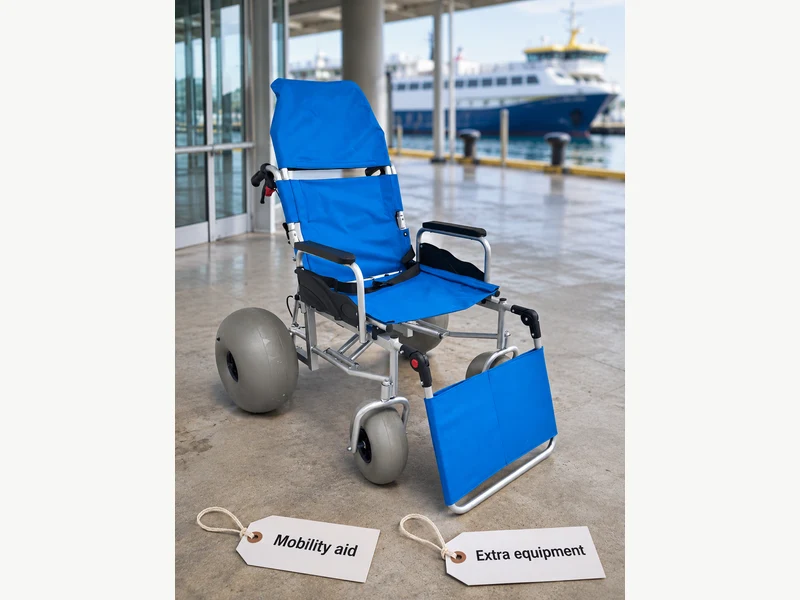
You can plan to take a beach wheelchair on a ferry once the operator confirms how it can be boarded and carried on your sailing. A wide sand chair can travel to the terminal in a car yet still raise questions at a passenger gate, lift or luggage desk. Describe how you will travel and send the chair's actual dimensions before relying on a booking.
How will the wheelchair on a ferry be carried?
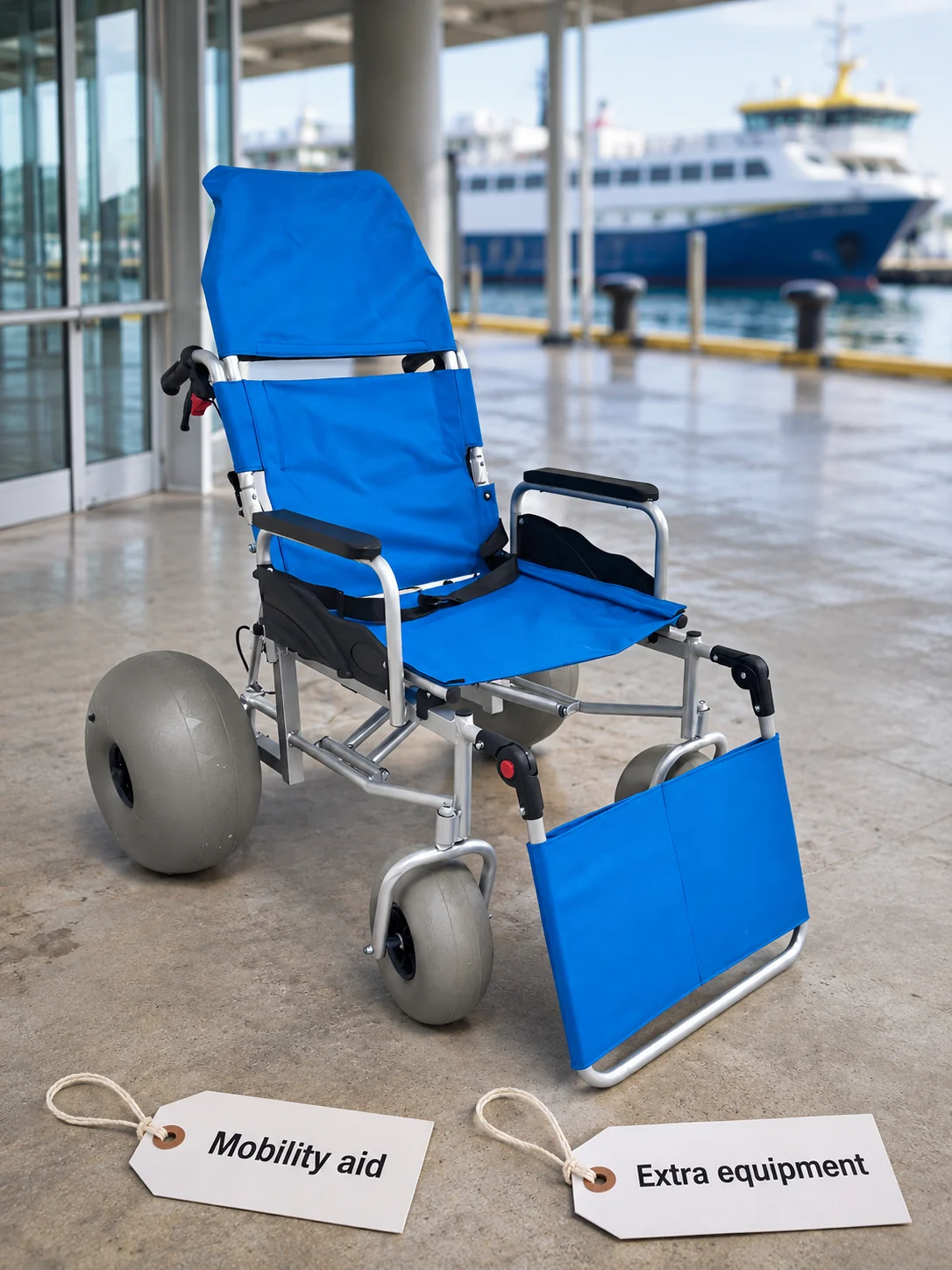
Decide whether the rider uses the wheelchair on a ferry, travels with another mobility aid, or carries the empty beach chair as extra equipment.
Why does the booking desk need this distinction?
Describe the actual journey. A passenger bringing a dismantled beach chair alongside a daily wheelchair has different questions from someone intending to stay in that chair while boarding. Give the operator both equipment descriptions.
- Name the chair used by the passenger.
- Identify additional empty equipment separately.
| Review point | What to record |
|---|---|
| Mobility aid | How the guest intends to travel |
| Extra chair | Proposed carriage and storage |
Key Takeaway: The operator can route the request to the right team.
Which sailing details matter?
Confirm the terminals, departure, return and operating company when asking about a wheelchair on a ferry.
Will the same answer cover the return?
Check each leg. A timetable may offer several vessels or embarkation arrangements. Give the exact date and service and ask how a change of sailing affects the assistance confirmation.
- Record outward and return service details.
- Keep the operator's reference number.
| Review point | What to record |
|---|---|
| Outbound | Confirmed arrangement |
| Return | Separate check where needed |
Key Takeaway: A booking note can be traced to the sailing it describes.
What measurements should you send?
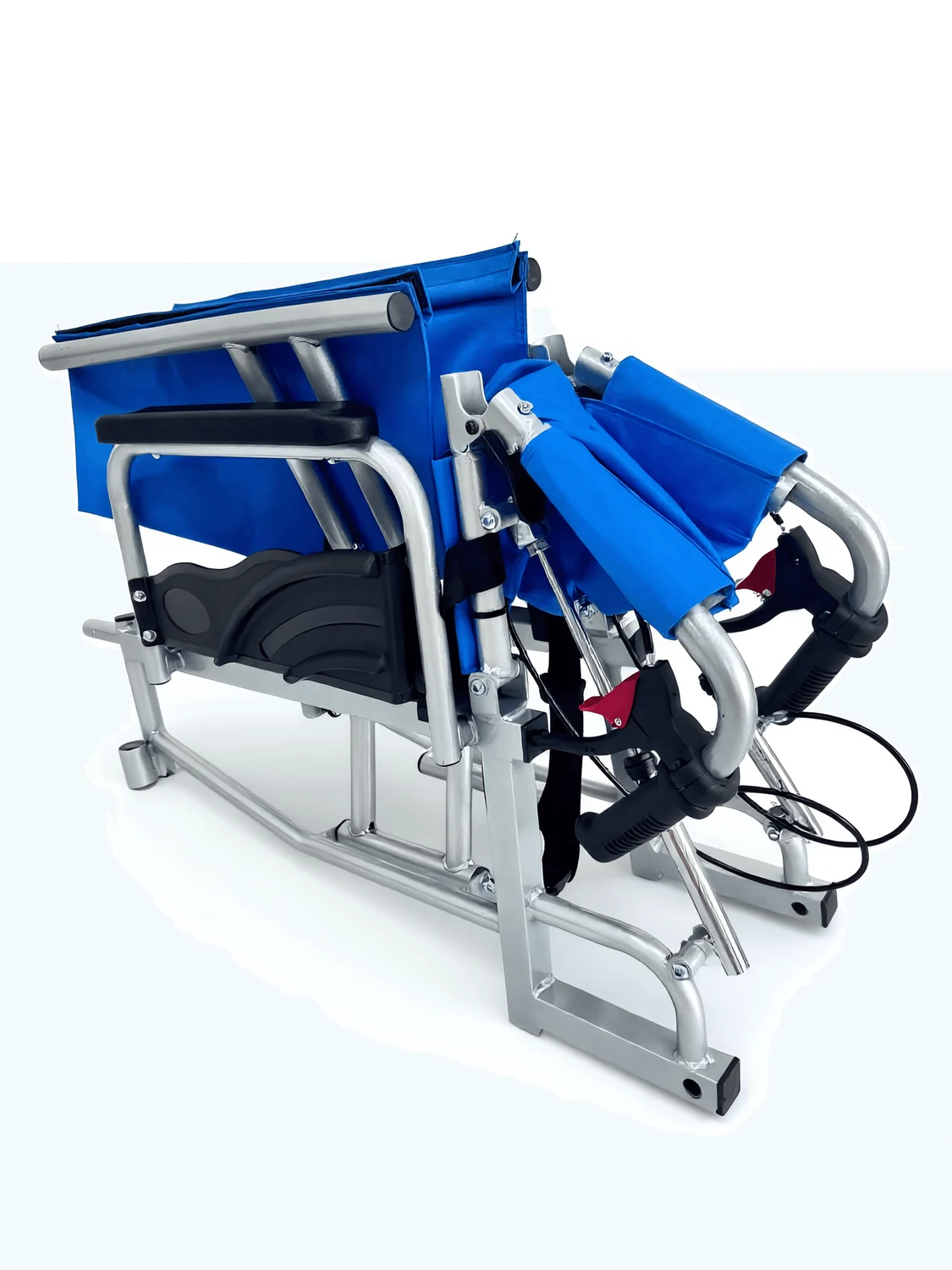
Send measurements of the wheelchair on a ferry in each state that the operator needs to assess.
Does the chair travel assembled?
Measure the state that matters. Give overall width, length and height with the fitted parts identified. If the supplier permits a compact state, provide its dimensions and list the pieces that travel separately.
- Use clear units on every figure.
- Show the widest fitted points in a photograph.
| Review point | What to record |
|---|---|
| Assembled | Outside envelope |
| Compact | Defined parts remaining on the unit |
Key Takeaway: The terminal team can review the right package against its own spaces.
Does a vehicle booking settle passenger access?
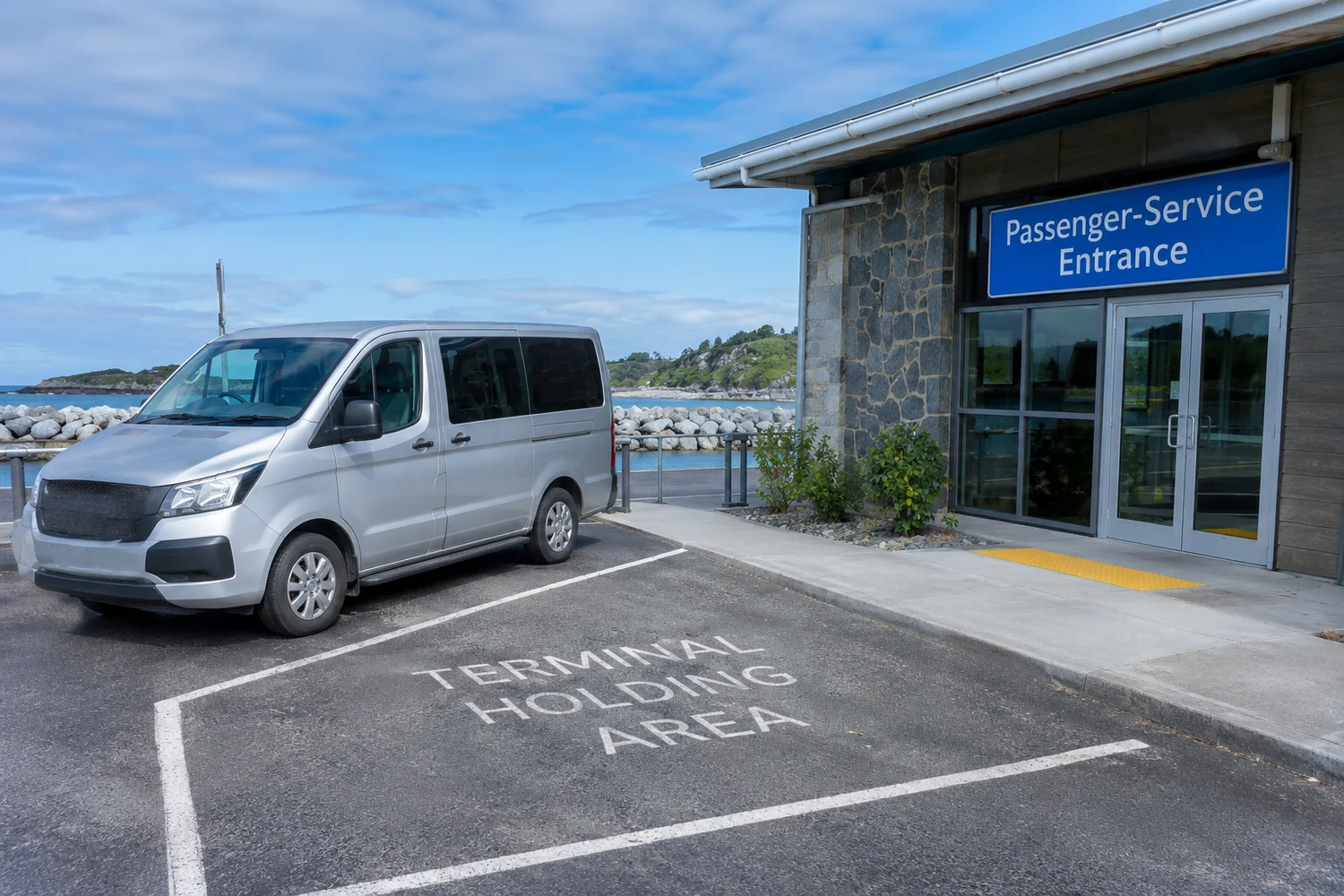
A vehicle booking does not by itself explain how a guest using a wheelchair on a ferry reaches the passenger area.
What happens after the car is parked?
Ask about the onward route. Give the operator your intended boarding method and ask about movement between the vehicle deck and passenger facilities. Follow the crew's instructions for that vessel.
- Confirm the arranged meeting point.
- Ask who provides boarding assistance.
| Review point | What to record |
|---|---|
| Vehicle record | Car and booking |
| Passenger record | Access and assistance needs |
Key Takeaway: Two linked confirmations make a drive-on trip easier to plan.
When should assistance be requested?
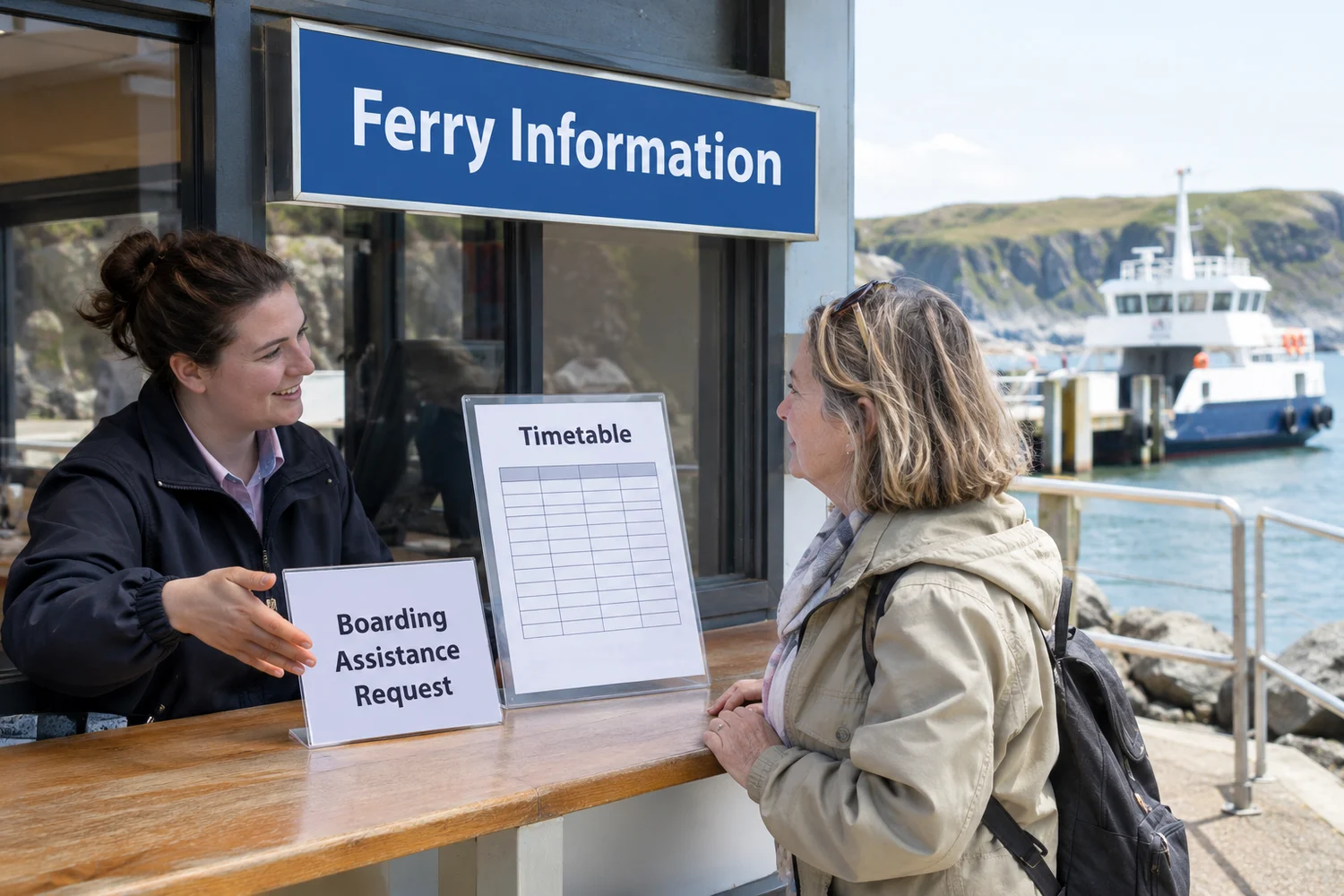
Ask about notice periods as soon as you plan to take a wheelchair on a ferry.
Which guidance applies to your route?
Use the operator and relevant authority. For covered UK journeys, UK government passenger guidance advises advance notice for particular arrangements and boarding help. Check the current instructions for the route you are booking.
- State the support needed at both ends.
- Ask for confirmation in an accessible format.
| Review point | What to record |
|---|---|
| Notice | Route-specific requirement |
| Reply | What the operator has agreed |
Key Takeaway: An early request leaves time to address a dimension or staffing question.
Who handles the detached pieces?
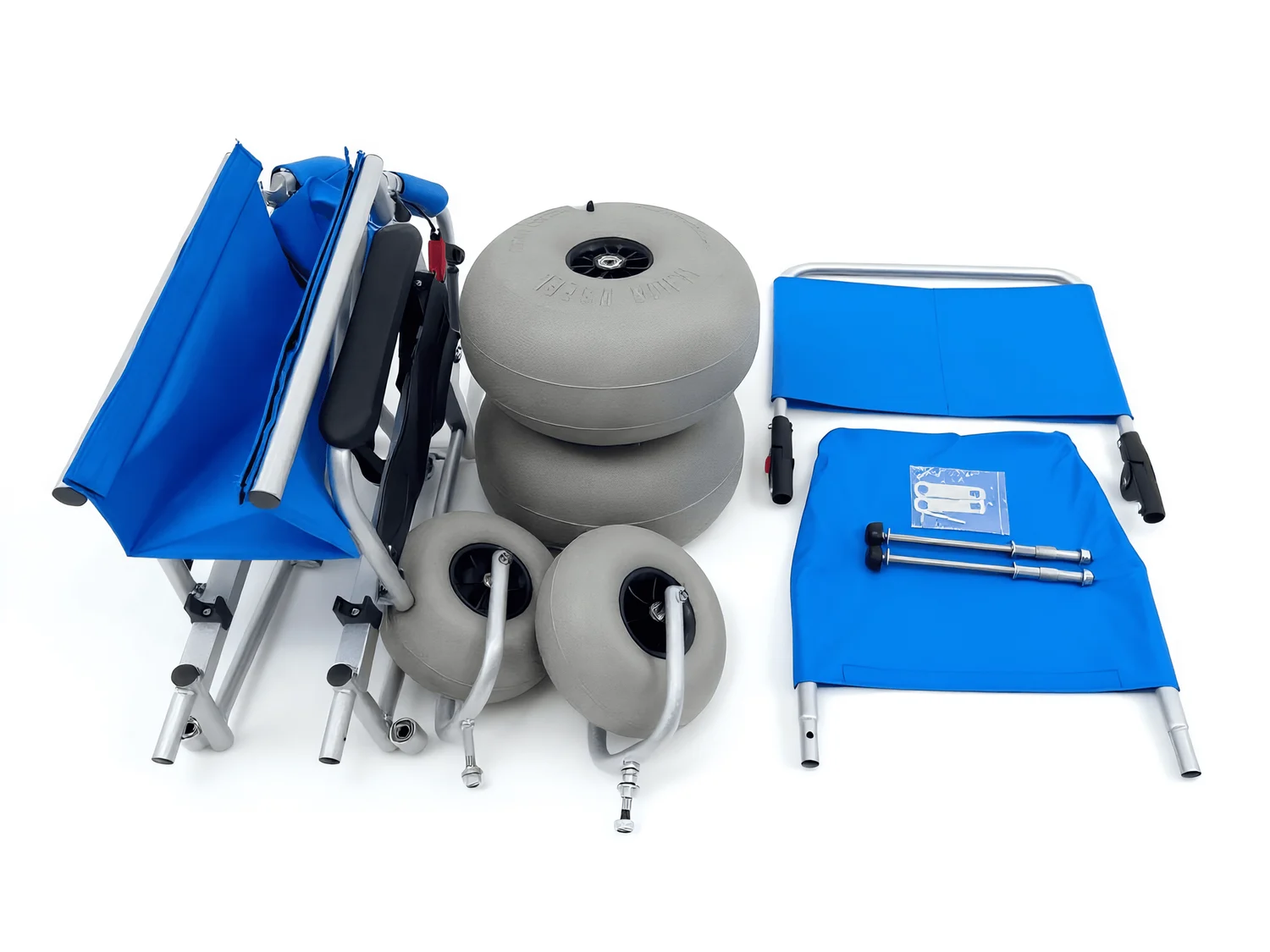
Agree who keeps each loose part when taking a wheelchair on a ferry in a compact configuration.
Which pieces belong together?
Use a short parts list. Photograph the permitted transport state and label bags in the way the operator accepts. A detached wheel or support that travels separately needs a reunion point at arrival.
- Count the pieces at handover.
- Keep the supplier's handling instructions accessible.
| Review point | What to record |
|---|---|
| Piece | Name and quantity |
| Custody | Person or location for collection |
Key Takeaway: The guest can account for the whole chair at the far terminal.
Where can the empty beach chair be stored?
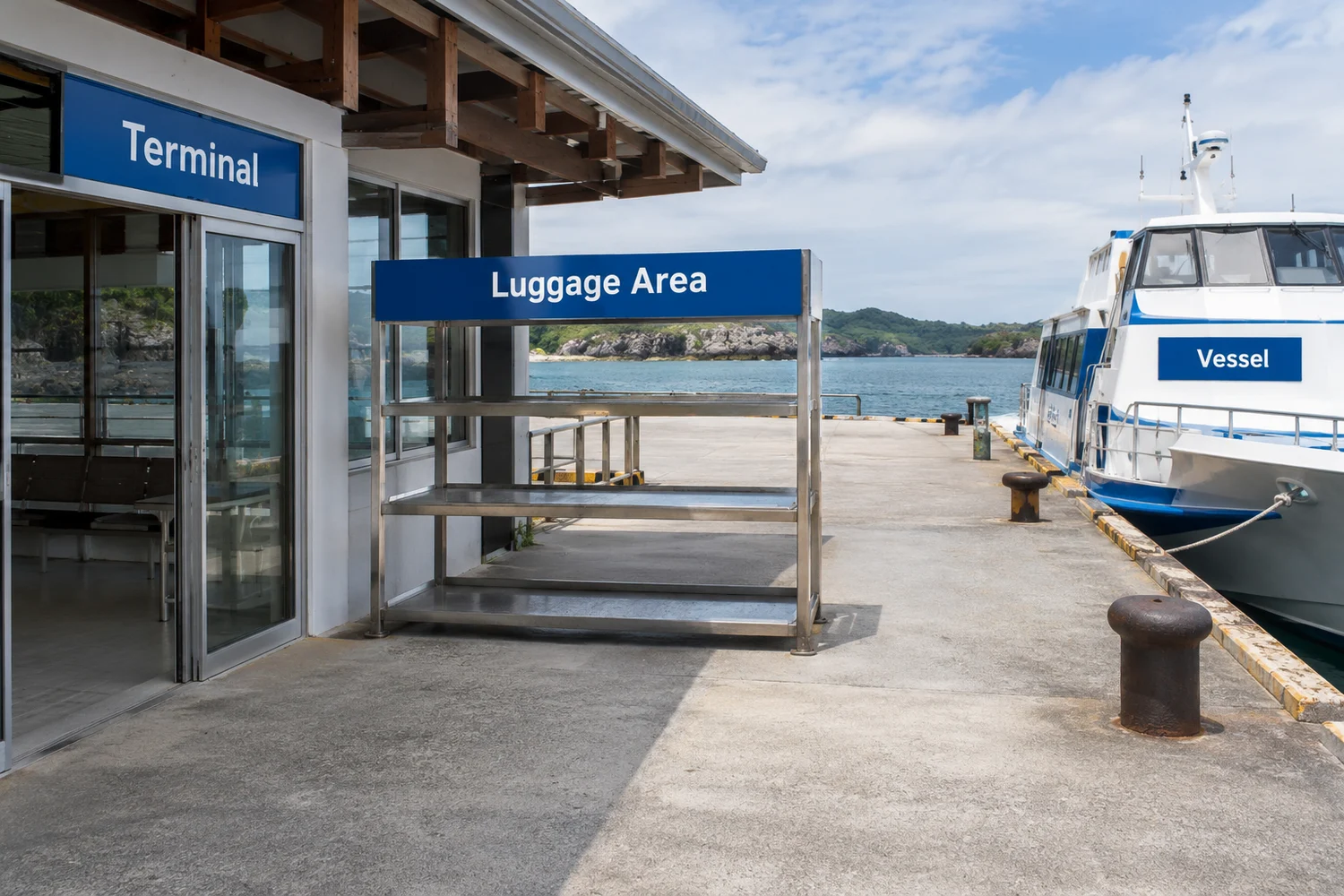
Ask the operator to confirm where an empty wheelchair on a ferry may be placed for the crossing.
What does a large waiting area prove?
Check the vessel arrangement. A spacious terminal says little about the space allocated on board. Let the crew identify the permitted storage location and handling arrangements.
- Provide the packed or assembled size as requested.
- Keep passageways available under crew direction.
| Review point | What to record |
|---|---|
| Terminal | Waiting and handover space |
| Vessel | Authorized location on board |
Key Takeaway: A written reply gives you an answer beyond a photograph of the terminal.
What if the beach chair has an attachment?
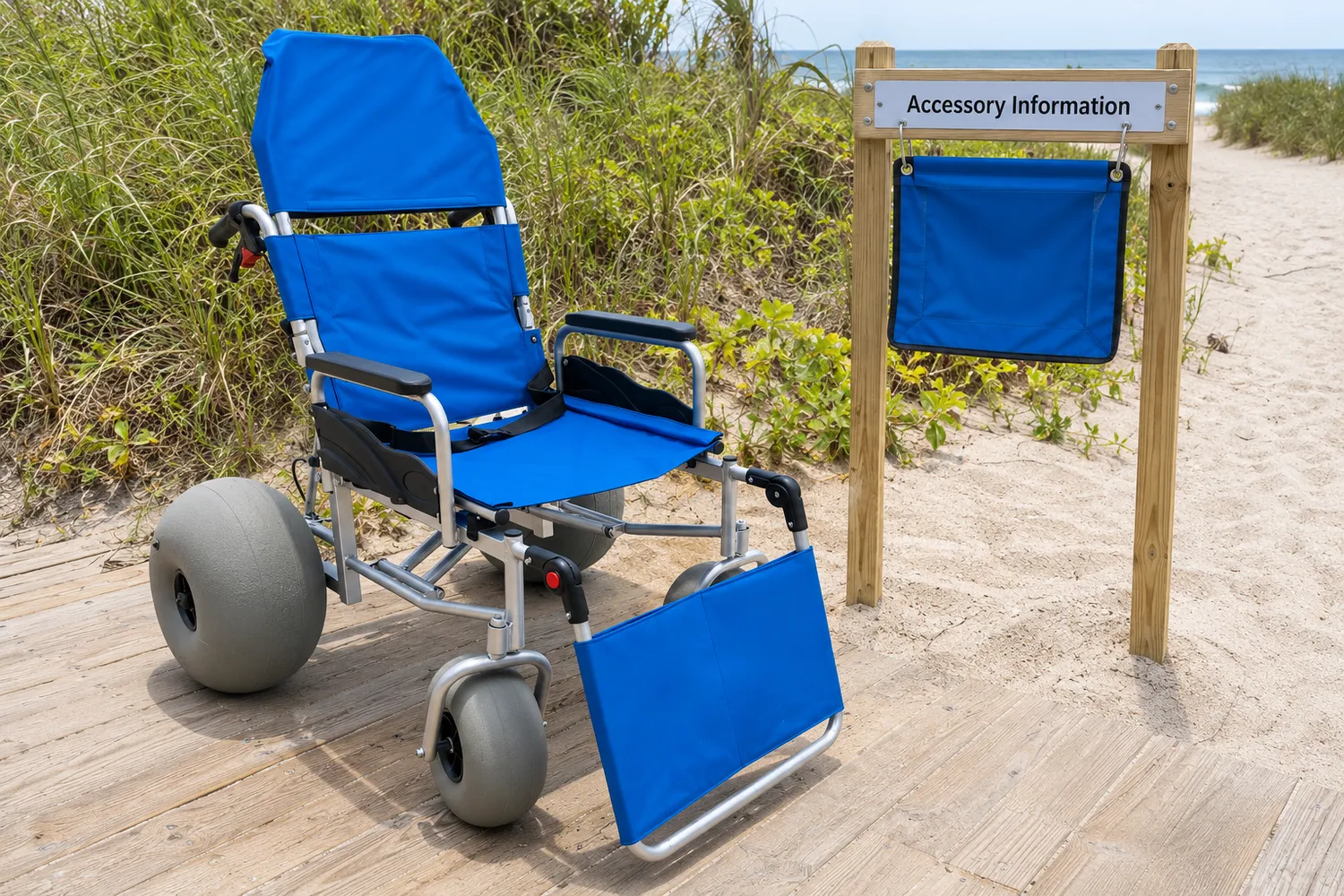
Declare the actual equipment when asking about a wheelchair on a ferry, including any separately proposed powered accessory.
Is every part covered by the same booking?
List the attachment separately. The base manual chair and a powered add-on have different identification and carriage questions. Provide the operator with the manufacturer's information for the equipment you will actually bring.
- Identify the base chair's drive type.
- Tell the operator about each additional device.
| Review point | What to record |
|---|---|
| Base chair | Model and configuration |
| Accessory | Separate identity and carrier response |
Key Takeaway: The booking reflects the actual equipment traveling that day.
What should be checked at arrival?
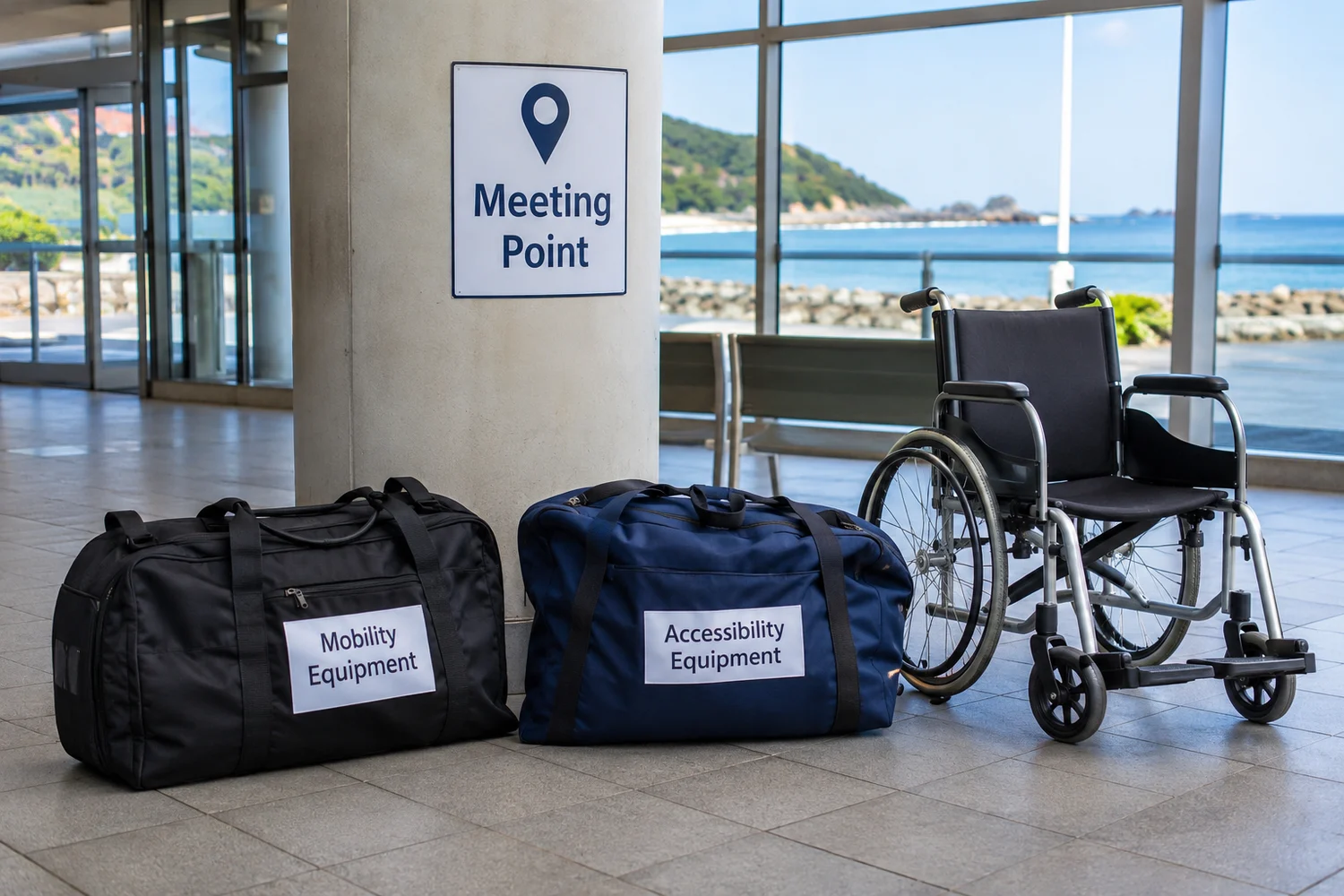
At arrival, account for the wheelchair on a ferry, any detached pieces and the onward connection before leaving the handover point.
Who is collecting the guest?
Keep both contacts available. Agree a meeting place with the local transport or hire provider. If a part or handling concern arises, report it to the operator while the handover details are still clear.
- Compare the returned set with your list.
- Follow the matching instructions before returning it to use.
| Review point | What to record |
|---|---|
| Returned equipment | Count and observed condition |
| Onward trip | Named meeting point |
Key Takeaway: A clear arrival plan covers the distance between the ferry and the sand.
What should go in the travel file?
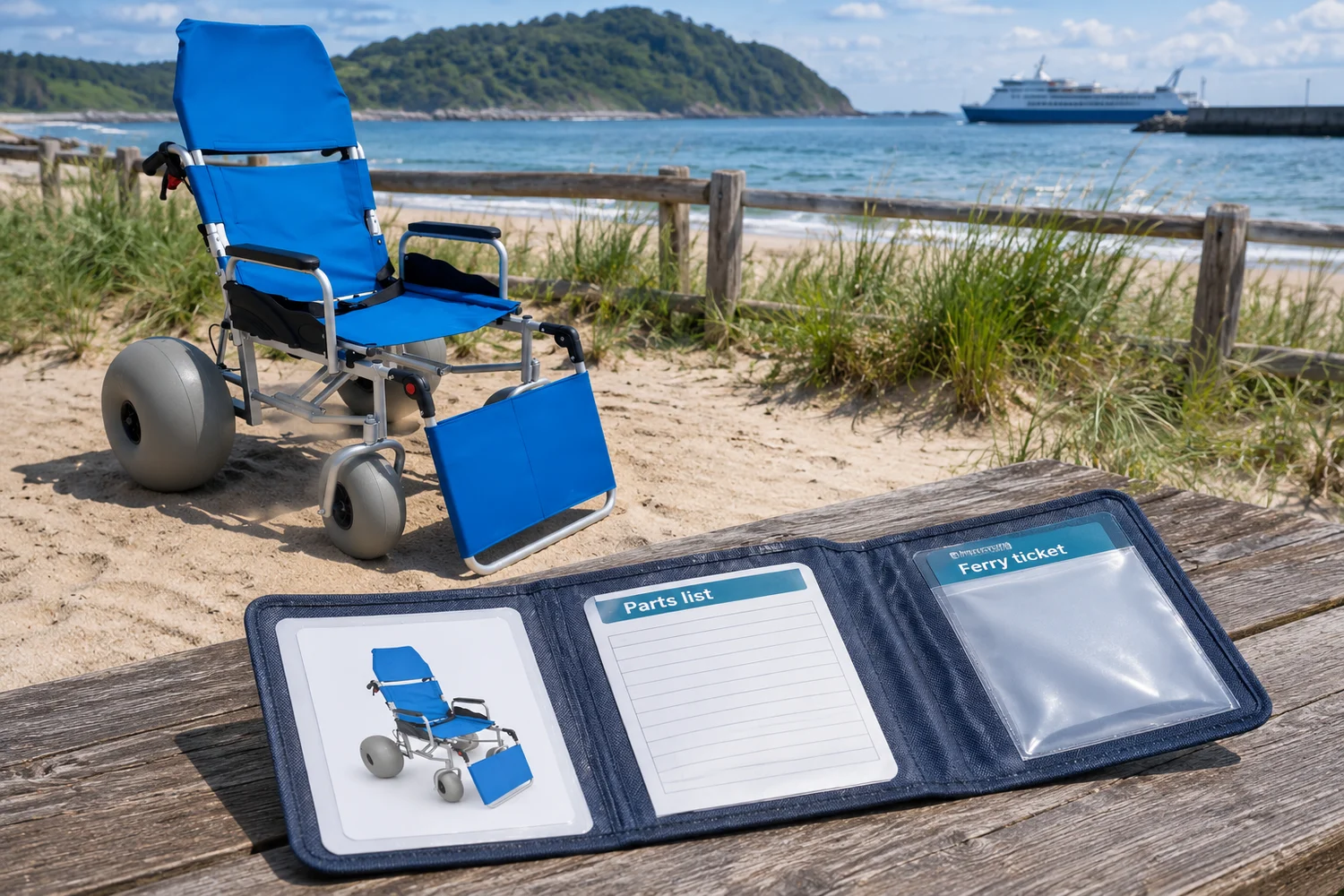
Keep the booking reply, measurements, parts list and handling information for the wheelchair on a ferry in one accessible file.
Who supplies which facts?
Keep the carrier's reply with the product sheet. Ask AryMD for available configuration details for the beach chair under review. The operator then decides the carriage and assistance arrangements for your service.
- Save a copy the traveler can reach offline.
- Give the return contact to the agreed companion.
| Review point | What to record |
|---|---|
| Product information | Supplier or manufacturer |
| Carriage confirmation | Operating ferry company |
Key Takeaway: The traveler can show both the equipment facts and the agreed booking at check-in. Contact us with your beach chair model and the dimensions your carrier has requested.
Frequently asked questions
Q1: Can I take two wheelchairs on the same sailing?
Ask the operator. Explain which device you use and which is extra equipment, then obtain its carriage decision.
Q2: Can a beach wheelchair stay assembled?
Possibly. The operator needs the actual dimensions and proposed storage or boarding arrangements.
Q3: Does one ferry company's answer apply to another?
No. Confirm each operator and sailing on your itinerary.
Q4: How do I know if a detached wheel will be accepted?
Give the carrier the wheel's size, packaging and handling plan and ask how it should be presented.
Q5: Who can tell me how to dismantle the chair?
Use the instructions for the exact chair and the supplier's qualified guidance. The ferry booking covers carriage arrangements.