
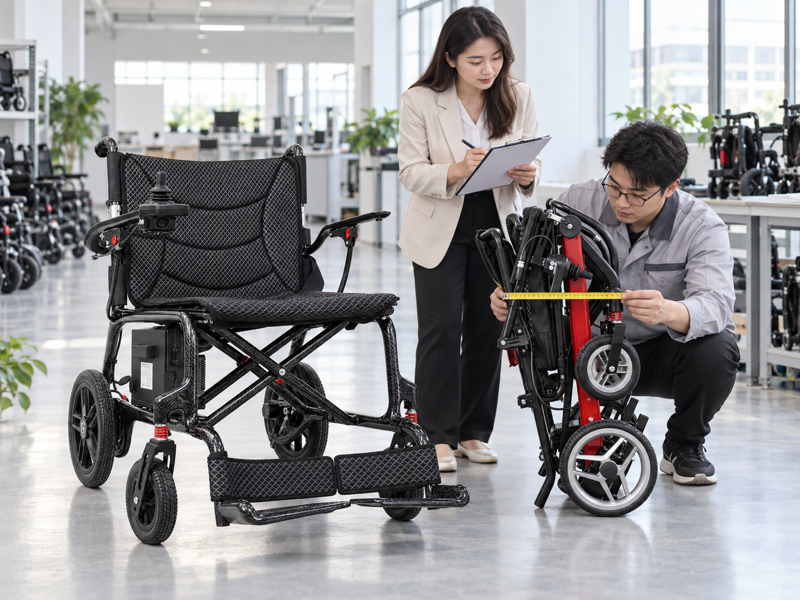
The best 2026 pick fits your user, route, vehicle, and service plan. An airport plan can fail at a narrow trunk, confusing latch, or battery question. That friction causes returns, support calls, and slow stock. Instead, compare each Lightweight electric wheelchair profile, test a sample, and build a safer shortlist.
1. What Comes Before Buying a Lightweight Electric Wheelchair?

Lightweight electric wheelchair selection should begin with a real use case, because weight alone cannot predict a good fit. For example, name the loader, turn space, outing length, and vehicle.
Which daily questions should your team ask?
Start with your real route. Use one day as your test script. Then, check every claim against that route.
- Who will lift, fold, charge, and store the chair?
- Which doorways, elevators, ramps, or trunk openings set hard limits?
- How long will a user sit before a break?
- Will travel include air, rail, taxis, or mixed transport?
How can you turn needs into buying rules?
Next, translate each answer into a pass or fail rule before requesting quotations. Request folded dimensions, total weight, capacity, battery details, and a repeatable folding demonstration.
| Use case | Buying rule | Sample check |
|---|---|---|
| Car travel | Fits a measured trunk opening | Load and unload twice |
| Tight interiors | Clears narrow routes | Turn through a mock doorway |
| Long outings | Supports stable seated posture | Run a timed seating trial |
| Air travel | Has clear battery records | Review files before booking |
This grid ties sales language to repeatable tasks. Key Takeaway: Write five firm conditions before comparing prices.
2. Which Lightweight Electric Wheelchair Features Matter Most?
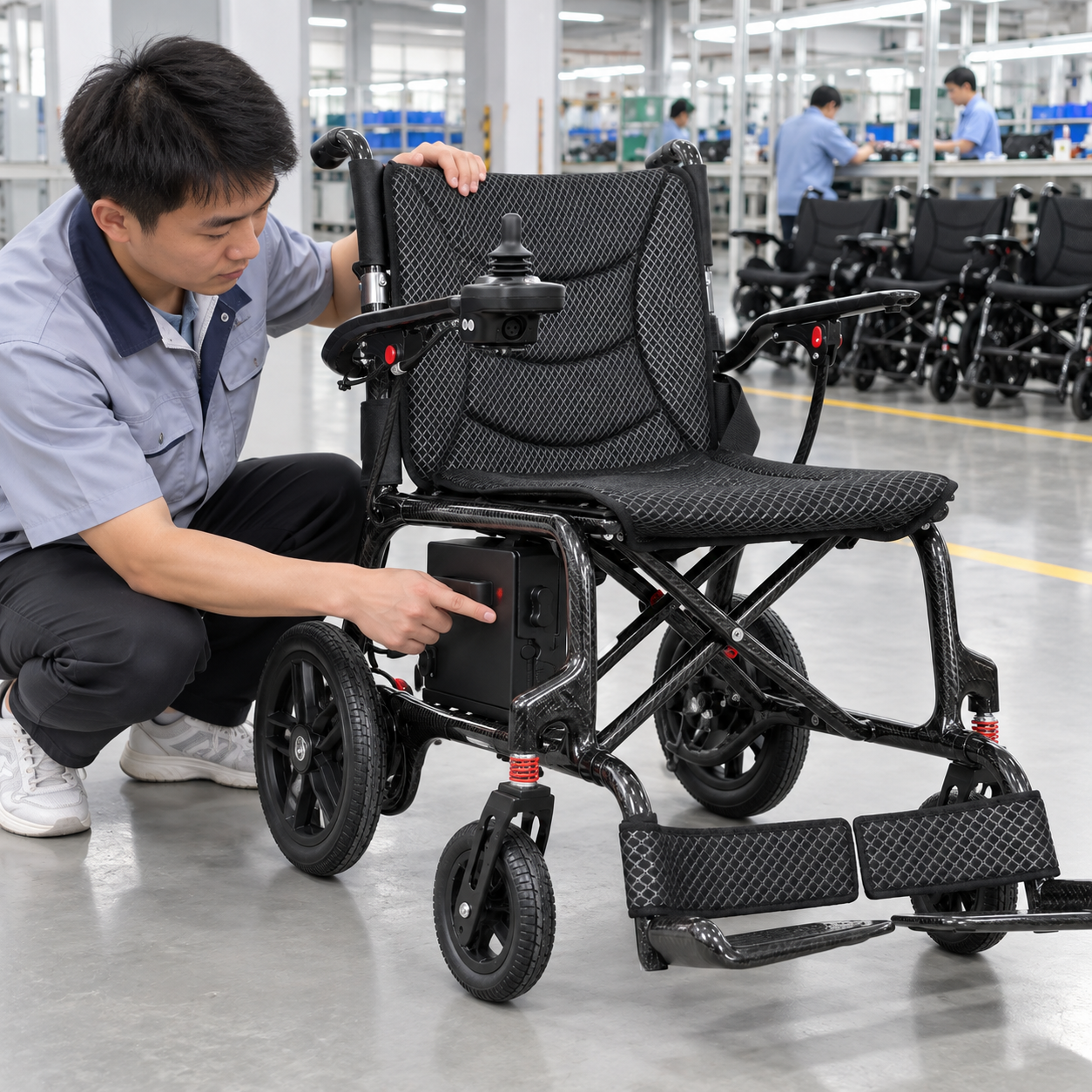
Lightweight electric wheelchair features matter when they make handling, driving, comfort, and service predictable. Still, folded balance, grips, latch access, casters, controls, and battery removal shape daily use. This folding power-chair comparison separates visible features from operational value.
What should buyers inspect beyond net weight?
Look past one headline number. For example, a lighter frame can feel awkward when lift points sit far from its center of mass.
- Folded size and balanced lifting points
- One-piece fold versus detachable modules
- Joystick reach, resistance, and mounting side
- Battery access without tools
- Tire, caster, and anti-tip geometry
- Cushion, armrest, and footrest adjustment
Which features change user outcomes?
Portability cuts handling strain, while stable controls reduce correction during tight turns. Meanwhile, comfort supports longer use, and replaceable modules can shorten repair downtime.
| Feature | User effect | Buyer evidence |
|---|---|---|
| Balanced folded form | Easier loading | Live lift test |
| Clear control layout | Faster handover | User trial |
| Accessible battery | Simpler charging | Removal demo |
| Common spare parts | Shorter downtime | Parts list |
Useful features are verified on a sample. Key Takeaway: Require a demonstration for each handling or service feature.
3. How Should You Compare Wheelchair Specs?
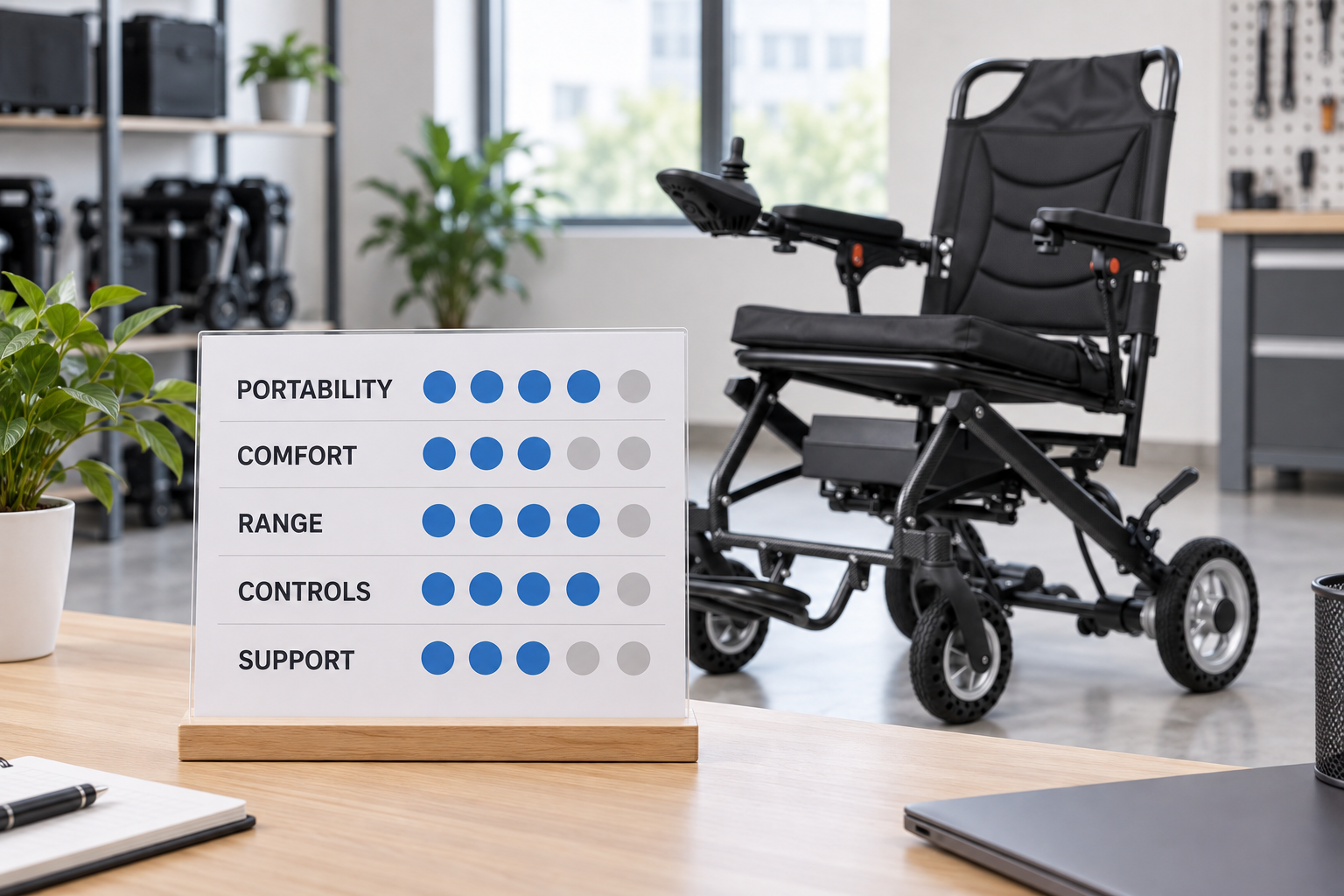
Lightweight electric wheelchair specifications become useful when each number maps to a real task. For example, map weight, folded size, range, turning space, and seat width to a task.
Can one scorecard keep comparisons fair?
Give every sample the same exam. Then, score each chair from one through five across portability, comfort, usable range, controls, and supplier support.
- Use measured values instead of brochure adjectives.
- Record test conditions beside each result.
- Keep user feedback separate from engineering notes.
- Reject missing data rather than guessing.
How should claims become scenarios?
For example, a range claim should become your longest route plus a sensible reserve. A folded dimension should become a trunk template, while a turning claim should become a marked floor test.
| Spec | Real question | Verification method |
|---|---|---|
| Total weight | Can one handler lift it safely? | Timed loading trial |
| Folded size | Does it clear trunk access? | Physical template |
| Seat width | Does posture stay centered? | Seated-fit check |
| Range | Does it cover a hard day? | Route-based trial |
| Turning space | Can it clear tight interiors? | Marked floor course |
This method makes brochures easier to compare. Key Takeaway: Attach one repeatable test to each approval specification.
4. Which Eight Wheelchair Profiles Fit 2026 Buyers?
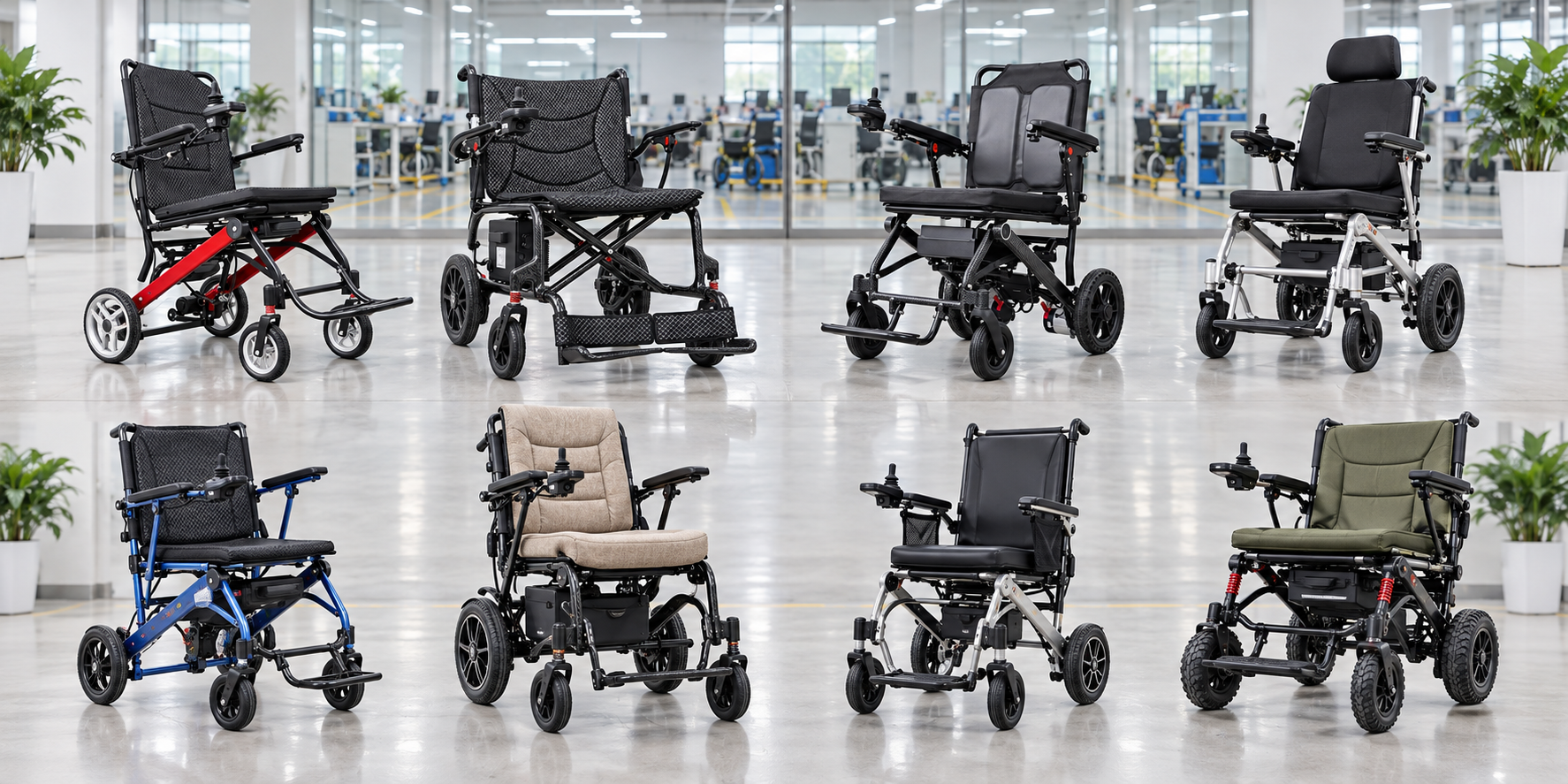
Lightweight electric wheelchair buyers should shortlist profiles by use case rather than chase one universal winner. Eight profiles cover travel, indoor, comfort, outdoor, and private-label briefs. For example, a light 13.5 kg class may suit frequent loading, while another buyer may accept more weight for seating or stability.
Which eight profiles deserve a sample request?
Match each profile with a buyer problem. Then, base final approval on verified model data.
- Carbon-fiber travel profile for frequent lifting
- Compact aluminum profile for balanced cost and handling
- Rapid one-piece folding profile for busy transfers
- Comfort-seat profile for longer daily use
- Tight-turning profile for small indoor routes
- Outdoor-stability profile for mixed paved surfaces
- Reclining-support profile for specific seating briefs
- Private-label platform for distributor programs
What tradeoffs separate similar profiles?
For example, travel chairs reduce lifting strain while comfort models add mass. Then, record one benefit and one tradeoff per profile.
How should you narrow eight profiles to three?
Next, drop any profile that misses a hard route, fit, or service rule. Request samples only from three profiles that serve distinct customer groups in your current channel.
| Profile | Strongest fit | Main tradeoff to test |
|---|---|---|
| Carbon-fiber travel | Frequent lifting | Ride feel and price |
| Compact aluminum | Mixed daily use | Folded balance |
| Rapid folding | Fast transfers | Latch repeatability |
| Comfort-seat | Longer sitting | Added mass |
| Tight-turning | Indoor routes | Outdoor stability |
| Outdoor-stability | Paved mixed terrain | Trunk size |
| Reclining-support | Position changes | Folding complexity |
| Private-label platform | Channel differentiation | Parts continuity |
The table exposes tradeoffs before sampling. Key Takeaway: Pick three profiles for separate customer jobs and test them deeply.
5. How Should You Test a Lightweight Electric Wheelchair?

Lightweight electric wheelchair testing should copy the user's route, handling steps, and seating time. Instead, open-floor laps can miss turning, loading, latching, or pressure problems. Then, run each sample through one written sequence.
What belongs in a useful sample trial?
Make the sample earn its place. Then, give trained staff and a suitable user time with each control and handling step.
- Fold and unfold the chair several times.
- Load it through a measured trunk opening.
- Drive through a doorway, tight turn, threshold, and gentle ramp.
- Check braking, joystick response, and low-speed control.
- Sit long enough for fit problems to appear.
- Remove, charge, and reinstall the battery.
Which results should your team record?
Next, use plain pass, concern, or fail ratings, supported by notes and photos. Ask two people to repeat handling tasks so one skilled operator does not hide a poor design.
| Test | Pass signal | Concern signal |
|---|---|---|
| Folding | Clean repeatable latch | Multiple attempts |
| Loading | Stable grip and clearance | Twisting or snagging |
| Tight turn | Smooth low-speed control | Repeated correction |
| Braking | Predictable stop | Delay or abrupt grab |
| Seating | Stable posture | Early pressure point |
Written results tie approval to evidence. Key Takeaway: Use one fixed route for every shortlisted chair.
6. What Makes a Lightweight Electric Wheelchair Comfortable?

Lightweight electric wheelchair comfort comes from fit, posture, vibration control, and easy access to controls. For example, padding cannot fix a wide seat, high armrest, or poor footrest. Instead, test comfort through a timed seated trial with a suitable user.
Which fit points deserve direct checks?
Give comfort enough time to speak. Still, a short showroom sit can miss pressure, reach, and posture problems.
- Seat width and depth support a centered posture.
- Back support matches daily sitting needs.
- Armrest height keeps shoulders relaxed.
- Footrest position supports legs without crowding knees.
- Joystick placement suits reach and hand control.
- Cushion cover can be removed for routine care.
How can distributors reduce fit-related returns?
Publish clear dimensions and train sales teams to ask about body size, transfer style, sitting time, and control side. Meanwhile, keep product advice within the chair's verified fitting range and refer clinical seating needs to qualified professionals.
| Fit point | What to observe | Sales record |
|---|---|---|
| Seat width | Centered hips | User body width |
| Seat depth | Supported thighs | Leg length check |
| Armrest | Relaxed shoulders | Height setting |
| Footrest | Stable feet | Position and clearance |
| Joystick | Easy reach | Preferred control side |
Fit records give support staff a clear start. Key Takeaway: Use measured fit for every comfort claim.
7. How Do Battery Care and Travel Rules Affect Ownership?
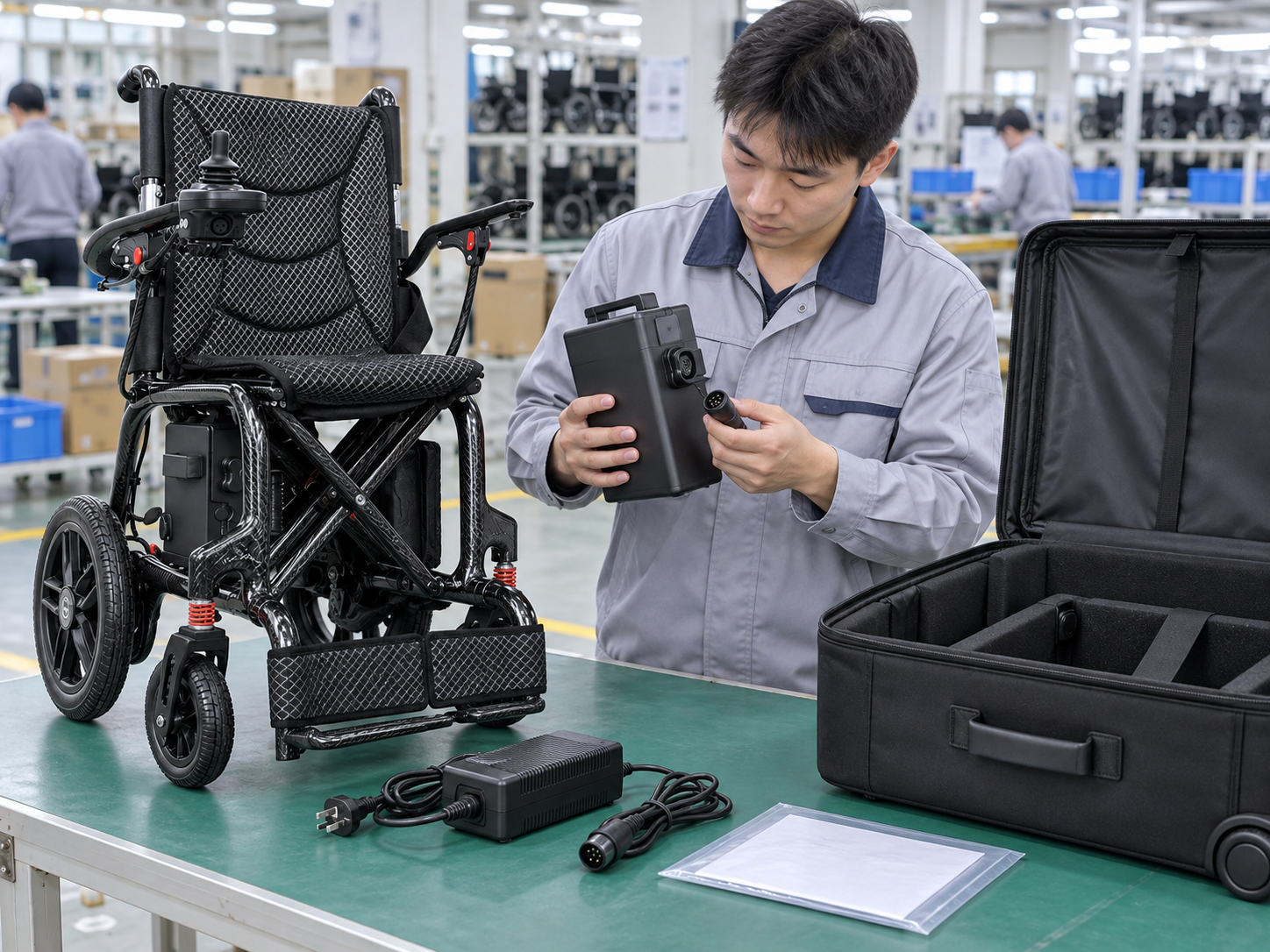
Lightweight electric wheelchair ownership becomes easier when charging, storage, replacement, and travel records are clear from day one. Next, buyers should confirm battery type, energy rating, removal method, charger compatibility, and spare availability for each target market. Airline acceptance varies, so users should check current carrier rules before every trip.
What should a battery handover cover?
Treat power records like product parts. Then, ship clear instructions with every chair and keep a matching file for support teams.
- Charging routine and approved charger
- Storage interval and temperature guidance
- Removal and reinstallation steps
- Connector inspection points
- Replacement part number and order path
- Battery specification document for travel questions
How can buyers avoid travel-day surprises?
Before booking, review official IATA mobility-aid guidance, then ask carriers about wheelchair handling and battery documentation. Meanwhile, keep contact details, battery records, and handling notes with the traveler rather than inside checked luggage.
| Ownership task | Record needed | Buyer check |
|---|---|---|
| Routine charging | User instructions | Charger matches market |
| Long storage | Storage guidance | Schedule follow-up charge |
| Battery removal | Handling steps | Repeat without tools |
| Air travel | Battery specification | Confirm carrier policy |
| Replacement | Part reference | Check supply route |
Good records reduce support calls. Key Takeaway: Approve battery documents with the physical sample.
8. What Supplier Support Protects Your Purchase?
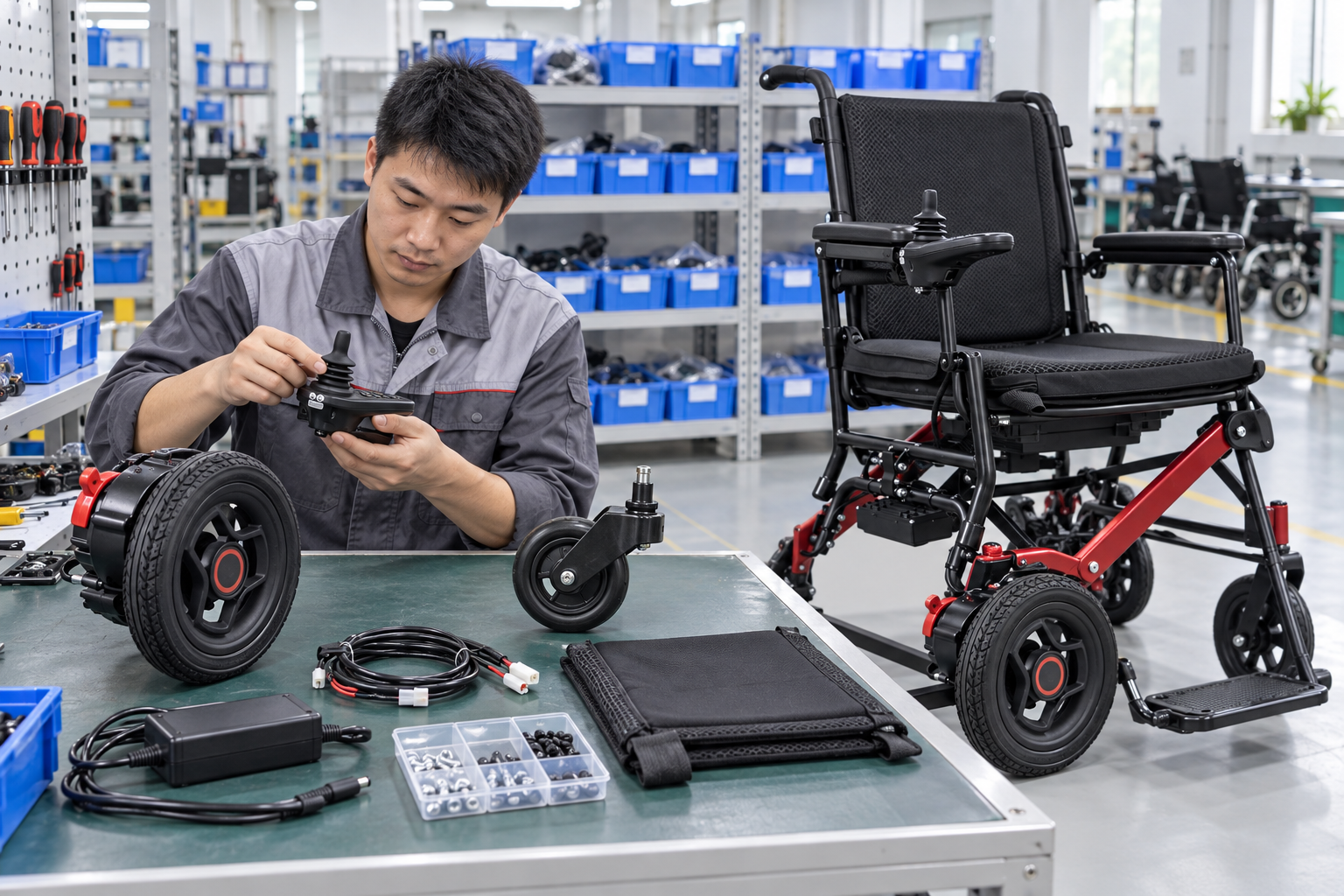
Lightweight electric wheelchair support should cover spare parts, diagnosis, training, warranty steps, and response ownership. Still, a low purchase price can lose its appeal when controllers, motors, casters, chargers, or upholstery have no clear replacement path. For example, a repeatable travel-chair specification process helps teams capture service details before an order.
What should you request before placing a trial order?
Ask how support works on a bad Monday. For example, the answer should name people, parts, records, and realistic response steps.
- Spare-parts list with clear identifiers
- Diagnostic flow for common faults
- Warranty scope and claim evidence
- Photos or videos for replacement work
- Support contact and response window
- Stock plan for fast-moving service parts
Which support signals deserve more weight?
Favor clear documentation, consistent answers, and parts that staff can identify without guesswork. Then, test support during sampling by sending one realistic fault question and reviewing response quality.
| Support area | Strong signal | Weak signal |
|---|---|---|
| Parts | Named list and photos | “Available if needed” |
| Diagnosis | Stepwise checks | Vague reset advice |
| Warranty | Written scope | Verbal promise |
| Training | Repeatable material | One-off explanation |
| Contact | Named owner | Shared inbox only |
Score support evidence during supplier review. Key Takeaway: Test one service question before the initial order.
9. How Can B2B Buyers Control Quality Before Ordering?
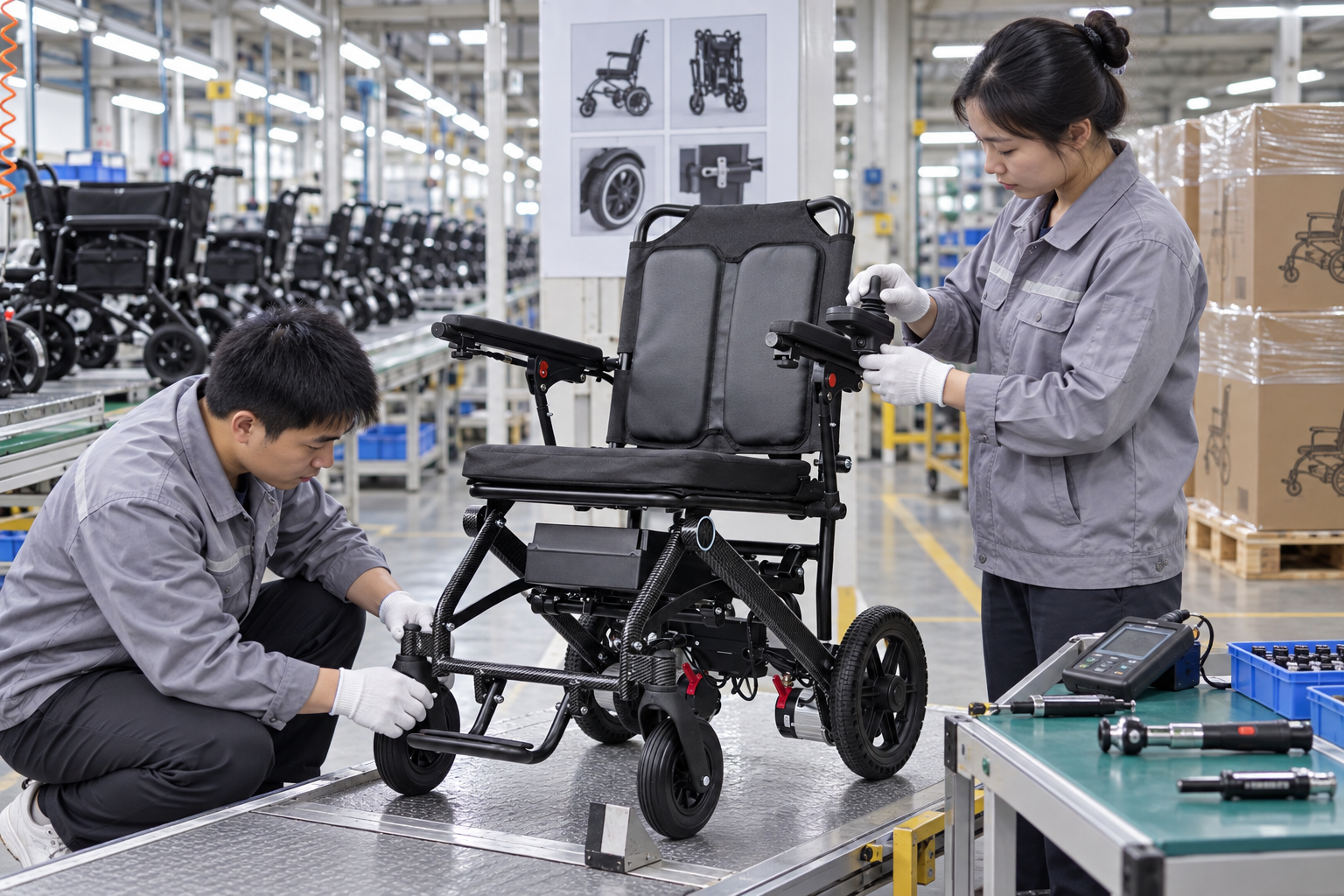
Lightweight electric wheelchair quality becomes more consistent when buyer requirements become inspection points. A good sample sets a reference, yet production checks must cover frame joints, fasteners, wiring, controls, braking, folding, upholstery, accessories, and packing. Then, agree on records before production rather than after a complaint.
Which checks belong in a pre-shipment plan?
Build the checklist from failure risk. For example, put safety-related functions, frequent complaint points, and shipping damage at the top.
- Visual frame and finish review
- Fastener and folding-latch check
- Joystick, motor, and brake function
- Battery and charger match
- Wheel alignment and caster movement
- Upholstery, accessories, and manual count
- Carton condition and drop-risk review
How should a trial order be approved?
Next, compare production units with the approved sample and signed specification. Keep photos, serial references, test results, and corrective actions in one order record.
| Control point | Evidence | Approval owner |
|---|---|---|
| Sample baseline | Signed specification | Buyer and supplier |
| Functional check | Test record | Quality team |
| Appearance | Photo set | Product manager |
| Packing | Carton review | Logistics team |
| Corrective action | Closed issue list | Named owner |
One shared record helps resolve disputes. Key Takeaway: Approve a written inspection plan before production.
10. How Do You Turn a Shortlist Into a Confident Order?

Lightweight electric wheelchair shortlists become order-ready after route testing, fit review, battery-file approval, support checks, and a documented quality plan. Keep two or three finalists until your team can compare samples under equal conditions. Then, choose a chair and supplier combination that sales, service, and logistics teams can support without improvisation.
What should happen before commercial approval?
Close every open loop. A small trial order should test both product performance and supplier behavior.
- Confirm final specifications and approved sample.
- Record packaging, manuals, labels, and accessories.
- Agree on inspection points and claim handling.
- Set a spare-parts starter list.
- Train sales and support staff with the same files.
- Review trial-order feedback before scaling volume.
What is your practical next move?
Use this guide to reduce guesswork around portability, comfort, range, controls, travel, service, and quality. For example, Ary Medical can help distributors compare suitable profiles, prepare sample checks, discuss private-label needs, and plan a trial order; contact us with your route, target market, and handling limits. Our position is simple: reliable mobility products begin with clear buyer requirements and repeatable supplier evidence.
| Next step | Output | Decision gate |
|---|---|---|
| Share use case | Route and user brief | Suitable profiles found |
| Compare samples | Common scorecard | Hard rules passed |
| Review support | Parts and service file | Downtime risk accepted |
| Approve quality plan | Inspection record | Trial order released |
| Review field feedback | Return and service notes | Volume can scale |
This sequence creates an auditable decision. Key Takeaway: Send a use-case brief before requesting a quotation.
Frequently Asked Questions
Q1: Can I take a lightweight electric wheelchair on a plane?
Often, yes. However, confirm carrier and battery rules before booking, then carry the battery specification.
Q2: What's the best wheelchair weight for frequent car travel?
The best figure matches safe lifting through a measured trunk opening. Then, test total weight, folded balance, and grip points together.
Q3: How do I know if a claimed range fits my customer?
Use a route trial with reserve capacity. Instead, judge load, surfaces, stops, temperature, and driving style rather than one brochure figure.
Q4: Can I order a sample before a wholesale purchase?
Usually, yes. Then, confirm sample terms, production specifications, and approval tests.
Q5: How do I know if a supplier can support repairs?
Ask for a parts list and submit one realistic fault question. Then, expect diagnostic steps, matching parts, evidence, and a responsible contact.