
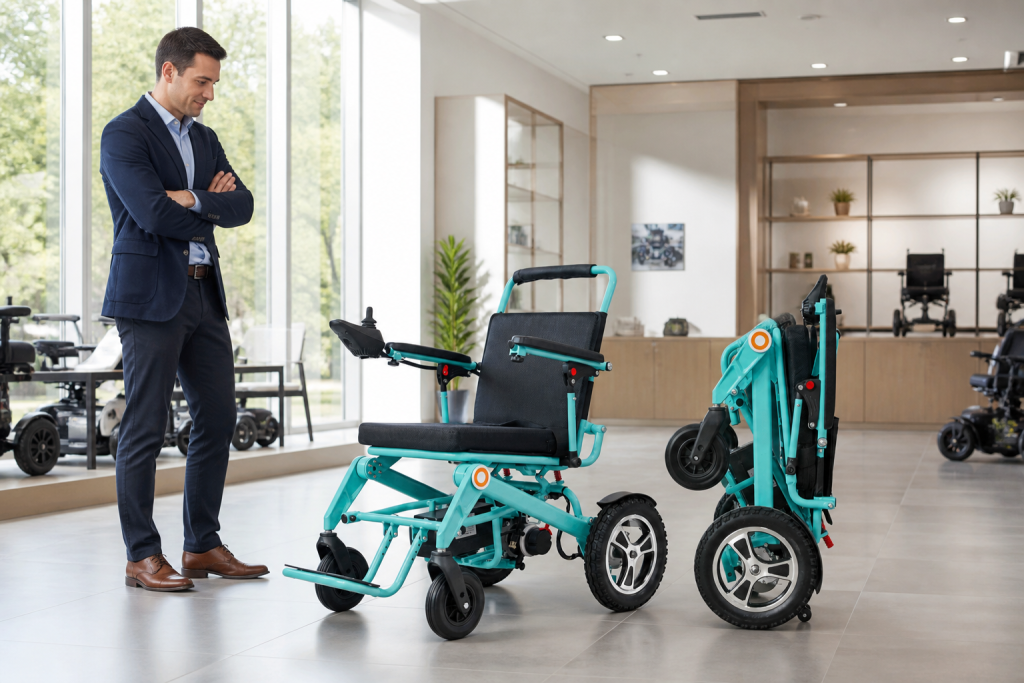
A folding electric wheelchair comparison should test each fold step, latch, lifting point, cargo space, and setup record with the exact sample. Use measured evidence. Repeat each handling task. Keep product claims tied to the supplied model. For U.S. facilities, review official mobility-device guidance alongside local rules and site-specific safety requirements.
Buyers can compare the best folding electric wheelchair by checking the complete folding sequence, folded shape, cargo fit, handling method, user setup, frame condition, and supplier records under the same conditions. A compact catalog pose does not show which parts stay attached, where hands should grip, how the chair balances, or whether a folded unit fits the buyer’s vehicle opening. Dealers and distributors also need model-specific manuals, parts names, packing steps, and a clear service route for folding joints and controls.
This article gives B2B teams a repeatable comparison that connects measurements with a supervised sample trial. Each observation names the chair setup, evaluator, tool, source, and open question. The result is a buying file that sales, warehouse, training, and service teams can read without turning one smooth demonstration into a promise for every worker or vehicle.
Which folding sequence should buyers document?
In practice, A folding electric wheelchair should be documented from a named starting setup through power-off, loose-part handling, frame release, final folded position, and reopening checks.
Use the exact model manual and sample rather than a generic folding video. List whether the battery, cushion, controller, foot support, or other user-contact parts stay attached. The ultra-light product page shows an ultra-light product context, while the buyer’s record should still capture each movement on the shortlisted chair.
A useful worksheet separates observed facts, model records, evaluator notes, and open questions. Give every entry a date, source, exact setup, and named reviewer. Run the same check for each candidate and retain any changed setup. This shared record lets procurement, training, warehouse, and service teams discuss the same evidence without turning a short trial into a broad product promise.
How can a folding trial be repeated?
Next, Set the same starting condition:
Place the chair on dry level flooring, switch power off, apply any documented parking step, and remove only parts named by the manual. Have trained staff perform the sequence at a measured pace. Note hand positions, latch movement, cable clearance, pinch areas, and the point where the folded chair reaches its stable resting state.
- starting setup and power state
- parts removed or left attached
- release and folding movements
- stable folded and reopened state
Repeat the check under the same conditions and record who took part. If a supplier answer arrives later, attach it to the original question instead of replacing the earlier entry. That history helps when a model, component, manual, sample, or operating plan changes during sourcing. A score should include a short reason and source link rather than a bare number.
Meanwhile, Repeat the process with the staff expected to handle samples, deliveries, or customer training. If the sequence differs between evaluators, record the difference and ask whether the manual or supplier can clarify it. Do not use speed as the main score. A clear repeatable method matters more than a rushed demonstration.
Key Takeaway: A folding claim becomes useful after the full sequence is recorded and repeated.
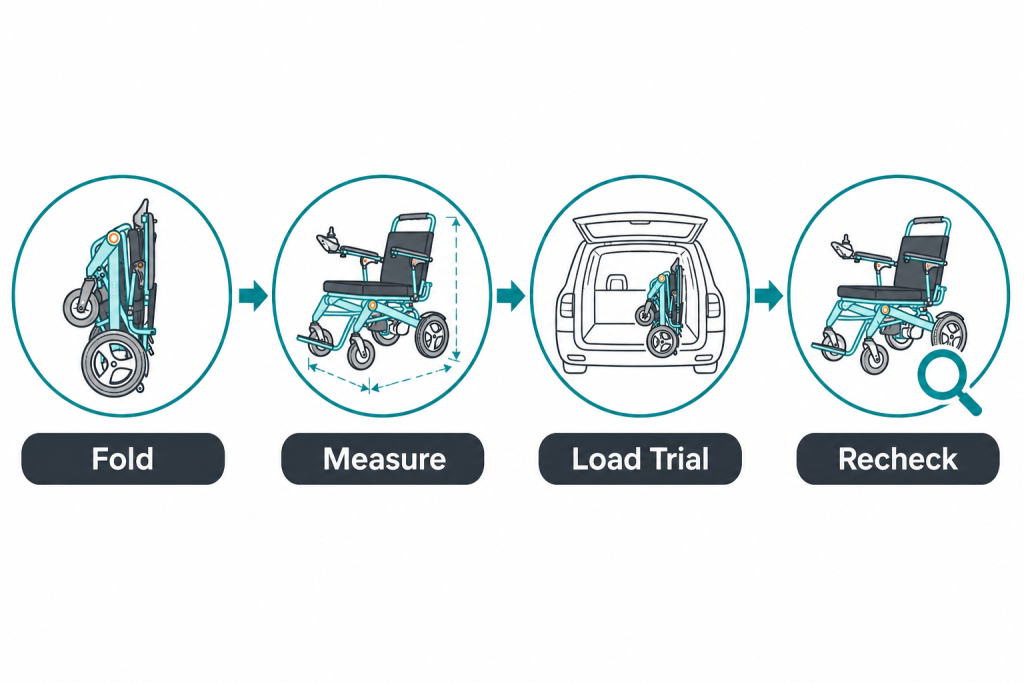
How should folded size and cargo fit be checked?
A folding electric wheelchair should be measured in its real folded setup and placed through the intended cargo opening with all loose parts, restraints, and helper roles recorded.
For example, Measure the widest, tallest, and deepest outer points using the same method for every candidate. Compare those values with the narrowest cargo opening, not only the largest space inside the vehicle. The travel article at lightweight travel article can help a team frame daily transport questions while the sample trial confirms the actual fit.
A useful worksheet separates observed facts, model records, evaluator notes, and open questions. Give every entry a date, source, exact setup, and named reviewer. Run the same check for each candidate and retain any changed setup. This shared record lets procurement, training, warehouse, and service teams discuss the same evidence without turning a short trial into a broad product promise.
What belongs in a cargo-fit worksheet?
Measure the real boundary:
Still, Record the folded chair orientation, measurement points, removed parts, battery position, and tool used. Then follow workplace policy for a supervised loading trial. Note cargo-sill height, handhold access, interior contact, controller protection, resting position, and the method used to prevent movement during transport.
- folded outer dimensions
- narrowest cargo opening
- lifting or loading equipment
- resting and restraint position
Repeat the check under the same conditions and record who took part. If a supplier answer arrives later, attach it to the original question instead of replacing the earlier entry. That history helps when a model, component, manual, sample, or operating plan changes during sourcing. A score should include a short reason and source link rather than a bare number.
A successful fit in one crossover does not prove fit in another. Vehicle trim, seat position, cargo floor height, and opening shape can change the result. Save a simple orientation photo and written setup with the vehicle reference. Buyers comparing remote samples can request the same measurement method before arranging a physical trial.
Afterward, Key Takeaway: Cargo fit requires the real folded chair, the real opening, and a recorded loading method.

What should teams inspect around folding joints?
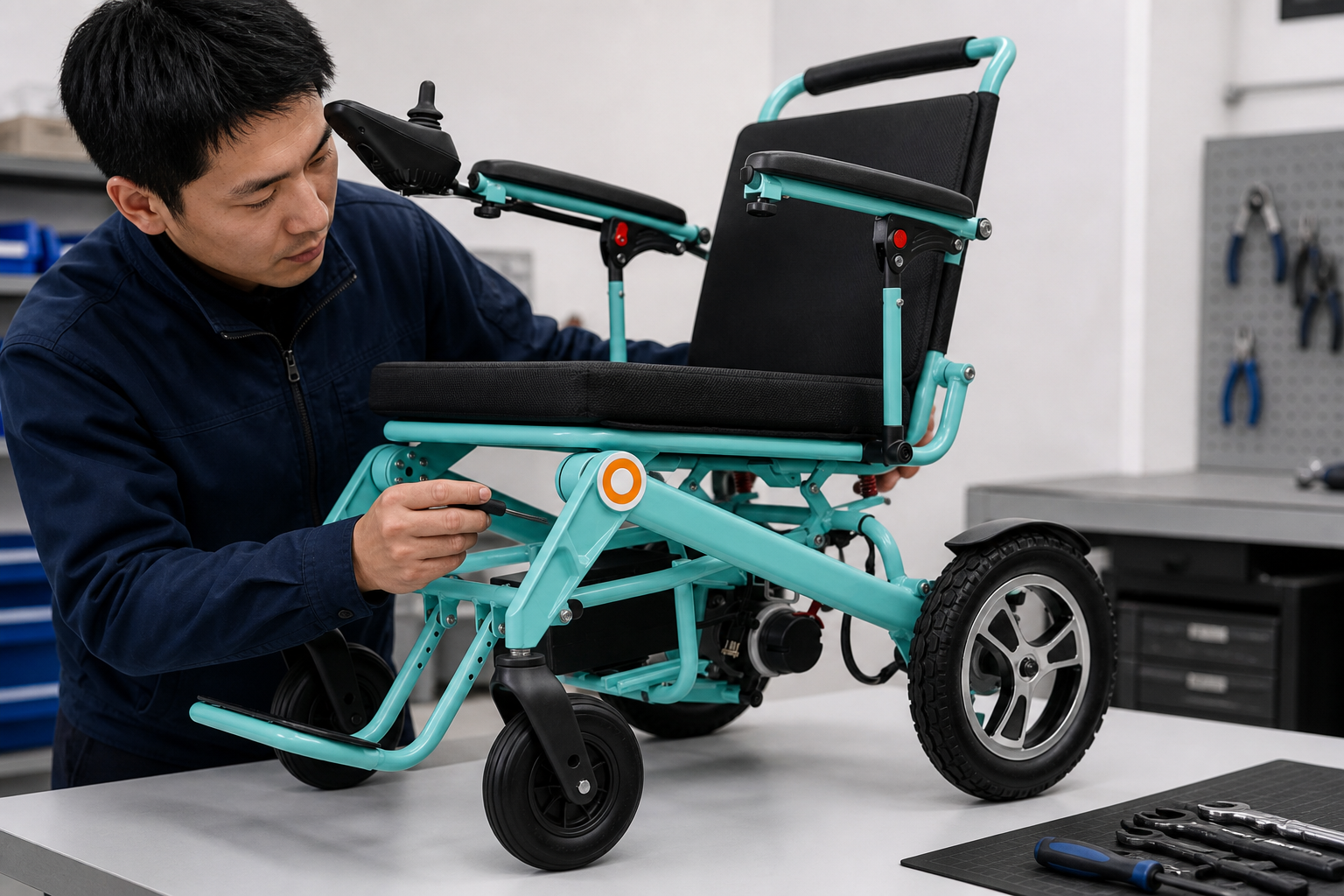
A folding electric wheelchair needs a visual check of folding joints, latches, pivots, fasteners, cable paths, cushion attachments, wheel alignment, and accessible frame surfaces.
Inspect the chair clean, powered off, and under bright even light. Follow model-specific service limits and do not dismantle or diagnose hidden parts during a buyer review. Compare the open, mid-fold, folded, and reopened state so visible contact or cable movement can be recorded at each stage.
In practice, A useful worksheet separates observed facts, model records, evaluator notes, and open questions. Give every entry a date, source, exact setup, and named reviewer. Run the same check for each candidate and retain any changed setup. This shared record lets procurement, training, warehouse, and service teams discuss the same evidence without turning a short trial into a broad product promise.
Which joint observations should be saved?
Look without damaging the sample:
Photograph accessible pivots, latch engagement, visible fasteners, cable routing, cushion attachment, and wheel position from the same angles. Note unexpected movement, rubbing, loose external hardware, or unclear instructions. Send any concern through the supplier’s trained service route instead of inventing a repair method.
- pivot and latch condition
- visible fasteners and frame contact
- cable clearance through the fold
- wheel and cushion alignment
Next, Repeat the check under the same conditions and record who took part. If a supplier answer arrives later, attach it to the original question instead of replacing the earlier entry. That history helps when a model, component, manual, sample, or operating plan changes during sourcing. A score should include a short reason and source link rather than a bare number.
Keep cosmetic observations separate from functional findings and service decisions. The buying team can describe what it saw, but trained support should decide the next action when a condition falls outside the manual. Attach later supplier answers to the original image and model reference so the review history remains clear.
Key Takeaway: A non-invasive joint record supports comparison and a trained service response when needed.
How do user fit and controls affect folding value?
Meanwhile, A folding electric wheelchair provides useful folding value only when seat support, foot placement, armrest access, joystick reach, mounting, cable path, and route fit also suit the intended setup.
A compact fold cannot compensate for weak user fit or awkward controls. Run stationary fit checks before powered movement, then use a short controlled route permitted by the manual. The wheelchair range lets buyers compare the chair within a broader product range rather than ranking the fold mechanism alone.
A useful worksheet separates observed facts, model records, evaluator notes, and open questions. Give every entry a date, source, exact setup, and named reviewer. Run the same check for each candidate and retain any changed setup. This shared record lets procurement, training, warehouse, and service teams discuss the same evidence without turning a short trial into a broad product promise.
Which whole-chair checks keep the review fair?
For example, Review the open chair as carefully:
Record seat and back support areas, armrest clearance, foot support position, joystick side, mounting firmness, and visible cable path. Note whether folding changes any setting or requires a part to be reattached. Confirm that the reopened chair reaches the documented operating state before a supervised powered trial begins.
- seat and back support
- armrest and foot support access
- joystick reach and secure mount
- post-fold setup and route check
Repeat the check under the same conditions and record who took part. If a supplier answer arrives later, attach it to the original question instead of replacing the earlier entry. That history helps when a model, component, manual, sample, or operating plan changes during sourcing. A score should include a short reason and source link rather than a bare number.
Still, Use one user profile and route for every candidate. Personal fit decisions may need a qualified mobility professional. The procurement record should state what happened in a named setup rather than promise comfort or clinical benefit. A folding chair is still a complete mobility product, so every operating check remains part of the buying decision.
Key Takeaway: The best fold is the one that remains compatible with user fit and documented operation.
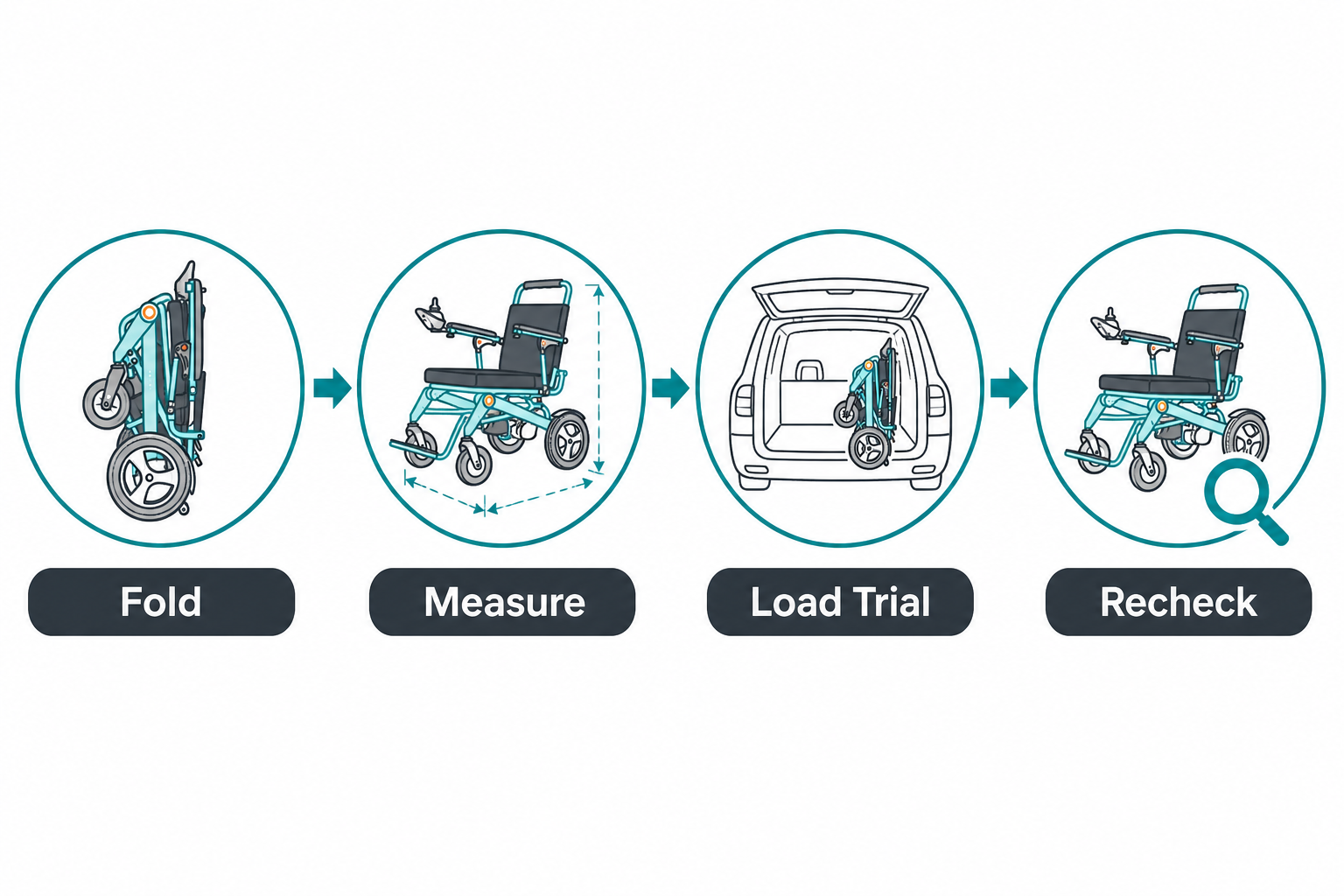
Which supplier support should change the ranking?
A folding electric wheelchair should rank higher when the supplier provides model-specific folding instructions, joint inspection guidance, parts naming, packing methods, revision records, and a written service path.
Afterward, Ask who answers a folding or latch question, what evidence the service team requests, and how a replacement part is matched to the exact chair. Request packing information that protects the folded frame, controller, wheels, cables, and removable parts during sample and order handling.
A useful worksheet separates observed facts, model records, evaluator notes, and open questions. Give every entry a date, source, exact setup, and named reviewer. Run the same check for each candidate and retain any changed setup. This shared record lets procurement, training, warehouse, and service teams discuss the same evidence without turning a short trial into a broad product promise.
What evidence belongs in the sourcing file?
Tie support to the exact model:
In practice, Collect the current manual, model and revision reference, folding steps, labeled component views, parts list, inspection fields, packing outline, and written issue-report route. Ask how a changed latch, fastener, cable, or cushion attachment is recorded and communicated after an order has been placed.
- model and revision identity
- folding and inspection instructions
- parts and packing records
- written service communication
Repeat the check under the same conditions and record who took part. If a supplier answer arrives later, attach it to the original question instead of replacing the earlier entry. That history helps when a model, component, manual, sample, or operating plan changes during sourcing. A score should include a short reason and source link rather than a bare number.
Score folding, cargo fit, handling, joint observations, user fit, and service support separately. Give each field a reason and source. Keep gaps open until written evidence arrives. A buyer can contact us today with its target market, vehicle profile, sample method, and document list ready for a focused supplier review.
Next, Key Takeaway: The final ranking should combine folding evidence with whole-chair fit and service readiness.
What do buyers ask about this mobility product?
The folding electric wheelchair questions buyers ask most often concern user fit, permitted use, controlled checks, records, and supplier support.
Can I compare folded chairs from photos alone?
Meanwhile, No. Photos can show shape, but they do not settle dimensions, loose parts, balance, handholds, cargo opening, loading method, or the reopened operating check.
What’s the best way to test vehicle fit?
Measure the real folded chair and narrowest cargo opening, then follow workplace policy for a supervised loading and removal trial with every helper and tool recorded.
For example, How do I know if a latch needs service?
Use the model manual and trained service route. Record the visible condition, chair identity, fold stage, and photos, then ask qualified support for the next step.
Can folding speed decide the better chair?
Still, No. A clear sequence, stable folded state, safe handling method, user fit, controls, reopening check, and service evidence matter more than a fast display.
What should suppliers provide for folding support?
Request the current manual, model revision, folding instructions, labeled joint and part views, packing steps, inspection fields, and written route for service questions.
Related planning resources: Review travel wheelchair specifications, foldable power wheelchair comparison, compact wheelchair planning before approving a product, sample, or supplier decision.