
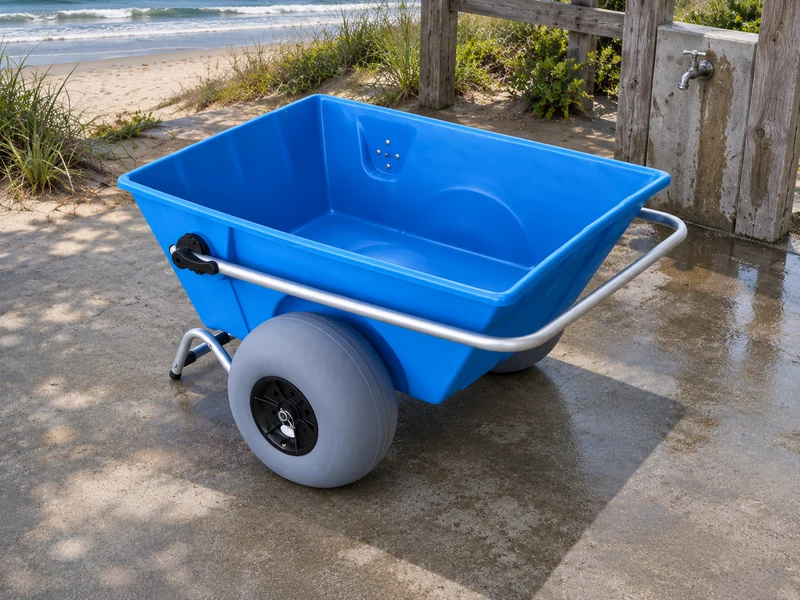
Choose a beach cart tub by fitting the wet equipment you actually collect and checking how the tub can be emptied and cleaned. A blue bin may hold a pile of dry towels on display yet leave nowhere practical to drain water at closing time. Review the return trip as well as the outward load.
Which beach cart tub shape fits wet gear?
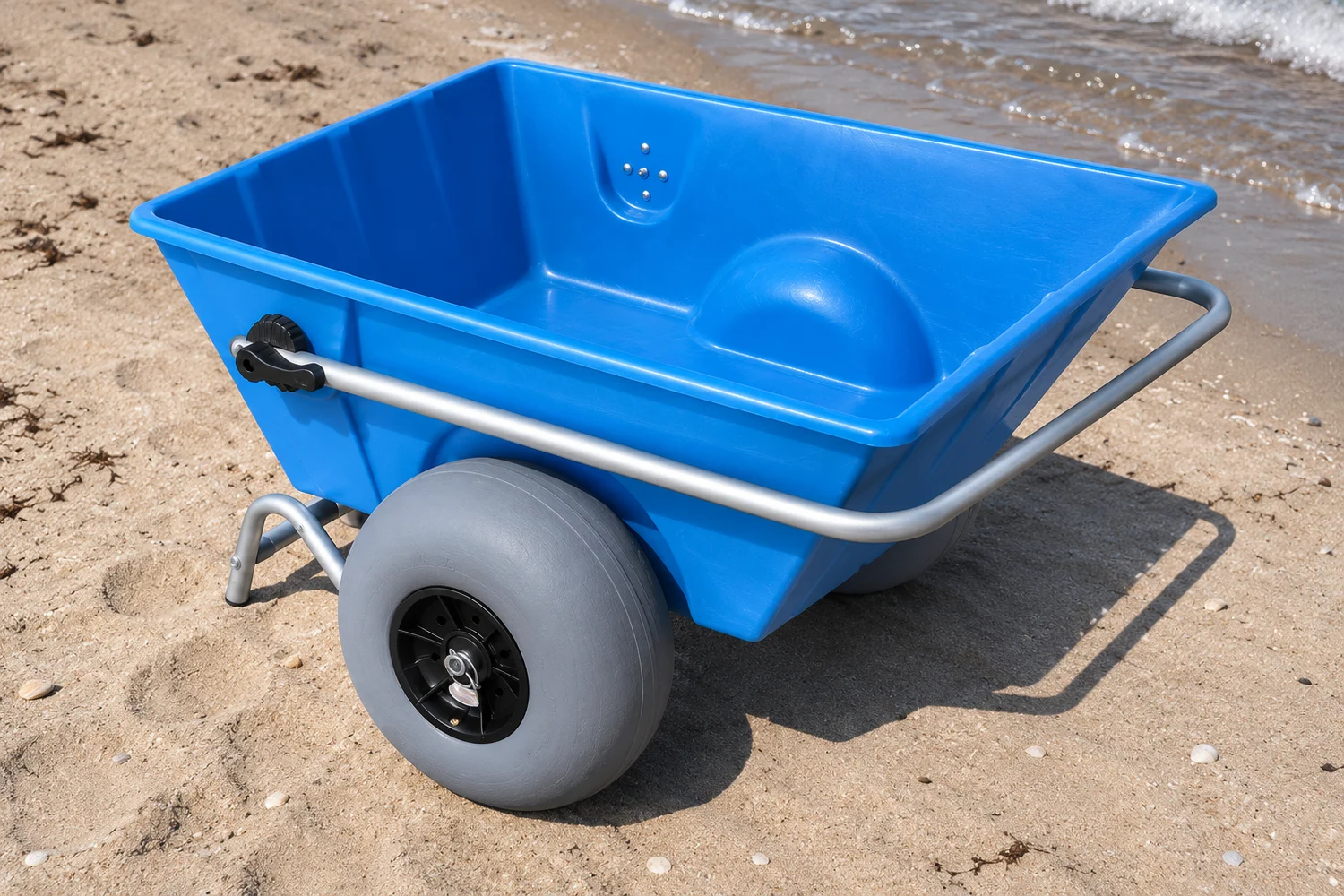
Choose a beach cart tub with enough usable internal space for the largest rigid item and the planned soft gear.
Why start with a rigid item?
Towels can change shape. Fins, boxes and rigid cleaning equipment can determine whether a load sits inside the tub or projects above its rim.
- Try the largest rigid item first.
- Add representative soft goods.
| Check | What to look for |
|---|---|
| Rigid item | Hard fitting constraint |
| Soft goods | Remaining usable space |
Key Takeaway: A real packing sample says more than an outside tub measurement.
Where should the inside width be measured?
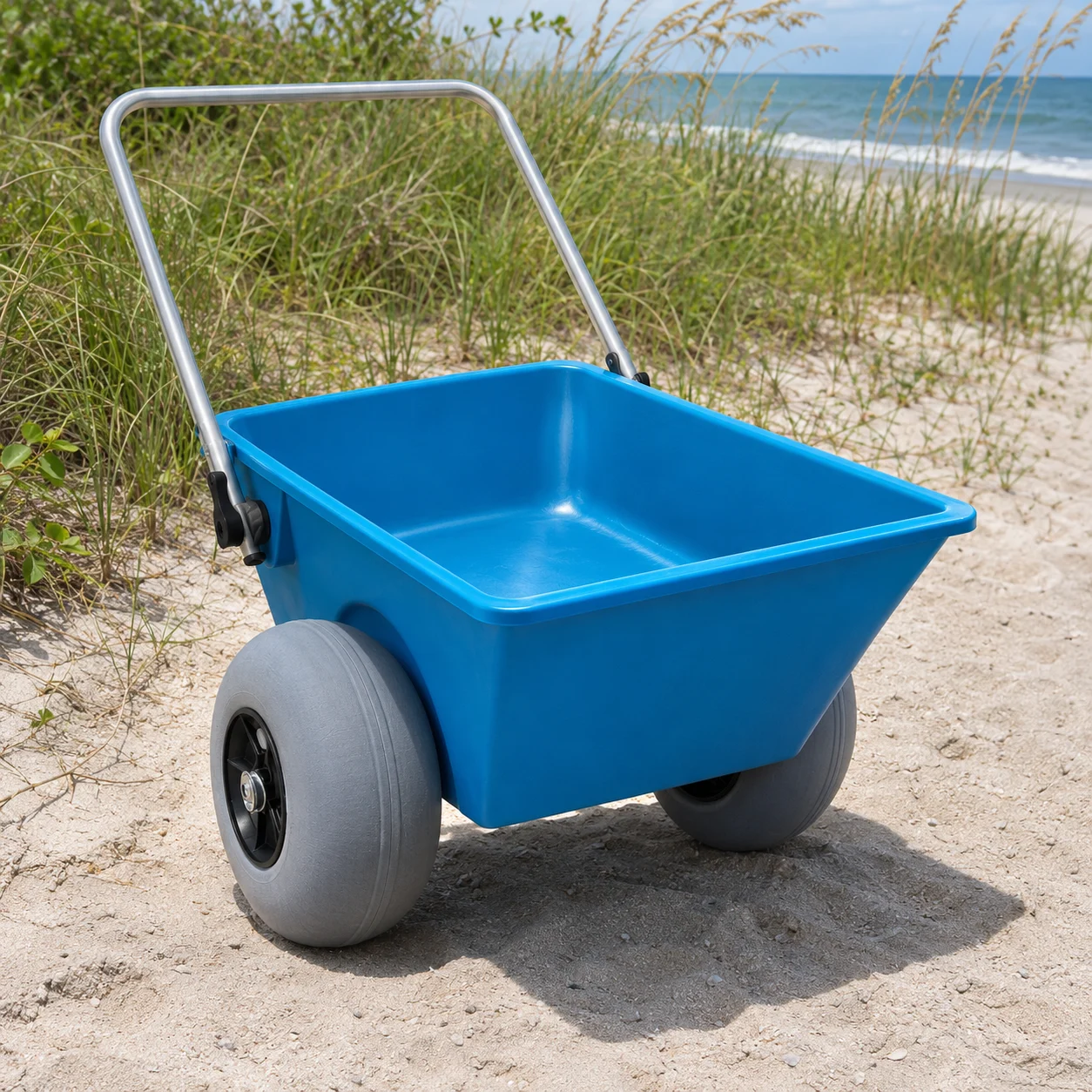
Measure the beach cart tub at the height where the critical item will sit.
Do the sides taper?
Look toward the floor. A wide opening can narrow enough below the rim to stop a box well above the base. Measure any separate beach accessories that share the collection tub.
- Take a floor-level measurement.
- Check the width at the item's widest point.
| Check | What to look for |
|---|---|
| At the rim | Loading opening |
| Near the floor | Usable base footprint |
Key Takeaway: A width recorded at the wrong height can make an impossible fit look convincing.
Does the tub have a drain?
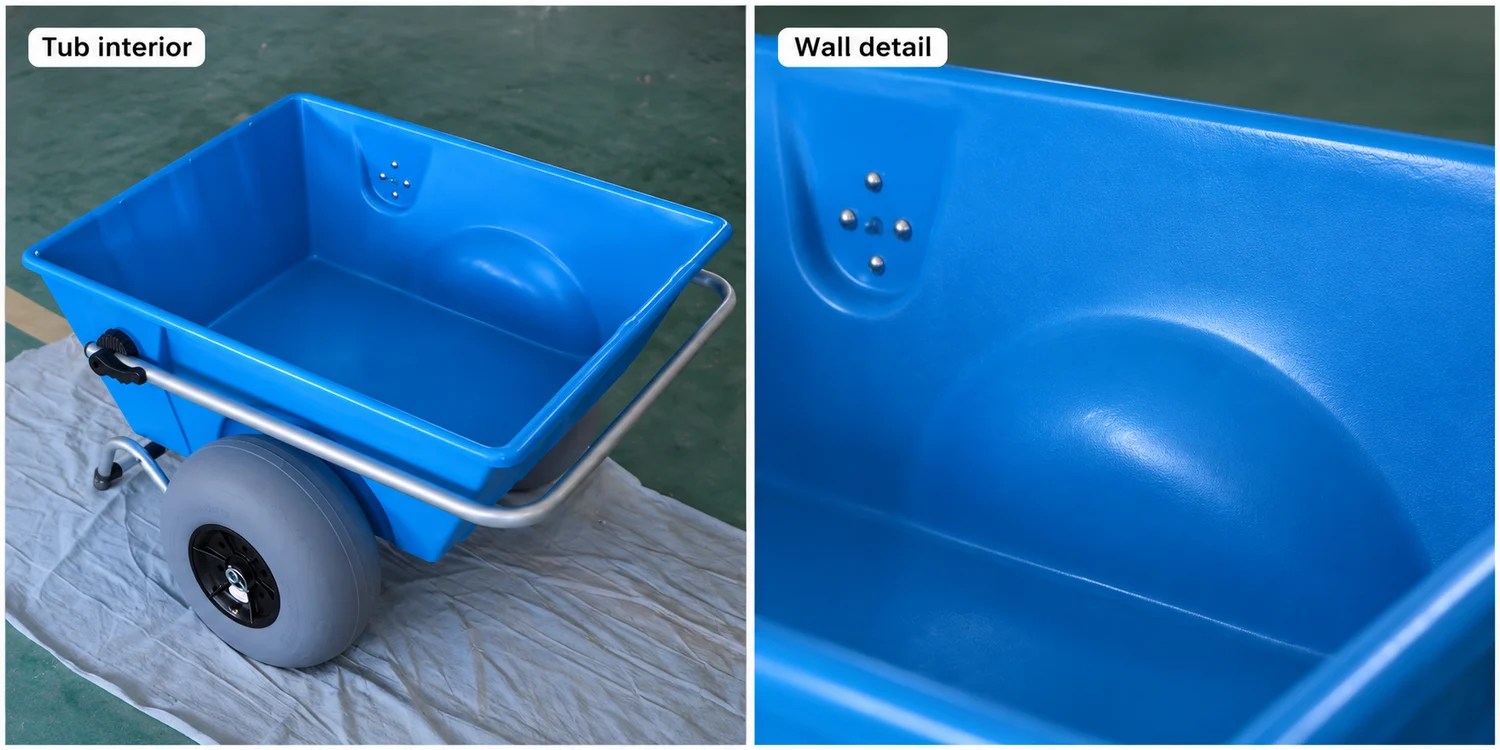
Treat the beach cart tub drain as unconfirmed until the exact model or drawing identifies one.
Can a dark feature prove drainage?
Look for documentation. A fastener, moulding mark or shadow may resemble a drain in a photograph.
- Request an interior close-up.
- Ask how the maker specifies emptying the tub.
| Check | What to look for |
|---|---|
| Visible feature | Needs identification |
| Drain | Confirmed outlet and procedure |
Key Takeaway: A drain claim should be tied to a real feature on the supplied tub.
Can a solid-looking tub hold standing water?
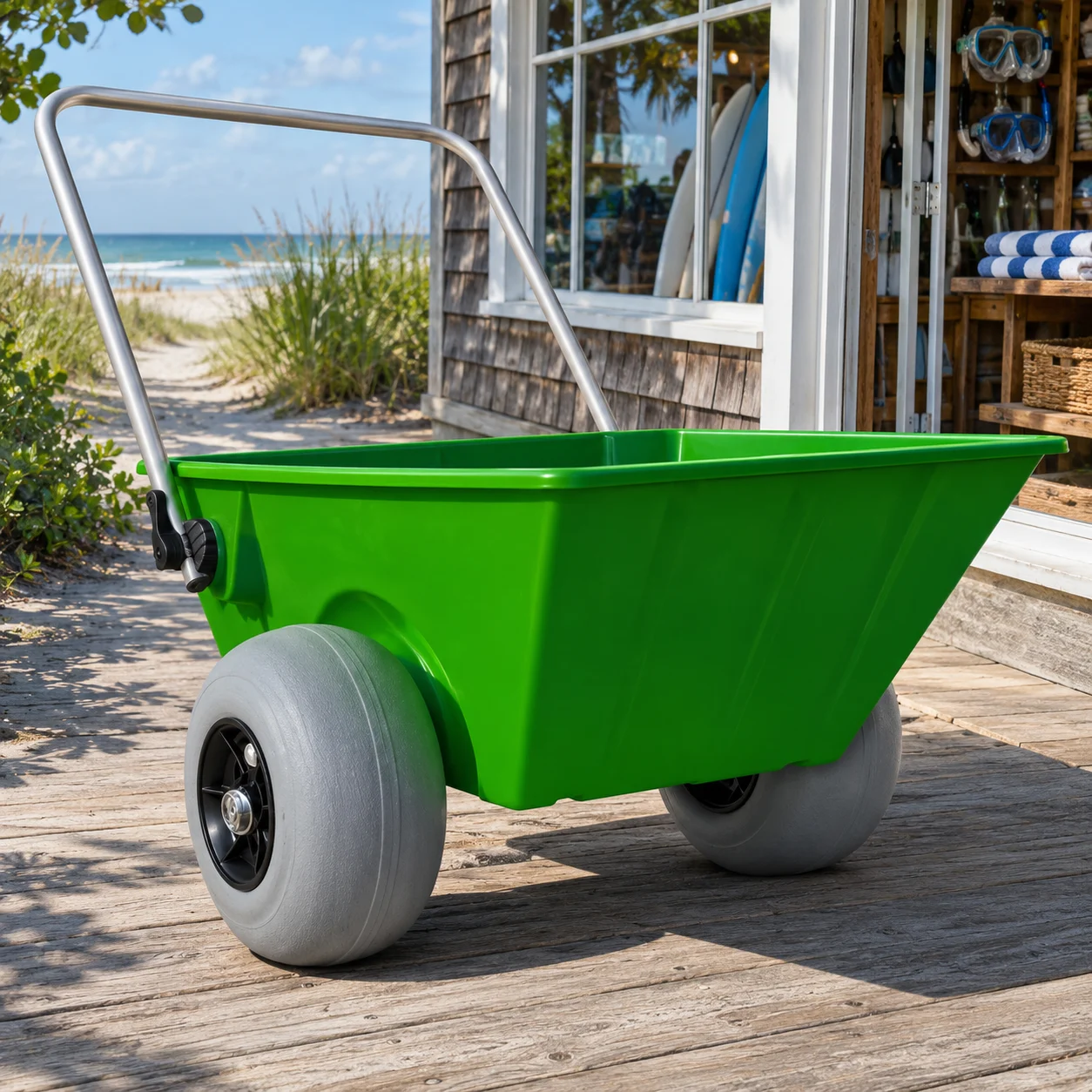
Ask whether the beach cart tub is specified for liquid containment before treating it as a tank.
What is your actual use?
Describe the load. Carrying damp gear, retaining runoff and transporting water as cargo create different requirements.
- Name the intended wet items.
- State whether free liquid will accumulate.
| Check | What to look for |
|---|---|
| Damp goods | Wet equipment load |
| Free liquid | Separate containment question |
Key Takeaway: The supplier can answer accurately once the liquid requirement is explicit.
What does wet gear do to the load?
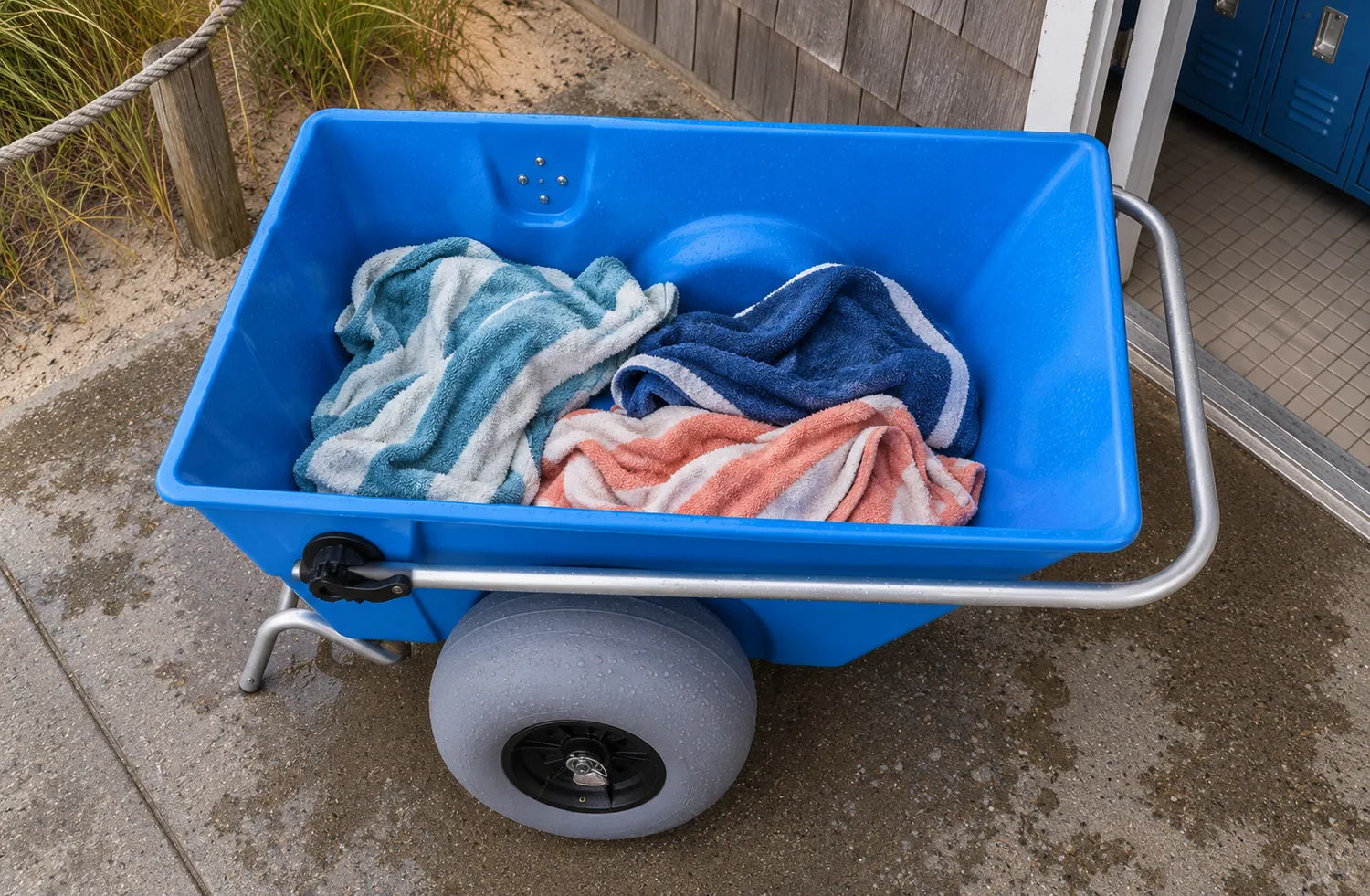
A beach cart tub carrying soaked gear may hold a heavier load than you planned from dry items.
Which weight should you use?
Weigh a representative return load. Include water retained by towels and other absorbent goods, and compare with the complete cart's documented limit.
- Record the actual load condition.
- Confirm the applicable cart rating.
| Check | What to look for |
|---|---|
| Dry estimate | Planning figure |
| Wet sample | Measured return condition |
Key Takeaway: A return-trip measurement gives the handling team a more realistic starting point.
How should you separate used and clean items?
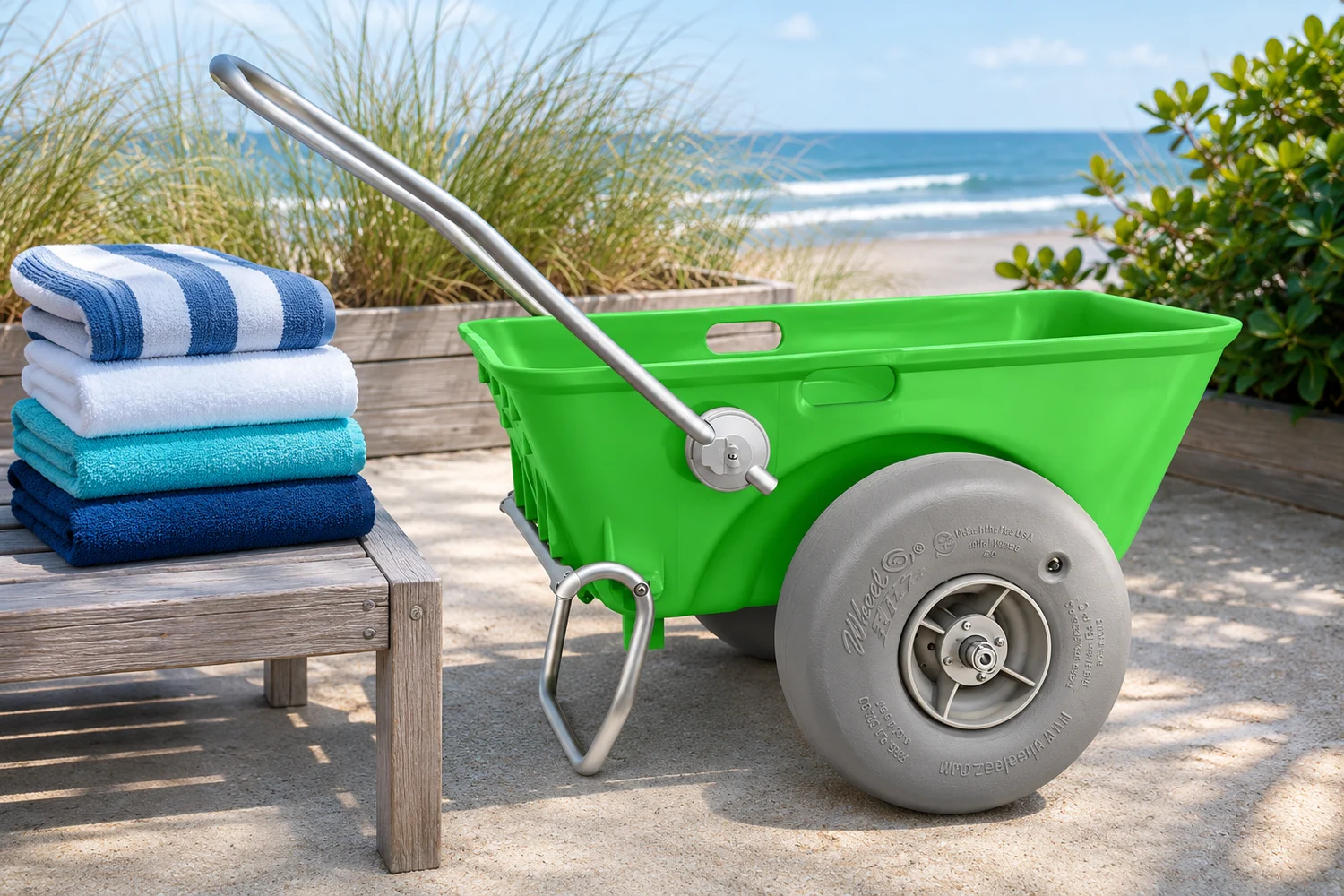
Plan separate containers or journeys inside the beach cart tub according to your site's handling practice.
Which items should stay apart?
Ask the team that unloads them. Used towels, clean supplies and maintenance tools may need distinct handling even if they fit in the same tub. Save the supplier information alongside the approved wet-gear workflow.
- Name the collection categories.
- Check whether inserts fit the real interior.
| Check | What to look for |
|---|---|
| Collection run | Used items |
| Delivery run | Clean stock |
Key Takeaway: A simple collection plan makes the cart useful to the team receiving the load.
How will staff empty and clean the tub?
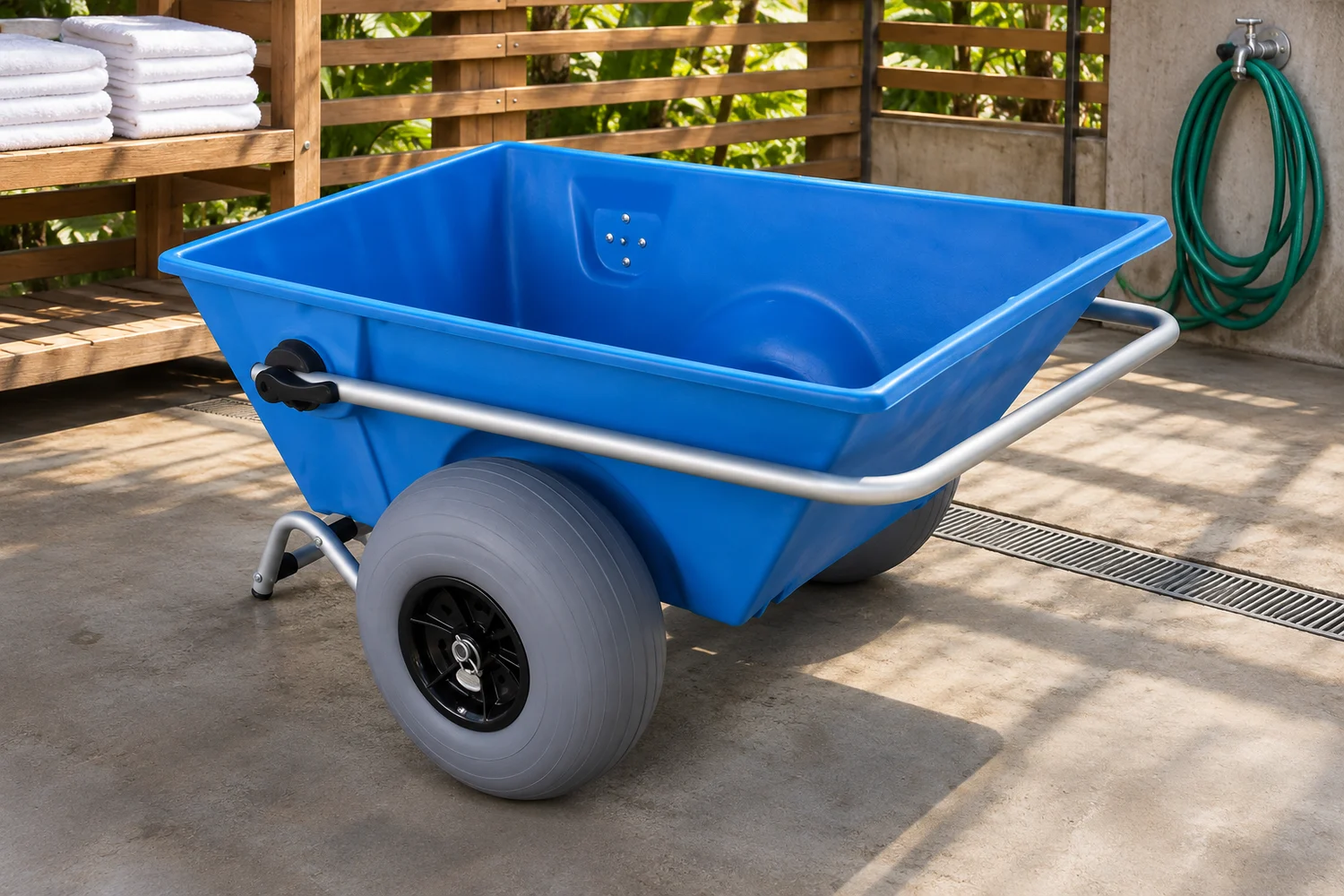
Select a beach cart tub whose documented care process fits your unloading and cleaning location.
Can the team reach the corners?
Inspect the interior. Curved walls may be easy to reach in one design while another arrangement makes access difficult near the handle or wheel side. For a workplace handling assessment, see the HSE guidance on pushing and pulling.
- Check staff access to the interior.
- Request the approved cleaning method.
| Check | What to look for |
|---|---|
| Access | Areas staff can reach |
| Method | Manufacturer's care guidance |
Key Takeaway: The end-of-shift task should be practical with the cart you actually buy.
Does the handle interfere with loading?
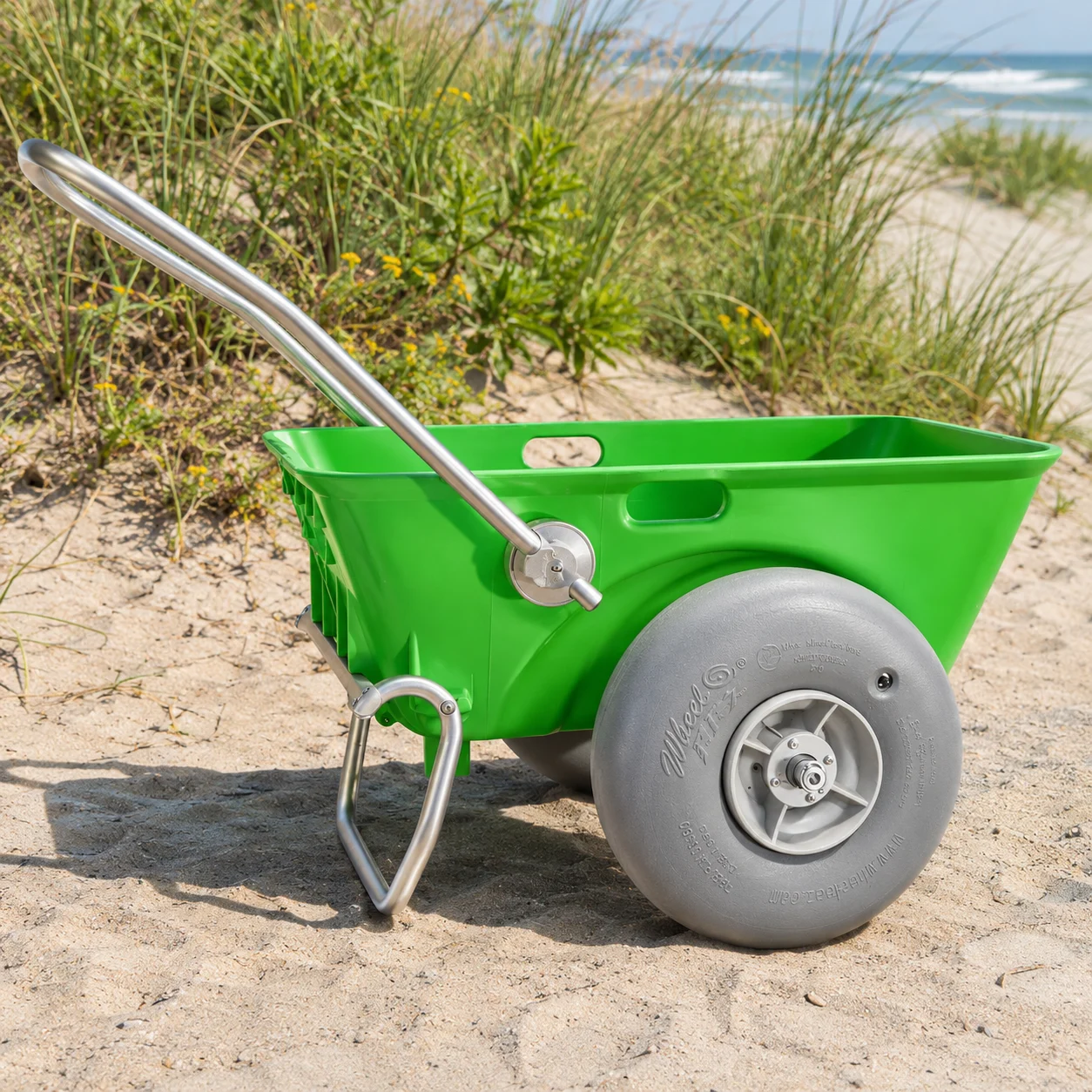
Check the beach cart tub with the handle in its documented working and storage positions.
Which position will the staff use?
Try the normal approach. A handle that looks clear in a front photograph may sit across the side from which the team loads large gear. An overhead photograph makes a loading enquiry easier to answer.
- Show the planned loading side.
- Verify the approved handle positions.
| Check | What to look for |
|---|---|
| Working state | Cart ready for movement |
| Storage state | Documented parked configuration |
Key Takeaway: Your site can choose a loading position that works without improvising around the handle.
How should a buyer assess wheel clearance?
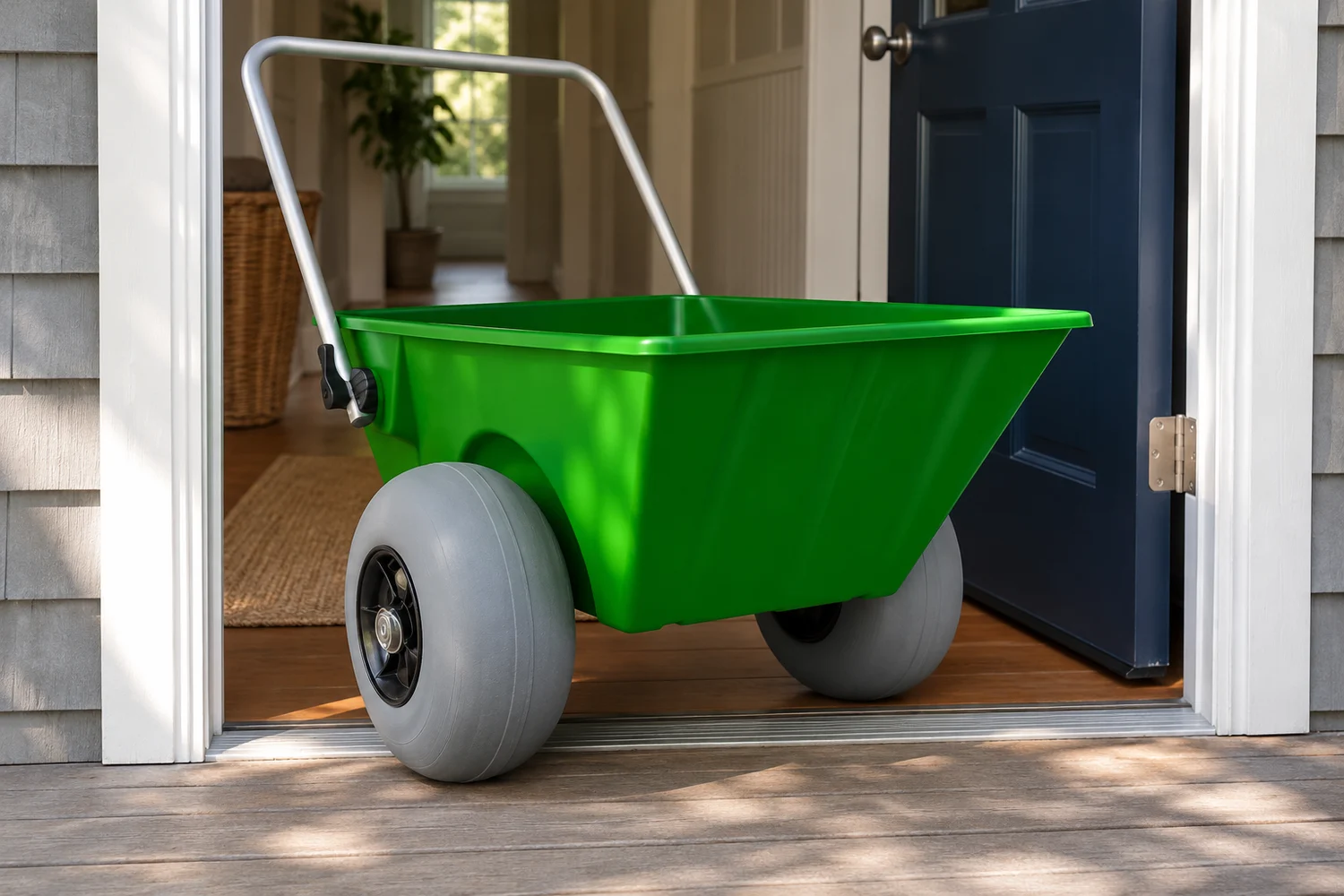
Review the beach cart tub together with its wheels, axle and loaded operating conditions.
Why inspect below the bin?
Look down the side. The outer edges of the tires and tub can affect door clearance differently, especially in a narrow service corridor.
- Measure the widest assembled point.
- Identify the narrowest route opening.
| Check | What to look for |
|---|---|
| Tub width | Container only |
| Cart width | Complete assembled equipment |
Key Takeaway: The item fits the tub and the whole cart must still fit the route.
What should the purchase specification say?
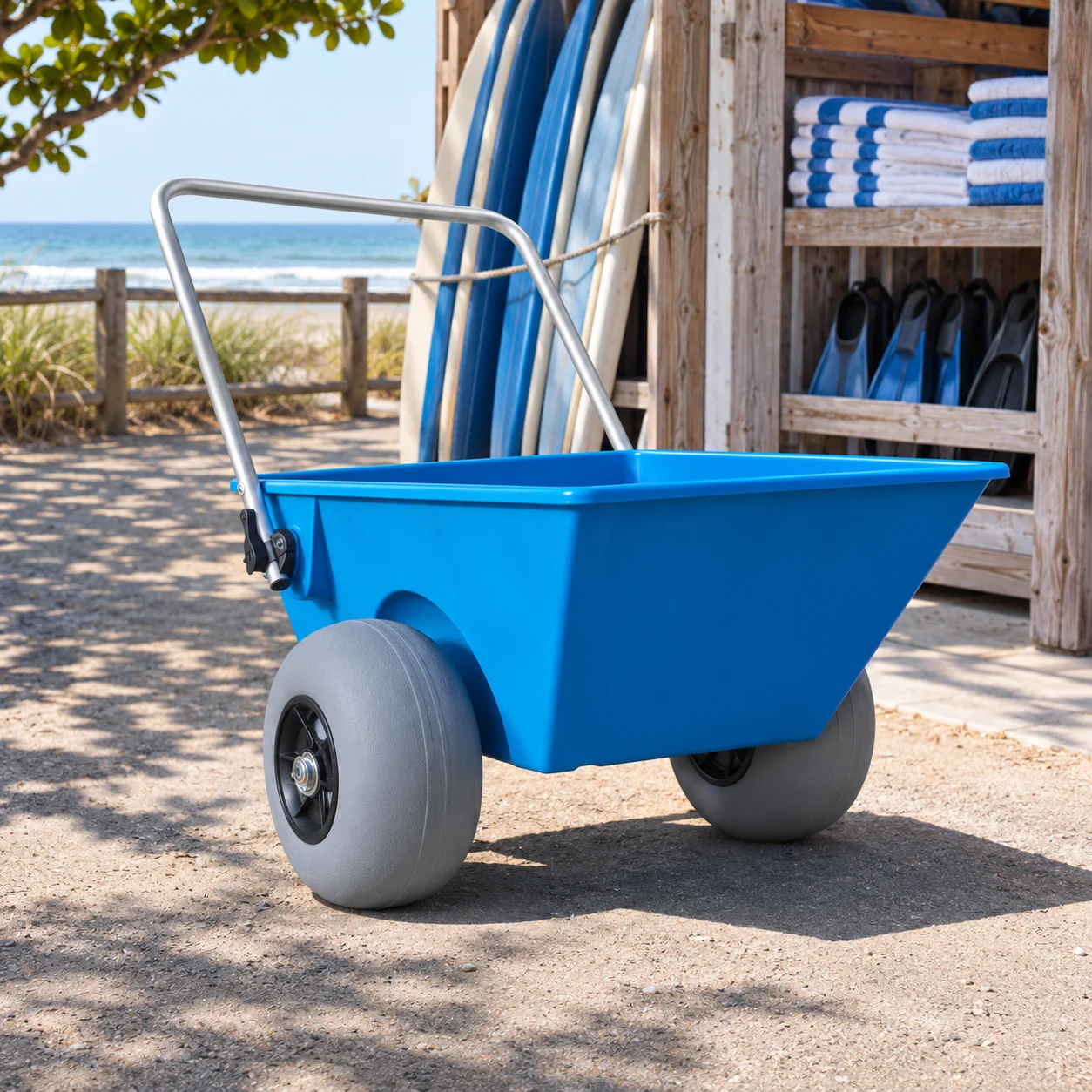
Describe the beach cart tub, accepted load sample, required care information and confirmed drainage arrangement.
What should you attach?
Use the sample record. Keep a photograph of the gear inside the tub and the supplier's answer about emptying and cleaning.
- Record the accepted model.
- Itemize any separate inserts or accessories.
| Check | What to look for |
|---|---|
| Product | Exact cart and tub |
| Acceptance | Fit, care and intended cargo |
Key Takeaway: You can reorder the same useful configuration instead of relying on a colour description. Contact us with the cart photograph and the load your team expects to carry. We want a cart to work just as well on the wet return trip.
Frequently asked questions
Q1: Can I tell whether it drains from a front photo?
No. Ask for the exact drainage detail and instructions.
Q2: Can a tub carry a fixed volume of water?
Only if the model is expressly specified for that use and the complete load is permitted.
Q3: What's the best size measurement for a storage box?
Measure the tub internally where the box will sit, including any taper.
Q4: Can I wash it with my usual chemicals?
Use products and methods compatible with the manufacturer's instructions.
Q5: How do I know whether a full wet load is manageable?
Check the documented limit and assess a representative wet load and route with your handling team.