
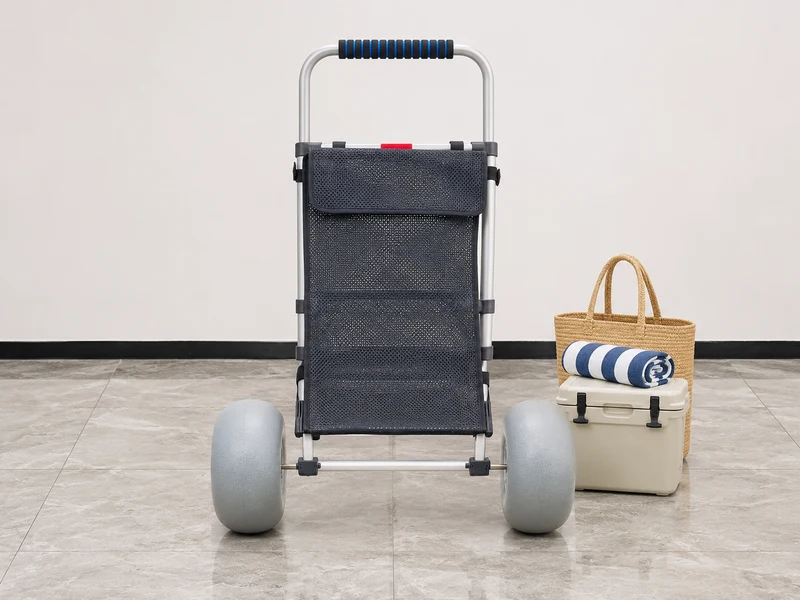
A beach trolley handle clears your cargo when the operator can reach the approved grip and use the trolley through the intended route with the load in place. A tall stack can block hand space on a deck that appeared generous when empty. Pack the gear the way staff will actually collect it.
How does a beach trolley handle fit the task?
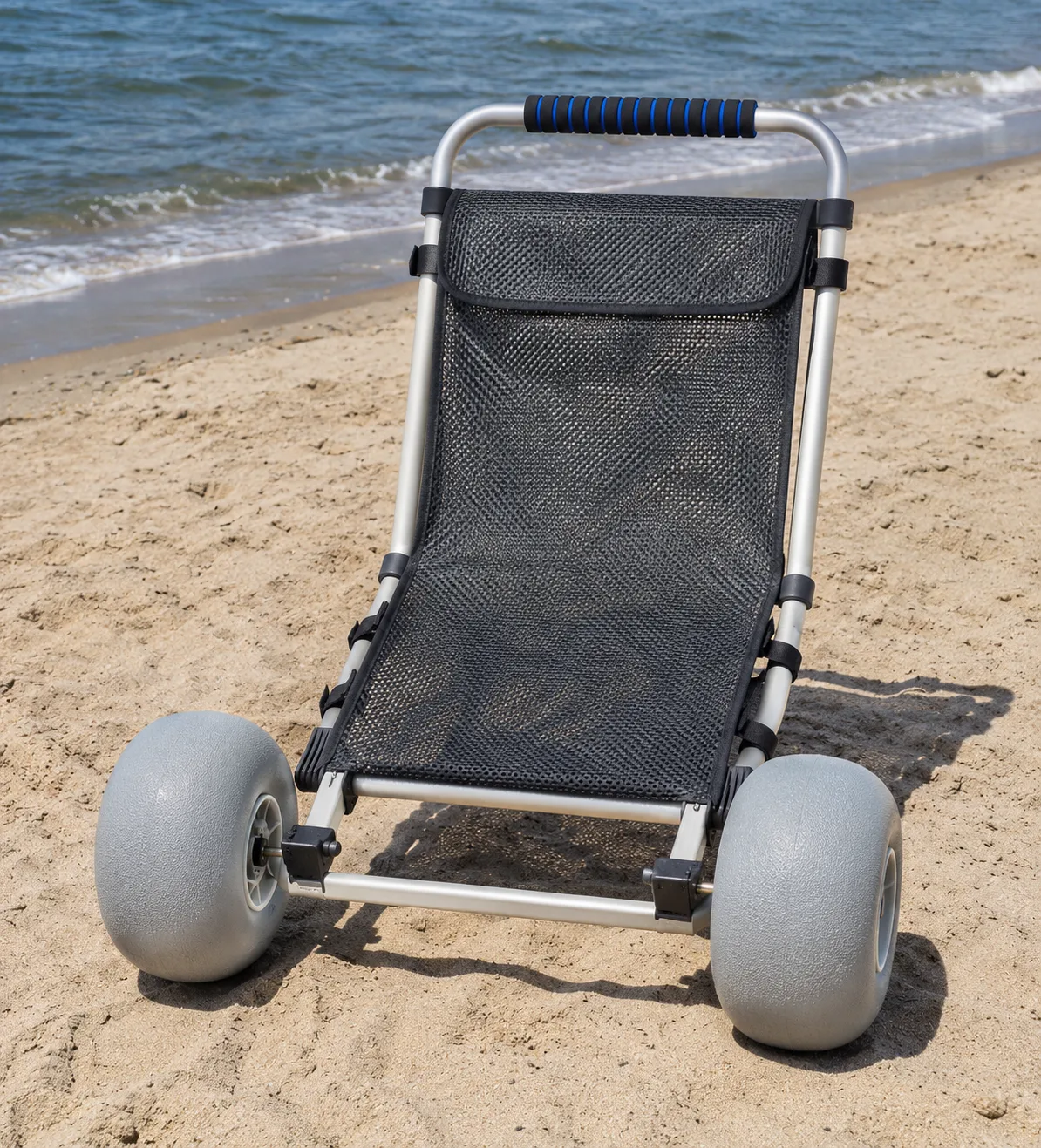
Assess the beach trolley handle with the complete trolley, representative load and operator position considered together.
Where should you begin?
Start with one normal trip. A cart used for towels between a store and a kiosk presents a different grip and visibility question from one carrying a single supply box.
- Name the trip.
- Identify the typical cargo.
| Check | What to look for |
|---|---|
| Task | Specific movement |
| Operator position | Working side of the handle |
Key Takeaway: A named task makes the comparison between two trolley layouts concrete.
What is the usable grip area?
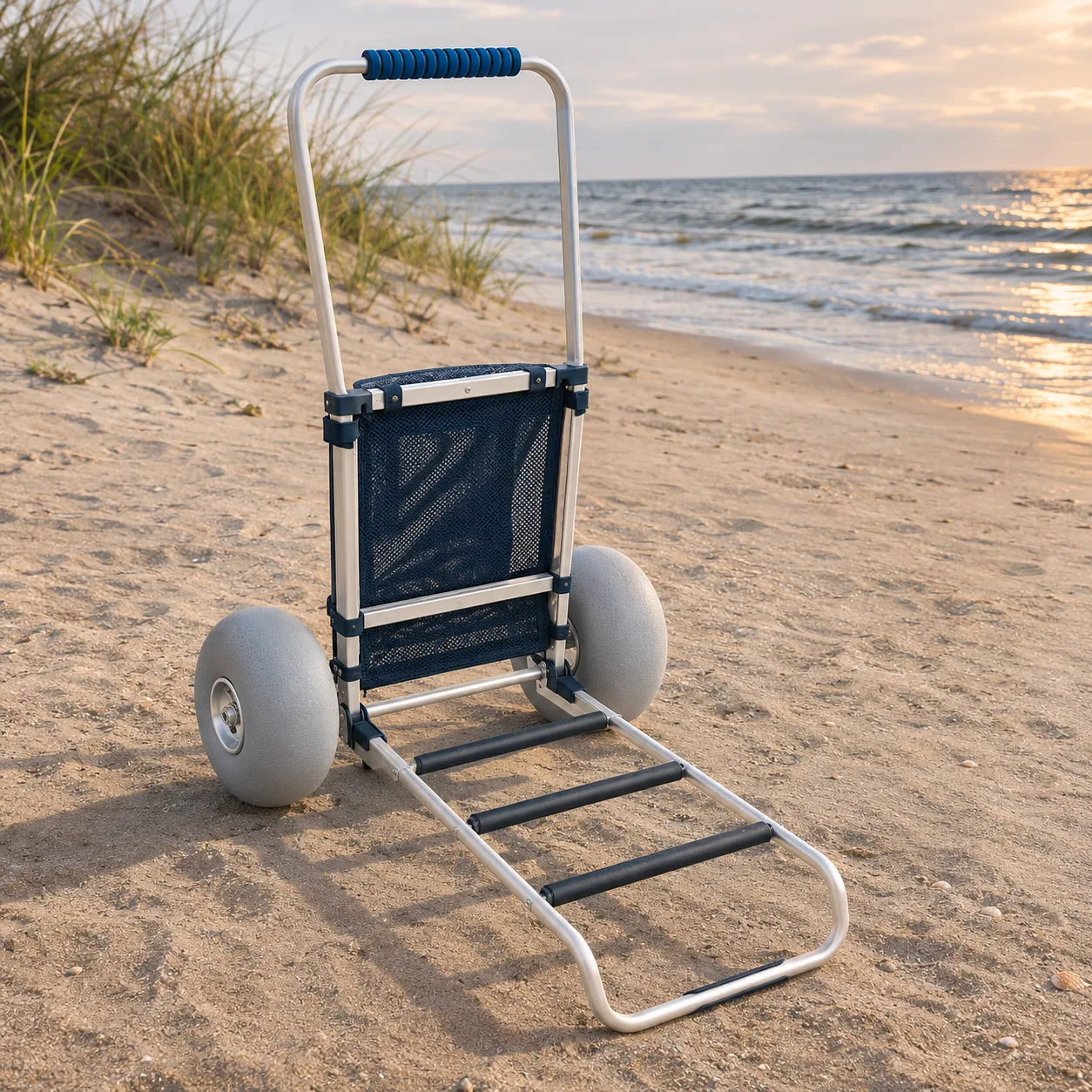
The usable beach trolley handle grip is the area staff can actually reach in the documented operating position.
Do the ends stay clear?
Check the packed deck. A box handle, bag strap or overhanging item can crowd one side of a wide grip. Include separately packed accessories when checking the hand space.
- Show both ends of the grip.
- Record the intended cargo arrangement.
| Check | What to look for |
|---|---|
| Physical grip | Handle surface |
| Usable grip | Space remaining with cargo |
Key Takeaway: The width of the handle alone does not tell you whether it can be used comfortably.
Which dimension describes hand clearance?
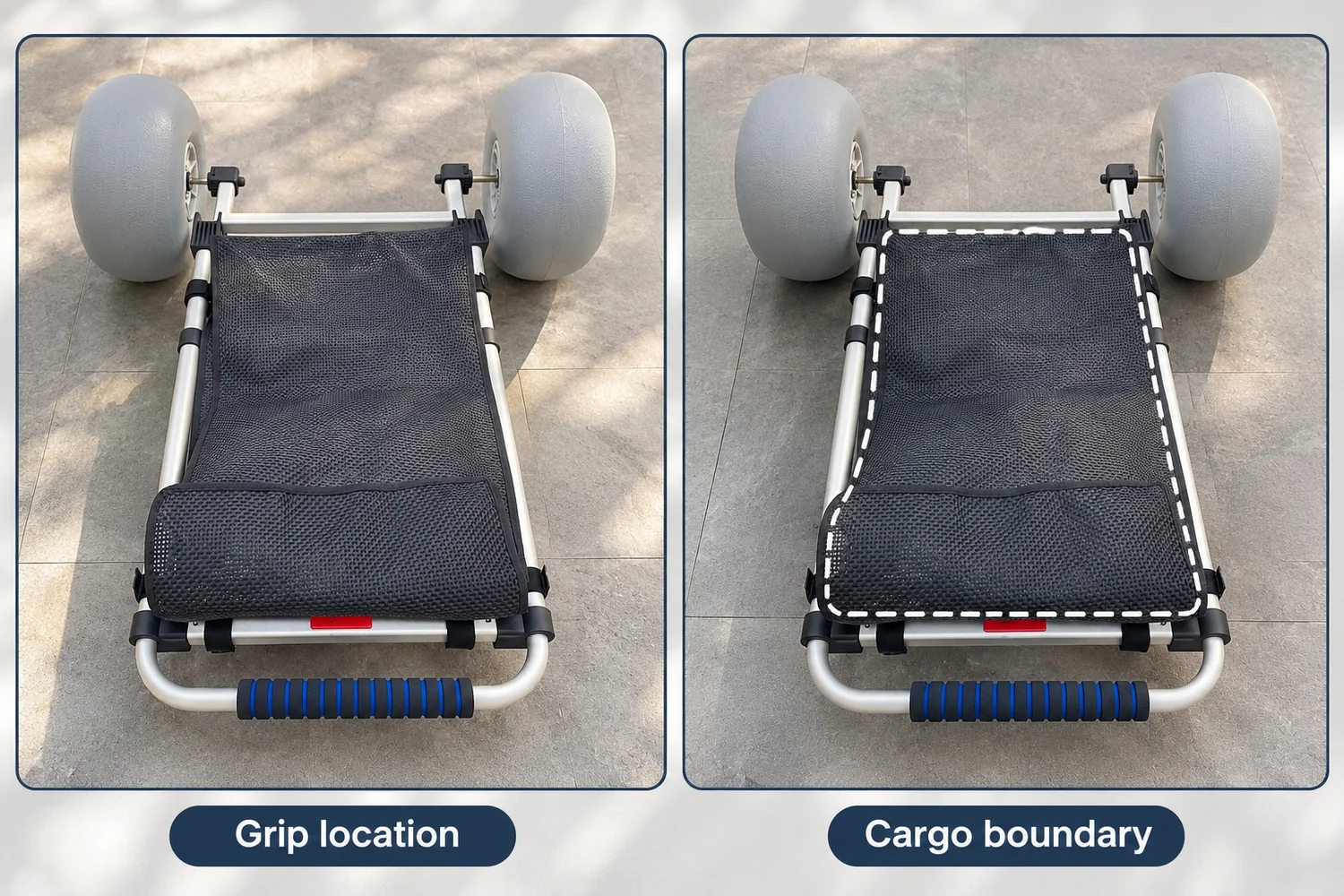
Measure beach trolley handle clearance between the intended grip area and the nearest part of the planned load.
What changes when the load shifts position?
Name the reference points. Measuring from the deck edge can miss the highest projecting part of the cargo.
- Photograph the grip-side envelope.
- Mark the nearest load boundary.
| Check | What to look for |
|---|---|
| Grip location | Approved hand position |
| Cargo boundary | Nearest projection |
Key Takeaway: The dimension answers a real question when both endpoints are visible.
Can the operator see the route ahead?
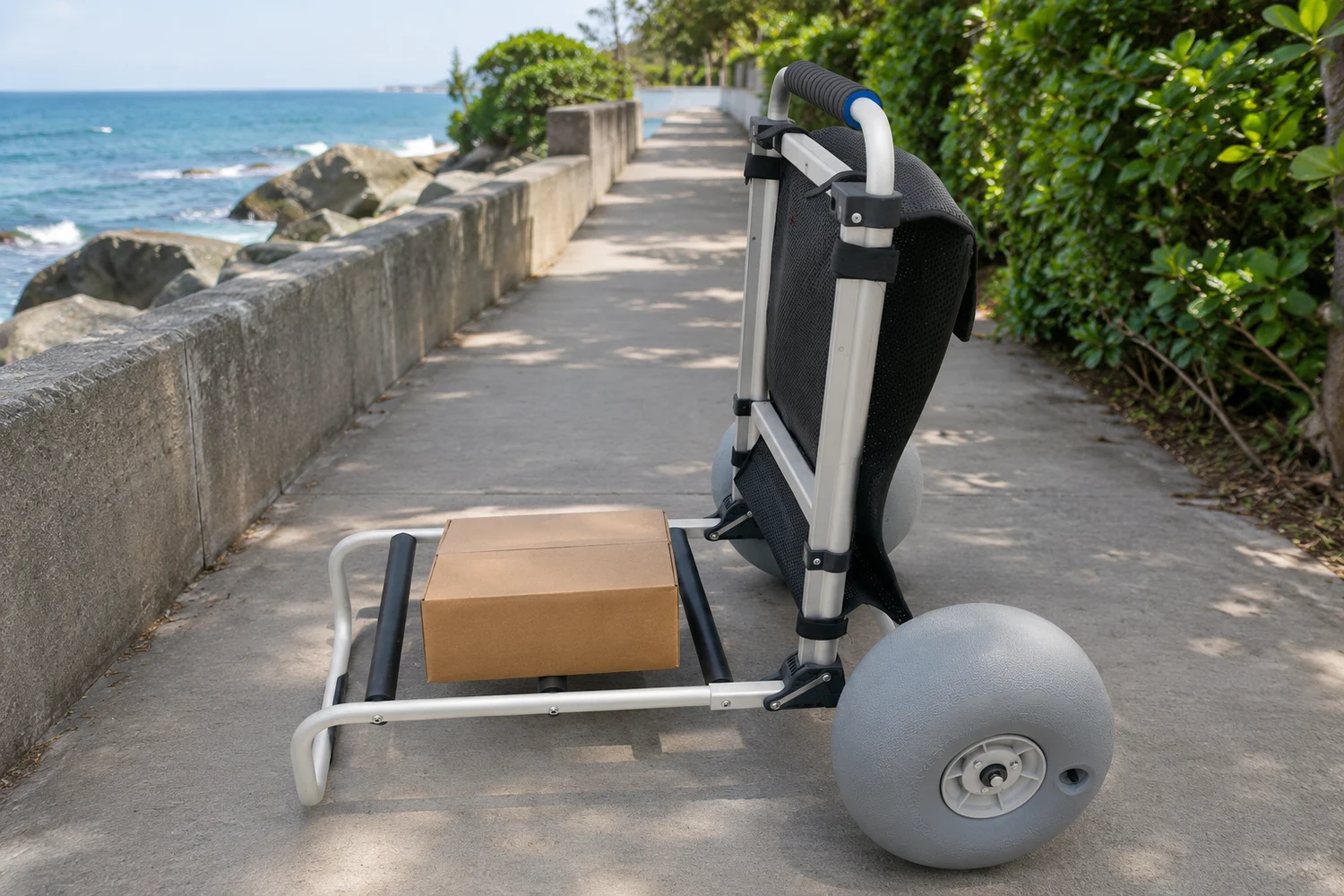
Test the loaded beach trolley handle arrangement for visibility in its intended direction of travel.
Which obstacle disappears first?
Look from the actual working position. A high stack can hide the leading deck edge or the next threshold before it obstructs the handles.
- Record the proposed load height.
- Review the approach to the narrowest point.
| Check | What to look for |
|---|---|
| Near field | Immediate deck and threshold |
| Ahead | Upcoming route and people |
Key Takeaway: A comfortable reach does not by itself establish a clear sight line.
How does turning change the space needed?
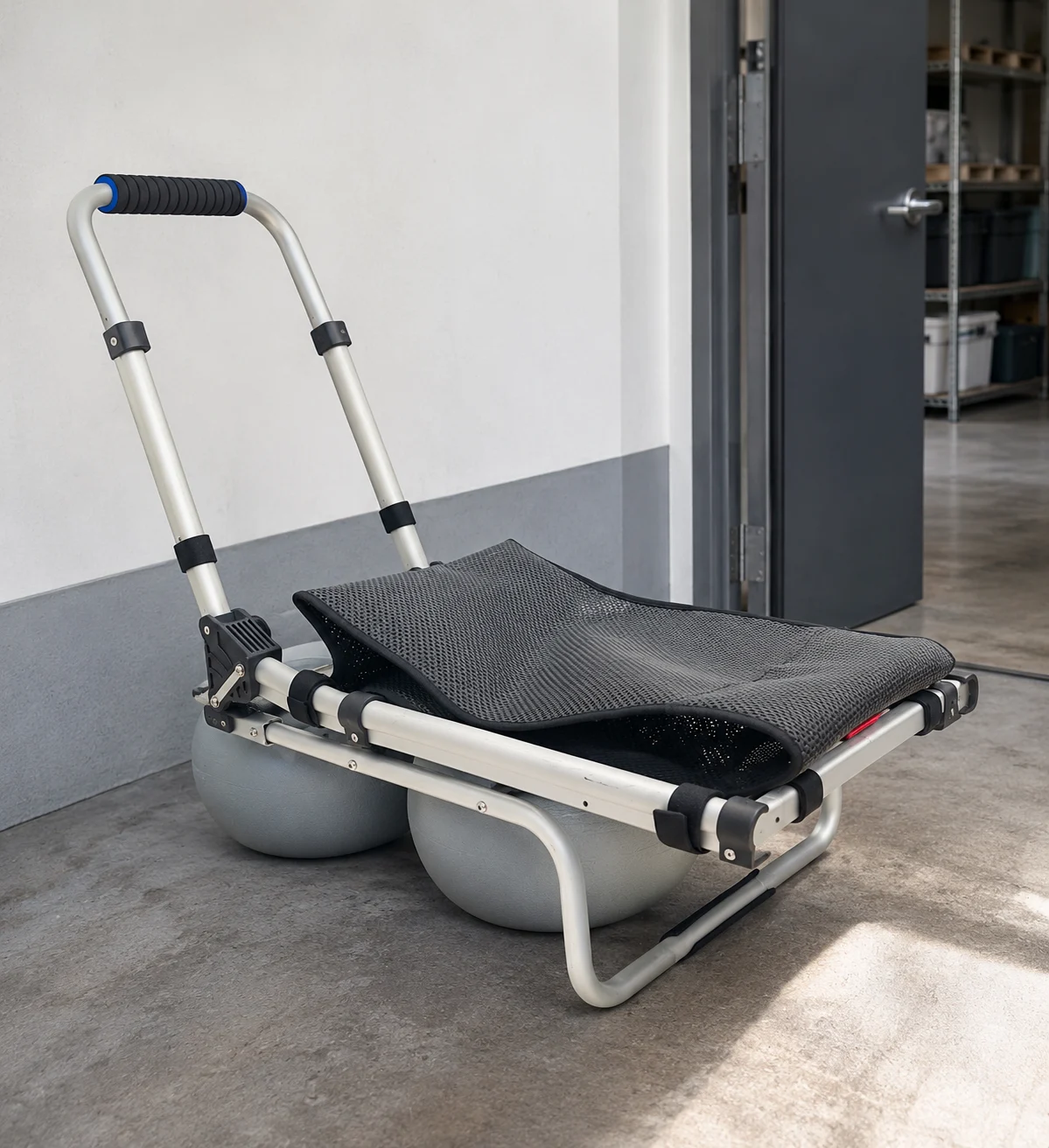
The beach trolley handle and operator sweep through extra space as the trolley changes direction.
Why measure the doorway and its approach?
Trace the complete turn. A trolley can fit straight through a doorway yet leave little space for hands or handle movement on the approach.
- Mark the approach direction.
- Review the loaded turn under approved conditions.
| Check | What to look for |
|---|---|
| Straight pass | Widest assembly point |
| Turn | Handle, load and operator path |
Key Takeaway: A doorway width is only half the picture when a turn comes immediately before it.
Can pulling replace pushing in a tight spot?
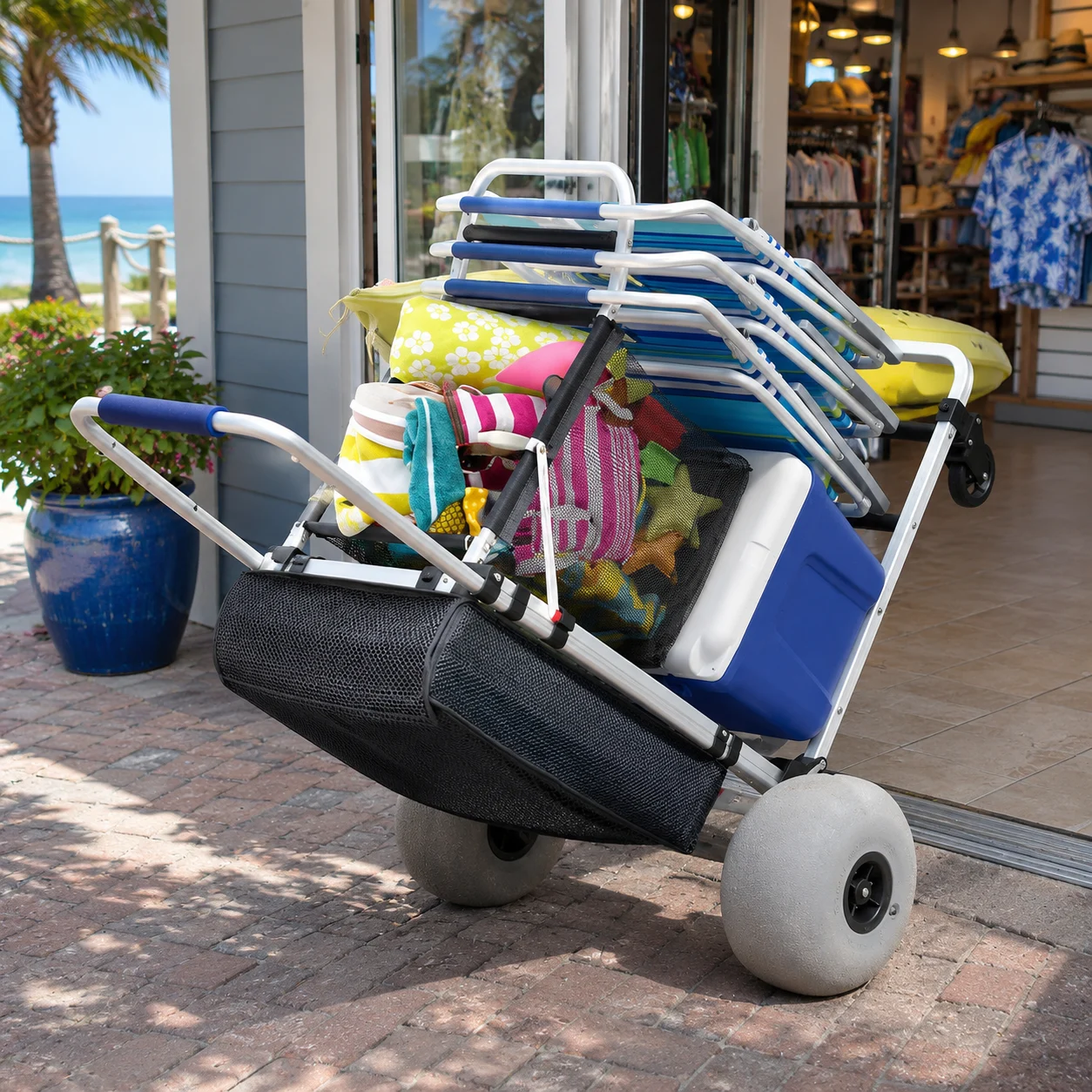
Use the beach trolley handle only in a handling direction supported for the exact trolley and task.
What if the route feels awkward?
Review the arrangement. A poor approach may call for a different route, load or trolley instead of an improvised operating position. Mark the restricted doorway on your beach service route.
- Read the unit instructions.
- Refer unusual handling to the site assessor.
| Check | What to look for |
|---|---|
| Documented use | Permitted handling mode |
| Site issue | Restricted space or visibility |
Key Takeaway: An awkward doorway is a design input for the service route.
Does a folding handle change the cargo space?
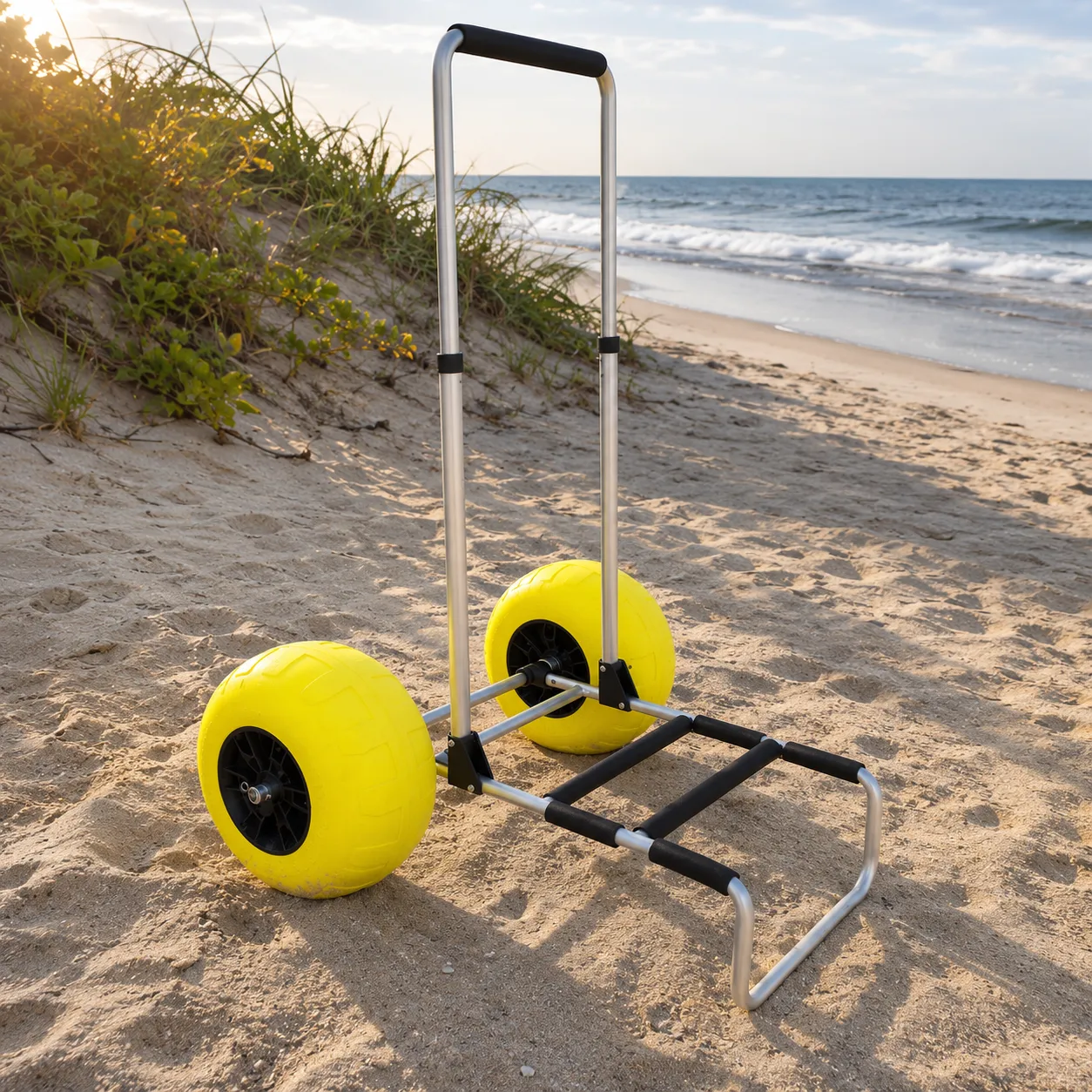
A folding beach trolley handle changes the storage envelope only as documented for that specific model.
Can two trolley photographs be combined?
Identify the model first. A tall silver deck handle and a folding luggage-style trolley can belong to different products with different operating geometry. For a workplace handling assessment, see the HSE guidance on pushing and pulling.
- Keep model photographs separate.
- Ask for the approved stored dimensions.
| Check | What to look for |
|---|---|
| Working envelope | Ready for the task |
| Storage envelope | Approved folded configuration |
Key Takeaway: A folding feature on another cart is not a feature of the quoted model.
What if several employees share the trolley?
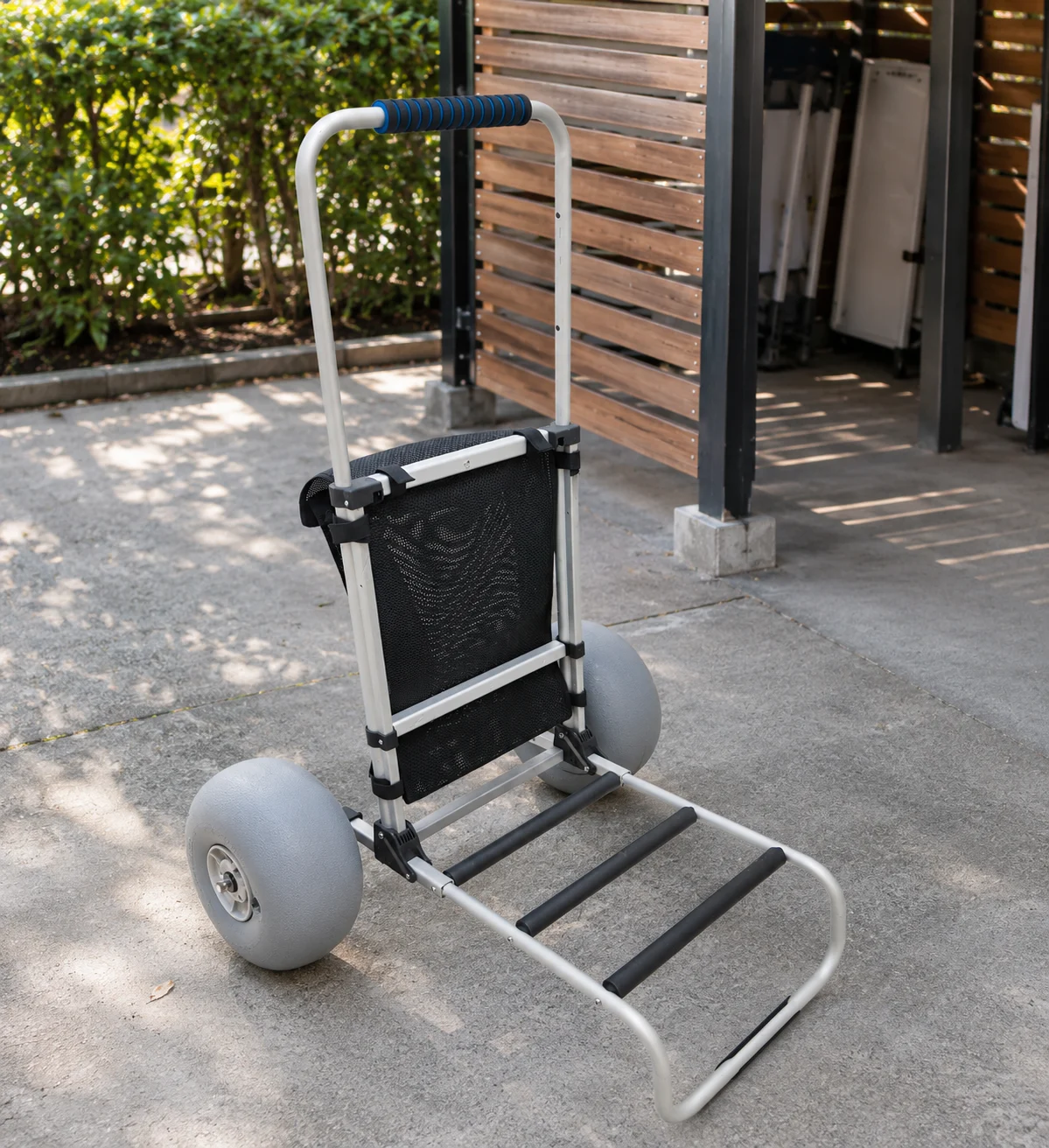
Assess the beach trolley handle with the people and tasks represented in the real handling operation.
Whose feedback gets lost?
Invite the closing shift. The person who returns wet or bulky gear can face a different load and route from the person who delivers empty equipment in the morning. Give both shift examples in your handling enquiry.
- Include both journey directions where applicable.
- Record the load state for each review.
| Check | What to look for |
|---|---|
| Delivery | Outbound load |
| Collection | Return load |
Key Takeaway: Different staff can identify constraints one empty demonstration overlooks.
What should the buying team ask a supplier?
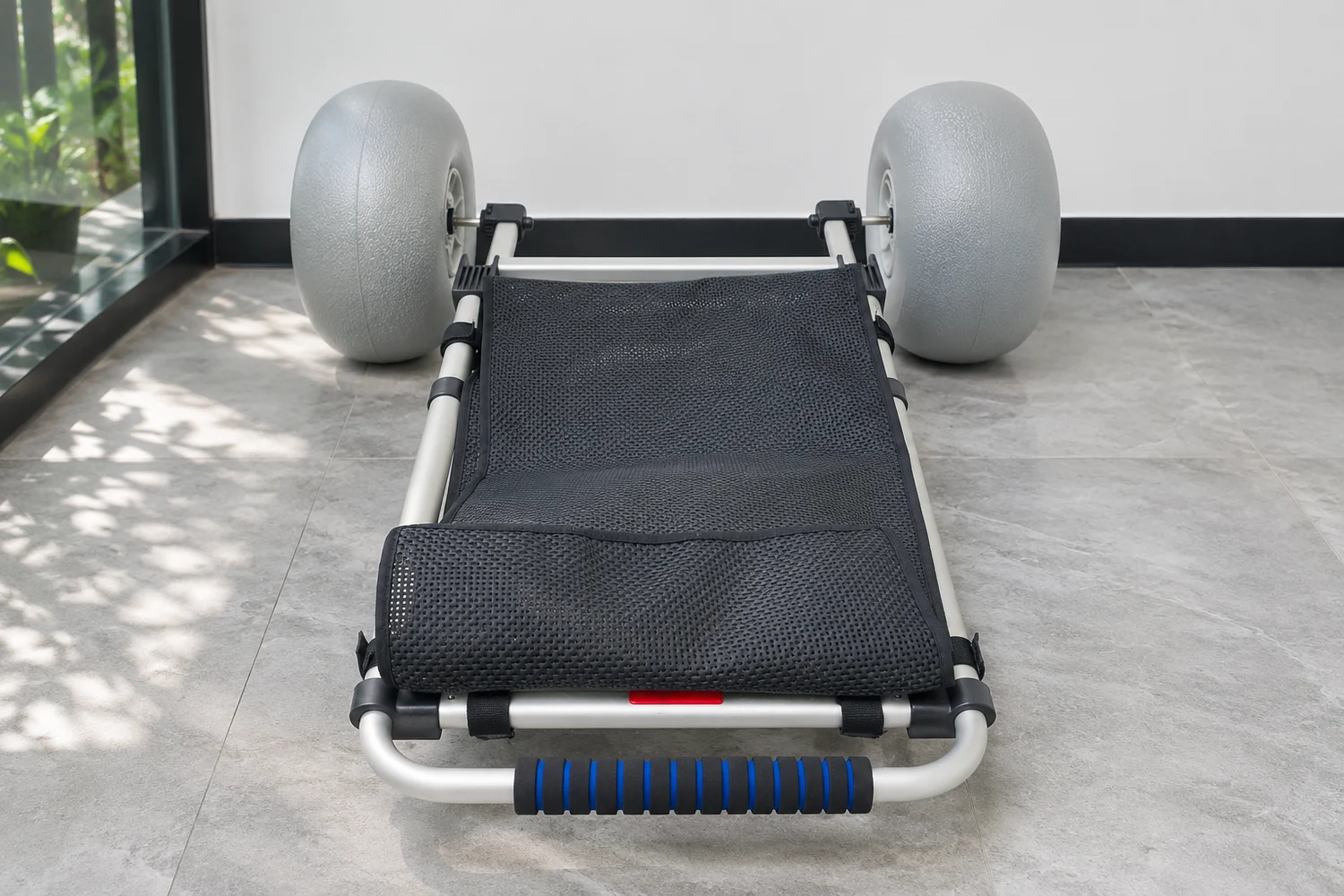
Ask for beach trolley handle position, approved handling method and complete assembled dimensions for the actual trolley.
Do you need a different size or a different layout?
Send a loaded side view. The issue may be an overhanging bin rather than the handle height itself.
- Identify the closest interference.
- Ask about confirmed product configurations.
| Check | What to look for |
|---|---|
| Observed problem | Position of load or grip |
| Supplier response | Approved layout or model |
Key Takeaway: A precise view helps the supplier address the task the customer is struggling with.
How do you sign off the loaded configuration?
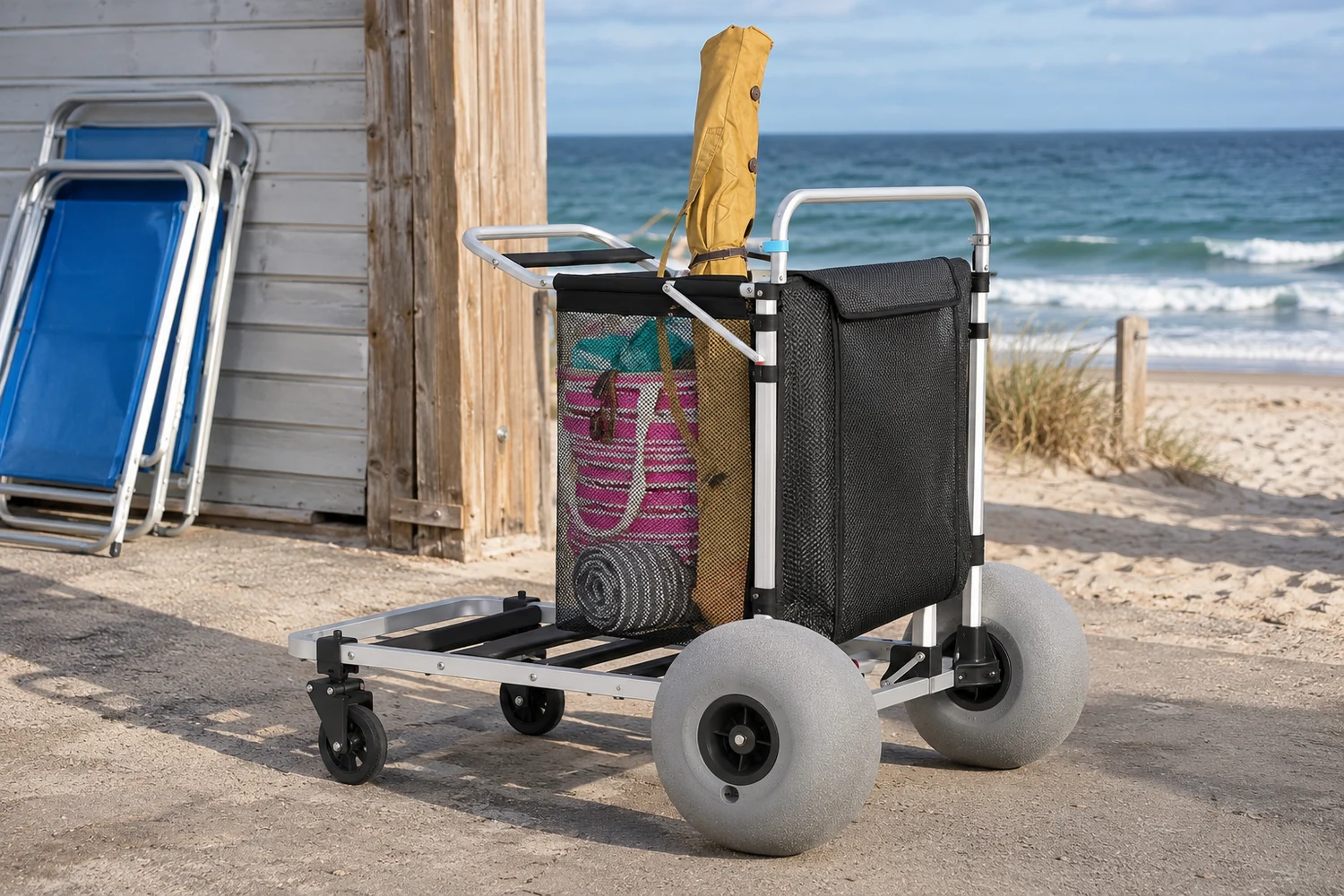
Accept a beach trolley handle configuration after the responsible team reviews the actual load, operator space and intended route.
What goes into the handover?
Write the accepted arrangement down. A photograph of the packed deck makes the later instruction clearer than a note saying “leave enough room.”
- Save the accepted load layout.
- Name the triggers for another assessment.
| Check | What to look for |
|---|---|
| Accepted setup | Model, load and route |
| Change | New cargo or different worksite |
Key Takeaway: The next team knows the task the trolley was selected to perform. Contact us with the cart photograph and the load your team expects to carry. We select handling equipment around the people doing the work.
Frequently asked questions
Q1: Can I judge handle reach from trolley height alone?
No. The grip position, load and operator access all matter.
Q2: What is the best sample load to try?
Use the actual mix of cargo that causes the tightest grip or visibility problem.
Q3: Can a folded dimension tell me the handle height in use?
No. Request the assembled working dimensions separately.
Q4: How do I know whether staff can use the trolley in a narrow turn?
Review the loaded approach and turn with the people responsible for the work.
Q5: Can I attach an extension to make the handle higher?
Use an extension only if the complete change is approved for that trolley and task.