
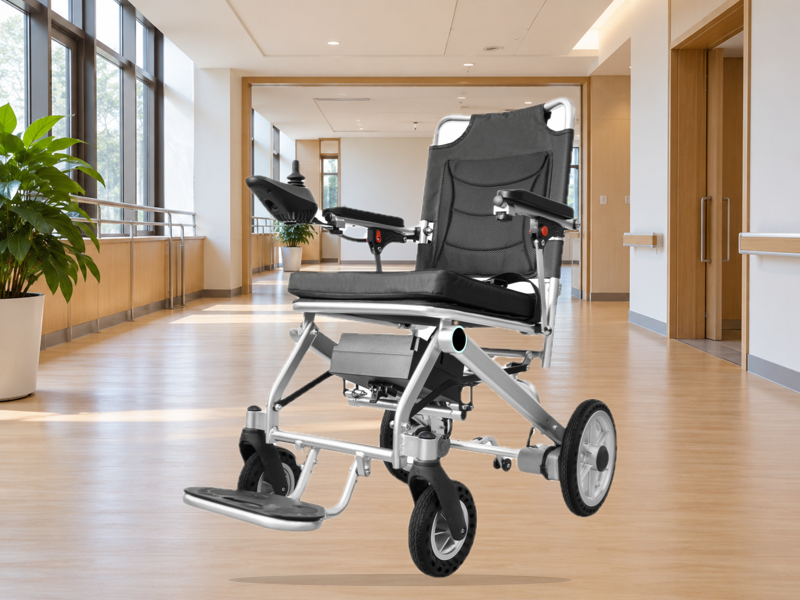
Buyers can compare the best portable electric wheelchair by matching user fit, folded dimensions, cargo access, lifting policy, control protection, and supplier records to one transport profile. A chair can look compact in a catalog yet remain awkward at a narrow vehicle opening, difficult to grip in its folded state, or poorly suited to the person who will use it.
Dealers, clinics, care groups, and distributors need a method that separates measured evidence from a broad portability label. This article creates that method through repeatable measurements, dry handling practice, controlled vehicle trials, and model-specific document checks. It does not treat one smooth demonstration as proof for every user or vehicle. The result is a sourcing file that another buyer, trainer, or service colleague can repeat and verify.
For U.S. public-access context, see the U.S. Department of Justice mobility-device guidance. It does not verify a chair’s transport setup or flight acceptance.
What transport profile should buyers write?
A portable electric wheelchair should be compared against a written transport profile covering the user, helpers, routes, vehicle, storage space, and permitted handling method.
Record who will drive the chair, who may move it when folded, which doors it must pass, and where it will sit during a trip. The wheelchair range helps teams place a transport model inside a wider wheelchair shortlist, while the local profile controls which models remain relevant.
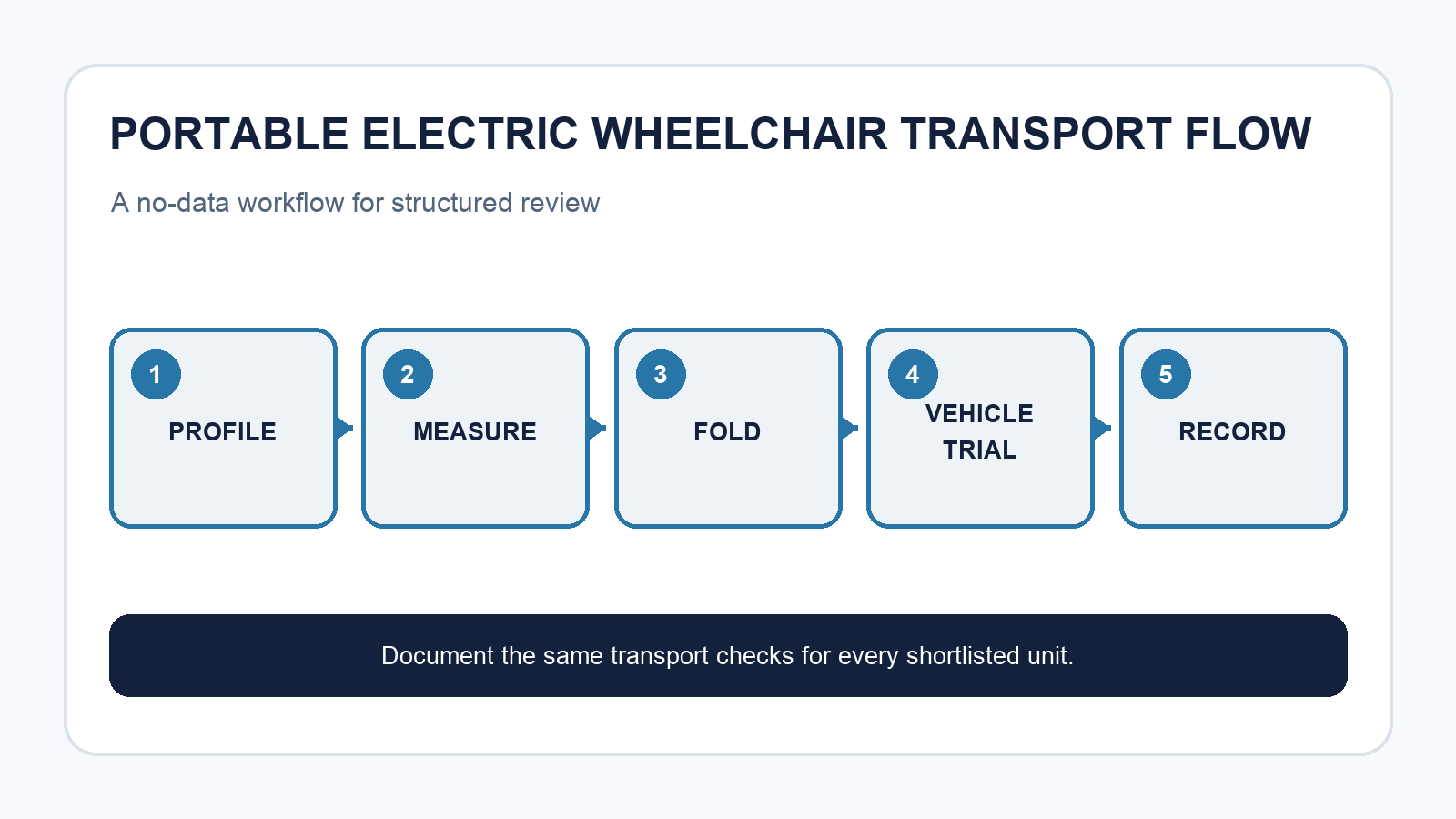
A useful worksheet separates observed facts, model records, evaluator notes, and open questions. Give each entry a date, source, exact setup, and named reviewer. Run the same check for every candidate and retain any changed setup. This record lets procurement, training, and service teams discuss the same evidence without turning a short trial into a broad product promise.
Which facts belong in the transport profile?
Start with the real routine:
Walk through a normal departure without moving the chair. Measure the vehicle opening, cargo floor, loading height, doorway, lift platform, and storage corner. Name any part that may detach under the manual, then identify who will handle that part and where it will be kept.
- user fit and control side
- vehicle and doorway clearances
- helper roles and lifting policy
- storage and charging location
Repeat the check under the same conditions and record who took part. If a supplier answer arrives later, attach it to the original question instead of replacing the earlier entry. That history matters when a model, component, manual, or operating plan changes during sourcing. A score should include a short reason and a source link rather than a bare number.
Place every value beside its source and date. User dimensions, open chair dimensions, folded dimensions, and package dimensions belong in separate fields. A missing value stays open until a drawing, manual, supplier record, or sample measurement answers it.
How should folded size and cargo fit be checked?
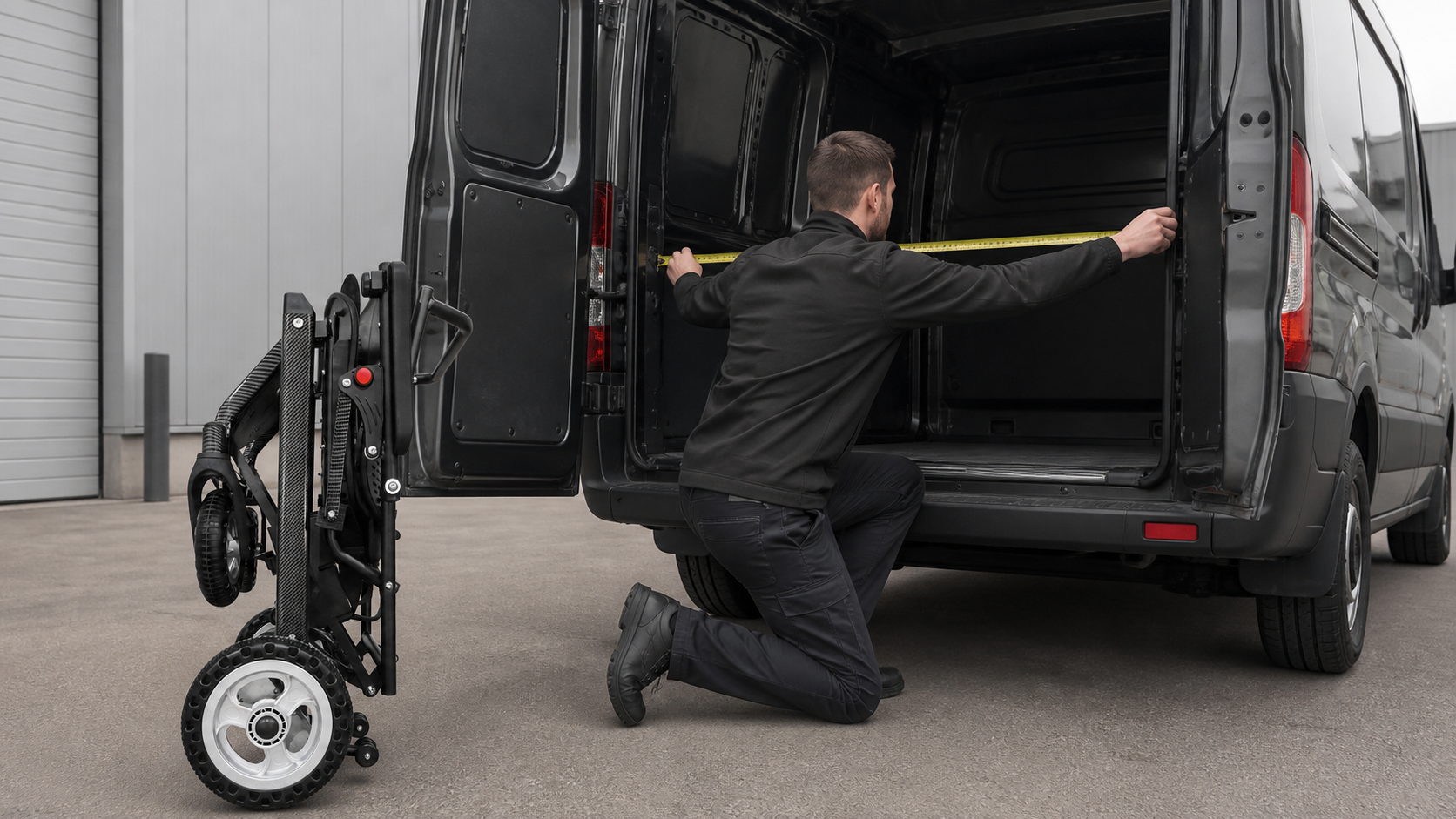
A portable electric wheelchair should be folded and placed through the real vehicle opening or a faithful cargo mock-up before the buyer accepts a transport claim.
Measure the unit in the exact folded setup planned for travel, including the controller position and any part left attached. Pair these observations with the electric wheelchair weight article, since stated chair weight and real handling shape answer different questions.
What makes a cargo trial repeatable?
Use one fixed sequence:
Set the chair on level flooring, power it off, and follow the model manual. Record each fold step, any loose item, the intended handholds, the cargo orientation, and whether the unit rests securely. Repeat the sequence with the staff who will handle samples or customer training.
- starting chair setup
- folded outer boundaries
- loose parts and storage
- cargo entry and removal path
A useful trial includes a measured opening, a photo of the folded state, and a short sketch of the cargo position. Do not infer suitability from weight alone. Balance, shape, grip access, loading height, and company lifting rules may change the practical result.
Which handling details should buyers observe?
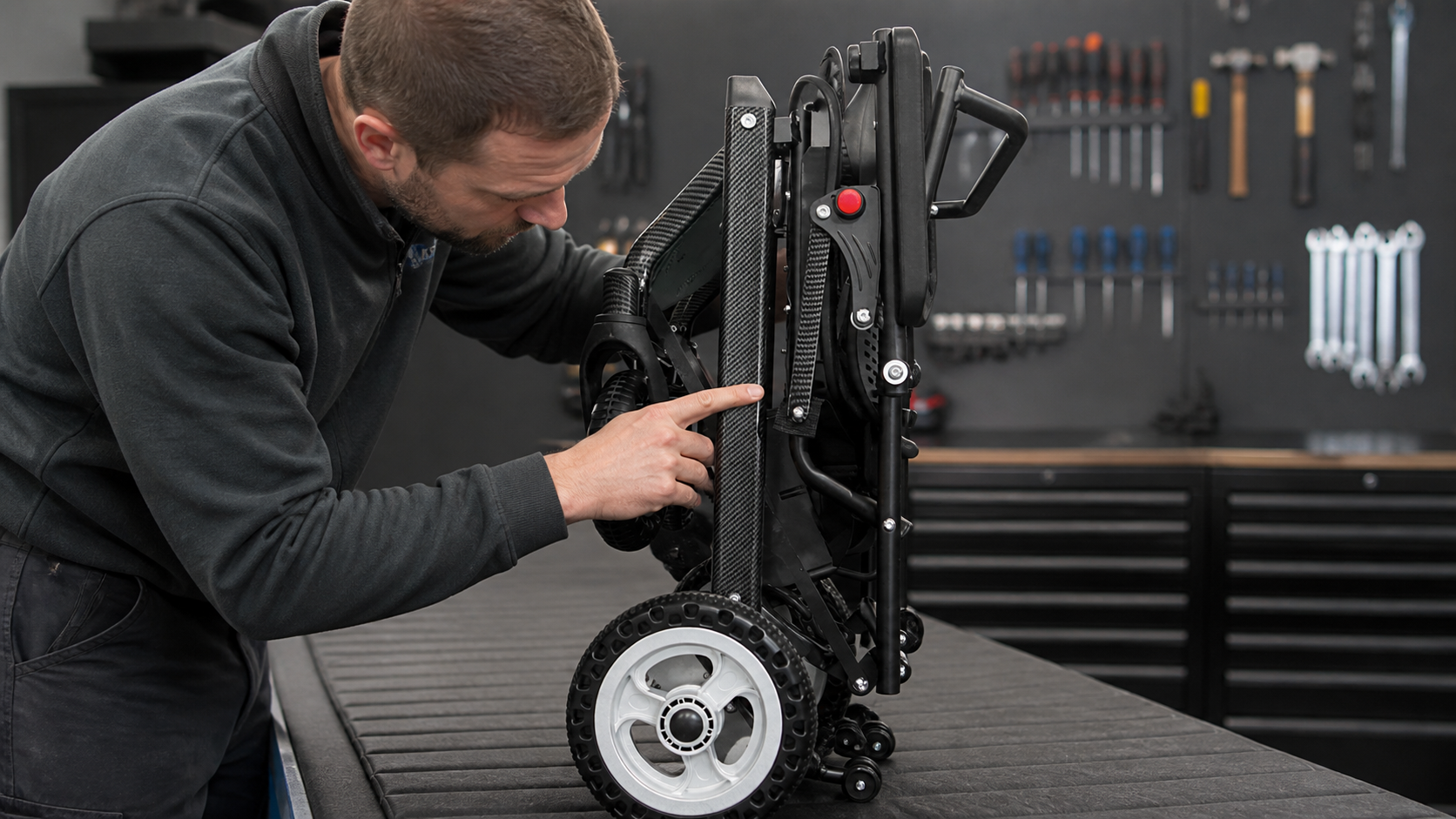
A portable electric wheelchair handling review should cover safe handholds, folded balance, pinch areas, loose parts, helper posture, and the documented loading method.
Ask the person who would move the unit to perform a supervised dry practice within their workplace policy. The travel wheelchair selection article provides wider travel-selection context, but the exact chair and vehicle still need their own handling record.
How can teams document a handling practice?
Watch the whole movement:
Write the starting position, each contact point, where the chair changes direction, and where the handler pauses. Note any reach below the cargo sill or contact with the joystick, armrest, foot support, cable, or folding joint. Stop if the manual or workplace policy does not support the planned move.
- named handholds
- folded balance and grip
- pinch and cable areas
- staff role at each step
Handling notes should describe observations, not claim that one person can move every unit. If a lift, ramp, or two-person method is used, record it as part of the setup. Compare candidates under the same method so a polished demonstration does not hide extra work.
How should controls be protected in transport?
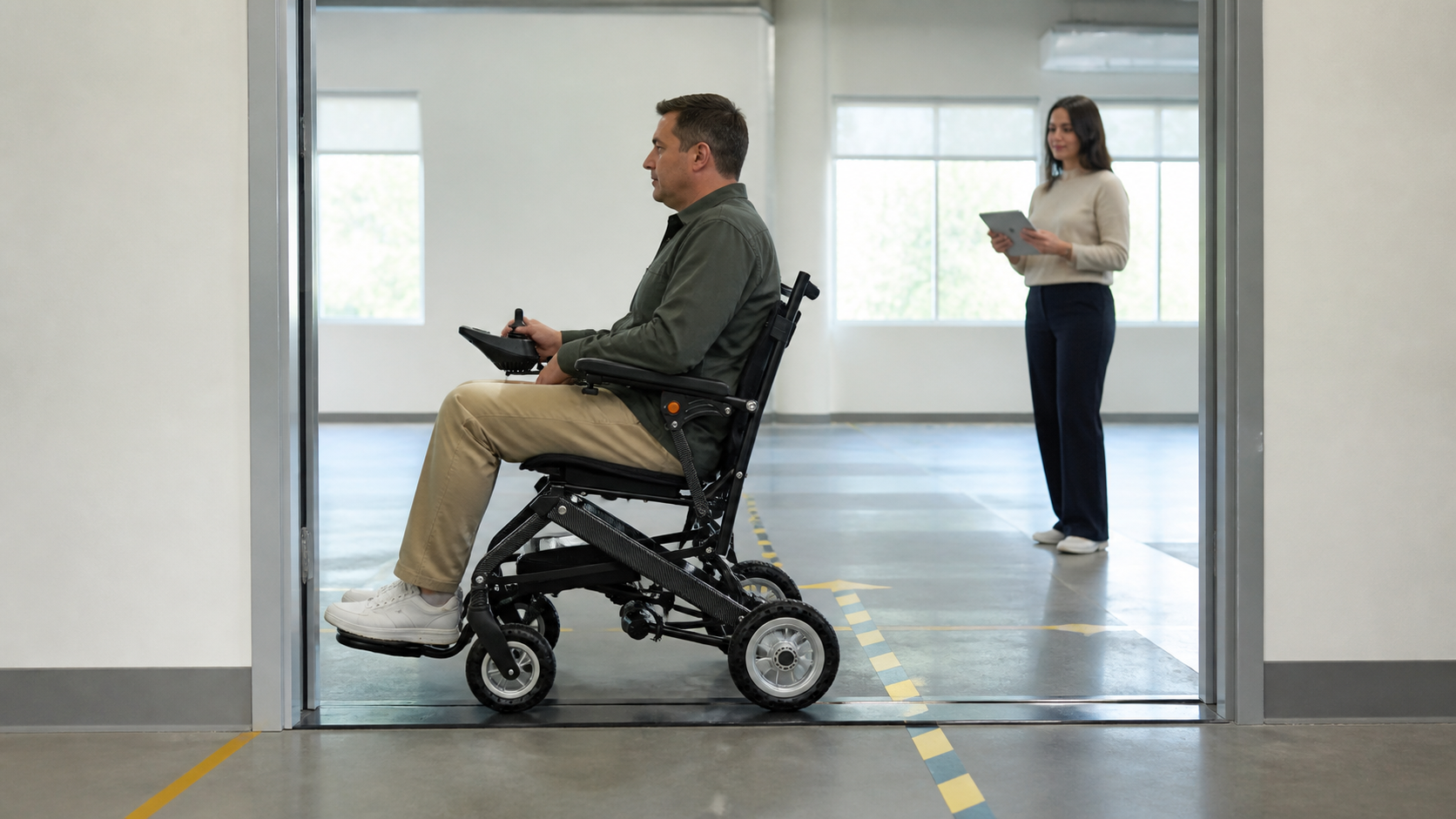
A portable electric wheelchair needs a transport check for joystick position, mount firmness, cable routing, power state, freewheel controls, and any permitted protective step.
Inspect the control area with the chair powered off. A folding movement must not trap or pull the cable, and cargo placement must not place force on a joystick, armrest, connector, or unsupported cover.
Which control points need a written record?
Keep the check visible:
Ask for the manual pages that show shutdown, folding, controller movement, battery handling, freewheel use, and return setup. Photograph the normal and transport positions of the exact sample. If the supplier proposes removing a control, request the model-specific instruction before any trial.
- joystick and bracket position
- cable path near joints
- power and freewheel state
- return setup after travel
After the dry transport practice, inspect the chair before powered use. Look for a shifted mount, pressed control, loose connector, trapped cable, or wheel obstruction. A trained person should handle any unclear condition rather than guessing from a generic video.
What supplier evidence supports a buying decision?
A portable electric wheelchair should rank higher only when model identification, manuals, dimension records, parts support, packing details, and service communication match the buyer’s transport plan.
Request records for the exact revision and chosen setup. A supplier should be able to explain what each listed weight includes, how folded dimensions were measured, and which parts may be moved or removed under written instructions.
Which documents belong in the sourcing file?
Trace every answer:
Collect the current manual, dimensional drawing, packing outline, inspection fields, parts naming route, and a sample fault-report process. Link each file to the model and revision. Leave sales statements outside the evidence column unless a matching document or observed sample supports them.
- model and revision reference
- manual and dimensional source
- packing and inspection record
- parts and support contact
Score fit, cargo trial, handling, controls, and service as separate fields with short reasons. Do not let a low weight or attractive sample erase an open control or documentation issue. Buyers with a defined transport profile can contact us today to discuss model records and sample planning.
What do buyers ask about this mobility product?
The portable electric wheelchair questions buyers ask most often concern fit, permitted use, records, controlled checks, and supplier support.
Can I compare portable chairs by weight alone?
No. Weight does not describe folded balance, cargo shape, grip access, joystick protection, seat fit, or the handling method used by your team. Confirm what the number includes and run a measured sample trial.
What's the best chair for a small car?
The better option is the model that fits the measured opening and cargo area in its documented transport setup. Check loading height, loose parts, handholds, controller position, and the person or equipment used for loading.
How do I know if the folded dimensions are useful?
Match them to the exact model, revision, and setup. Ask how the supplier measured the boundaries and which parts were moved or removed, then verify the result on a sample when possible.
Can I remove the battery before loading?
Only follow the model manual and applicable workplace rules. Battery removal, carrying, storage, and reconnection methods differ, so a generic demonstration is not a safe substitute for product instructions.
How should a distributor compare supplier support?
Use the same written document request for every supplier. Compare response clarity, manuals, dimension sources, parts identification, packing records, and the path for reporting transport or service issues.