
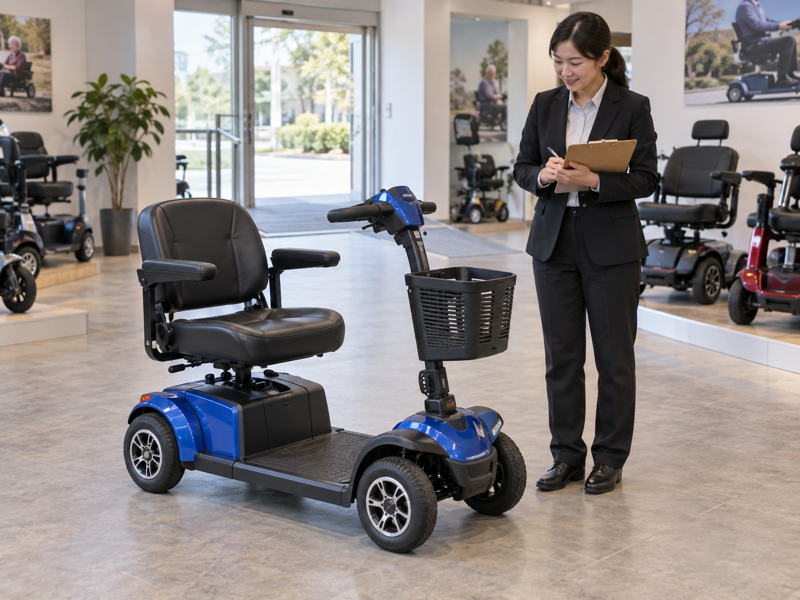
Choose a four wheel mobility scooter by matching the rider's needs, controls, daily route and support plan to the exact model. A buyer can like a broad four-wheel layout and still find that the seat or doorway approach does not suit everyday use. Check the complete product against a clear brief before ordering. The blue scooter images here illustrate a generic layout; confirm the supplied model and its details with the manufacturer.
What should a four wheel mobility scooter choice start with?
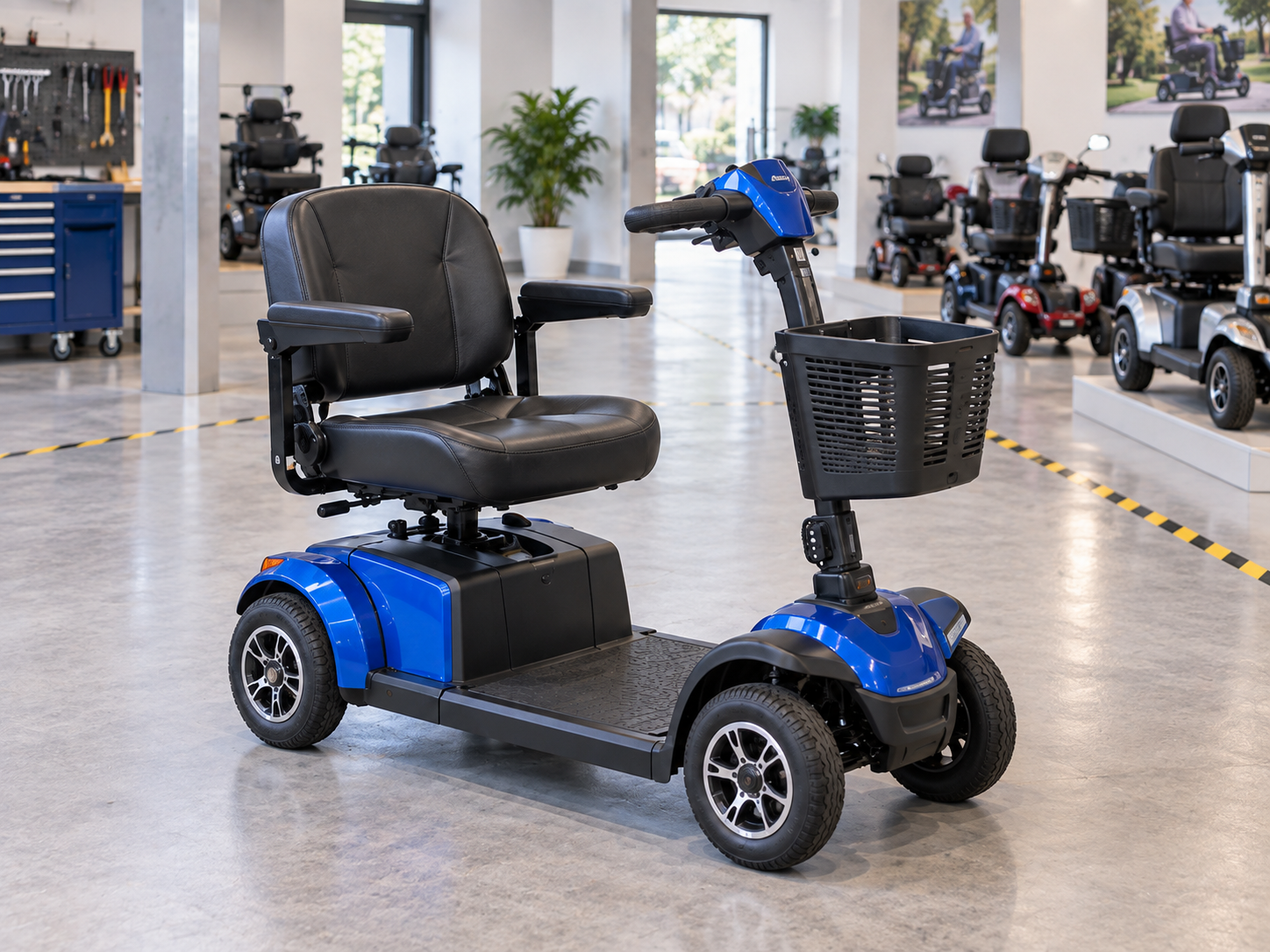
A four wheel mobility scooter choice should start with the person's needs and the intended use, rather than wheel count alone. Identify the required support, control access and normal route. Then review models that can be assessed against those needs.
Which questions belong in the first conversation?
Describe the ordinary journey. Ask where the person will use, store and transport the device and who will help when needed. RiDC's mobility scooter checklist offers practical questions for that selection process.
- Record the intended indoor and outdoor use.
- Identify support and control needs for an appropriate review.
- Describe storage and handling requirements.
| Need | Buying question |
|---|---|
| Person and use | Which layouts should be assessed? |
| Route and handling | What tasks must the model support? |
Use the same brief when comparing more than one model. Key Takeaway: Your shortlist will have a reason for including each product.
Which controls should a four wheel mobility scooter have?
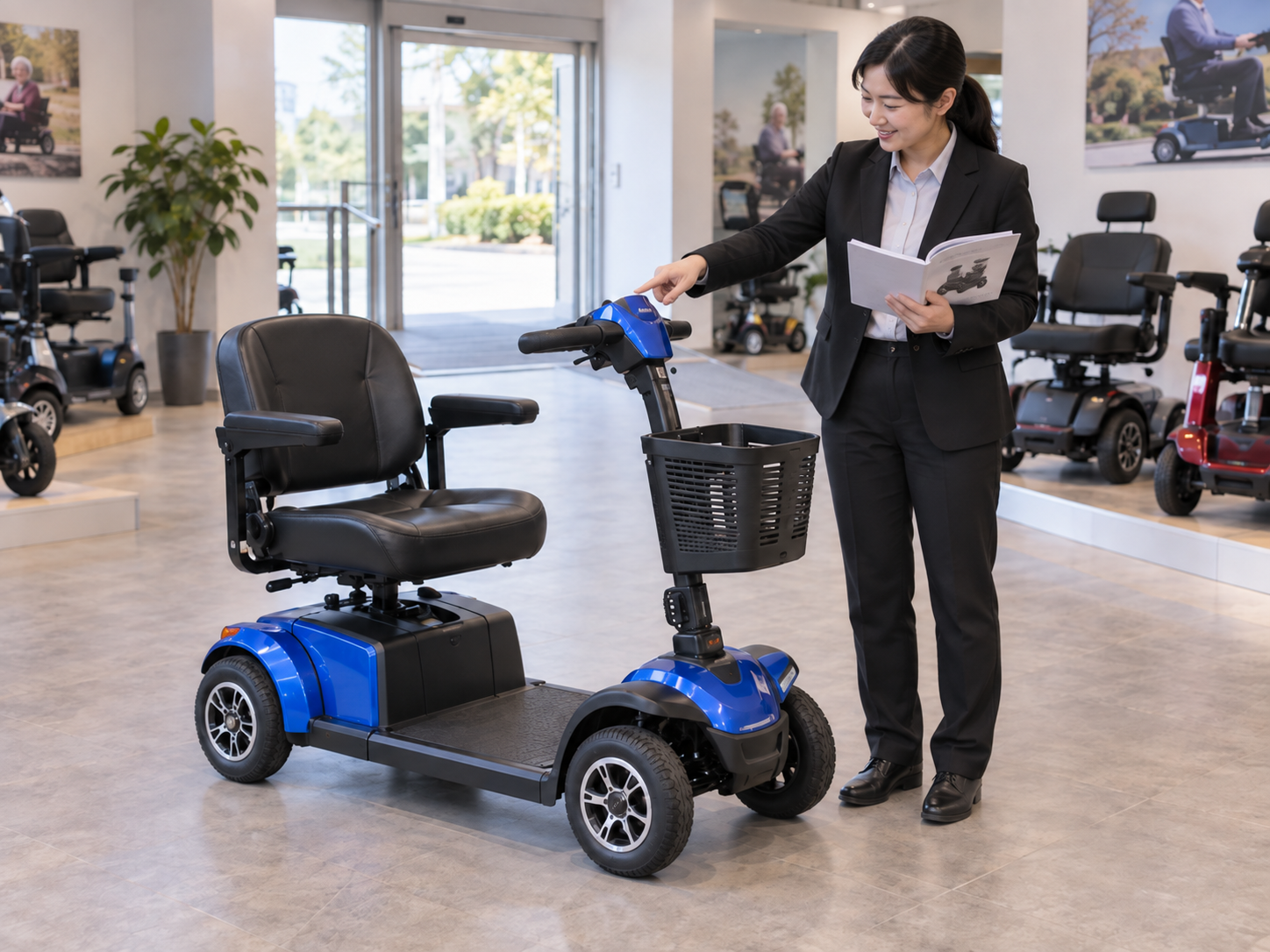
A four wheel mobility scooter should have a control layout the rider can use as established by the appropriate fit review. Inspect the actual steering and controls rather than inferring them from a sales category. Check the complete product information for the version being considered.
Can a product label explain how it is steered?
Look at the controls themselves. A tiller or handlebar layout and a joystick-controlled chair require different product information and demonstrations. Ask the supplier to identify the exact configuration and current operating guide.
- Identify the actual steering and control method.
- Review access from the agreed seated position.
- Use the instructions for the exact supplied setup.
| Control detail | Review task |
|---|---|
| Steering layout | Confirm how the specific device is operated |
| Control reach | Assess whether the rider can use it as intended |
Do not transfer operating advice from a different layout. Key Takeaway: Your handover will describe the device the customer actually receives.
How do you assess a four wheel mobility scooter seat?
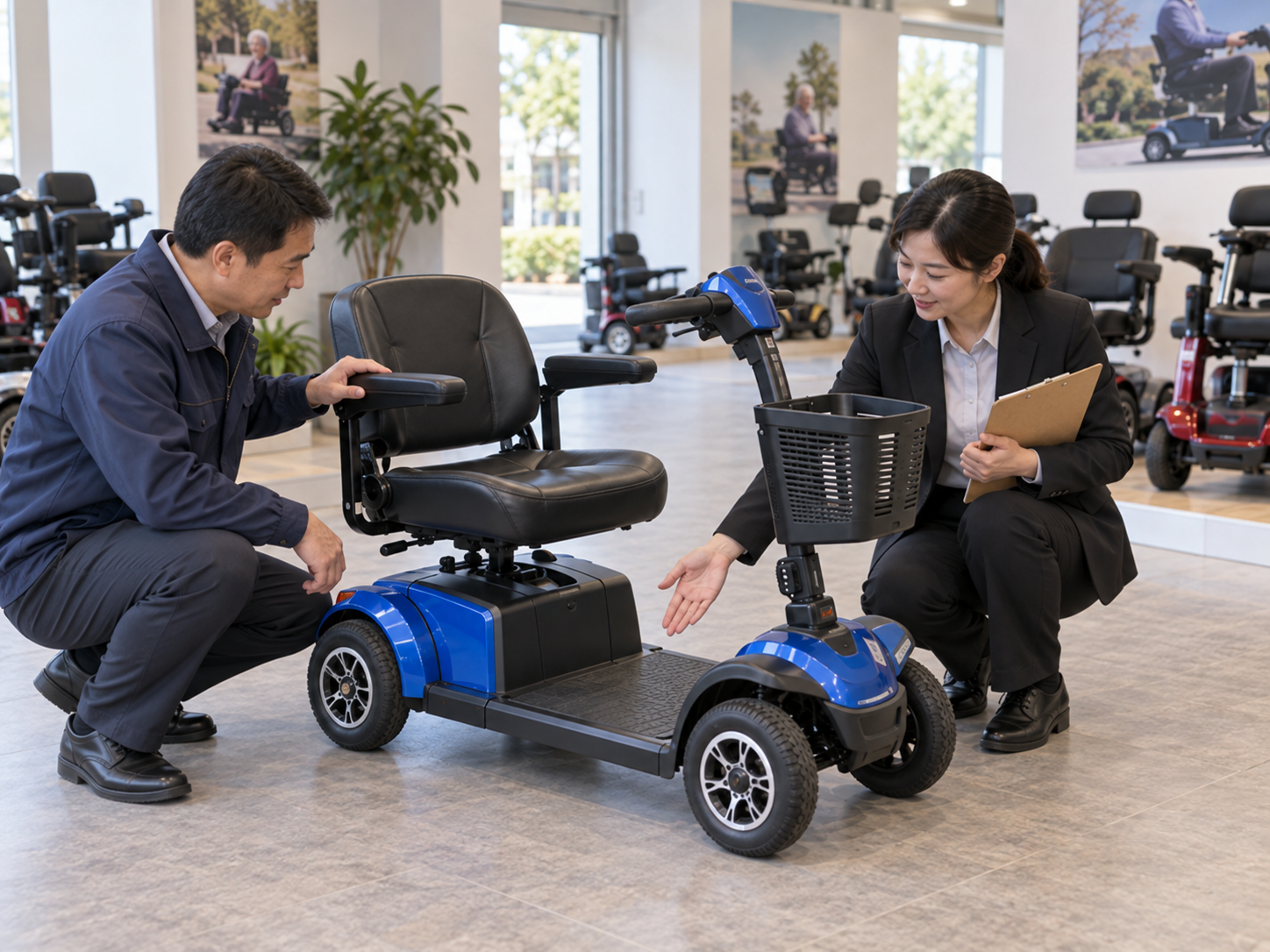
Assess a four wheel mobility scooter seat against the required support, access and riding position. Review usable dimensions together with the foot area and controls. A padded appearance or a large outside width does not establish an individual fit.
What should the seat review include?
Check the complete seated setup. Use the relevant product dimensions and involve an appropriate assessor when the person's needs require it. Record the settings used so a later change does not lose the basis of the review.
- Check usable seat space and required support.
- Review foot placement and control access.
- Record the approved adjustment positions.
| Fit area | Evidence to retain |
|---|---|
| Seat and support | Agreed needs and product dimensions |
| Foot and control relationship | Settings used in the review |
Repeat the affected checks after an approved seating change. Key Takeaway: The buying decision will cover the person sitting on the scooter, not only the empty product.
Will a four wheel mobility scooter fit the daily route?
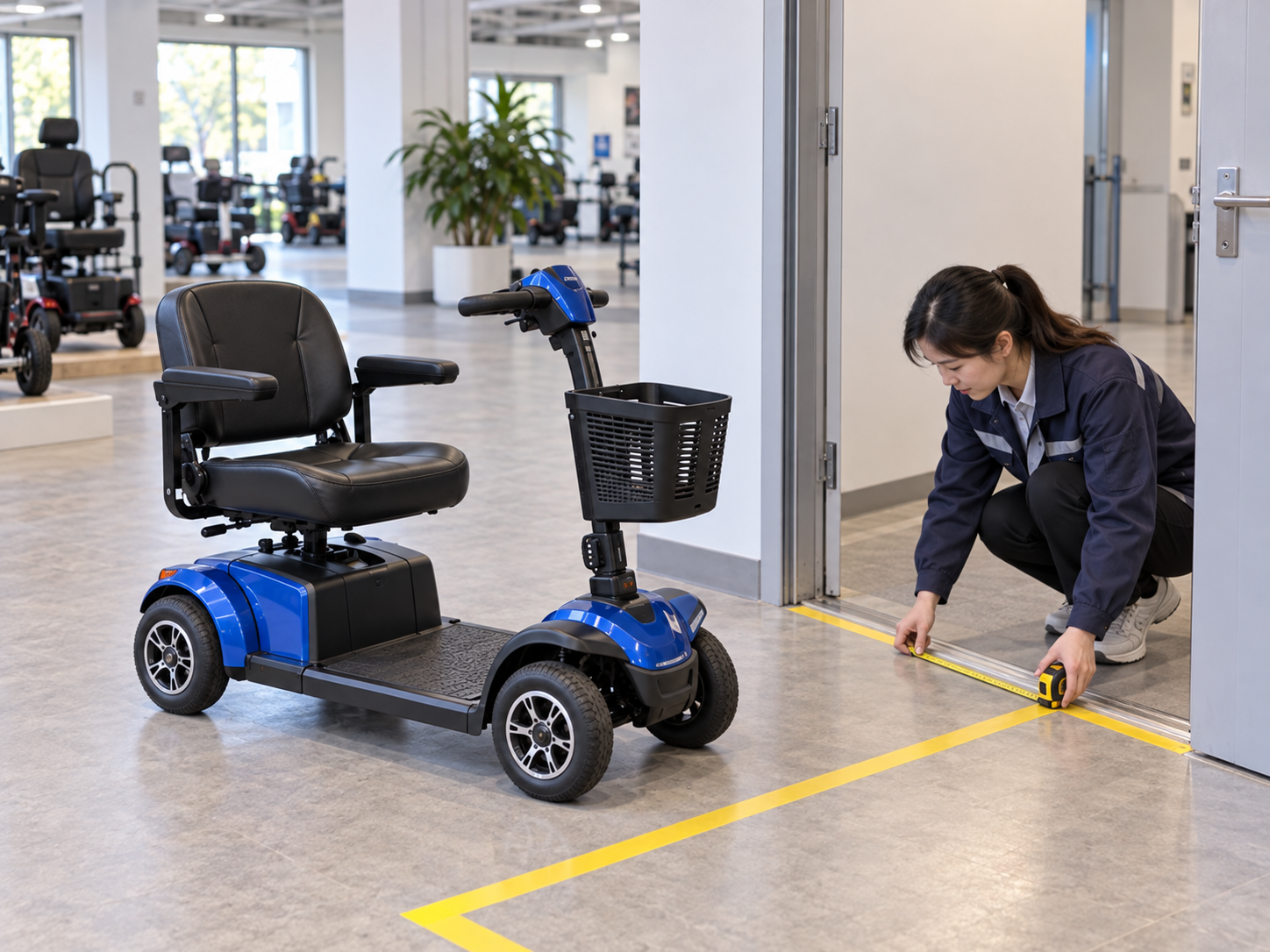
A four wheel mobility scooter needs an actual route review to establish a useful fit through openings and turns. Check the approach and exit space as well as the doorway itself. Compare an electric wheelchair layout separately when the rider's needs point toward a different device.
Which part of the route is most restrictive?
Sketch the tightest passage first. Record fixed furniture, door swings and changes in direction. Use defined dimensions and a suitable controlled trial instead of assuming that a compact catalogue figure covers the whole journey.
- Measure the narrowest clear opening.
- Record approach angles and turning space.
- Include fitted accessories in the route review.
| Route element | Question |
|---|---|
| Opening | Can the supplied setup pass through as intended? |
| Turn and exit | Is there room to continue the movement? |
A full route sketch is more useful than one isolated width. Key Takeaway: You can identify where a promising model needs a closer trial.
Does a four wheel mobility scooter guarantee stability?

No, a four wheel mobility scooter does not guarantee stability merely because it has four wheels. Review the exact model's stated limits and the planned use conditions. Do not treat wheel count as permission to use slopes, obstacles or surfaces outside those limits.
What should the supplier explain about the intended terrain?
Match the route to the instructions. Describe the actual surfaces and changes in level in the buying brief. Ask for the relevant model information and suitable advice where the route or personal needs are uncertain.
- Identify the intended surfaces and level changes.
- Check the stated operating conditions and limits.
- Resolve unsuitable sections of the route before use.
| Evidence | Use in the decision |
|---|---|
| Model limits | Defines permitted use conditions |
| Actual route | Shows what needs to be compared with those limits |
Keep a favourable product feature separate from an unverified route claim. Key Takeaway: Your recommendation will state where the model is intended to be used.
What battery checks does a four wheel mobility scooter need?

A four wheel mobility scooter enquiry should identify the approved battery and charger pairing and the evidence behind any range claim. Confirm the supplied version for the target market. Ask the supplier team for current records tied to that setup.
Which items should be named on the quote?
Write the pairing into the product line. List the battery, charger and relevant options so the receiving team can check them. Do not replace an approved item with a similar-looking part without the required review.
- Record the battery and charger references.
- Request the relevant charging and care guide.
- Ask for the conditions behind a quoted distance.
| Order detail | Check |
|---|---|
| Battery and charger | Approved combination for the model |
| Range statement | Relevant setup, method and conditions |
Keep the evidence with the exact option being supplied. Key Takeaway: The customer will receive a defined charging setup and a supportable explanation of range.
How will you store and move a four wheel mobility scooter?
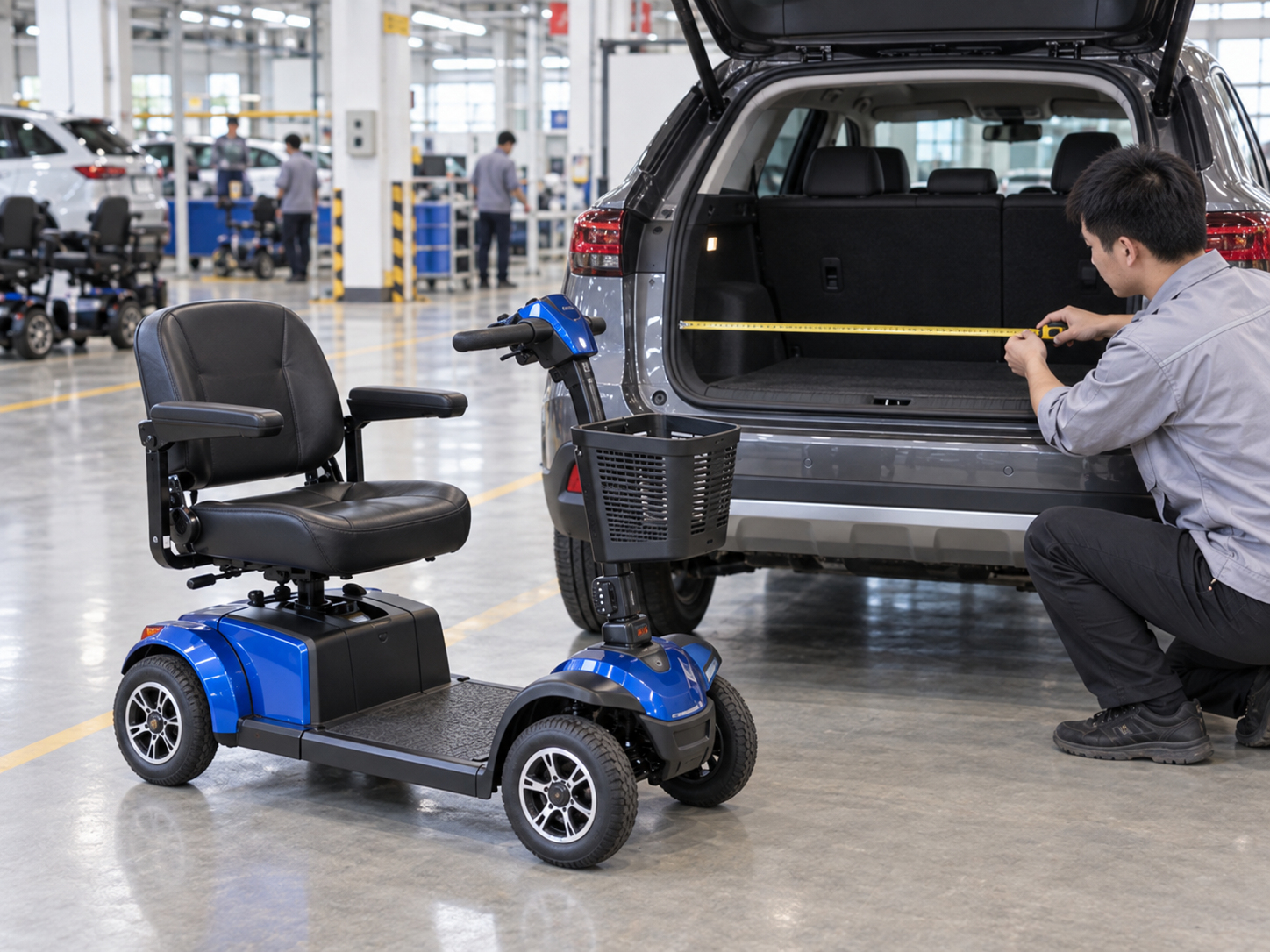
Plan how a four wheel mobility scooter will be stored and moved using its approved handling method and complete dimensions. Some models fold or separate; others need a different approach. Review the actual method with the person who will perform the task.
What must the handler manage in one step?
Follow the entire handling sequence. Include permitted removals, the heaviest item handled and the route into the storage or vehicle space. If manual handling is unsuitable, seek an appropriate review of another method or compatible loading aid.
- Confirm the allowed handling and storage positions.
- Record the complete and separately handled weights where relevant.
- Trial both putting the device away and returning it to use.
| Task | Information needed |
|---|---|
| Handling | Approved method, grip points and relevant item weights |
| Storage or vehicle fit | Openings, resting space and retrieval route |
A small footprint does not answer the lifting and retrieval questions. Key Takeaway: The product can be assessed for the whole daily routine.
What service support should a four wheel mobility scooter include?

A four wheel mobility scooter purchase should have a clear service route, current parts information and defined support terms. Ask who handles faults and which work requires trained personnel. A general warranty statement does not answer every repair question.
What will the dealer need after the first sale?
Review the first likely service enquiry. Confirm how staff identify the model, report a problem and obtain the approved part or service advice. Request current terms without assuming a fixed warranty period or response time.
- Obtain the model-specific parts and care information.
- Clarify dealer and supplier roles.
- Record the agreed fault and replacement-parts process.
| Support detail | Dealer question |
|---|---|
| Parts information | How is the correct item identified? |
| Fault process | Who reviews the issue and approves the next action? |
Keep the support information with the approved product record. Key Takeaway: Your team can support the device after delivery without starting every query from scratch.
How do you compare four wheel mobility scooter samples?
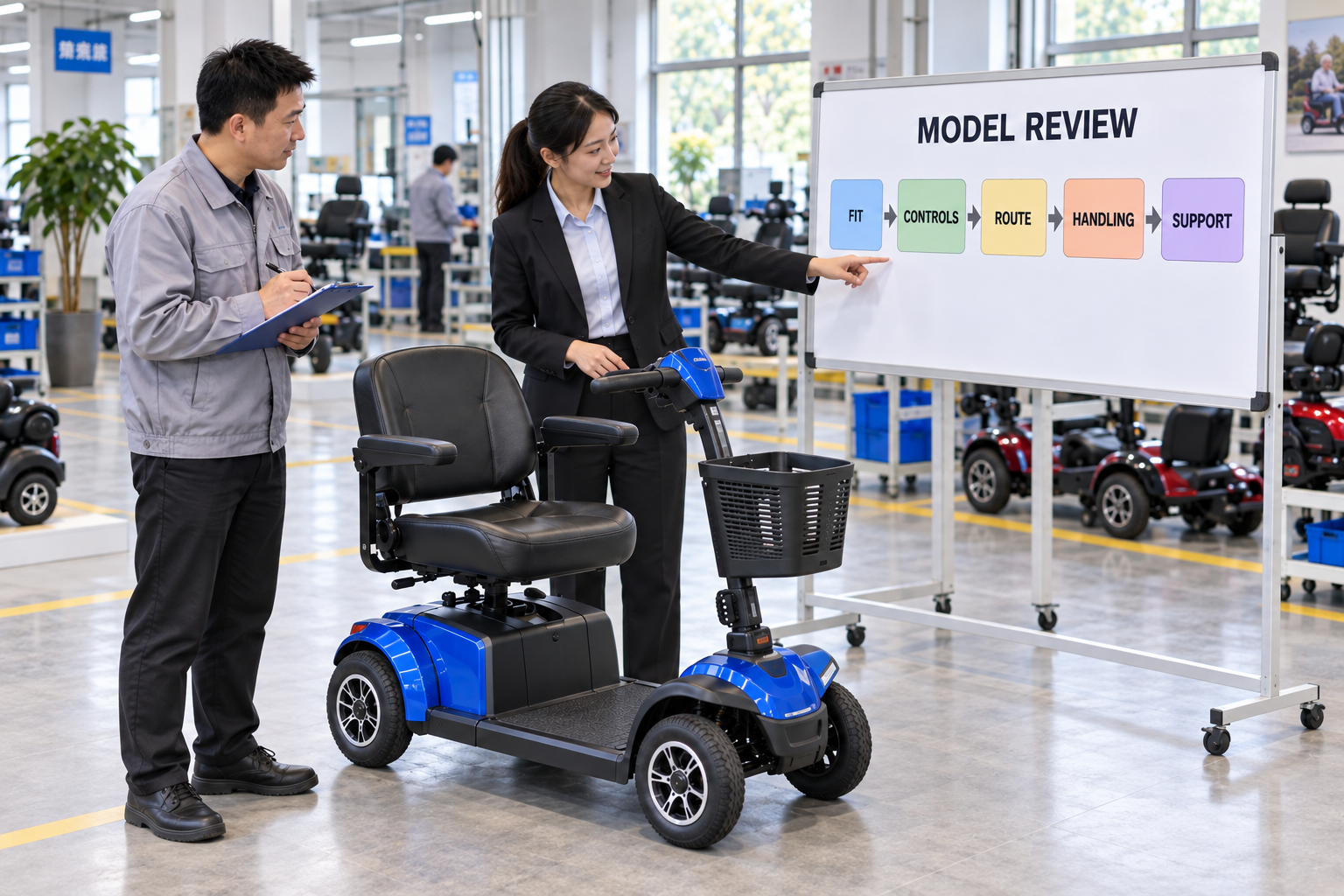
Compare each four wheel mobility scooter sample against the same fit, control, route, handling and support brief. Record the configuration and conditions reviewed. Keep supplier statements separate from observations your team has actually made.
What should the comparison sheet show?
Use the same questions for every sample. Attach the model reference, relevant guide and findings to the review. Mark unresolved questions with a named follow-up owner instead of giving them an assumed pass.
- Identify the exact sample configuration.
- Record observations under stated conditions.
- Keep open product and support questions visible.
| Comparison entry | How to interpret it |
|---|---|
| Recorded observation | Evidence from a defined review |
| Unresolved claim | Requires an answer before approval |
Rank the models only after the relevant gaps are understood. Key Takeaway: Your shortlist can be explained using consistent evidence.
How can you choose a four wheel mobility scooter confidently?

Choose a four wheel mobility scooter once its fit, controls, route needs, handling and support information meet the agreed brief. Retain the final setup with the order. Resolve unclear options before confirming the product to the buyer.
Ready to request a model-specific proposal?
Send the whole use brief. Ary Medical can review product options when you state the rider requirements, intended route and handling needs. Ask for the exact model details and current support information for the proposed setup.
- Describe the required seat and control layout.
- Include the critical route and storage dimensions.
- Request current model, battery, handling and service records.
| Your brief | Supplier response to request |
|---|---|
| Rider and daily tasks | Relevant product layouts for review |
| Outstanding questions | Model-specific information and support terms |
Use the proposal to close the remaining fit and operating questions. Key Takeaway: To compare options against your brief, contact us. Ary Medical supports product choices that can be explained through a complete use review.
Frequently asked questions
Q1: Can I assume four wheels make every route suitable?
No. Review the model's stated limits and the actual route, with appropriate advice where needed.
Q2: What's the best four-wheel model for a small home?
Choose through a full fit and route review. Doorway approaches, turns, seating and handling needs all affect the decision.
Q3: Can I use a scooter label to identify the control layout?
No. Inspect the actual controls and model guide; a tiller layout and a joystick-controlled chair require different information.
Q4: How do I know whether it will fit in a car?
Measure and review the approved handling method for the actual vehicle. Include the opening, heaviest handled item and retrieval route.
Q5: Can I rely on the illustrations as a product specification?
No. The blue scooter images show a generic layout. Confirm the exact supplied model, options and records with the manufacturer.