

Choose manual wheelchair brakes by confirming that their parking locks match the chair, contact the rear tyres as intended and work within the user's transfer plan. A chair can look ready at a showroom handover yet roll when someone transfers if a lock or tyre needs attention. Start with the exact model and its instructions, then document a trained check and a clear service route.
What do manual wheelchair brakes actually do?
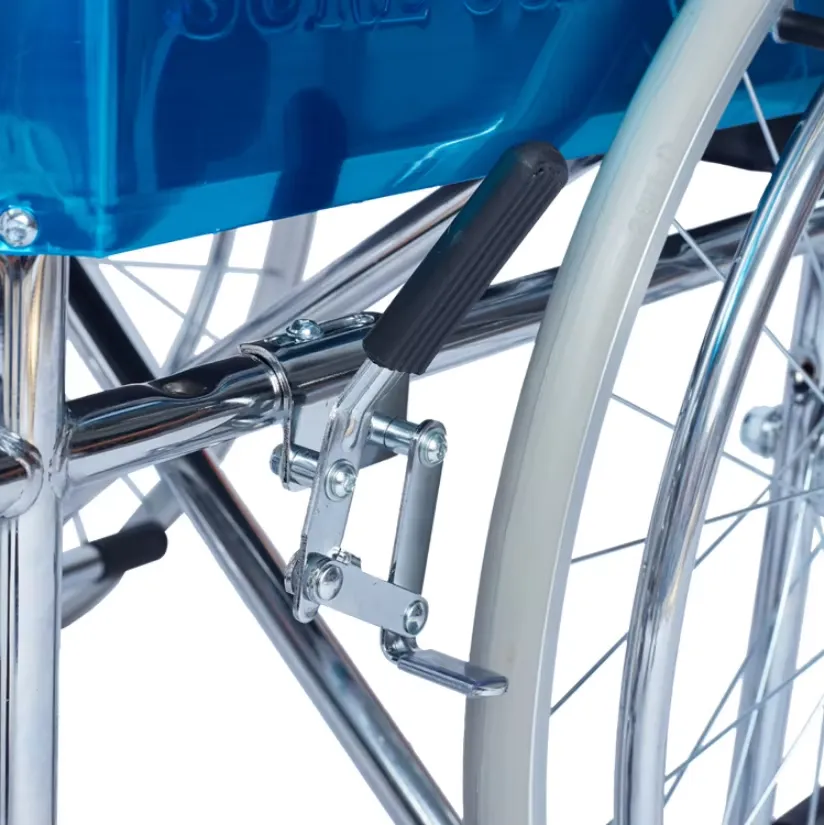
Manual wheelchair brakes on this type of chair act as parking wheel locks. They hold rear wheels while the chair is stationary, subject to the exact model instructions and condition. They are not a substitute for the user's or attendant's trained method of slowing a moving chair.
Why call them parking locks?
Start with the job they perform. The side lever shown in the product detail is positioned beside a rear tyre. Mersey Care's wheelchair safety advice warns against using wheel locks to stop a moving chair.
- Identify each lock and its intended operating position.
- Separate stationary parking checks from propulsion training.
- Keep the model instructions available at handover.
| Task | Correct review |
|---|---|
| Parking | Confirm lock contact on a stationary chair |
| Slowing movement | Use trained user or attendant technique |
The distinction belongs in every demonstration script. Key Takeaway: Your team can explain the lock without teaching a risky braking habit.
How do manual wheelchair brakes match the exact chair?
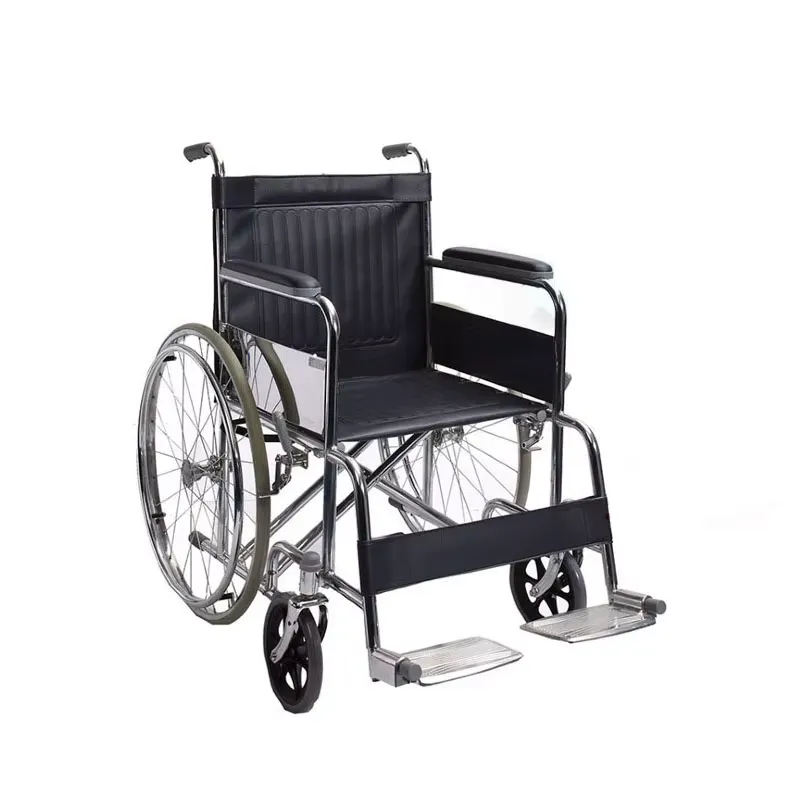
Manual wheelchair brakes match when their parts, mounting position and tyre interface are approved for the exact chair setup. Similar levers can have different brackets or contact points. Check the product range alongside the model and part record before placing an order.
Which identifiers belong in a parts request?
Put the tyre in the same conversation. Ask for the chair model, relevant revision, lock side and rear-wheel or tyre configuration. A change in tyre type or size can affect the contact that a given lock was set up to make.
- Record the chair and lock assembly references.
- Identify the applicable rear-wheel and tyre setup.
- Request included fittings and approved service guidance.
| Item | Question for the supplier |
|---|---|
| Lock assembly | Which model and side does it fit? |
| Rear wheel | Which tyre setup is this match based on? |
A complete request makes a look-alike replacement less tempting. Key Takeaway: The received part can be checked against a specific chair.
What should a manual wheelchair brakes transfer check cover?
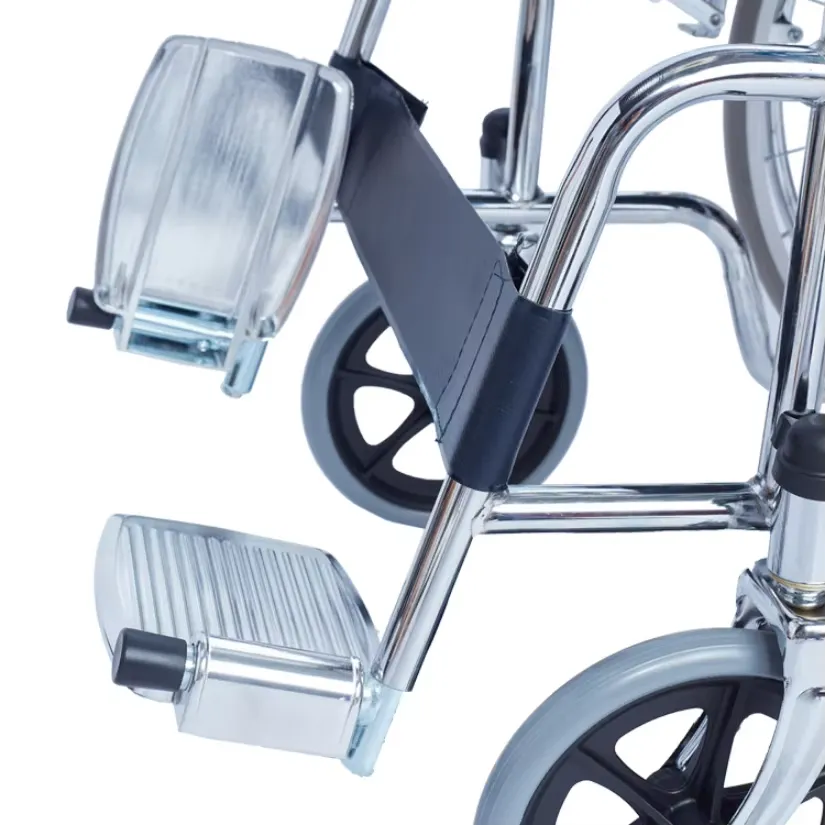
A manual wheelchair brakes transfer check covers stationary positioning and the prescribed wheel-lock use before a person moves between surfaces. The transfer method itself needs an individual review by trained personnel. Do not turn a generic article into a personal transfer instruction.
What should staff show at handover?
Keep the chair still before discussing movement. Explain where the model's locks are and how staff should verify the chair is secure under the applicable instructions. Frimley Health's standard-wheelchair guidance includes brake use before transfers.
- Follow the individual's assessed transfer plan.
- Use the model's prescribed lock positions and checks.
- Refer uncertain transfer concerns to the responsible clinician.
| Review | Owner |
|---|---|
| Chair lock operation | Trained product handover or service staff |
| Personal transfer method | Appropriate clinical or rehabilitation assessor |
Both reviews are needed, but they answer different questions. Key Takeaway: You can provide a safer handover without prescribing a transfer.
How can tyre condition affect manual wheelchair brakes?
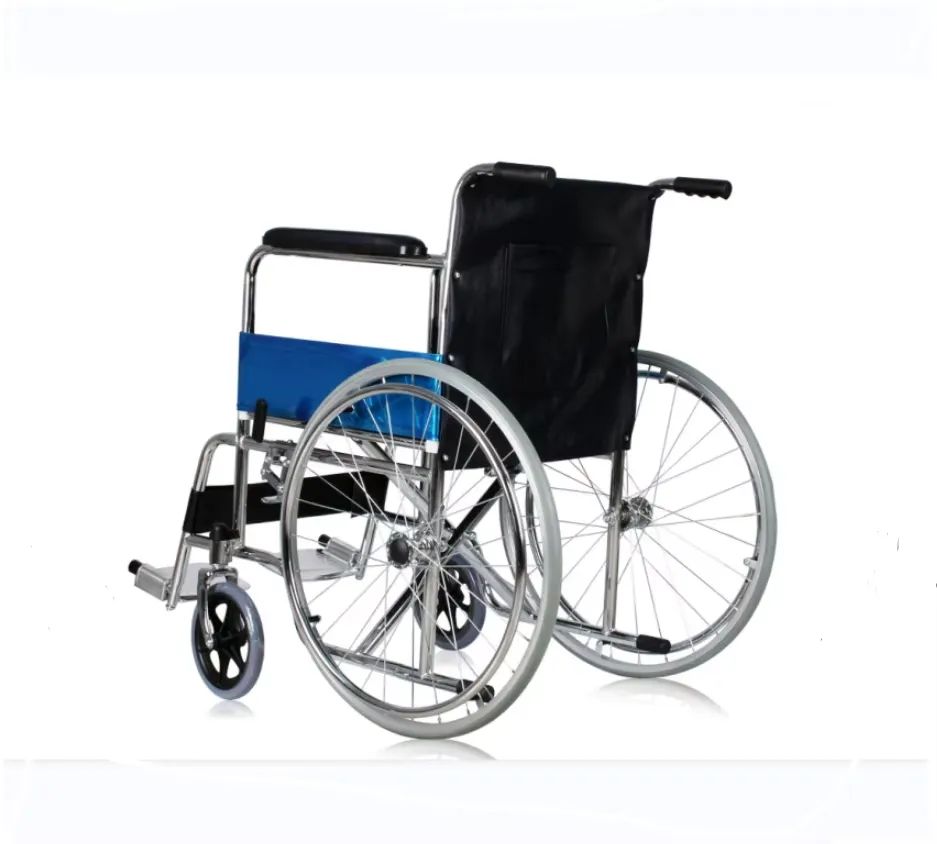
Manual wheelchair brakes that contact a rear tyre depend on that tyre's approved condition and setup. Wear, damage or an incorrect replacement may change how the lock meets the wheel. The pictured lever shows a tyre-contact arrangement, not proof of every model's mechanism.
What information should be checked together?
Read the wheel and lock as one assembly. Use the exact tyre specification and service instructions rather than judging contact by eye alone. If the chair uses pneumatic tyres, follow the stated pressure range for that tyre and model; do not invent a universal setting.
- Identify the approved tyre type and size.
- Record visible wear or damage for service review.
- Escalate uncertain lock contact before normal use.
| Observation | Next step |
|---|---|
| Tyre specification differs | Confirm approved replacement details |
| Lock contact looks uncertain | Request trained service review |
A lock cannot be assessed independently of its contact surface. Key Takeaway: Your inspection can catch a wheel-related mismatch before a sale or repair.
When do manual wheelchair brakes need service?
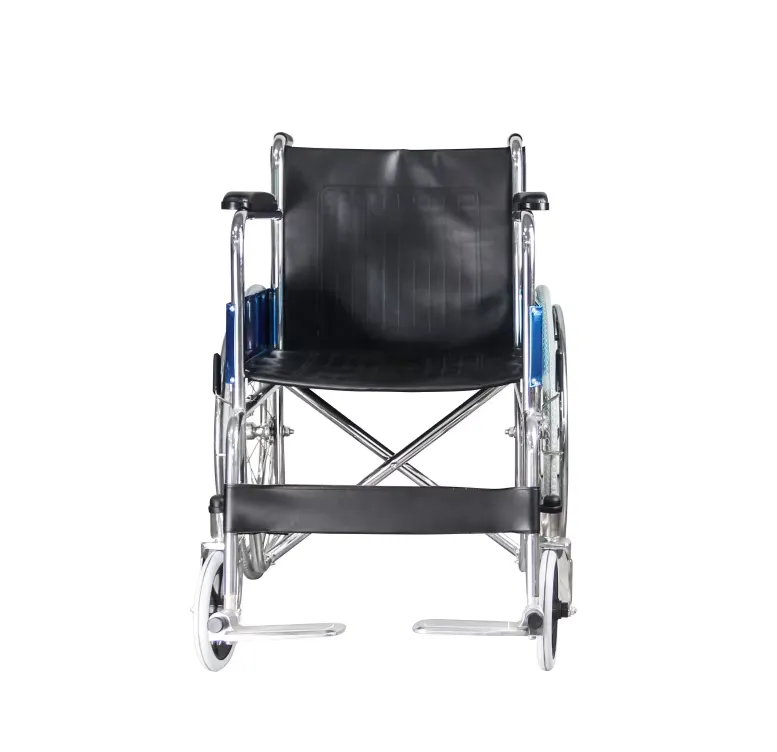
Manual wheelchair brakes need service review when a lock feels loose, fails to hold as specified or shows damage. Treat a changed feel as a reportable observation, not a diagnosis. The service team should follow the maker's process and the user's provider arrangements.
What should be in the fault report?
Describe the symptom without guessing at the fix. Note the exact chair, side, tyre setup, observation and recent work. Keep the user from relying on a suspect lock while the responsible team decides the appropriate response.
- Record when and how the concern appeared.
- Photograph the affected area without forcing movement.
- Ask for approved service and return-to-use checks.
| Record | Why it helps |
|---|---|
| Model, side and tyre | Identifies the correct assembly |
| Observed symptom | Gives technicians a starting point |
A factual report is more useful than a guessed adjustment. Key Takeaway: The next technician can review a specific issue promptly.
Can manual wheelchair brakes slow a moving chair?
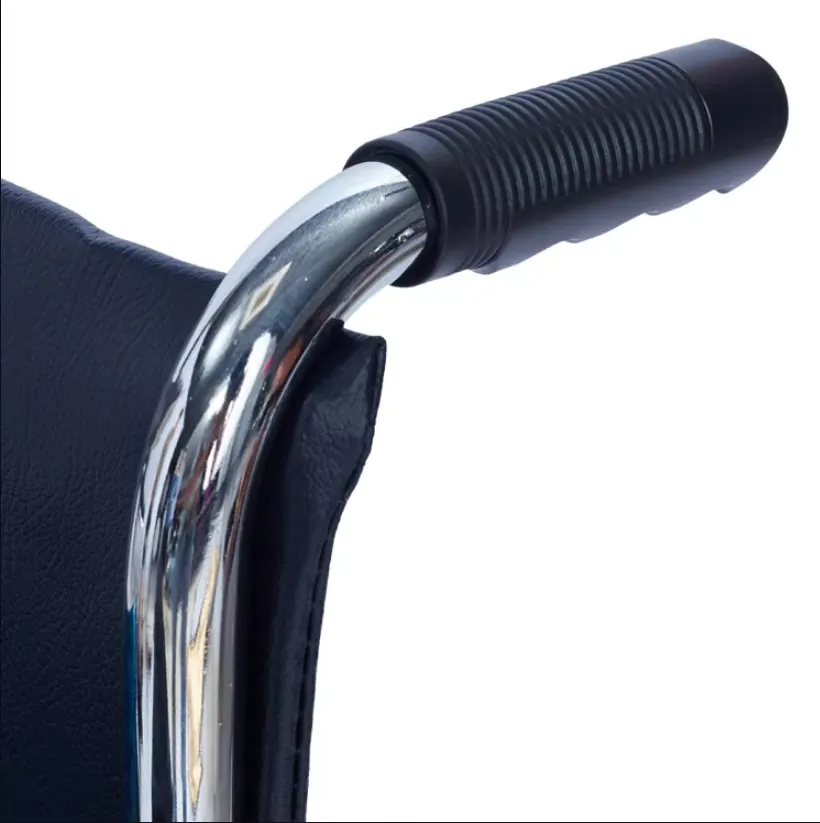
Manual wheelchair brakes of the parking-lock type should not be used to slow a moving chair. Applying a wheel lock during travel can create a sudden wheel stop and a loss of control. Use the applicable user or attendant training for movement instead.
How should the handover explain this limit?
Make the use boundary explicit. Demonstrate lock use only under the model's safe stationary procedure. Link any mobility practice to the person's assessed ability and training, not to an improvised lever action.
- State that parking and slowing are separate tasks.
- Show where the lock is and when it may be used.
- Refer propulsion or attendant technique to trained staff.
| Situation | Action route |
|---|---|
| Stationary setup | Use the approved parking-lock check |
| Chair in motion | Follow taught movement and slowing methods |
Clear language prevents a common but serious misunderstanding. Key Takeaway: Your buyer receives a usable rule, not a vague safety warning.
How should both manual wheelchair brakes be reviewed?

Manual wheelchair brakes should be reviewed as the actual left and right assemblies specified for the chair. One side working does not establish that the other side holds properly. A dealer should document each observation under the model's service routine.
What belongs in a two-sided record?
Treat each side as its own observation. Capture the location, condition and result for each lock without inventing a pass threshold. If transfer equipment is part of the user's plan, transfer devices need their own fit and handling review.
- Identify both assemblies by side.
- Record model-approved checks separately.
- Refer any difference to trained service personnel.
| Side | Record |
|---|---|
| Left | Condition and approved-check result |
| Right | Condition and approved-check result |
A side-specific record makes follow-up less ambiguous. Key Takeaway: A missed second lock is less likely to hide behind a general tick box.
Which manual wheelchair brakes details help spare-part orders?
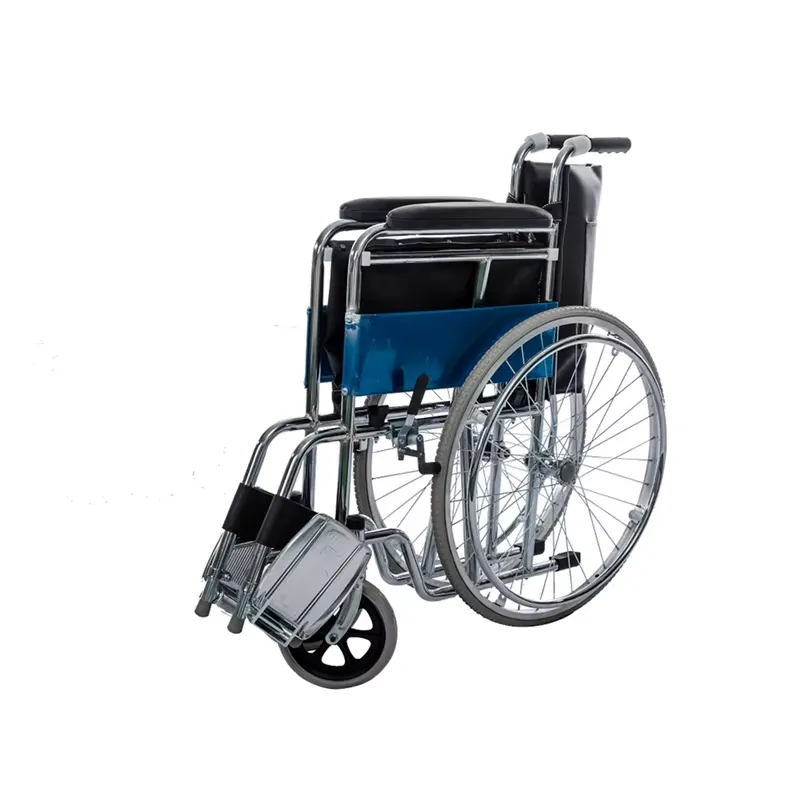
Manual wheelchair brakes are easier to order when the quote names the chair, side, rear-wheel setup and complete part scope. A photo can help locate the component but cannot replace the part reference. Ask who will fit and verify the approved replacement.
How do you avoid a partial quote?
Write down what arrives in the box. Clarify whether a lever, bracket, contact piece or full assembly is included. Ask the supplier team for the model match and relevant instructions before agreeing to substitution.
- List the exact model and revision.
- Specify side, tyre interface and part scope.
- Record who carries out fitting and final checks.
| Quote line | Clarify |
|---|---|
| Part scope | Complete assembly or individual component? |
| Service role | Who installs and checks it? |
Specific line items reduce back-and-forth after delivery. Key Takeaway: Purchasing can compare like-for-like parts rather than lever photos.
What should a manual wheelchair brakes handover include?
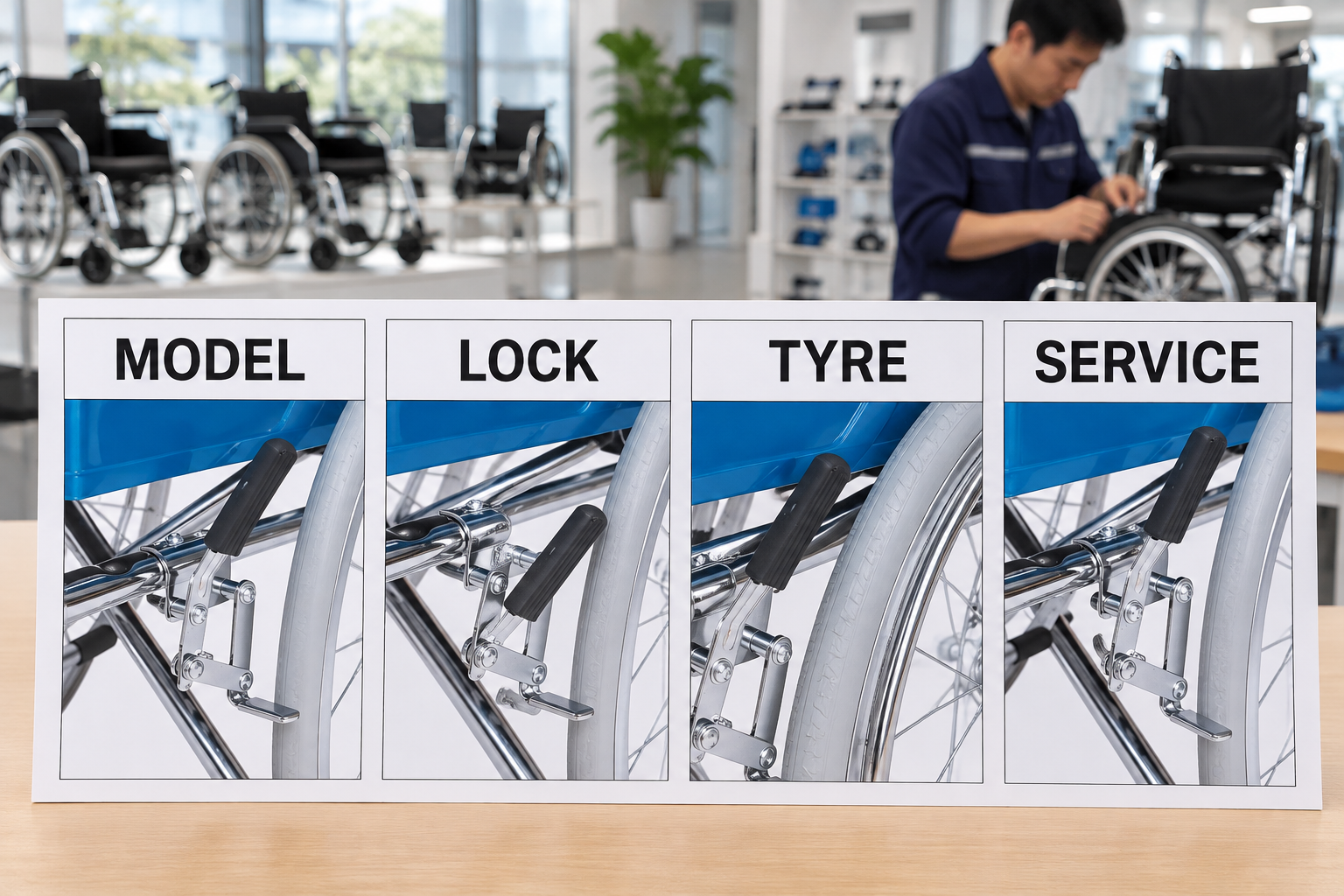
A manual wheelchair brakes handover should cover intended use, model-specific operation, user training, service contacts and follow-up. Give the user and attendant the same current guidance. Keep any unresolved lock concern outside normal-use sign-off.
Which handover evidence is worth keeping?
Make the next check easy to repeat. WHO's wheelchair provision guidance places selection, fitting, training and follow-up in one service process. Store the approved lock and tyre information with the chair record.
- Give the current model instructions and demonstration record.
- Record the chair, tyre and lock details.
- Set a route for service questions and later review.
| Handover item | Reader benefit |
|---|---|
| Use and training | Explains when the lock belongs in the routine |
| Service route | Names who handles a changed lock feel |
The chart above can structure the dealer's review, not certify a chair. Key Takeaway: You leave the buyer with a practical support path.
How do you choose manual wheelchair brakes with confidence?
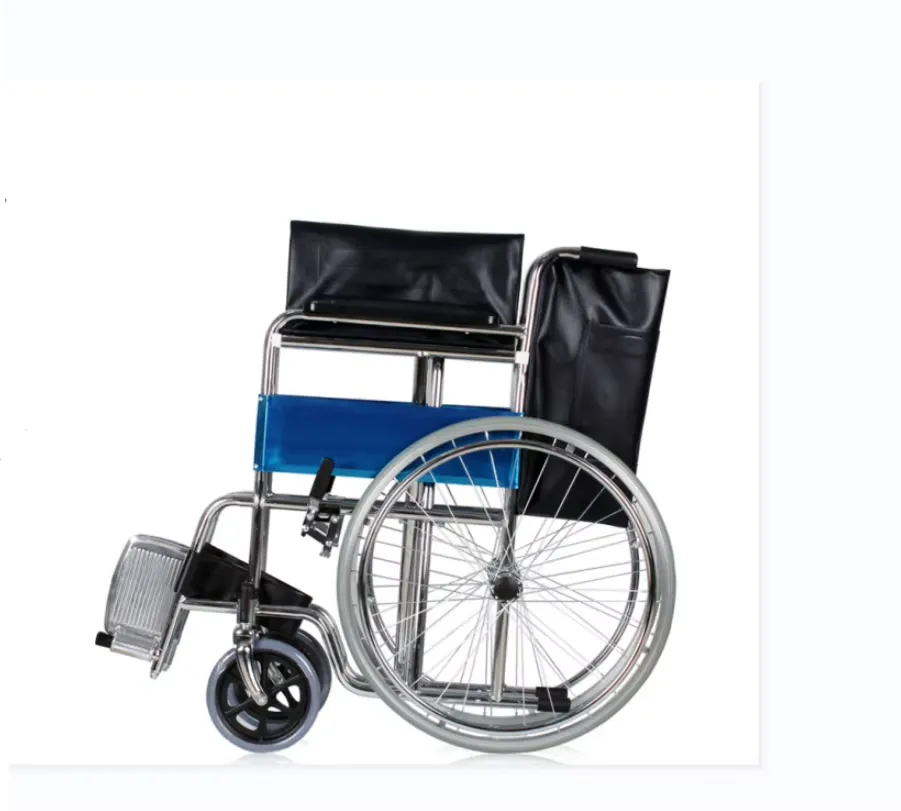
Choose manual wheelchair brakes by matching the exact chair and tyre setup, confirming parking use, and agreeing on service and transfer-review roles. One sales photo cannot establish safe operation for every user. Bring the model and intended setting into the enquiry.
What should you send for a useful response?
Send a brief that can be checked. Include the model identifier, tyre setup, lock concern and the setting where the chair will be used. Ask for the permitted parts and a documented handover route.
- Identify the chair and rear-wheel setup.
- Explain the parking or service question.
- Request model instructions and support contacts.
| Your brief | Response to request |
|---|---|
| Chair and wheel identity | Approved lock and parts match |
| Use or service concern | Next trained review step |
This keeps the choice tied to a real product and person. Key Takeaway: For help choosing an approved setup, contact us. Ary Medical stands for clear equipment decisions backed by fit, training and follow-up.
Frequently asked questions
Q1: Can I use the parking locks to slow the chair?
No. Wheel locks of this type are for stationary parking. Ask trained personnel about safe movement methods.
Q2: How do I know if a replacement lock fits?
Check the exact model, side, wheel and tyre setup against the approved parts record. A matching shape alone is not enough.
Q3: Can I adjust a loose lock myself?
Only if the model instructions and your provider expressly allow that work. Otherwise request trained service review before relying on it.
Q4: What's the best check before a transfer?
Use the chair's prescribed stationary lock check within the person's assessed transfer plan. Do not treat this article as a personal transfer method.
Q5: Can one working side stand in for the other?
No. Record both left and right assemblies under the applicable model guidance and refer differences for service review.