

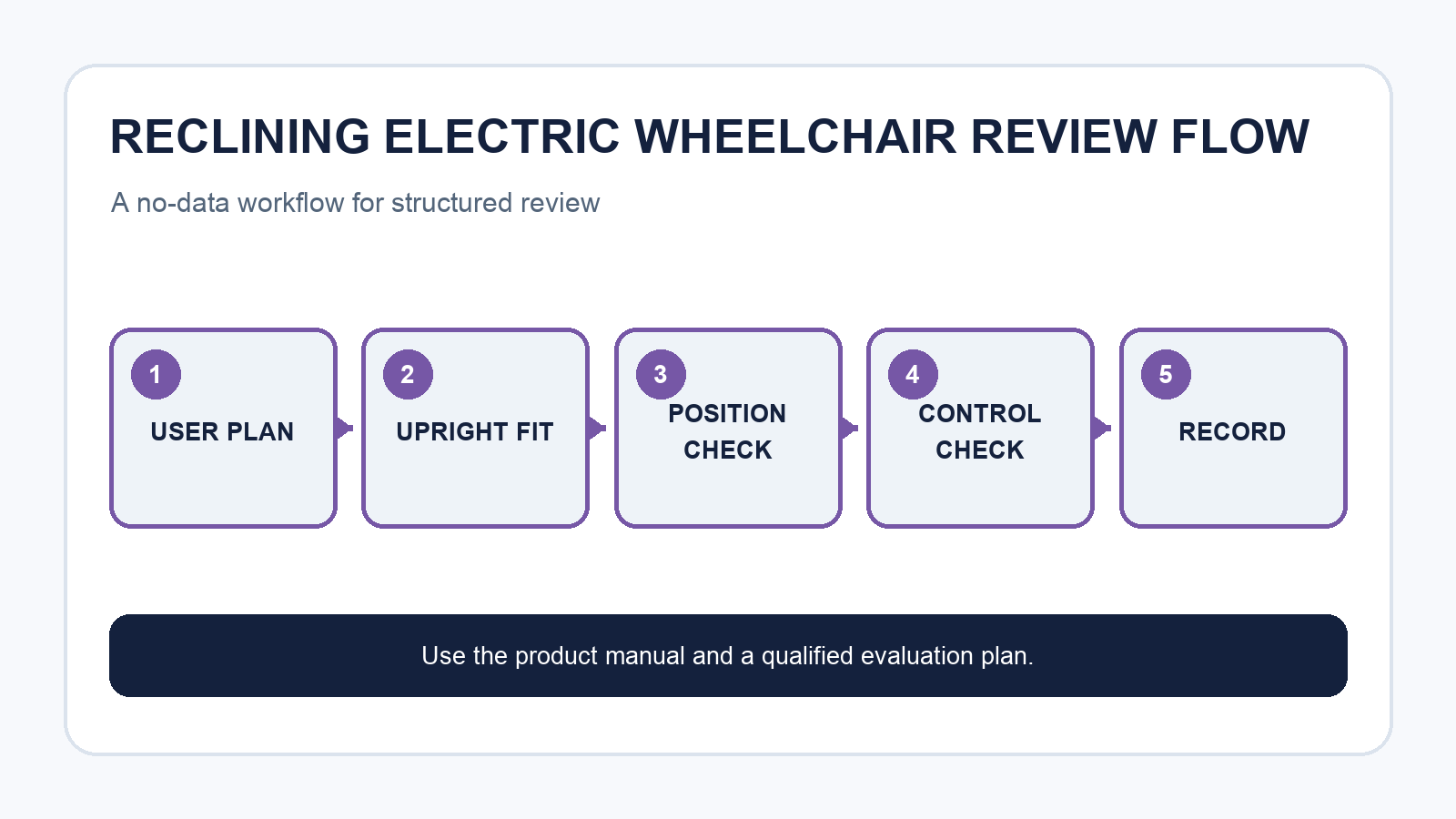
A reclining electric wheelchair is easy to review when the buyer starts with a qualified user plan, checks upright fit, observes each permitted position change, verifies control access, and records service evidence. Recline can affect head support, arm position, foot support, transfers, cable paths, room clearance, and caregiver tasks, so a feature list is not enough.
Dealers, care organizations, clinics, and distributors need model-specific instructions and a controlled method that keeps personal needs separate from broad sales claims. This article presents that B2B method without making medical promises. Every observation is tied to the exact chair, setup, evaluator, and manual. The finished file helps purchasing, training, and service teams see which questions are answered, which settings were tested, and where qualified guidance is still needed.
For U.S. public-access context, ADA.gov describes wheelchairs and manually powered mobility aids. Those access rules do not decide individual fit or positioning.
What user plan should guide the review?
A reclining electric wheelchair should be reviewed against a written user plan covering fit, posture goals, transfers, controls, caregiver tasks, routes, and qualified professional guidance.
Write the intended setting and who can approve personal positioning choices. The wheelchair range can help a sourcing team compare chair categories, while the user plan identifies which seating and movement functions need a hands-on review.
A useful worksheet separates observed facts, model records, evaluator notes, and open questions. Give each entry a date, source, exact setup, and named reviewer. Run the same check for every candidate and retain any changed setup. This record lets procurement, training, and service teams discuss the same evidence without turning a short trial into a broad product promise.
Which people and facts belong in the plan?
Name the decision roles:
Record the user, caregiver, clinician or mobility professional, buyer, trainer, and service contact when those roles apply. List the current seating setup, transfer method, control side, common rooms, doorway limits, storage, and the permitted use named in the manual.
- user and qualified adviser
- caregiver and transfer method
- control and support setup
- room and route profile
Repeat the check under the same conditions and record who took part. If a supplier answer arrives later, attach it to the original question instead of replacing the earlier entry. That history matters when a model, component, manual, or operating plan changes during sourcing. A score should include a short reason and a source link rather than a bare number.
Do not let procurement staff choose a personal recline angle from a brochure. Their role is to collect the exact model records, arrange a controlled sample, and document questions. Fit or positioning decisions remain with the user and qualified professional team.

How should upright fit be documented?
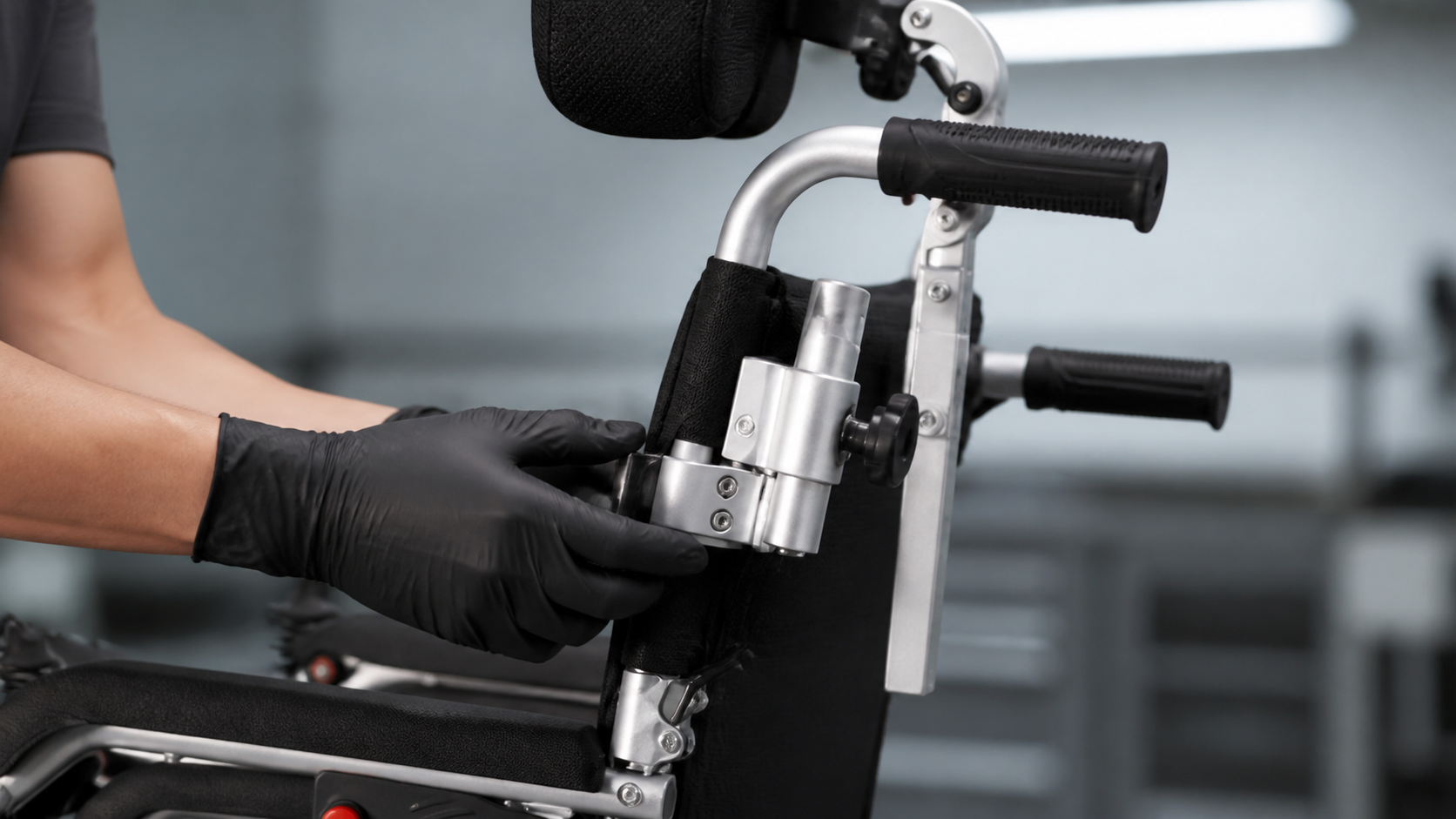
A reclining electric wheelchair needs an upright fit record covering seat and back support, head support, armrests, foot supports, controls, transfer access, and room clearance.
Begin in the documented upright setup before changing position. The wide-seat wheelchair article offers wider-seat context, yet every sample still needs its own user-specific fit and access review.
What belongs on the upright fit sheet?
Use the same reference setup:
Record support contact, visible alignment, joystick reach, arm position, foot placement, head support position, and caregiver access without making a clinical judgment outside the review team’s role. Note each adjustment setting and the manual page used for setup.
- seat and back support areas
- head and arm support
- foot support and transfer access
- joystick and room clearance
Keep the chair stationary while fit is reviewed and ask the qualified adviser to direct personal changes. If a mount, cushion, support, or control position changes, save the new setup as a separate record rather than overwriting the earlier observation.
How should position changes be observed?
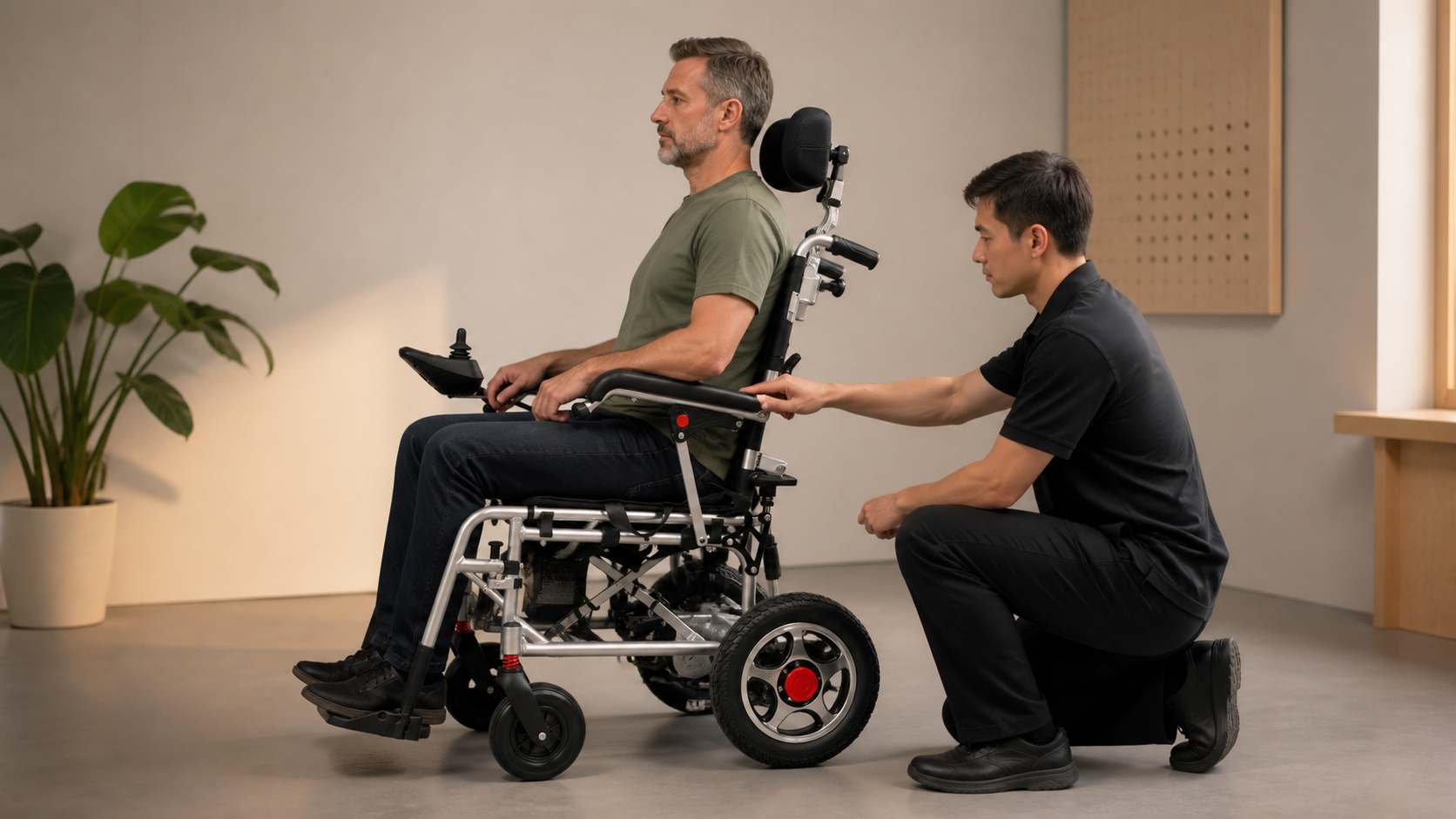
A reclining electric wheelchair position change should be observed under the model manual for support contact, head and arm position, foot support, cable movement, wall clearance, and caregiver access.
Use a controlled room with enough open space and a clear stop instruction. The wheelchair selection article can help teams frame wider wheelchair-choice questions, while the exact recline sequence remains model and user specific.
What makes a position trial repeatable?
Move through documented stages:
Start from the recorded upright setup and use only permitted controls. Pause at agreed points so the team can observe supports, clothing, joystick access, cable path, foot position, rear clearance, and any contact with furniture or staff. Return using the manual sequence.
- starting upright record
- support and limb position
- cable and control movement
- rear and side clearance
Do not interpret a quiet mechanism or smooth sample as proof of personal benefit. Record what the team saw, who directed the change, and whether the user plan was met. Stop when the user, adviser, caregiver, or operator reports uncertainty.
Which controls and caregiver tasks need review?
A reclining electric wheelchair needs separate checks for drive controls, position controls, attendant access, power state, freewheel use, emergency steps, and caregiver working space.
Controls may move relative to the user or nearby furniture during recline. Inspect mounts and cables while powered off, then run only the documented functions in a supervised area with a clear stop route.
How can teams record control access?
Separate each operating task:
List who uses each control, from which position, and under which chair setup. Record reach, visibility, label clarity, mounting firmness, cable clearance, and the return-to-upright action. Ask the supplier for written guidance when any symbol or sequence is unclear.
- drive control access
- position control access
- attendant and freewheel steps
- stop and return sequence
Caregiver space belongs on the room plan. Note whether support, clothing, bedding, furniture, or a wall conflicts with the permitted movement. The sourcing sheet should flag a conflict rather than invent a workaround that the manual does not support.
What service evidence should buyers compare?
A reclining electric wheelchair should rank higher only when positioning instructions, component identification, inspection records, parts support, training, and fault reporting match the care setting.
Ask how the exact actuator, control, support, cable, and frame revision are identified without dismantling the sample. Request the current manual, inspection fields, packing method, training outline, and service communication path.
Which records support long-term ownership?
Keep the model history visible:
Save the chair reference, setup record, user manual, part names, inspection observations, support responses, and any approved configuration change. Ask how dealers receive updated documents and how a reported position fault is routed to trained service staff.
- model and setup reference
- position and control manual
- parts and inspection route
- training and service contact
Score user-plan fit, upright setup, position trial, controls, room access, and service separately. Keep unanswered fields open. A care buyer or distributor can contact us today with its intended setting, sample plan, user-review roles, and required product records.
What do buyers ask about this mobility product?
The reclining electric wheelchair questions buyers ask most often concern fit, permitted use, records, controlled checks, and supplier support.
Can I choose a recline setup from product photos?
No. Product photos do not show personal fit, support contact, control reach, transfer method, room clearance, or professional guidance. Use the exact chair in a qualified evaluation plan.
What's the best reclining chair for every care setting?
There is no single model for every setting. The suitable choice matches the user plan, room, transfers, supports, controls, permitted functions, caregiver tasks, and available service route.
How do I know if head support is positioned correctly?
Ask the qualified professional directing the personal evaluation and follow model-specific adjustment instructions. Procurement staff should record the setup rather than make a clinical determination.
Can a caregiver operate the position controls?
Only when the product instructions and care plan assign that task and the caregiver has suitable training. Record who uses each control and the stop and return steps.
What should I ask the supplier before a sample?
Request the exact model manual, positioning functions, control map, support adjustments, room clearances, inspection fields, training route, parts identification, and fault-report process.