
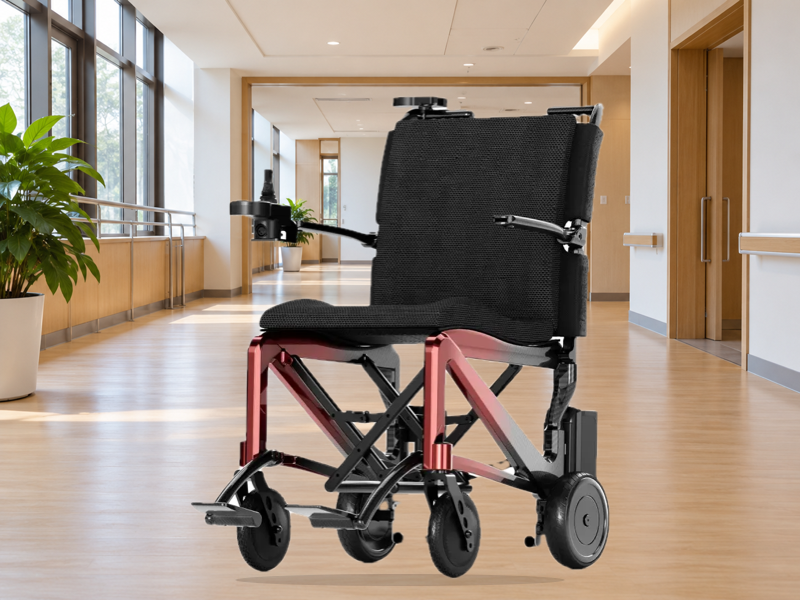
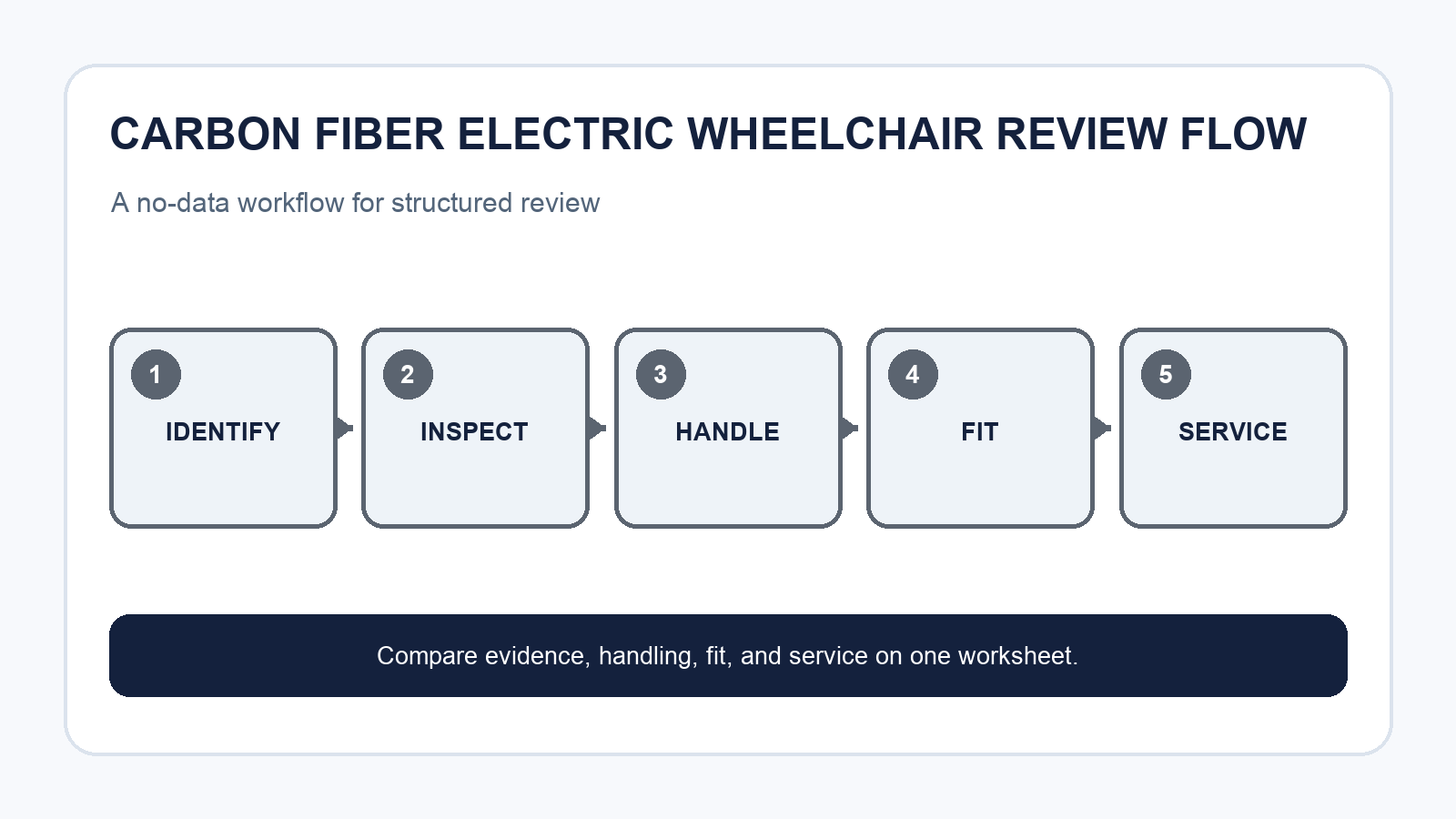
Compare a carbon fiber electric wheelchair by checking its frame records, full-chair handling, fit, controls, and service file. The material label alone cannot show how a chair folds, balances, fits a user, clears a doorway, or receives parts. Ask for the exact model version, drawing, manual, or sample record behind each claim. Then compare carbon-frame chairs with other designs using the same review steps. Do not treat frame material as proof about every chair part. This gives buyers, service staff, and trainers one set of facts to review.
For U.S. access rules, see ADA.gov’s mobility-device guidance. It does not verify this chair’s frame or parts.
What material evidence should buyers request?
Start with model records that name each carbon-fiber frame part, chair version, drawing, manual, and supplier source.
Ask which visible members use carbon fiber and which parts use another material. The wheelchair range can place the product in a wider wheelchair range, while the sourcing file identifies the exact sample and revision under review.
A useful worksheet separates observed facts, model records, evaluator notes, and open questions. Give each entry a date, source, exact setup, and named reviewer. Run the same check for every candidate and retain any changed setup. This record lets procurement, training, and service teams discuss the same evidence without turning a short trial into a broad product promise.
How can teams trace a material claim?
Connect the claim to a source:
Request a drawing, bill reference, labeled component view, or supplier declaration tied to the exact model. Compare that record with the physical sample without cutting, drilling, or damaging it. Mark decorative surface patterns and unknown covers as unverified until a model record explains them.
- exact model and revision
- named frame members
- document source and date
- open construction questions
Repeat the check under the same conditions and record who took part. If a supplier answer arrives later, attach it to the original question instead of replacing the earlier entry. That history matters when a model, component, manual, or operating plan changes during sourcing. A score should include a short reason and a source link rather than a bare number.
Keep material identity separate from complete-chair performance. Wheels, motors, fasteners, upholstery, batteries, controls, and folding hardware may use other materials and need their own review. A clear worksheet prevents a carbon label from becoming an unsupported claim about the whole unit.
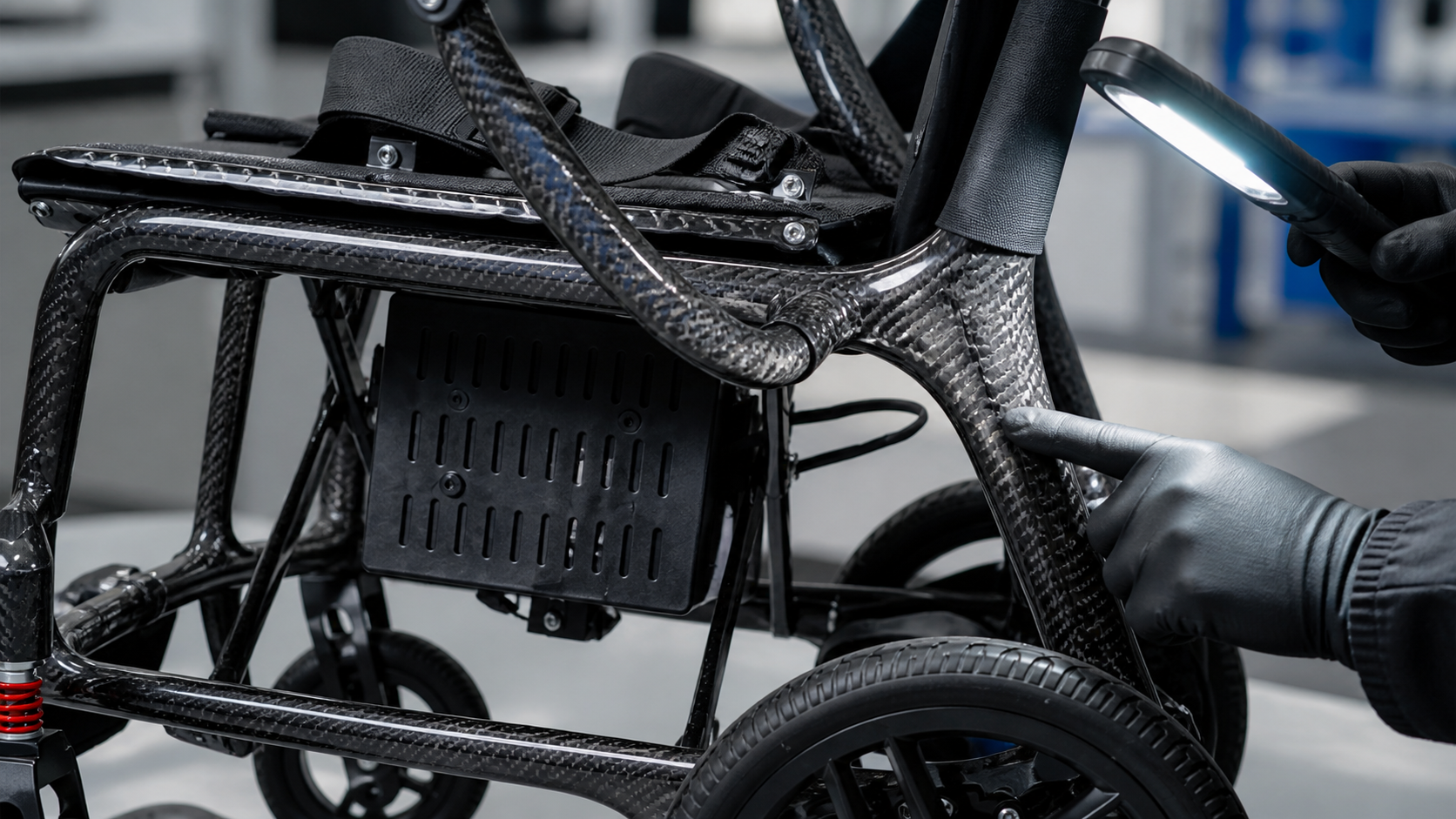
How should frame condition be inspected?
Check visible surfaces, joints, fasteners, folds, contact areas, and conditions named in the manual. Do not alter the frame during this review.
For background, read the electric wheelchair engineering article. Use the exact manual and trained service staff for checks and repairs.
Which visible areas belong on the checklist?
Use a calm inspection sequence:
Power off the chair and inspect accessible frame members from the same angles on every sample. Look for visible change, unusual movement, loose hardware, cable contact, or surface marks near joints. Do not diagnose internal condition from a photograph or apply a generic repair method.
- frame surface and junctions
- folding and pivot areas
- fasteners and mounting points
- cable and accessory contact
Photograph findings with the model reference and date, then send unclear conditions through the supplier’s service path. The record should distinguish a cosmetic observation, a loose external part, and a condition that needs trained evaluation. Procurement staff should not rewrite those categories as failure claims.
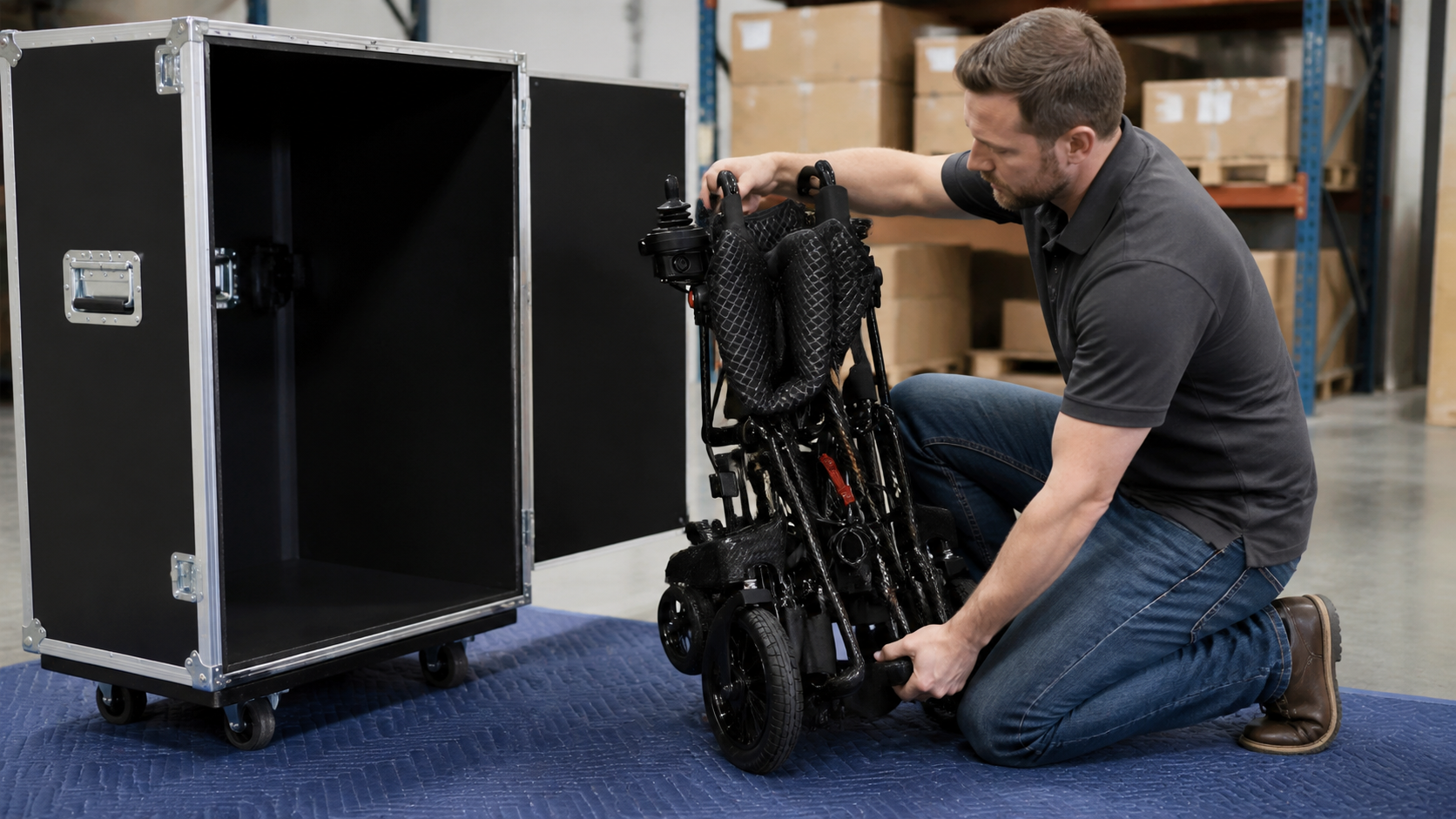
What does a folded handling trial reveal?
A folded sample review shows shape, balance, grip access, loose parts, cargo fit, and staff handling needs. Frame material alone cannot answer those questions.
Confirm what the documented chair weight includes, then connect it to the real folded unit. The electric wheelchair weight article helps buyers frame weight questions, while a supervised practice shows how shape and balance affect the move.
How should handling observations be recorded?
Follow the full movement:
Use the model manual on level flooring with the chair powered off. Record the starting setup, fold steps, grip points, parts removed, lifting equipment, cargo opening, and resting orientation. Name every person and tool involved so the result can be repeated.
- complete-chair setup
- folded dimensions and balance
- grip and pinch areas
- cargo method and helper role
Do not treat low mass as permission for any worker to lift the chair. Workplace policy, personal capability, cargo height, and available equipment still control the method. Compare carbon and non-carbon candidates under the same policy rather than inventing a separate standard for one material.
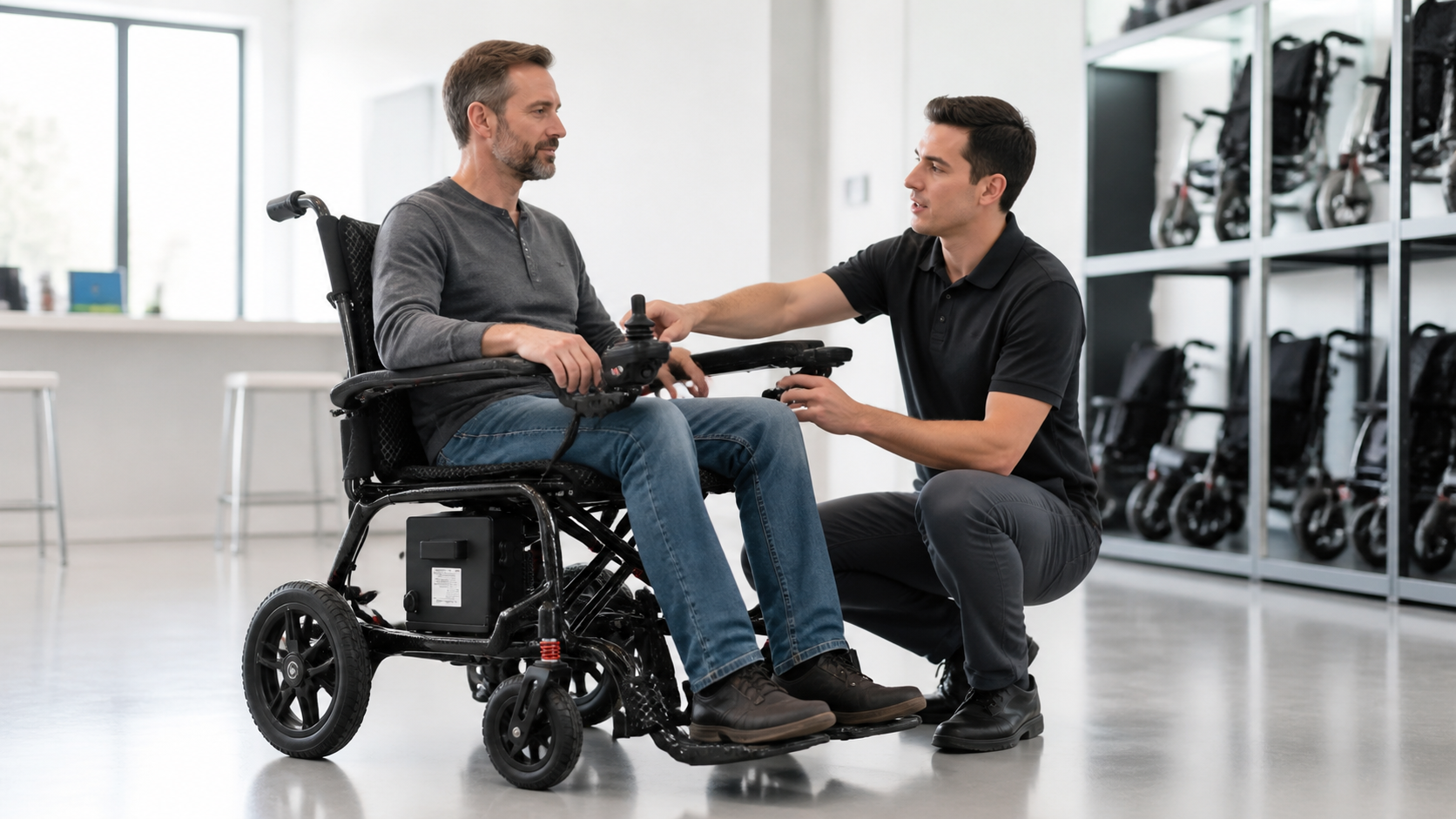
How should fit and controls be compared?
Compare user fit, seat access, foot placement, joystick reach, control mounting, cable routing, and observations from the planned route.
The frame material does not settle personal fit or control access. Build the same user and route profile used for every shortlisted chair, then keep clinical decisions with a qualified professional when the user requires that support.
Which checks keep the comparison fair?
Use one setup sheet:
Record seat and back support areas, armrest position, foot support, joystick side, mounting firmness, and visible cable path with the chair powered off. Use powered trials only in a controlled area under the manual and a clear stop procedure.
- seat and back support
- armrest and foot access
- joystick reach and mount
- dry level route observations
A sourcing record should describe what happened under named conditions. It should not promise comfort, clinical benefit, or behavior on an untested route. If an adjustment changes the result, record both setups and keep the chosen configuration tied to the user profile.
Which service records affect the final rank?
Rank a chair higher only when inspection steps, part names, packing, repair routes, manuals, and supplier replies fit the buyer’s service plan.
Ask how staff report a suspected frame issue, what photos and model details are required, and who decides the next action. Request packing methods that protect exposed frame and controls during sample and order handling.
What should a supplier file contain?
Keep the service route traceable:
Collect the manual, model reference, component names, inspection fields, packaging outline, and written support path. Ask how a revision change reaches dealers and how a replacement part is matched to the chair. Do not infer repair permission from a generic material guide.
- model and revision record
- inspection and service guidance
- parts naming method
- packing and issue report route
Score material evidence, visible condition, handling, fit, controls, and service separately. Leave unresolved fields open and attach later supplier answers to the original request. A buyer can contact us today with its market, use profile, sample plan, and requested model records.
What do buyers ask about this mobility product?
The carbon fiber electric wheelchair questions buyers ask most often concern fit, permitted use, records, controlled checks, and supplier support.
Can I assume every black patterned tube is carbon fiber?
No. Appearance alone does not identify construction. Ask for a model-specific record that names the relevant frame members and revision, then match that record to the physical sample.
What's the best way to compare chair weight?
Confirm what the stated weight includes and use the same setup for every candidate. Pair the number with folded balance, grip access, cargo height, loose parts, and your workplace handling policy.
How do I know if a frame mark needs service?
Use the product manual and trained service route. Record the location and visible condition without destructive testing, then send the exact model details and photos to qualified support staff.
Can a carbon frame settle user fit?
No. Fit depends on the person, seat, back support, armrests, foot supports, controls, route, and adjustment setup. A qualified mobility professional may be needed for personal decisions.
What supplier evidence should I save?
Save the model and revision record, material source, current manual, drawings, inspection guidance, component names, packaging method, and written route for service questions.