
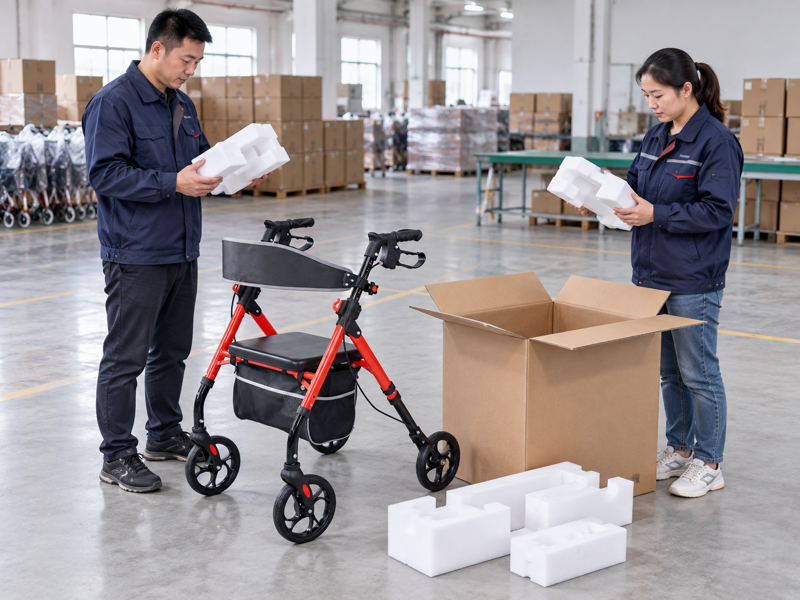
Plan rollator packaging from the exact model's approved folded configuration, then protect vulnerable parts and verify the real carton before shipping. A dealer can receive an intact outer box but find a bent cable guide or loose bag inside. A product photo will not reveal the packing sequence, measured size or transit result. Give the supplier a content checklist and give receiving staff a clear inspection record.
What should rollator packaging protect?
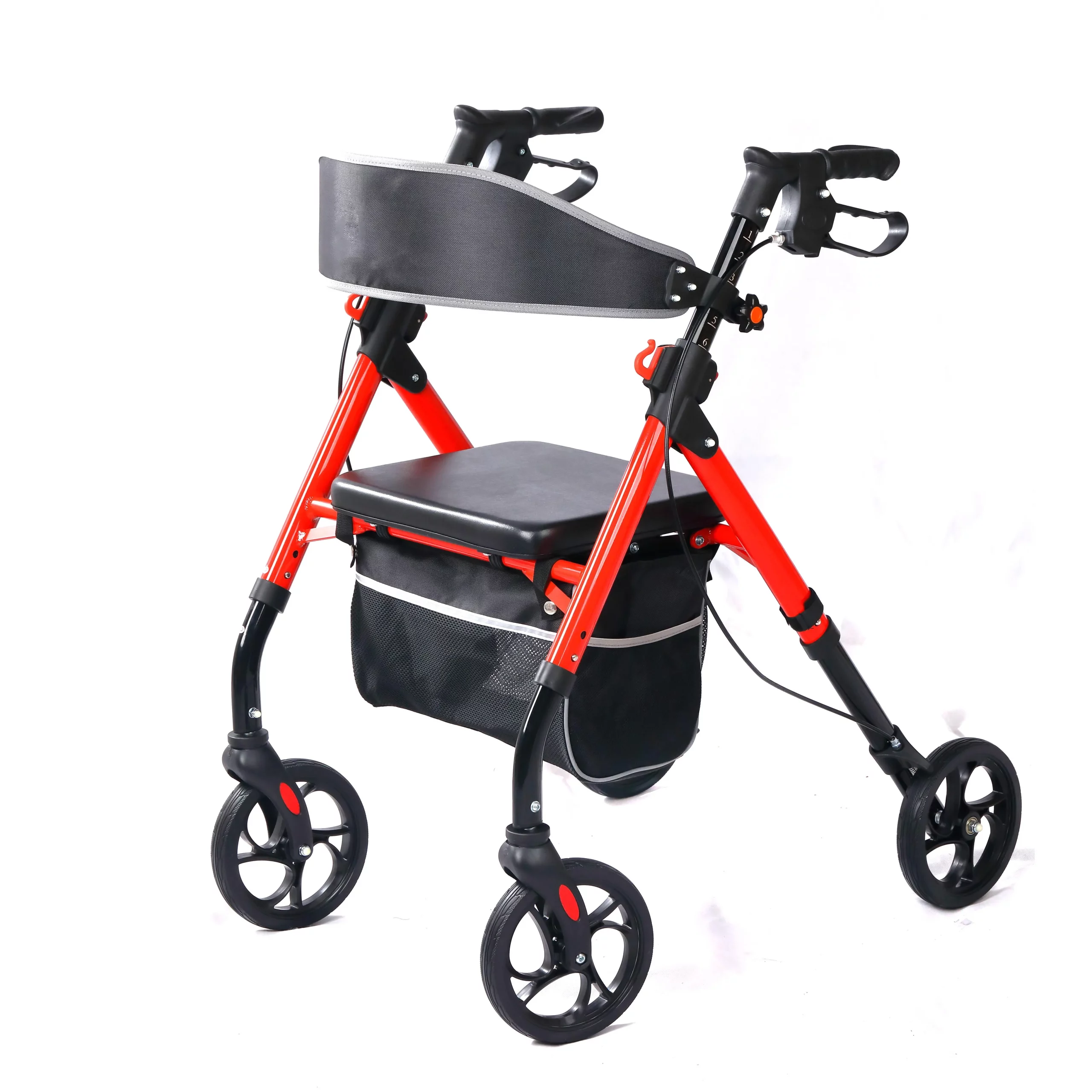
Rollator packaging should protect the named rollator's frame, wheels, handles, seat, bag, brake components and included documents according to its approved pack design. The red Shopping Walker photo shows those visible areas before packing. It cannot prove that any particular box has passed a transport test.
Which contact points belong on a brief?
Walk around the whole aid. List projecting handles, front casters, rear wheels, seat edges and removable items. Ask which protections the pack uses for the exact configuration rather than assuming a generic foam insert fits every frame.
- Identify product and option codes.
- Name vulnerable surfaces and fittings.
- Request the current packing layout.
| Area | Packing question |
|---|---|
| Projecting part | How is movement restrained? |
| Included item | Where is it secured? |
A protection plan needs the complete item list. Key Takeaway: Your order can describe what the pack must contain and safeguard.
How should rollator packaging describe the fold?
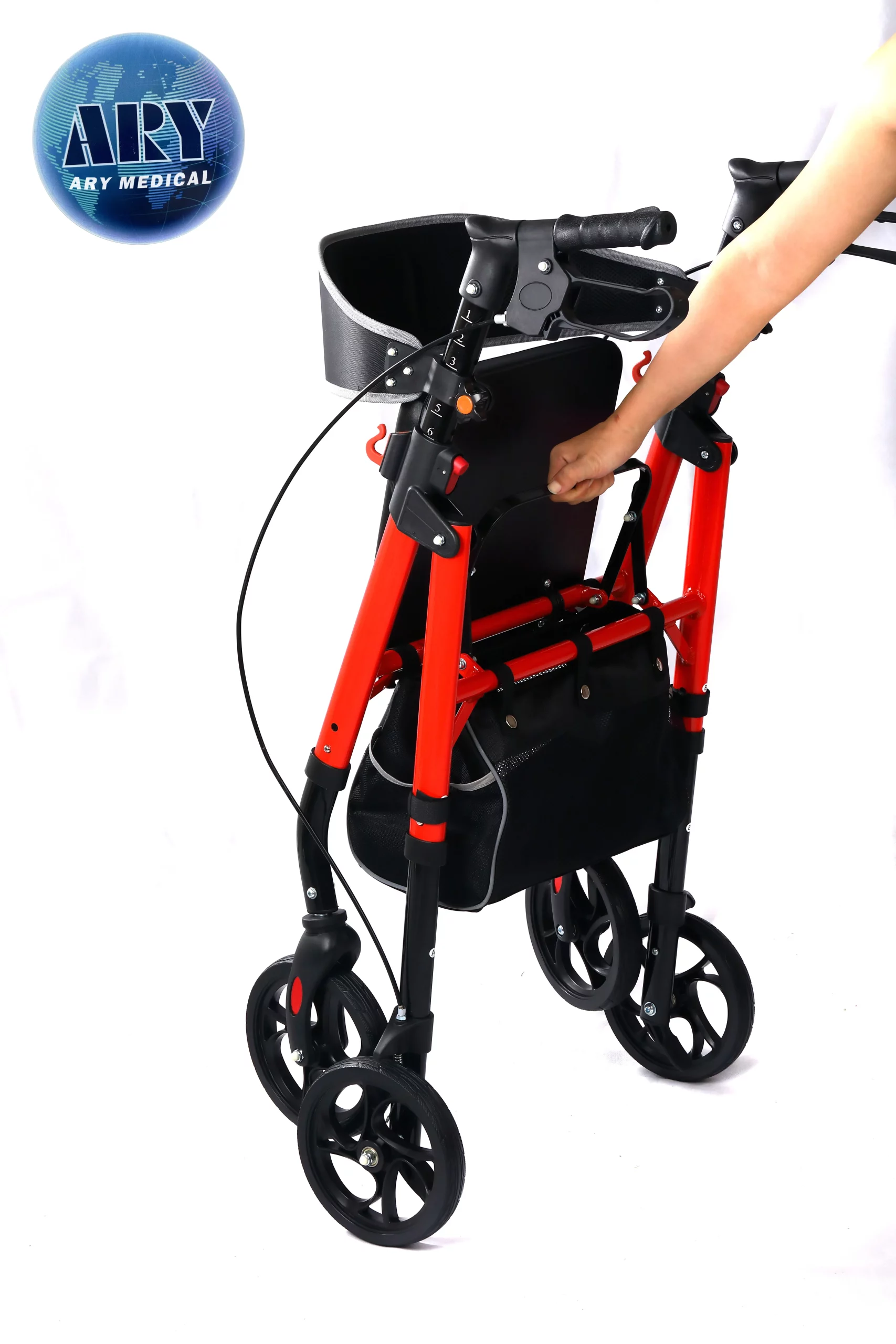
Rollator packaging should describe the permitted folded or partly collapsed position used for shipment, based on the exact model instructions. The product image shows a hand pulling an inner strap but not the complete folding sequence. Ask the product team for a controlled pack drawing.
What should the drawing make clear?
Name the shipped state, not a gesture. Record handle, seat, back strap and wheel positions in the final package. Any removal or locking step belongs to the maker's instructions and trained process.
- Request the approved fold or disassembly state.
- Identify loose parts and where they travel.
- Keep reopening checks with the package.
| Packing state | Evidence |
|---|---|
| Folded aid | Current model guide |
| Removed item | Packing list and location |
One photograph can start the question but not finish the method. Key Takeaway: The receiver can reconstruct the authorised configuration.
Which measurements matter for rollator packaging?
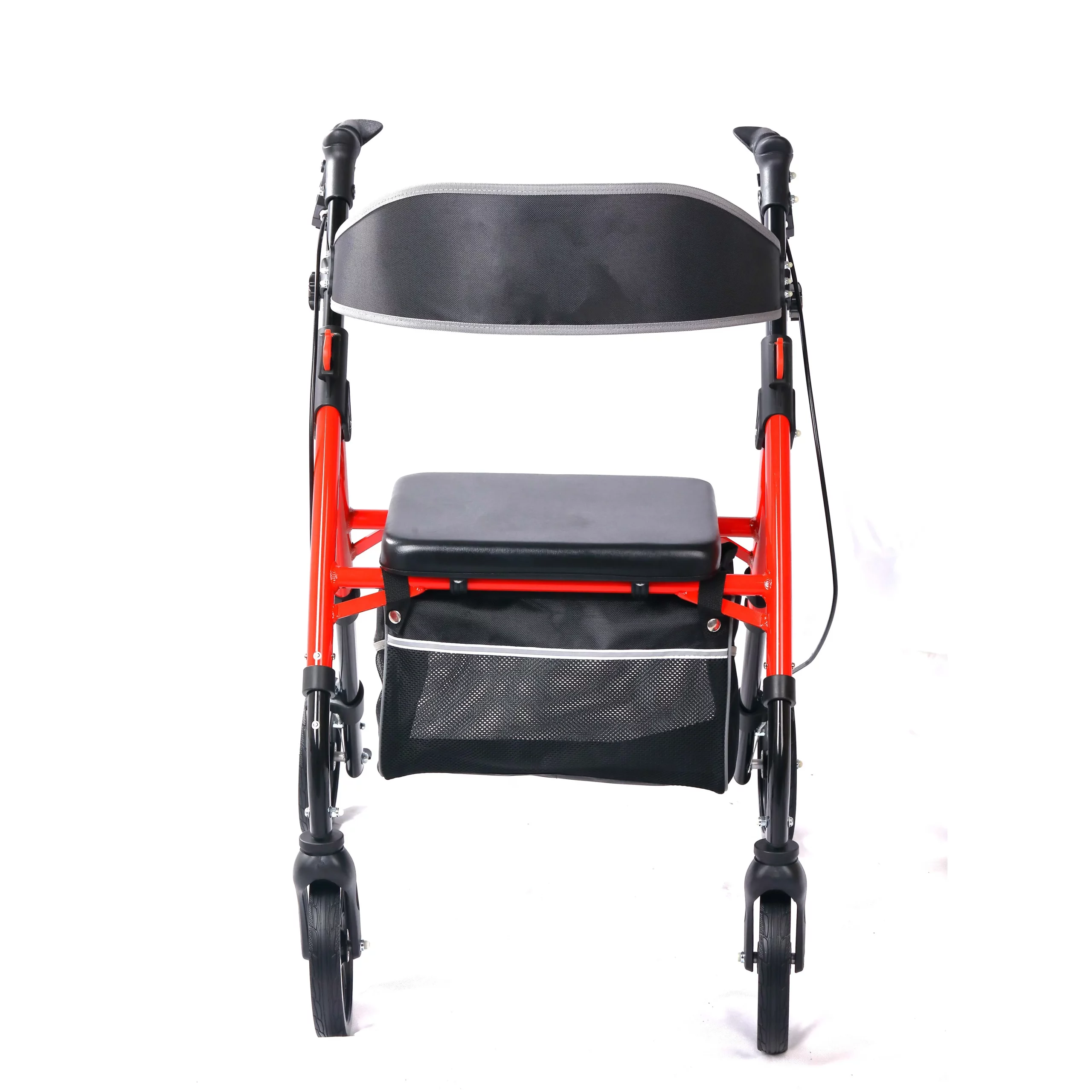
Rollator packaging measurements should state the actual carton length, width, height and gross weight for the quoted configuration. Open-chair dimensions or camera scale cannot replace packed data. Request the measurement method and any change when accessories differ.
What makes freight data usable?
Measure the package that will ship. WHO's assistive-product specification guide treats open and folded dimensions as product data; a transport quote also needs verified packed dimensions. Keep product, carton and order revision together.
- Request measured carton size and gross weight.
- Identify the product and accessory mix measured.
- Confirm when a change requires a fresh packing quote.
| Measurement | Applies to |
|---|---|
| Folded product | Aid in its approved compact state |
| Carton size/weight | Final packed unit |
A shipping figure without its configuration is hard to trust. Key Takeaway: You can request freight on the box that will actually move.
How can rollator packaging protect seat and bag?
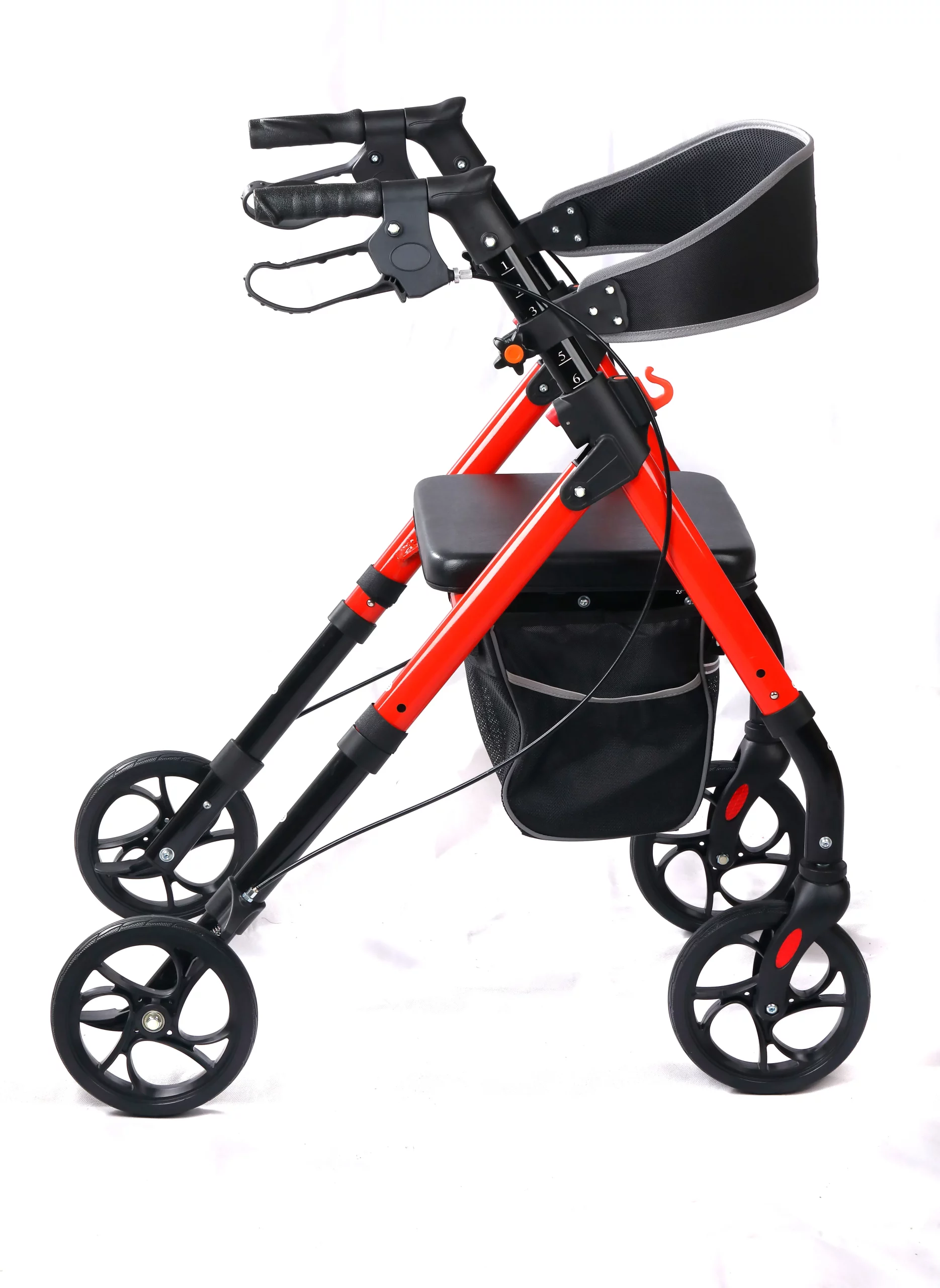
Rollator packaging should protect the seat and under-seat bag under the supplier's approved packing layout. A side profile shows both parts in the open chair but not how they sit inside a carton. Ask the supplier team whether either item travels fitted or separate.
What should a receiver examine?
Look where layers touch. Check seat edges, bag seams and attachment points for rubbing, moisture or missing parts after unpacking. Keep the actual maker care instructions with the contents rather than assuming fabric cleaning is a packaging fix.
- Identify the packed seat and bag positions.
- Protect surfaces from hard-frame contact as specified.
- Record visible condition on receipt.
| Component | Receiving question |
|---|---|
| Padded seat | Any mark or compression concern? |
| Under-seat bag | Complete and correctly attached? |
A clean outer carton can still hide contact damage inside. Key Takeaway: Your dealer can spot a handling issue before a customer handover.
What should rollator packaging do around cables?
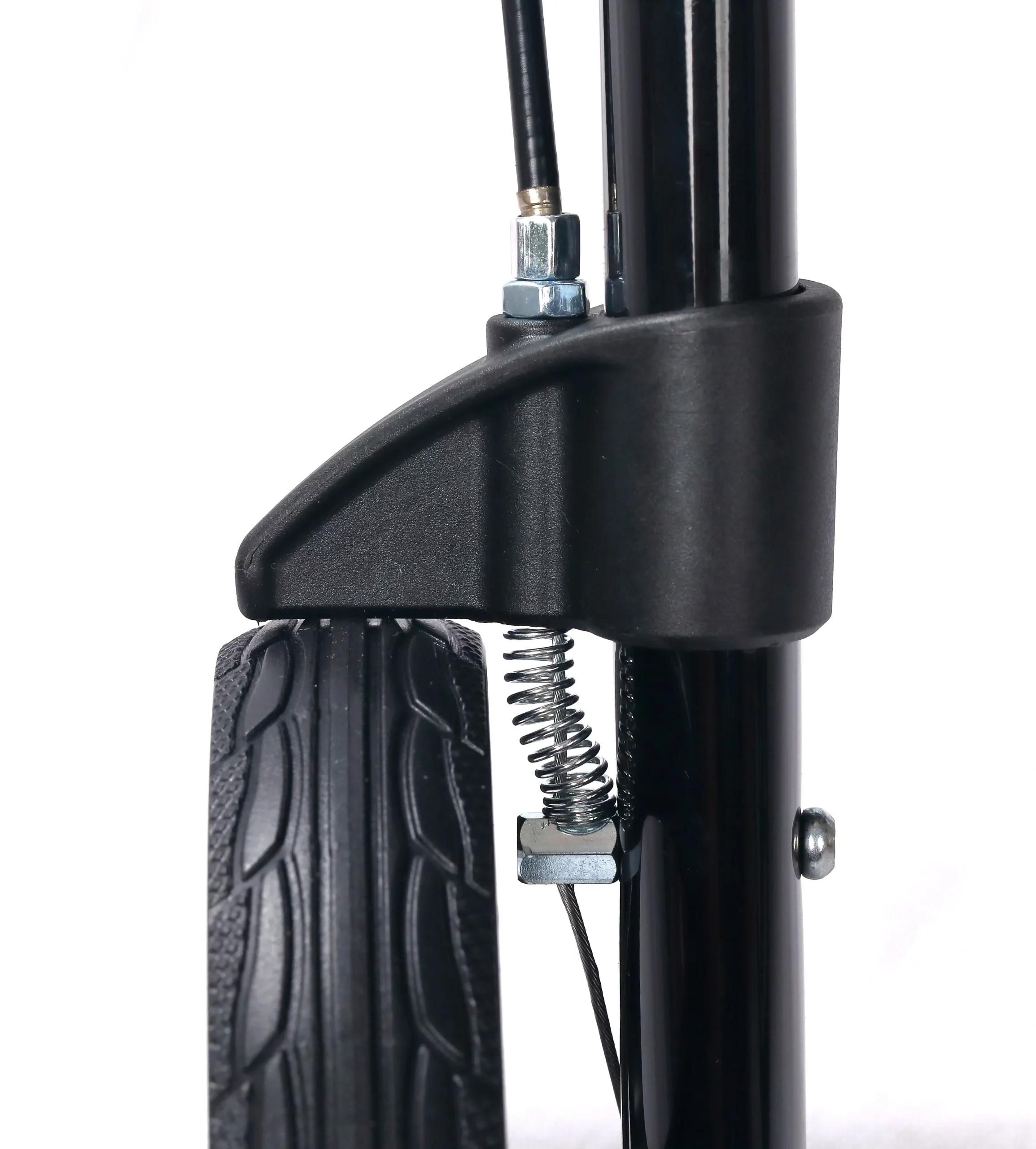
Rollator packaging should keep brake cables and nearby wheel fittings in the position and protection defined by the exact pack plan. The close-up shows a cable near a wheel but no approved wrapping method. Do not tape, bend or disconnect a cable from a photograph.
How should technical staff review the unpacked aid?
Inspect the routing before a trial. Check visible cable condition and carry out the maker's prescribed brake checks with trained personnel. Hold any unexplained change for service review.
- Record approved cable routing in the pack.
- Inspect visible damage after unpacking.
- Document the required function check.
| Finding | Response |
|---|---|
| Visible abrasion or kink | Technical review |
| Prescribed check completed | Record release decision |
Protection and functional review answer different questions. Key Takeaway: You can avoid a rushed handover after a hidden cable problem.
Which items and labels belong in rollator packaging?
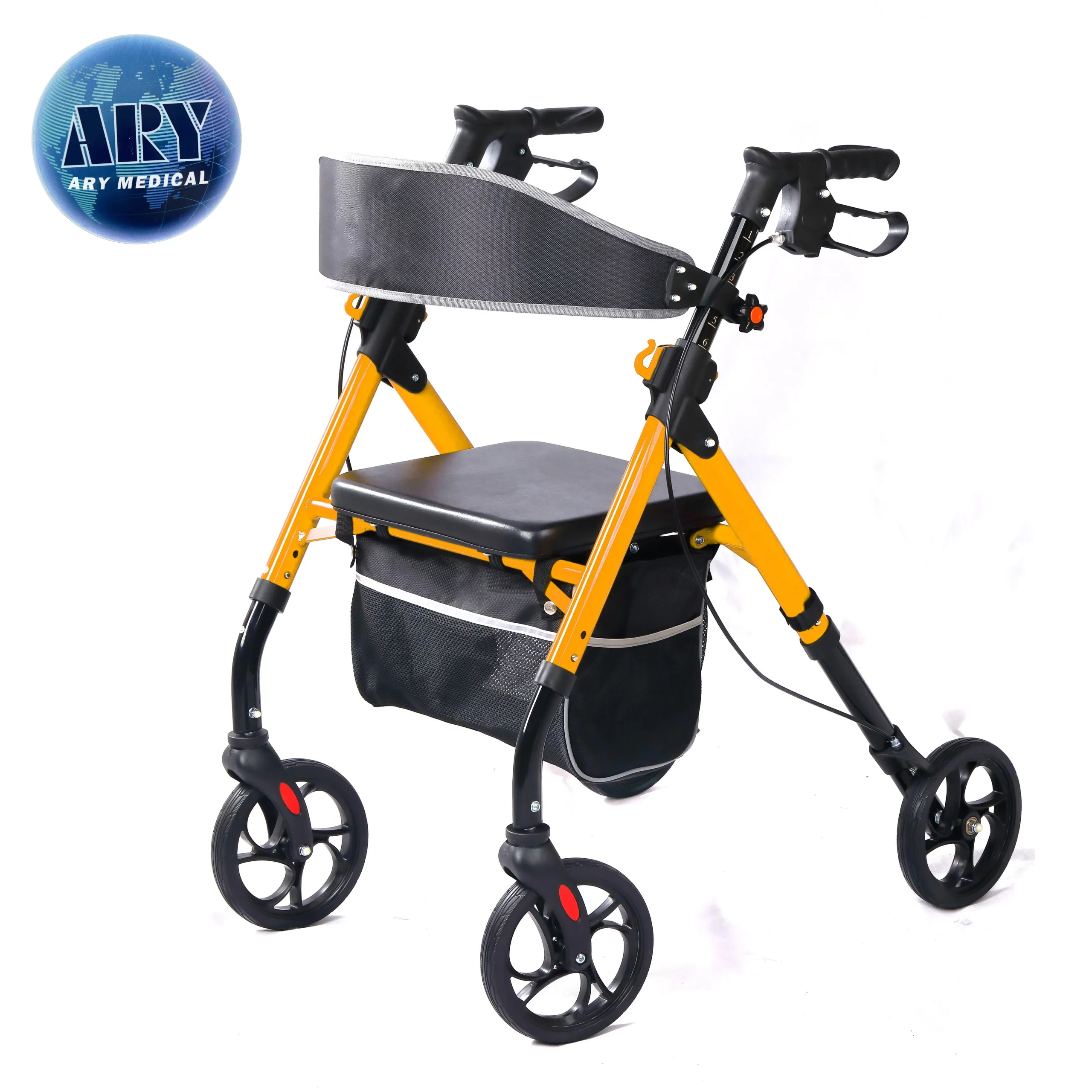
Rollator packaging should include the exact model, approved accessories, instructions and traceability information agreed for the order. Colour alone does not identify a configuration; the yellow product view is only one visual variant. Compare the walking-aids range to name the correct family, then use the purchase-order code.
What should the pack list confirm?
Count parts by identity, not shape. Ask for the current contents list, component references and applicable document revision. Keep any market-language or importer-document requirement on the buyer's approved checklist instead of inventing one universal label.
- Match product and variant to the order.
- List included bag, fittings and instructions.
- Check external and internal identifiers agree.
| Pack field | Check |
|---|---|
| Model and option | Order-line match |
| Included items | Complete against list |
A carton label should resolve identity, not merely look tidy. Key Takeaway: Receiving staff can confirm the actual ordered package.
How should stores unpack rollator packaging?
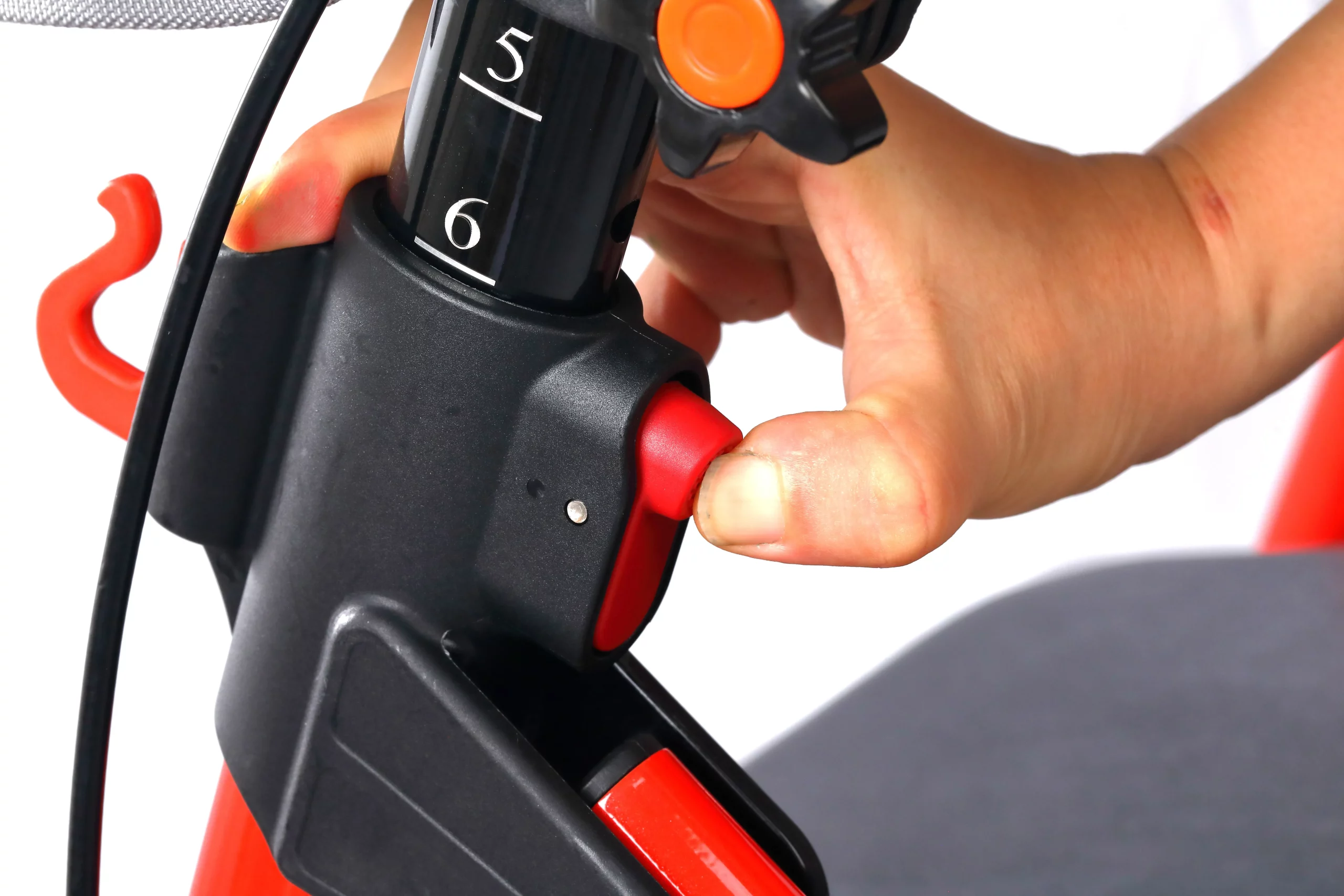
Unpack rollator packaging under the exact model instructions, then restore the aid and complete the prescribed pre-use checks. The handle-post close-up shows an adjustment control but not a universal setup sequence. Trained staff should verify the returned position.
What should a retail checklist record?
Keep assembly and fit apart. Confirm all included components, permitted assembly steps and visible condition. The user's individual handle setting belongs to the later fitting plan, not an arbitrary warehouse default.
- Follow the current unpacking guide.
- Verify parts and visible condition.
- Leave personal adjustment for the assessed user.
| Stage | Responsible check |
|---|---|
| Unpack | Completeness and damage |
| Handover | Individual fit and training |
A complete carton does not automatically mean a ready-to-use aid. Key Takeaway: Your store can separate stock acceptance from personal fitting.
How does local delivery affect rollator packaging?

Rollator packaging for a last-mile route should reflect the agreed handoffs and risks for the packed carton, not the rollator's outdoor-use claims. The surface collage on the product page shows grass, paving and a speed bump with no carton. It is not a package test.
What should a delivery brief describe?
Map who handles the box. Record warehouse, carrier and retailer handoffs, storage orientation limits and any specific protection requested for the route. Use real shipment evidence for damage claims rather than a lifestyle image.
- Identify transfer and storage points.
- Request the supplier's pack-handling instructions.
- Keep arrival-condition photos with carton ID.
| Route issue | Evidence |
|---|---|
| Carrier handoff | Packing and delivery terms |
| Damage on arrival | Carton and product photos |
A route plan makes packaging choices reviewable. Key Takeaway: You can ask the supplier about actual transport conditions without claiming a passed test.
What should a rollator packaging review record?

A rollator packaging review should link model, fold state, protection, label, carton data and the receiving result. Record which version of the pack drawing was used. Hold unresolved damage or missing contents for the supplier's agreed claim route.
Could another buyer repeat the review?
Keep the sequence visible. The chart follows model, fold, protect, label and review. Put photographs and decision owners beside those steps; avoid a blank 'passed' tick with no method behind it.
- Identify product and pack revision.
- Store actual dimensions and contents list.
- Record receiving issue and resolution owner.
| Record field | Purpose |
|---|---|
| Pack identity | Connects quote and shipped unit |
| Receiving result | Routes exceptions before sale |
A short traceable record makes later claims easier to assess. Key Takeaway: Your team can explain what was checked on this shipment.
How can rollator packaging support retail delivery?
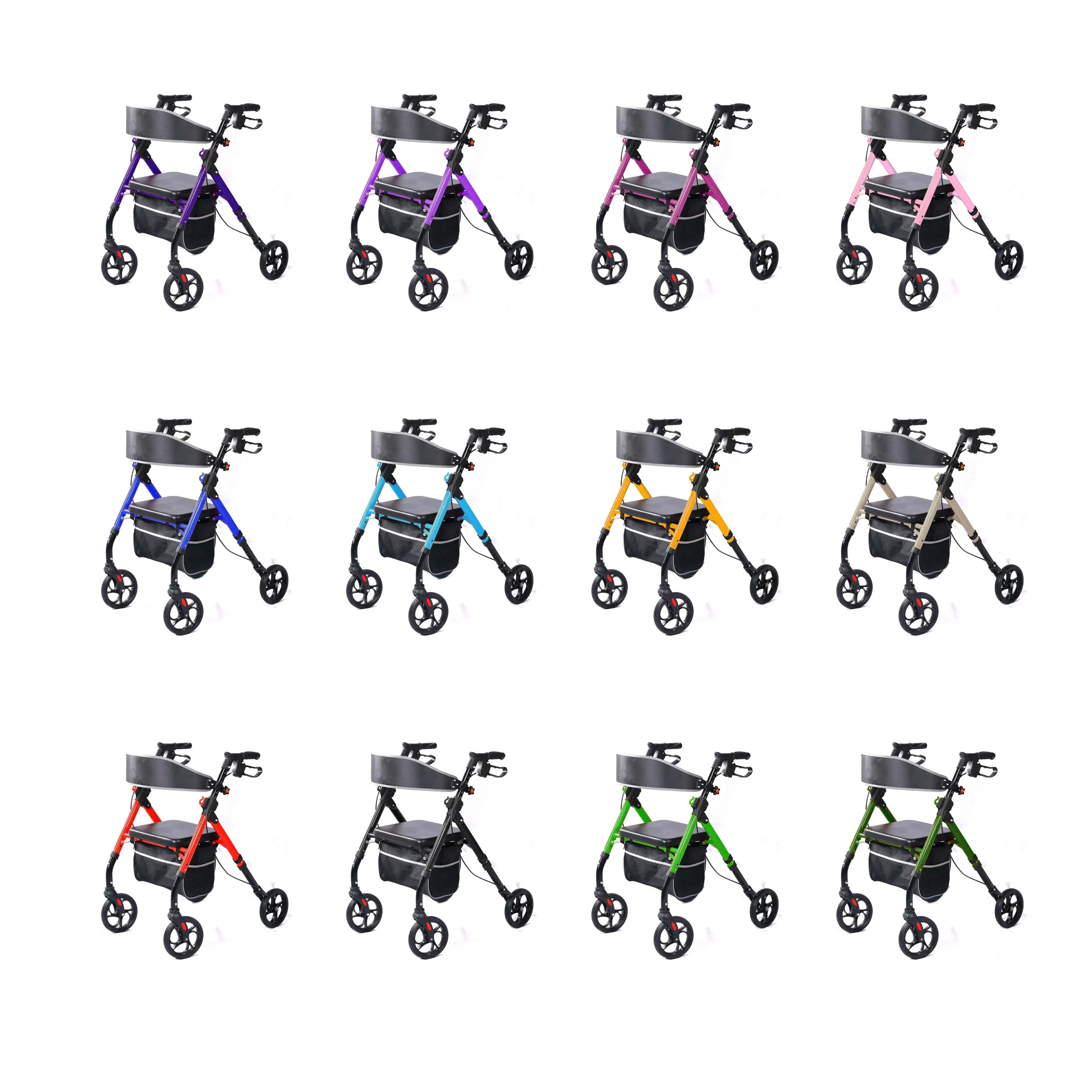
Rollator packaging supports retail delivery when the product, pack dimensions, contents and receiving checks are all agreed before dispatch. Ask for a sample pack if the selling route has unusual handling. Keep performance claims tied to verified evidence.
Ready to request a pack specification?
Send the full route with the product code. Ary Medical can discuss available packing information for a named Shopping Walker configuration. Request the current carton data, contents and handling instructions so your retailer can plan receiving and customer handover.
- Name model and ordered options.
- Describe shipping and retail handoffs.
- Request measured pack and contents records.
| Buyer input | Supplier response |
|---|---|
| Exact configuration | Current pack layout |
| Delivery path | Handling and receiving details |
A measured, documented pack is more useful than a generic shipping promise. Key Takeaway: For a product-specific packing brief, contact us. Ary Medical favours orders that arrive complete and can be checked.
Frequently asked questions
Q1: Can I calculate carton size from a folded photo?
No. Request measured dimensions for the final packed configuration.
Q2: What's the best way to protect brake cables in transit?
Use the maker's current pack plan and service checks; do not improvise a cable bend or tie.
Q3: How do I know every accessory is inside?
Compare the carton and product IDs with the approved packing list during receiving.
Q4: Can a clean carton prove the rollator is undamaged?
No. Inspect the aid and included parts under the receiving process.
Q5: How do I know the pack passed shipping tests?
Ask for test evidence tied to the exact pack and method; a photo or generic claim is insufficient.