
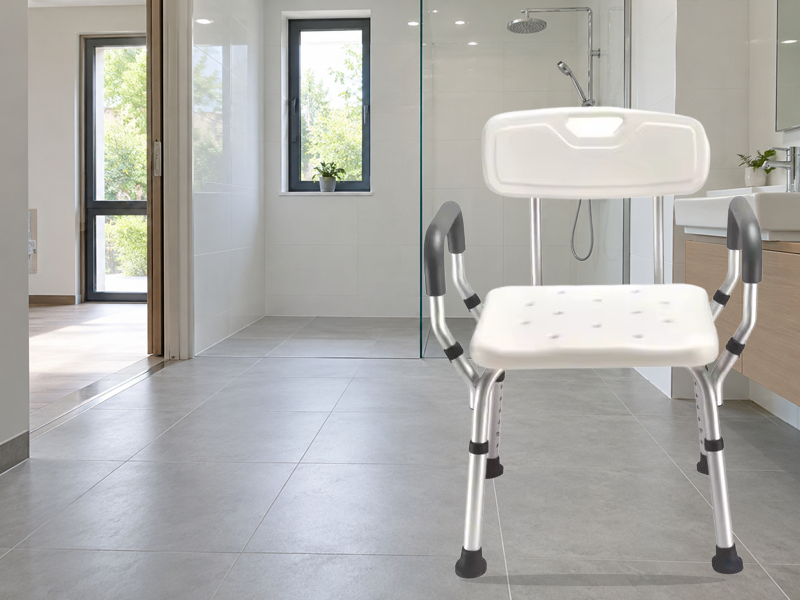
A shower chair maintenance checklist should identify the unit, condition, approved checks, stop rules, service owner, and release status. A clean appearance alone cannot show whether locks, feet, or supports still work.
For healthcare settings, CDC guidance says to follow manufacturers’ instructions when cleaning and maintaining noncritical medical equipment. Use the exact chair manual and facility policy for product-specific checks.
1. What Belongs on the Checklist?
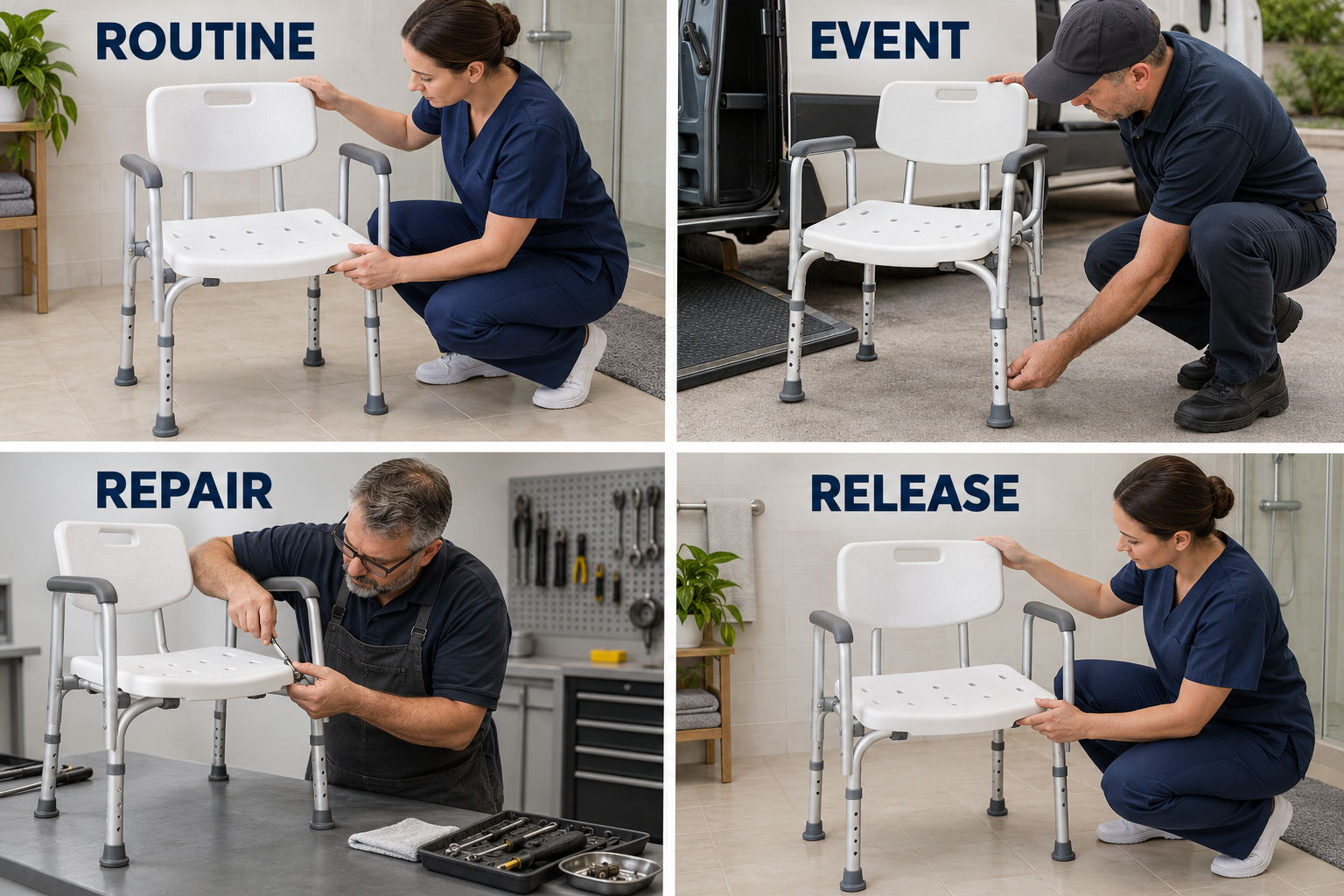
Separate pre-use, scheduled, incident, post-cleaning, and return-to-service checks. Each form should name the trigger and output.
Use a short layout that staff can complete during a real shift.
Related product and sourcing references include bathing-chair buyer guide and bath-chair range.
2. Who Owns Each Check?
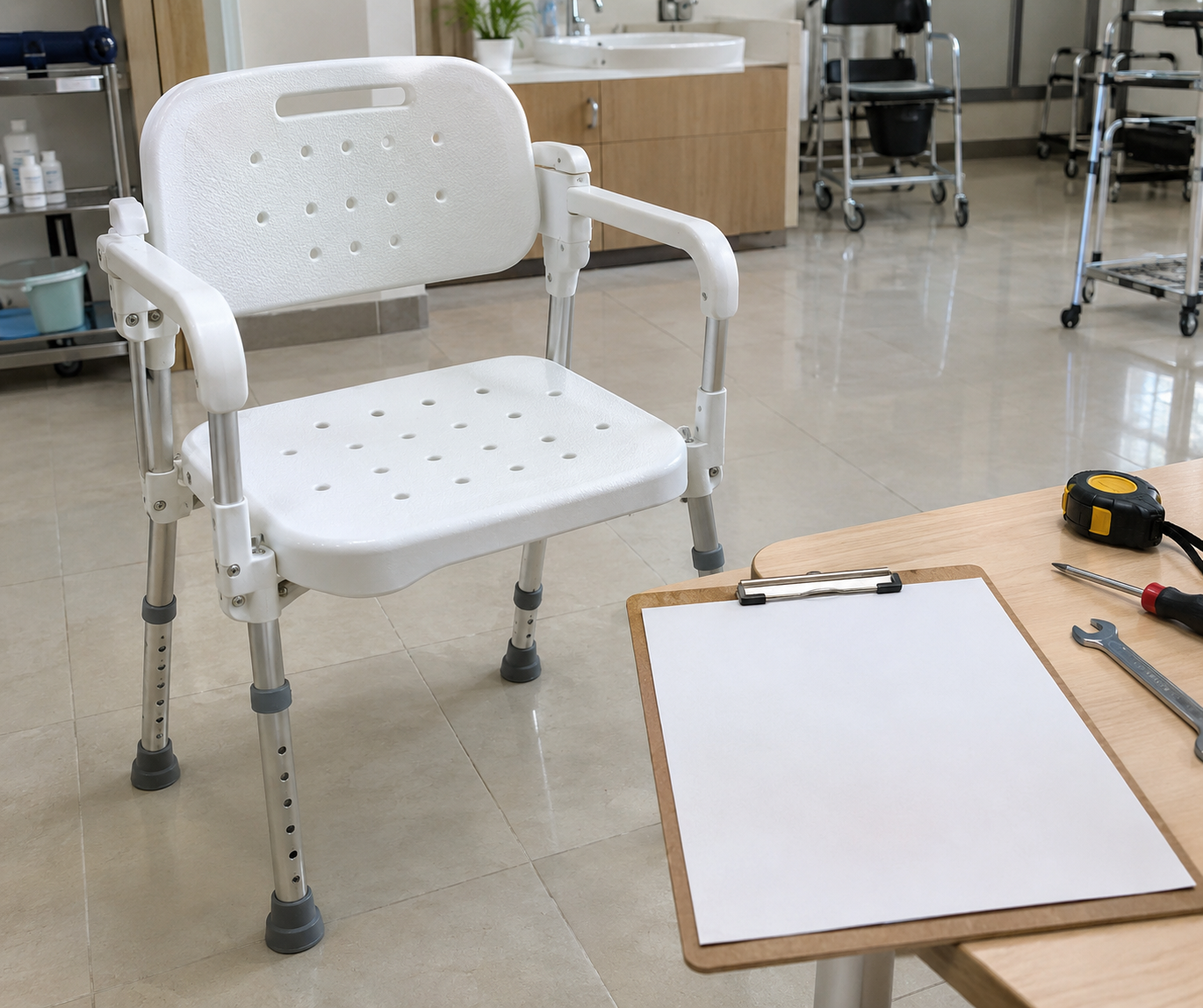
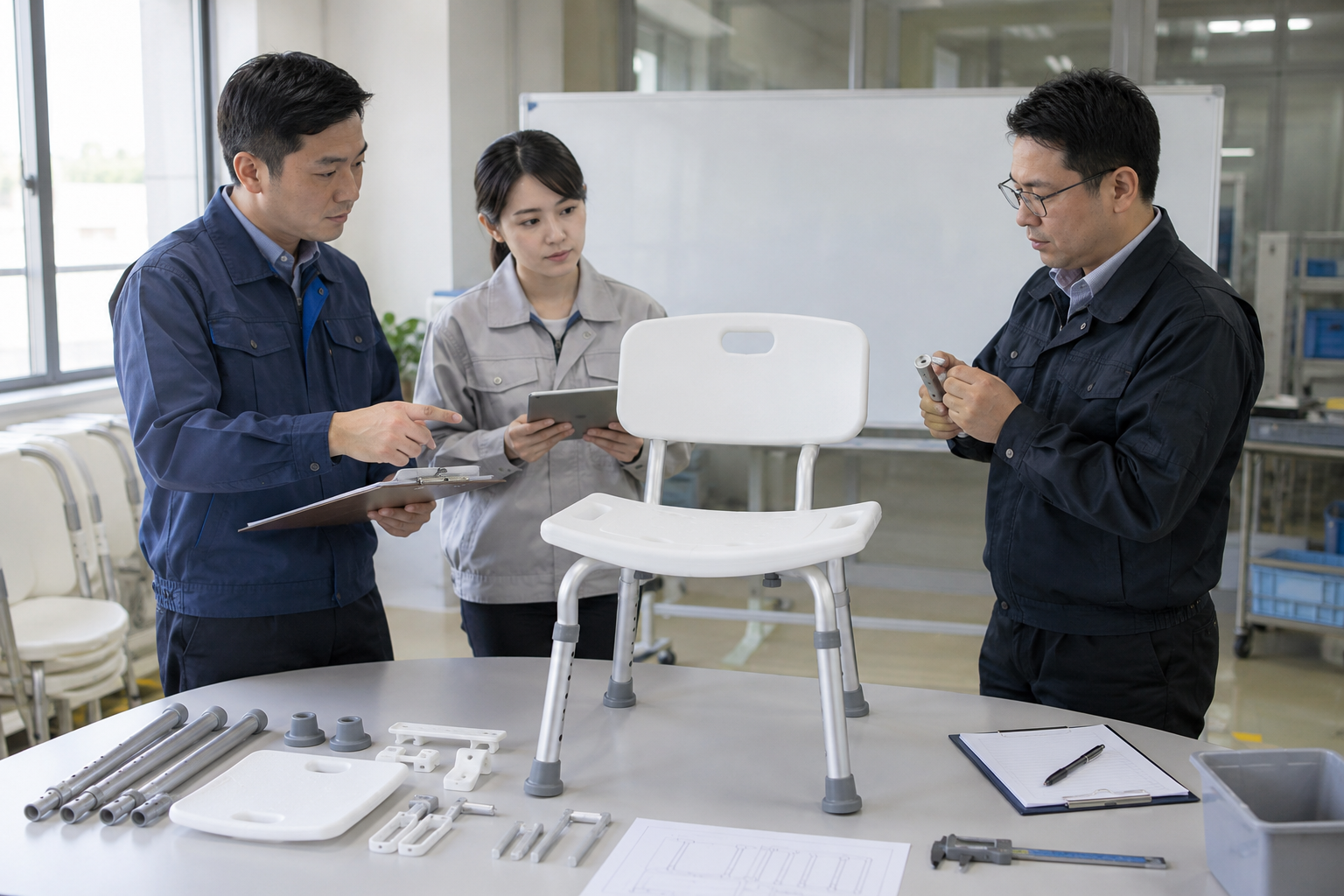
Users or caregivers may confirm setup, cleaning staff may report damage, and technical staff may inspect or repair within their training.
Name who can place a hold and who can release the chair.

3. When Should Checks Run?
Use product instructions and facility policy for scheduled checks. Also inspect after delivery, setting, transport, a complaint, a drop, or repair.
Record the reason for each check.
For a related reference, see simple bath chair.
4. How Is the Chair Identified?
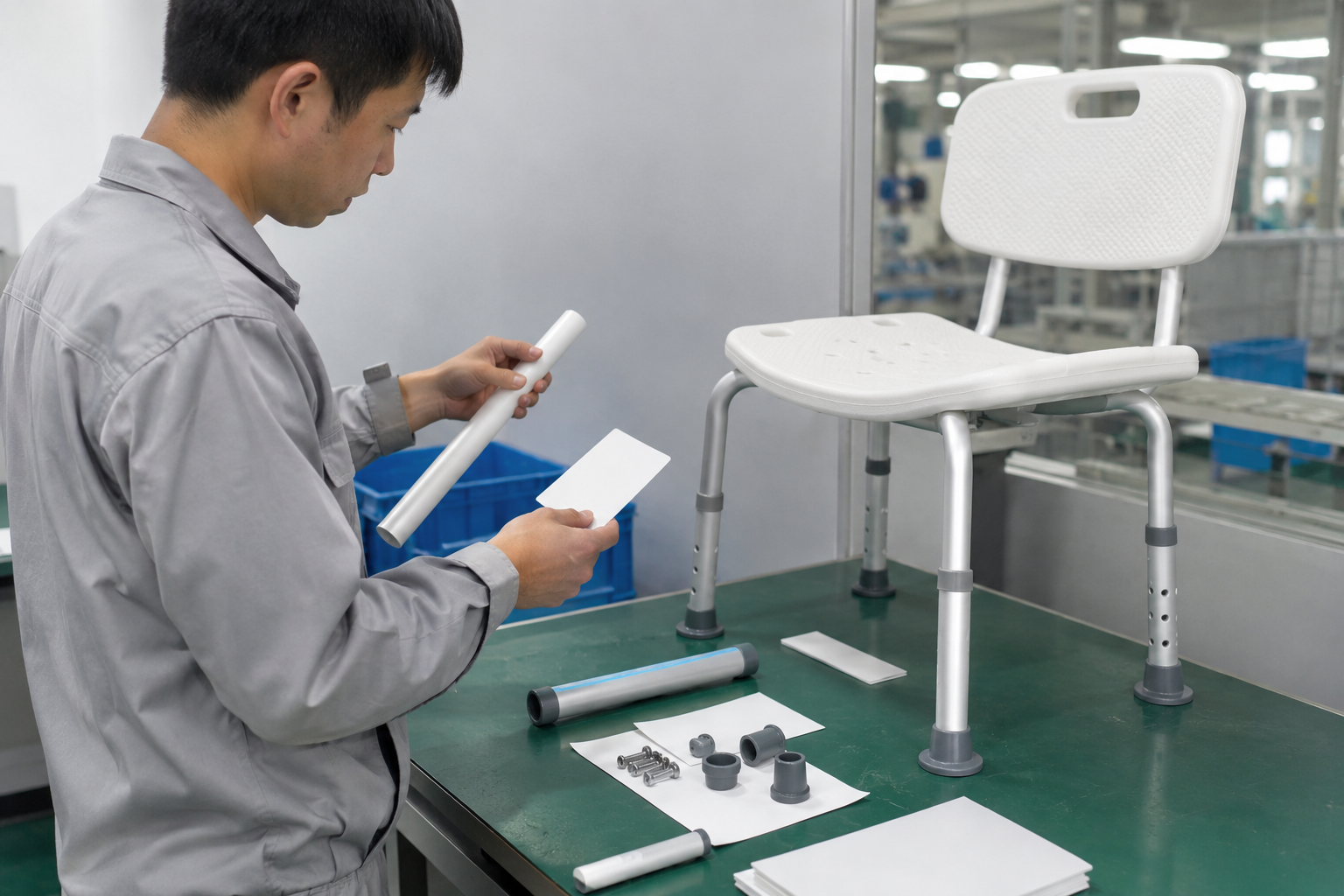
Match the unit with its model, revision, options, feet, supports, location, manual, parts list, and service history.
Hold the chair if its instructions or identity do not match the physical setup.
5. What Should Frame Checks Cover?
Look at tubes, welds, joints, braces, coatings, holes, feet, and end caps. Use a defined empty-chair check for rocking, looseness, or unusual movement.
Do not repair beyond staff authority.
For a related reference, see white bath chair.
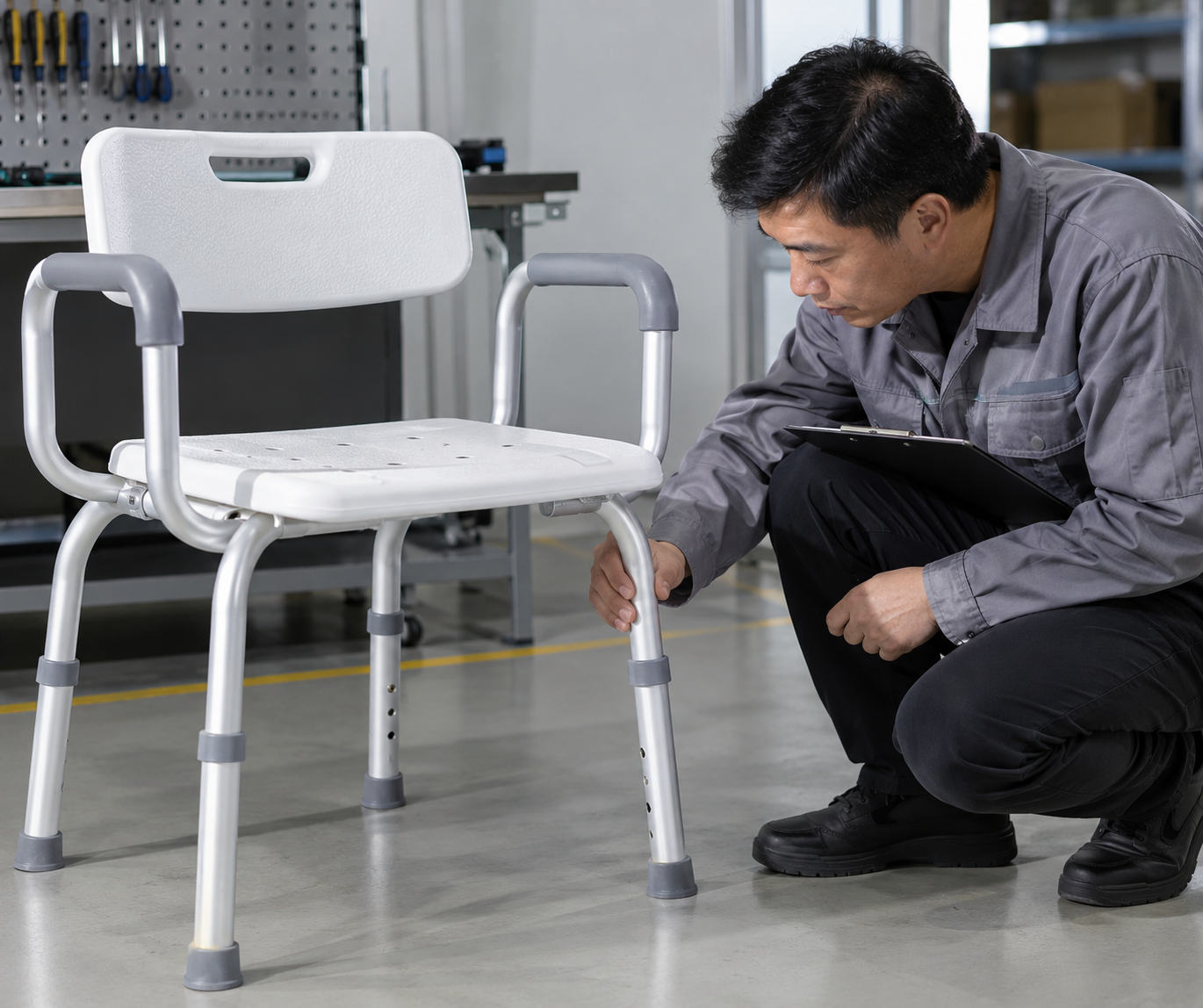
6. How Are Seating Parts Checked?
Inspect the seat, back, arms, padding, seams, drainage, mounts, and contact edges. Check both surfaces and attachments.
Hold cracks, tears, swelling, retained water, or unstable supports.
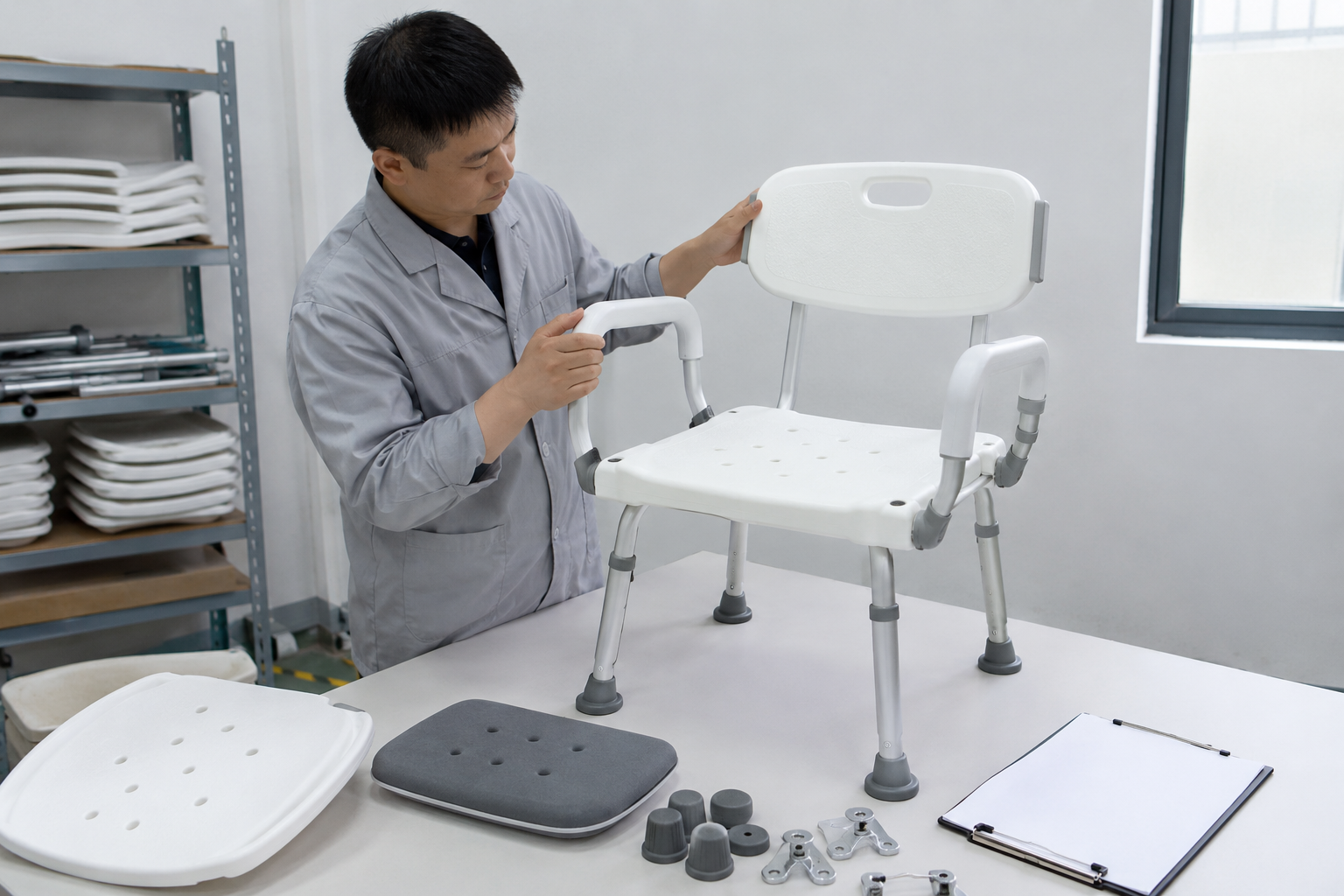
7. Which Locks Need Functional Checks?
Cycle height pins, folding latches, arm locks, and support mounts as the manual directs. Confirm each part returns to its full engaged state.
Stop if an setting sticks or only partly locks.
For a related reference, see folding bath chair.
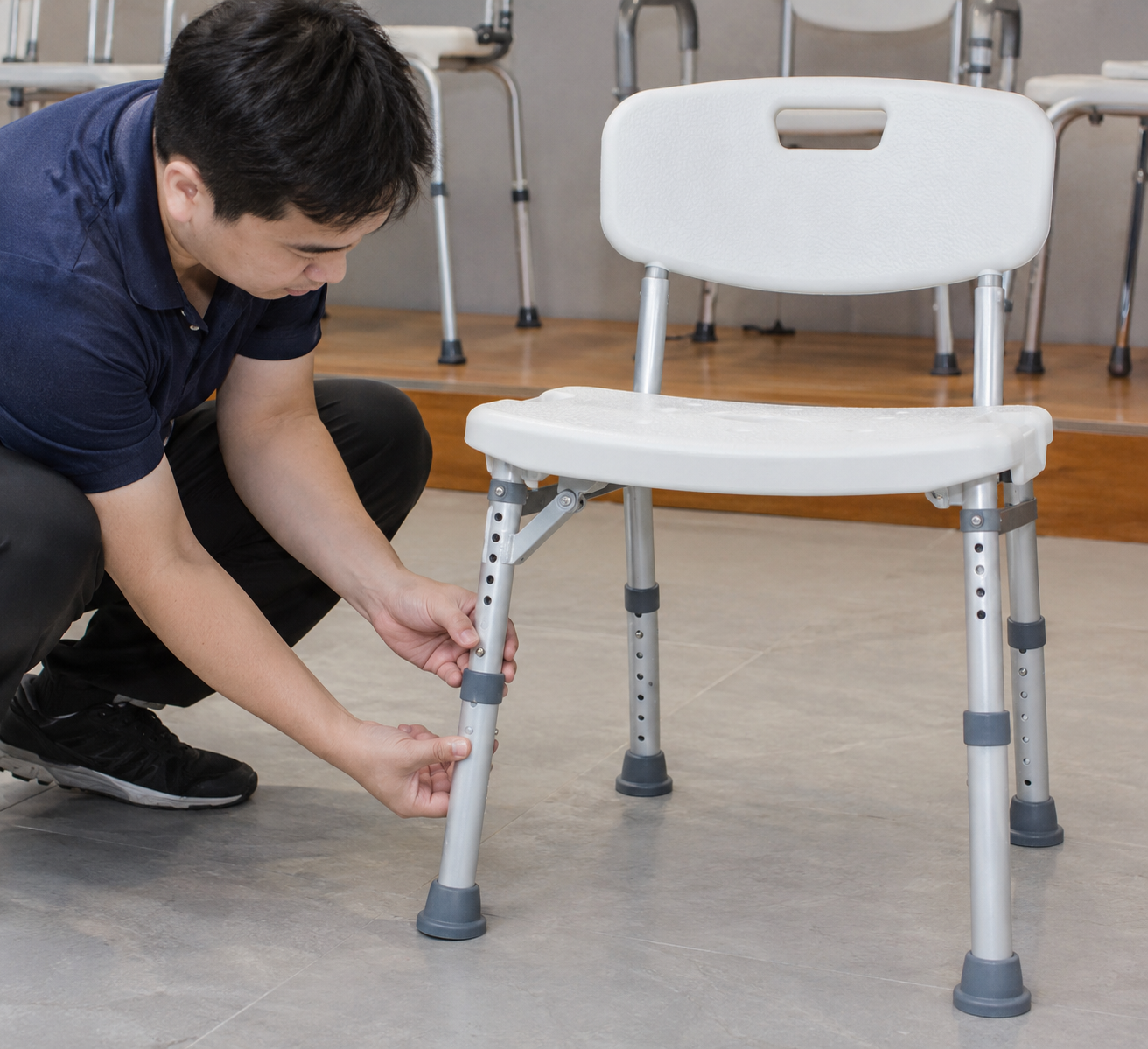
8. How Should Feet Be Inspected?
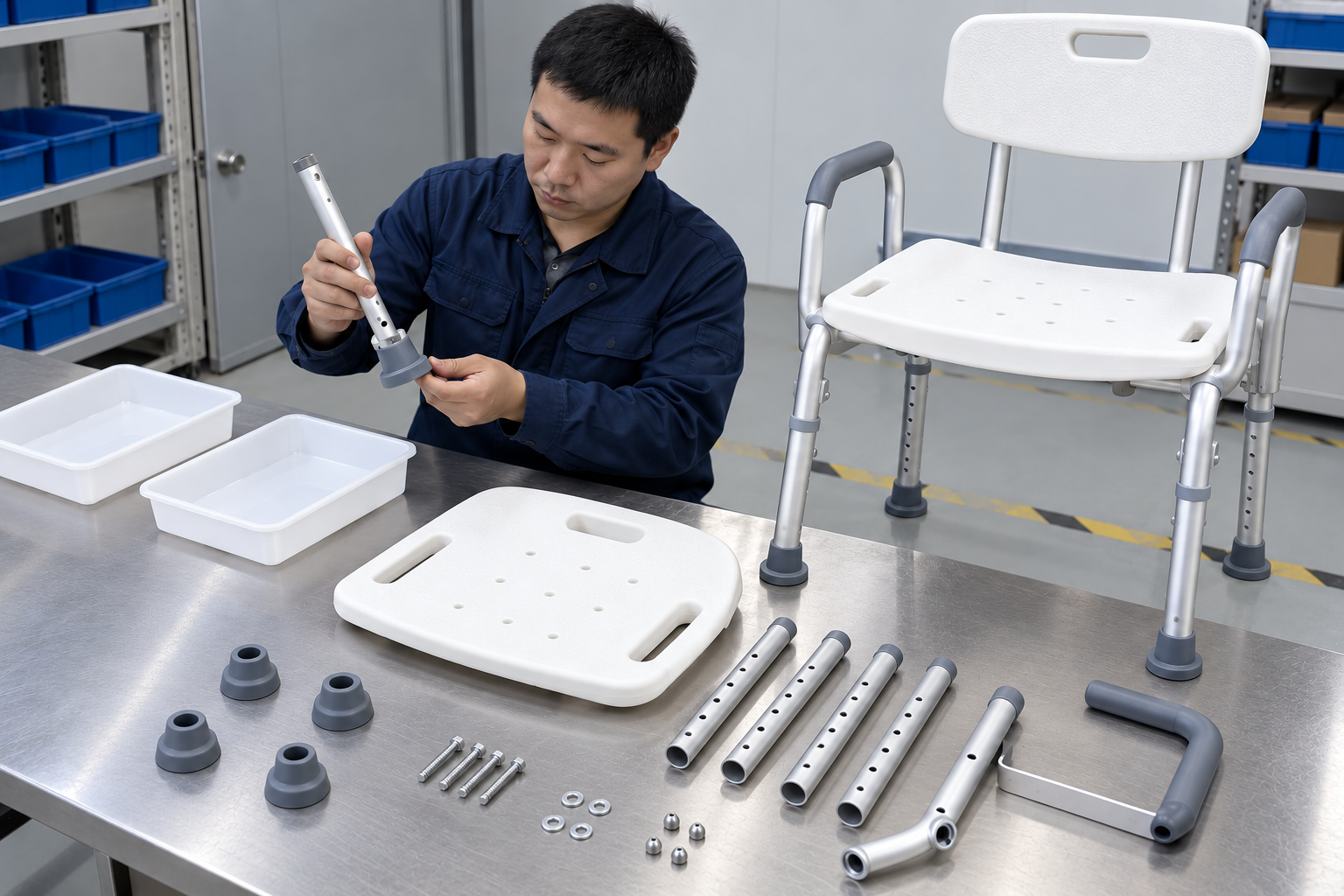
Compare all feet for cracks, wear, rotation, loose fit, uneven height, and full floor contact. Use the approved part identity for replacements.
Recheck rocking after any change.
For a related reference, see toilet-chair range.
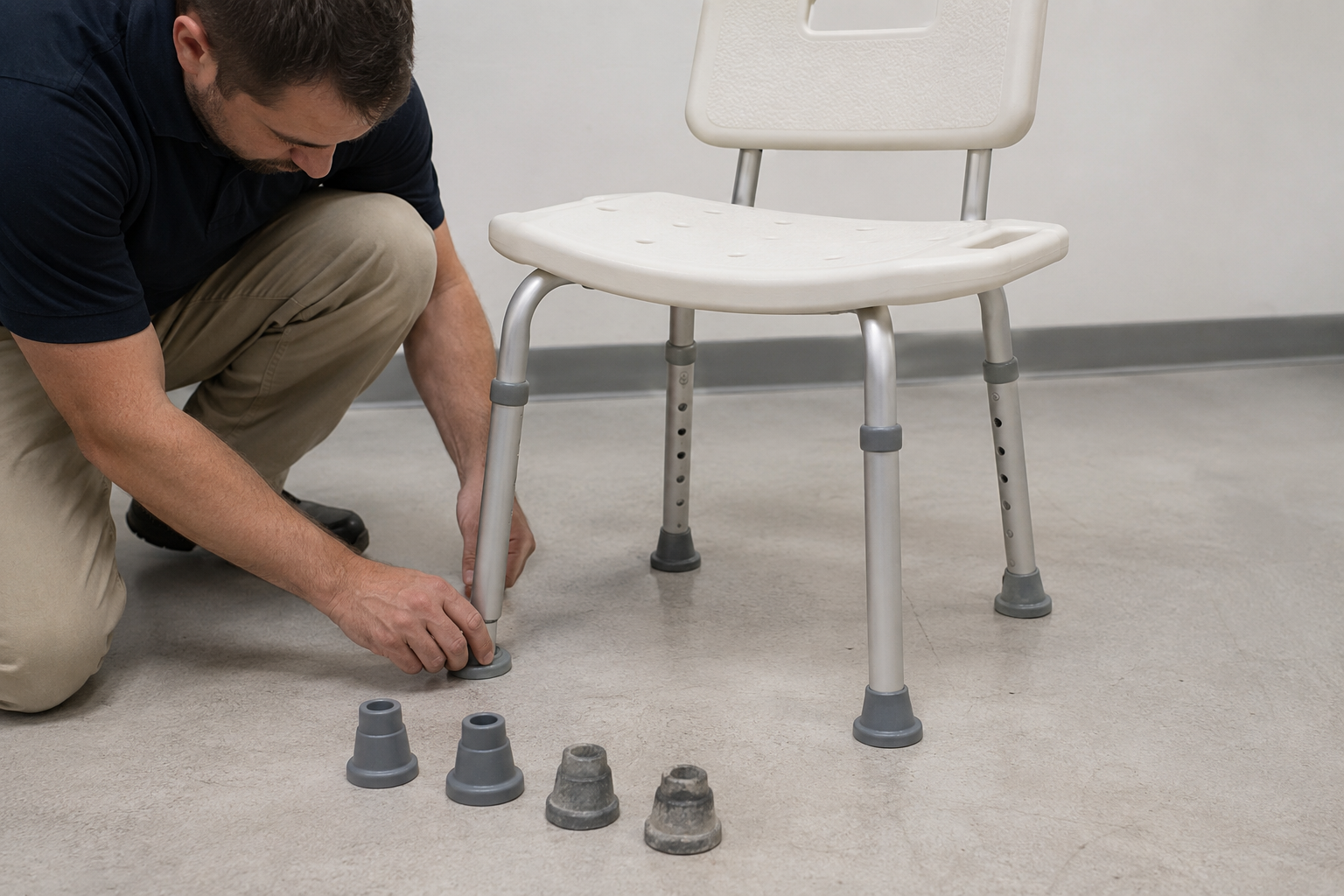
9. How Are Repairs and Parts Recorded?
Link the original finding to the part, service action, post-repair check, and release decision. Keep the chair on hold until an approved person closes the issue.
CDC guidance supports following the maker’s care instructions in healthcare settings; product limits remain model-specific.
For a related reference, see hospital furniture range.
10. When Can a Chair Return to Use?
Confirm identity, condition, lock function, feet, seating, cleaning, and record closure before release. Set an owner for open actions and review recurring issues by model or batch.
Use the current checklist revision.
For a related reference, see B2B supplier overview.
For a product or sourcing question, contact us today.
Frequently Asked Questions
Can a visual check replace a functional check?
No. Visual check can find cracks, wear, rust, or missing parts, but it may not reveal partial lock engagement, movement, rocking, or a failed setting. Use both within the approved steps.
What’s the best maintenance interval for shared chairs?
The best interval follows current product guidance, facility policy, usage rate, wet exposure, transport, defect history, and event triggers. Review it when service data changes.
How do I know when a chair should be quarantined?
Quarantine it when a defined stop rule is met or when identity, frame condition, locking, completeness, or safe function is uncertain. Keep it separated until an approved decision.
Can generic spare feet be used?
Not without verified fit and approval. Foot geometry, attachment, material, height, and contact behavior can change chair stability and floor interaction.
How should a repaired chair return to service?
Confirm part identity, correct assembly, affected functions, complete setup, cleaning status, labels, records, and approved release. Repeat broader stability checks when the repair can affect geometry.