

A shower chair manufacturer should be compared through product fit, configuration control, evidence, production, quality, customization, samples, service, quotations, and change management—not price and photographs alone. Two factories may show similar chairs while their drawings, parts maps, inspection records, and after-sales processes differ sharply. Demo quality can disappear in volume production when those controls are weak. This guide gives distributors, importers, private-label brands, and institutional buyers a practical approval framework.
1. What Is a Shower Chair Manufacturer?
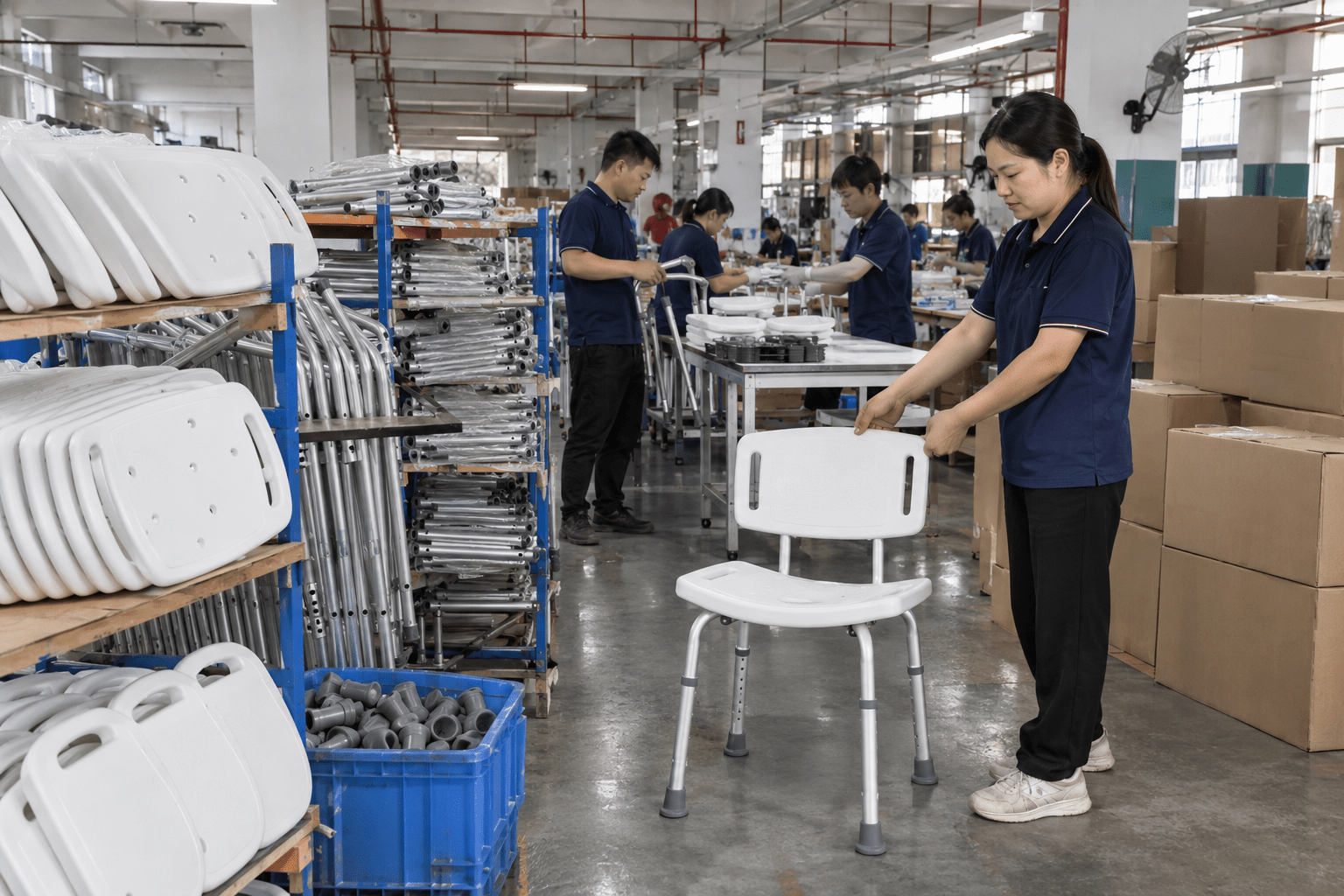
A shower chair manufacturer may be an integrated producer, contract factory, assembler, brand owner, trading company, or coordinator of component suppliers. The label alone does not show who controls design, tooling, materials, assembly, testing, packing, documents, warranty, or changes. Buyers need a responsibility map for the quoted product.
Which Supplier Roles Need Separation?
Identify the legal seller, production site, assembler, tool owner, critical component sources, testing coordinator, and service contact. Some models can work well, but hidden handoffs create risk.
- Ask who owns each process and record.
- Confirm which sites may produce the order.
- Record subcontracted critical operations.
Which Responsibilities Should Be Named?
Design authority, bill of materials, purchasing, manufacturing, inspection, packaging, documentation, warranty, and change notice need named owners. Trace the decision path: a sales contact may not control an engineering answer.
- Request escalation contacts by function.
- Define who approves substitutions.
- Match warranty promises to service capacity.
| Supplier role | Responsibility | Evidence | Buyer boundary |
|---|---|---|---|
| Integrated producer | Design through assembly | Site and process records | Verify actual scope |
| Assembler/contract factory | Controlled build activities | Work and inspection records | Check external dependencies |
| Trading/brand organization | Coordination and commercial control | Supplier map and agreements | Confirm technical authority |
Supplier type matters less than transparent control. Key Takeaway: approve named responsibilities and escalation routes for the exact chair.
2. Which Products Should a Shower Chair Manufacturer Offer?

A shower chair manufacturer should offer a range aligned with the buyer’s users, bathrooms, transfer routes, staff, and channels. Stools, standard chairs, supported chairs, folding chairs, reinforced models, transfer benches, and commode configurations have different boundaries. A large catalog is useful only when configurations remain controlled.
Which Range Decisions Matter to Buyers?
Compare product families against actual segments, not the number of listings. Check whether the supplier can explain intended applications, excluded uses, available supports, and service differences.
- Map each family to a buyer segment.
- Remove duplicate options without clear purpose.
- Check continuity of critical spare parts.
Which Shared Platforms Need Configuration Control?
Frames, seats, arms, backs, legs, feet, fasteners, cartons, and instructions may be shared across models. Shared does not mean interchangeable: one variation can change fit or evidence.
- Request a platform and option map.
- Identify incompatible combinations.
- Control each revision and approved substitute.
| Product family | Buyer segment | Shared part | Main risk |
|---|---|---|---|
| Standard/supported chair | Home and facility channels | Seat, legs, feet | Option mix changes geometry |
| Folding chair | Portable and storage-limited use | Supports and feet | Locks add new controls |
| Transfer/commode type | Route-specific care | Seat and accessories | Different workflow and evidence |
Range quality depends on disciplined boundaries. Key Takeaway: favor a relevant, controlled platform over an impressive but unclear catalog.
3. Which Evidence Should a Shower Chair Manufacturer Provide?
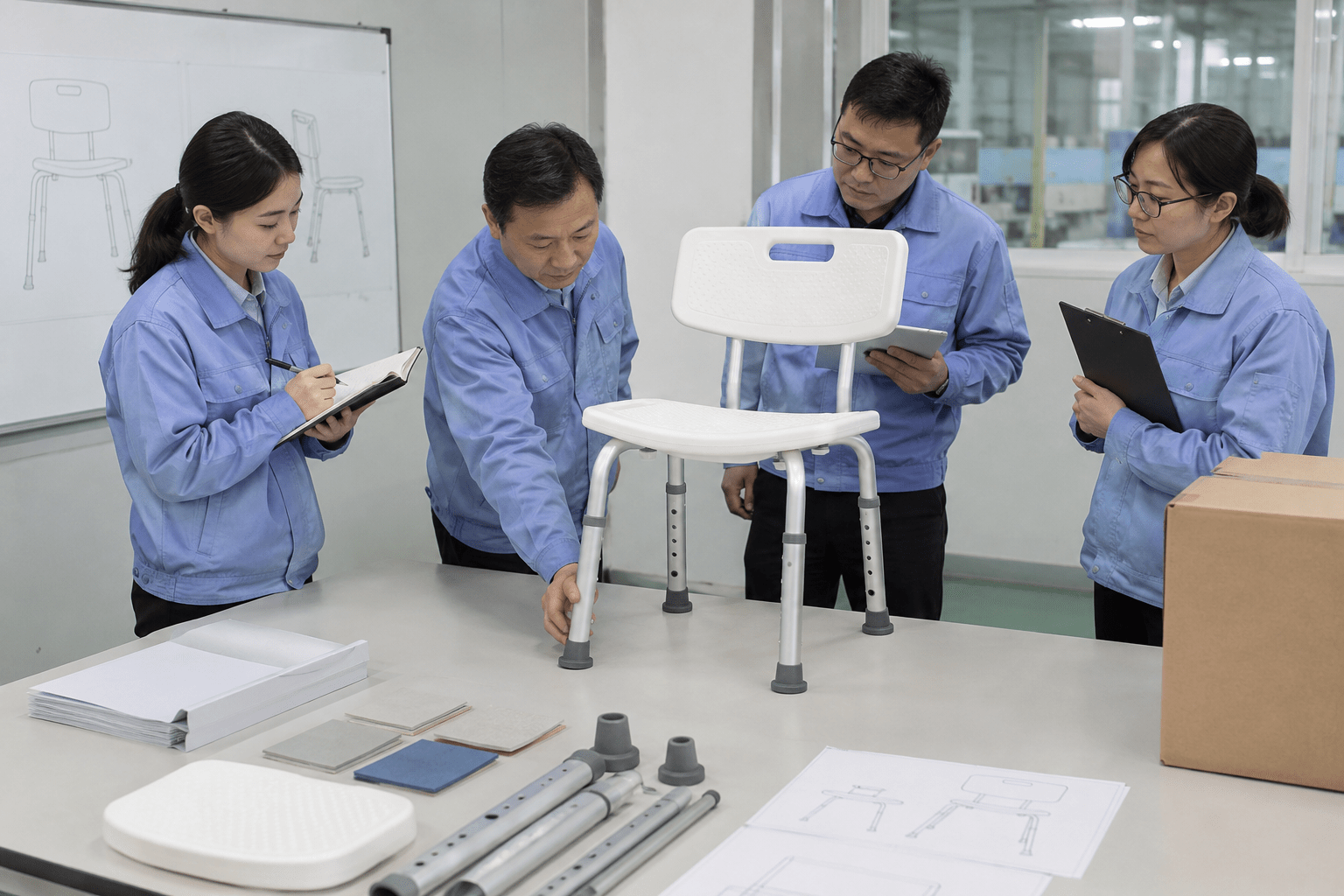
A shower chair manufacturer should provide configuration-matched drawings, bill of materials information, dimensions, materials, stated load basis, applicable reports, manuals, labels, packaging files, and inspection records. Evidence should identify the model, revision, options, sample, method, and issuer. Generic files need clarification.
Which Product Records Need Matching?
Compare the quotation, drawing, sample, report, manual, labels, parts list, and packing file on the same controlled fields. Differences should be listed rather than silently reconciled.
- Match model and revision identifiers.
- Check option and material coverage.
- Verify dates and current document status.
Which Evidence Gaps Need Clarification?
Family-level reports, obsolete drawings, missing support options, generic manuals, and unclear laboratory scope may leave critical claims open. Match the claim to the sample: visual similarity cannot extend evidence.
- Ask for the exact tested configuration.
- Record limitations and accepted gaps.
- Reopen review after relevant changes.
| Document | Required field | Common gap | Buyer gate |
|---|---|---|---|
| Drawing/specification | Model, revision, dimensions, options | Quotation mismatch | Reconcile before sample |
| Technical report | Sample and method scope | Family-level assumption | Claim-specific review |
| Manual/label | Correct configuration and market | Generic or obsolete file | Complete before release |
Evidence should describe what will be purchased. Key Takeaway: reject document sets that cannot be tied to the quoted chair and revision.
4. How Does a Shower Chair Manufacturer Control Production?
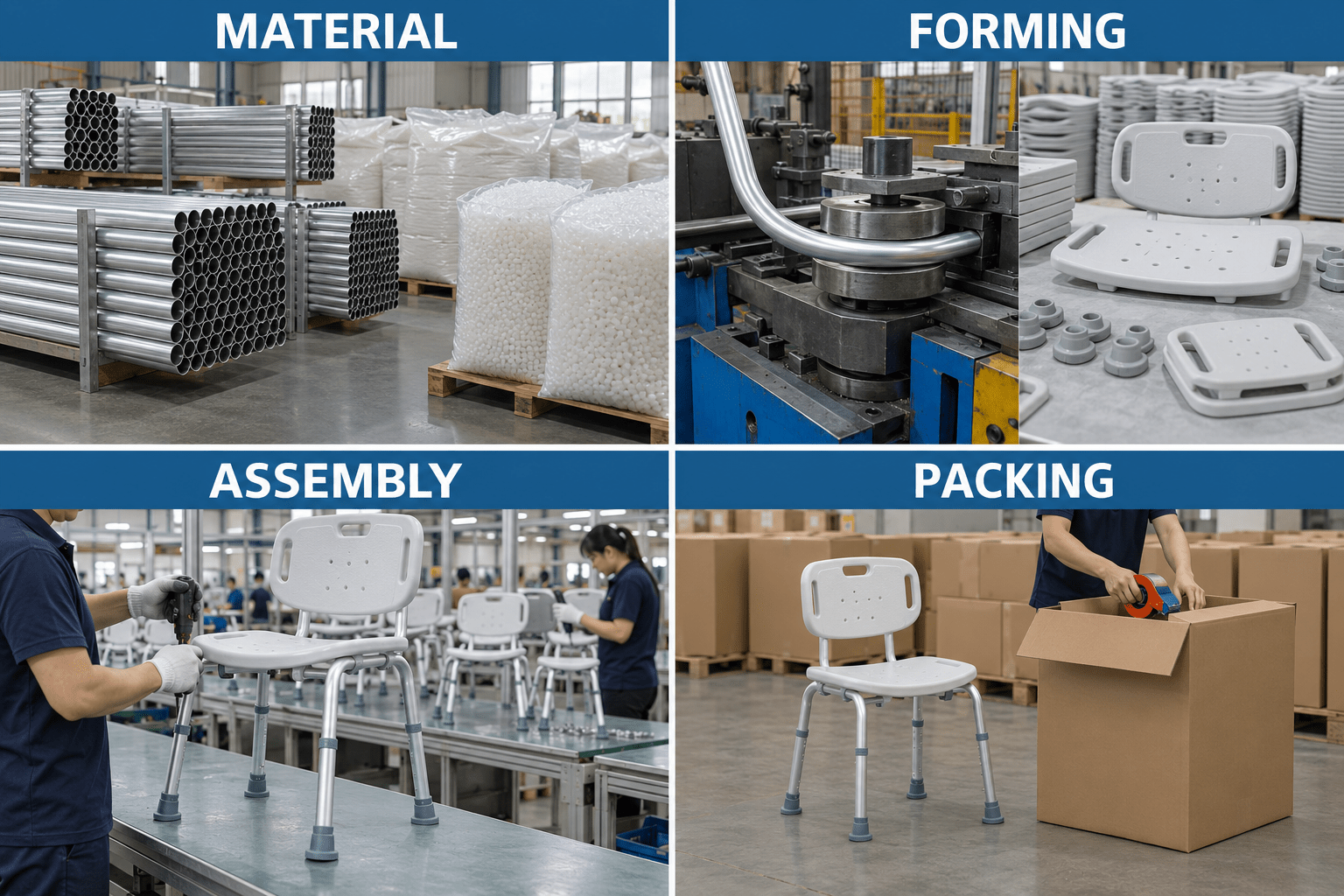
A shower chair manufacturer controls production through material receipt, tube forming, molding, welding, finishing, assembly, inspection, packing, and traceable release. Outsourced coating, molding, tooling, labels, manuals, cartons, testing, or specialized parts remain the manufacturer’s responsibility to control. Buyers should see records, not only a factory tour.
Which Processes Need Visibility?
Map incoming material to finished chair and identify critical characteristics at each operation. Observe how drawings, work instructions, samples, tools, and inspection status reach operators.
- Follow one batch through key stages.
- Check segregation of passed and failed items.
- Verify current instructions at the workstation.
Which Outsourced Steps Need Control?
Approved sources, specifications, incoming checks, nonconformance handling, and change notices should cover every external process. Outsourcing does not outsource accountability: the final supplier still owns the delivered configuration.
- Review critical supplier approval records.
- Check how external changes are detected.
- Include outsourced parts in traceability.
| Process | Control record | Failure risk | Audit question |
|---|---|---|---|
| Material/forming | Receipt and dimensional record | Wrong tube or geometry | How is identity preserved? |
| Welding/finish | Work and inspection record | Joint or coating defect | How are failures segregated? |
| Assembly/packing | Configuration checklist | Mixed options or missing parts | How is final state verified? |
Process visibility connects approval with repeat production. Key Takeaway: audit the records and handoffs that preserve the sample at volume.
5. How Does a Shower Chair Manufacturer Control Quality?

A shower chair manufacturer should control incoming materials, dimensions, molded parts, welds, fasteners, feet, coatings, locks, assemblies, packaging, labels, and documents through defined checks. Sampling sources and disposition authority need clarity. A final appearance check cannot replace in-process control.
Which Incoming and In-Process Checks Matter?
Review how the factory confirms material identity, critical dimensions, joint condition, surface finish, foot geometry, fastener type, adjustment engagement, and option segregation.
- Link checks to drawing characteristics.
- Confirm calibrated or controlled tools where needed.
- Trace failed items and corrective action.
Which Final Checks Need Configuration Matching?
Final review should cover completeness, dimensions, floor contact, adjustments, folding where fitted, supports, packing, labels, and documents. Inspect the ordered state: a base model pass does not clear optional arms or backs.
- Use a configuration-specific checklist.
- Record lot and sample identity.
- Keep released and held units separated.
| Quality stage | Check | Record | Disposition |
|---|---|---|---|
| Incoming | Material and component identity | Receipt inspection | Accept, hold, reject |
| In-process | Geometry, joints, locks, finish | Operation record | Correct or segregate |
| Final | Complete configured product and pack | Release checklist | Ship or hold |
Quality needs evidence at the point defects can be prevented. Key Takeaway: evaluate how the factory detects, contains, and closes configuration-specific failures.
6. How Does a Shower Chair Manufacturer Handle Customization?
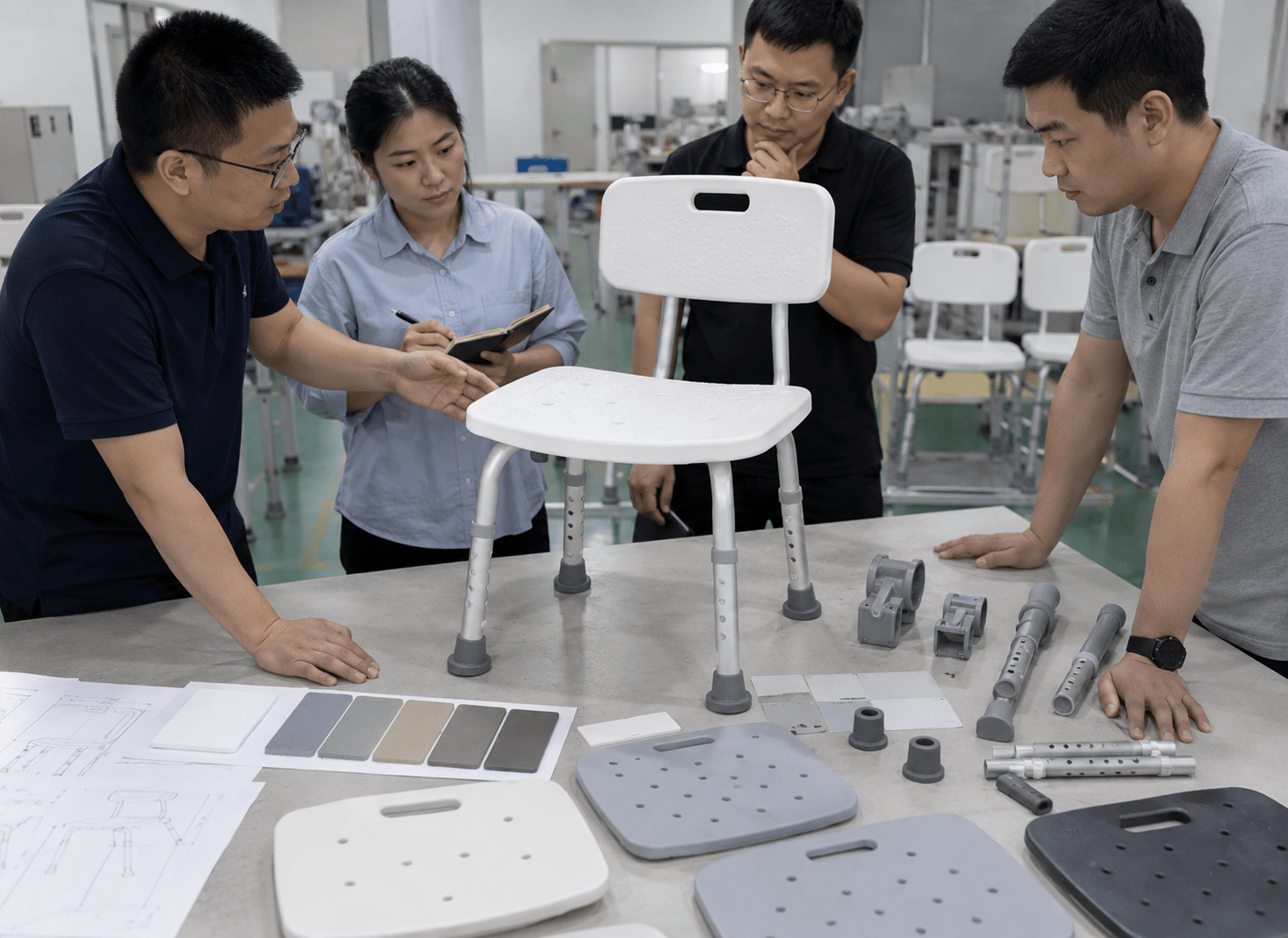
A shower chair manufacturer should separate cosmetic changes, option combinations, dimensional modifications, structural changes, and new-platform work. Existing colors, approved labels, carton artwork, language files, or validated accessories may carry lower technical risk. Dimensions, frames, seats, supports, feet, materials, and load claims need engineering review.
Which Changes Are Usually Low Risk?
Low-risk does not mean no control. Existing validated options, private-label files, colors within an approved process, and document translations still need file, sample, and approval checks.
- Confirm the option already exists.
- Check artwork and language ownership.
- Review packaging and label effects.
Which Changes Need Engineering Review?
Geometry, tube, weld, mold, support, locking, foot, material, or claimed performance changes can affect evidence and production. Classify before quoting: a quick commercial answer can hide development work.
- Request impact assessment and evidence plan.
- Define prototype and pilot gates.
- Control design freeze and future substitutions.
| Change type | Technical impact | Evidence need | Gate |
|---|---|---|---|
| Existing cosmetic option | Lower but not zero | File and sample check | Appearance approval |
| Module combination | Interface and configuration | Fit/function review | Configuration sample |
| Structural/material change | Performance and manufacturing | Engineering and test plan | Formal design release |
Customization should follow risk, not sales labels. Key Takeaway: classify every requested change before cost, timing, and evidence are approved.
7. How Should a Shower Chair Manufacturer Prepare Samples?
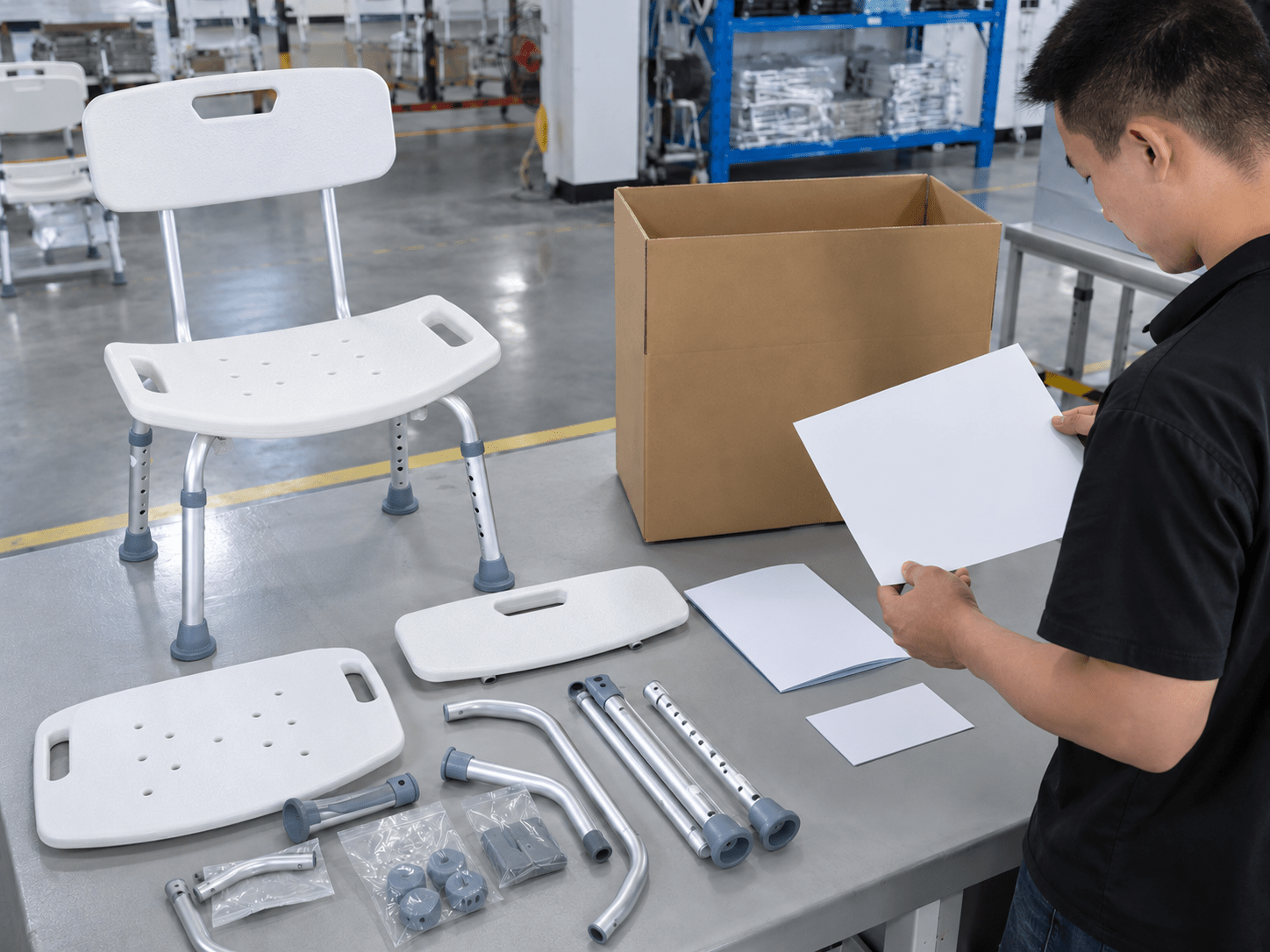
A shower chair manufacturer should prepare samples with controlled model, revision, materials, options, labels, packaging, manuals, deviations, and production-representativeness status. A hand-built prototype can answer design questions but cannot silently represent production. The sample record must state its purpose.
Which Sample Identity Needs Control?
Attach a sample sheet that matches the physical unit, documents, materials, configuration, and packaging. Mark temporary or non-production parts clearly in the record.
- Record model, revision, date, and options.
- List every accepted deviation.
- Preserve photos of the shipped state.
Which Sample Records Need Buyer Access?
Inspection results, test history, deviations, change log, configuration, packing, and technical contacts should accompany the sample. Know what you are approving: undocumented differences become production disputes.
- Compare the sample against the quote.
- Close deviations before final approval.
- Define which sample becomes the control reference.
| Sample field | Required record | Warning sign | Buyer action |
|---|---|---|---|
| Identity | Model, revision, configuration | Unlabeled mixed options | Hold evaluation |
| Representativeness | Production process/material status | Hand-built difference hidden | Limit approval scope |
| Deviations | Open and closed exception log | Verbal promise only | Require closure evidence |
Sample identity protects the meaning of approval. Key Takeaway: approve a documented configuration, not an attractive anonymous prototype.
8. How Does a Shower Chair Manufacturer Support Service?
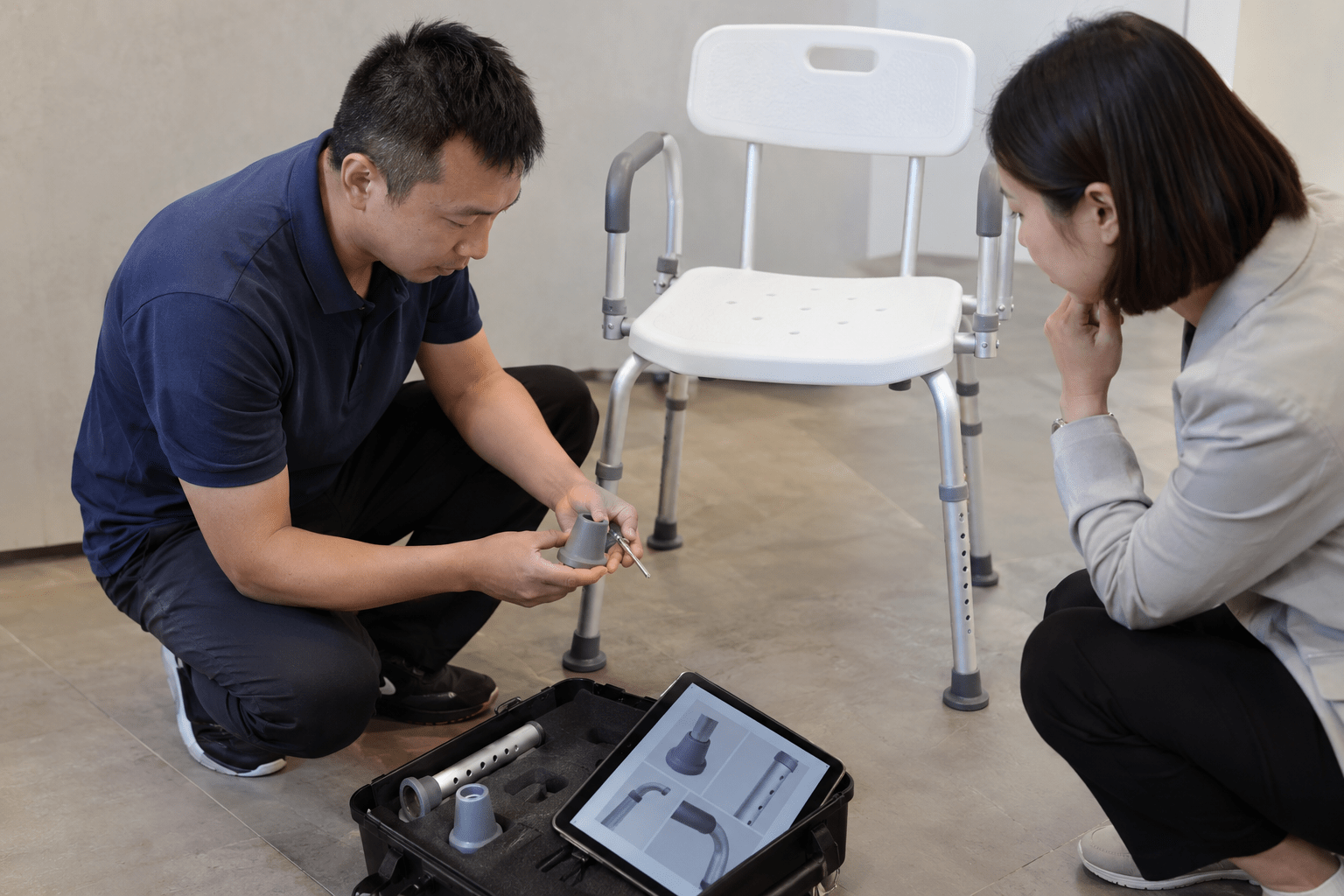
A shower chair manufacturer should support unit identification, evidence intake, technical triage, parts selection, instructions, warranty decisions, escalation, and closeout. Spare parts need model, revision, dimensions, mount, material, orientation, minimum pack, and substitute control. Response quality should be tested before a large order.
Which Spare-Part Controls Matter?
Request a controlled parts map, compatibility rules, replacement method, stock policy, lead path, and change notice. Generic photographs are not enough for similar feet or supports.
- Match parts to model and revision.
- Include service-critical wear items.
- Prevent silent substitute shipment.
Which Support Workflow Needs Testing?
Run a mock case using a realistic defect description, unit identity, photos, and urgency. Test the handoff: rapid acknowledgement without technical ownership does not close the case.
- Observe evidence requested and triage quality.
- Ask who authorizes parts or return.
- Verify closeout and trend feedback.
| Support stage | Supplier action | Buyer evidence | Gate |
|---|---|---|---|
| Intake | Identify unit and issue | Model, lot, photos, condition | Case accepted |
| Triage | Assign technical owner | Requested facts supplied | Disposition proposed |
| Closeout | Provide controlled action/part | Verification result | Record closed |
Service capability should be observable before problems occur. Key Takeaway: qualify parts and support workflows with the same rigor as the product.
9. How Does a Shower Chair Manufacturer Quote Orders?

A shower chair manufacturer should quote a defined configuration, quantity, currency, delivery term, packaging, tooling, samples, documents, spares, validity, and exclusions. Buyers cannot compare offers that use different options or freight bases. Hidden costs often sit outside the unit line.
Which Commercial Fields Need Common Definitions?
Set the same model state, quantity tiers, currency, delivery basis, packing level, artwork, manual, sample, inspection, and support assumptions for every supplier.
- Use one RFQ response table.
- Separate recurring and one-time charges.
- Record quotation validity and capacity basis.
Which Hidden Costs Need Review?
Carton volume, tooling, testing, labels, manuals, spare packs, third-party inspection, rework, storage, and change fees can alter landed cost. Normalize before ranking: a lower unit line may simply exclude more work.
- List inclusions and exclusions.
- Compare logistics on like-for-like packs.
- Keep quality gates outside price scoring.
| Cost field | Included scope | Common exclusion | Comparison rule |
|---|---|---|---|
| Product price | Approved configuration | Optional supports or labels | Same bill of requirements |
| Packaging/logistics | Carton and delivery basis | Pallet, freight, handling | Same shipment basis |
| Development/support | Tooling, samples, documents | Retest or change work | Separate one-time costs |
Commercial clarity prevents false savings. Key Takeaway: compare complete scopes after technical gates, not headline unit prices.
10. How Should You Approve a Shower Chair Manufacturer?
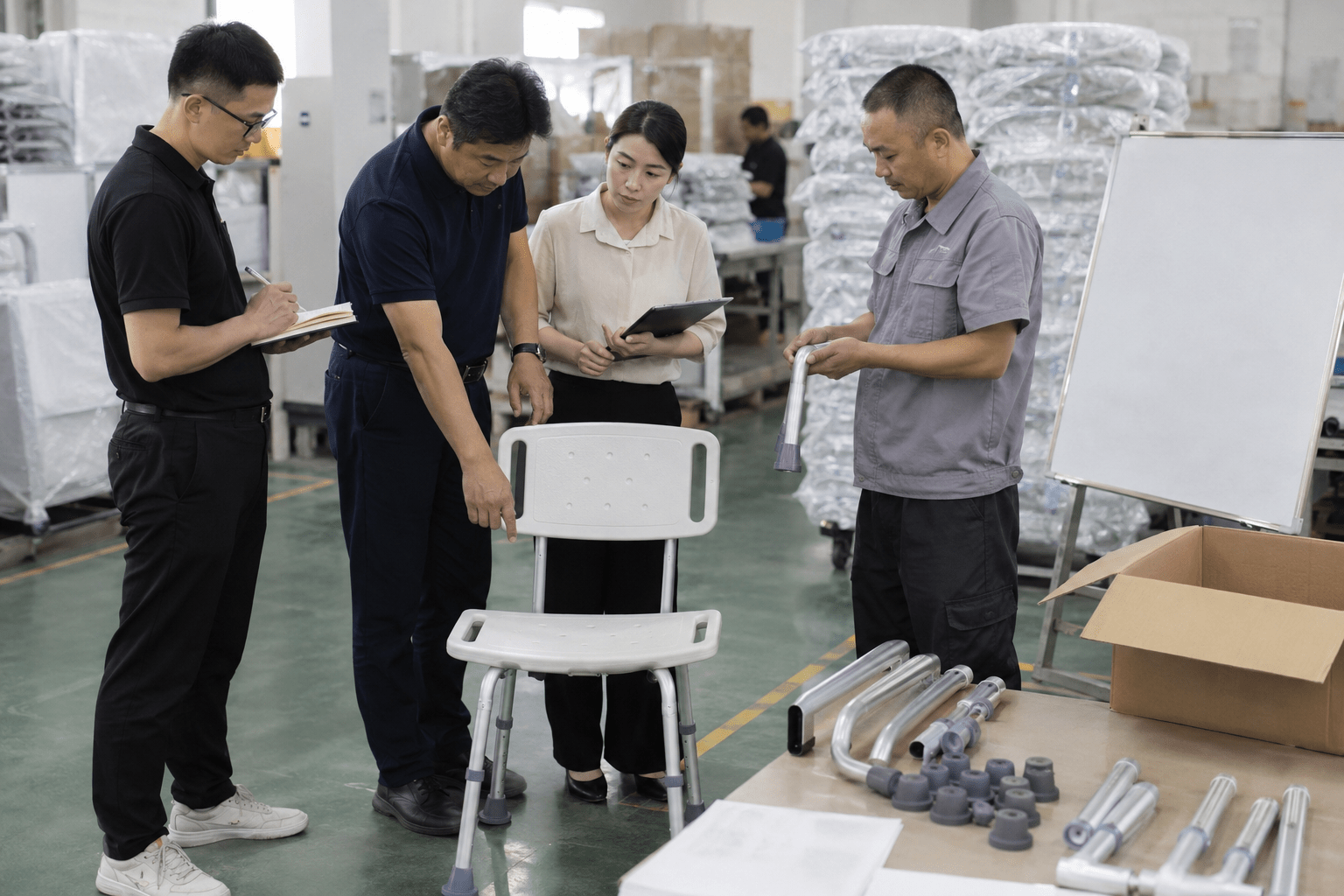
A shower chair manufacturer should be approved through gates for product fit, evidence, production, quality, customization, samples, service, commercial clarity, and change control. Approval should identify the production site and configuration. A score cannot compensate for a failed mandatory gate.
Which Gates Belong in the Scorecard?
Use pass/fail requirements before weighted preferences. Include evidence completeness, process ownership, inspection, sample result, support exercise, pack readiness, quotation scope, and corrective-action closure.
- Name the evidence behind every score.
- Keep open findings visible.
- Set expiration or review triggers.
How Should Approval Be Preserved?
Freeze the signed specification, approved sample, drawings, parts, artwork, packing, inspection plan, purchase conditions, deviations, and change-notice route. Preserve the basis: approval is lost when uncontrolled changes enter production.
- Conduct receiving checks against the approved state.
- Schedule risk-based supplier reviews.
- Link findings to institutional procurement controls.
| Approval layer | Evidence | Owner | Pass rule |
|---|---|---|---|
| Product/evidence | Sample and matched documents | Product/quality | Critical requirements pass |
| Factory/support | Audit and mock case | Sourcing/service | Controls demonstrated |
| Commercial/change | Complete terms and frozen files | Procurement | Scope and notice accepted |
Approval should survive the first order. Key Takeaway: freeze what passed and monitor the controls that keep it unchanged.
Conclusion
Manufacturer selection should connect responsibility, range, evidence, production, quality, customization, samples, service, commercial scope, and change control. This approach prevents a good photograph or prototype from standing in for repeatable supply. For help reviewing bath-chair configurations and sourcing documentation, contact us today.
We help B2B buyers turn supplier claims into verifiable approval gates. Reliable partnerships are built on controlled products and transparent decisions, not promises alone.
FAQ
Can a factory audit replace product testing?
No. An audit reviews systems and process controls, while product testing addresses configuration-specific performance questions. Buyers often need both, with clear limits for each.
What’s the best way to compare supplier quotations?
Use one controlled configuration and response table covering price basis, quantity, currency, delivery term, packaging, tooling, documents, samples, spares, validity, and exclusions. Apply technical gates first.
How do I know whether a sample represents production?
Review its revision, materials, options, manufacturing route, inspection record, packaging, deviations, and stated production status. Verify the production sample again after pilot manufacture.
Can a manufacturer substitute a component after approval?
Only through the agreed change process. Require advance notice, impact assessment, updated evidence, sample review where needed, written approval, and revised receiving checks.
How should distributors test technical support?
Run a mock case with real unit identity, photos, condition, and a spare-part question. Assess intake, technical ownership, evidence request, response quality, disposition, and closeout.
