
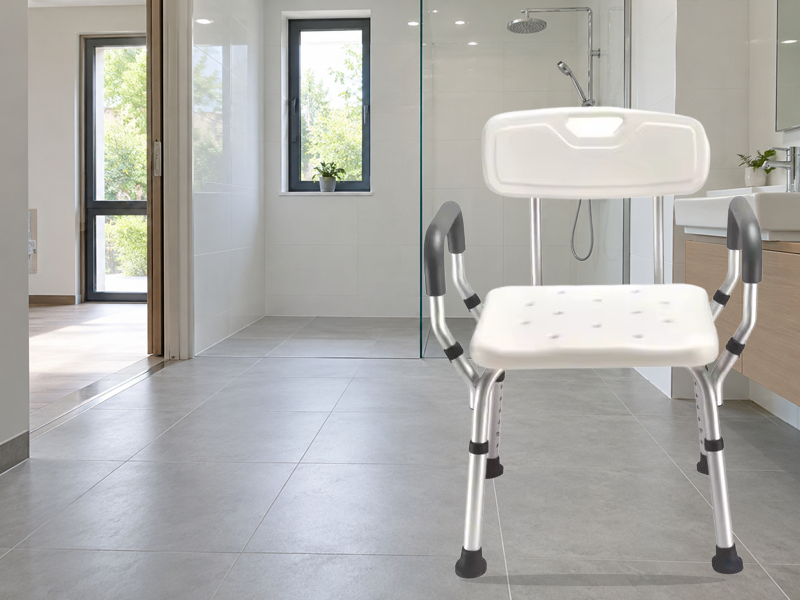
A shower chair vs shower stool choice depends on support needs, room space, transfers, handling, and service. A stool usually has a seat without a back; a chair may add a back or arms, depending on the model. Buyers should compare the full configuration with the task and bathroom before choosing a range.
The ISO 17966:2026 overview includes bath and shower chairs, bath boards, and stools. Confirm product scope and target-market use; a standard reference does not prove that a specific chair passed a test.
1. What Defines a Shower Chair and a Stool?
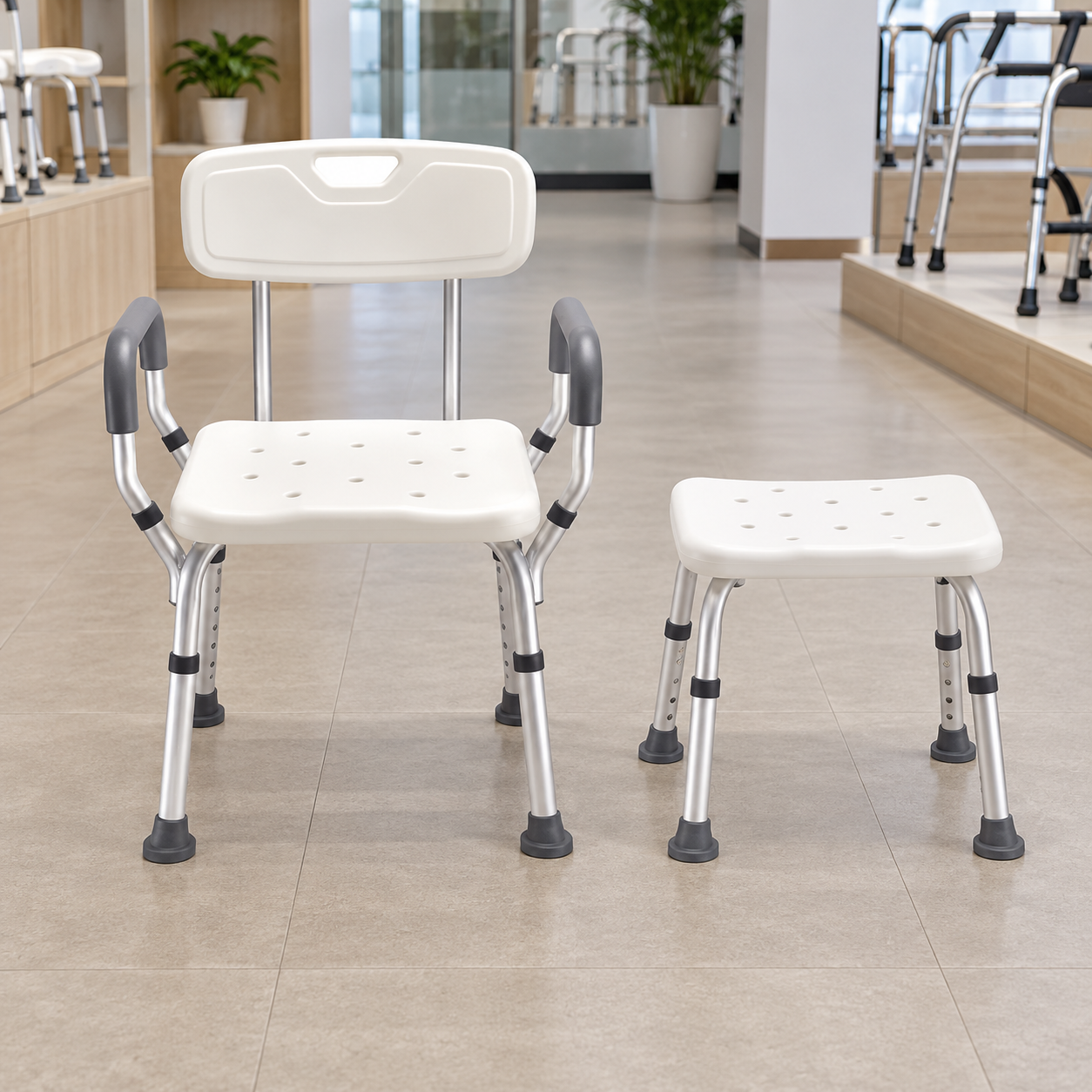
Start with the parts and task. A stool has a seat without a back. A shower chair may include a back and optional arms. Transfer benches and commode chairs are separate products.
Use the bathing-chair guide and bath-chair range to review product families, then compare only offers built for the same task.
| Product | Common setup | Buyer check |
|---|---|---|
| Shower stool | Seat without back support | Fit and intended sitting task |
| Shower chair | Seat with back; arms may vary | Support and room access |
| Transfer bench | Seat spans a tub edge | Entry route and tub fit |
2. Who Needs Each Product Type?
Buyers should define the bathing task, amount of support, transfer route, caregiver role, and room before selecting a model. Individual suitability belongs with a qualified assessor.
For range planning, compare the white bath chair with a simpler bath chair only when their tasks and limits are clear.
- Record whether the user sits, stands, or transfers.
- Note any back or arm support required for the task.
- Keep user dimensions with the authorized assessment.
3. Which Supports Change the Choice?
A backrest or armrest can support one task and block another. Check height, spacing, mounting, removal, cleaning, and contact with the room.
For example, a fixed arm can obstruct side access even when it offers a useful handhold. Verify each offered setup on a sample.
4. How Does Each Product Fit the Room?
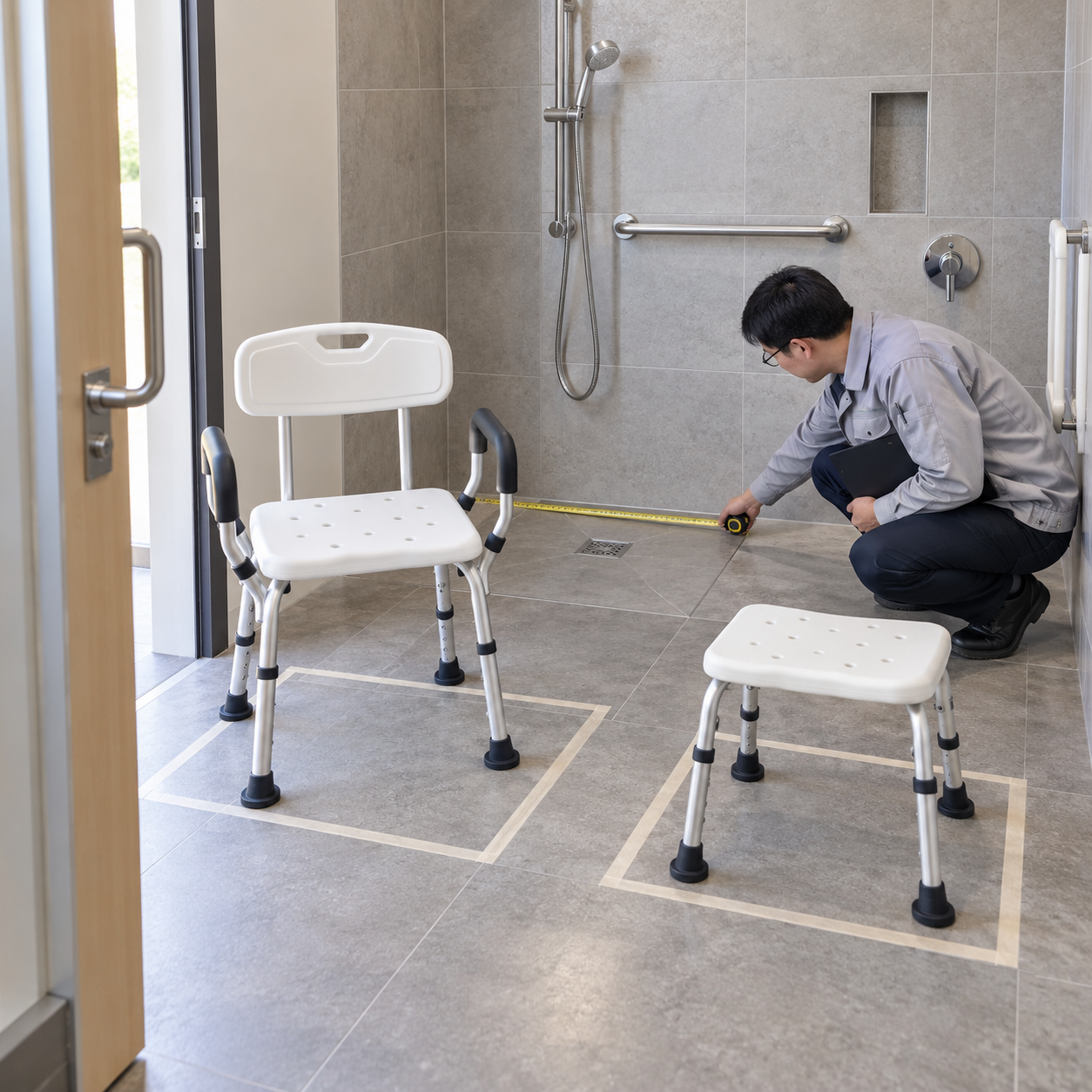
Measure the doorway, bathing floor, tub shape, drain, controls, curtain or door, and caregiver space. Overall width alone cannot show whether every foot sits correctly.
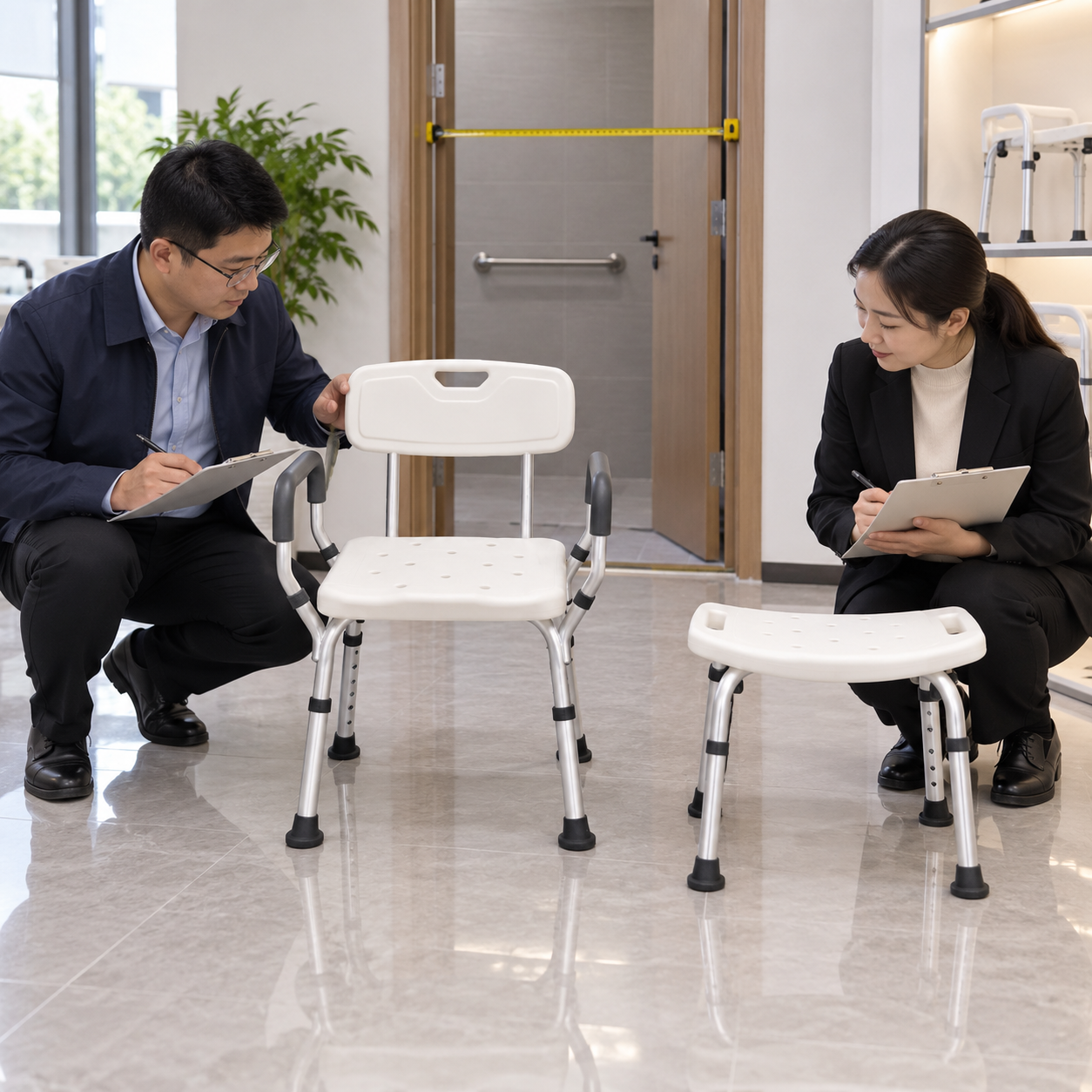
Place the quoted chair or stool in a measured mock-up. Check the access route and storage position. A simple, narrow model may suit a different room than a wide supported model.
- Record the narrowest entry and turning point.
- Check floor contact at each leg.
- Keep controls and exit space clear.
5. Which Transfer Tasks Need Review?
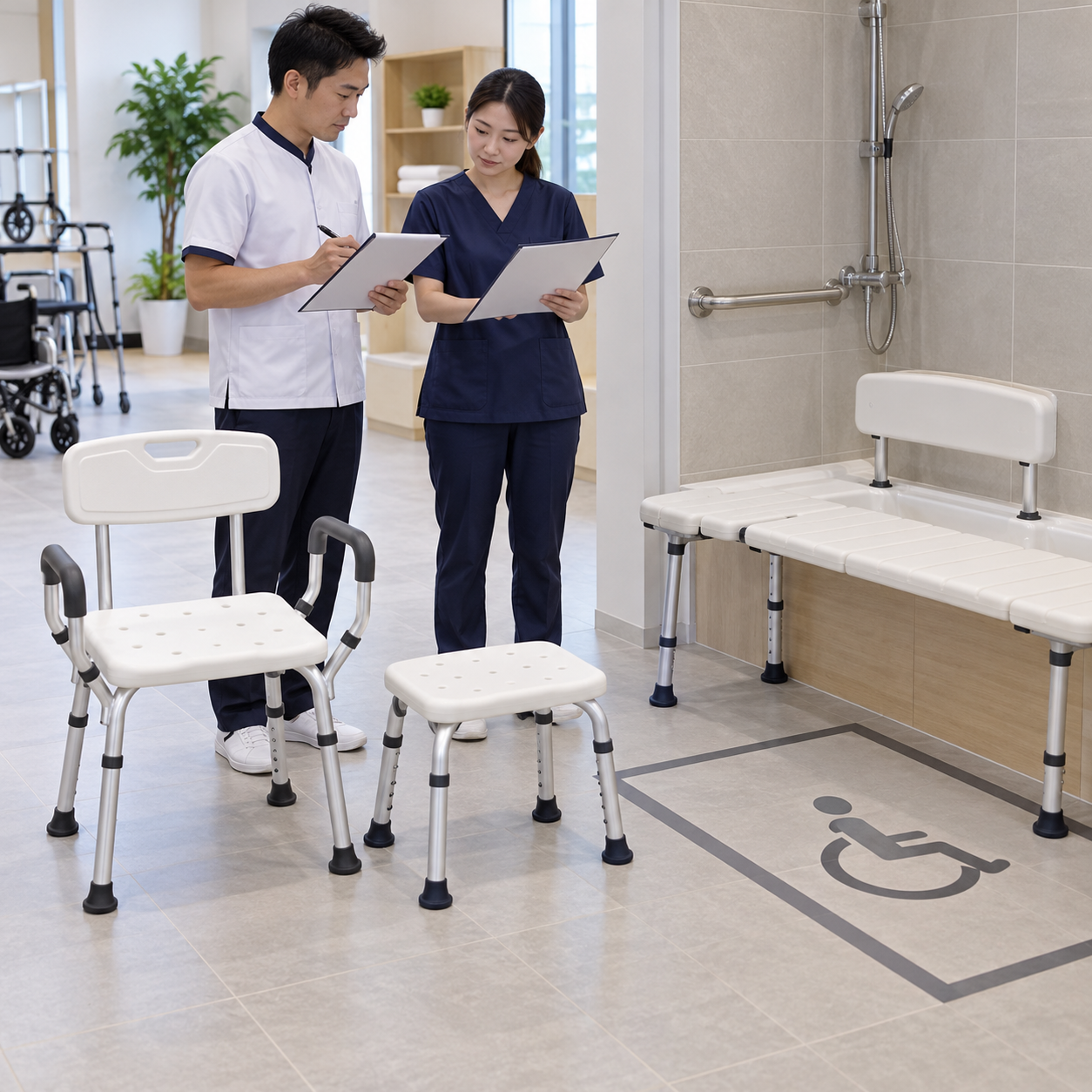
Review the approach, source seat, destination, hand placement, foot position, and caregiver stance with qualified input. Arms can help or block access, depending on the approved route.
Compare a shower or commode chair with a bath lift only when the transfer task calls for that category.
6. What Can a Stability Check Prove?
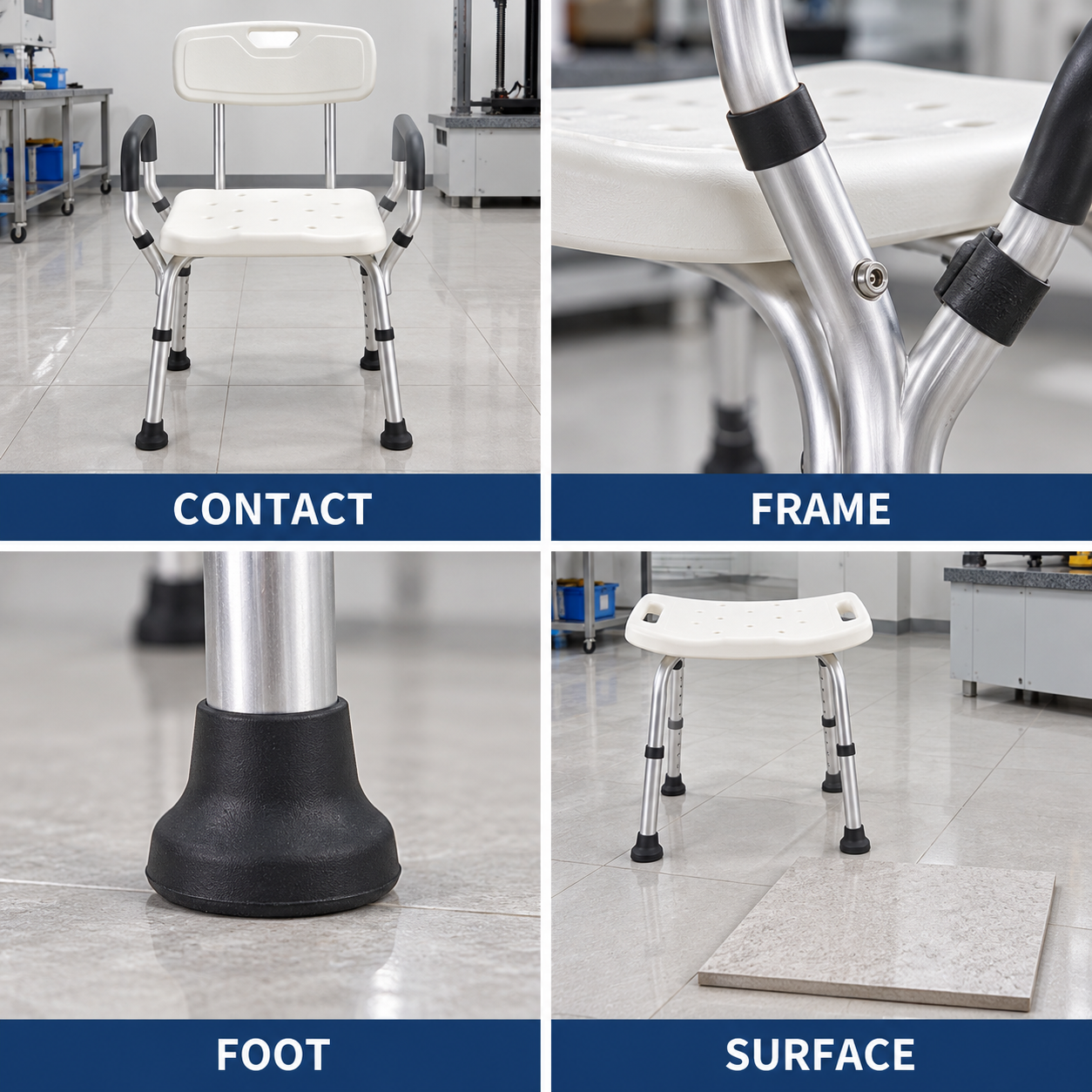
Check every foot, lock, joint, height setting, surface, and support before any approved task trial. Stop when the chair rocks, a foot lifts, or a lock does not engage.
ISO 17966:2026 lists shower chairs, but its scope excludes stability and friction on surfaces made slippery by soap. Use a separate, defined method for any floor-grip claim.
7. What Handling and Storage Work Is Required?
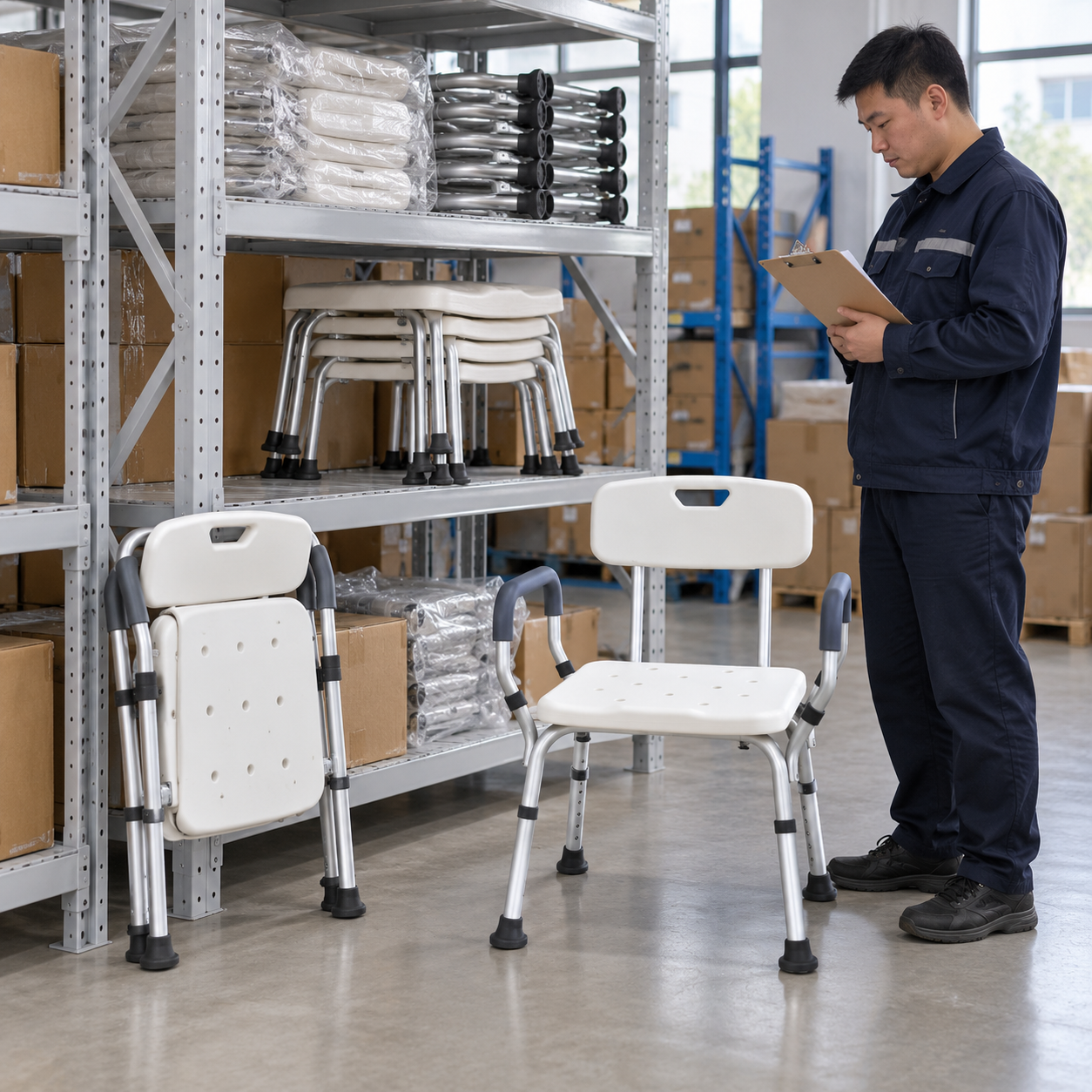
Check carrying grips, folding steps, loose parts, drying access, storage space, and the route back to use. A light stool may still be hard to carry if its shape is awkward.
The folding bath chair shows another storage configuration. Keep instructions specific to the exact product.
8. How Should Buyers Test Samples?
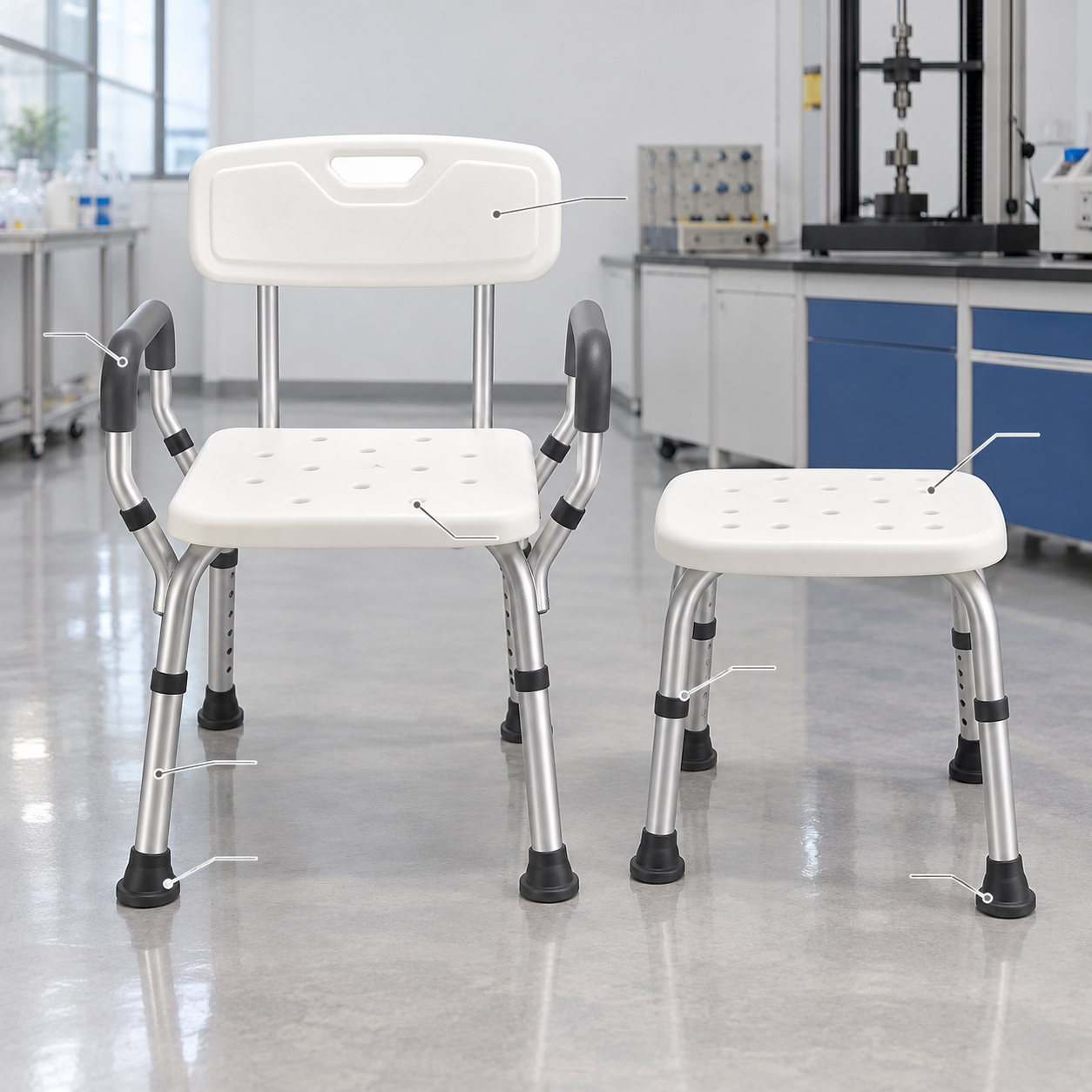
Use the same room, surface, measurement points, handling route, and cleaning process for comparable samples. Keep support-specific checks tied to the parts fitted on each model.
- Match the sample to its drawing and quote.
- Check dimensions, locks, feet, support, and packaging.
- Assign an owner to each exception before approval.

9. What Should Supplier Documents Identify?
Request model and revision, parts, dimensions, materials, manual, test scope, cleaning limits, packaging, spare parts, and change notice. Each file should match the quoted configuration.
For B2B sourcing context, see the supplier overview and preserve unanswered fields as open questions.

10. How Should Buyers Set a Product Range?
Approve separate category boundaries, user and room limits, support options, sample checks, spare parts, and service responsibilities. A retailer may stock both products when staff can explain their different tasks.
Keep commode needs separate in the toilet-chair range. For product questions, contact us with the target market and room constraints.

Frequently Asked Questions
Can a shower stool replace every shower chair?
No. A stool lacks a back and arms; choose only when its support and the assessed task fit.
Which product suits a narrow shower?
Measure the full route and bathing floor, then test the exact setup. A smaller seat does not prove full foot contact or transfer space.
How do I know whether arms are needed?
Review their role in support, push-off, side access, and cleaning with the qualified assessor and exact bathroom setup.
Can both products use the same stability test?
They can share baseline checks, but supports and frames need configuration-specific observations.
How should distributors stock both categories?
Set distinct buyer questions, fit limits, evidence, spare parts, and staff guidance for each range.