
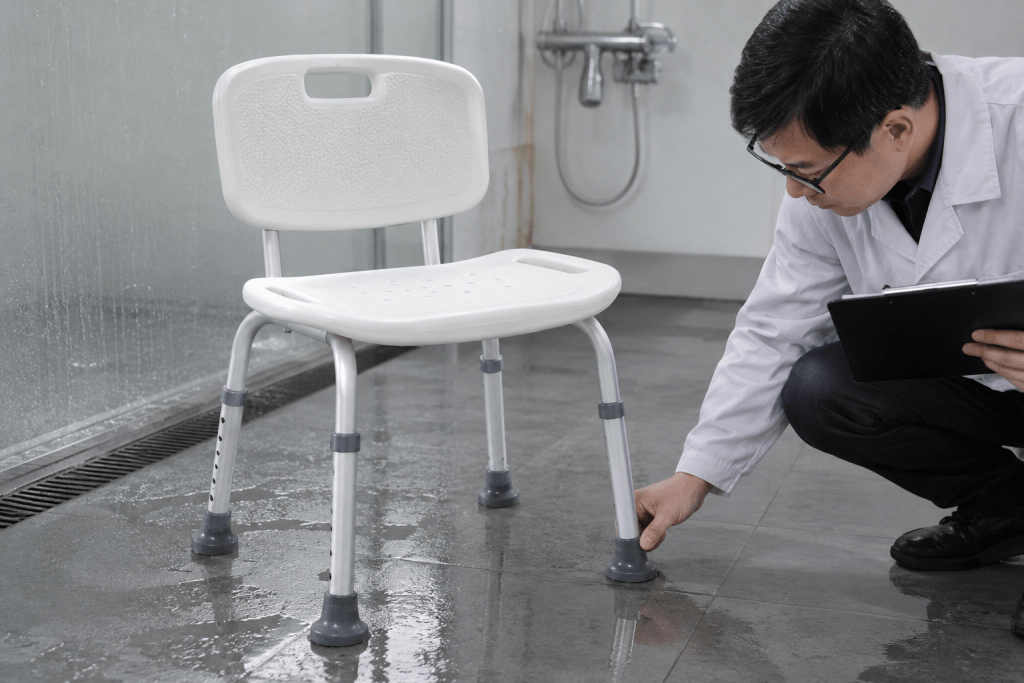
Reliable non slip shower chair feet combine suitable material, contact geometry, secure attachment, full floor contact, wear control, replacement compatibility, and surface-specific testing. A new rubber tip may grip one clean tile yet rotate, harden, split, or sit partly on a drain slope. The phrase non-slip cannot remove those conditions. This guide helps distributors and facilities evaluate foot types, materials, floors, adjustments, maintenance, tests, replacements, and supplier controls. It also separates product evidence from housekeeping and placement responsibilities. Routine checks should remain practical for facility staff. Clear hold rules prevent doubtful feet from returning to service.
1. What Are Non Slip Shower Chair Feet?

Non slip shower chair feet are the product’s floor-contact components, designed to distribute load, protect surfaces, provide defined grip, and remain replaceable where specified. Their performance depends on chair setup and floor condition. Buyers should also review how each foot changes through cleaning and service.
Which Functions Should the Feet Perform?
Review contact, load distribution, attachment, water behavior, floor protection, and service life. A foot should match the leg and intended environment.
- Maintain full contact on approved surfaces.
- Remain secured to the leg.
- Allow inspection, cleaning, and replacement.
Which Foot Types Need Separate Definitions?
Rubber tips, suction cups, ferrules, pads, articulated feet, casters, and glides behave differently. Name the contact method: a generic anti-slip label hides the design.
- Identify foot geometry and mount.
- Define intended floor and product state.
- Separate fixed feet from rolling components.
| Foot type | Contact method | Intended question | Boundary |
|---|---|---|---|
| Rubber ferrule | Friction and contact area | Does it match the floor? | No suction claim |
| Suction foot | Cavity and surface seal | Does surface support sealing? | Needs compatible smooth surface |
| Caster | Wheel and brake | Is rolling intended? | Different product category |
Foot type determines the tests and maintenance needed. Key Takeaway: define the contact design before judging a non-slip claim.
2. Which Materials Suit Non Slip Shower Chair Feet?
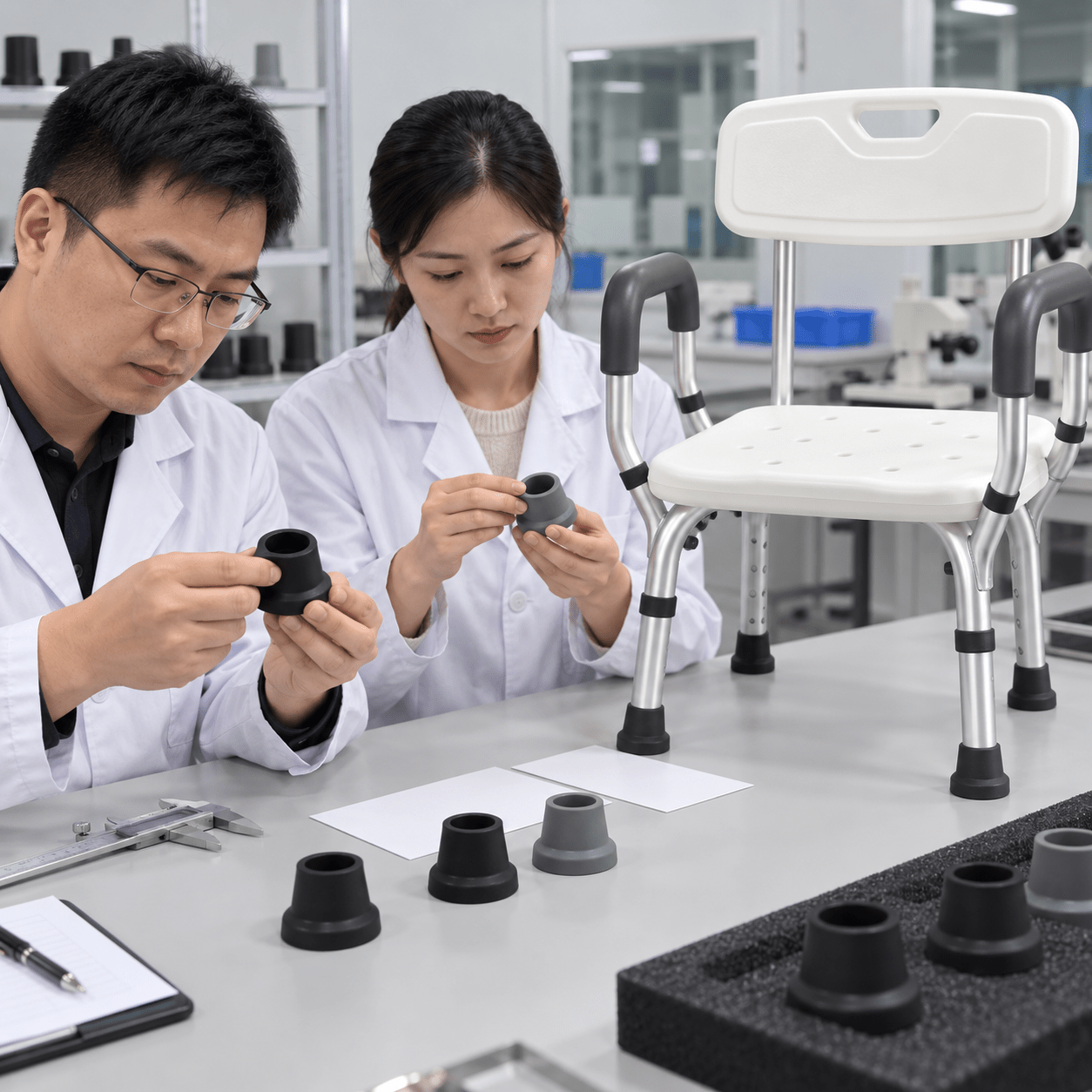
Non slip shower chair feet need material properties suited to water, floor contact, deformation, cleaning, aging, and the expected load. Color and softness by touch cannot prove performance. Compound substitutions may alter behavior without changing the visible shape.
Which Material Properties Matter?
Wet grip, hardness, resilience, water resistance, tear resistance, aging, marking, and cleaning compatibility may affect use and service.
- Surface friction under defined conditions.
- Shape recovery and deformation.
- Resistance to cracking, swelling, or hardening.
Which Material Claims Need Evidence?
Medical grade, antimicrobial, non-marking, chemical resistant, durable, and recyclable need definitions and sources. Cut the adjective first: ask what test or specification supports it.
- Match material with drawing and sample.
- Request applicable evidence and limits.
- Avoid extending claims across substitutions.
| Property | Buyer question | Evidence | Failure sign |
|---|---|---|---|
| Wet contact | Which surface and condition? | Applicable test or trial | Unexpected movement |
| Resilience | Does shape recover? | Material or durability record | Permanent deformation |
| Cleaning compatibility | Which approved method? | Product instruction | Cracking or swelling |
Material claims need conditions. Key Takeaway: approve the foot compound only with traceable properties and cleaning limits.
3. Which Shapes Improve Non Slip Shower Chair Feet?
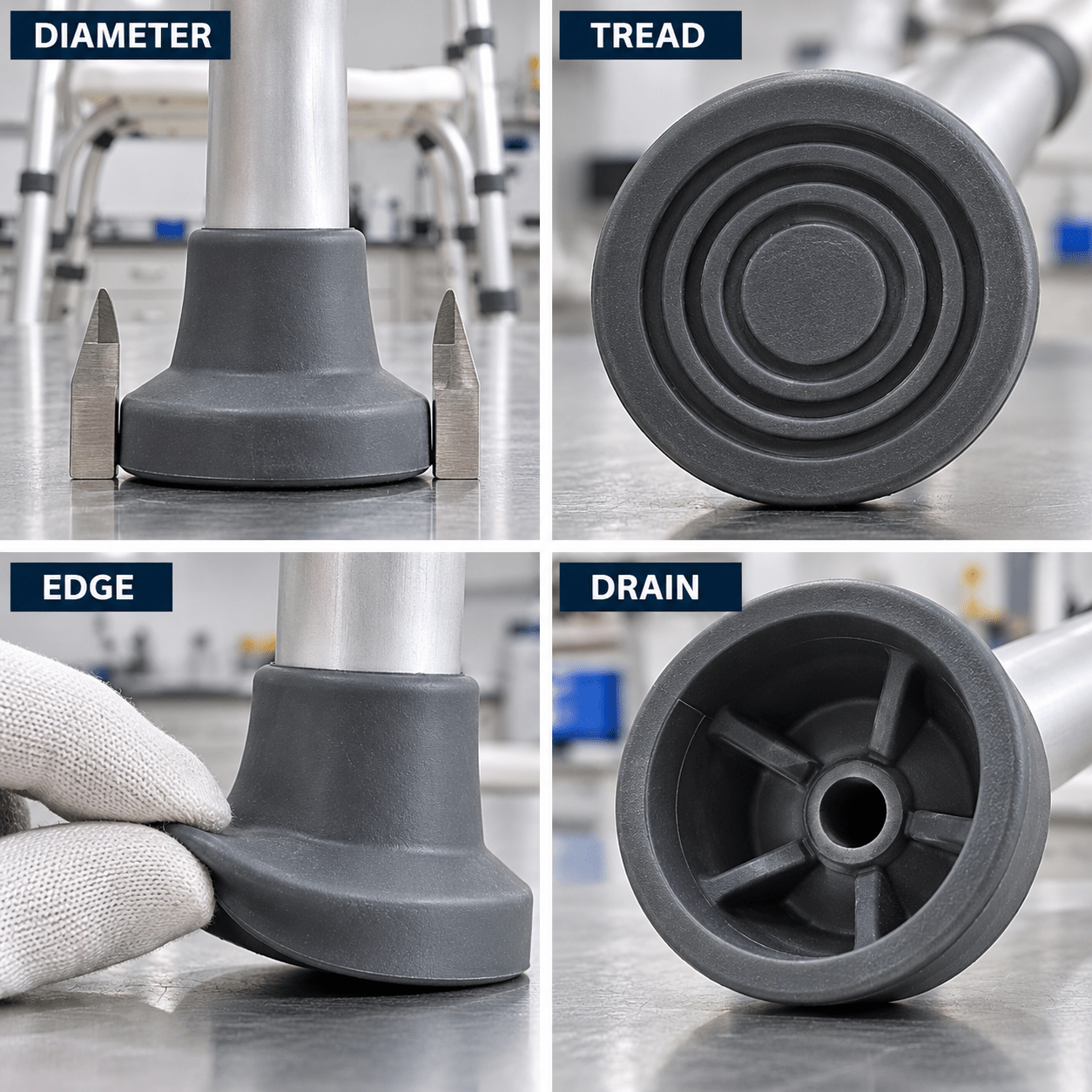
Non slip shower chair feet use diameter, tread, ribs, cavity, edge, wall thickness, articulation, and drainage to create contact. Geometry also affects cleaning and wear. Mold condition and trimming quality can influence the final contact surface.
Which Geometry Controls Floor Contact?
Review the loaded contact area rather than the outside shape alone. Tread and flexible edges may behave differently on tile, grout, or texture.
- Base diameter and contact surface.
- Ribs, tread, edge, and suction cavity.
- Leg angle and articulation where present.
Which Shapes Can Trap Water or Residue?
Deep cavities, closed channels, hollow tips, seams, and hidden attachment areas can retain water or soil. Grip and hygiene share the same part: inspect both functions.
- Check access for cleaning and drying.
- Observe retained water after normal procedures.
- Reject sharp, split, or inaccessible damage.
| Geometry | Contact effect | Cleaning effect | Buyer check |
|---|---|---|---|
| Wide flat base | Larger potential contact | Exposed surface | Full-floor contact |
| Tread or ribs | Changes surface interaction | Grooves collect soil | Wear and cleaning check |
| Suction cavity | Requires compatible seal | Hidden cavity | Surface and drying review |
Useful geometry balances contact and service. Key Takeaway: inspect floor interaction and cleaning access before approving foot shape.
4. How Do Non Slip Shower Chair Feet Attach?
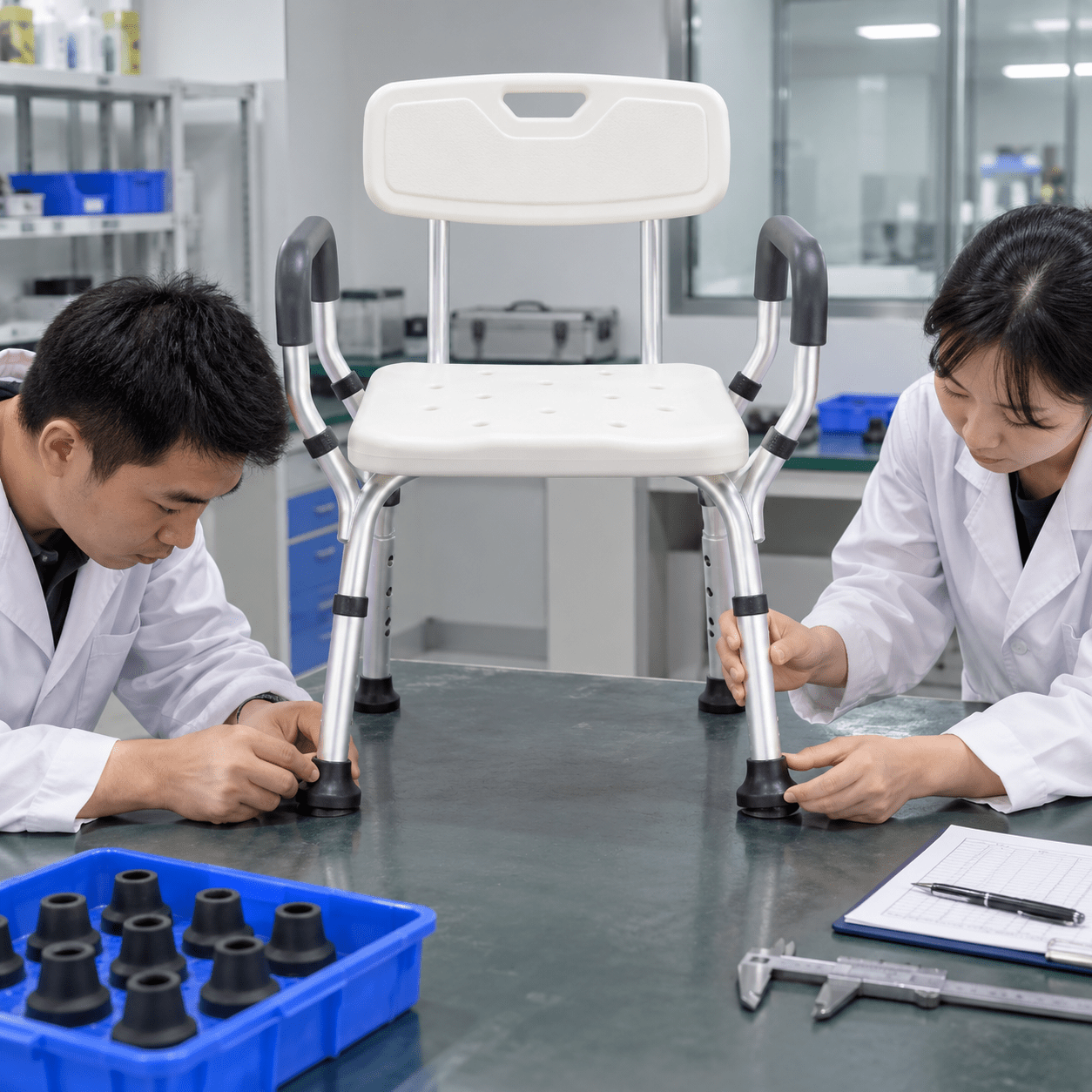
Non slip shower chair feet may use push fits, molded inserts, threads, pins, collars, adhesive, or integrated leg ends. Attachment determines rotation, pull-off, water entry, and replacement. Leg-end damage can remain hidden beneath an apparently secure foot.
Which Attachment Methods Need Inspection?
Check insertion depth, fit, retainer, orientation, leg end, and part identity. Compare every foot rather than one sample corner.
- Secure fit without visible gap.
- Correct orientation and part size.
- Undamaged leg and foot interface.
Which Attachment Failures Need Controls?
Rotation, pull-off, splitting, loose fit, water entry, corrosion, and wrong replacement size can change chair height or contact. Pull the evidence together: parts and maintenance records should match the mount.
- Test retention using approved methods.
- Hold loose or damaged components.
- Record replacement and post-checks.
| Attachment | Failure mode | Inspection | Action |
|---|---|---|---|
| Push fit | Loose or wrong diameter | Seating and rotation | Replace matched part |
| Threaded | Loose or seized thread | Torque/process check | Service per instruction |
| Integrated | Damage at leg end | Visual and function | Replace approved assembly |
Attachment is part of floor-contact performance. Key Takeaway: control foot identity, retention, orientation, and leg compatibility.
5. Which Floors Suit Non Slip Shower Chair Feet?
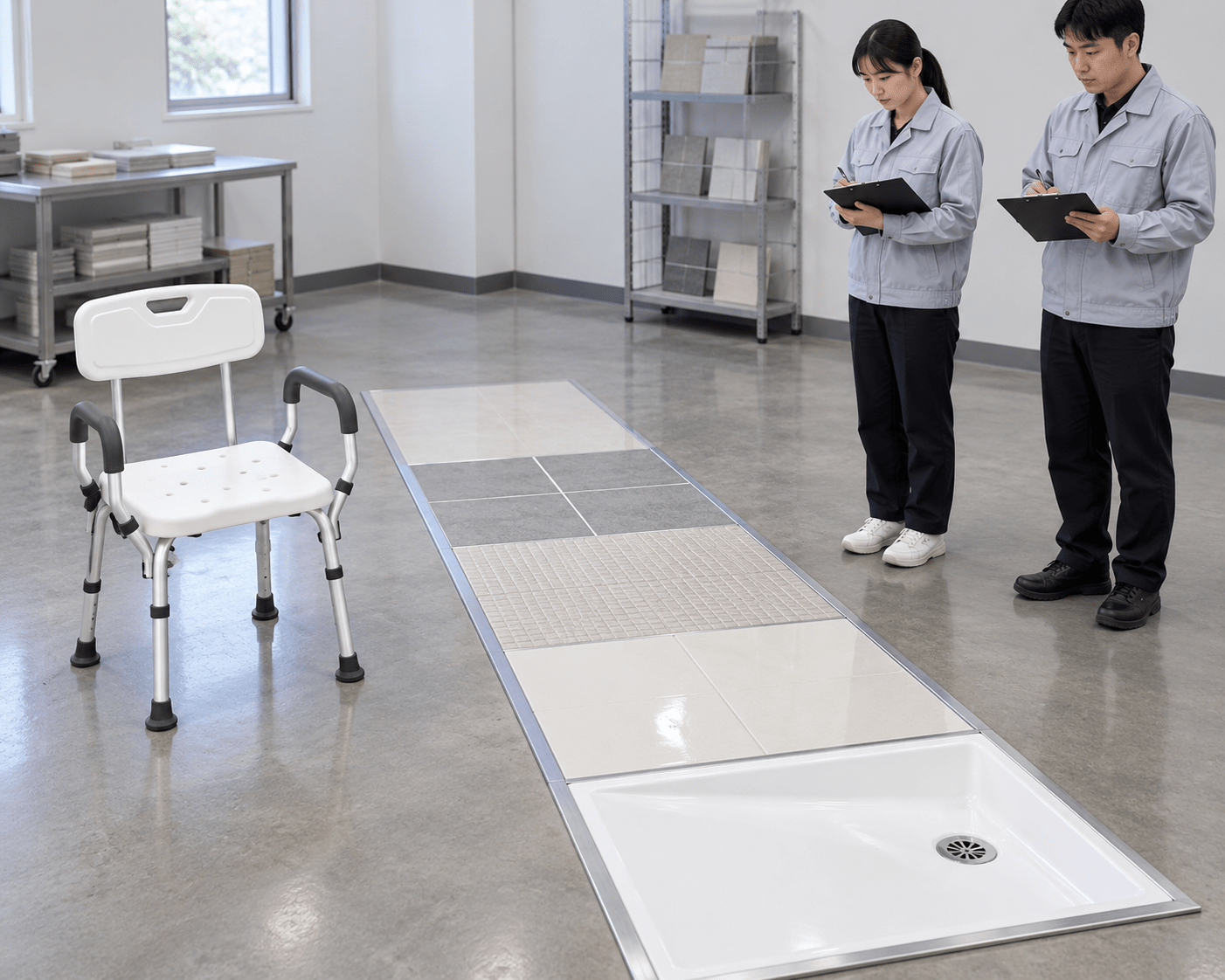
Non slip shower chair feet suit only floor conditions included in product evidence, instructions, or controlled buyer trials. Tile texture, grout, acrylic tubs, stone, coatings, drain slopes, water, and residue change contact. Floor wear and housekeeping practices can change those conditions over time.
Which Surface Variables Change Grip?
Record surface material, texture, cleanliness, slope, joints, water state, and wear. A wet-area label cannot describe every bathroom.
- Smooth and textured tile.
- Grout, drains, and transitions.
- Curved tub and coated surfaces.
Which Surfaces Need Separate Testing?
Smooth wet tile, textured floors, curved tubs, uneven joints, and contaminated surfaces require distinct review. Change one variable at a time: otherwise results cannot identify the cause.
- Use the same chair and leg settings.
- Stop when contact becomes unpredictable.
- Compare related bathroom product boundaries.
| Surface | Contact question | Observation | Decision |
|---|---|---|---|
| Flat clean tile | Baseline full contact | Movement and rocking | Reference |
| Grout or drain | Edge and partial contact | Foot deformation | Approve/restrict |
| Curved tub | Complete base contact | Foot lift or chair twist | Exclude if unsuitable |
Floor condition belongs in the approval. Key Takeaway: state tested surfaces and exclude unsupported placements.
6. How Do Adjustments Affect Non Slip Shower Chair Feet?
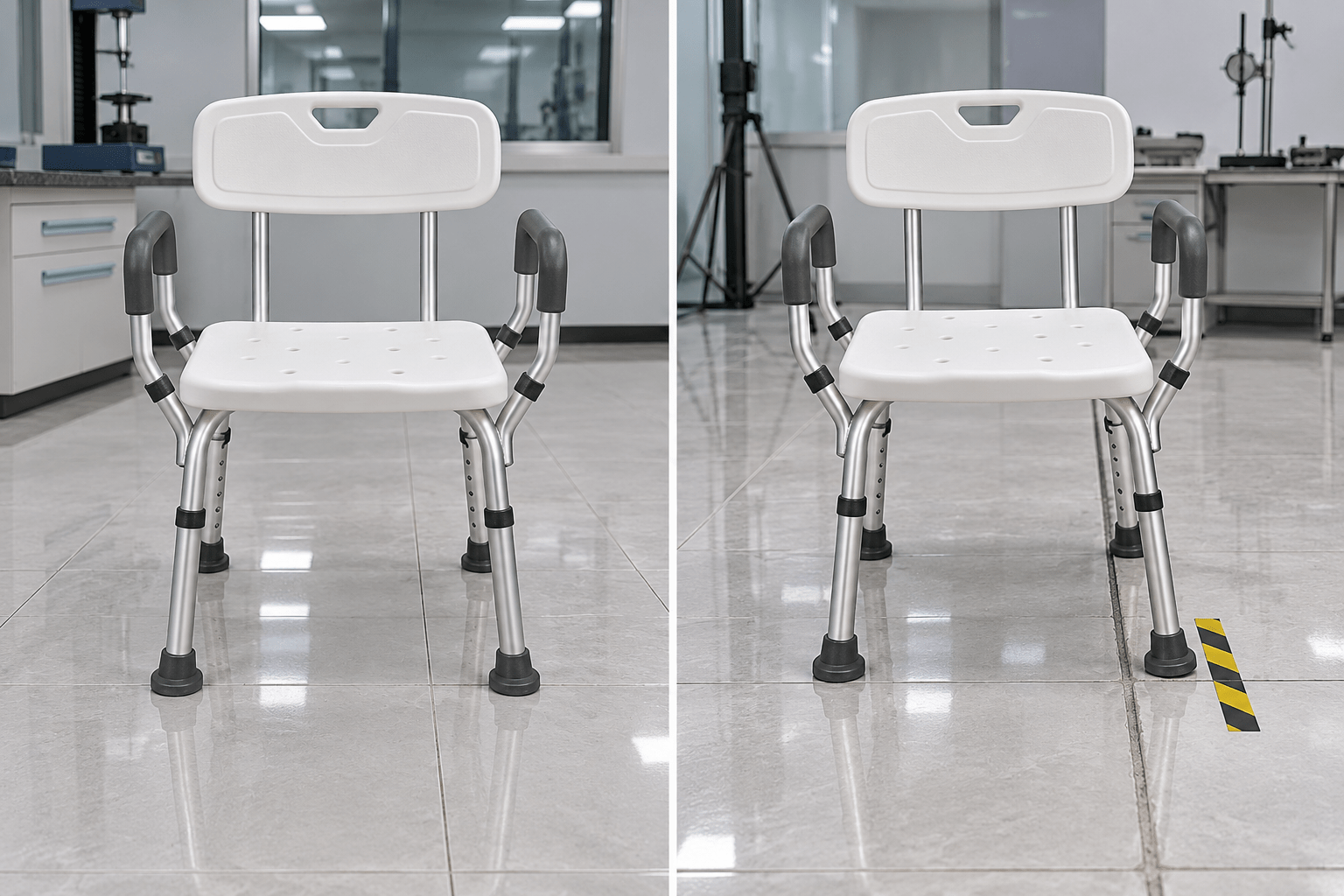
Non slip shower chair feet can lose full contact when legs use unequal settings, maximum extension, partial locks, or positions not permitted by the design. Frame twist may appear before visible sliding. Recheck contact after moving the chair or changing height.
Which Leg Settings Change Contact?
Compare all leg positions, lock engagement, extension, foot angle, and seat attitude. Use documented leveling only where allowed.
- Equal approved settings.
- Permitted compensation settings.
- Highest intended extension.
Which Foot Positions Need Correction?
Edge contact, tilted suction cups, partial tread, grout placement, and drain overlap reduce usable contact. Look under every corner: front views can hide a lifted rear foot.
- Observe all feet at floor level.
- Check rocking and frame twist.
- Reposition or exclude the site.
| Leg state | Foot state | Warning sign | Action |
|---|---|---|---|
| Equal and locked | Full contact | None visible | Continue checks |
| Unequal or partial | Tilted contact | Rocking or twist | Reset or hold |
| Maximum extension | Geometry changed | Lift or excessive flex | Review approved limit |
Adjustment and foot contact must be reviewed together. Key Takeaway: confirm every lock and foot after changing chair height.
7. How Do Non Slip Shower Chair Feet Wear?
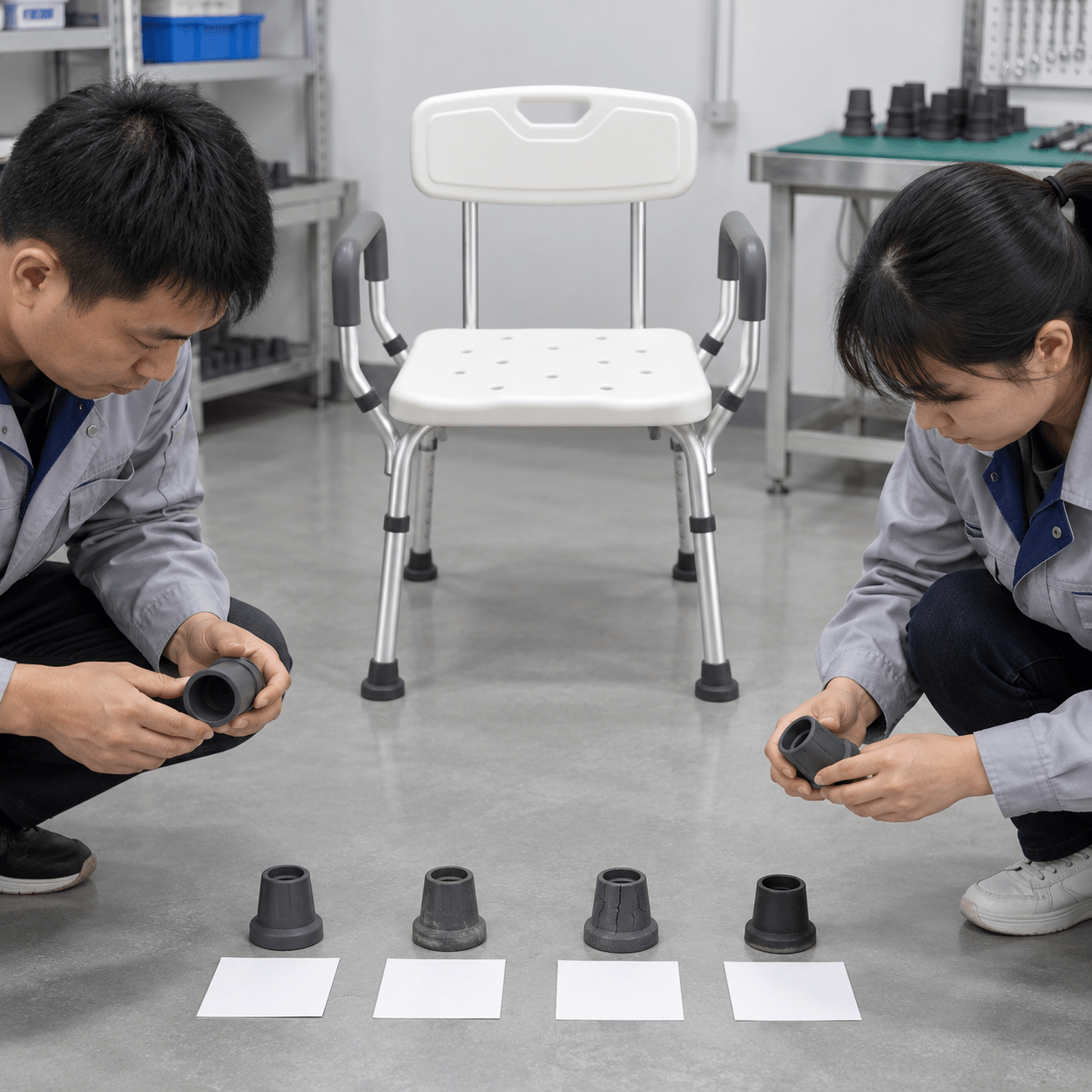
Non slip shower chair feet wear through repeated loading, cleaning, dragging, rough floors, heat, storage, and aging. Routine checks should find change before floor contact becomes unreliable. Fleet records can reveal repeated wear patterns tied to one environment.
Which Wear Signs Need Routine Inspection?
Look for tread loss, hardening, cracking, deformation, smoothness, discoloration, loose fit, or uneven height. Compare all feet.
- Surface and edge condition.
- Shape, flexibility, and attachment.
- Matching type and wear across the chair.
Which Use Conditions Accelerate Wear?
Shared facilities, aggressive cleaning, dragging, rough surfaces, heat, and incorrect replacements may shorten service life. Record the condition, not a guess: replacement intervals need evidence.
- Link wear with use and cleaning records.
- Hold products with damaged feet.
- Review repeated patterns across a fleet.
| Wear sign | Possible cause | Service action | Release rule |
|---|---|---|---|
| Smooth or worn tread | Repeated floor contact | Replace approved foot | New foot verified |
| Crack or split | Aging or incompatible cleaning | Quarantine and replace | Leg interface intact |
| Loose fit | Wrong part or deformation | Match correct part | Retention passes |
Wear control keeps contact predictable. Key Takeaway: inspect feet by condition and replace them through a controlled parts process.
8. How Should Non Slip Shower Chair Feet Be Tested?
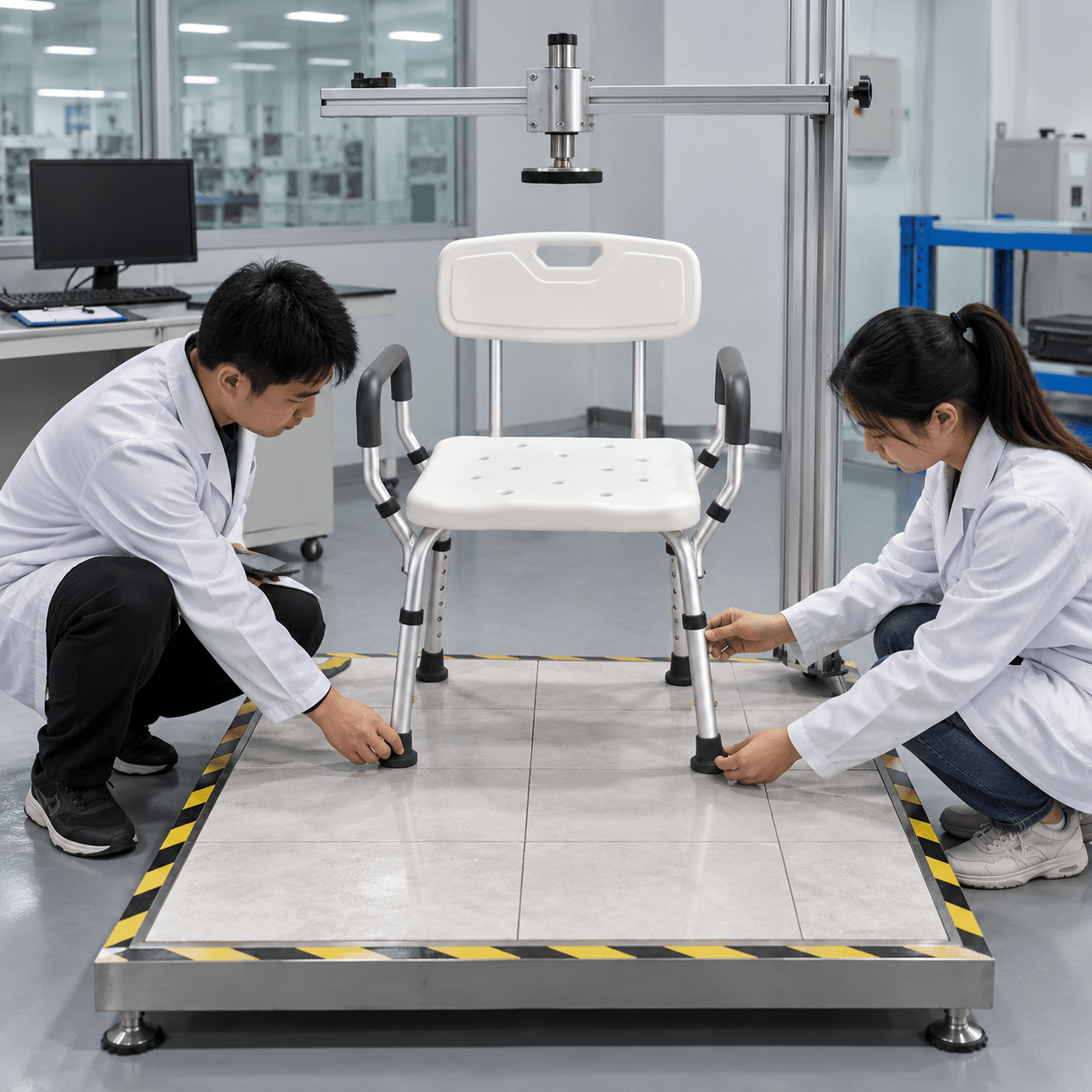
Non slip shower chair feet should be tested with a defined chair configuration, surface, moisture condition, load basis, direction, leg setting, and conditioning process. A dramatic demonstration cannot replace a controlled protocol. Repeatability matters because a single favorable run can hide variability.
Which Test Setup Needs Control?
Record product identity, feet, surface, cleaning state, slope, fixtures, applied condition, direction, and environment. Avoid unsafe user demonstrations.
- Use the offered part and chair revision.
- Condition surfaces consistently.
- Document stop and acceptance rules.
Which Outcomes Need Recording?
Movement, deformation, pull-off, contact, recovery, damage, and repeatability may matter. Keep the result bounded: do not convert one surface trial into a universal claim.
- Compare before and after condition.
- Record failed and excluded cases.
- Review supplier evidence through the B2B sourcing framework.
| Test | Controlled input | Observation | Output |
|---|---|---|---|
| Contact | Surface and leg state | Full or partial contact | Placement rule |
| Movement | Direction and condition | Displacement behavior | Test result |
| Retention | Mount and method | Rotation or pull-off | Parts approval |
Testing should answer a specific floor-contact question. Key Takeaway: accept results only within the documented configuration and surface conditions.
9. How Do You Replace Non Slip Shower Chair Feet?
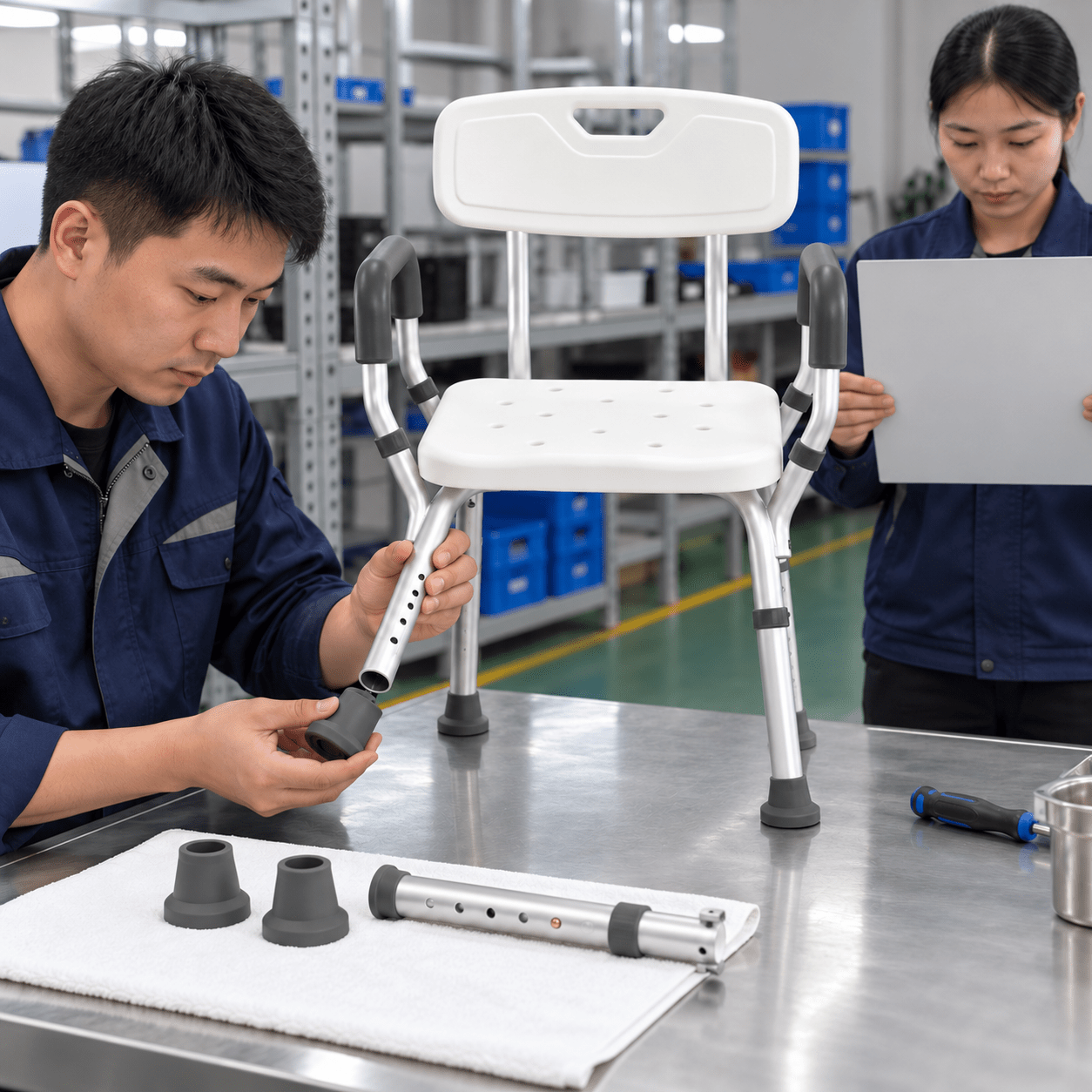
Non slip shower chair feet should be replaced with parts matched by model, revision, leg diameter, mount, dimensions, material, tread, and orientation. Visual similarity is insufficient. Replacement records should preserve the date, part source, and installer.
Which Compatibility Fields Need Matching?
Use an illustrated parts map, controlled part number, or equivalent identity record. Check whether front and rear or left and right differ.
- Leg and mount dimensions.
- Foot geometry and material.
- Product model and revision.
Which Post-Replacement Checks Matter?
Verify full seating, equal height, rotation, retention, floor contact, rocking, and records. Replacement ends with function: installing the part alone does not release the chair.
- Inspect all four feet together.
- Check approved height settings.
- Record technician and part identity.
| Replacement step | Identity check | Function check | Status |
|---|---|---|---|
| Select part | Model and mount | Visual comparison | Pass/hold |
| Install | Seating and orientation | Retention | Pass/hold |
| Release | Matching feet and height | Contact and rocking | Pass/hold |
Compatible parts protect geometry and contact. Key Takeaway: close every replacement with identity, retention, and floor-contact checks.
10. How Do Suppliers Control Non Slip Shower Chair Feet?
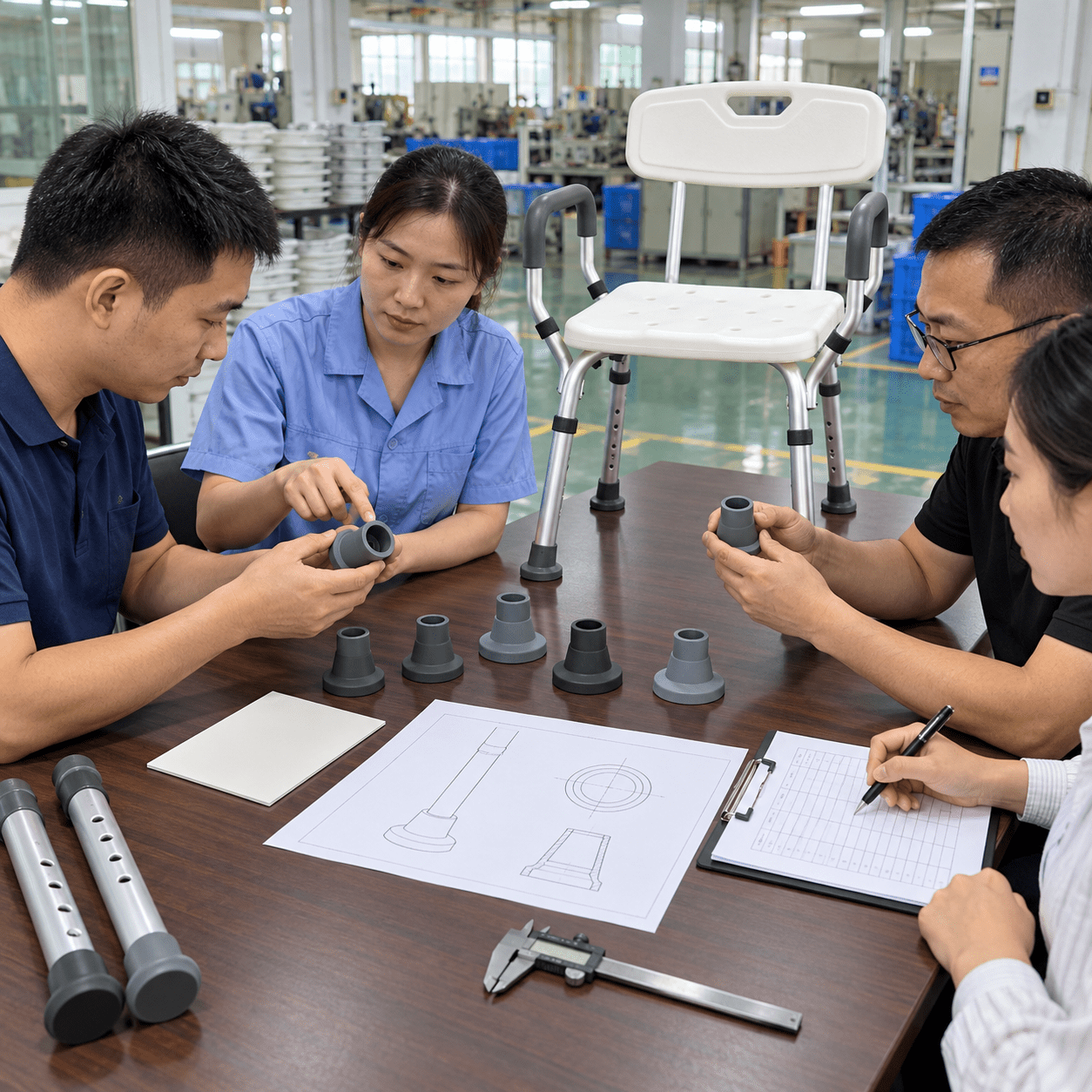
Non slip shower chair feet suppliers should control material, drawing, mold, dimensions, mount, inspection, replacement identity, packaging, and changes. The chair supplier remains responsible for the offered configuration. Incoming inspection should detect mixed or damaged foot lots before assembly.
Which Supplier Evidence Should Buyers Request?
Request current drawings, material information, samples, inspection method, parts map, maintenance guidance, and applicable test evidence.
- Match foot with chair and leg.
- Review incoming and final checks.
- Record approved substitutes.
Which Purchase Conditions Protect Consistency?
Approved part identity, substitute control, incoming inspection, spare quantity, packaging, and traceability belong in the order. Stop silent changes: a different compound or mold can alter contact.
- Require advance change notice.
- Compare production with approved samples.
- Link fleet replacement with shared equipment receiving.
| Supplier control | Evidence | Common gap | Gate |
|---|---|---|---|
| Material and mold | Controlled specification | Color-only match | Technical approval |
| Inspection | Dimensions and condition | No retention check | Correct process |
| Change control | Notice and review | Silent substitute | Hold shipment |
Supplier controls preserve approved contact parts. Key Takeaway: treat feet as controlled safety-relevant components, not generic consumables.
Conclusion
Reliable feet need suitable material, geometry, attachment, full contact, maintenance, controlled testing, compatible replacements, and supplier change control. The non-slip label alone cannot describe those conditions. To discuss bath-chair parts and procurement requirements for your market, contact us today.
Dependable bathroom equipment starts where the frame meets the actual floor. A controlled spare-part process keeps that contact consistent through service. Keep inspection records current.
FAQ
Can non-slip feet prevent every movement?
No. Floor material, water, residue, slope, leg setting, load direction, wear, and placement can change contact and movement. Training and routine inspection still control how the chair is placed and released for use.
What’s the best foot type for smooth tile?
The best type is the one approved for that chair and verified on the defined tile condition. Do not infer performance from appearance alone. Record the cleaning state, surface texture, and leg settings used during review.
How do I know when a rubber tip needs replacement?
Replace or hold it when approved inspection finds tread loss, hardening, cracking, deformation, looseness, mismatch, or unreliable contact. Compare every foot because uneven wear can change chair geometry and floor contact.
Can replacement feet change chair height?
Yes. Different dimensions or seating depth can alter height and level. Match the exact part and recheck all feet after installation. A replacement should not be released until retention and rocking checks pass.
How should facilities record foot inspections?
Record unit identity, date, each foot’s condition, floor-contact result, action, replacement part, owner, and release status. Fleet records should also flag repeated defects linked with one surface, cleaner, or part lot.
