

A shower chair with arms and back is useful when those supports solve an assessed sitting, standing, or bathing task without blocking access. Buyers sometimes treat the most supported configuration as the safest default. Yet fixed arms, back height, padding, and wider dimensions can create transfer, cleaning, or bathroom-fit conflicts. This guide helps distributors and institutions evaluate support geometry, user fit, transfers, materials, maintenance, testing, and supplier evidence.
1. What Is a Shower Chair With Arms and Back?
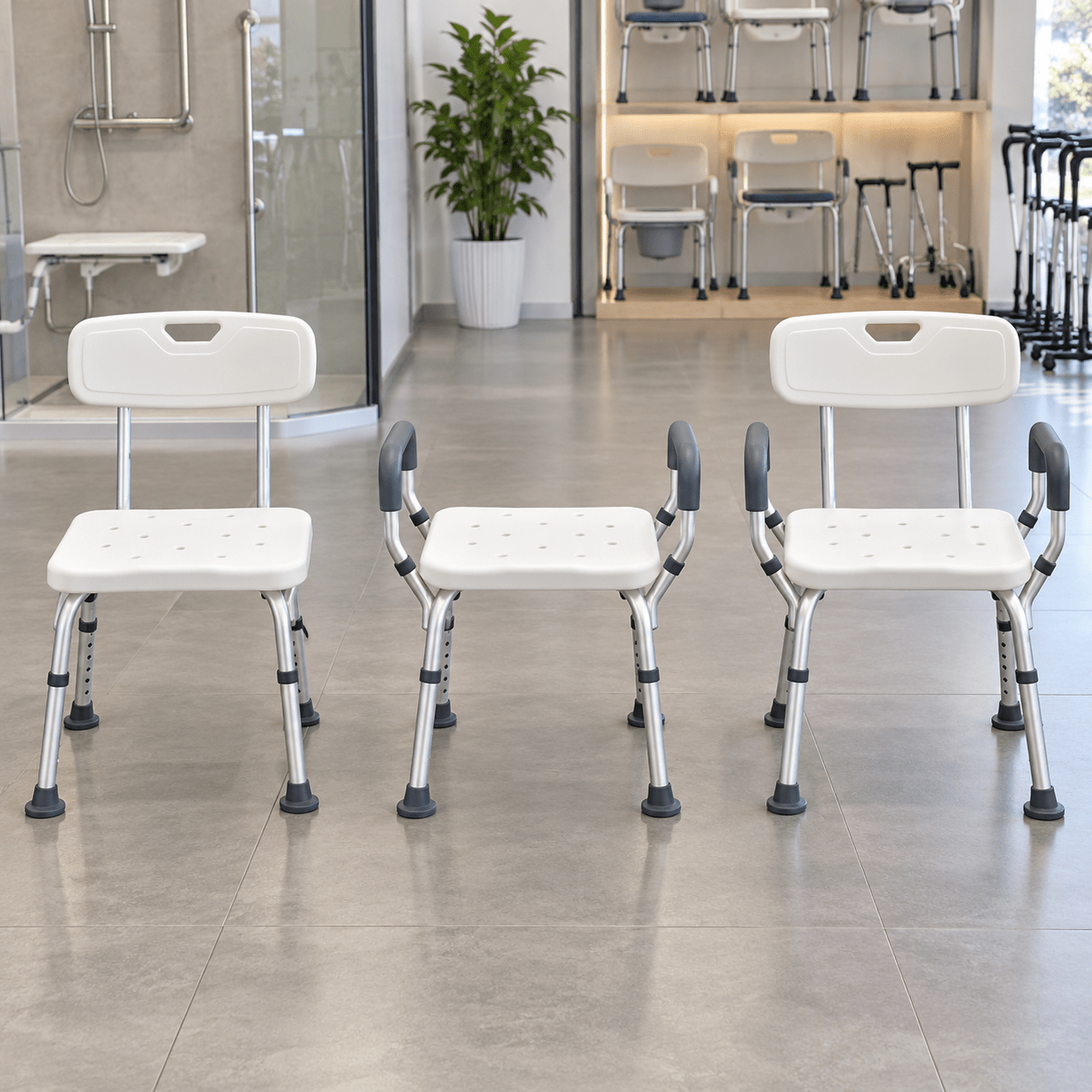
A shower chair with arms and back combines a bathing seat with rear support and two lateral supports in the offered configuration. Buyers should define whether those parts are fixed, removable, folding, padded, height-adjustable, or load-bearing.
Which Components Define the Configuration?
Review the complete seating structure rather than counting visible parts. Mounts, locks, fasteners, drainage, feet, and adjustment points affect how supports perform.
- Seat, backrest, and both armrests.
- Frame, legs, feet, and height locks.
- Support mounts, padding, and drainage paths.
Which Similar Products Need Separate Definitions?
Back-only chairs, stools, transfer benches, commodes, and rolling shower chairs have different operating boundaries. Get the category right: a backrest does not turn every bathing seat into the same product.
- Name the intended bathing and transfer tasks.
- Record all standard and optional supports.
- State which configurations remain outside scope.
| Configuration | Back | Arms | Primary question | Boundary |
|---|---|---|---|---|
| Stool | No | No | Is unsupported sitting suitable? | Minimal support |
| Back-only chair | Yes | No | Is rear support enough? | Open side access |
| Chair with arms and back | Yes | Yes | Do all supports fit the task? | Larger support envelope |
Product definition should survive beyond a catalog image. Key Takeaway: specify every support, mount, lock, and option before comparing products.
2. Who Needs a Shower Chair With Arms and Back?
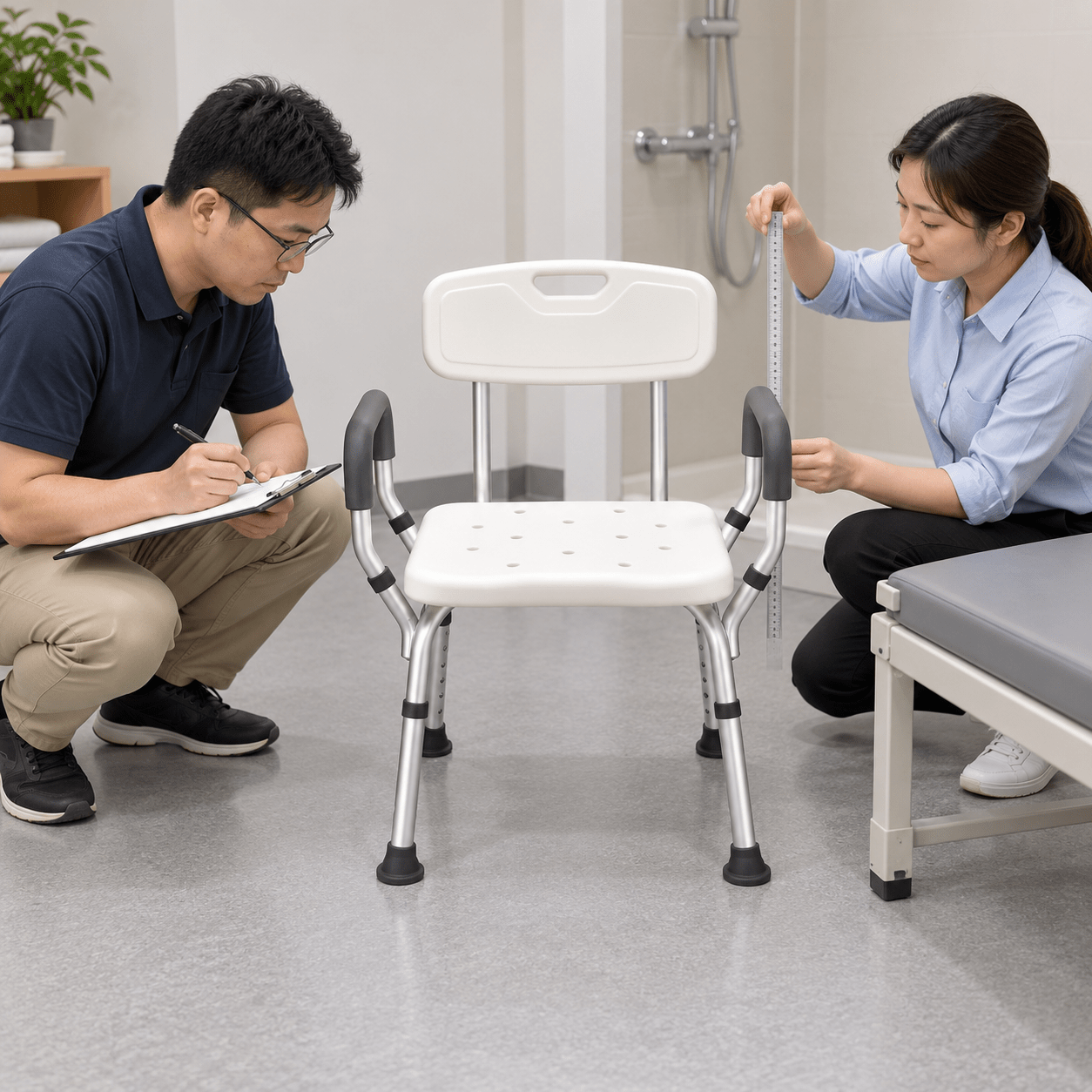
A shower chair with arms and back may suit users who need supported sitting or a defined hand contact during bathing. Suitability remains individual and should account for dimensions, movement, transfer method, skin contact, cognition, and the bathroom.
Which Tasks May Benefit From Added Support?
Observe how the person sits, lowers, rises, washes, reaches controls, and receives assistance. A support should have a clear job.
- Trunk rest during seated bathing.
- Hand support during an approved movement.
- Position cues in a defined environment.
Which User Factors Need Qualified Review?
Body size, upper-limb function, posture, transfer route, and tolerance for contact can change the result. Avoid diagnosis shortcuts: two people with the same condition may need different configurations.
- Compare usable seat and between-arm width.
- Check arm and back contact during tasks.
- Keep final fit with a qualified assessor.
| User factor | Product field | Task effect | Evidence |
|---|---|---|---|
| Hip and trunk dimensions | Seat and back width | Fit and movement | Measured assessment |
| Arm function | Armrest geometry | Push-off or support | Task trial |
| Transfer route | Removable or fixed supports | Access | Route observation |
The product should follow the task rather than a diagnosis label. Key Takeaway: approve added supports only when their individual benefit and limitations are observed.
3. How Do Arms Support a Shower Chair With Arms and Back?
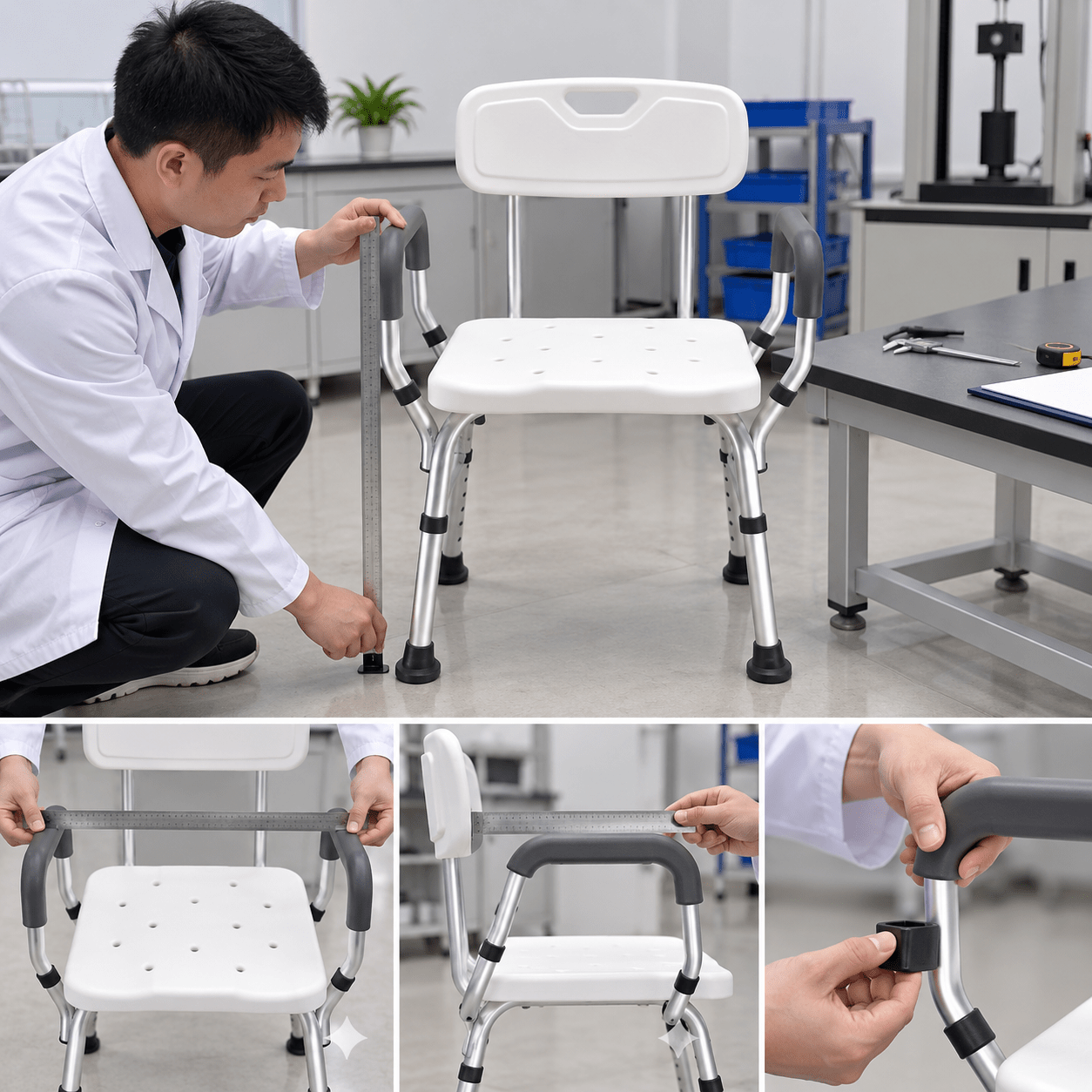
A shower chair with arms and back uses armrests as contact points, boundaries, or push surfaces only within their intended design. Height, spacing, length, grip, mount strength, and removal method shape their usefulness.
Which Armrest Dimensions Matter?
Measure both arms from consistent seat and frame references. Usable spacing may differ from the chair’s overall width.
- Between-arm width and arm height.
- Grip length, width, and surface.
- Front projection and mount position.
Which Arm Designs Change Access?
Fixed, removable, swing-away, and drop-down arms create different transfer and cleaning routes. Follow the moving part: every removable support needs a secure return state.
- Inspect locks and visual engagement.
- Test side access with the complete chair.
- Record loose-part storage and replacement identity.
| Arm design | Access effect | Service need | Buyer test |
|---|---|---|---|
| Fixed | Consistent support; blocks side | Fastener inspection | Fit and route check |
| Removable | Opens side access | Part and lock control | Remove/refit cycle |
| Folding | Changes envelope | Hinge and latch checks | Position verification |
Armrests can help one action and obstruct another. Key Takeaway: evaluate arm geometry, load role, locking, and access as one configuration.
4. How Does a Back Support a Shower Chair With Arms and Back?

A shower chair with arms and back uses its backrest for rear contact within a defined seated position. Back height, width, angle, contour, flexibility, padding, and attachment affect posture, access, and cleaning.
Which Backrest Features Affect Position?
Measure the back relative to the seat and intended user range. Note whether the support is rigid, flexible, removable, or integrated.
- Back height, width, angle, and contour.
- Padding, cover, seams, and drainage.
- Mounts, fasteners, locks, and frame contact.
Which Backrest Conditions Need Observation?
Observe upright sitting, permitted leaning, washing access, wall clearance, and water retention. A comfortable pose is not enough: the back must remain serviceable through repeated wet use.
- Check movement and mount play.
- Inspect skin-contact edges and hardware.
- Test cleaning, rinsing, drying, and refitting.
| Backrest field | Intended role | Possible conflict | Check |
|---|---|---|---|
| Height | Rear contact | Shoulder or washing access | User-range review |
| Angle | Positioning | Wall and seat relationship | Task observation |
| Padding | Contact comfort | Drying and damage | Cleaning trial |
Backrest selection belongs in both fit and maintenance reviews. Key Takeaway: approve a back only when its position, attachment, and cleaning process work together.
5. Which Sizes Fit a Shower Chair With Arms and Back?
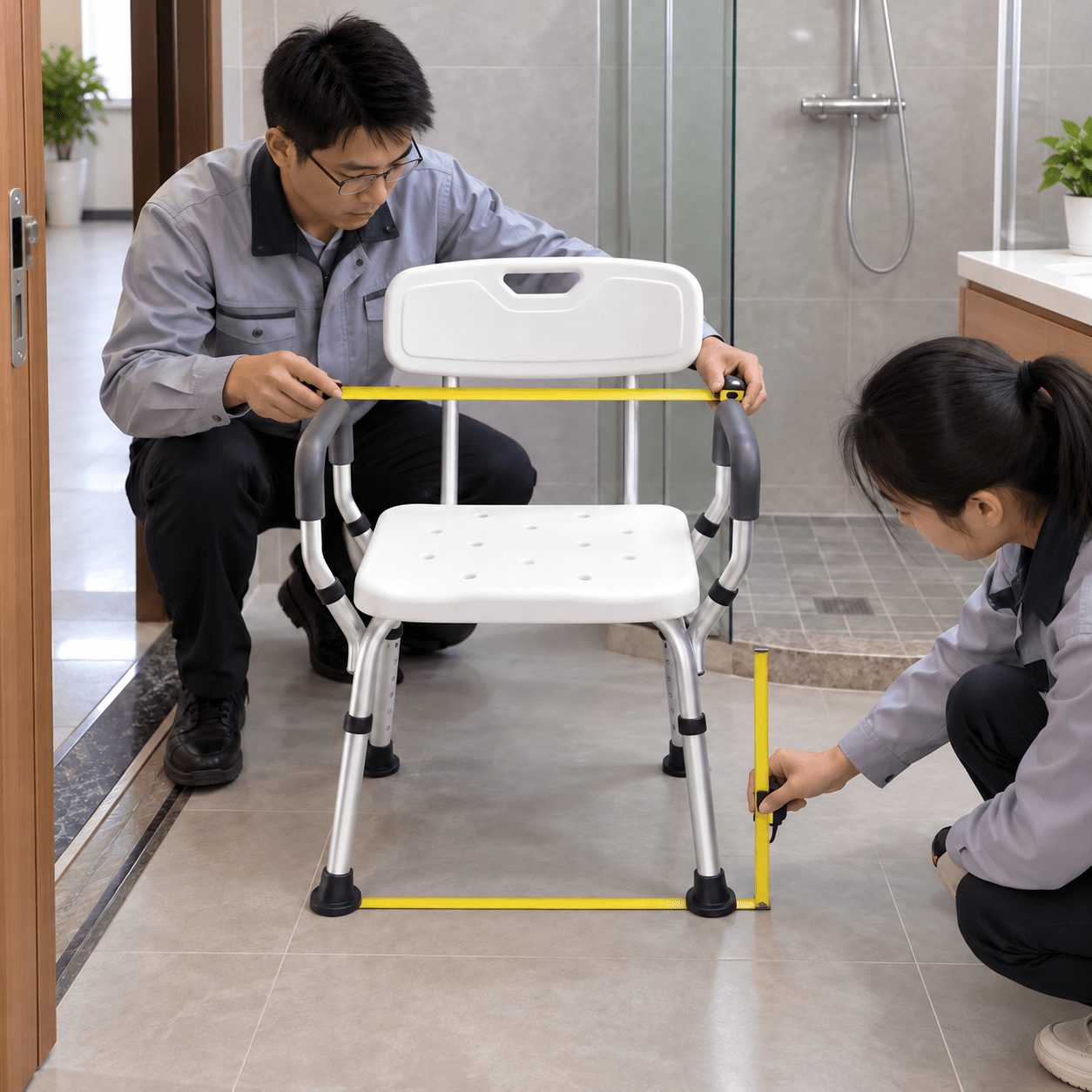
A shower chair with arms and back fits only when usable seating dimensions, support spacing, base footprint, and bathroom clearances align. Overall width alone cannot prove seat fit or floor contact.
Which User Dimensions Need Comparison?
Use task-based measurements and consistent reference points. Include the intended clothing, padding, and support configuration where relevant.
- Hip width, thigh depth, and lower-leg length.
- Elbow position and between-arm clearance.
- Foot placement and control reach.
Which Bathroom Dimensions Limit the Chair?
Measure the base, arms, back, doorway, tub floor, wall gap, controls, and caregiver zone. Check both envelopes: seating fit and room fit can fail independently.
- Confirm every foot sits on a suitable surface.
- Preserve approach and exit space.
- Test doors, curtains, and controls in motion.
| Dimension | User question | Room question | Pass condition |
|---|---|---|---|
| Usable seat width | Is contact and movement appropriate? | Does seat clear enclosure? | Both fit checks pass |
| Between-arm width | Do arms support without pressure? | Do arms clear walls? | Task remains accessible |
| Base footprint | Are feet positioned correctly? | Do all feet contact floor? | Stable placement |
Fit is the intersection of person, product, and room. Key Takeaway: measure usable dimensions and operating clearances before approving a size.
6. How Do Transfers Work With a Shower Chair With Arms and Back?
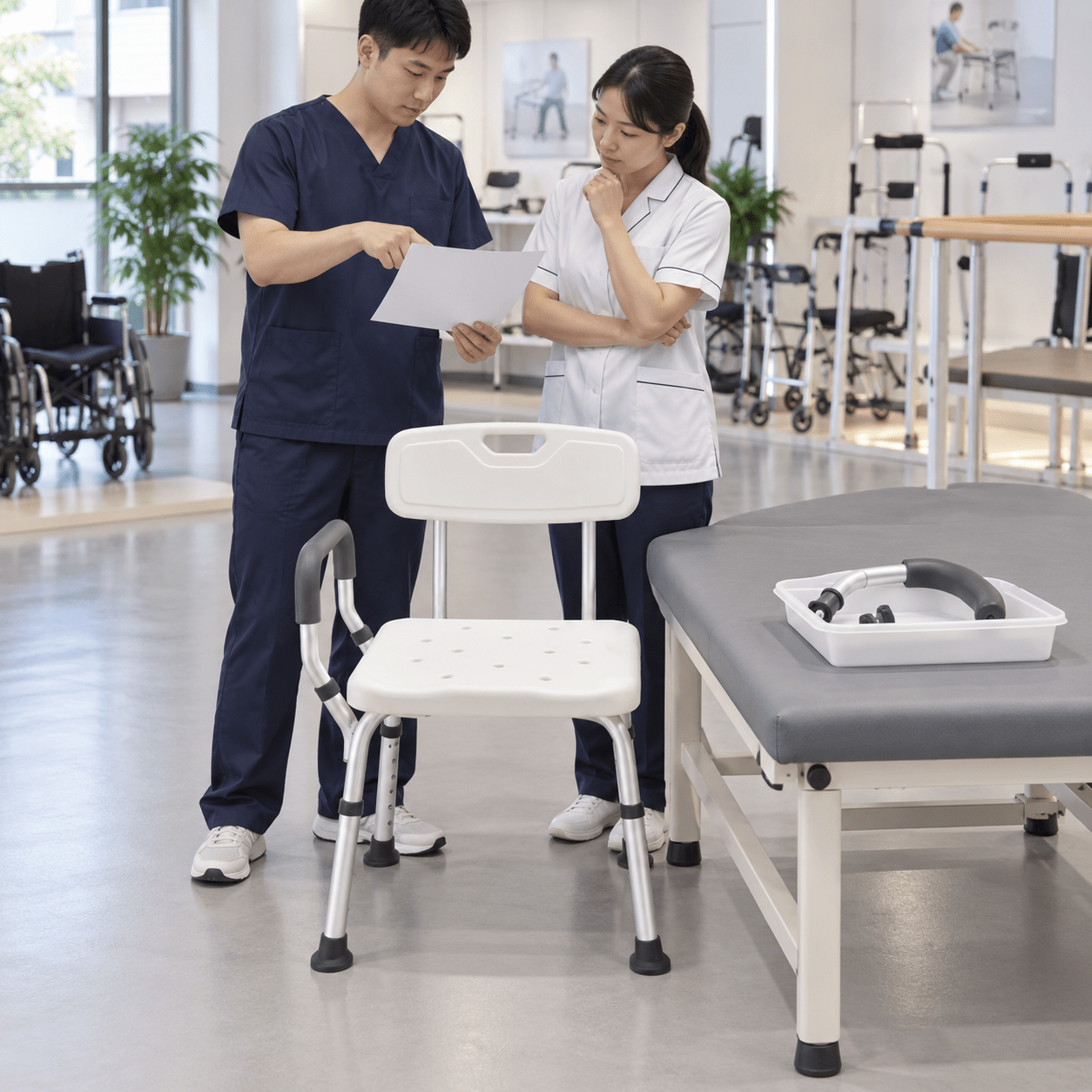
A shower chair with arms and back supports transfers only when seat height, approach, brakes or stable placement, support movement, and the user’s approved method align. Arms and back do not replace an assessment or trained assistance.
Which Sit-to-Stand Steps Need Review?
Observe approach, foot placement, forward movement, arm contact, support stability, and exit. Use the actual height setting and floor condition.
- Confirm feet remain on the approved surface.
- Check armrests for the intended load direction.
- Keep the chair from rocking or shifting.
Which Side Access Can Arms or Back Block?
Fixed arms can close a lateral route, while a wide back may limit wheelchair or caregiver positioning. Map the full space: include the source seat, destination, wall, and commode-chair boundary.
- Test removable parts through a complete cycle.
- Control where detached supports are placed.
- Recheck locks before use.
| Transfer route | Support need | Possible obstruction | Control |
|---|---|---|---|
| Sit-to-stand | Stable push surface | Arm height or frame movement | Assessed setup |
| Side transfer | Open lateral space | Fixed arm or wide back | Removable option review |
| Assisted approach | Caregiver working room | Wall and supports | Room trial |
The support layout must fit the approved movement. Key Takeaway: treat transfer access as a configuration and room decision, not an armrest assumption.
7. Which Materials Suit a Shower Chair With Arms and Back?
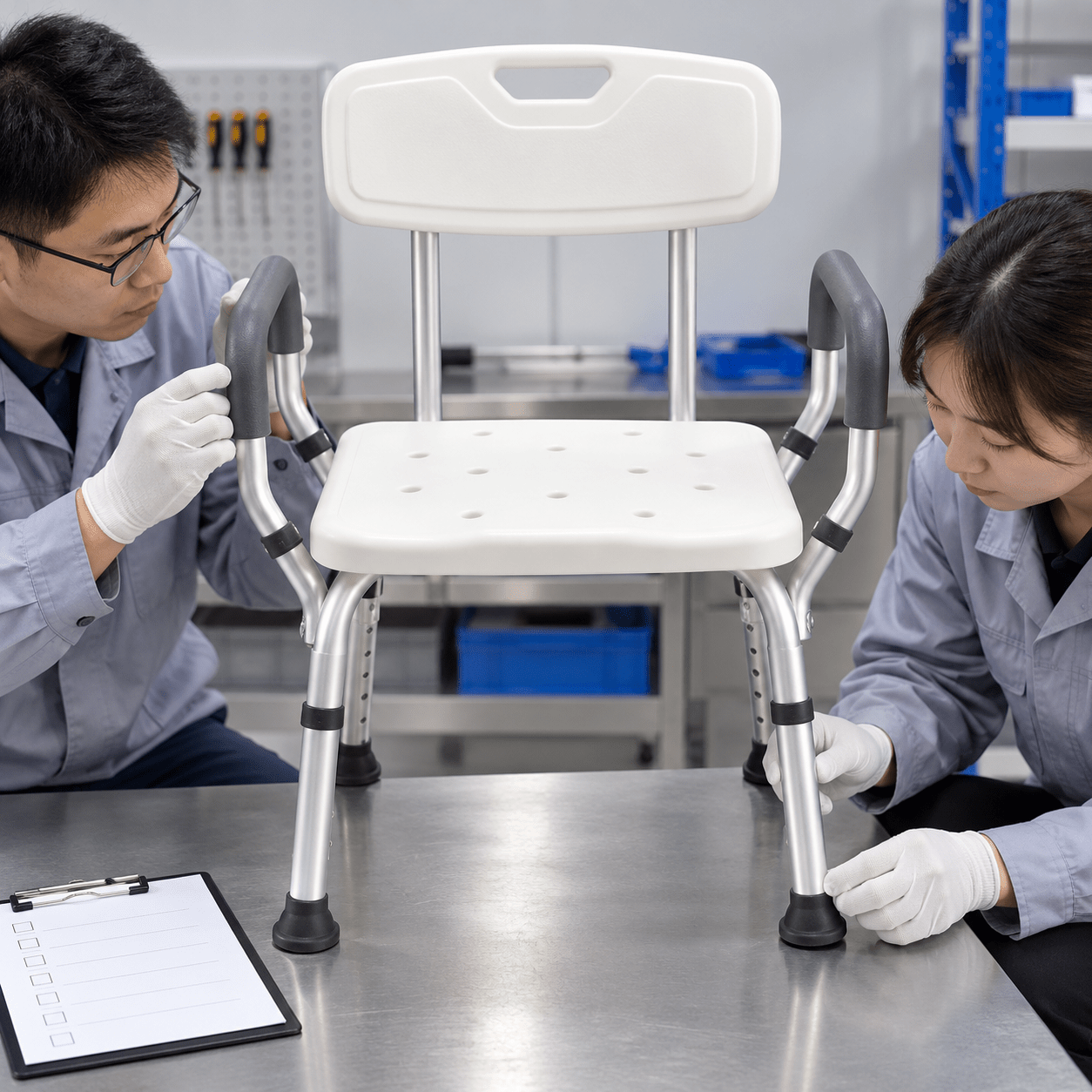
A shower chair with arms and back needs a material system suited to water, cleaning, contact, repeated adjustment, and service. Frame labels such as aluminum or stainless steel do not describe padding, feet, fasteners, coatings, and inserts.
Which Frame and Seat Properties Matter?
Ask for evidence covering the exact components and finish. Smooth surfaces, drainage, cleanability, stiffness, and damage resistance affect daily work.
- Frame material, joints, coatings, and end caps.
- Seat resin, surface, drainage, and mounts.
- Water entry, drying, and replacement access.
Which Contact Surfaces Need Inspection?
Arm grips, back covers, padding seams, exposed fasteners, and edges receive frequent contact. Look past the frame: small materials often drive cleaning and wear issues.
- Check seams and hidden attachment areas.
- Inspect for cracking, swelling, or sharp edges.
- Match replacements to the approved configuration.
| Component | Required property | Wet-area risk | Buyer evidence |
|---|---|---|---|
| Frame | Strength and corrosion resistance | Hidden moisture or coating damage | Material and inspection record |
| Seat/back | Waterproof, smooth, cleanable | Cracks or retained water | Sample and instructions |
| Arms/feet | Grip and durability | Wear or chemical damage | Parts and maintenance guidance |
Material selection applies to every component. Key Takeaway: review the whole wet-area material system and its replacement path.
8. How Do You Clean a Shower Chair With Arms and Back?
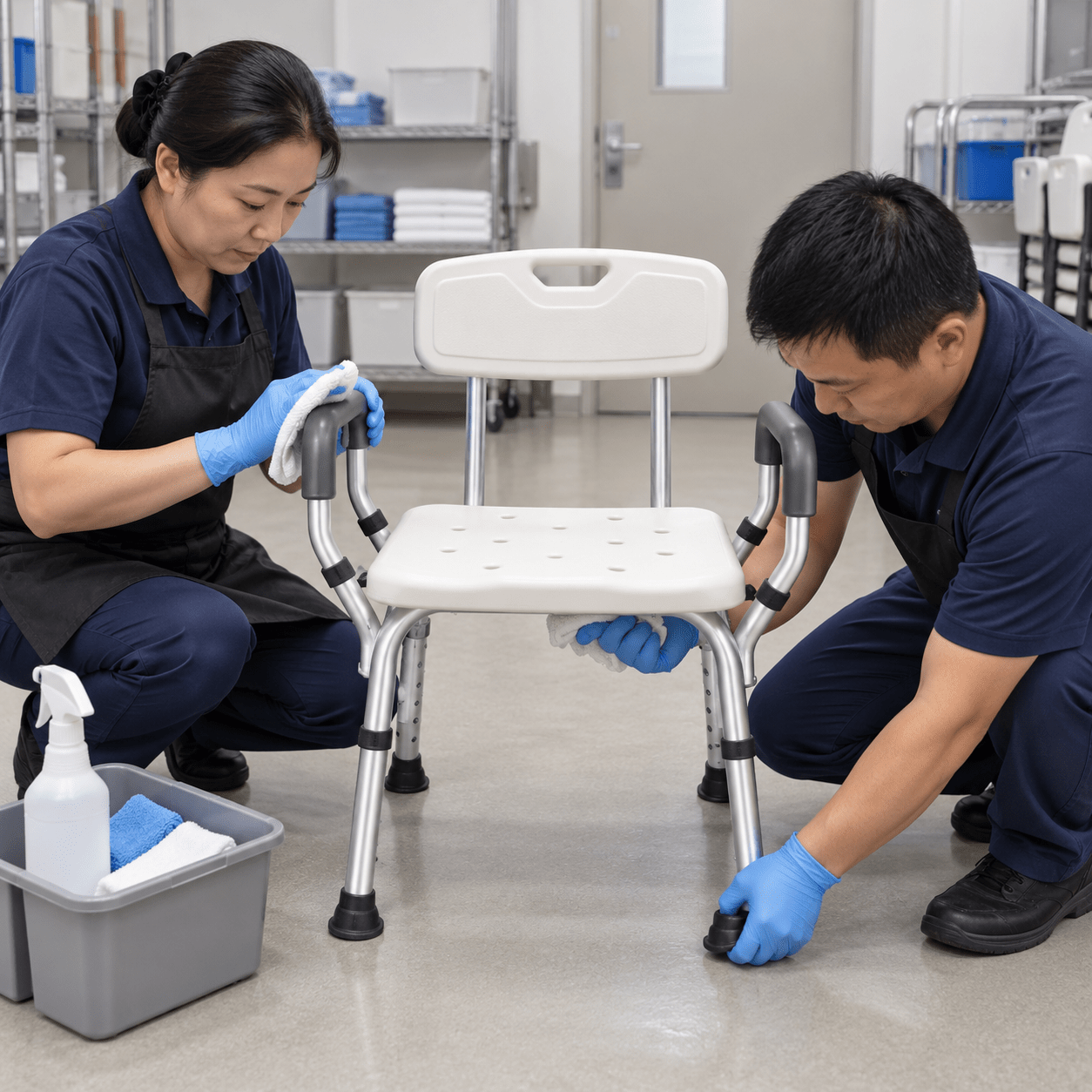
A shower chair with arms and back requires access to more mounts, seams, contact surfaces, and hidden areas than a basic stool. Cleaning and disinfection must follow product instructions and facility policy.
Which Added Supports Increase Cleaning Work?
Map the back, arms, padding, locks, joints, drainage holes, feet, and underside. Removable parts should have controlled identity and return steps.
- Clean high-contact supports and grips.
- Check water retention around mounts.
- Dry before storage or release.
Which Shared-Use Records Matter?
Facilities need a repeatable path for isolation, cleaning, inspection, damage hold, release, and storage. Close the loop: a clean surface does not prove that locks or padding remain functional.
- Inspect after the approved process.
- Hold cracked or swollen components.
- Align with the shared bathroom-equipment overview.
| Cleaning zone | Access challenge | Damage sign | Release check |
|---|---|---|---|
| Arm mounts | Hidden joint | Looseness or residue | Lock and surface check |
| Back padding | Seams and cover | Tear or retained moisture | Dry and intact |
| Underside | Frame intersections | Corrosion or soil | Visual inspection |
Cleaning affects service life and availability. Key Takeaway: verify cleaning, drying, inspection, and reassembly on the actual support configuration.
9. How Do You Test a Shower Chair With Arms and Back?
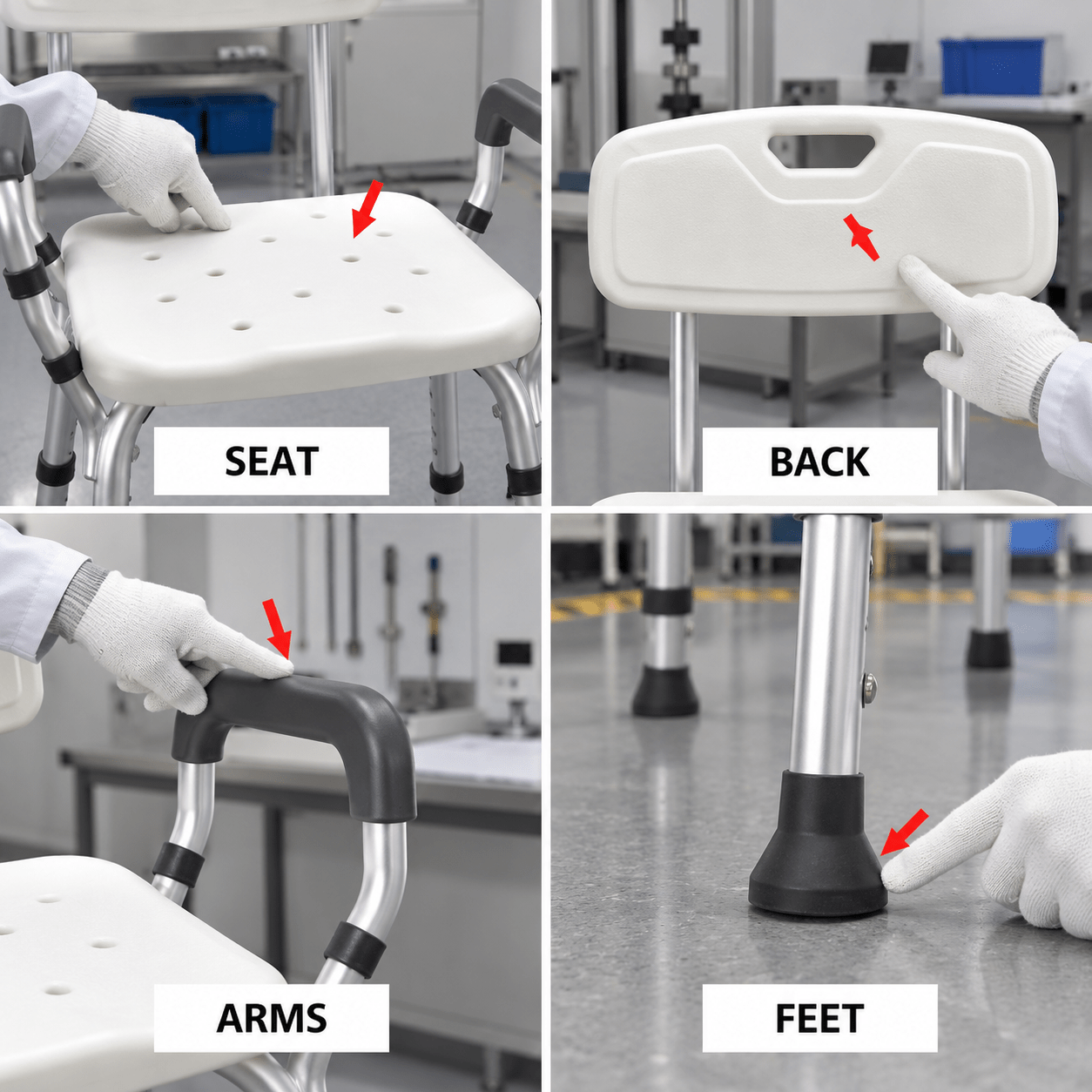
A shower chair with arms and back sample test should identify the unit, verify fit and room access, inspect every support, and close exceptions before production. Generic family evidence cannot approve every optional arm or back.
Which Structural Tests Need Configuration Matching?
Seat, back, arms, height locks, feet, frame joints, and fasteners must match the offered product and evidence. Record sample revision and installed options.
- Cross-reference drawing, quotation, and sample.
- Inspect support loads and attachment directions.
- Verify post-test function and condition.
Which Task Trials Need Realistic Conditions?
Test sitting approach, support contact, push-off, side access, placement, cleaning, and handling in controlled conditions. Use a decision protocol: stop when instability or damage appears.
- Record room, surface, and height setting.
- Assign owners to findings.
- Retest changes before approval.
| Test area | Configuration field | Observation | Gate |
|---|---|---|---|
| Fit | Seat, back, and arms | Contact and movement | Assessor approval |
| Structure | Mounts and frame | Play, deformation, or damage | Technical pass |
| Operation | Transfer and cleaning | Workflow conflicts | Exceptions closed |
Sample evidence should trace into production. Key Takeaway: approve the exact support system and use conditions tested.
10. How Should Buyers Source a Shower Chair With Arms and Back?
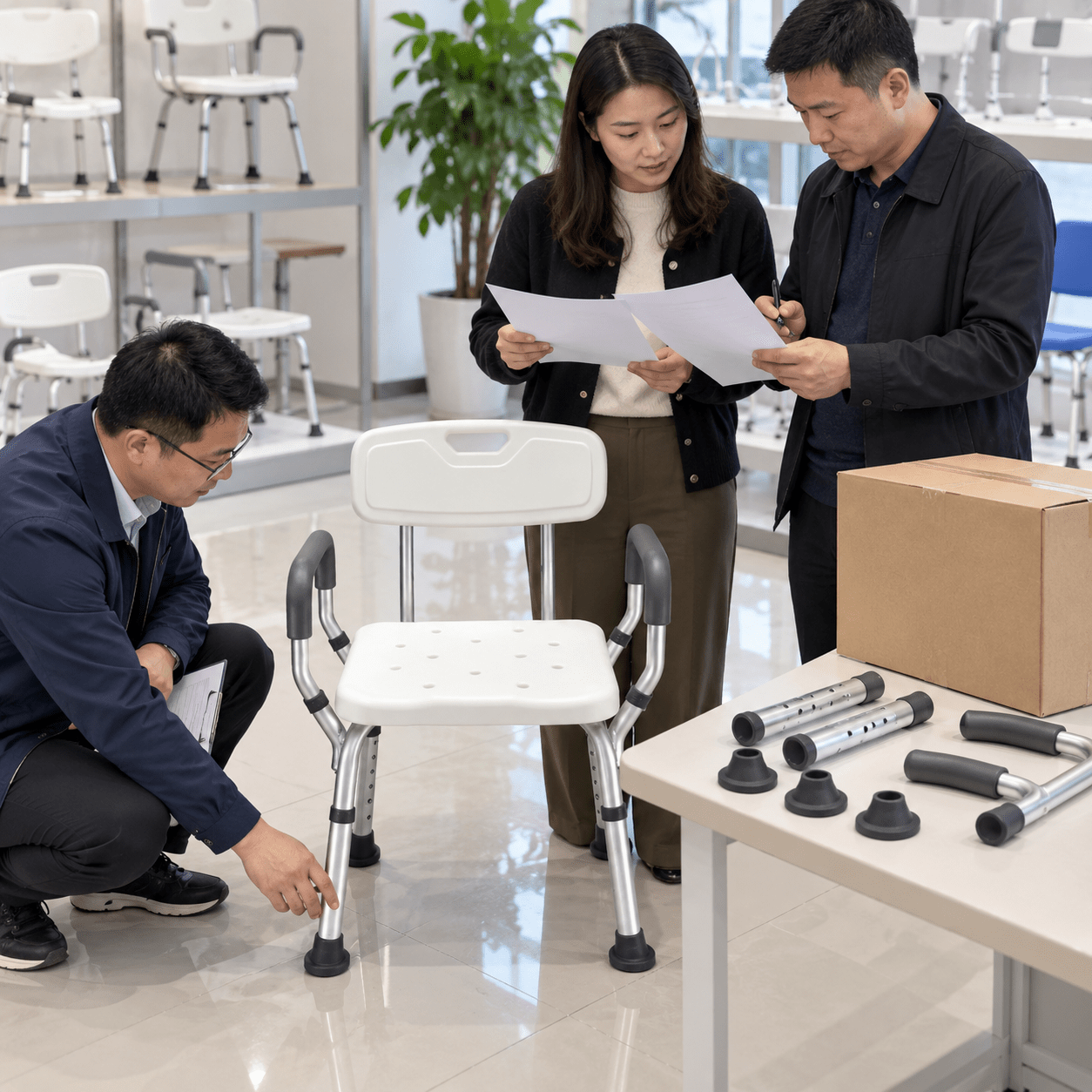
A shower chair with arms and back should be sourced through a brief that defines users, tasks, dimensions, bathroom conditions, support options, evidence, samples, parts, and service. Commercial offers should compare the same configuration.
Which Options Belong in the RFQ?
State whether arms and back are fixed, removable, folding, padded, adjustable, or optional. Include dimensions, materials, load evidence, packaging, instructions, and replacement parts.
- Use exact configuration fields.
- Price alternatives separately.
- Require change notification.
How Should the Sample Be Approved?
Complete identity, fit, access, stability, cleaning, handling, support, and related toilet-chair boundary checks. Finish with traceability: the purchase order must preserve the approved state.
- Close critical exceptions.
- Record training and service ownership.
- Apply production receiving checks.
| Sourcing stage | Output | Owner | Release rule |
|---|---|---|---|
| Buyer brief | Tasks and configuration | Product team | Scope approved |
| Sample review | Fit and test record | Evaluation team | Exceptions closed |
| Production order | Controlled specification | Procurement | Sample identity preserved |
A controlled file makes later orders comparable. Key Takeaway: source supports as engineered configuration elements, not decorative upgrades.
Conclusion
Arms and a back add value when their geometry, load role, access, cleaning, and fit serve real tasks. They can also obstruct transfers, increase product width, or add maintenance work. To review supported bathing-chair options for your channel or institution, contact us today. Responsible product design treats every support as a functional commitment that must remain usable throughout its service life.
FAQ
Can armrests make every transfer easier?
No. Fixed arms may help one movement and block another. Evaluate arm height, spacing, load direction, removal method, room clearance, and the approved transfer route.
What’s the best backrest height for a buyer range?
No universal height fits every user. Compare target user dimensions, task posture, bathroom clearance, cleaning access, and the offered size range.
How do I know whether removable arms are needed?
Review side access, caregiver space, washing tasks, transport, cleaning, lock reliability, and loose-part control. Approve removal only when the complete sequence works.
Can padded supports be used in shared facilities?
Possibly, when the material and construction match approved cleaning, disinfection, drying, inspection, and replacement processes. Confirm product and facility instructions.
How should a distributor approve support options?
Assign an identity to every option, match evidence, test the combined configuration, close exceptions, and retain the approved state in quotations and orders.
