
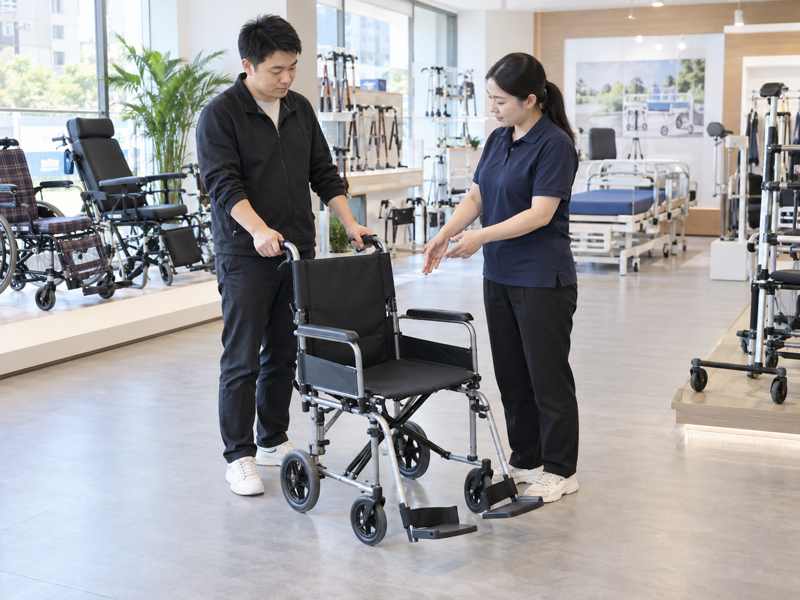
Choose a transport wheelchair by matching the user's assessed needs with the attendant, route and short-trip handling plan. A clinic may ask for a compact chair at its entrance, yet a narrow frame will not solve a difficult transfer or an uneven route. The AryMD 809 manual chair shown in comparison images has large push-rim rear wheels; those images do not document an attendant transport model. Request the exact transport-chair setup and current instructions before ordering.
What makes a transport wheelchair different?
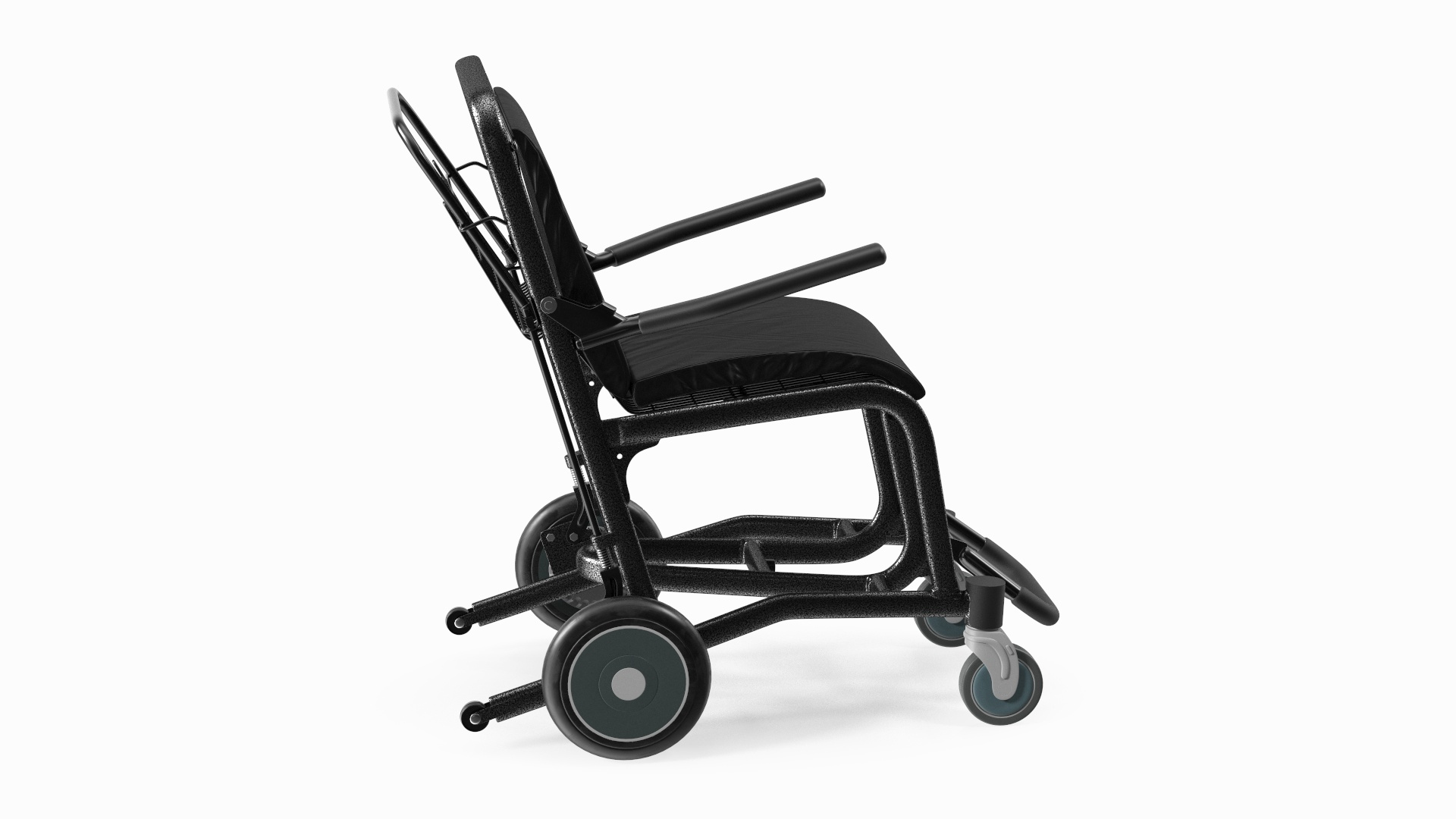
A transport wheelchair is selected for assisted movement under its exact design and instructions, often with a compact rear-wheel arrangement that differs from a self-propelled chair. The pictured AryMD transport chair has small rear wheels without push rims. Its airport setting does not prove airline approval or every route capability.
What should buyers identify on the actual model?
Start with propulsion and handling roles. Ask whether the person can propel, how an attendant handles the chair and which parts are included. Get the maker's product photograph and model guide rather than reusing a generic wheelchair image as proof.
- Name the user and attendant roles.
- Confirm rear-wheel and push-handle design on the exact model.
- Request current handling instructions.
| Chair question | Why ask |
|---|---|
| Who moves it? | Defines the intended handling role |
| Which model? | Prevents a photo-based mix-up |
The term transport chair describes a use category, not one universal layout. Key Takeaway: Your quote can identify the actual chair rather than a familiar comparison image.
Who should use a transport wheelchair?
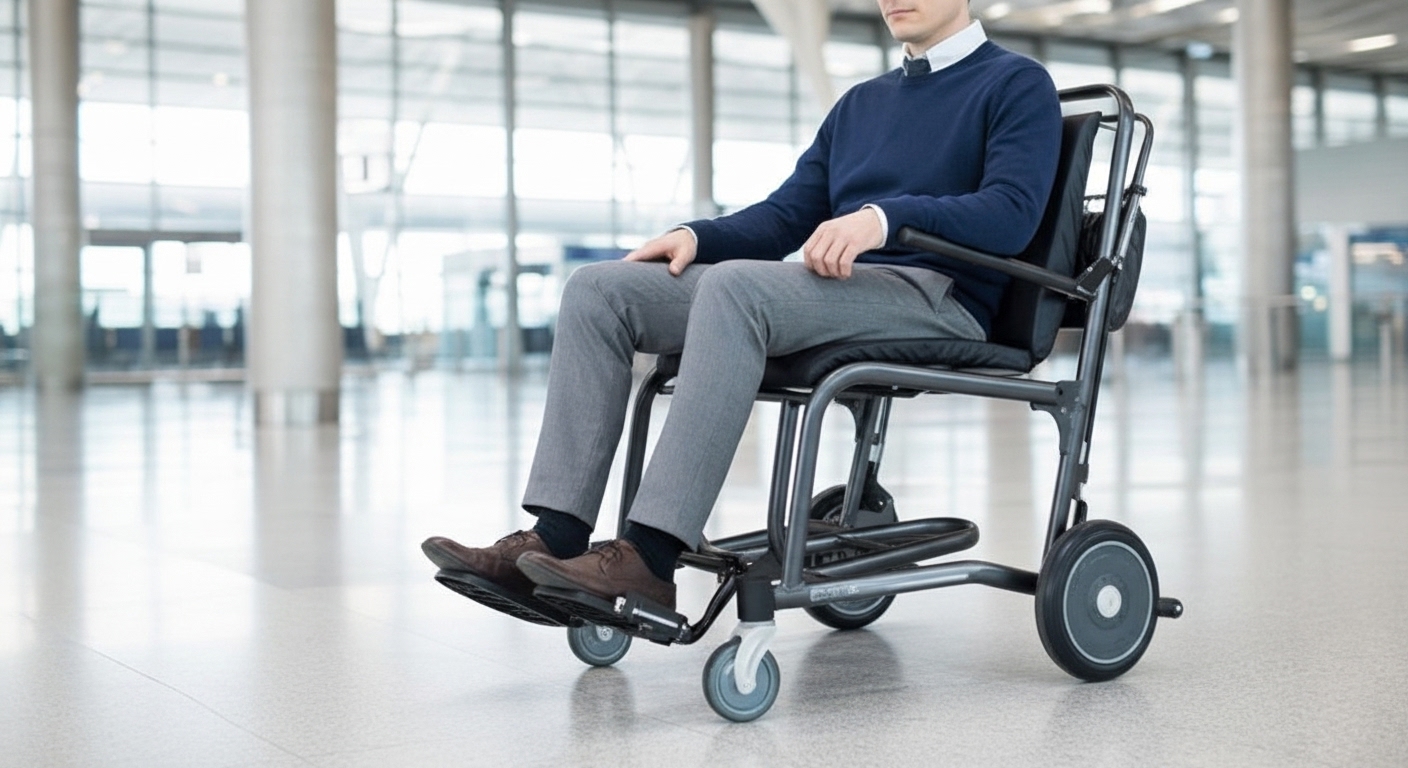
A transport wheelchair should serve a person whose assessed needs and planned assistance match that chair's stated use. Short journeys do not remove the need for fitting and training. Check the product range for options, then arrange the individual review.
Which needs belong in the brief?
Name the person and the task together. WHO's wheelchair provision guidelines call for individual assessment, fitting, training and follow-up. Record posture support, sitting tolerance, transfer method and who will assist on the route without making a diagnosis from a catalog page.
- Document assessed seating and support needs.
- Identify the attendant and planned trips.
- Name the professional responsible for fit review.
| Brief item | Reviewer |
|---|---|
| Personal fit | Qualified assessor |
| Chair options | Supplier and service team |
A short trip still involves a real person and a real transfer. Key Takeaway: Your selection starts with the user instead of a compact-frame promise.
How do you compare a transport wheelchair with a manual chair?
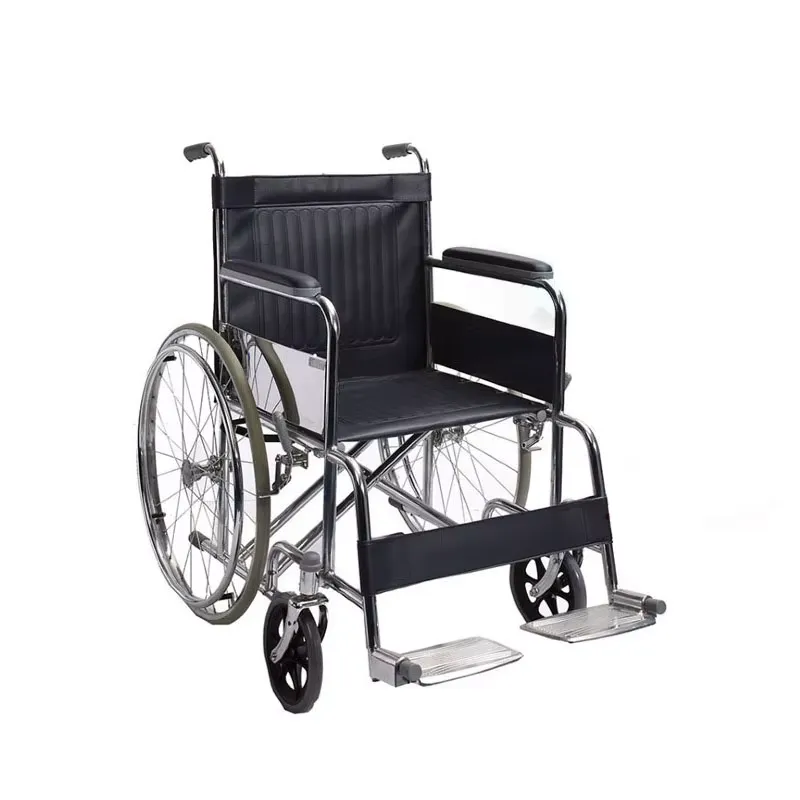
Compare a transport wheelchair with a manual chair by the intended propulsion role, wheel layout and user's approved routine. The pictured AryMD 809 has large push-rim wheels suited to a self-propelled chair configuration. It is a comparison, not an image of the quoted transport chair.
Which difference changes the purchase decision?
Watch who is expected to move the chair. An attendant-only chair needs a reliable attendant plan. A self-propelled model may address a different independence goal; neither choice can be made from wheel size alone without an individual fit review.
- State whether self-propulsion is required.
- Compare push-handle and rear-wheel arrangements.
- Confirm the model's intended use in writing.
| Option | Question |
|---|---|
| Attendant transport | Who provides movement and assistance? |
| Self-propelled manual | Can the user operate it as planned? |
The right wheel layout follows the person's role in the journey. Key Takeaway: You can explain why a small rear wheel is not a substitute for self-propulsion.
Which route suits a transport wheelchair?
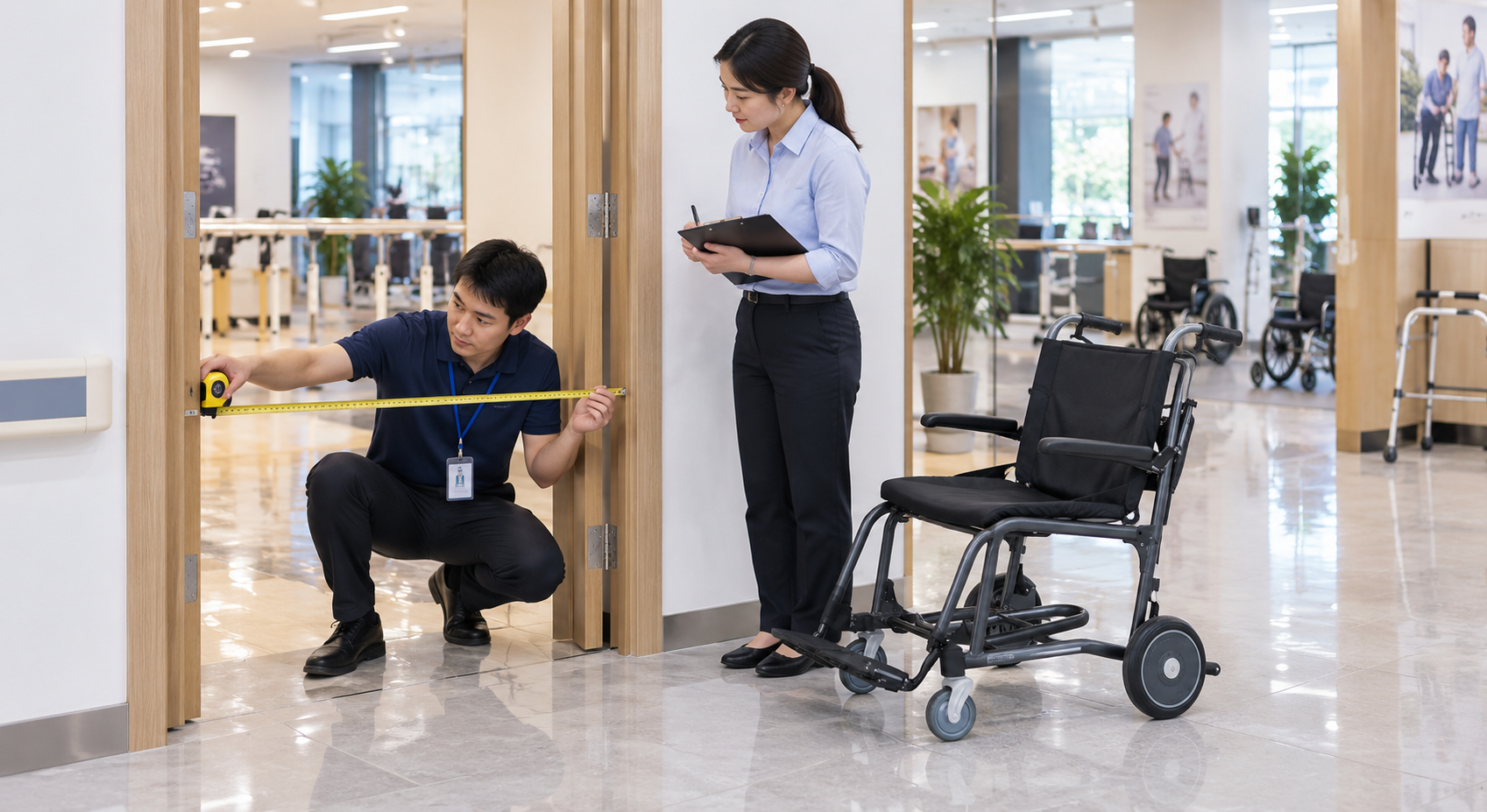
A transport wheelchair route must fit the exact chair's permitted surfaces, dimensions and attendant plan. Check doorways, turns, floor transitions and stops on the route the user will actually take. The wheelchair series shows different chairs but does not approve one for every building.
How should a buyer document the route?
Walk it with a plan, not a guess. Record narrow points, thresholds, gradients and places where an attendant must pause. Ask for model dimensions and permitted conditions; do not invent a turning diameter or ramp capability from photographs.
- Measure relevant doors and storage openings.
- Identify changes in surface and level.
- Check chair limits against the actual route.
| Route point | Evidence |
|---|---|
| Door or turn | Measured space and chair drawing |
| Surface or slope | Exact model instructions |
A workable route cannot be certified by a showroom floor. Key Takeaway: Your team can screen the chair against real building constraints.
How should a transport wheelchair support transfers?

A transport wheelchair should support the individual's assessed transfer plan and the model's permitted component movements. Foot supports, armrests and locks may affect access. Do not assume a compact frame makes transfers easier for everyone.
What should a demonstration establish?
Separate chair features from personal technique. Show the empty chair's approved arrangements with trained staff, then let the responsible assessor review the person-specific transfer. Keep both records together for handover.
- Identify permissible foot-support and arm movements.
- Confirm the lock or brake method for that model.
- Document the approved personal transfer plan.
| Question | Source |
|---|---|
| What can the chair move? | Maker instructions |
| How does the person transfer? | Qualified individual review |
A feature demonstration does not replace a transfer assessment. Key Takeaway: The user receives a coherent chair-and-care plan.
What brakes matter on a transport wheelchair?
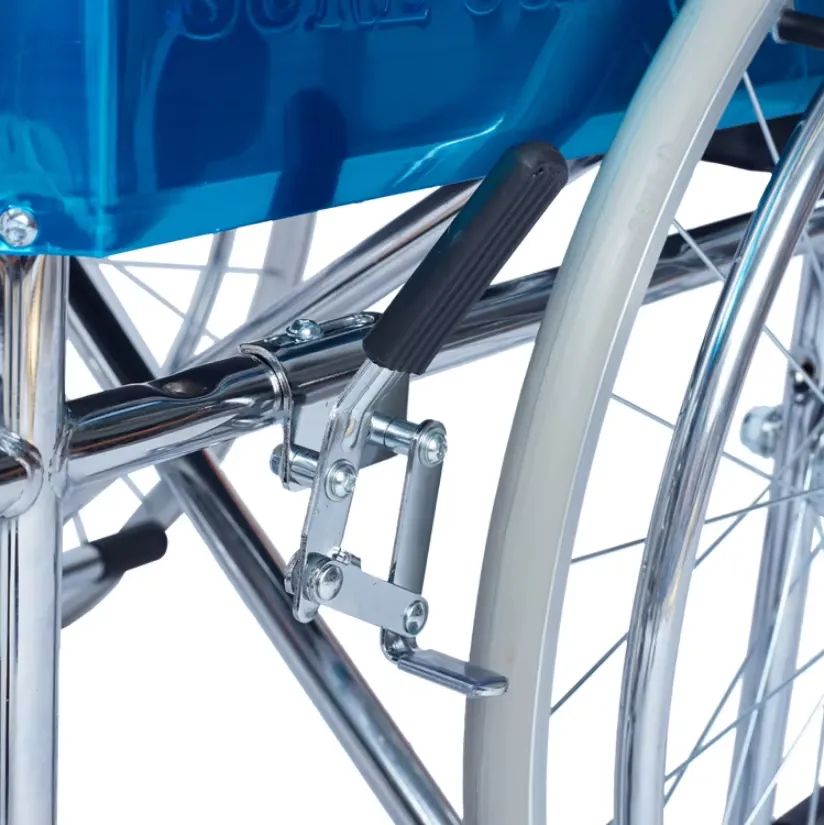
A transport wheelchair needs the stopping and parking features specified for its exact design, plus trained attendant use. Do not infer a wheel-lock control from the AryMD 809 comparison close-up. Ask the supplier team for the actual transport model's instructions.
What should staff learn before handover?
Use the current chair guide. The NHS wheelchair guidance describes braking and attendant care for its supplied chairs. Apply that source only as a reminder to train, while exact control location and operation come from your chosen model.
- Identify the model's parking and attendant controls.
- Demonstrate use under approved instructions.
- Record who received training and what was checked.
| Handover item | Basis |
|---|---|
| Control identification | Exact chair manual |
| Attendant training | Observed approved demonstration |
A different chair's lever photo is a poor operating guide. Key Takeaway: Your staff can teach the correct chair rather than a lookalike.
Can a transport wheelchair travel in a vehicle?
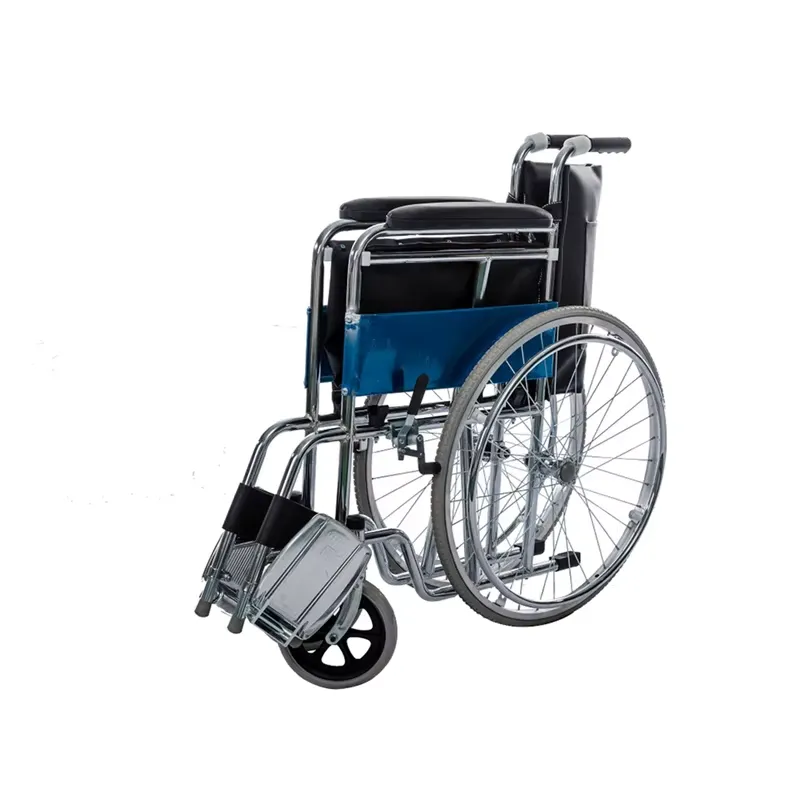
A transport wheelchair can be carried in a vehicle only according to its product instructions and the transport plan; carrying an occupant while seated needs separate explicit approval and suitable vehicle equipment. The folded 809 image is a self-propelled manual-chair comparison, not the proposed transport model. Ask for the exact chair's transport information.
Which questions belong before loading?
Decide whether the person or chair is travelling. Record folded size, handling points and any approved occupied-transport status from the maker. If a claim is absent, plan the person's travel independently and consult the relevant transport professional.
- Ask for actual folded and packaged dimensions.
- Identify the maker's permitted handling points.
- Verify any occupied-transport claim separately.
| Travel question | Evidence |
|---|---|
| Chair as luggage | Fold and handling guide |
| Person seated in chair | Explicit approval and vehicle plan |
A compact chair is not automatically a crash-tested vehicle seat. Key Takeaway: Your buyer can avoid an unsupported transport claim.
How should a transport wheelchair be cleaned in shared use?
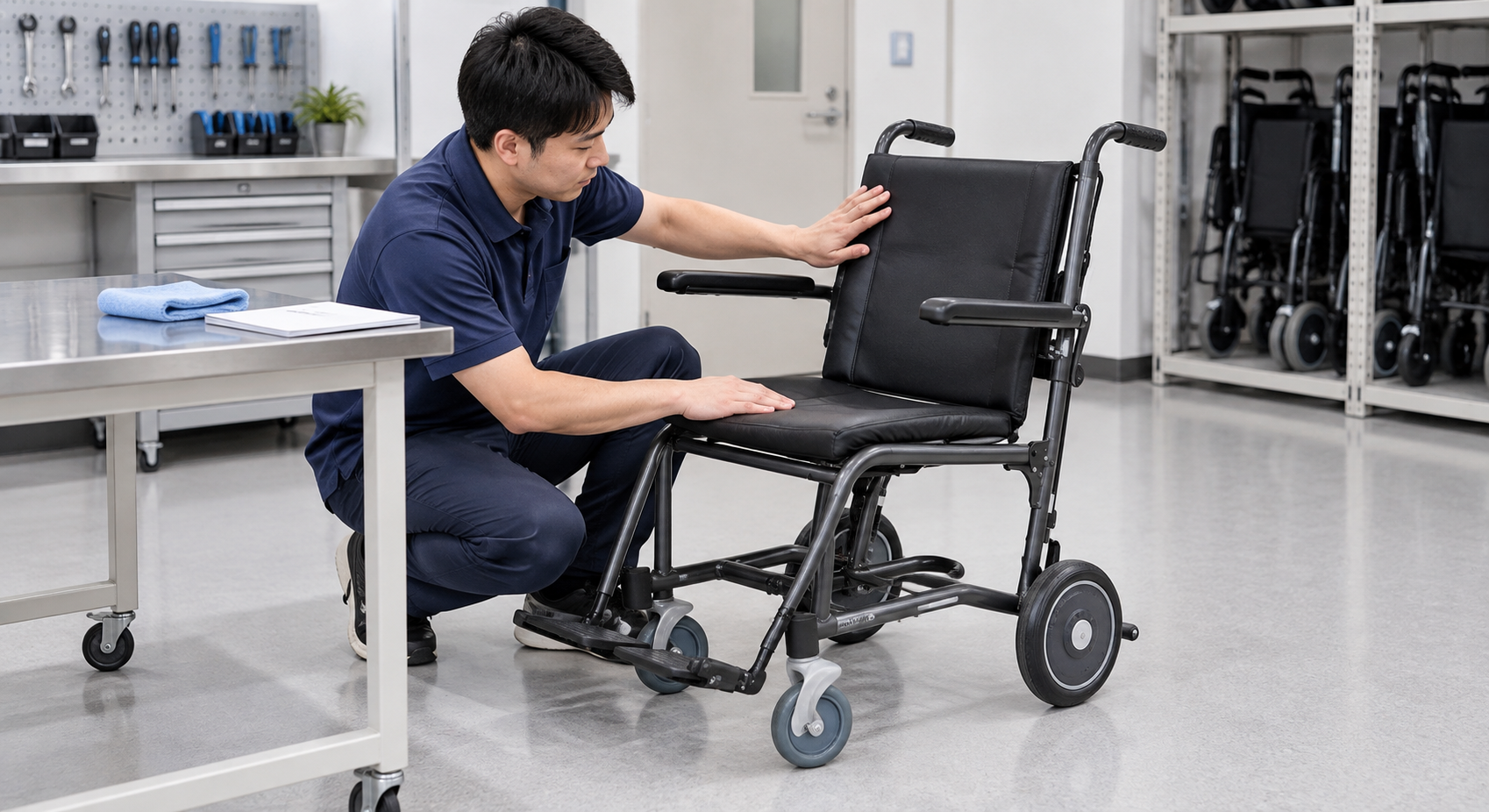
Clean a transport wheelchair under its material-specific maker guidance and the facility's care process. Shared use calls for clear responsibility between trips, not an assumed universal disinfectant. The illustrative care-room image does not establish the actual product's upholstery material.
What belongs on a turnover card?
Make the next user's chair ready on purpose. Identify surfaces, approved products, drying instructions and a visible-condition check. Keep records of damage or a failed check so staff can remove a suspect chair from circulation.
- Name the exact chair and care document.
- Record cleaning and condition checks.
- Hold damage for service review.
| Turnover field | Why |
|---|---|
| Approved method | Avoids material mismatch |
| Condition | Routes faults before reuse |
A simple record connects cleaning with safe equipment release. Key Takeaway: Your team can prepare a chair consistently between users.
What should a transport wheelchair trial record?
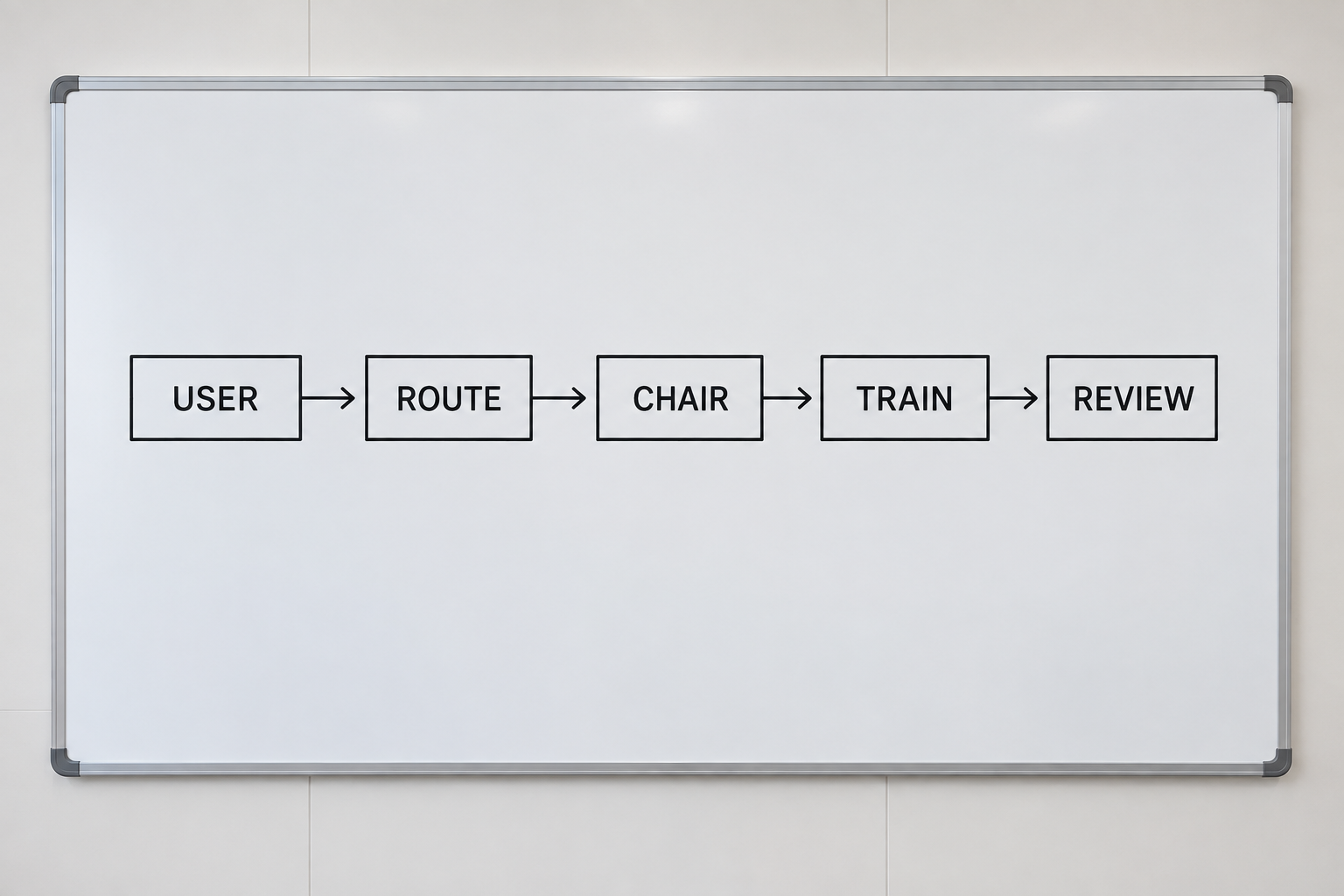
A transport wheelchair trial should record the user's fit review, exact model, route, attendant training and unresolved questions. A comfortable showroom loop alone cannot verify every use condition. Keep the outcome tied to that specific chair configuration.
Which result belongs in the decision file?
Turn the trial into a reviewable decision. The workflow chart moves from user and route through chair, training and review. Log observations without inventing a numerical pass grade or claiming a generic transport approval.
- Identify model and sample configuration.
- Record fit and route observations.
- List issues, owners and follow-up actions.
| Trial field | Use |
|---|---|
| Observed fit and route | Supports selection |
| Open issues | Prevents premature approval |
A trial is useful when its limits are visible. Key Takeaway: You can revisit the choice without relying on memory.
How do you choose a transport wheelchair supplier brief?

A transport wheelchair supplier brief should state the assessed user need, attendant role, route and service questions for the exact proposed chair. Request model images, instructions and available options in one enquiry. Keep the 809 manual chair as a comparison only.
Ready to request a transport model?
Send the questions that shape the trip. Ary Medical can clarify product options and available documents when your team names the intended use and destination. Ask for exact model details before arranging a user trial or dealer order.
- Describe user and attendant roles.
- Share route, storage and transfer constraints.
- Request current model and service information.
| Buyer input | Supplier response to request |
|---|---|
| Use and route | Suitable model options for review |
| Service needs | Instructions and support route |
A complete brief makes a useful product discussion possible. Key Takeaway: For model-specific options, contact us. Ary Medical puts the user's real journey ahead of a generic chair label.
Frequently asked questions
Q1: Can I propel a transport wheelchair myself?
Often not on attendant-only models with small rear wheels. Confirm the intended propulsion role for the exact chair.
Q2: What's the best chair for a short clinic transfer?
Choose after the user's fit, attendant, route and transfer plan are reviewed; no one model suits every trip.
Q3: How do I know if it fits through a doorway?
Compare measured route clearances with the exact chair's current dimension drawing.
Q4: Can I remain seated in it during car travel?
Only where the exact chair and vehicle setup explicitly support occupied transport; verify both before use.
Q5: How do I know if attendants need training?
They do. Use the model's current handling instructions and a documented demonstration.