
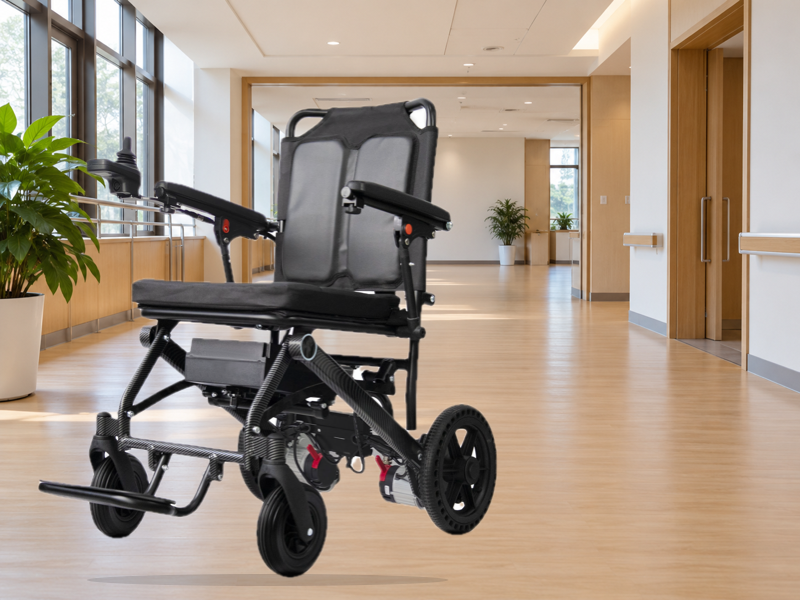
Electric wheelchair history becomes confusing when every prototype, practical design, and commercial product receives the same “first” label. A clearer timeline separates early motorized experiments from a chair that users could control in daily life. Official Canadian records credit NRC engineer George Klein with creating the first truly practical electric wheelchair after improving earlier designs.
This article uses the National Research Council Canada history and its archival catalogue as primary references. It does not turn historical attribution into a claim about any current Ary Medical product. Product buyers should review current specifications through the wheelchair series and model documents.
What Does “Invented the Electric Wheelchair” Mean?
The phrase can describe different milestones: an early powered experiment, a controllable practical chair, a documented engineering project, or a later commercial product. Those milestones should not be collapsed into one unsupported claim. NRC uses careful wording and calls Klein’s work the first truly practical electric wheelchair.
Start with the attribution. Use the exact language supported by a primary source. Avoid claiming that no powered wheelchair existed earlier, because NRC itself says Klein corrected flaws in previous designs.
- Name the milestone being discussed.
- Link attribution to a primary record.
- Keep commercial history separate from engineering history.
| Claim type | Evidence needed |
|---|---|
| Earliest experiment | Dated technical or patent record |
| Practical design | Official engineering history and design details |
| Current product claim | Current model documentation |
Key Takeaway: Define “first” before repeating it.
Why Does NRC Credit George Klein?
NRC reports that Klein improved earlier unacceptable designs by raising drive voltage, giving each main wheel an independent drive, and adding a sophisticated controller that resembled a joystick. These changes addressed control and maneuvering rather than adding a motor without a usable interface.
Here is the useful distinction. NRC credits a practical system, not a lone motor. That wording supports a focused history without overstating every earlier or later contribution.
- Independent wheel drives supported pivoting.
- A multi-position controller gave the user direct control.
- Design work continued with feedback from intended users.
| Design area | Historical contribution |
|---|---|
| Drive | Independent power at main wheels |
| Control | Joystick-like multi-position interface |
| Development | Work with people who would use the chair |
Key Takeaway: Practical control explains NRC’s attribution.

What Problem Was the Practical Electric Wheelchair Addressing?
NRC places the project in a postwar rehabilitation context. Some veterans returned with severe mobility limitations, and manual chairs did not give every person independent movement. The project addressed a specific gap between a wheeled seat and a controllable powered mobility system.
Context matters here. The historical need explains why control access mattered as much as propulsion. Avoid converting that context into a claim that one design served every disability or user.
- Identify the user problem described by the source.
- Do not generalize one rehabilitation need to every user.
- Connect historical design choices with documented constraints.
| Historical need | Engineering response |
|---|---|
| Limited manual propulsion | Powered drive |
| Turning control | Independent drives |
| Limited hand use | Alternative control exploration |
Key Takeaway: User needs shaped the engineering priorities.
How Did User Collaboration Shape the Design?
NRC says Klein worked closely with people who would eventually use the chairs. The record also describes an alternative control operated with cheek pressure. These details show an iterative approach built around access to control rather than a fixed assumption about hand function.
The record is specific. Modern buyers can apply the same discipline by reviewing control reach and setup with suitable professionals instead of assuming one joystick position fits every user. The joystick handover guide turns that idea into current checks.
- Ask who participated in design review.
- Separate historical evidence from modern clinical assessment.
- Document the approved control setup for each user.
| Review question | Why it belongs |
|---|---|
| Can the user reach controls? | Access varies by setup |
| Can the chair turn on the route? | Space changes real use |
| Is an alternative input needed? | Control needs differ |
Key Takeaway: Control access should follow the user, not a generic layout.

What Does the 1953 Archive Record Add?
The NRC archive lists Klein’s report titled “A Wheel Chair Electric Drive Designed for the use of Quadriplegics” and dates it to 1953. The archive also references photographs of the chair and its relay control. This supports the timeline with a documented engineering record rather than a repeated web anecdote.
Use the archive as an anchor. A dated catalogue entry gives readers a verifiable point without pretending that every development detail appears on one page.
- Keep the report title in quotation marks.
- Use the archive date as a documented milestone.
- Do not infer missing specifications from photographs.
| Archive item | Safe use |
|---|---|
| Engineering report | Confirms project and date |
| Photographs | Shows documented hardware |
| Correspondence | Supports later historical research |
Key Takeaway: A catalogue record is stronger than an unattributed timeline.
How Should a Buyer Read Historical Joystick Claims?
A joystick-like controller appears in NRC’s account, but current controls have model-specific mounting, programming, service, and training requirements. Historical resemblance does not prove that a modern control shares the same electronics or operating behavior.
Keep history and procurement apart. For current decisions, compare control access through an adult fit review and confirm each configuration with supplier records.
- Treat visual similarity as context only.
- Request current control documentation.
- Test the supplied configuration on the intended route.
| Evidence | Decision value |
|---|---|
| Historical description | Explains design direction |
| Current manual | Defines present controls |
| Supervised trial | Checks current fit and access |
Key Takeaway: A historical idea does not replace current product evidence.

Which Later Developments Should This Timeline Avoid Guessing About?
A reliable article should not invent a single uninterrupted line from Klein’s chair to every later brand, battery chemistry, or smart control. Each commercial milestone needs its own primary company, patent, regulatory, or museum evidence. Unsupported brand stories weaken the verified part of the timeline.
This keeps the history honest. Readers who need present-day comparisons can use the folding wheelchair comparison without treating modern features as direct descendants of one prototype.
- Remove unattributed brand milestones.
- Avoid unsupported “first mass-produced” claims.
- Do not attach current specifications to historical devices.
| Weak timeline habit | Better method |
|---|---|
| Repeating a brand story | Find a primary company or archive source |
| Guessing technical lineage | Describe only documented links |
| Mixing eras | Separate history from current buying advice |
Key Takeaway: Stop the timeline where evidence stops.
What Can Procurement Teams Learn from Electric Wheelchair History?
The strongest lesson concerns method: define the user problem, test control access, document the configuration, and revise around evidence. Those practices remain useful even though modern designs, standards, and components differ from Klein’s project.
Apply the method carefully. A travel wheelchair specification or compact-route plan should use current measurements and records.
- Write the use case before comparing models.
- Keep model revisions visible.
- Test controls and routes with the intended setup.
| Historical method | Current procurement practice |
|---|---|
| User collaboration | Fit and route review |
| Control iteration | Configured sample trial |
| Documented engineering | Revision-controlled supplier file |
Key Takeaway: Copy the evidence method, not old specifications.

How Should Suppliers Present History Without Misleading Buyers?
Suppliers should cite the source, preserve its wording, and label historical images clearly. A history section should not imply that the supplier owns the invention, produced the original chair, or carries an official relationship with NRC.
Attribution needs boundaries. Current claims belong in model pages such as the ergonomic wheelchair page, where specifications can be checked independently.
- Name the source organization.
- Separate historical material from brand claims.
- Link current products only through clearly labeled navigation.
| Content element | Required boundary |
|---|---|
| Historical quote or paraphrase | Source and context |
| Archive image | Rights and caption review |
| Current product link | No implied historical endorsement |
Key Takeaway: Clear attribution protects both history and buyer trust.
What Is the Best Rule for an Accurate Electric Wheelchair Timeline?
Build the timeline from primary records, use exact attribution, and label uncertainty. NRC supports the claim that George Klein developed the first truly practical electric wheelchair, while also acknowledging earlier flawed designs. That is more precise than declaring one person created every form of powered mobility.
End with a simple rule. When a claim lacks a primary source, remove it or mark it for verification. Buyers can then move from history to current evidence through the wheelchair weight guide.
- Use primary records first.
- Define what each milestone means.
- Keep modern product decisions evidence-based.
| Final check | Pass condition |
|---|---|
| Attribution | Matches source wording |
| Date | Supported by archive record |
| Current claims | Separated from history |
Key Takeaway: A shorter verified timeline beats a dramatic unsupported one.

Who developed the first truly practical electric wheelchair?
National Research Council Canada credits engineer George Klein with developing the first truly practical electric wheelchair by improving earlier designs.
Did powered wheelchair ideas exist before Klein?
Yes. NRC explicitly refers to earlier designs and explains that Klein corrected problems that kept them from being practical.
What made Klein’s chair practical?
NRC highlights higher drive voltage, independent drives for the main wheels, and a sophisticated joystick-like controller.
Is a modern joystick identical to Klein’s controller?
No such conclusion should be made from resemblance alone. Modern controls require current model documentation and configuration records.
Can historical claims prove current product performance?
No. History provides context, while current product performance requires current test data, manuals, and model-specific evidence.