
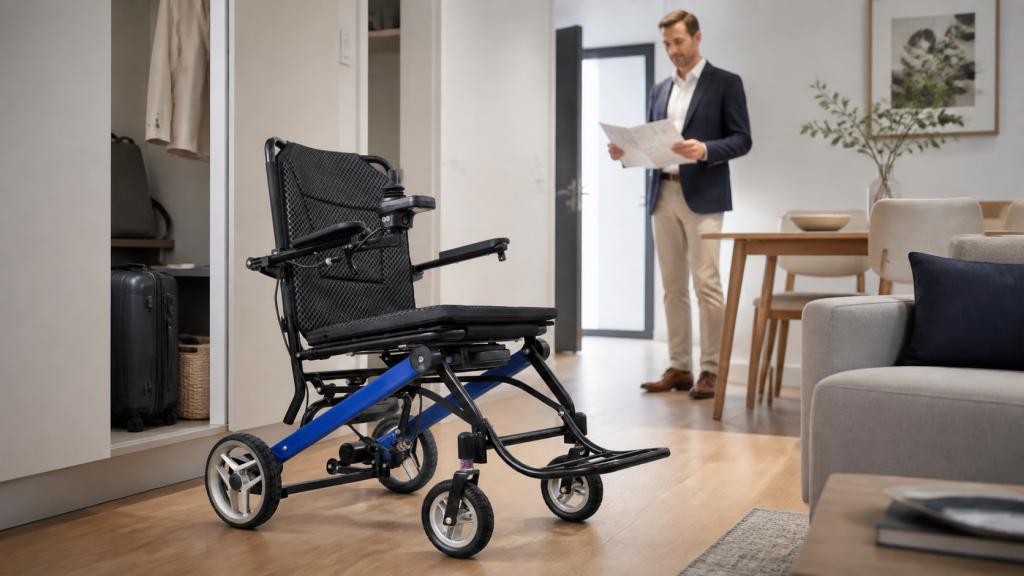
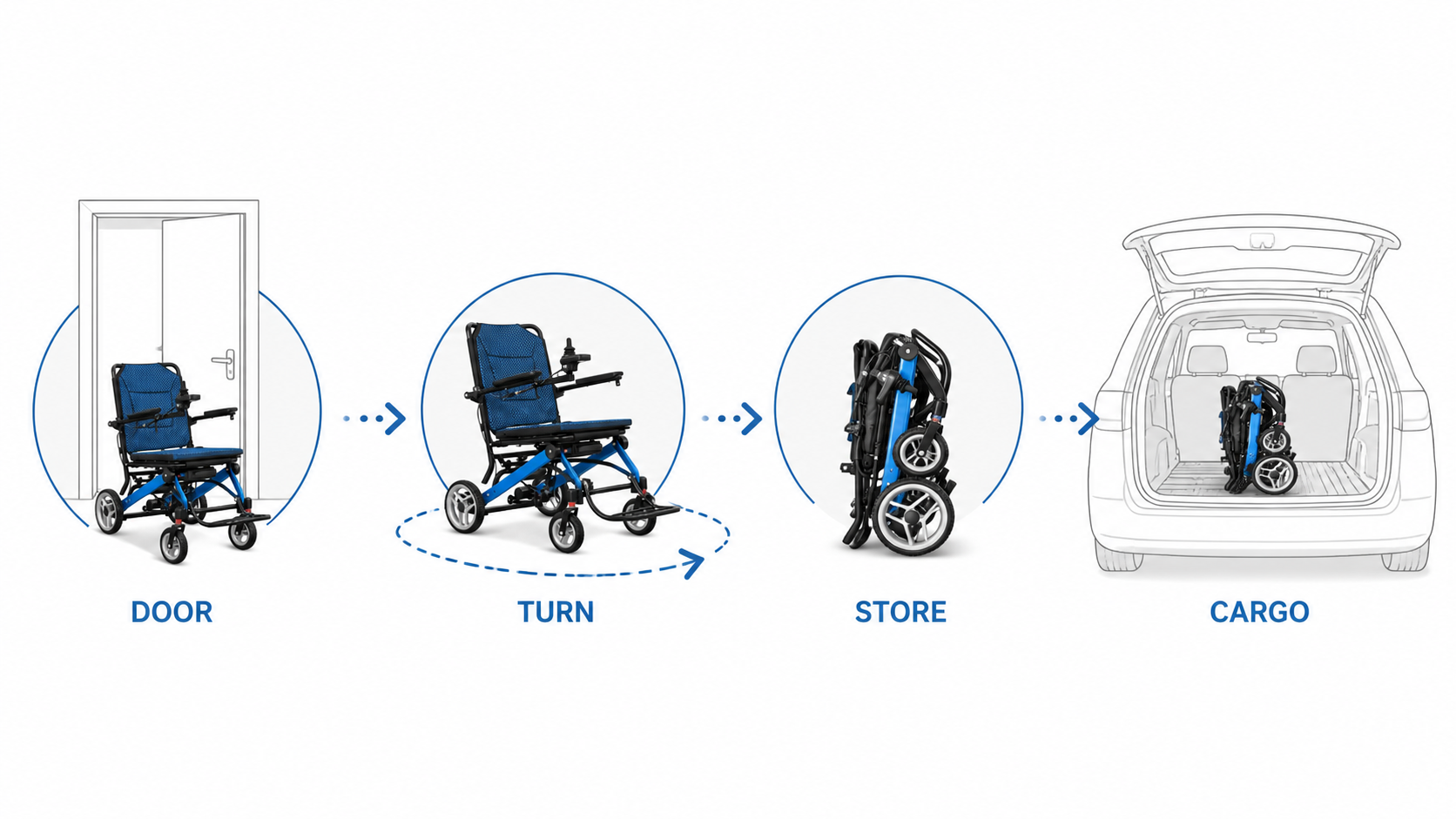
A compact electric wheelchair plan should connect outside dimensions, occupied fit, turning space, storage, folding, and vehicle loading to the real route. Measure each constraint. Test the approved setup. Keep results with the model record. For U.S. facilities, compare local procedures with official mobility-device guidance.
A compact electric wheelchair is easy to plan for when buyers map real doorways, turns, table approaches, storage areas, lifts, and vehicle openings before ranking a chair. The word compact does not settle route fit because wheel position, foot support, controller width, folded shape, and furniture layout all affect how a chair moves through a space. Dealers, housing providers, travel programs, and distributors need a repeatable route record tied to the exact sample.
This article shows how to build that record without inventing clearance or performance claims. It connects site measurements with a supervised sample check, then adds folding, storage, cargo, and supplier documents. The completed file tells sales and training teams where the chair was checked, under which setup, and which route questions remain open for a model-specific answer.
Which route measurements define the small-space plan?
In practice, A compact electric wheelchair route plan should record narrow doorways, usable openings, turning areas, corridor width, table approach, lift space, storage access, and surface changes.
Measure the real path from entry to daily destinations instead of one room in isolation. Note doors that swing into the route, removable mats, furniture, wall guards, lift doors, and any area that changes during busy hours. The ultra-light product page offers a different compact product context while the building record stays sample-specific.
A useful worksheet separates observed facts, model records, evaluator notes, and open questions. Give every entry a date, source, exact setup, and named reviewer. Run the same check for each candidate and retain any changed setup. This shared record lets procurement, training, warehouse, and service teams discuss the same evidence without turning a short trial into a broad product promise.
How should buyers build a route worksheet?
Next, Walk the path before moving a chair:
Draw a simple route from start to destination and mark each restricted point. Record the measuring tool, clear opening, floor condition, furniture position, slope only where permitted, and available helper. Keep numbers in the site worksheet rather than turning them into general product promises. Photograph the route without private personal details.
- usable doorway and lift openings
- turns and corridor pinch points
- table and transfer approaches
- storage access and floor changes
Repeat the check under the same conditions and record who took part. If a supplier answer arrives later, attach it to the original question instead of replacing the earlier entry. That history helps when a model, component, manual, sample, or operating plan changes during sourcing. A score should include a short reason and source link rather than a bare number.
Meanwhile, A route changes when furniture, door hardware, rugs, or storage items move. Date the worksheet and name the setup used. If the buyer covers several buildings, use one form per site. A model that works on one marked path still needs a separate review for another address or room layout.
Key Takeaway: The route map should reflect the real path, not a generic floor plan.
How should doorway and turning checks be run?
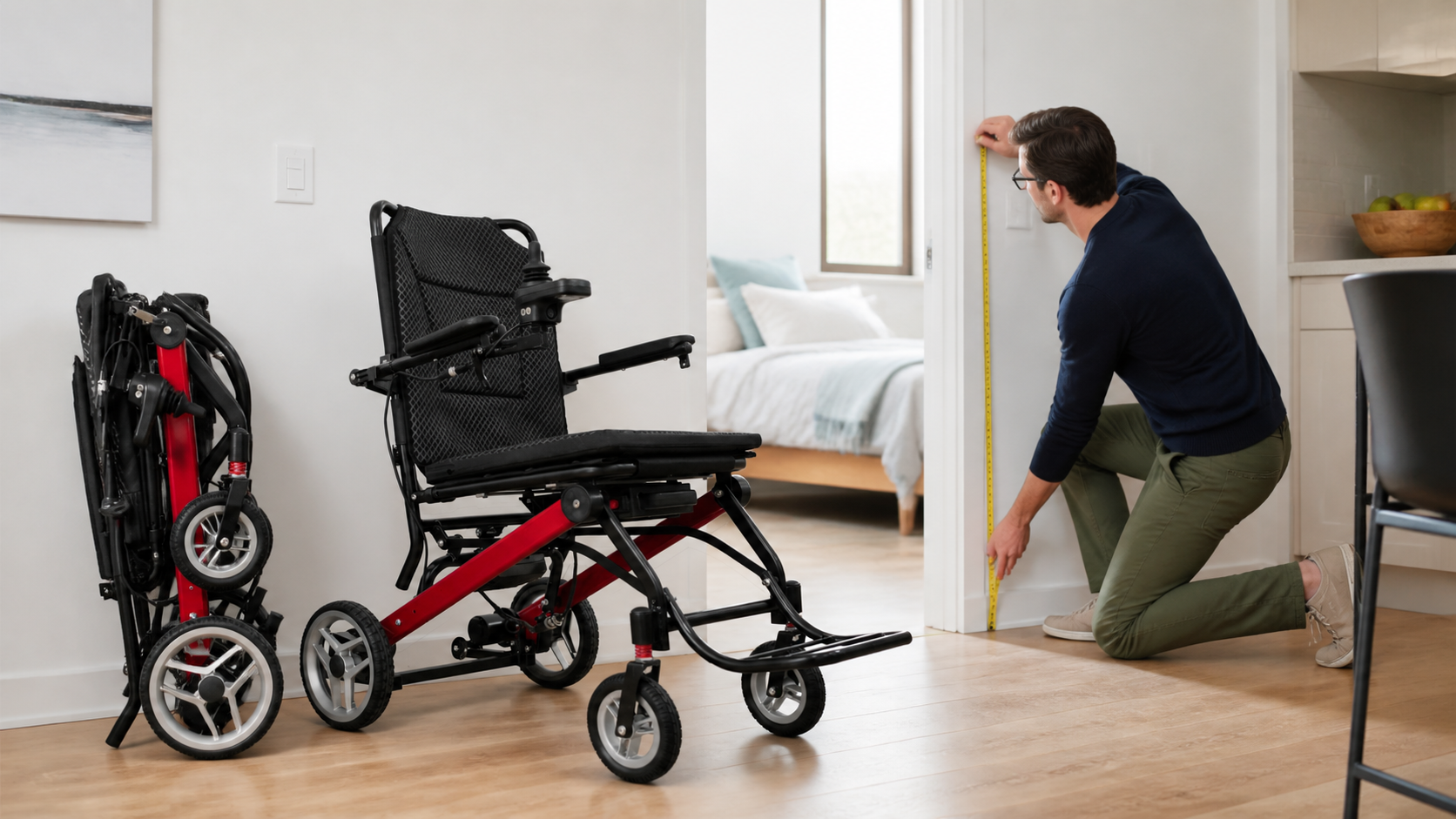
A compact electric wheelchair should be checked at each marked doorway and turn on dry level flooring with the same chair setup, evaluator brief, and stop signal.
For example, Begin with power off to check outer contact points such as foot supports, casters, armrests, joystick, and anti-tip parts. Move to a powered trial only under trained supervision. The travel planning article at lightweight travel article can help teams frame route questions without replacing the local check.
A useful worksheet separates observed facts, model records, evaluator notes, and open questions. Give every entry a date, source, exact setup, and named reviewer. Run the same check for each candidate and retain any changed setup. This shared record lets procurement, training, warehouse, and service teams discuss the same evidence without turning a short trial into a broad product promise.
What makes the route trial comparable?
Use one marked sequence:
Still, Run a straight doorway approach, a broad turn, a table approach, and a return path permitted by the manual. Note any repositioning, helper cue, furniture contact risk, or stop. Keep control settings and chair setup consistent between candidates. Do not use a successful pass to claim universal indoor fit.
- straight doorway approach
- broad and restricted turns
- table or desk approach
- controlled stop and return path
Repeat the check under the same conditions and record who took part. If a supplier answer arrives later, attach it to the original question instead of replacing the earlier entry. That history helps when a model, component, manual, sample, or operating plan changes during sourcing. A score should include a short reason and source link rather than a bare number.
Record where the evaluator started, which direction the door opened, and whether the route was empty or in normal use. A second run can test repeatability, but it should not erase the earlier run. If the chair setup changes, create another row. This preserves the link between route result and configuration.
Afterward, Key Takeaway: A fixed route and named setup turn small-space fit into a repeatable observation.
What should buyers record about folding and storage?
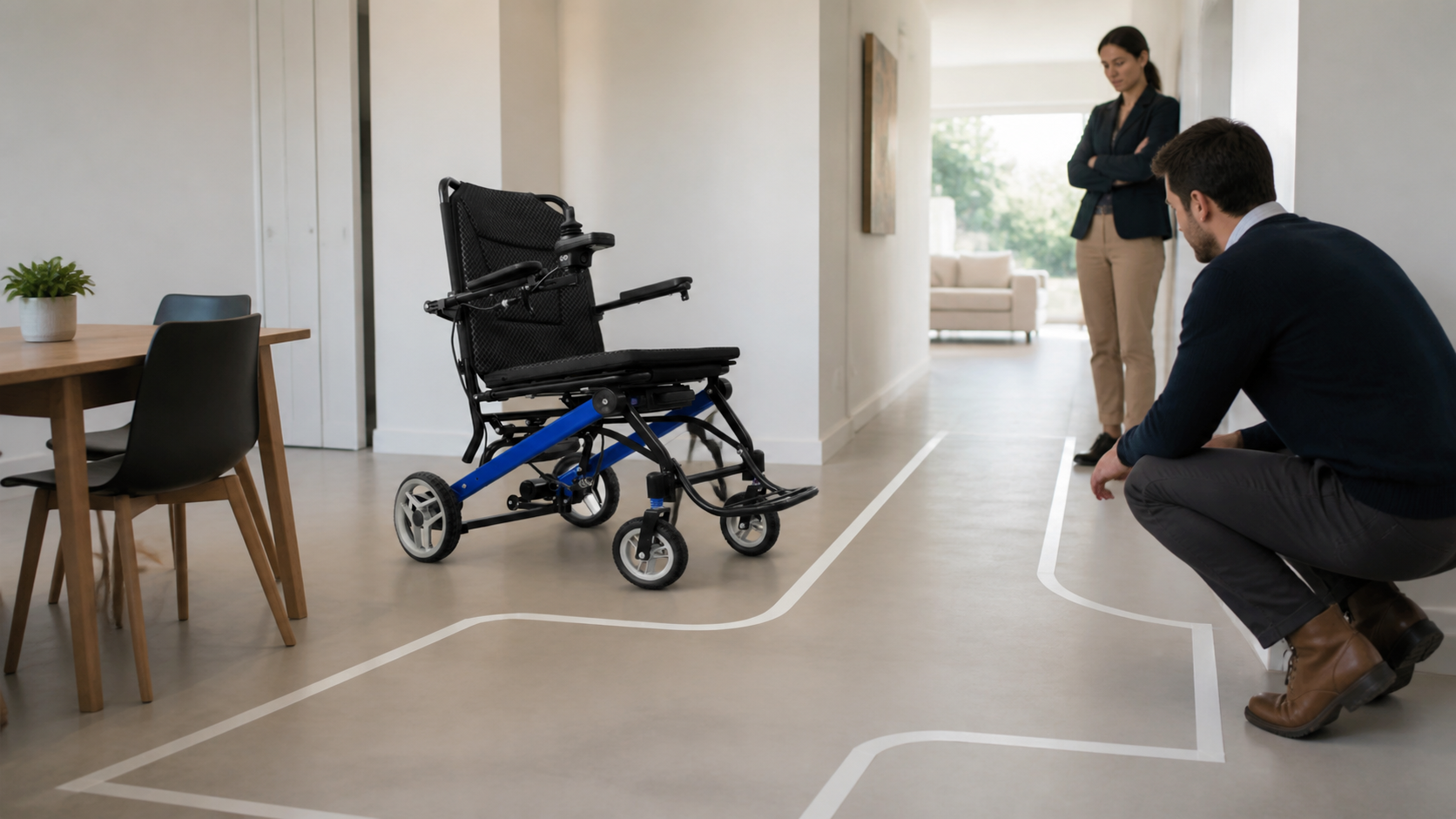
A compact electric wheelchair storage review should record the manual folding sequence, parts removed, folded outer points, resting orientation, grip access, pinch areas, and storage clearance.
Compact in motion and compact in storage are different questions. Use the exact model manual, power the chair off, and note whether the battery, cushion, controller, or foot support stays attached. The electric wheelchair weight article helps buyers ask what a listed weight includes before planning any handling task.
In practice, A useful worksheet separates observed facts, model records, evaluator notes, and open questions. Give every entry a date, source, exact setup, and named reviewer. Run the same check for each candidate and retain any changed setup. This shared record lets procurement, training, warehouse, and service teams discuss the same evidence without turning a short trial into a broad product promise.
How can a storage trial stay realistic?
Follow the whole movement:
Have trained staff fold, move, place, retrieve, and reopen the chair under workplace policy. Record helper roles, permitted grips, handling equipment, shelf or alcove access, controller protection, and the stable resting position. Confirm the chair returns to its documented operating setup before a route trial begins.
- fold sequence and loose parts
- folded shape and balance
- storage opening and resting state
- retrieval and reopening check
Next, Repeat the check under the same conditions and record who took part. If a supplier answer arrives later, attach it to the original question instead of replacing the earlier entry. That history helps when a model, component, manual, sample, or operating plan changes during sourcing. A score should include a short reason and source link rather than a bare number.
Do not treat low mass as permission for every worker to lift. Shape, balance, grip access, sill height, and local policy affect the handling method. If the storage area shares space with bags, cleaning tools, or other products, run the check in the real occupied condition and document any obstruction.
Key Takeaway: Storage fit includes folding, handling, placement, retrieval, and reopening.
How can vehicle cargo fit be reviewed?
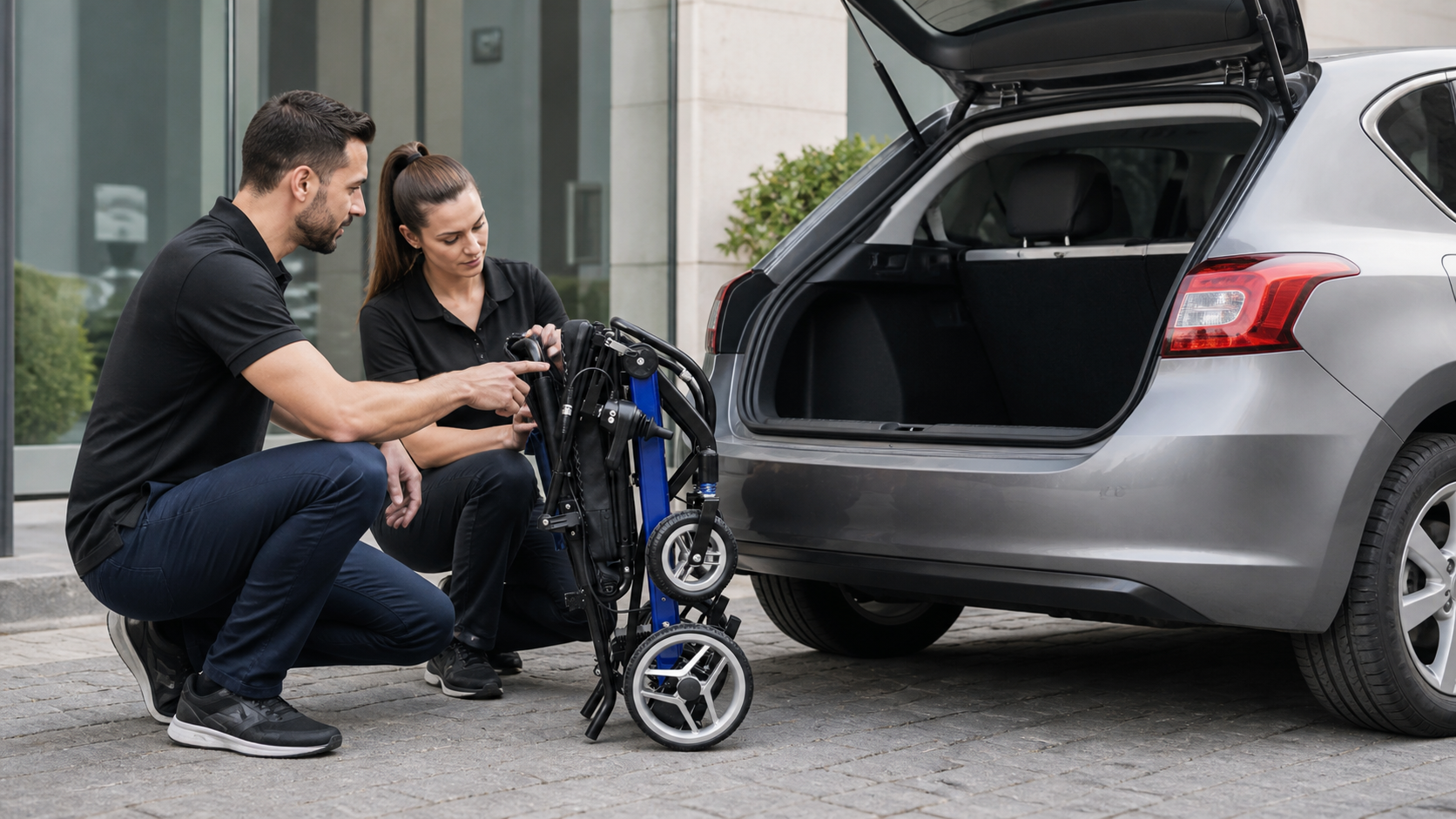
Meanwhile, A compact electric wheelchair cargo review should compare the real folded chair with the narrowest vehicle opening, sill height, interior contact points, restraints, and unloading space.
Measure the complete folded setup and vehicle opening with the same method used in the site worksheet. Check the path to the vehicle and the cargo bay. Keep vehicle trim, seat position, chair orientation, loose parts, and helper roles in the record.
A useful worksheet separates observed facts, model records, evaluator notes, and open questions. Give every entry a date, source, exact setup, and named reviewer. Run the same check for each candidate and retain any changed setup. This shared record lets procurement, training, warehouse, and service teams discuss the same evidence without turning a short trial into a broad product promise.
Which cargo details belong on the form?
For example, Check the full loading context:
Under workplace policy, place the folded chair beside the vehicle before deciding the loading method. Record available handling equipment, protected controls, hand access, resting orientation, restraint plan, and room to retrieve the chair. Do not assume that one hatchback, taxi, or van represents another model or trim.
- narrowest cargo opening
- sill and approach conditions
- chair orientation and protection
- restraint and unloading space
Repeat the check under the same conditions and record who took part. If a supplier answer arrives later, attach it to the original question instead of replacing the earlier entry. That history helps when a model, component, manual, sample, or operating plan changes during sourcing. A score should include a short reason and source link rather than a bare number.
Still, A photo of the final placement can support the record, but it should include the setup description and date. Test removal and placement. If another team, vehicle, or tool will handle customer deliveries, create a separate trial with those people and conditions rather than extending the earlier result.
Key Takeaway: Cargo fit is a vehicle-specific handling record, not a universal compact claim.
Which documents complete the route decision?
A compact electric wheelchair decision needs a route map, chair setup, manual, dimensions source, fold record, storage trial, cargo notes, inspection form, and open-question list.
Afterward, Ask the supplier to identify the exact model and revision behind every dimension or folding instruction. Pair written data with the supervised sample record. Keep marketing language separate from measurements and observations so reviewers can see which source supports each field.
A useful worksheet separates observed facts, model records, evaluator notes, and open questions. Give every entry a date, source, exact setup, and named reviewer. Run the same check for each candidate and retain any changed setup. This shared record lets procurement, training, warehouse, and service teams discuss the same evidence without turning a short trial into a broad product promise.
How should teams close the planning file?
Make every route answer findable:
In practice, Link each restriction point to a measurement, photo, sample note, or supplier document. Assign open questions to an owner and date. Record why a route field passed, failed, or needs another trial. Buyers can contact us today with their route profile, storage plan, vehicle context, and document list ready for a model-specific discussion.
- site route and restriction points
- sample setup and manual source
- storage and cargo records
- open question and decision owner
Repeat the check under the same conditions and record who took part. If a supplier answer arrives later, attach it to the original question instead of replacing the earlier entry. That history helps when a model, component, manual, sample, or operating plan changes during sourcing. A score should include a short reason and source link rather than a bare number.
The selected chair should meet the buyer’s required routes under the documented setup. Optional routes can remain separate. If a building or vehicle changes, reopen the relevant section rather than reusing the old result. This keeps a compact claim tied to a real environment and review date.
Next, Key Takeaway: The final route decision should show where the chair was checked and what remains uncertain.
What do buyers ask about this mobility product?
The compact electric wheelchair questions buyers ask most often concern setup, permitted use, controlled checks, records, and supplier support.
Can I judge small-space fit from product width?
Meanwhile, No. Width helps, but door swing, foot support, caster path, joystick position, turns, furniture, lifts, and storage access also affect the route.
What’s the best way to test a doorway?
Measure the usable opening, then run a controlled sample approach with the exact chair setup, door position, evaluator brief, and stop signal recorded.
For example, How do I know if the chair fits a car?
Measure the real folded chair and narrowest cargo opening, then review sill height, grips, helpers, protection, resting orientation, restraint, and removal space.
Can one apartment trial cover other homes?
Still, No. Each site can differ in door hardware, turns, rugs, lifts, furniture, storage, and vehicle access, so use a separate route record.
What records should a distributor keep?
Keep the site map, measurements, sample setup, manual source, fold steps, storage and cargo notes, photos, reviewers, and open supplier questions.
Related planning resources: Review adult fit review, folding wheelchair comparison, travel wheelchair specifications before approving a product, sample, route, or supplier decision.