
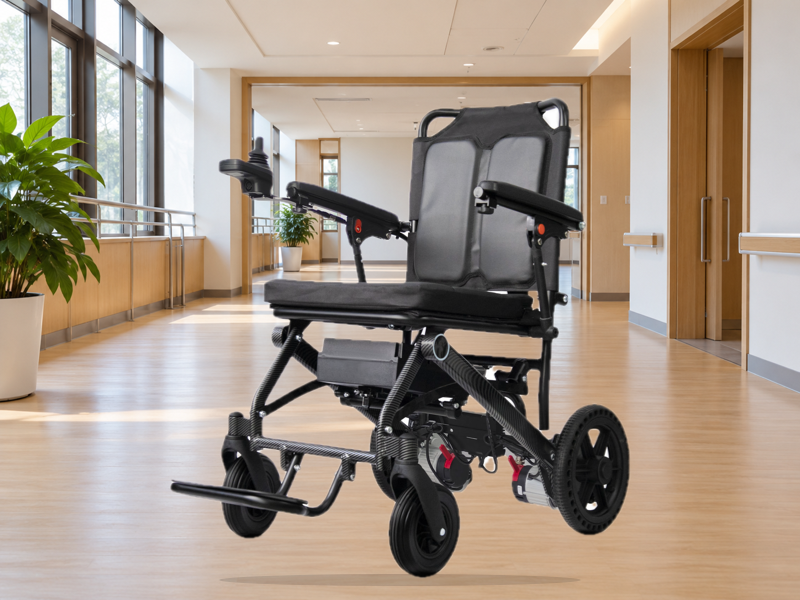
Compare an outdoor electric wheelchair against the real route and the exact model manual. A dry courtyard, campus path, curb cut, doorway threshold, and loose trail raise different questions. A broad “outdoor” label cannot answer them. Dealers, facilities, care groups, and mobility buyers can use this method to compare the same chair setup, trial route, and supplier file. Keep untested slopes, weather, loose ground, and obstacles out of the results.
For U.S. public-access context, ADA.gov explains access for wheelchairs and manually powered mobility aids. A site route and a model’s operating limits still need separate review.
What route profile should buyers record?
Build a route profile with surfaces, widths, turns, thresholds, curb cuts, measured slopes, weather limits, rest points, and indoor links.
Walk the planned route without the chair and document its physical features. The wheelchair range helps buyers see chair categories, while the route record decides which sample trials and supplier questions belong in the comparison.
A useful worksheet separates observed facts, model records, evaluator notes, and open questions. Give each entry a date, source, exact setup, and named reviewer. Run the same check for every candidate and retain any changed setup. This record lets procurement, training, and service teams discuss the same evidence without turning a short trial into a broad product promise.
Which route details belong on the worksheet?
Map each segment:
Record dry surface type, clear width, turning area, threshold shape, curb-cut condition, slope only when measured by a qualified method, drainage, sheltered stops, and the doorway at each end. Identify any segment that the current manual does not permit.
- dry firm surface segments
- clear width and turns
- thresholds and curb cuts
- weather and indoor links
Repeat the check under the same conditions and record who took part. If a supplier answer arrives later, attach it to the original question instead of replacing the earlier entry. That history matters when a model, component, manual, or operating plan changes during sourcing. A score should include a short reason and a source link rather than a bare number.
Do not replace a route map with a label such as urban, campus, or all terrain. A short physical description allows suppliers and evaluators to answer specific questions. Keep temporary construction, parked vehicles, crowding, or seasonal conditions in the route notes.
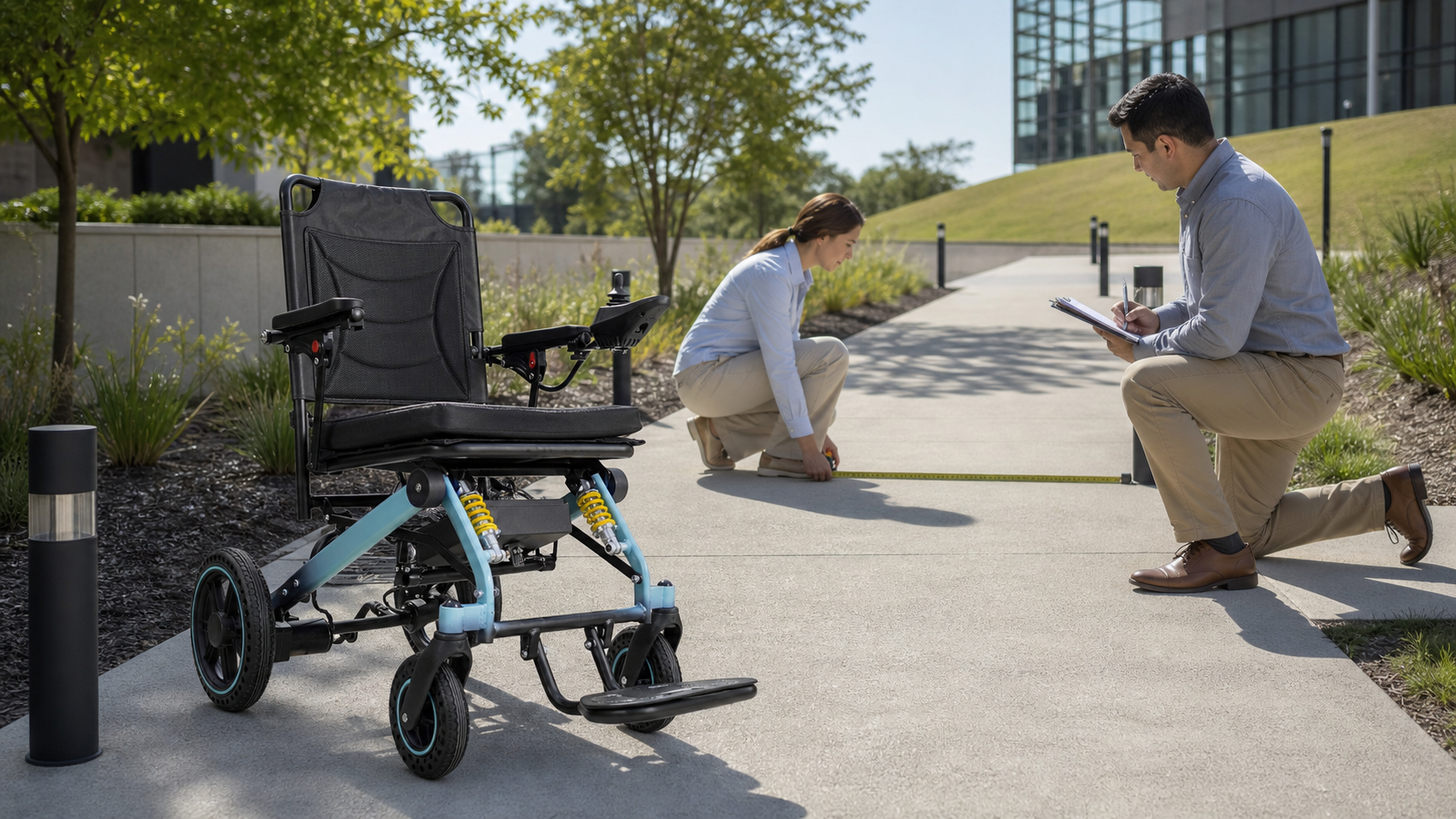
How should manual limits shape the shortlist?
Keep a chair on the shortlist only when its current manual covers the planned surface, slope, obstacle, weather, user setup, and operation method.
Ask the supplier for documentation tied to the exact model revision. The electric wheelchair use article provides use-setting context, but buyers still need the product manual for operating boundaries and preparation steps.
Which manual fields need a direct match?
Build a route-to-manual matrix:
Place each route feature beside the related manual instruction or limit. Record slope, obstacle, water exposure, temperature, tire setup, user load, and attendant guidance only as written for that model. Mark missing or unclear fields for a supplier response.
- permitted surface and slope
- obstacle and clearance guidance
- weather and water exposure
- setup and attendant instructions
A salesperson’s verbal answer should not replace the current manual. If the route exceeds a documented boundary, change the route or model shortlist. Do not design an unsupported test merely to see whether the chair can pass once.
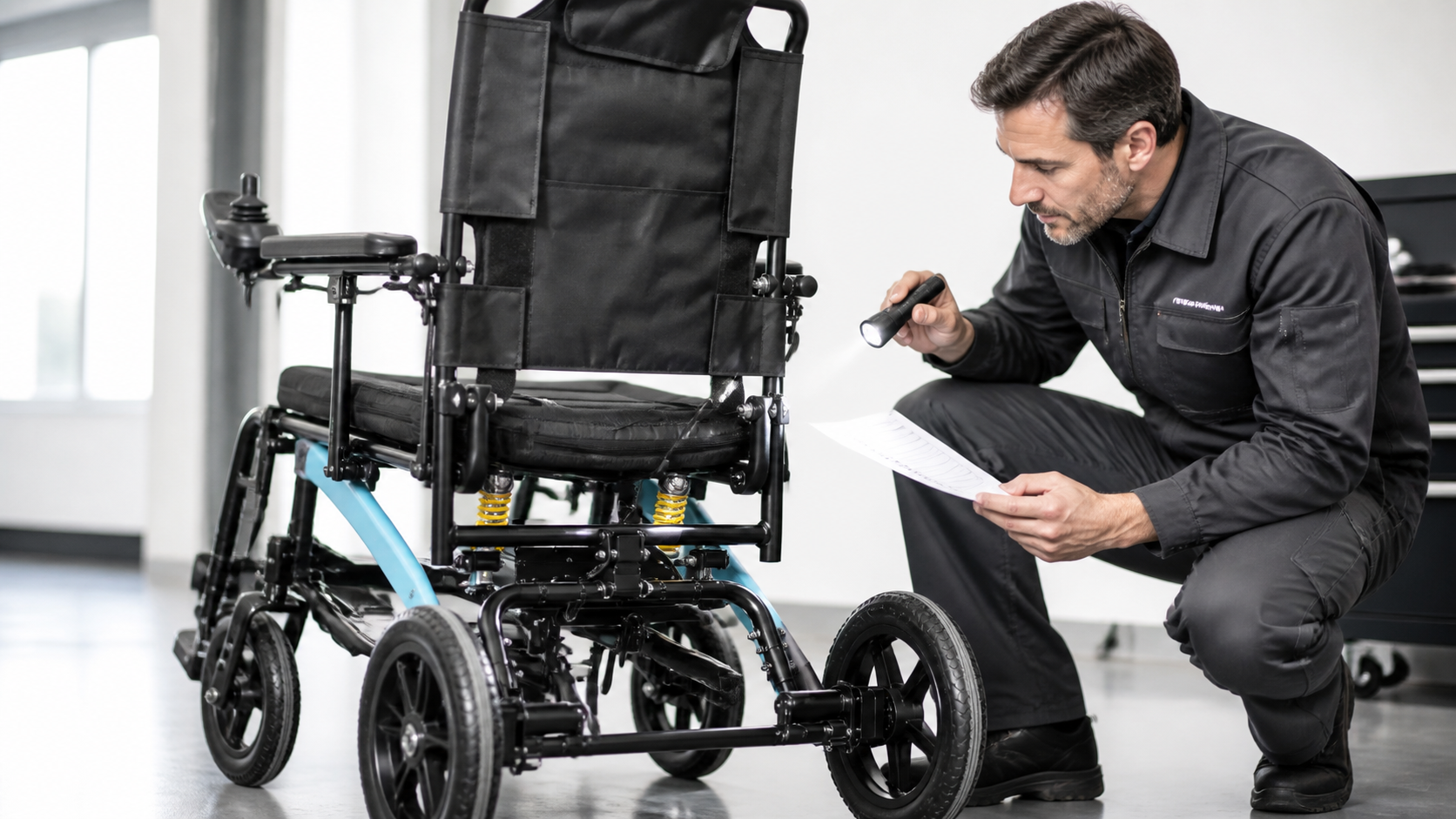
What should a controlled surface trial include?
Run each trial on a dry, firm surface allowed by the manual. Use one course, trained supervision, clear stop steps, and the same setup for each chair.
Build a modest course that mirrors only the documented route features. The electric wheelchair weight article can help separate chair weight from route behavior, since mass alone does not describe caster tracking, turning, clearance, or control feel.
How can teams record trial behavior?
Keep the course fixed:
Use marked straight travel, broad turns, a permitted threshold mock-up, a gentle documented change in grade when appropriate, and a controlled stop. Record chair setup, device battery indicator, tire state, operator, observer, surface, weather, and any intervention.
- straight firm-surface travel
- broad turning space
- permitted threshold approach
- controlled stop and restart
Stop if the operator feels uncertain or the behavior conflicts with the manual. A short course does not prove performance across every outdoor route. It supplies comparable observations under known conditions without inventing range, speed, slope, or obstacle data.
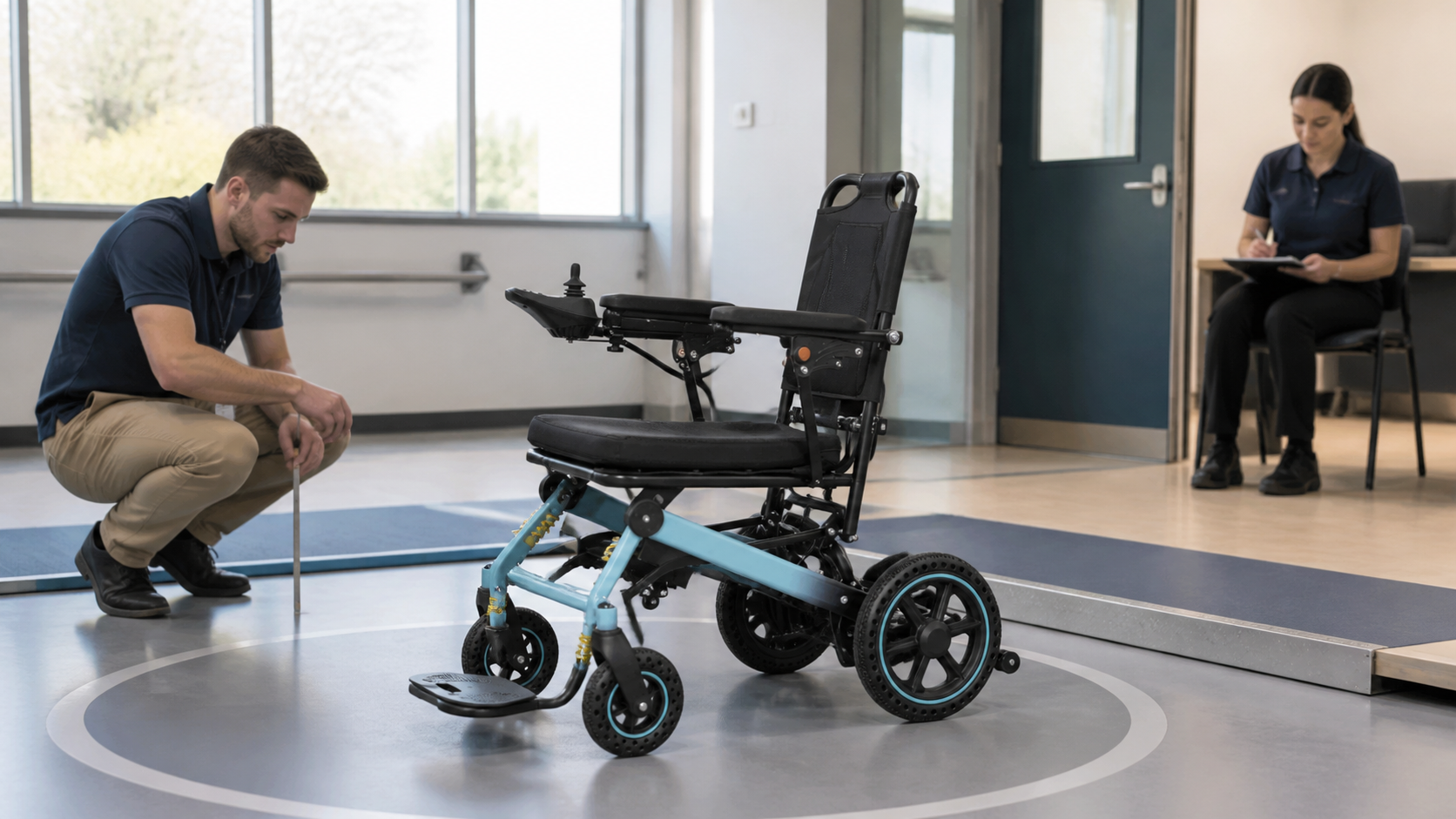
Which wheel and frame details need inspection?
With power off, check the tires, casters, wheels, frame joints, suspension, foot supports, controls, cables, and visible fasteners.
Inspect before and after a controlled trial so the record captures the chair’s starting condition and any visible change. Use the exact manual for cleaning, adjustment, and service boundaries.
What belongs in the condition record?
Use the same viewing order:
Photograph accessible areas under good light and record tire condition, caster movement, wheel attachment, visible frame joints, suspension elements, cable routing, controller mount, and foot support. Do not remove covers or diagnose an internal fault without trained authority.
- tires wheels and casters
- frame and suspension areas
- controls and cable routing
- foot supports and fasteners
Route an unclear noise, movement, mark, or control response to trained service staff with the model reference and trial notes. Procurement teams should describe the observation plainly. They should not turn it into a cause, warranty promise, or safety finding.
How should service support affect the rank?
Rank a chair higher only when manuals, part names, inspection steps, route answers, packing, and service contact fit the buyer’s operating plan.
Ask how dealers report route-related observations, order the correct wear parts, identify a revision, and receive updated instructions. Request a sample support path before making a larger sourcing decision.
Which supplier records belong in the file?
Keep support evidence model specific:
Collect the current manual, dimensional source, component names, inspection fields, parts request method, packing outline, and issue-report route. Ask how the supplier responds when a planned surface or route is not covered by the manual.
- model and revision reference
- manual and route responses
- parts and inspection method
- packing and service route
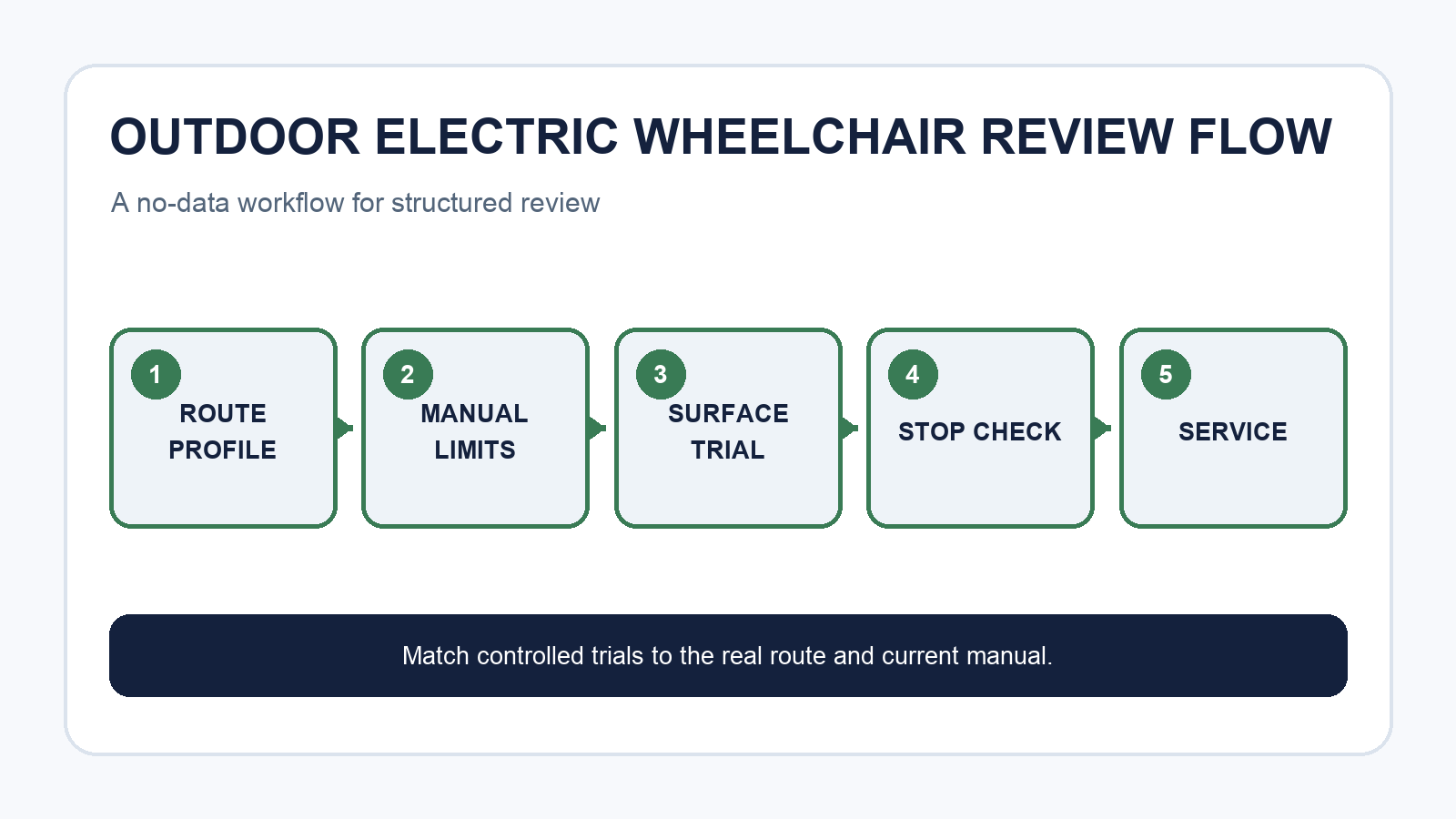
Score route match, manual match, controlled trial, condition record, and support as separate fields. Leave open questions visible. A buyer can contact us today with its route map, intended users, target market, sample course, and document list.
What do buyers ask about this mobility product?
The outdoor electric wheelchair questions buyers ask most often concern fit, permitted use, records, controlled checks, and supplier support.
Can I use an outdoor chair on every surface?
No. Outdoor is not a universal surface approval. Follow the exact model manual and compare it with the real route, weather, slope, obstacle, user setup, and trained operating plan.
What's the best route for a sample trial?
Use a controlled dry firm route that mirrors documented daily features and stays within the manual. Keep the course, chair setup, evaluator brief, and observation form the same for each candidate.
How do I know if a slope belongs in the trial?
Check the exact manual and use a qualified method to measure and manage the route. Do not estimate a slope by sight or run a trial outside the documented boundary.
Can suspension alone prove outdoor suitability?
No. Visible suspension does not settle user fit, manual boundaries, tire condition, controls, route clearance, service access, or behavior under the planned trial conditions.
What records should a distributor retain?
Keep the route profile, exact model manual, setup, trial notes, condition photos, supplier answers, parts method, training record, and service contact path.