
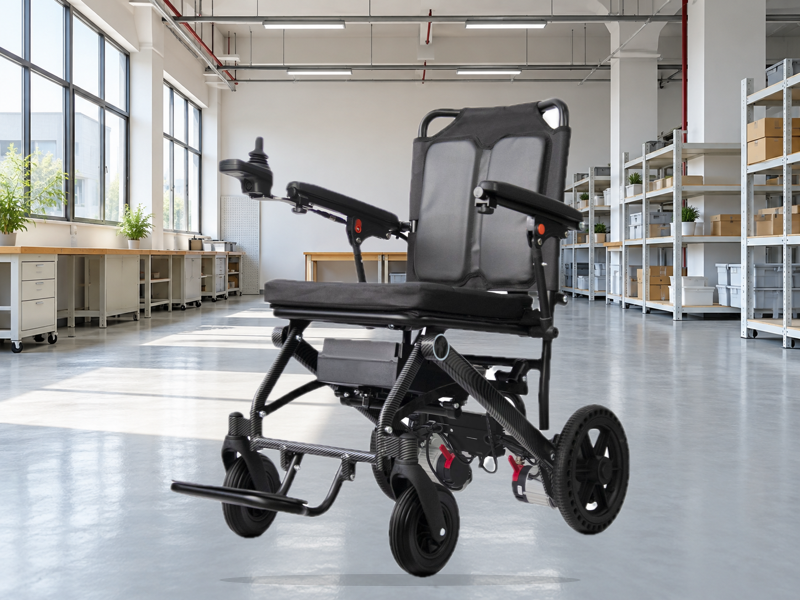
electric wheelchair maintenance is easy to document when every chair has an exact model record, named owner, manual-led check list, fault log, cleaning method, parts route, and trained service contact. A vague reminder to service the fleet cannot tell a dealer which unit was checked, what changed, who performed the work, or whether a fault remains open.
Clinics, distributors, rental programs, and care organizations need records that protect product history without inviting untrained repair. This article builds a practical B2B system around visible observations, manufacturer instructions, controlled function checks, and clear escalation. It does not invent universal service intervals or replace the exact product manual. The resulting file supports routine ownership, staff handover, supplier communication, and model-specific service decisions.
For U.S. public-access questions, see ADA.gov’s mobility-device guidance; maintenance tasks and service limits still come from the exact model instructions.
What should a maintenance record identify?
Electric wheelchair maintenance should identify the exact chair, model, revision, serial or fleet reference, current setup, manual source, assigned owner, and open service issues.
Create one record per physical unit rather than one generic sheet for the whole fleet. The wheelchair range can help categorize chair types, while each unit record preserves its own model and configuration history.
A useful worksheet separates observed facts, model records, evaluator notes, and open questions. Give each entry a date, source, exact setup, and named reviewer. Run the same check for every candidate and retain any changed setup. This record lets procurement, training, and service teams discuss the same evidence without turning a short trial into a broad product promise.
Which identification fields belong on the record?
Make the unit traceable:
Record the device reference visible on the chair, acquisition or receipt record, current manual version, battery and charger reference when documented, controller setup, accessories, storage site, service contact, and staff owner. Avoid copying an identifier from a nearby unit.
- chair and fleet reference
- model revision and manual
- battery charger and controls
- owner location and service route
Repeat the check under the same conditions and record who took part. If a supplier answer arrives later, attach it to the original question instead of replacing the earlier entry. That history matters when a model, component, manual, or operating plan changes during sourcing. A score should include a short reason and a source link rather than a bare number.
Add a dated change note when an approved component, setup, location, or owner changes. Keep earlier entries visible so staff can understand which configuration a prior inspection described. Store sensitive personal details outside the equipment record when they are not needed for service.
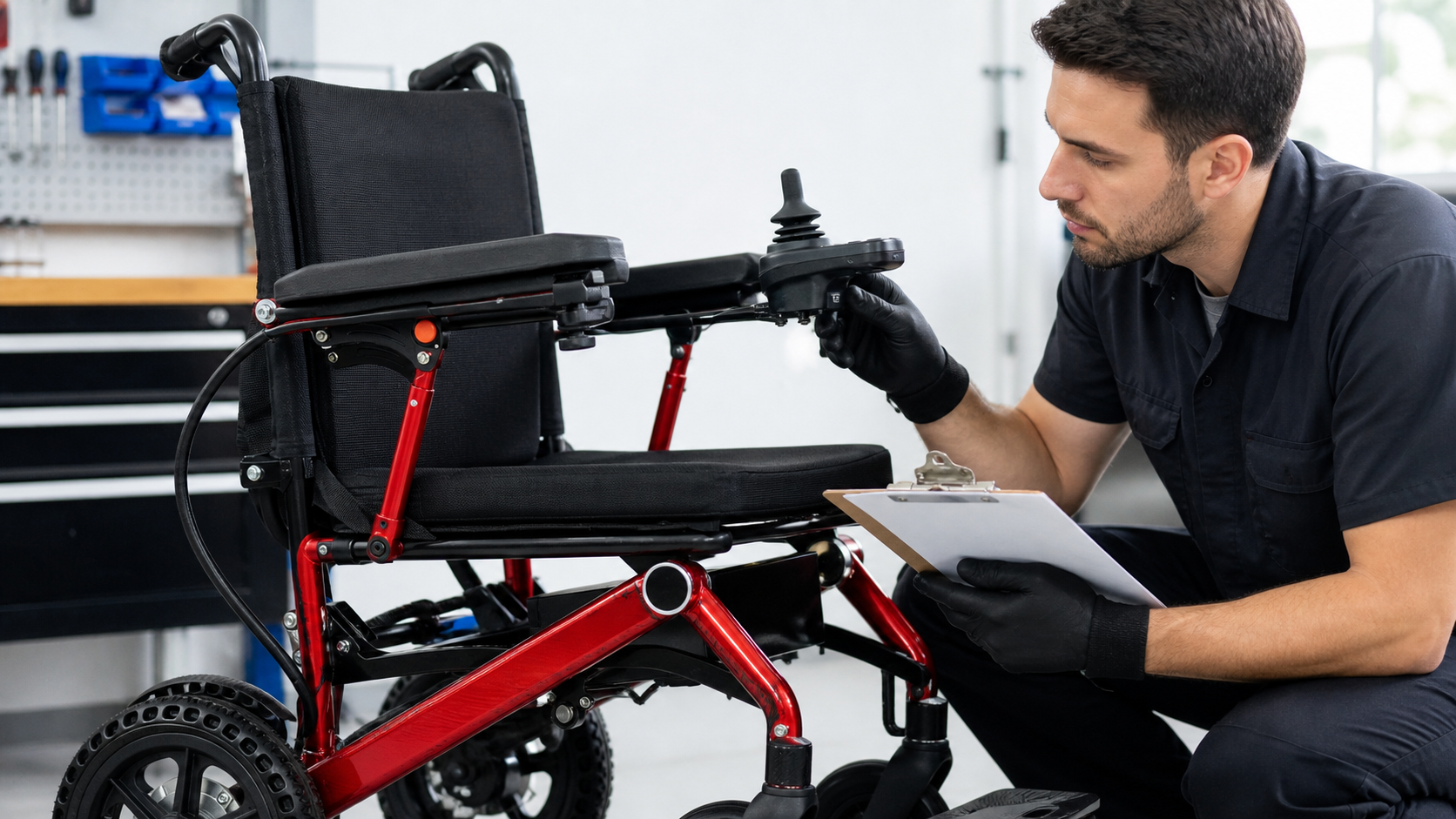
Which visual checks can staff document?
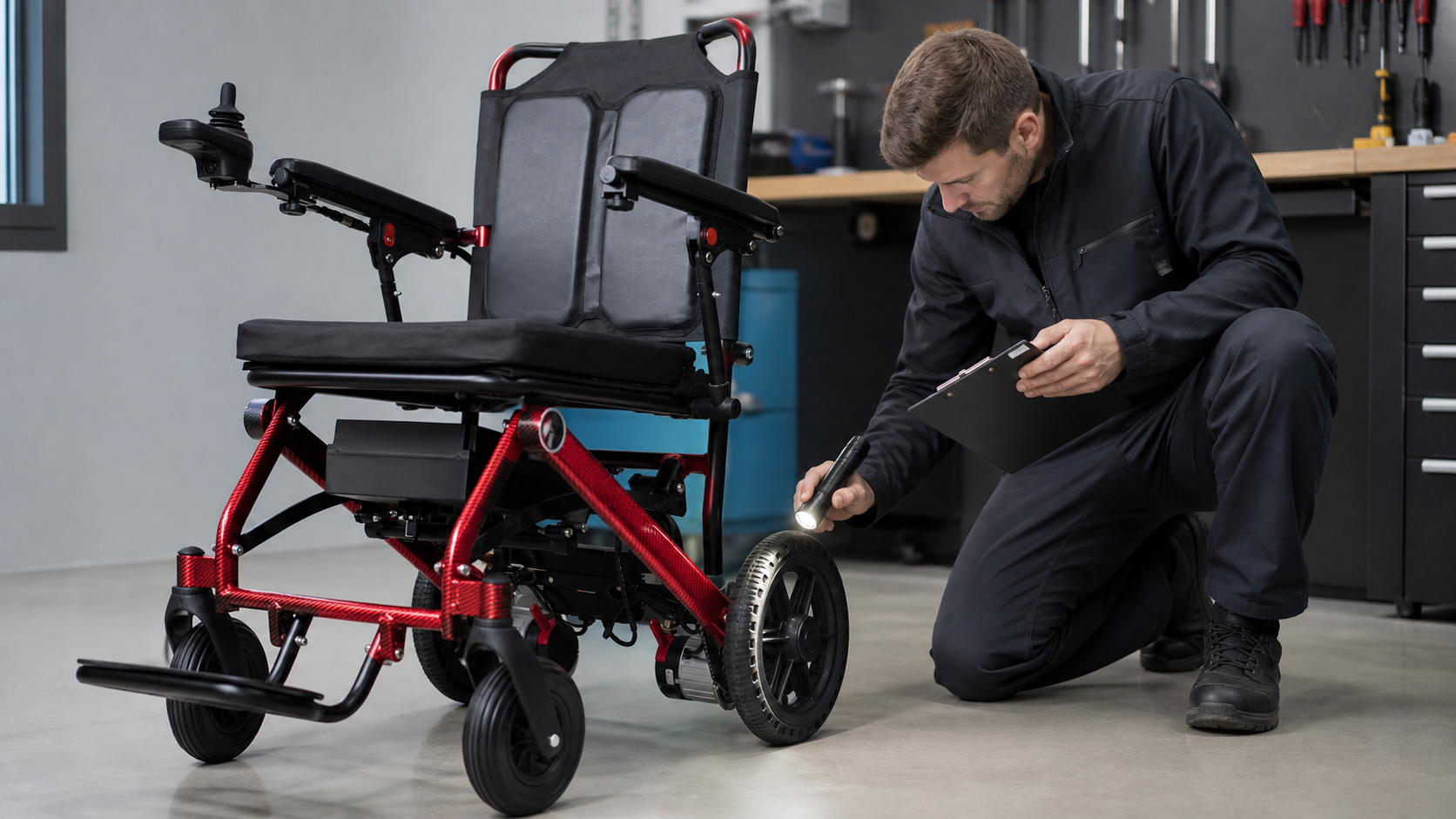
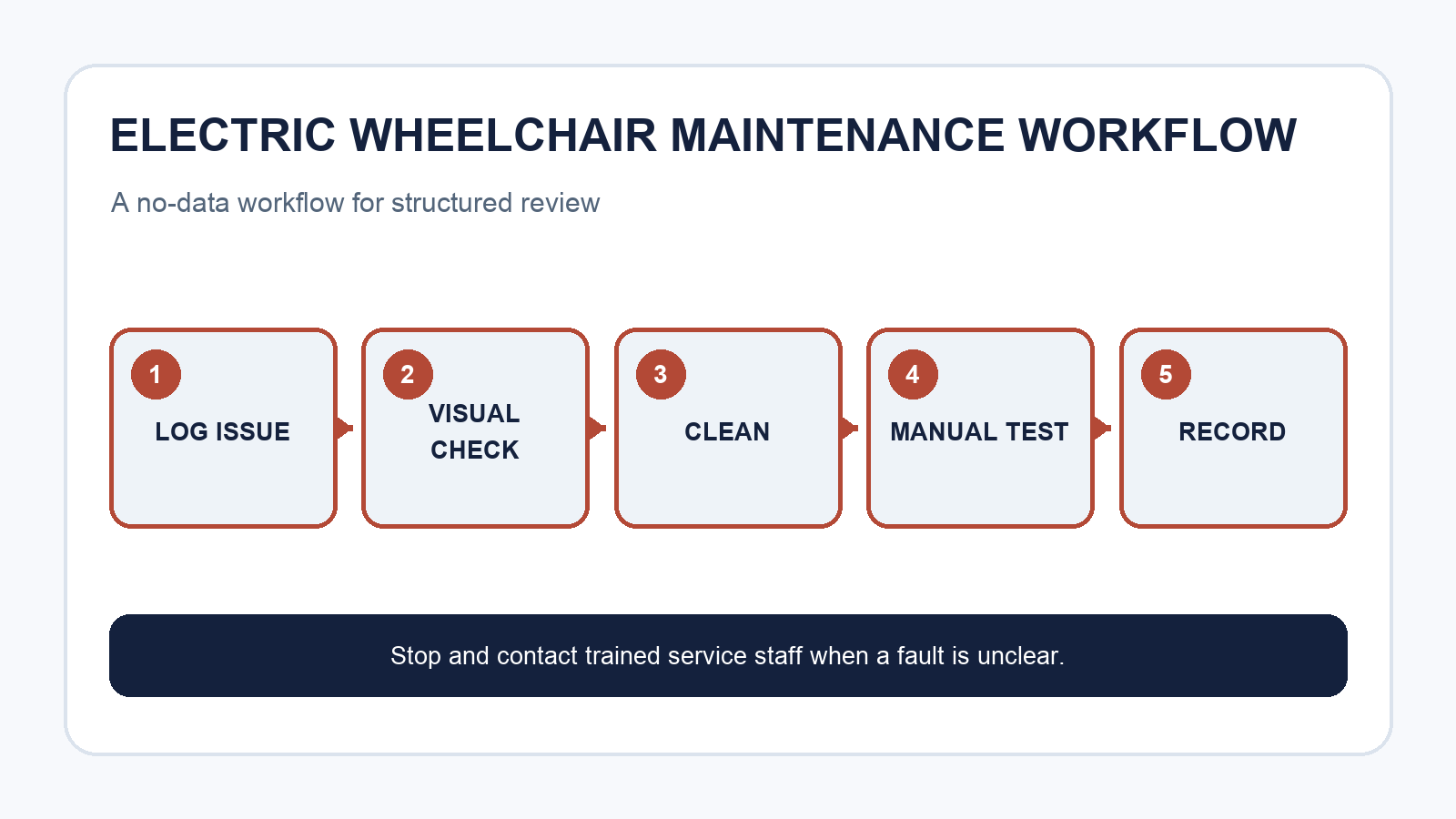
Electric wheelchair maintenance can include documented visual checks of tires, casters, wheels, frame, seating, controls, cables, foot supports, fasteners, and visible battery enclosure condition.
Define which checks trained local staff may perform and which conditions go straight to service. The electric wheelchair engineering article offers engineering context, while the exact model manual sets inspection points and action boundaries.
How should a visual check be performed?
Use a fixed viewing order:
Park on level ground, power down through the documented method, and inspect accessible areas under good light. Record normal condition or a plain observation such as loose, worn, shifted, marked, obstructed, or unclear. Do not remove covers or guess at an internal cause.
- tires wheels and casters
- frame seating and supports
- joystick cables and mounts
- visible enclosure and fasteners
Attach photos only when policy allows and label them with the unit reference and date. A condition that affects operation or conflicts with the manual should stop use until the trained service route decides the next step. The record reports facts rather than a repair finding.
How should cleaning and storage be recorded?
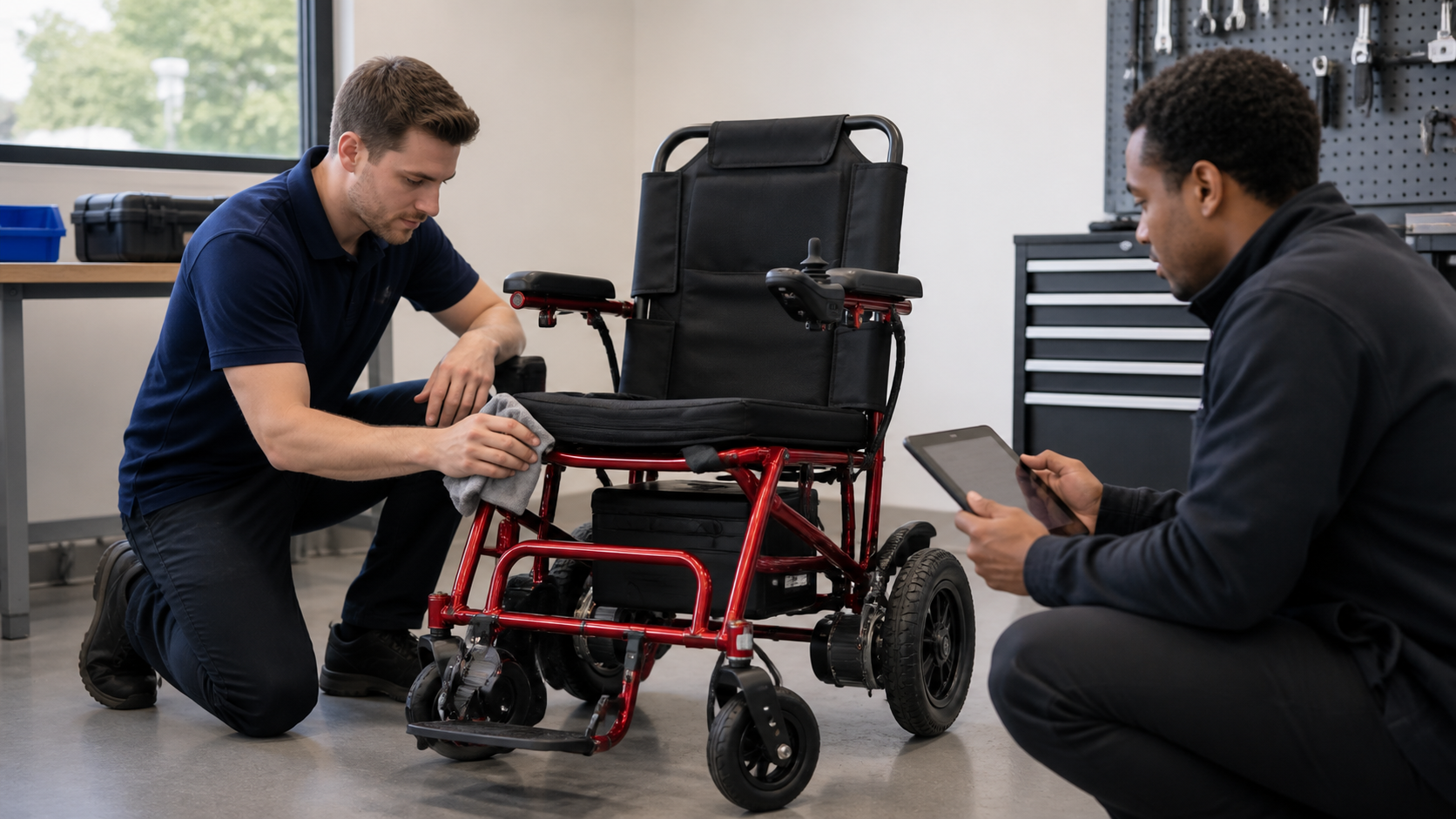
Electric wheelchair maintenance should record model-approved cleaning materials, powered-off preparation, dry contact methods, storage location, moisture events, and the staff member who completed the task.
Use the manual for upholstery, frame, controller, battery enclosure, wheels, and connectors. Do not create one wet-cleaning method for every chair or apply fluid near electrical parts without model-specific permission.
What belongs in a cleaning entry?
Keep the method plain:
Write the surface cleaned, product or dry cloth used, chair power state, visible result, storage return, and any condition found during cleaning. Do not use high-pressure water, open an enclosure, or spray controls unless the exact instructions allow a named method.
- surface and permitted material
- power state and preparation
- visible condition found
- dry storage return
A cleaning record can reveal recurring dirt at a caster, cable contact near a fold, or moisture exposure in a storage area. Route that pattern to service or facility staff rather than changing the maintenance method without approval.
Which function checks belong in the plan?
Electric wheelchair maintenance should include only model-approved function checks for power-up, joystick neutral, controls, freewheel state, brakes, steering, stopping, and fault indicators.
Run function checks in a controlled clear area with trained staff and a defined stop step. Battery charging remains tied to the exact chair and charger instructions, with the linked electric wheelchair cost article helping buyers place service cost beside documented ownership needs.
How should teams record a function check?
Use the manual sequence:
Record the starting condition, device indicator as displayed, test area, operator, control response, stop response, sound or movement observation, and any fault message exactly as shown. Stop the test when the chair behaves unexpectedly or the manual calls for service.
- power-up and indicator state
- joystick and control response
- freewheel and stopping check
- fault message and stop action
Do not convert a short workshop check into a range, speed, braking-distance, or battery-health claim. Its purpose is to confirm the documented routine or capture a fault clearly enough for trained support to respond.
How should faults and parts be tracked?
Electric wheelchair maintenance should track each fault from observation through stop decision, supplier report, part identification, trained service action, function check, and closure approval.
Give every issue a reference and keep communication attached to it. Record symptoms in plain language, the exact chair setup, recent relevant work, and the manual step used before contacting service.
What makes a service log useful?
Preserve the full issue path:
Include the unit reference, date, reporter, observation, photos when allowed, device message, use status, supplier case reference, named part, technician action, post-service check, and closure owner. A replacement part should be matched through the supplier’s model method rather than appearance.
- observation and stop decision
- support case and part reference
- trained action and test
- closure owner and date
Review open issues during staff handover and purchasing decisions. Repeated delays, unclear parts, or missing manuals belong in the ownership-cost discussion. A fleet buyer can contact us today with model references, maintenance scope, open records, and support questions.
What do buyers ask about this mobility product?
The electric wheelchair maintenance questions buyers ask most often concern fit, permitted use, records, controlled checks, and supplier support.
Can I use one maintenance interval for every chair?
No. Follow the exact model manual, usage conditions, service advice, and applicable local policy. Keep a unit-level plan when models, configurations, environments, or duty cycles differ.
What's the best way to report an unclear fault?
Stop according to policy, record the exact unit and plain observation, capture any device message, note the setup and recent work, then contact trained service through the documented route.
How do I know if staff can tighten a loose part?
Check the model manual, training scope, and service policy. A visible loose part does not automatically authorize a local adjustment, especially near controls, folding joints, wheels, brakes, or electrical areas.
Can I pressure-wash an electric wheelchair?
Do not do so unless the exact manufacturer instructions explicitly permit a named method. Water and cleaning products can conflict with controls, connectors, bearings, upholstery, and enclosed components.
What records should stay with a replaced part?
Keep the chair reference, supplier part reference, reason for replacement, trained installer, work date, required check, result, and closure approval. Follow local disposal and battery rules where they apply.