
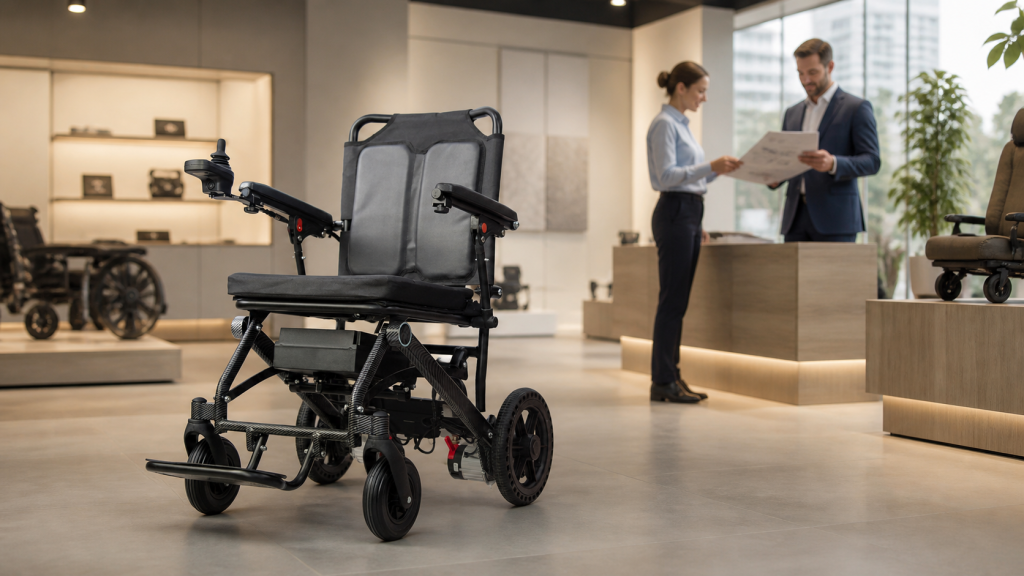
A power wheelchair supplier comparison should connect sample evidence, configuration records, packaging, parts support, and response quality to a traceable decision. Test the exact sample. Keep revisions visible. Score only evidence that the supplier can reproduce. For U.S. facilities, review official mobility-device guidance alongside local rules and site-specific safety requirements.
Buyers can compare the best power wheelchair supplier by reviewing a real sample, model identity, packing method, document control, parts naming, and the written route for service questions. A polished quotation can introduce a product, yet it does not show whether warehouse, training, sales, and support teams can work from the same records. Distributors also need to know how revisions are named, how a reported issue reaches the right person, and which evidence stays linked to a specific chair.
This article gives B2B teams a practical supplier audit built around observable checks and saved documents. It avoids broad claims and keeps unanswered fields open. The result is a sourcing file that can be repeated for every shortlisted supplier, shared across departments, and revisited when a sample, manual, component, or order plan changes.
What should a supplier profile contain?
In practice, A power wheelchair supplier profile should name the legal sales contact, model family, target market, document owner, sample route, service contact, and revision method.
Build the profile before comparing prices or options. Ask who owns the product file, who confirms a sample configuration, and how a changed component is recorded. Use the ultra-light product page as a product-context reference while keeping the supplier profile tied to the exact sample and quotation under review.
A useful worksheet separates observed facts, model records, evaluator notes, and open questions. Give every entry a date, source, exact setup, and named reviewer. Run the same check for each candidate and retain any changed setup. This shared record lets procurement, training, warehouse, and service teams discuss the same evidence without turning a short trial into a broad product promise.
How can buyers make the profile traceable?
Next, Start with named ownership:
Create one row for the supplier contact, model name, sample identifier, document date, market, intended buyer channel, and support route. Ask for written answers where a handoff crosses sales, engineering, packing, or service. Save files with dates and revision labels so a later update does not erase what the team reviewed.
- supplier and document owner
- exact model and sample identity
- target market and buyer channel
- written sales and service route
Repeat the check under the same conditions and record who took part. If a supplier answer arrives later, attach it to the original question instead of replacing the earlier entry. That history helps when a model, component, manual, sample, or operating plan changes during sourcing. A score should include a short reason and source link rather than a bare number.
Meanwhile, Keep commercial claims separate from verified sample observations. A supplier may serve several markets, so the buyer should state which language, operating setting, packing route, and internal training plan apply. If the answer changes during the audit, add a dated note and retain the earlier response for comparison.
Key Takeaway: A named supplier profile gives every later sample and service check a stable reference.
How can teams check a production sample?
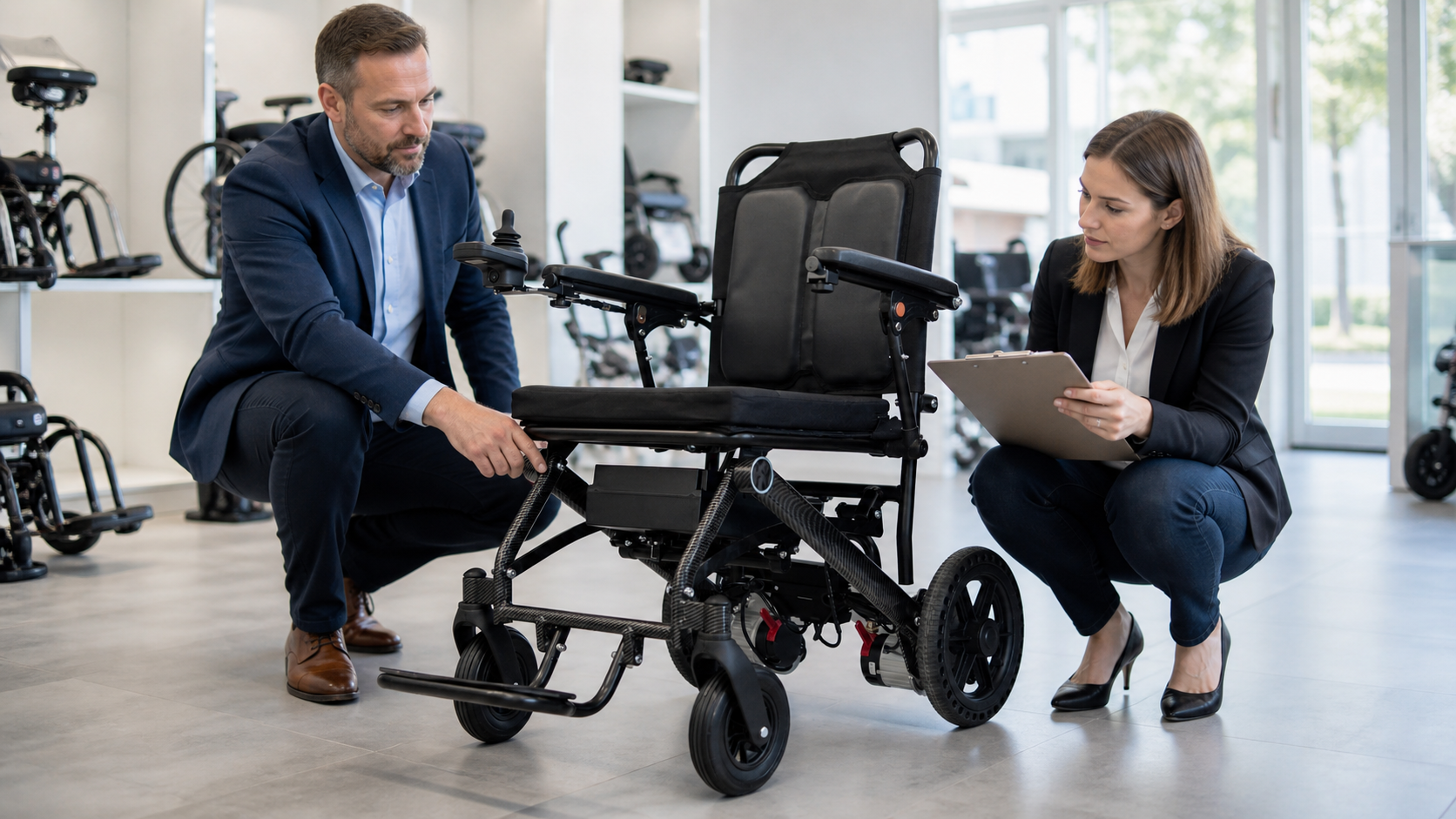
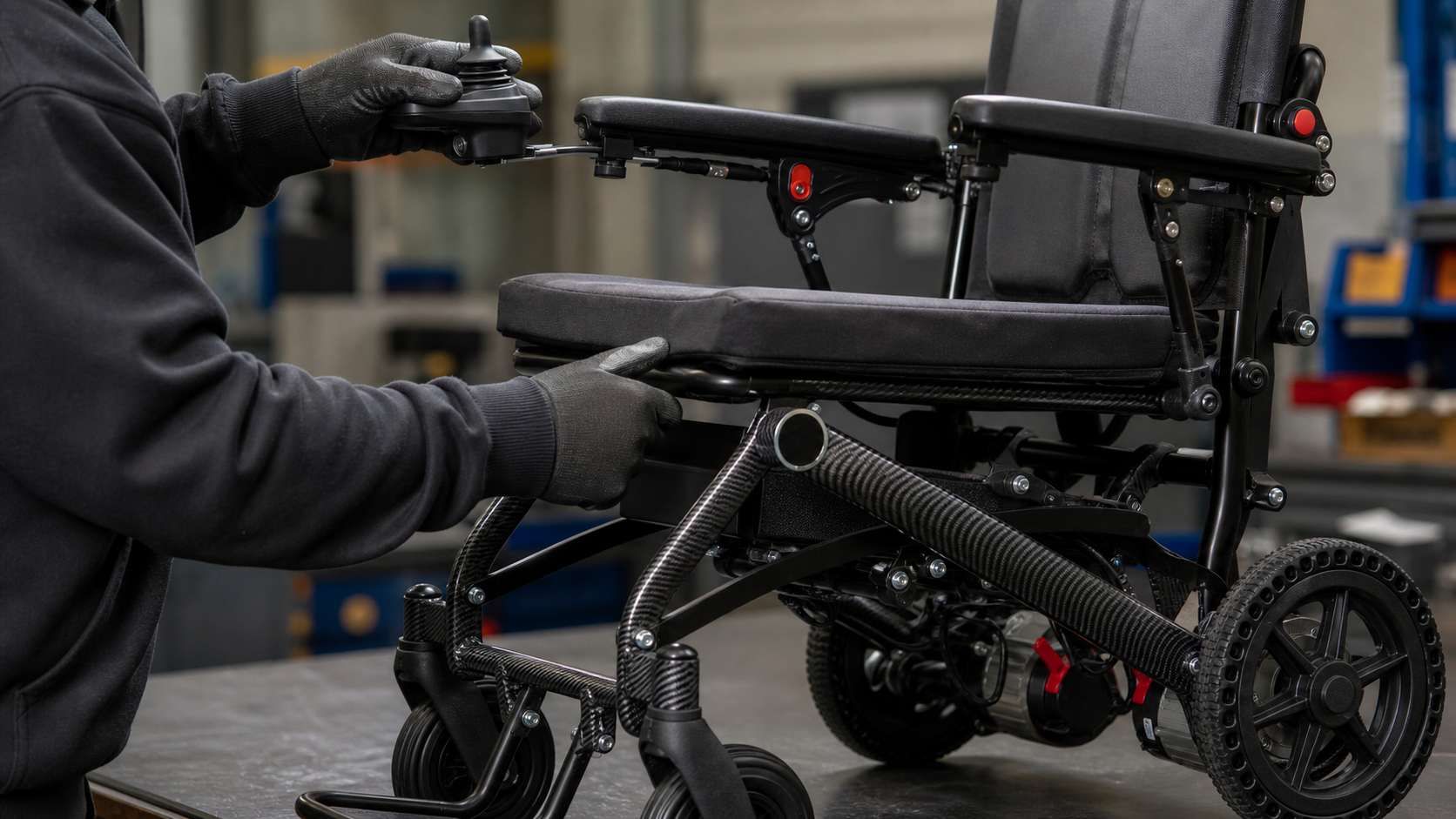
A power wheelchair sample should be checked through identity, visible frame condition, seating parts, controls, cable routing, wheels, folding steps, accessories, and manual references.
For example, Place the chair on dry level flooring and compare it with the written configuration. The ergonomic wheelchair page gives another seating context, but only the sample label, manual, and supplier file can define what arrived. Record differences without trying to repair or reinterpret them during the audit.
A useful worksheet separates observed facts, model records, evaluator notes, and open questions. Give every entry a date, source, exact setup, and named reviewer. Run the same check for each candidate and retain any changed setup. This shared record lets procurement, training, warehouse, and service teams discuss the same evidence without turning a short trial into a broad product promise.
Which sample observations belong in the file?
Use one calm inspection order:
Still, Photograph the whole chair from agreed angles, then record upholstery attachment, armrest position, foot support, joystick mount, visible fasteners, cable clearance, wheel condition, and supplied loose parts. Power-on or folding checks should follow the exact manual and trained supervision. Name every setup used for an observation.
- sample and revision identity
- frame and user-contact parts
- joystick mount and cable route
- wheels, loose parts, and manual
Repeat the check under the same conditions and record who took part. If a supplier answer arrives later, attach it to the original question instead of replacing the earlier entry. That history helps when a model, component, manual, sample, or operating plan changes during sourcing. A score should include a short reason and source link rather than a bare number.
Do not score a sample only by appearance. Pair each note with the configuration, document source, evaluator, and date. If an operating step is unclear, stop that step and ask for written guidance. A useful audit records the gap; it does not invent a sequence to keep the demonstration moving.
Afterward, Key Takeaway: The sample check should connect visible details to the exact model record and manual.
Which packing records should buyers request?
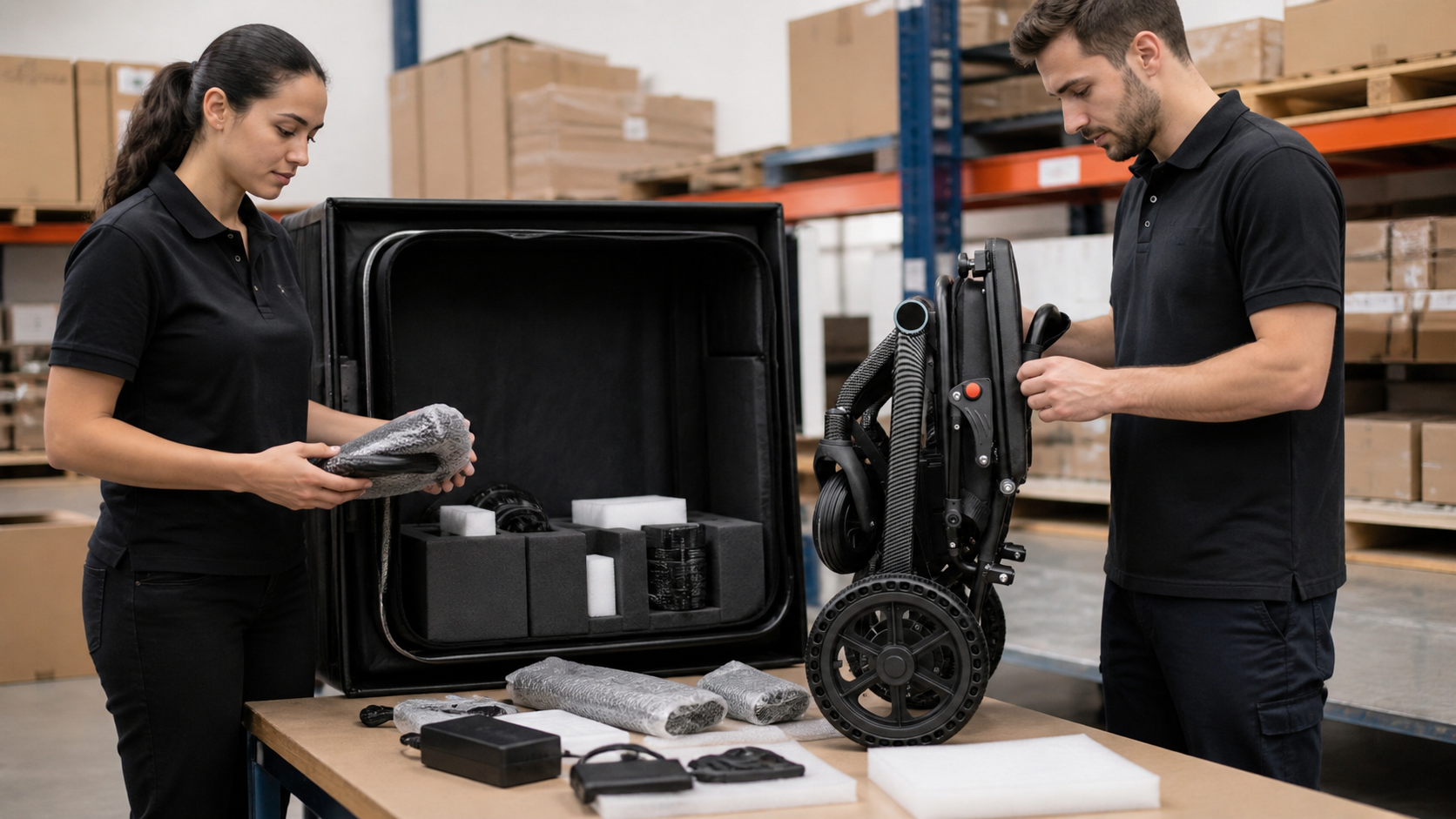
A power wheelchair packing review should cover folded or open orientation, protected contact points, loose-part locations, controller protection, carton identity, and receiving steps.
Ask for the packing outline used for the quoted configuration, then compare it with the sample pack. A listed chair weight also needs a definition of included parts; the electric wheelchair weight article provides questions that help buyers separate complete-chair records from handling assumptions.
In practice, A useful worksheet separates observed facts, model records, evaluator notes, and open questions. Give every entry a date, source, exact setup, and named reviewer. Run the same check for each candidate and retain any changed setup. This shared record lets procurement, training, warehouse, and service teams discuss the same evidence without turning a short trial into a broad product promise.
What makes a packing review repeatable?
Follow the chair through the pack:
Record the chair state before packing, every part removed, each protective piece, the location of the charger or other documented accessories, and the method used to keep the controller and cables away from pressure. Note the opening sequence so receiving staff can reverse it without pulling on unsupported parts.
- chair orientation and fold state
- protected frame and control points
- loose-part and accessory locations
- receiving and repacking sequence
Next, Repeat the check under the same conditions and record who took part. If a supplier answer arrives later, attach it to the original question instead of replacing the earlier entry. That history helps when a model, component, manual, sample, or operating plan changes during sourcing. A score should include a short reason and source link rather than a bare number.
A clean sample pack does not prove every shipment will match. Ask how packing checks are recorded and what happens when a carton, insert, component, or accessory changes. The buyer’s warehouse team should review the method against its own handling policy and equipment before a larger order is planned.
Key Takeaway: Packing evidence is useful when it protects the same sample configuration the buyer reviewed.
How should service evidence be compared?
Meanwhile, A power wheelchair service review should compare issue intake, model identification, photo requests, parts naming, response ownership, document updates, and closure records.
Send each supplier the same neutral service scenario without claiming that a real fault exists. Ask which identity fields, photos, manual references, and operating notes would be requested. Keep response speed separate from response quality and from the buyer’s own service capability.
A useful worksheet separates observed facts, model records, evaluator notes, and open questions. Give every entry a date, source, exact setup, and named reviewer. Run the same check for each candidate and retain any changed setup. This shared record lets procurement, training, warehouse, and service teams discuss the same evidence without turning a short trial into a broad product promise.
Which support fields reveal a workable process?
For example, Trace one question from start to close:
Record where the issue enters, who checks model identity, how the chair setup is described, how parts are named, and where the written answer is stored. Ask how a revised document reaches dealers and how an unresolved case remains visible. Do not ask for private customer information or unsupported success stories.
- issue intake and named owner
- model and revision confirmation
- parts naming and photo request
- written response and closure record
Repeat the check under the same conditions and record who took part. If a supplier answer arrives later, attach it to the original question instead of replacing the earlier entry. That history helps when a model, component, manual, sample, or operating plan changes during sourcing. A score should include a short reason and source link rather than a bare number.
Still, A friendly sales reply is useful, but it is not the whole service route. Buyers need a process that warehouse, dealer, and training staff can follow after the sales contact changes. Score clarity, traceability, and model specificity. Leave response-time promises out unless they are documented for the proposed agreement.
Key Takeaway: Service evidence should show how a model-specific question moves through a written process.
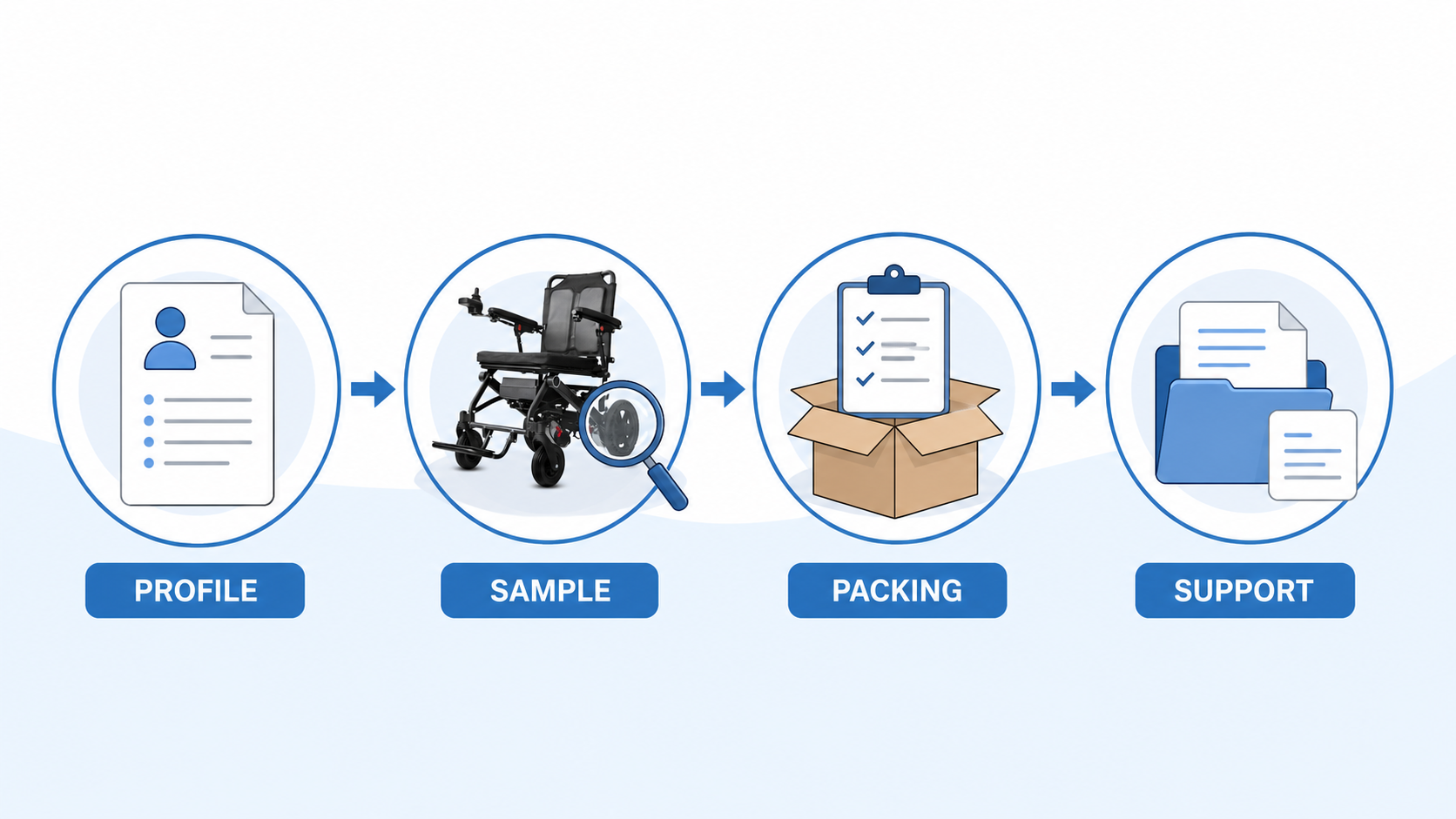
What makes a supplier scorecard defensible?
A power wheelchair supplier scorecard is defensible when every score has a defined field, observed fact, document source, named reviewer, open question, and dated reason.
Afterward, Separate product fit, sample consistency, packing, documentation, training support, and service process. Price can sit beside those fields, but it should not hide missing evidence. Weight each field according to the buyer’s channel and operating plan before opening the proposals.
A useful worksheet separates observed facts, model records, evaluator notes, and open questions. Give every entry a date, source, exact setup, and named reviewer. Run the same check for each candidate and retain any changed setup. This shared record lets procurement, training, warehouse, and service teams discuss the same evidence without turning a short trial into a broad product promise.
How should the final ranking be recorded?
Keep the decision readable:
In practice, Use a short reason under every score and link it to the matching photo, manual page, email, or inspection entry. Run a second-person review for high-impact gaps. Mark assumptions as assumptions. A buyer can contact us today with its market, sample questions, route profile, and required records ready for a focused supplier discussion.
- defined field and weighting
- evidence link and reviewer
- open gap and follow-up owner
- dated decision and change note
Repeat the check under the same conditions and record who took part. If a supplier answer arrives later, attach it to the original question instead of replacing the earlier entry. That history helps when a model, component, manual, sample, or operating plan changes during sourcing. A score should include a short reason and source link rather than a bare number.
The highest total should not win automatically if a required field is blank. Record threshold fields before scoring and state how ties or missing records are handled. Save the scorecard with the sample identity and proposal version so the team can explain the decision later without relying on memory.
Next, Key Takeaway: A defensible supplier rank shows both the evidence collected and the gaps still open.
What do buyers ask about this mobility product?
The power wheelchair questions buyers ask most often concern setup, permitted use, controlled checks, records, and supplier support.
Can I compare suppliers from quotations alone?
Meanwhile, No. A quotation starts the review, but a sample, model records, packing evidence, service process, and written answers make the comparison usable.
What’s the best sample record to request?
The better record names the exact model, revision, supplied parts, manual version, inspection date, packing state, and contact who confirmed the configuration.
For example, How do I know if service answers are traceable?
Check whether each answer links to a named model, document source, issue owner, requested evidence, written action, and closure record.
Can price carry the largest score?
Still, Yes, if that weighting fits the buyer’s plan, but required product, document, packing, and service fields should still have clear thresholds.
What should I send before a supplier call?
Send the target market, channel, use profile, sample questions, required records, packing route, and service scenario without sharing private user data.
Related planning resources: Review folding wheelchair comparison, suspension review, joystick handover before approving a product, sample, or supplier decision.