
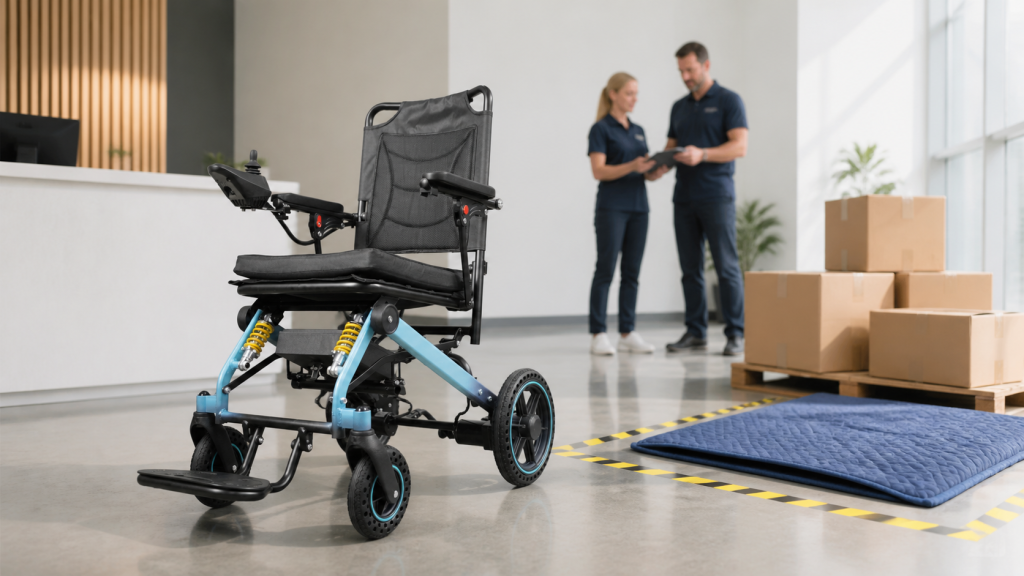
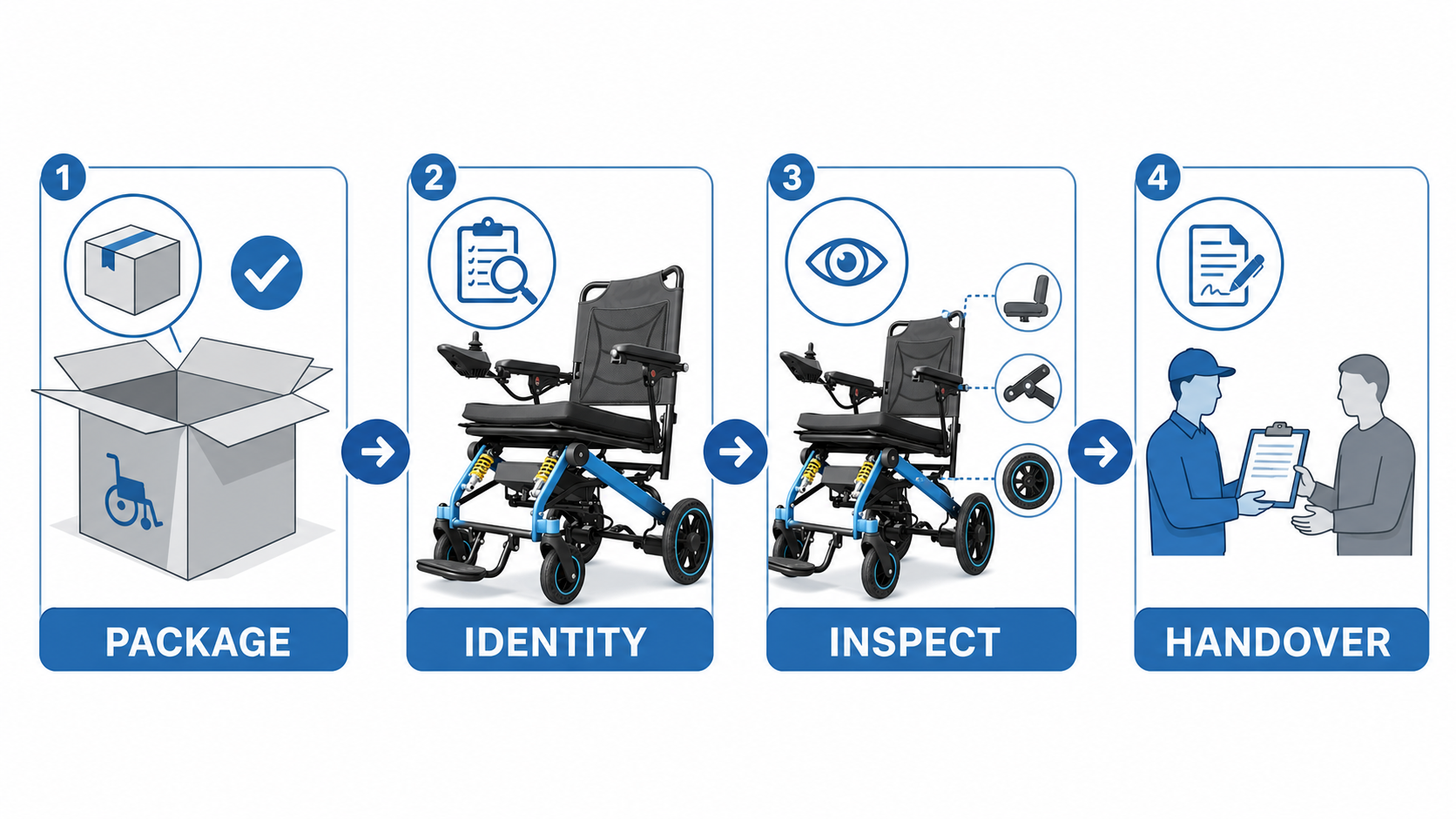
A motorized wheelchair delivery check should preserve evidence from the sealed package through model identification, visible inspection, control review, document matching, and acceptance. Photograph damage before unpacking further. Separate shipping issues from product findings. Keep one traceable receiving record. For U.S. facilities, compare handling procedures with official mobility-device guidance.
A motorized wheelchair delivery is easy to check when receiving staff follow one documented sequence from package condition and model identity to chair inspection, control handover, and acceptance records. A carton that looks intact does not confirm that the quoted configuration arrived, every loose part is present, or the manual matches the chair. Dealers and institutional buyers also need a clear method for recording visible damage without dismantling parts or running an unsupported operating test.
This article gives warehouse, purchasing, training, and service teams a practical receiving workflow. Each step names the package, sample or order identity, reviewer, date, chair setup, and source document. The result keeps discrepancies open until written resolution and prevents a quick unboxing from becoming an unsupported claim about product condition or future operation.
What should teams check before opening the package?
In practice, A motorized wheelchair receiving check should begin with carton identity, count, orientation, seals, visible impact, moisture signs, handling marks, and delivery records.
Move the package to a designated inspection area without hiding its arrival condition. Compare the delivery record with the order and packing list before cutting any seal. The ergonomic wheelchair page offers a product context, while the receiving file must remain tied to the exact package and model ordered.
A useful worksheet separates observed facts, model records, evaluator notes, and open questions. Give every entry a date, source, exact setup, and named reviewer. Run the same check for each candidate and retain any changed setup. This shared record lets procurement, training, warehouse, and service teams discuss the same evidence without turning a short trial into a broad product promise.
How can package condition be recorded fairly?
Next, Photograph before changing the scene:
Capture all carton faces, corners, seals, labels, and any visible concern while protecting private shipping data. Note date, time, carrier reference, package count, and who accepted the delivery. Do not write that internal parts are unaffected until the chair is unpacked and inspected under the planned sequence.
- carton and order identity
- seals, corners, and orientation
- moisture or impact observations
- delivery record and reviewer
Repeat the check under the same conditions and record who took part. If a supplier answer arrives later, attach it to the original question instead of replacing the earlier entry. That history helps when a model, component, manual, sample, or operating plan changes during sourcing. A score should include a short reason and source link rather than a bare number.
Meanwhile, If a package condition conflicts with receiving policy, pause and follow the buyer’s escalation route. Keep the carton and packing materials available until the discrepancy is documented. A clean outer carton is one observation only. It does not replace model, component, and control checks after opening.
Key Takeaway: The arrival record should preserve package condition before staff alter it.
How should model identity be confirmed?
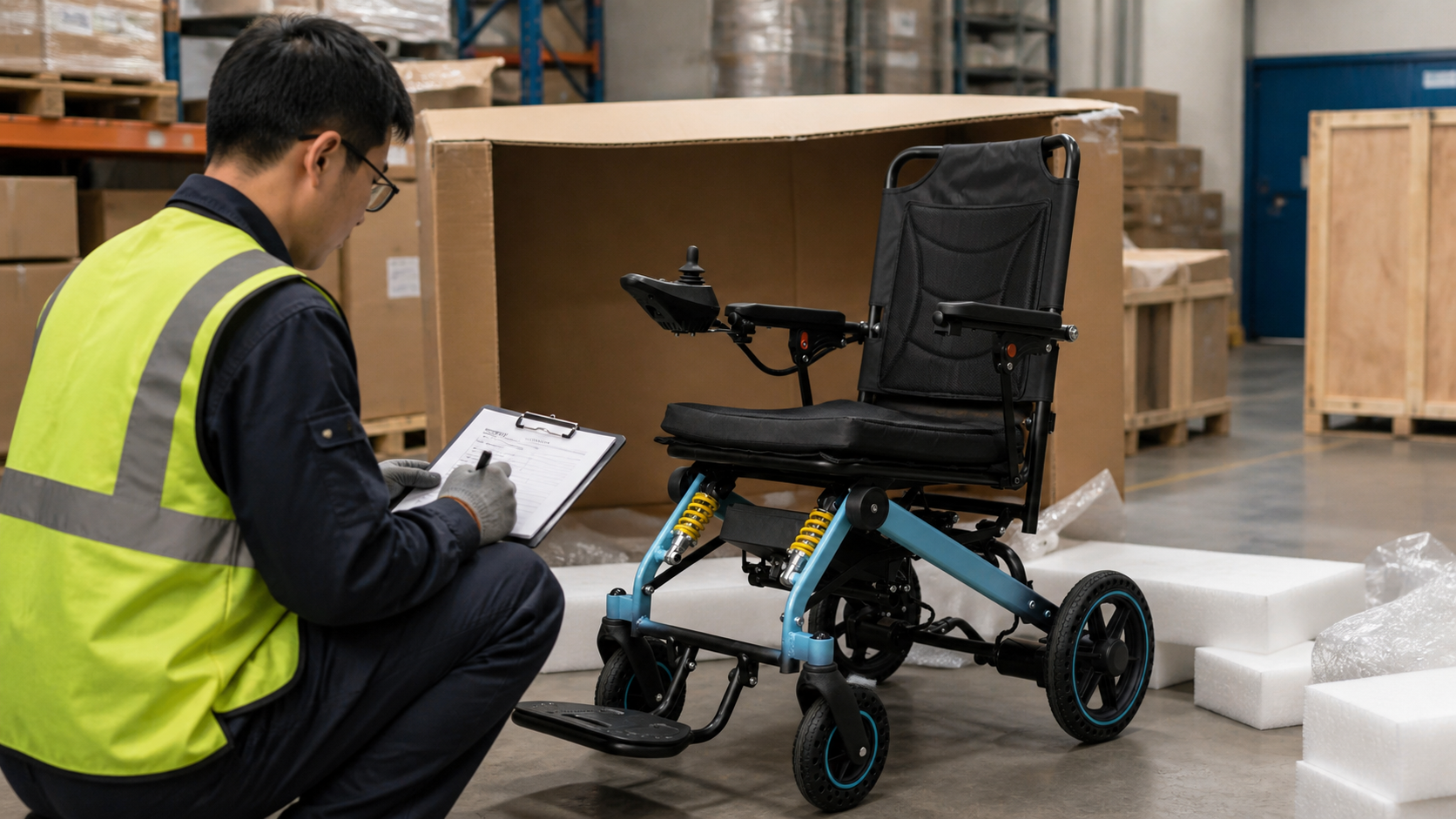
A motorized wheelchair identity check should match the order, carton label, chair label, model name, revision, color or configuration, manual, and supplied component list.
For example, Use two-person confirmation for high-impact fields and keep photos linked to the receiving record. The wheelchair range can help staff recognize the wider chair category, but it does not replace the exact order and revision. Leave a mismatch open until the supplier responds in writing.
A useful worksheet separates observed facts, model records, evaluator notes, and open questions. Give every entry a date, source, exact setup, and named reviewer. Run the same check for each candidate and retain any changed setup. This shared record lets procurement, training, warehouse, and service teams discuss the same evidence without turning a short trial into a broad product promise.
Which identity fields prevent mix-ups?
Match the records in sequence:
Still, Start with the purchase reference and packing list, then compare carton and chair identifiers. Check the manual title, charger or documented accessories, control location, seating configuration, foot supports, and listed loose parts. Do not rely on color alone because finishes and components may appear similar across models.
- purchase and packing reference
- carton and chair identifier
- manual and configuration name
- accessory and loose-part list
Repeat the check under the same conditions and record who took part. If a supplier answer arrives later, attach it to the original question instead of replacing the earlier entry. That history helps when a model, component, manual, sample, or operating plan changes during sourcing. A score should include a short reason and source link rather than a bare number.
Record a clear match, mismatch, or unreadable field rather than guessing. If a label is damaged, photograph it and ask the supplier which other identity method is supported. Do not energize or modify a chair with unresolved identity when buyer policy requires confirmation before the operating check.
Afterward, Key Takeaway: Identity should be confirmed across the order, package, chair, and manual.
Which chair parts need a receiving inspection?
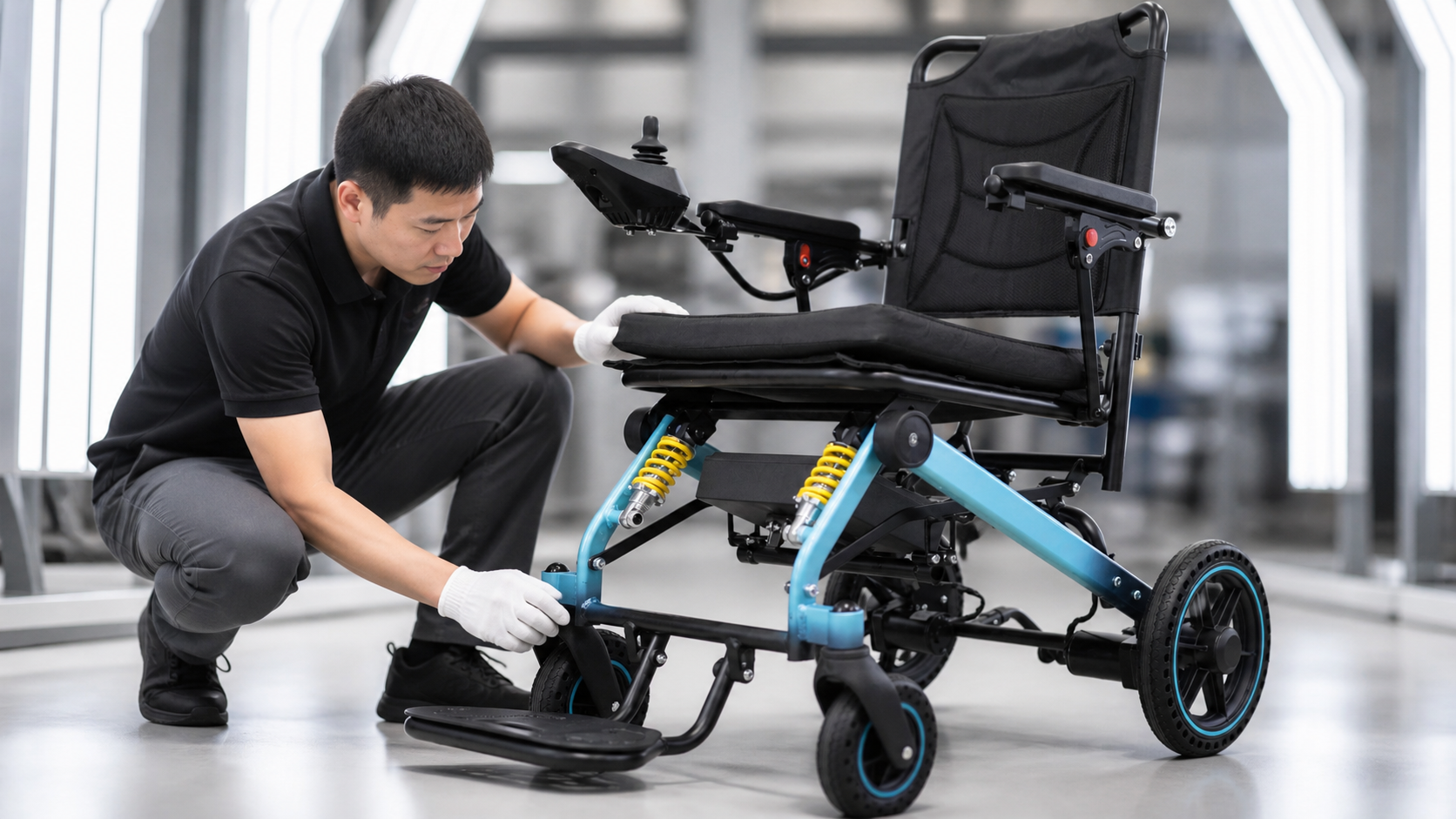
A motorized wheelchair receiving inspection should cover frame finish, visible alignment, upholstery, armrests, foot supports, casters, rear wheels, controls, cables, fasteners, and loose parts.
Place the chair on dry level flooring and remove packing only as documented. Inspect from agreed whole-chair angles before close details. A listed weight may affect handling planning, and the electric wheelchair weight article helps staff ask what parts are included without turning a number into a lifting instruction.
In practice, A useful worksheet separates observed facts, model records, evaluator notes, and open questions. Give every entry a date, source, exact setup, and named reviewer. Run the same check for each candidate and retain any changed setup. This shared record lets procurement, training, warehouse, and service teams discuss the same evidence without turning a short trial into a broad product promise.
How should visible findings be documented?
Inspect without dismantling the chair:
Use good lighting and compare right and left sides where helpful. Record scratches, deformation, loose upholstery, shifted supports, wheel condition, visible fasteners, control mount, cable clearance, and protective films. Do not tighten, bend, connect, or remove parts unless the receiving procedure and trained role permit it.
- frame finish and visible alignment
- seat, armrest, and foot supports
- casters, rear wheels, and tires
- control mount, cables, and fasteners
Next, Repeat the check under the same conditions and record who took part. If a supplier answer arrives later, attach it to the original question instead of replacing the earlier entry. That history helps when a model, component, manual, sample, or operating plan changes during sourcing. A score should include a short reason and source link rather than a bare number.
A photograph should show location and scale without claiming a cause. Link the finding to the package and chair identity. If the supplier requests another view, add it to the same discrepancy record. Keep observation, suspected cause, and requested action in separate fields so later reviewers can follow the evidence.
Key Takeaway: A non-invasive inspection records what arrived without changing the evidence.
How can controls and freewheel steps be handed over?
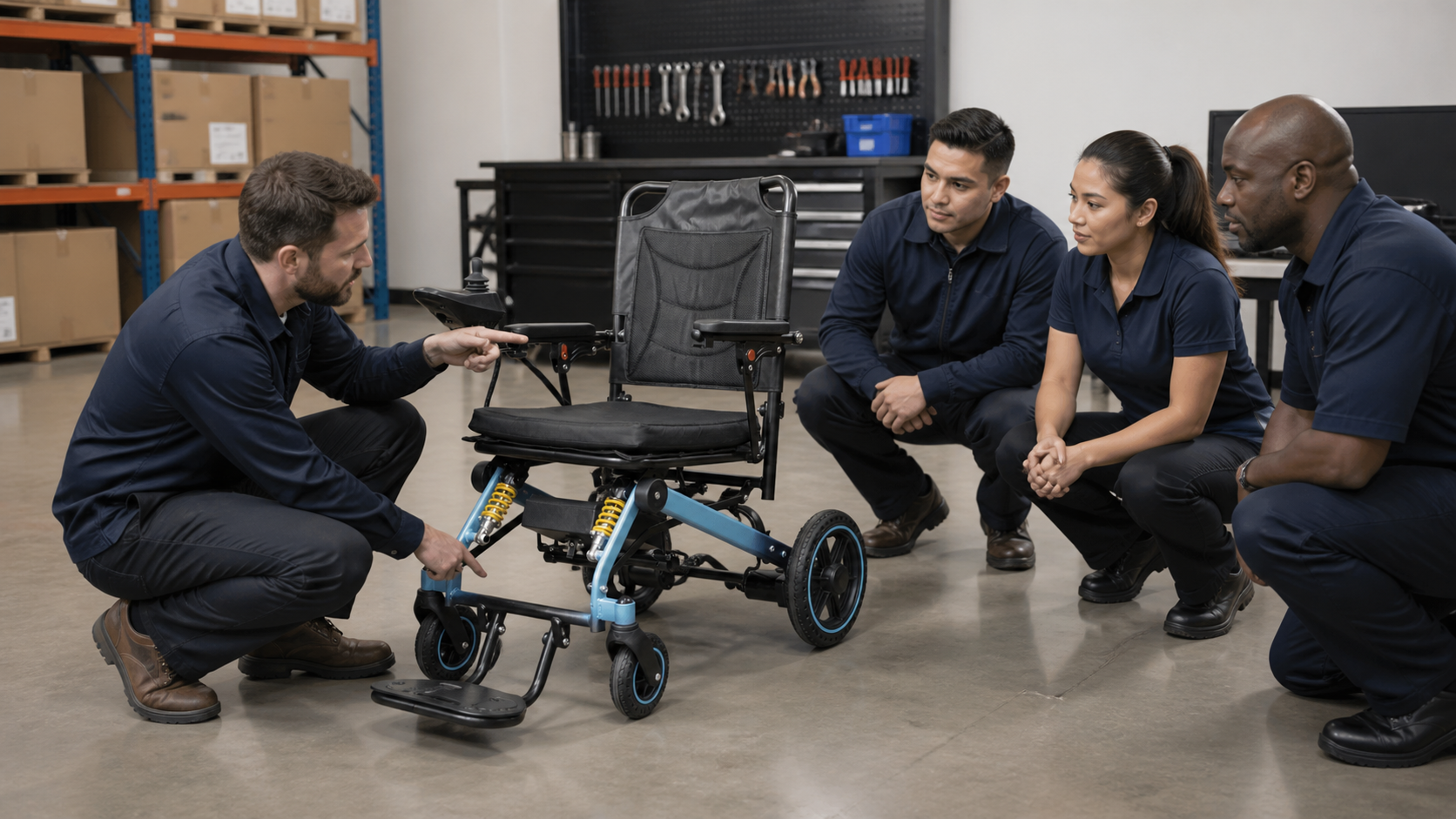
Meanwhile, A motorized wheelchair handover should cover power access, joystick position, neutral return, charging access, freewheel state, manual movement, stop procedure, and fault reporting.
The exact manual controls the sequence. Keep the chair stationary for identification checks, then use a controlled area for any powered test. Name who is trained to operate, assist, charge, move, or report a concern. Receiving staff do not need to perform steps outside their role.
A useful worksheet separates observed facts, model records, evaluator notes, and open questions. Give every entry a date, source, exact setup, and named reviewer. Run the same check for each candidate and retain any changed setup. This shared record lets procurement, training, warehouse, and service teams discuss the same evidence without turning a short trial into a broad product promise.
What belongs in the operating handover?
For example, Teach one action at a time:
Point to each control and state its documented purpose. Demonstrate power-on, power-off, neutral joystick, a low-demand movement permitted by the manual, controlled stop, and the freewheel check. Confirm the chair returns to the operating state named by the manual before sign-off. Record questions that need supplier clarification.
- power and joystick controls
- charging access and power-off state
- freewheel identity and manual movement
- stop signal and issue-report route
Repeat the check under the same conditions and record who took part. If a supplier answer arrives later, attach it to the original question instead of replacing the earlier entry. That history helps when a model, component, manual, sample, or operating plan changes during sourcing. A score should include a short reason and source link rather than a bare number.
Still, Do not treat receiving sign-off as user training for every setting. The handover confirms that named staff can identify and repeat the agreed warehouse or technical steps. Personal use training may require another plan, qualified input, and a route matched to the intended user and environment.
Key Takeaway: The operating handover should match staff roles, the manual, and a controlled check area.
What belongs in the delivery acceptance file?
A motorized wheelchair acceptance file should include package photos, order match, model identity, inspection notes, supplied parts, control handover, discrepancies, owners, and written closure.
Afterward, Keep acceptance separate from unresolved exceptions. The buyer can accept the record while holding a discrepancy open according to its policy. Link every exception to the chair, package, date, reviewer, supplier contact, requested action, and current status.
A useful worksheet separates observed facts, model records, evaluator notes, and open questions. Give every entry a date, source, exact setup, and named reviewer. Run the same check for each candidate and retain any changed setup. This shared record lets procurement, training, warehouse, and service teams discuss the same evidence without turning a short trial into a broad product promise.
How should teams close or hold the delivery?
Use a clear decision field:
In practice, State accepted, accepted with an open item, held for review, or another term defined by buyer policy. Give the reason and evidence link. Retain packing materials when required. Buyers can contact us today with their order identity, package photos, discrepancy list, and document questions ready for a focused supplier review.
- package and model evidence
- inspection and supplied-part record
- control handover and staff sign-off
- exception owner and written closure
Repeat the check under the same conditions and record who took part. If a supplier answer arrives later, attach it to the original question instead of replacing the earlier entry. That history helps when a model, component, manual, sample, or operating plan changes during sourcing. A score should include a short reason and source link rather than a bare number.
Do not erase an exception after it is resolved. Add the supplier response, corrective record, replacement reference, or internal decision beneath the original finding. This timeline helps purchasing, warehouse, training, and service teams understand what arrived and how the issue moved to closure.
Next, Key Takeaway: The acceptance file should preserve both the delivery decision and every open item behind it.
What do buyers ask about this mobility product?
The motorized wheelchair questions buyers ask most often concern setup, permitted use, controlled checks, records, and supplier support.
Can I accept a chair because the carton looks clean?
Meanwhile, No. Outer condition is one check; model identity, supplied parts, visible chair condition, controls, manual, and open discrepancies also need review.
What’s the best time to photograph a delivery?
Photograph the package before opening, the unpacking sequence, whole chair, key details, and any discrepancy while keeping each image linked to the order.
For example, How do I know if the correct model arrived?
Match purchase, packing, carton, chair, revision, configuration, manual, and supplied-part records; hold any mismatch for written confirmation.
Can receiving staff tighten a loose part?
Still, Only if the buyer’s procedure, manual, and trained role permit it. Preserve the original observation before any approved action.
What should remain open after acceptance?
Any unresolved identity, condition, part, document, control, packing, or supplier-response field should keep an owner, status, and evidence link.
Related planning resources: Review fleet management records, suspension inspection, joystick handover before approving a product, sample, route, or supplier decision.