
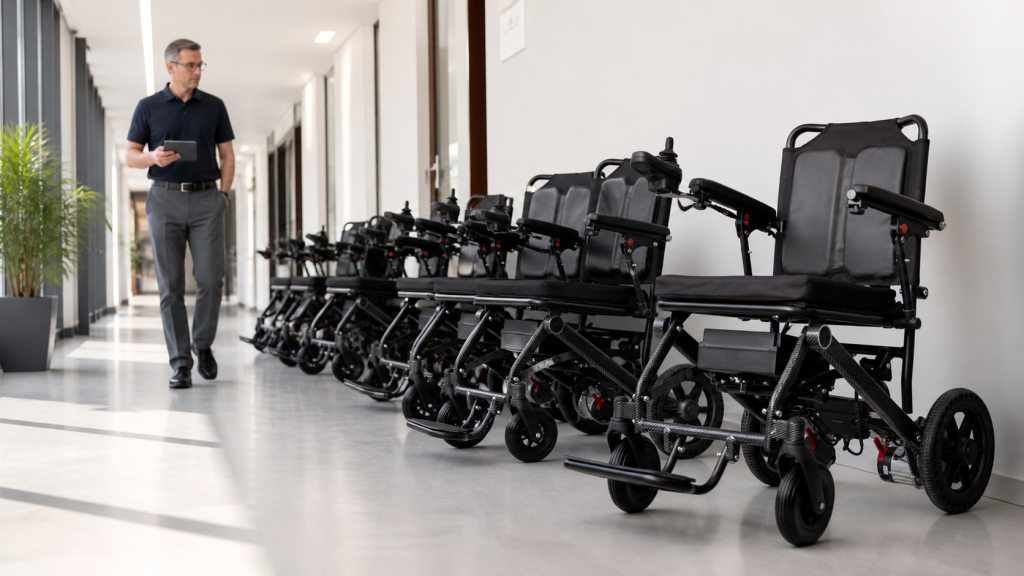
An electric wheelchair fleet needs one traceable record for asset identity, receiving, assigned configuration, user handover, charging, storage, routine checks, faults, and service history. Give each task an owner. Keep parts tied to the correct model. Review open issues before another handoff. For U.S. facilities, align local procedures with official mobility-device guidance.
Also, An electric wheelchair fleet becomes easier to manage when every chair has a verified identity, receiving baseline, assigned location, handover record, routine-check schedule, and service history that points back to one accountable owner. Fleets often become confusing through small gaps rather than one major failure: a chair moves rooms without a record, a controller changes, a charger loses its asset link, or a service note never reaches operations.
A strong B2B fleet method keeps purchasing, facilities, training, and service teams on the same record. It does not promise user outcomes or treat powered-on status as proof that a chair is ready. Instead, teams follow current product instructions, local policy, qualified guidance, and observable evidence. This article outlines a practical structure for facilities, rental providers, distributors, and mobility programs that manage more than one electric wheelchair.
What should an electric wheelchair fleet identity record contain?
In practice, An electric wheelchair fleet identity record should contain asset code, model, revision, approved configuration, controller, battery and charger relationship, location, document set, and current status. Fleet work breaks down when staff identify a chair only by color or room. Similar units may carry different options, revisions, service actions, or instructions. Give each chair one durable identity that follows it across receiving, storage, handover, checks, transfer, and service.
Create one record for each configured chair
Start with the asset, not the spreadsheet total:
However, Build a profile from the delivered unit and current source documents. Photograph useful angles, identity labels, controller position, battery enclosure, charger identity, seat and backrest format, foot supports, and supplied items. Keep personal user data outside this equipment file unless an authorized policy defines otherwise.
- asset code, model, revision, and approved option set
- controller, battery enclosure, charger, and supplied accessories
- assigned site, storage bay, status, and accountable team
- instruction revision, service owner, and open concern
Next, Use clear status terms such as receiving review, ready under local process, assigned, held for review, in service, or retired from active rotation. Define those terms internally. A status label should show workflow state without making medical or performance claims.
For example, Key Takeaway: Fleet control begins with a chair-level identity that survives movement and staff changes.
How should receiving establish a fleet baseline?
Electric wheelchair fleet receiving should establish a baseline by comparing each arrived chair with the approved configuration, visible condition, supplied items, and current documents before assignment. Purchase records may describe a product family while operations receive a configured unit. The baseline closes that gap and gives later checks a reliable reference.
Compare the arrived chair with approved evidence
Meanwhile, This is the moment to capture facts:
Record packaging condition, chair identity, frame and seating parts, controller position, wheel arrangement, foot supports, battery enclosure, charger identity, accessories, labels, and document revision. Use the motorized wheelchair receiving guide for related process ideas while keeping this chair’s current instructions and purchase file in control.
- purchase configuration and approved sample evidence
- visible condition, supplied items, and source match
- difference category, hold status, and decision owner
- baseline photographs, closure note, and release authority
Instead, Separate transport damage, missing items, configuration differences, and document gaps. Each needs a distinct response. Do not silently move a substitute into the fleet because it appears similar. A controller, battery, charger, armrest, or instruction change can affect training, storage, checks, and service.
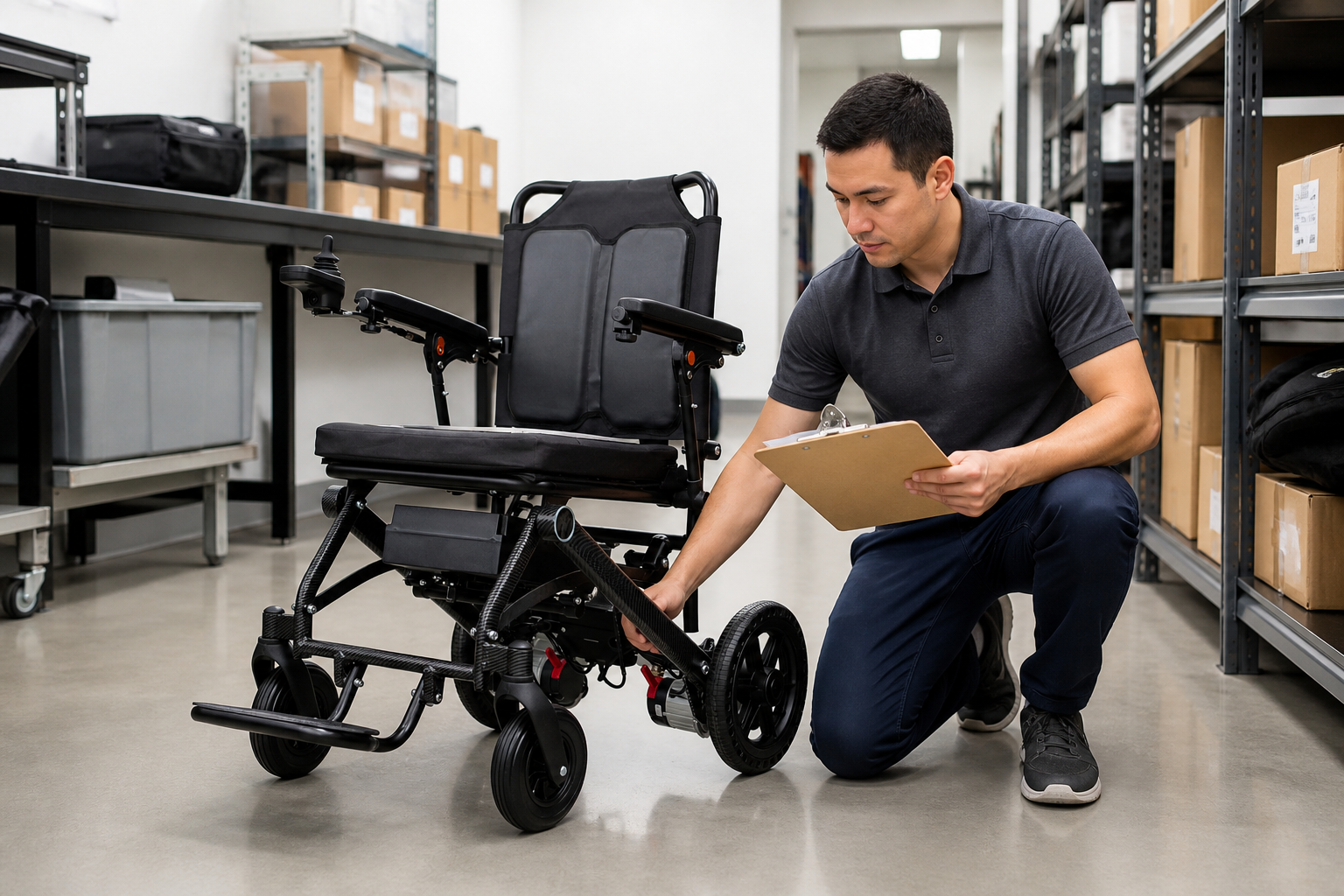
For example, Receiving creates the visual and document baseline used throughout the chair’s fleet life.
Also, Key Takeaway: A clean receiving baseline connects the purchase decision with the exact chair that joins the fleet.
How should fleet storage and charging be controlled?
Electric wheelchair fleet storage and charging should be controlled through assigned bays, chair-to-charger identity, clear access, current instructions, cable management, and recorded exceptions. Equipment rooms can become crowded when chairs return at different times or move between teams. A visible bay plan helps staff place each unit consistently and report missing or mismatched items.
Give every chair an assigned storage state
Still, The room should make correct work easier:
Mark bays with asset identities that staff can read without exposing personal data. Keep access routes clear under local facility rules. Link each charger with the chair or approved configuration it serves, following current supplier guidance. Record who may connect, disconnect, inspect, or escalate charging concerns.
- assigned bay, site, and return location
- chair, charger, and approved accessory relationship
- cable route, access boundary, and visual check scope
- missing item, unexpected cue, hold rule, and owner
However, Do not create generic charging times or storage limits from memory. Use the current chair and battery sources. If documents conflict or a label cannot be matched, place the unit in the defined review state and send the question to the assigned owner.
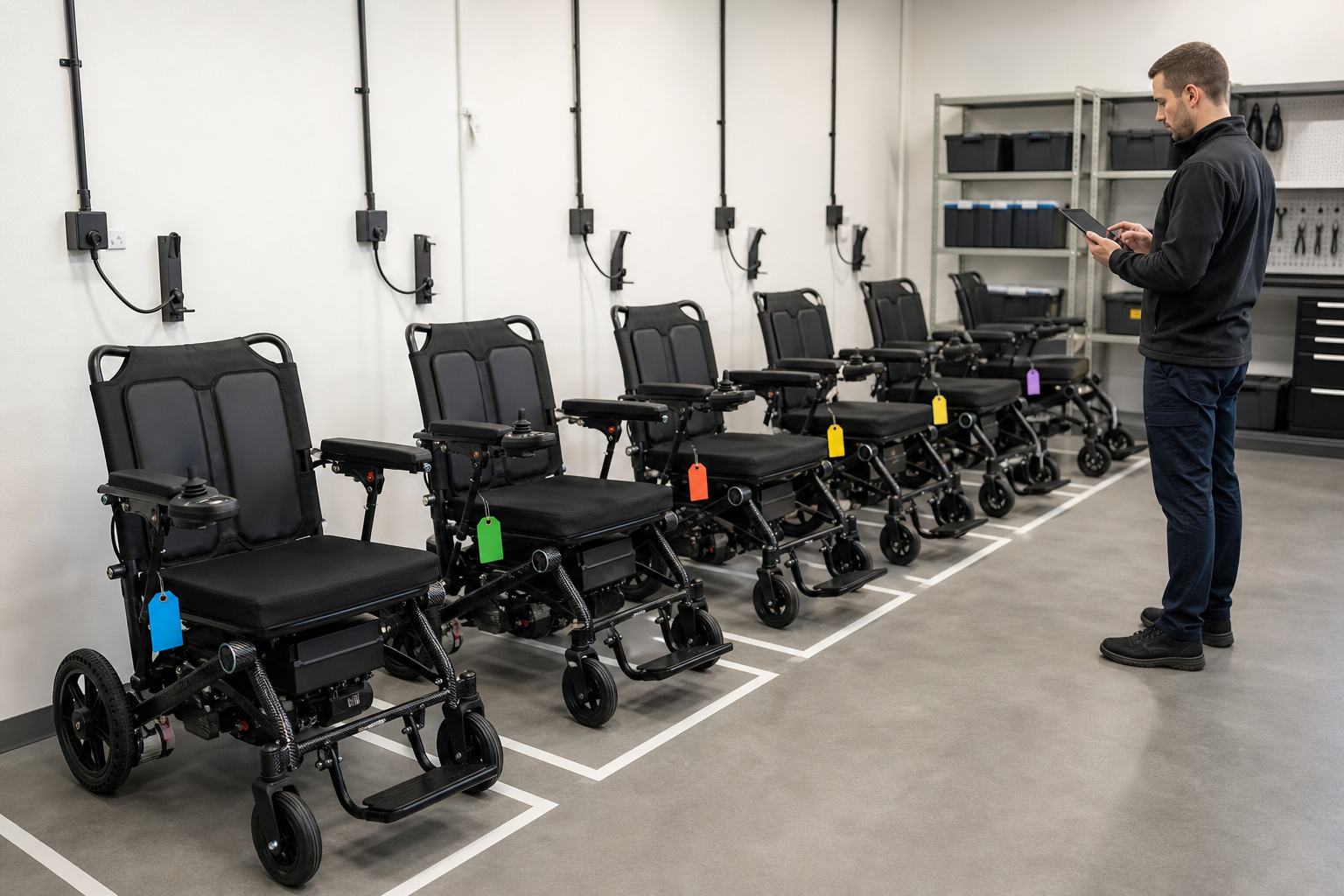
Afterward, Assigned bays and charger identity reduce avoidable mix-ups across shifts and locations.
For example, Key Takeaway: Storage control links location, access, charger identity, and issue routing for each chair.
What makes electric wheelchair fleet handover repeatable?
Electric wheelchair fleet handover becomes repeatable when staff use the same chair identity, current instruction, observable checkpoints, stop rules, and issue route for every assigned transfer. A quick verbal demonstration can fade after a shift change. A chair-level handover record shows what staff saw, what they practiced under qualified guidance, what remained open, and who owns follow-up.
Teach a fixed sequence with clear boundaries
In practice, The useful sequence stays chair specific:
Begin with asset identity and status. Continue with controller location, permitted power cues, footrest position, visible condition, approved charger relationship, shutdown, parking, storage, and concern reporting. The electric mobility chair training article offers related record ideas, but it cannot replace current model guidance or local authority.
- asset identity, current status, and source revision
- controller, seating parts, foot supports, and approved accessories
- permitted demonstration, shutdown, parking, and storage
- stop reason, concern route, follow-up owner, and repeat point
Instead, Record participation separately from competence or authorization. A person attending a session does not create a broad approval for every chair. Repeat affected checkpoints after a configuration, instruction, service, or assignment change.
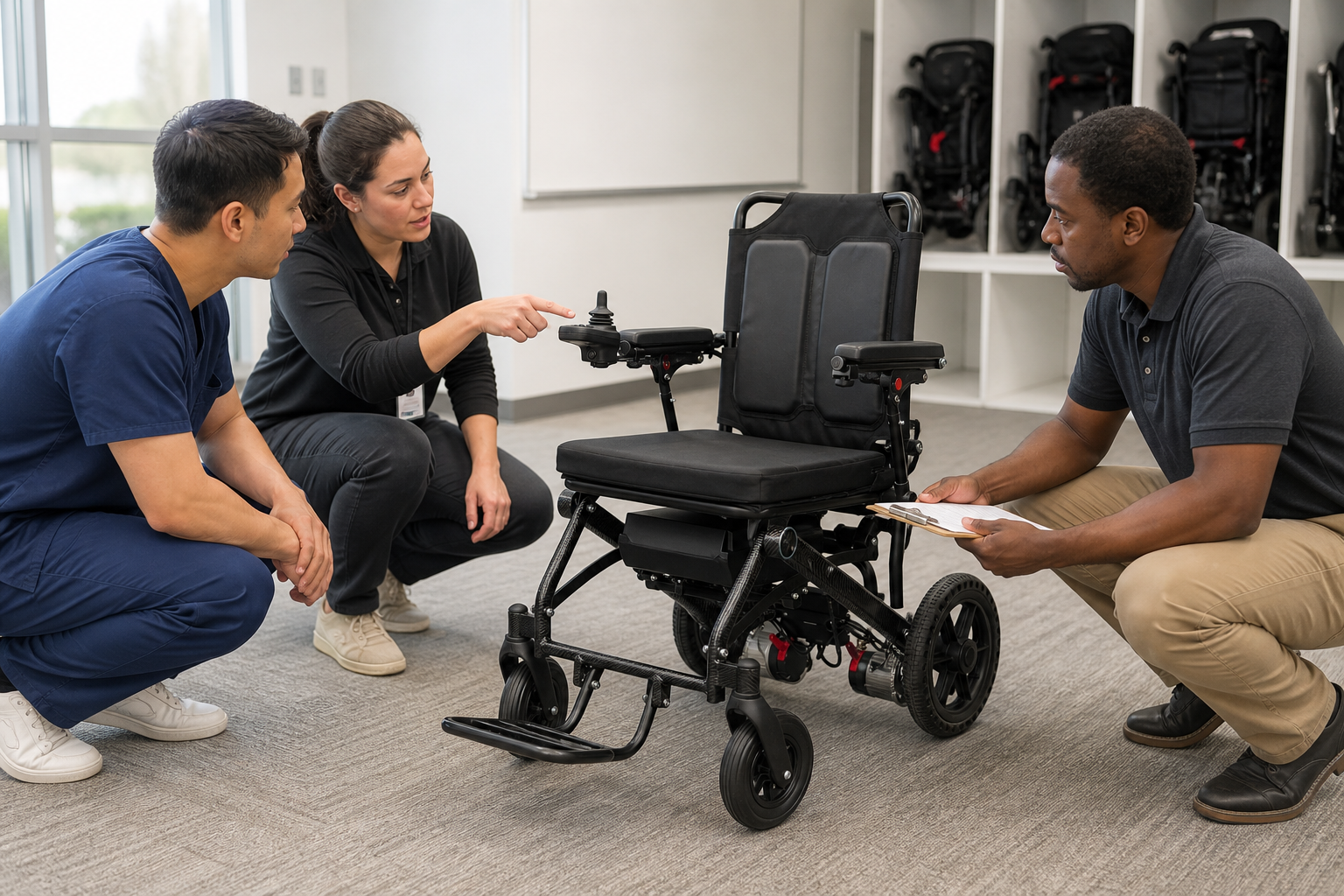
Next, A repeatable handover ties observable actions to one configured chair and one current source set.
Also, Key Takeaway: Handover works when identity, instruction, roles, and issue routing stay together.
Which routine checks belong in fleet operations?
Electric wheelchair fleet routine checks should cover asset identity, visible condition, controller housing, cable clearance, seating parts, foot supports, wheel context, approved accessories, and current status without drifting into unassigned service work. Teams need a short routine that catches observable differences and routes them to the right owner. They should not open protected assemblies or make unfamiliar adjustments.
Keep routine observation separate from repair
Meanwhile, Here is the boundary that protects the record:
List what assigned staff may view, what they may operate under current instructions, and which observations place a chair into review. Write neutral notes such as “left foot support differs from baseline” or “controller cable touches moving joint.” Avoid diagnosis and outcome claims.
- asset and configuration identity before each check
- housing, upholstery, supports, wheels, cables, and accessories
- permitted power cue, shutdown, and storage observation
- hold status, service route, owner, and closure record
However, Use baseline photographs during comparison. If a chair returns from another site, after an incident covered by policy, or following service, repeat the fields affected by that event. Keep the check short enough that teams use it and detailed enough that another colleague understands the concern.
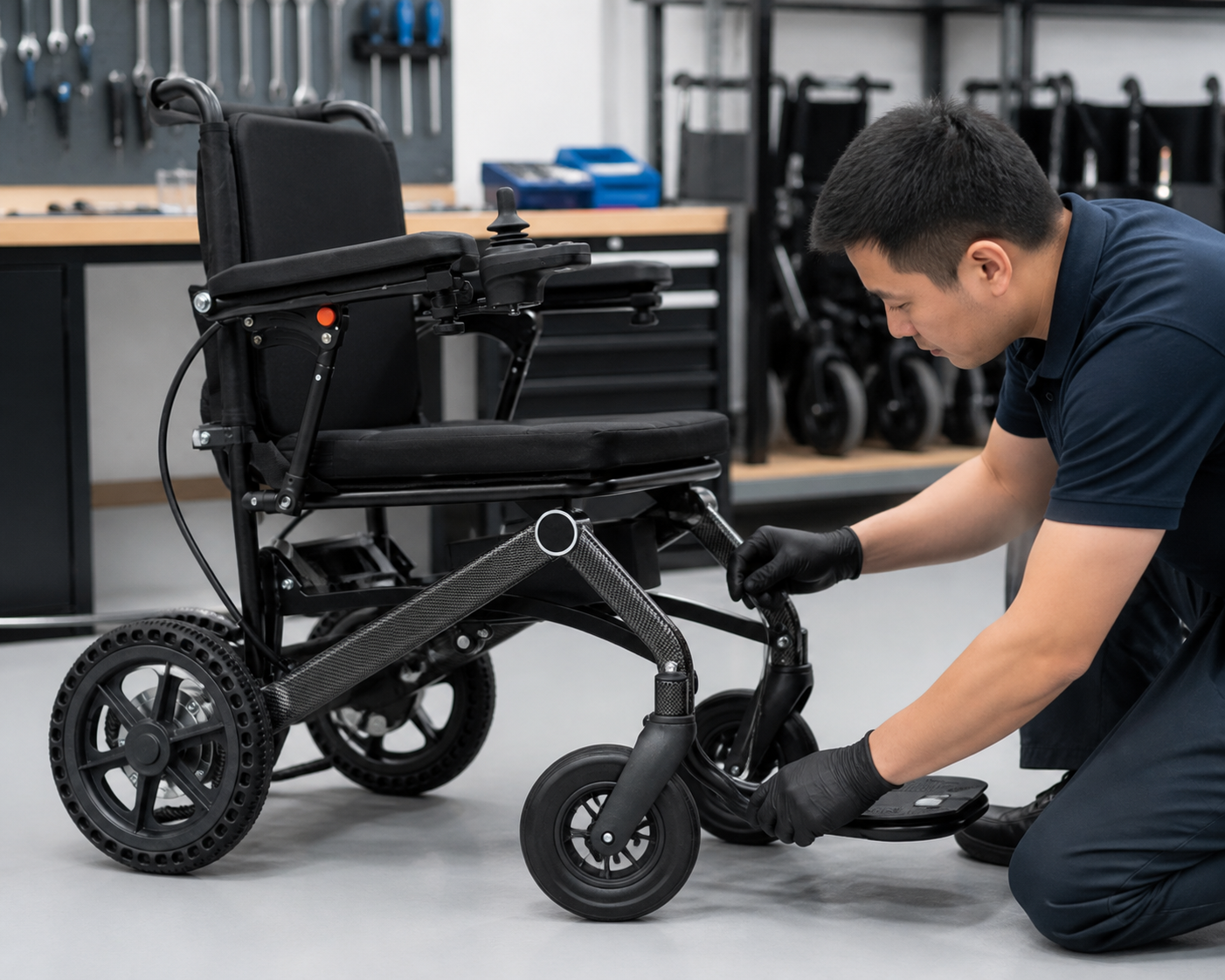
For example, Routine checks should capture visible differences while keeping repairs inside assigned service roles.
For example, Key Takeaway: Routine checks support early reporting without turning operations staff into unassigned technicians.
How should service records return a chair to fleet use?
Electric wheelchair fleet service records should return a chair through identified work scope, authorized action, post-service configuration, updated sources, repeated checkpoints, and named release authority. “Fixed” is too vague for a shared fleet. Operations needs to know which chair changed, what system was affected, whether parts or settings differ, and which handover or storage records need revision.
Close service work with an operations-ready record
Still, The handback matters as much as the repair:
Ask service teams to state asset identity, reported concern, authorized work, replaced assembly, returned configuration, source revision, and any restrictions or open items. Repeat visible checks and affected handover checkpoints before release under local process.
- asset code, concern date, and service owner
- authorized work, part identity, and returned configuration
- affected instruction, training, storage, or charger record
- post-service check, open item, and release authority
Instead, Preserve earlier records. A revision history helps teams see recurring concerns and configuration changes without overwriting the decision trail. Keep service notes factual and avoid turning one repair into a claim about the model family.
Afterward, Key Takeaway: Service closure should return a documented configuration, not only a powered-on chair.
How can teams review fleet patterns without inventing claims?
Also, Electric wheelchair fleet teams can review patterns by counting events from their own controlled records, checking data definitions, and separating observations from conclusions. A fleet dashboard may show holds, service visits, missing accessories, transfer frequency, or training repeats, but the numbers only make sense when every site records those events through the same rules.
Build a review cycle from traceable records
The useful question is simple:
In practice, Can another manager trace each summary back to chair-level records? Define every field, date range, status, and owner before comparing locations or models. Note missing data and policy changes. Do not present internal patterns as universal product performance.
- chair count and status under one defined date point
- recorded holds, service events, transfers, and open actions
- missing fields, changed definitions, and data owner
- action decision, accountable team, and next review date
Use patterns to improve process: clarify a handover step, fix asset labels, request a supplier source, adjust storage layout, or reopen a receiving check. The ergonomic electric wheelchair page may help teams frame product questions, while fleet records should remain tied to exact configured chairs.
However, Record the reason for every process change and name the chairs or sites it affects. A revised checklist should not quietly replace an earlier rule without a date, owner, and communication step. Repeat relevant staff briefings when wording, status definitions, or escalation routes change.
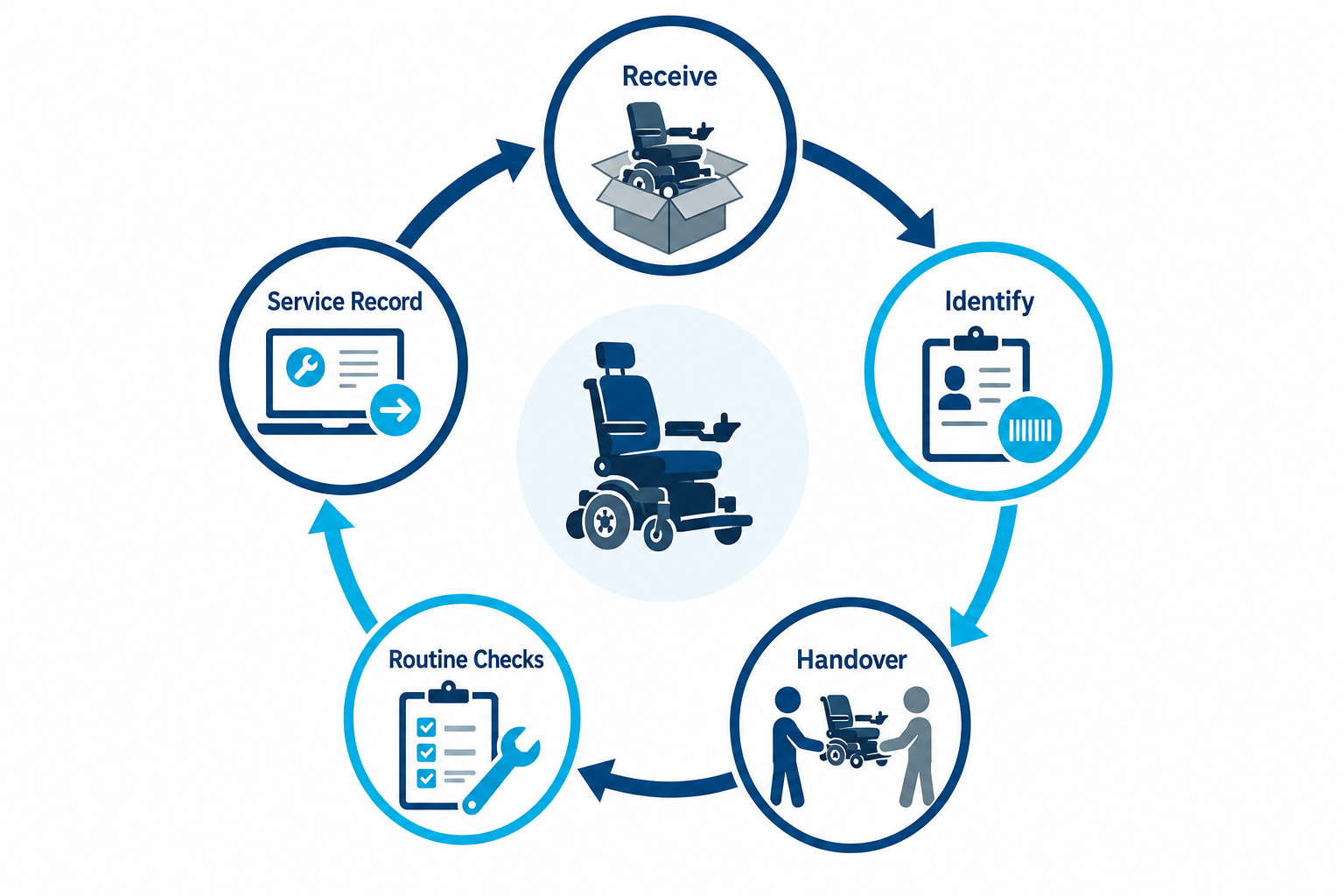
How Can Staff Keep Fleet Records Clear?
Next, The lifecycle returns service records to receiving, identity, handover, and routine operations.
For example, Hold a short cross-team review with purchasing, facilities, training, and service. Close outdated tasks and keep unresolved questions visible. If your program needs a chair-level fleet record or model-specific source discussion, contact us today.
Review movement between locations as carefully as movement into service. A transfer record should identify chair, departure site, receiving site, accessories, charger, current status, open concerns, and people responsible at both ends. The receiving location can then repeat affected identity, storage, and handover checks before assignment.
Meanwhile, This small control prevents an accurate history from becoming separated from its chair during a busy relocation. It also helps purchasing and facilities distinguish a true equipment shortage from a unit that has simply moved without a completed record. When a chair returns, close the transfer with time, condition, supplied items, and any follow-up action.
Key Takeaway: Traceable fleet records support practical process changes without unsupported performance claims.
What FAQs do teams ask about an electric wheelchair fleet?
Instead, An electric wheelchair fleet FAQ should clarify asset identity, charger control, handover, routine checks, and return-to-use records without replacing current instructions.
For example, Can I manage identical chairs under one shared asset record?
Also, No. Each chair needs its own identity and history even when models match. Service actions, locations, configurations, and open issues can differ.
What’s the best way to stop charger mix-ups?
Still, Link approved chargers with chair identities or exact configurations, mark storage bays clearly, follow current sources, and route unclear matches into review.
How do I know if a chair should leave active rotation?
However, Follow local policy and current product guidance. A visible difference, missing source, unexpected cue, unmatched charger, or unresolved service concern may trigger the defined hold state.
Afterward, Can one staff handover cover every fleet model?
For example, No. Shared process language helps, yet model and configuration checkpoints must stay chair specific.
What should a service handback include?
In practice, It should identify the asset, concern, authorized work, returned configuration, affected records, repeated checks, open items, and release owner.
Related planning resources: Review joystick handover, suspension inspection, adult wheelchair fit before approving a product, sample, route, or supplier decision.