
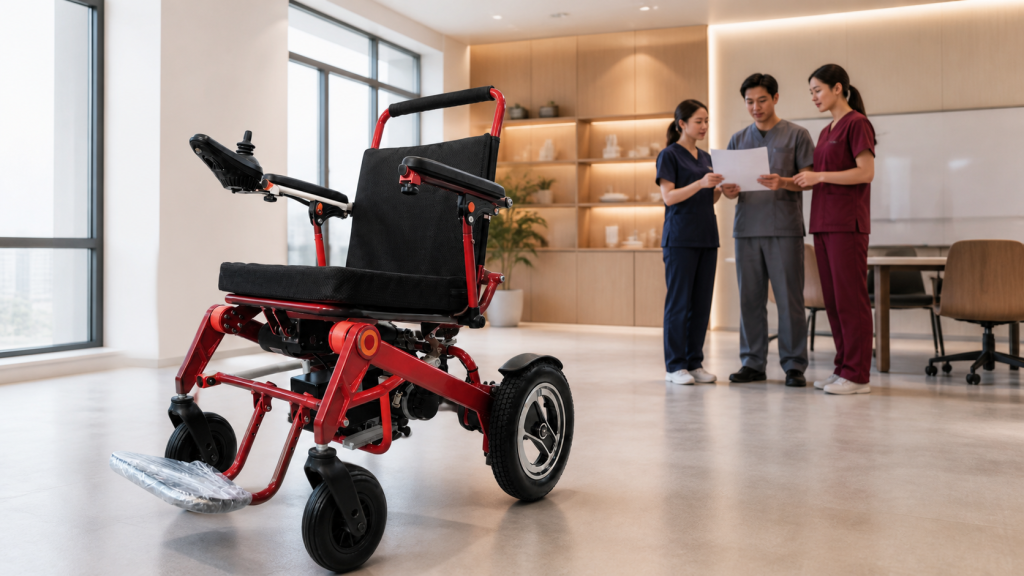
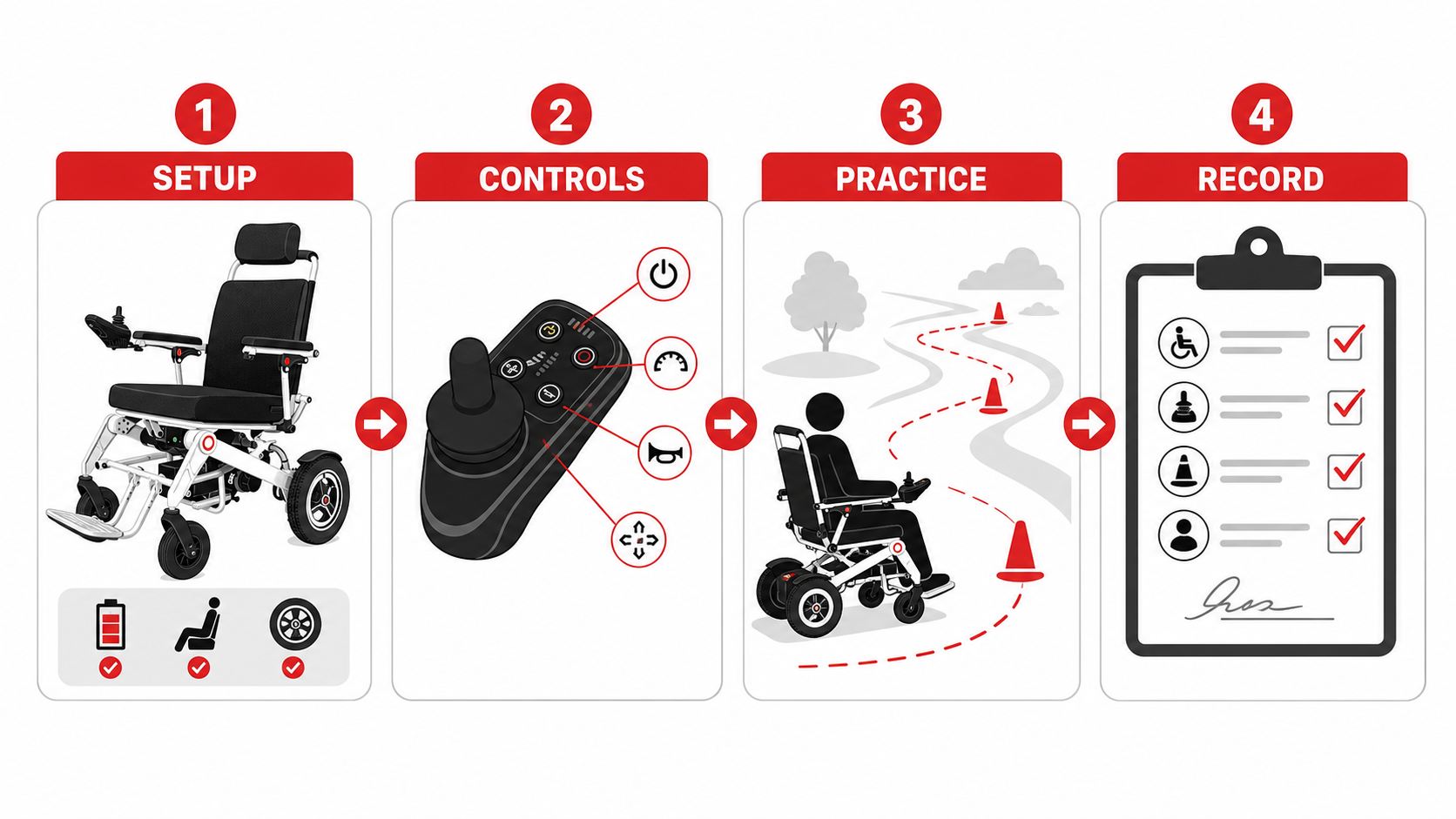
An electric mobility chair training plan should cover the exact setup, controls, stopping actions, seating supports, charging routine, attendant tasks, and supervised practice. Use the supplied instructions. Train with the approved configuration. Record who completed each handoff. For U.S. facilities, align site procedures with official mobility-device guidance.
An electric mobility chair is easy to train on when every lesson follows the same setup, control names, stop actions, supervised practice route, and sign-off record. A quick demonstration may show how a joystick moves, yet staff also need to identify power states, seating supports, foot placement, cable clearance, freewheel status, charging access, and the boundary of their role. Institutional buyers need training that a new staff member can repeat from the manual without relying on one person’s memory.
This article presents a practical B2B training plan for dealers, care organizations, community programs, and service teams. It keeps personal mobility decisions with the appropriate qualified people and avoids medical promises. Each module names the chair configuration, learner, trainer, document source, observed practice, and open question.
Which setup belongs in the training plan?
In practice, An electric mobility chair training plan should begin with model identity, chair configuration, seat and support positions, controller side, power state, freewheel state, and planned route.
Record the exact sample and manual version before the lesson begins. Note whether a headrest, cushion, foot support, attendant control, or other documented option is fitted. The wide-seat wheelchair page provides another seating context while the lesson stays tied to the chair in the room.
A useful worksheet separates observed facts, model records, evaluator notes, and open questions. Give every entry a date, source, exact setup, and named reviewer. Run the same check for each candidate and retain any changed setup. This shared record lets procurement, training, warehouse, and service teams discuss the same evidence without turning a short trial into a broad product promise.
How should trainers prepare the chair and room?
Next, Set a calm starting condition:
Use dry level flooring, remove unrelated obstacles, mark the practice boundary, and state the stop signal. With power off, identify user-contact parts, controller position, visible cable route, charging access, and permitted adjustment points. Confirm the learner knows who may change the setup and where an unclear step should be reported.
- model and manual identity
- seat, headrest, and foot support
- controller and cable position
- power, freewheel, and route state
Repeat the check under the same conditions and record who took part. If a supplier answer arrives later, attach it to the original question instead of replacing the earlier entry. That history helps when a model, component, manual, sample, or operating plan changes during sourcing. A score should include a short reason and source link rather than a bare number.
Meanwhile, Do not let one lesson combine several undocumented configurations. If the controller side, cushion, foot support, or attendant option changes, start a new setup row. This keeps later practice notes attached to the condition the learner actually used. A trainer should pause any step that conflicts with the manual.
Key Takeaway: A named chair setup and controlled room give every lesson a reliable starting point.
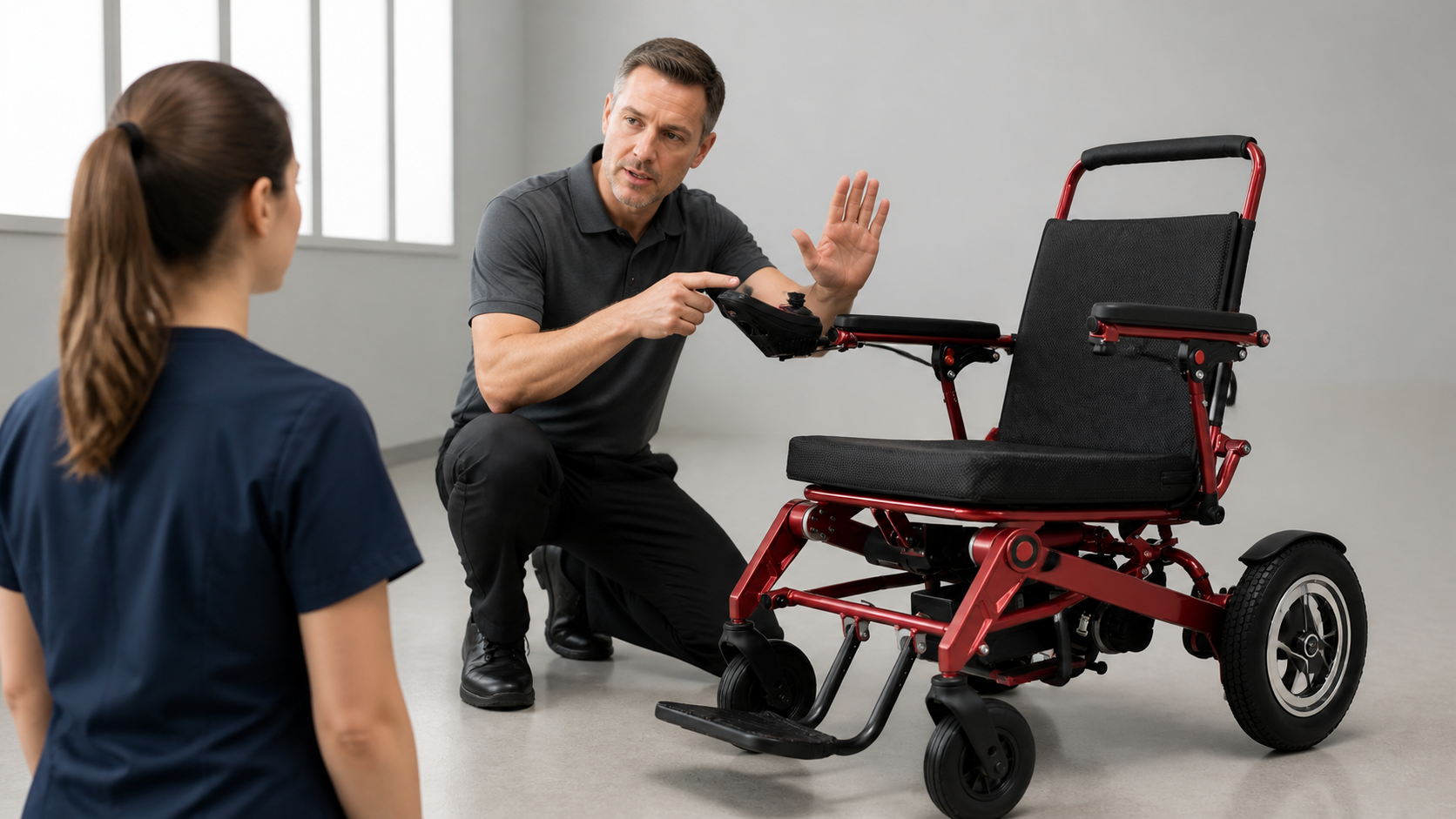
How should joystick and stop actions be taught?
An electric mobility chair control lesson should teach power-on, power-off, neutral joystick, low-demand movement, controlled stop, emergency communication, and fault reporting in separate steps.
For example, Start stationary and name each control without assuming the icons are familiar. Use the wheelchair range to place the chair within a wider product range, then return to the exact manual for button, indicator, and operating meanings. Keep the trainer close enough to use the agreed stop plan.
A useful worksheet separates observed facts, model records, evaluator notes, and open questions. Give every entry a date, source, exact setup, and named reviewer. Run the same check for each candidate and retain any changed setup. This shared record lets procurement, training, warehouse, and service teams discuss the same evidence without turning a short trial into a broad product promise.
What makes control practice repeatable?
Teach one cue and one response:
Still, Ask the learner to point to the power control, show the neutral joystick position, state the stop signal, and describe what to do if an indicator or chair response is unclear. Practice straight movement and a controlled stop only in the marked area and at the documented training setting.
- power-on and power-off sequence
- neutral joystick and hand position
- straight movement and controlled stop
- unclear response and report route
Repeat the check under the same conditions and record who took part. If a supplier answer arrives later, attach it to the original question instead of replacing the earlier entry. That history helps when a model, component, manual, sample, or operating plan changes during sourcing. A score should include a short reason and source link rather than a bare number.
Use observation language instead of broad labels such as easy or safe. Record whether the learner followed the sequence, needed a cue, or stopped the exercise. Repeat only after the learner and trainer agree that the next attempt is appropriate. Personal operation may require a separate user-specific plan.
Afterward, Key Takeaway: Control training is clearer when each action has a named cue, response, and stop route.
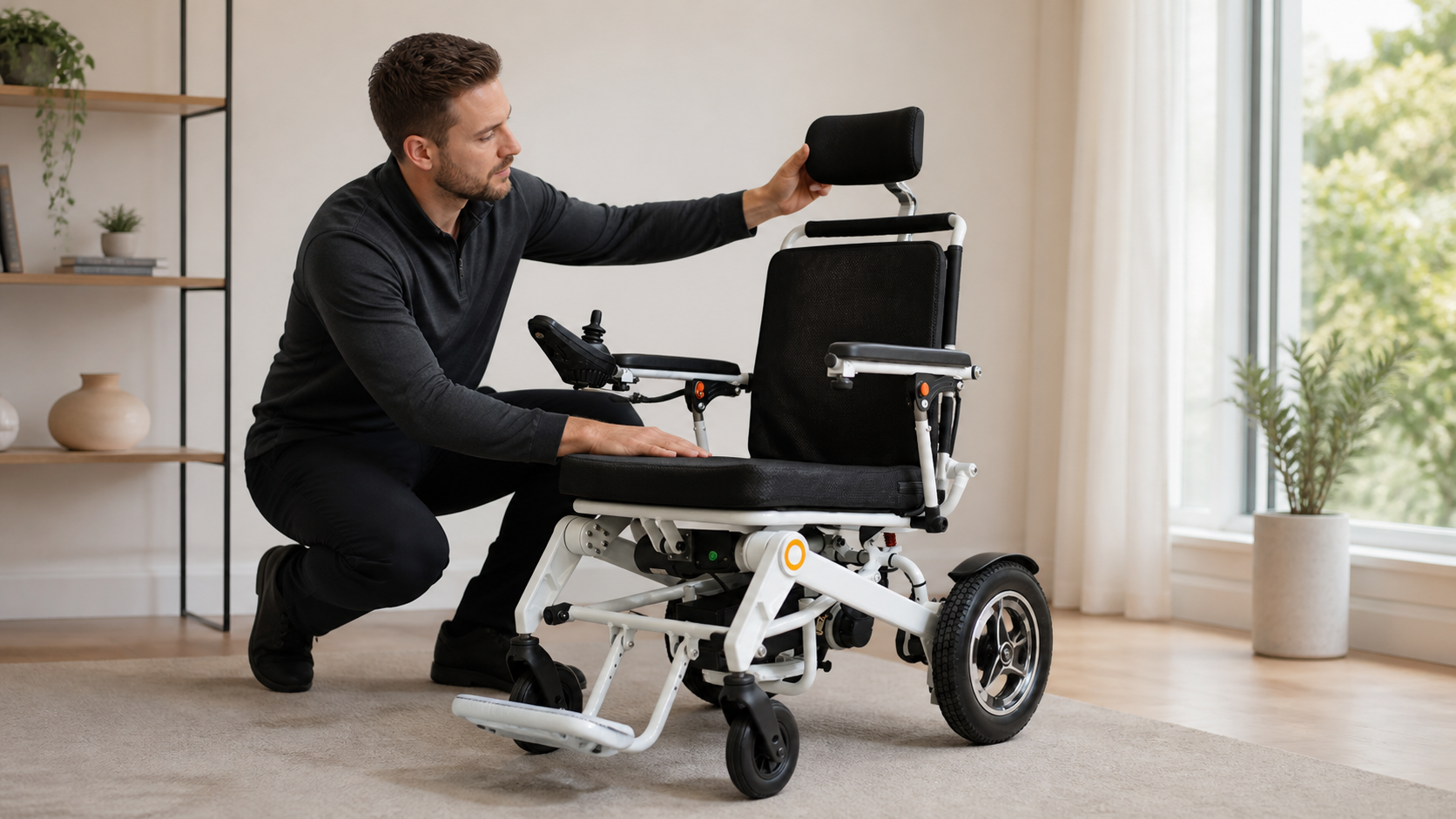
What should staff learn about seating and supports?
An electric mobility chair seating lesson should cover cushion placement, back and head support, armrest access, foot support, controller reach, transfer boundaries, and approved adjustment records.
Staff should learn what they are allowed to observe, adjust, or report. The travel use article at travel and daily mobility article can prompt route and comfort questions, but model-specific setup and personal fit may call for qualified input. Training should never turn an observation into a clinical claim.
In practice, A useful worksheet separates observed facts, model records, evaluator notes, and open questions. Give every entry a date, source, exact setup, and named reviewer. Run the same check for each candidate and retain any changed setup. This shared record lets procurement, training, warehouse, and service teams discuss the same evidence without turning a short trial into a broad product promise.
How can a stationary fit check be documented?
Look at contact points in order:
With power off, verify the cushion and back support are seated as documented, the head support is in its approved position, armrests and foot supports are secure, and the controller remains reachable without visible strain. Record the configuration and any help used during entry, exit, or repositioning.
- cushion and back support
- headrest and armrest position
- foot support and leg space
- controller reach and transfer boundary
Next, Repeat the check under the same conditions and record who took part. If a supplier answer arrives later, attach it to the original question instead of replacing the earlier entry. That history helps when a model, component, manual, sample, or operating plan changes during sourcing. A score should include a short reason and source link rather than a bare number.
Staff should not create new adjustments during routine handover unless their role and the product instructions permit it. If a setup does not match the record, stop and ask the responsible person. Photograph adjustment positions only when privacy and organizational policy allow it, and keep images in the controlled training file.
Key Takeaway: Seating training should define what staff observe, what they may change, and what they report.
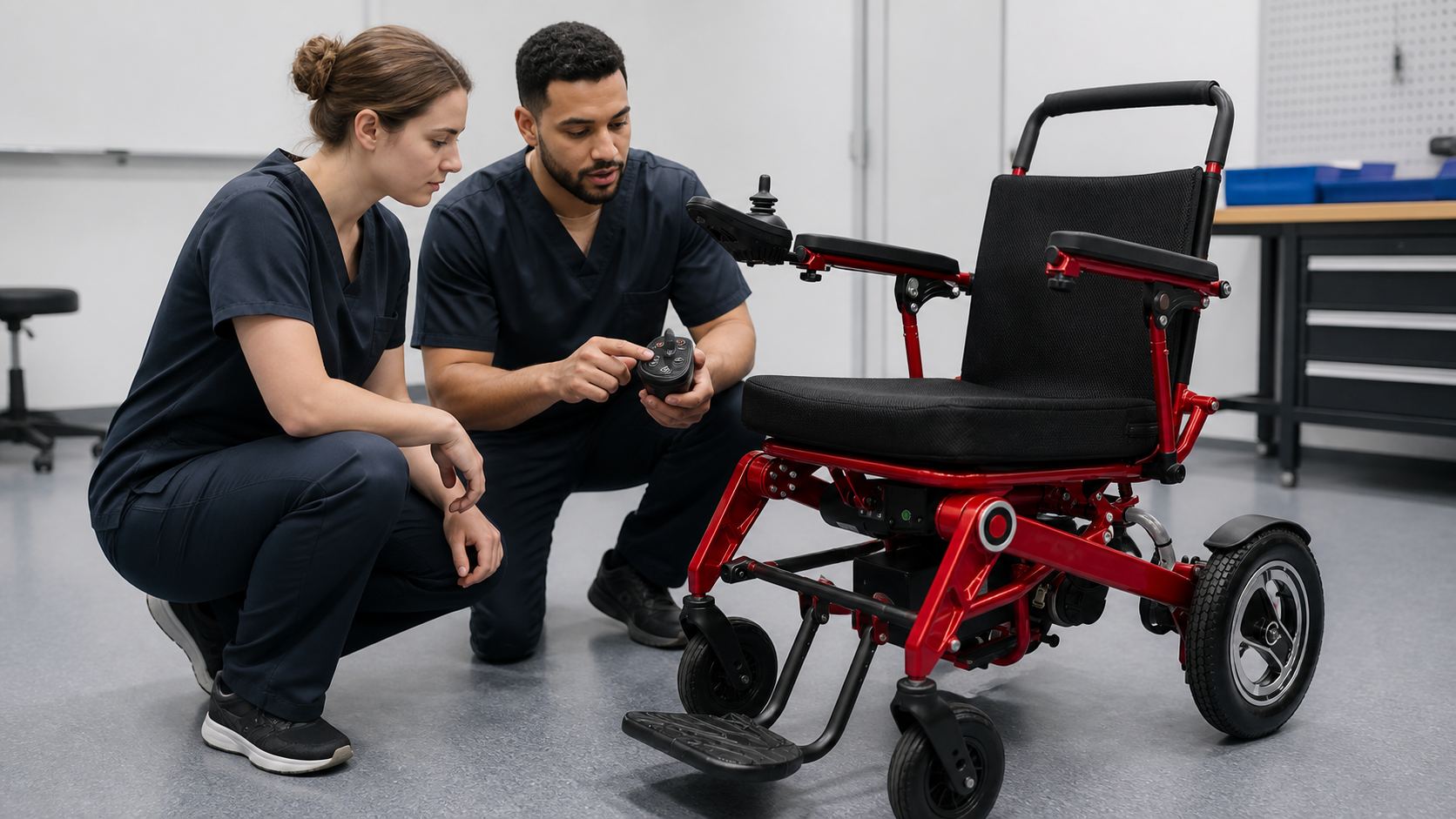
How can attendant control training stay clear?
Meanwhile, An electric mobility chair attendant-control lesson should separate user control, attendant control, changeover steps, active-control confirmation, stop procedure, communication, and return to the normal setup.
Use attendant control only when the exact chair and manual document that option. Keep the chair stationary while identifying both interfaces and any supported changeover action. Name who has authority to use the option and under which organizational procedure.
A useful worksheet separates observed facts, model records, evaluator notes, and open questions. Give every entry a date, source, exact setup, and named reviewer. Run the same check for each candidate and retain any changed setup. This shared record lets procurement, training, warehouse, and service teams discuss the same evidence without turning a short trial into a broad product promise.
Which actions belong in attendant practice?
For example, Separate control identity from movement:
Have the learner point to each interface, state which one is active, perform the documented changeover, confirm the active control, and repeat the stop signal. Run a short supervised straight route only after the stationary sequence is correct. End by returning the chair to the recorded operating setup.
- user and attendant control identity
- documented changeover steps
- active-control confirmation
- stop, communication, and return state
Repeat the check under the same conditions and record who took part. If a supplier answer arrives later, attach it to the original question instead of replacing the earlier entry. That history helps when a model, component, manual, sample, or operating plan changes during sourcing. A score should include a short reason and source link rather than a bare number.
Still, Do not blend attendant practice with personal care procedures that fall outside the product lesson. Record any cue, hesitation, or unclear indicator and route it to the trainer or supplier. If the learner cannot identify the active control, stop movement and repeat the stationary module before another attempt.
Key Takeaway: Attendant training should make control ownership and the return state unambiguous.
Which records complete the training sign-off?
An electric mobility chair sign-off should record model, setup, manual version, trainer, learner, modules practiced, cues needed, route conditions, open questions, and review date.
Afterward, A signature should confirm what was covered, not claim mastery in every setting. Use separate rows for setup, controls, seating, attendant operation, charging, freewheel identification, and issue reporting. Assign each open question to a named owner before closing the session.
A useful worksheet separates observed facts, model records, evaluator notes, and open questions. Give every entry a date, source, exact setup, and named reviewer. Run the same check for each candidate and retain any changed setup. This shared record lets procurement, training, warehouse, and service teams discuss the same evidence without turning a short trial into a broad product promise.
How should training records stay current?
Treat sign-off as a dated snapshot:
In practice, Store the lesson outline, chair identity, observation notes, and document sources together. Add refresher dates or changed configurations beneath the original record. Buyers can contact us today with their staff roles, chair setup, route profile, and requested manuals ready for a model-specific training discussion.
- chair and document identity
- trainer, learner, and modules
- observed practice and cues
- open question and refresher date
Repeat the check under the same conditions and record who took part. If a supplier answer arrives later, attach it to the original question instead of replacing the earlier entry. That history helps when a model, component, manual, sample, or operating plan changes during sourcing. A score should include a short reason and source link rather than a bare number.
A new manual, control option, chair revision, staff role, or route can trigger a focused refresher. Keep the earlier sign-off for history. The organization should decide who reviews records and how access is controlled. Avoid storing personal information that is not needed for the training purpose.
Next, Key Takeaway: Training sign-off should state exactly what was practiced and what still needs follow-up.
What do buyers ask about this mobility product?
The electric mobility chair questions buyers ask most often concern setup, permitted use, controlled checks, records, and supplier support.
Can I train staff with a generic wheelchair video?
Meanwhile, No. A video can provide context, but the exact model, manual, configuration, controls, room, trainer, and supervised practice must shape the lesson.
What’s the best place for control practice?
Use a dry level area with a marked boundary, clear stop signal, trained supervision, and only the route elements named in the lesson plan.
For example, How do I know if a learner needs a refresher?
Use the organization’s criteria, plus any changed chair setup, manual, role, route, control option, missed step, or unresolved question recorded at sign-off.
Can staff change seating supports during handover?
Still, Only when their role, the exact product instructions, and the approved personal setup permit it; otherwise they should record and report the mismatch.
What should a training sign-off say?
State the chair and manual, setup, modules, trainer, learner, route conditions, observed cues, open questions, decision, and review date.
Related planning resources: Review joystick handover, adult wheelchair fit, fleet management before approving a product, sample, route, or supplier decision.