

An electric wheelchair for adults should be reviewed around the intended user, seated fit, control reach, route space, handling, charging, and support. Test the approved configuration. Use real daily tasks. Record any change that affects fit or control access. For U.S. facilities, align site procedures with official mobility-device guidance.
An electric wheelchair for adults is easy to fit when buyers connect a named user profile, seated support, control reach, transfer method, route space, and service records in one repeatable review. A seat-width figure or showroom photo cannot settle that decision alone. Dealers, care providers, clinics, and institutional buyers need observations from the exact sample and setup under discussion.
This article presents a practical B2B method that keeps personal mobility decisions with qualified professionals while giving purchasing teams clear product and supplier checks. Each step separates observed facts, source documents, evaluator notes, and open questions. That structure helps sales, training, warehouse, and service teams compare the same evidence without turning one comfortable demonstration into a claim about every adult user.
Which user profile should guide a fit review?
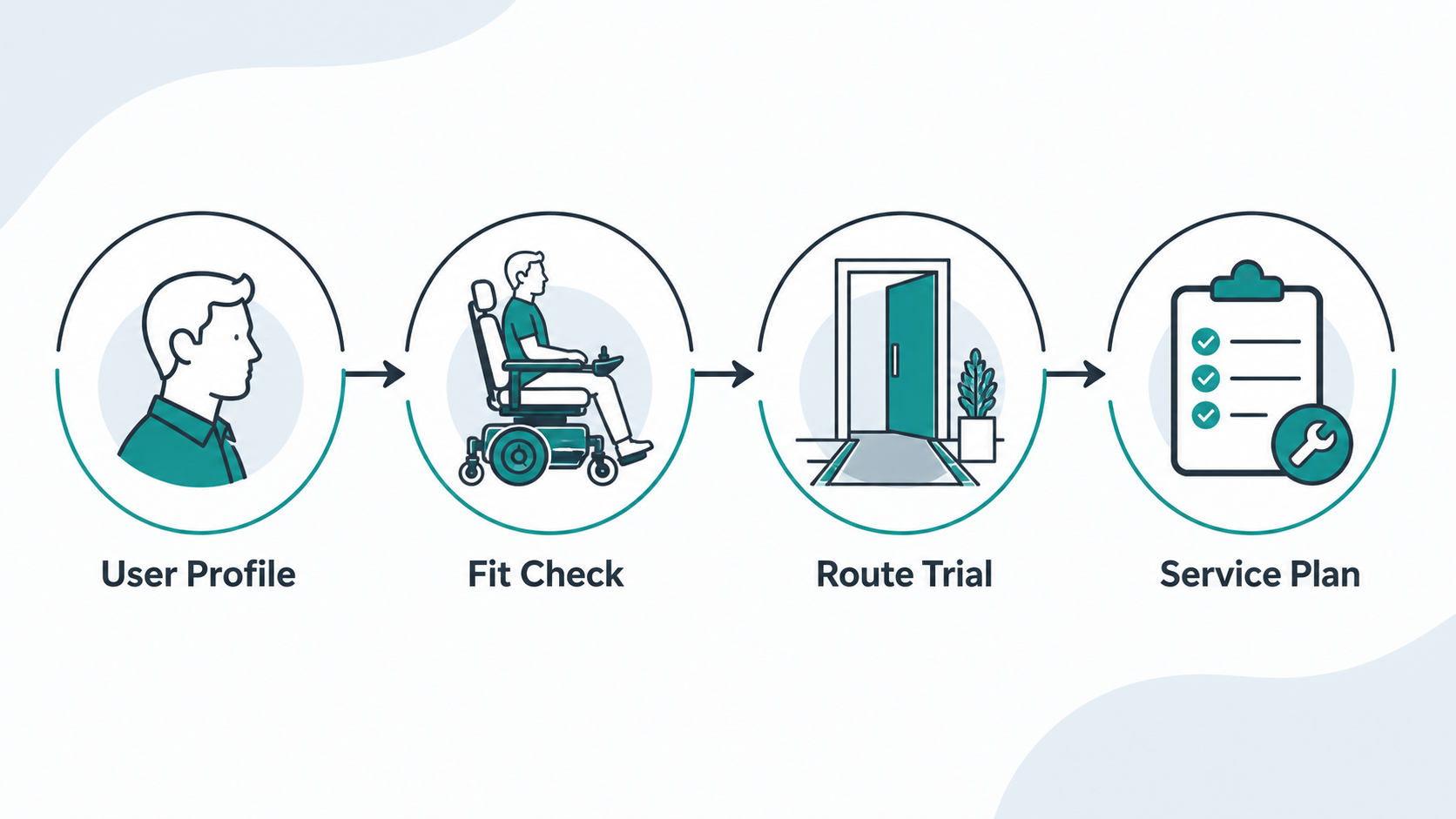
In practice, An electric wheelchair for adults should be reviewed against a named profile covering seated support, transfers, hand control, foot placement, daily routes, clothing, and available help.
Start with the person and planned setting before opening a product scorecard. Record who may use the chair, who may assist, where transfers happen, which hand operates the controller, and which rooms or community routes matter. Keep personal clinical decisions with qualified professionals. The product review can then focus on visible support areas, adjustment positions, route clearance, and document sources.
Place the chair on dry level flooring with power off. Note the exact cushion, backrest, armrest, footplate, controller side, and any permitted accessories. Identify the sample and revision. If a setup changes, create a new entry. That history helps when purchasing or training staff revisit a decision after a supplier reply.
Build a user-fit worksheet
Next, Start with observable needs:
Ask the evaluator to describe entry, exit, seated posture, hand position, foot placement, and the planned route in ordinary language. Photograph approved adjustment positions without exposing personal data. Mark each note as observation, user feedback, manual source, professional input, or open supplier question.
- seat and back support areas
- transfer and armrest access
- foot placement and support
- joystick side and relaxed reach
Do not replace the profile with a generic adult label. Two people may need different access, control placement, or support even in the same building. Record clothing, cushion, helper, and route conditions used during the check. Those details make a later comparison useful instead of vague.
Meanwhile, Key Takeaway: A named user and recorded setup give every later chair comparison a clear reference point.
How should seated support and controls be checked?
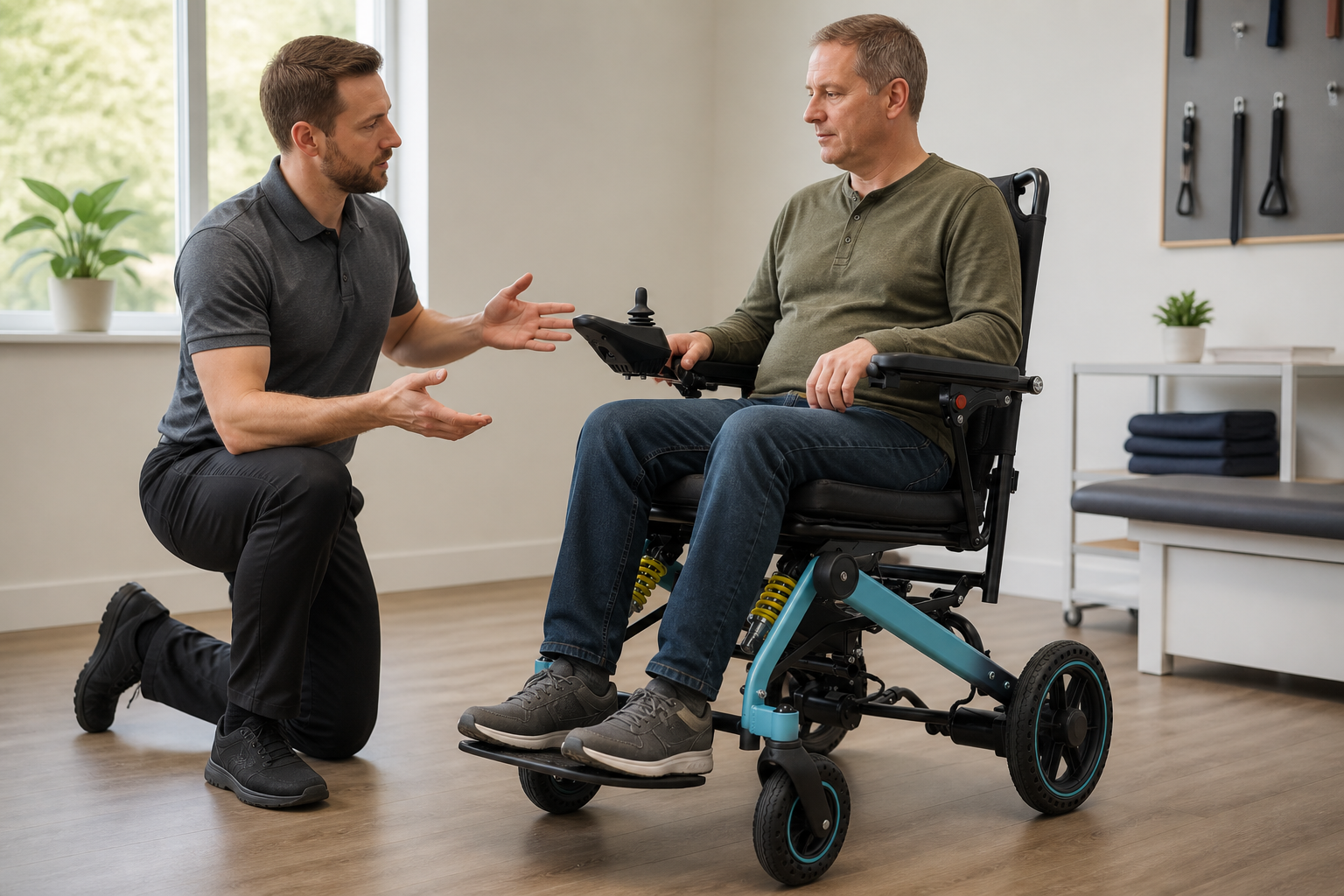
An electric wheelchair for adults needs a stationary check of seat contact, back support, armrest clearance, foot placement, joystick reach, mount firmness, and cable routing.
Review seated support and controller access together, then keep findings in separate fields. The wide-seat wheelchair page offers another configuration context, yet the exact user, sample, cushion, manual, and route still control the result. Avoid turning a single dimension into a complete fit judgment.
For example, With power off, ask the user to rest both arms naturally and show whether the joystick can be reached without leaning or twisting. Inspect the bracket for visible movement and follow cables without dismantling parts. Record approved adjustment positions and identify who made any change.
Check fit in one calm sequence
Here is the useful order:
Review pelvis position, back contact, arm support, controller reach, knee space, and foot support from a normal seated posture. Note transfer clearance with the chair stationary. Ask for model-specific instructions covering adjustment, start-up, shutdown, charging access, freewheel use, and fault reporting.
- seat and cushion contact
- armrest and transfer clearance
- joystick reach and mount
- foot support and leg position
Still, A powered trial belongs in a controlled area with trained supervision and a clear stop signal. Describe what happened under that setup instead of writing broad words such as comfortable or easy. If an approved change improves access, save both positions and name the hardware or instruction used.
Key Takeaway: User posture, control reach, secure mounting, and source instructions belong in one fit record.

What can a workplace route trial reveal?
An electric wheelchair for adults route trial can reveal doorway fit, caster tracking, turning space, footplate clearance, stopping response, and the helper actions needed on a defined course.
Afterward, Build a short supervised course from places named in the user profile: a doorway, table approach, broad turn, level corridor, and a permitted surface change. The article about common electric wheelchair uses provides general context, while the local course supplies buyer observations from the planned setting.
Before starting, note chair setup, floor condition, evaluator, helper, and stop signal. Use the same route map for every candidate. Record pauses, cues, adjustment changes, and any point where the manual or local policy stops the trial. These details support later training far better than a bare pass mark.
Make route notes comparable
Watch the same contact points:
In practice, Observe front-caster tracking, line holding, footplate clearance, doorway approach, broad turns, and controlled stopping. Keep the route within the documented product use. A buyer review should answer sourcing questions, not create a stress test or a personal mobility prescription.
- doorway and table approach
- broad turn on level flooring
- permitted threshold or floor edge
- controlled stop and restart
The result belongs to that course, user, setup, and supervision. It does not predict every building or surface. Save route notes with a version date, then repeat only affected checks when a doorway, chair setup, or helper method changes.
Key Takeaway: A fixed course changes route language into repeatable buyer observations.
How should frame, suspension, and handling be reviewed?
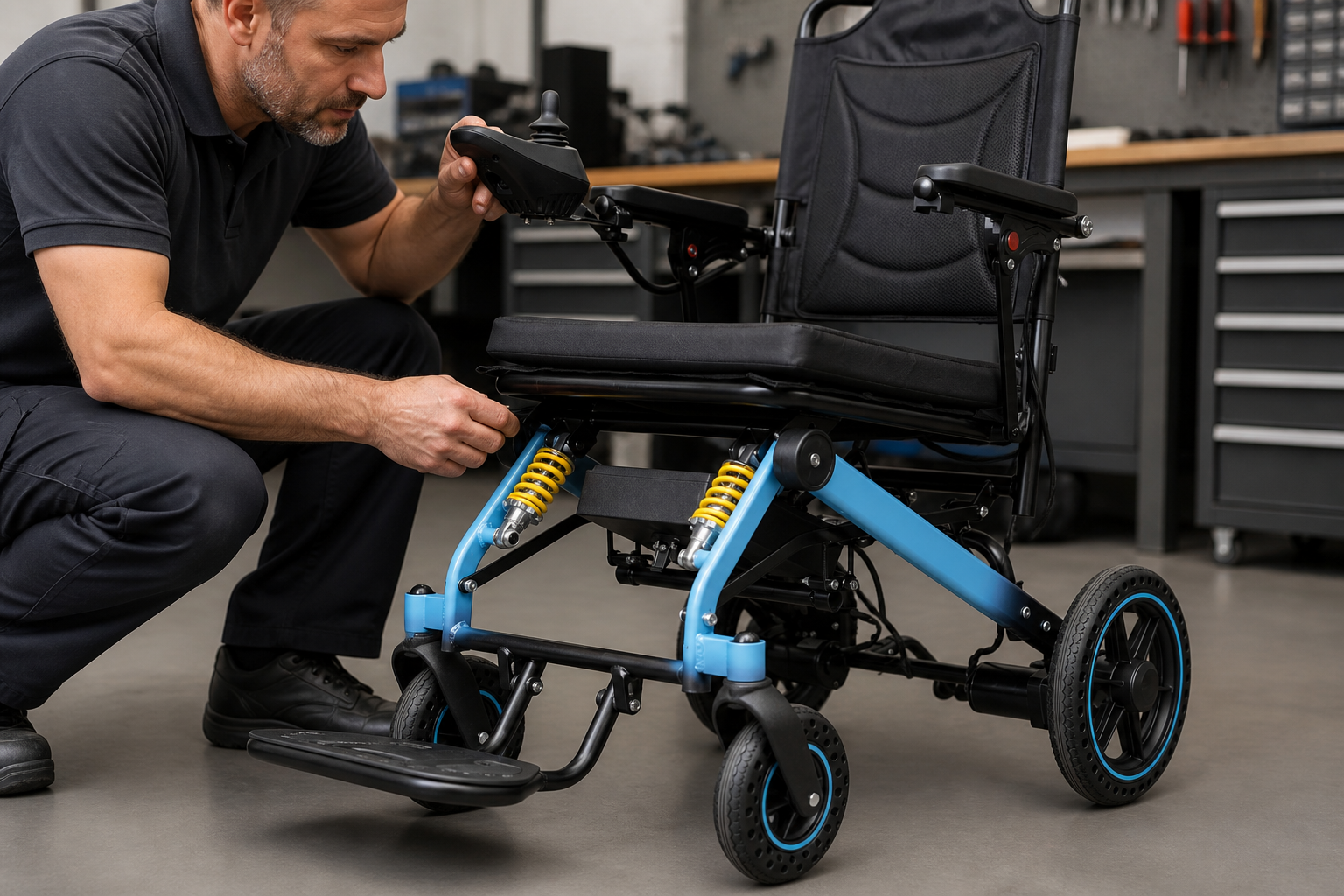
Next, An electric wheelchair for adults should be reviewed through visible frame joints, suspension layout, wheel condition, footplate alignment, folded shape, balance, handholds, and service access.
Product structure affects route feel, storage, inspection, and parts conversations. Buyers can compare candidates within the wheelchair series, but every score should name the sample and observed condition. A visible spring or reinforced member should not become a performance claim without product-specific evidence.
Power the chair off and inspect accessible frame tubes, fasteners, wheel condition, controller mount, cable clearance, footplate position, and any suspension components. Do not dismantle parts outside the manual. Record wear, unusual movement, and open questions with photographs that show the exact location.
Link structure with service tasks
Meanwhile, Look beyond appearance:
Ask how routine cleaning, inspection, folding, storage, and issue reporting work for the exact configuration. Follow the permitted fold sequence and note parts needing protection. Record what the stated weight includes, how balance feels under the approved method, and which helpers or aids take part.
- frame and accessible fasteners
- wheels and visible suspension
- footplate and controller protection
- folded shape and handling roles
A successful handling trial does not apply to every worker or vehicle. Keep workplace policy, personal capability, and approved lifting aids in the method. Pair every score with a reason and source rather than using a low weight or rugged appearance as a shortcut.
For example, Key Takeaway: Frame review becomes useful when visible structure, handling, and service access share one record.
Which supplier records should affect the shortlist?
An electric wheelchair for adults should rank higher only when model identity, manuals, parts naming, packing steps, inspection fields, and service communication fit the buyer’s operating plan.
Ask how a chair revision is identified, how staff report an issue, which photos or model details are requested, and how parts are matched. Records should name the exact chair rather than a broad family. Price belongs beside this evidence, yet it cannot close an unclear service route or missing adjustment instruction.
Still, Collect the current manual, revision reference, labeled component views, packing outline, inspection form, and written support route. Ask how updates reach dealers and how a changed part appears on later paperwork. Keep marketing material separate from service records. Review document versions beside the sample identity and note any mismatch before scoring. Ask the supplier which record remains authoritative after a revision, how older files receive a superseded mark, and whether training material follows the same part names. This small document-control check reduces confusion during receiving and later service conversations.
Score evidence with short reasons
Keep each answer traceable:
Use the same evidence grid for every candidate. Give fit, controls, route notes, handling, and support their own fields. A score should include a short reason, date, reviewer, sample identity, and source link. Leave unanswered cells open instead of guessing.
- model and revision identity
- current manual and part names
- packing and inspection records
- written issue-report route
Afterward, A new team member should be able to identify the chair, locate its setup record, repeat approved checks, and send a service question without private background knowledge. That test shows whether supplier evidence can support a real B2B handover.
Key Takeaway: The shortlist should reflect the whole chair and the documented support behind it.
What should buyers send with a fit inquiry?
An electric wheelchair for adults fit inquiry should include the user profile, approved sample setup, route notes, document gaps, service expectations, and questions needing model-specific replies.
In practice, Review the inquiry with purchasing, user-facing staff, training, warehouse, and service teams. Remove contradictory wording and personal data that does not belong in a supplier discussion. Ask suppliers to label assumptions. This makes replies easier to compare and keeps later sample checks focused.
Attach clear photos of approved adjustment positions, the route version, and the evidence grid. State who owns each open question and how supplier changes will be recorded. Keep publication and customer-facing claims outside the sourcing record until they receive separate review.
Prepare one aligned review pack
The closing check is simple:
Next, Read every requirement as an observable action or requested document. Replace vague wording with a setup, route, source, or owner. Confirm that personal mobility questions remain with qualified professionals. Send the same pack to each shortlisted supplier.
- named user and setup profile
- route and handling observations
- supplier evidence grid
- open questions with owners
Bring the sample plan, target setting, fit questions, and document needs into a model-specific discussion. Keep the approved review pack available for receiving, training, and service after an order.
Key Takeaway: One aligned review pack supports clearer supplier replies and a traceable internal handover.
What do buyers ask about this electric wheelchair for adults topic?
Meanwhile, Can I select a chair from seat width alone?
No. Review back support, armrest and foot support access, transfer method, controller reach, posture, route space, the exact cushion, and qualified professional input where needed.
What’s the best controller side for an adult user?
For example, The better side follows the user’s relaxed reach, posture, transfer method, table access, and documented mounting options. Record the approved position on the exact chair.
How do I know if a chair fits a workplace?
Map doorways, turns, table approach, lifts, storage, and permitted floor changes. Run a controlled sample trial with the planned setup, route, staff roles, and stop signal.
Still, Can a listed chair weight settle handling?
No. Confirm included parts, folded shape, balance, permitted grips, loose components, helper roles, storage orientation, and workplace policy before approving a handling method.
What supplier documents should I save?
Afterward, Save model and revision records, the current manual, parts names, inspection fields, packing steps, adjustment notes, and the written route for service questions.
For model-specific records, sample planning, or a supplier discussion built around your operating profile, contact us today.
Related planning resources: Review senior wheelchair review, compact route planning, travel wheelchair specifications before approving a product, sample, route, or supplier decision.