
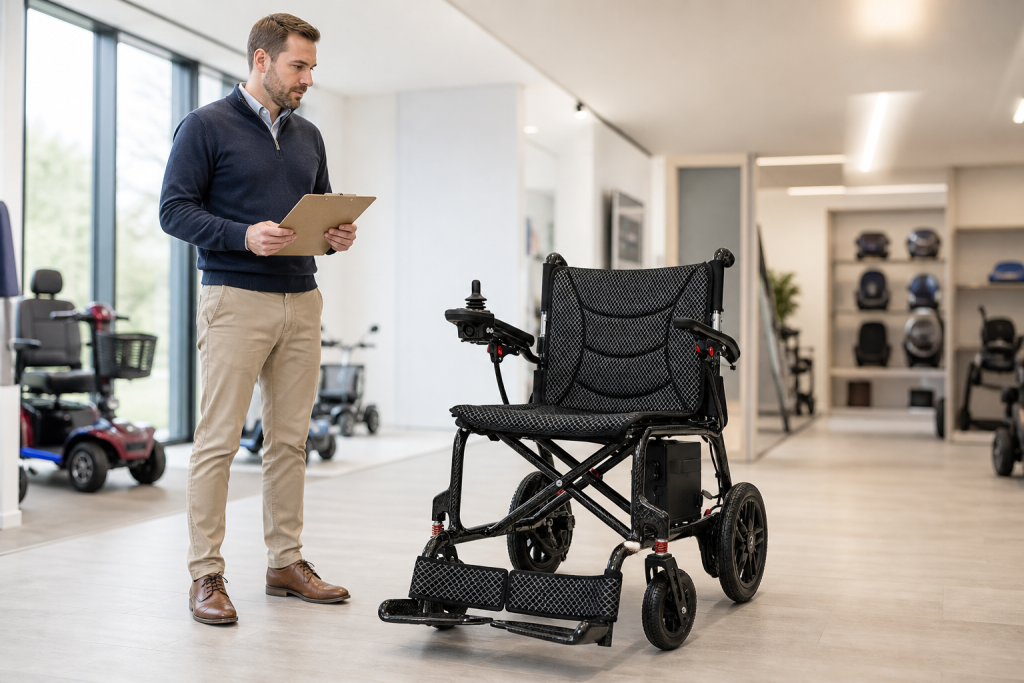
A foldable power wheelchair comparison should test each fold, latch, lifting point, route constraint, battery record, receiving step, and handover task with the exact sample. Repeat the handling sequence. Keep revisions visible. Match every claim to current supplier evidence. For U.S. facilities, align site procedures with official mobility-device guidance.
Buyers can compare the best foldable power wheelchair by matching folding evidence, route needs, storage limits, control layout, supplier records, and arrival checks. A compact photo alone cannot show whether a chair suits a distributor, rental fleet, care facility, or transport team. Buyers often receive a model name plus a few attractive images, yet those materials may leave open questions about the folding sequence, loose parts, joystick protection, foot support position, vehicle handling, or service ownership.
A stronger review starts with one written requirement record. Every supplier reply, sample observation, and arrival result should point back to that record. This article gives B2B teams a practical way to compare foldable chairs without inventing claims or treating one demonstration as proof for every setting. The method keeps purchasing, operations, training, and service colleagues focused on the same configured sample from quotation through handover.
What should a foldable power wheelchair brief include?
In practice, A foldable power wheelchair brief should include operating routes, folded handling needs, storage context, control preference, configured parts, document sources, service roles, and receiving checks.
Start with the operating setting rather than a broad request for a compact chair. Record where the unit will be stored, which doors and lifts matter, whether a vehicle interface belongs in scope, who may fold or unfold it, and which staff manage charging or service reporting. Keep commercial targets in a separate section. That separation prevents a price discussion from replacing an unanswered product question.
Build one shared requirement record
Here is the practical starting point:
Next, Give each requirement an owner, source, status, and review method. A request such as “easy to fold” should become observable checkpoints: starting configuration, removable parts, hand positions, latch actions, folded stability, reopen sequence, and post-fold inspection. Mark unknown fields as open rather than copying a value from another model.
- route, doorway, lift, storage, and vehicle contexts
- folding roles, loose-part control, and chair protection steps
- controller, armrest, foot support, battery, and charger identity
- document source, revision, open item, and accountable owner
Keep one dated version for each offered configuration. If a supplier changes a controller side, cushion, foot support, battery format, or frame option, create a new entry. A visible change history helps colleagues compare like with like and gives receiving staff a clean baseline when a sample or shipment arrives.
Key Takeaway: A useful brief converts a compact-chair request into named checks, sources, owners, and open actions.
How should buyers verify the folding sequence?
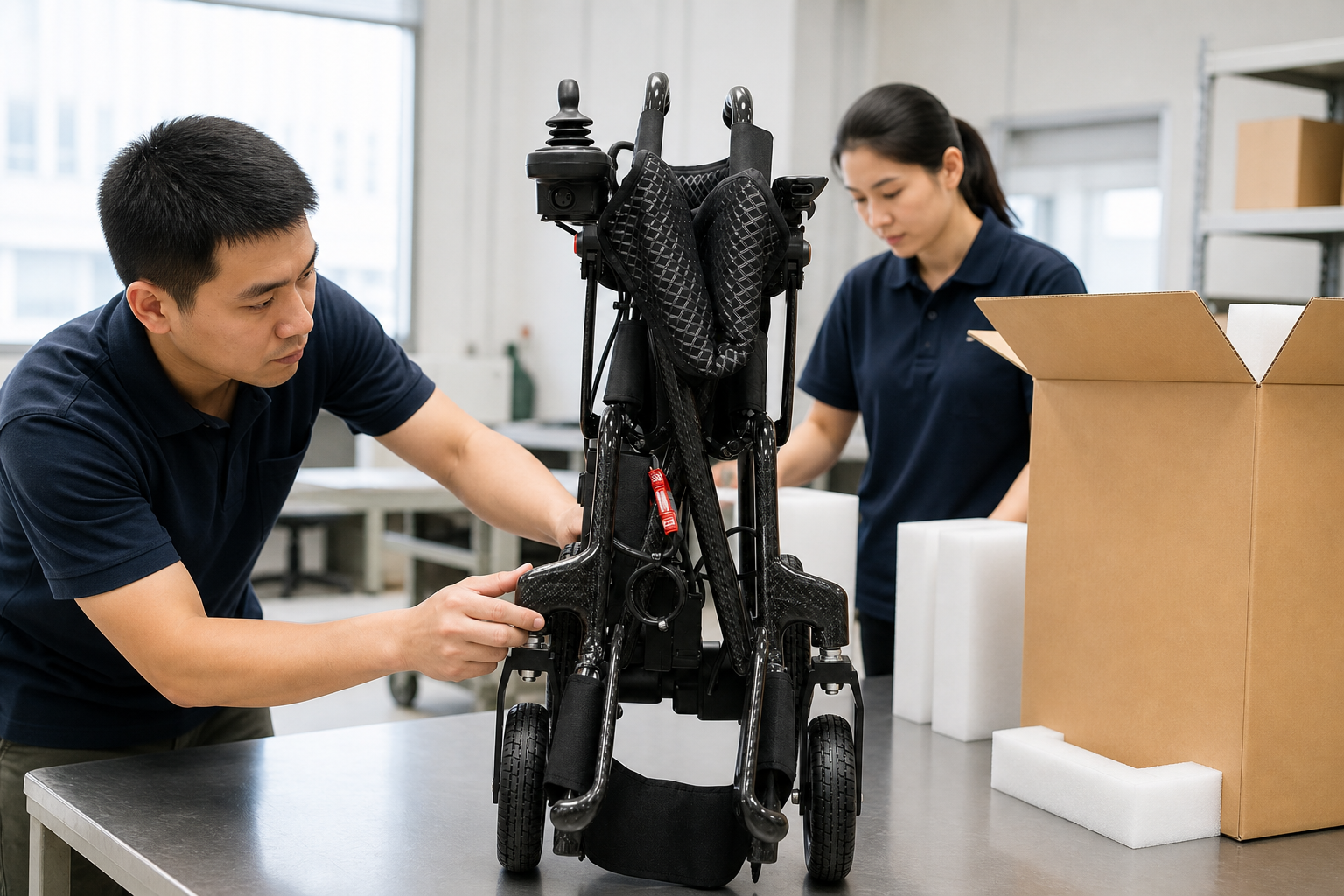
Meanwhile, A foldable power wheelchair folding review should follow the current model instructions, record every permitted step, and check the chair again after it returns to operating form.
Ask the supplier for the current folding and reopening source for the exact model and option set. The folding electric wheelchair comparison offers related buyer questions, while the offered model’s own instruction must govern the sample check. Do not infer a latch direction or battery action from a similar frame.
Review folding and reopening as linked steps
The detail that protects later handovers:
For example, Record the chair before folding, during each permitted action, in its folded position, and after reopening. Note which parts remain attached, which parts need separate protection, and which tasks belong to trained service personnel. Stop the review if the source is missing, the action differs from the document, or a staff role remains unclear.
- exact product, revision, option set, and instruction source
- starting position, permitted actions, and folded resting position
- loose parts, cable protection, controller protection, and storage method
- reopen sequence, visual check, open concern, and follow-up owner
Photographs should show the configured chair and the action stage without claiming a result. Keep staff observations neutral. A record may state that a latch was visible, a foot support was removed under instruction, or a cable needed protection. It should not promise effortless handling for every person or setting.
Key Takeaway: Folding evidence covers the full cycle, not only the moment when the chair becomes narrow.
Which route and storage checks should teams record?
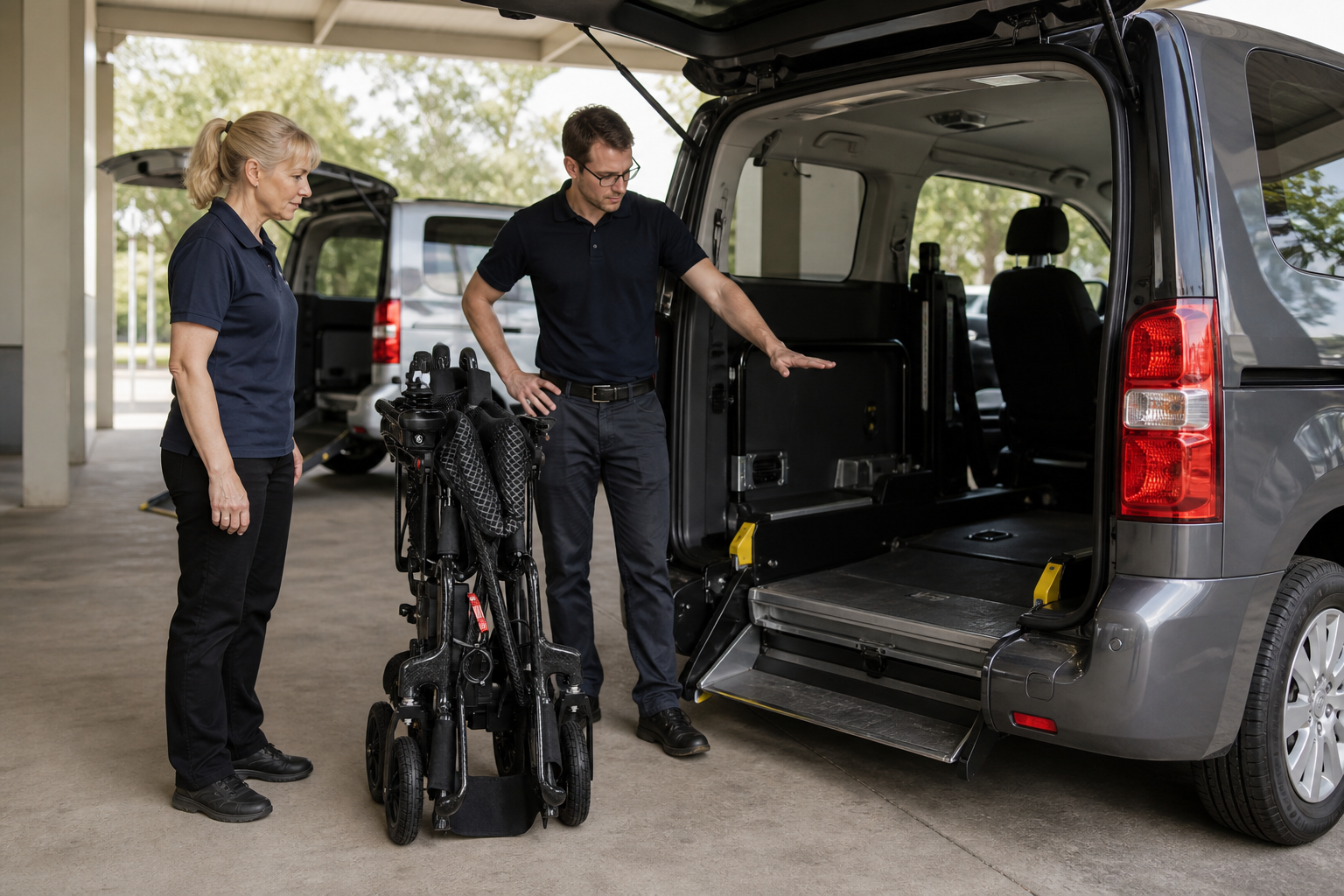
Still, A foldable power wheelchair route record should cover real doors, turns, lifts, storage spaces, charging locations, vehicle interfaces, and staff handling points.
Walk the route in operating order. Start at storage, continue through release and charging tasks, then map corridors, doorways, lifts, destination spaces, and return. The ultra-light electric wheelchair page can prompt handling questions, yet weight or folded-size evidence must still come from the exact offered configuration.
Walk the route before sample approval
This is where a generic claim becomes a real check:
Afterward, Use named checkpoints rather than a single pass statement. Record the configured chair, staff role, source, route point, observed action, and open issue. If transport belongs in scope, review the folded chair beside the actual cargo area without claiming fit until the buyer’s method confirms it.
- storage entry, charging position, and release path
- doorway approach, turning point, lift, and destination area
- folded transfer, vehicle interface, and separate-part location
- return route, damage check, issue route, and record owner
Repeat affected checkpoints after a verified configuration change. A different foot support, controller mount, cushion, or protective cover may change handling. Route notes should help another team repeat the review rather than show that a chair appeared once in a corridor or loading bay.
Key Takeaway: Route evidence ties a configured chair to named places, staff actions, and open handling questions.
How do buyers compare controls and handling roles?
In practice, A foldable power wheelchair control review should identify joystick location, mount, cables, battery housing, charger, brakes, foot supports, armrests, and staff responsibilities on one exact sample.
Photograph each configured part in operating and folded positions where the current source permits those states. Record whether a part stays attached, moves, or receives separate protection. Ask who may perform each action and where service work begins. A purchasing colleague should not have to guess whether a cable check, controller change, or battery task belongs to routine staff or trained service personnel.
Tie handling duties to current sources
The handover question is simple:
Next, Can a new staff member identify the chair, find its current instruction, complete assigned checks, fold it through the permitted sequence, reopen it, and report a concern? Build the review around that path. Keep unsupported actions closed until the proper source or role owner answers them.
- controller housing, mount, cable route, and protection position
- battery and charger identity from current documents
- foot support, armrest, cushion, and loose-part responsibilities
- routine staff checks, service-only work, and issue reporting
Use the same role map during sample review, receiving, training, and later service discussions. If the supplier changes a part or instruction, identify affected tasks and staff. This keeps a small product change from creating an unnoticed gap in daily handling.
Key Takeaway: Control review works when every visible part has a source, permitted action, responsible role, and reporting path.
What belongs in a supplier evidence pack?
Meanwhile, A foldable power wheelchair supplier pack should contain model and revision identity, configuration details, folding instructions, control records, parts references, service contacts, training scope, and update rules.
Send one structured request to each supplier. Ask them to label every response with product, revision, option, date, and document type. For travel-related programs, the portable electric wheelchair travel article can frame operational questions, while battery, transport, or carrier acceptance claims still require current evidence from the proper parties.
Compare source quality rather than brochure polish
Here is the buyer test for a useful pack:
For example, Another colleague should be able to trace each answer back to a current source and the same configured sample. Separate marketing statements, manuals, drawings, option lists, sample photographs, service replies, and commercial terms. They serve different purposes and should not be merged into one unsupported score.
- product identity, revision, option list, and dated sources
- folding, control, charging, storage, and cleaning instructions
- parts naming, service route, training scope, and update process
- open gap, supplier reply, buyer owner, and closure status
Keep missing information visible. Decide whether each gap blocks approval, needs a sample check, or belongs in a contract action. Freeze a dated decision copy after approval. Later replies should create a new entry rather than erase the record used for the order.
Key Takeaway: A supplier pack supports a decision only when each answer is traceable to the offered configuration.
How should receiving repeat the approved review?
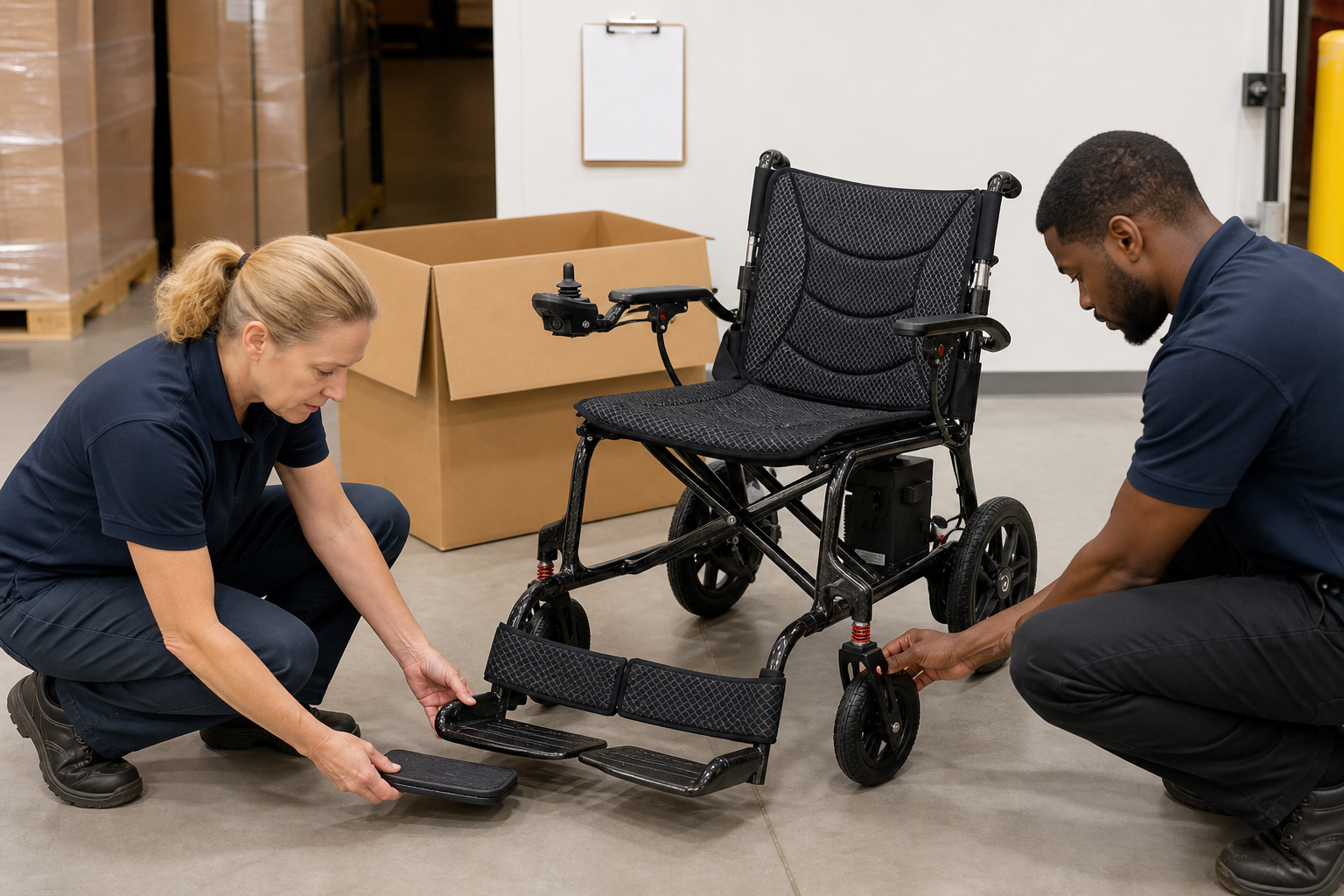
Still, A foldable power wheelchair receiving process should repeat identity, configuration, folding, control, document, supplied-part, and packaging checks before handover.
Give receiving staff the approved comparison file rather than a short purchase description. Check model identity, visible frame, upholstery, joystick side, foot supports, armrests, battery housing, charger, supplied documents, and packaging condition. Photograph differences and keep affected fields open. Do not substitute or adjust parts merely to make arrival match the record.
Turn the approved file into an arrival checklist
The handoff should close the evidence loop:
Afterward, Build receiving rows directly from the approved requirements. Assign a status and owner to each difference. Link revised documents, replacement parts, supplier replies, and repeated checks to the same row. Release the unit only through the buyer’s defined authority and operating policy.
- approved product and configuration identity
- visible structure, controls, supports, charger, and supplied records
- packaging condition, arrival difference, and accountable owner
- repeated folding or route check after an authorized change
Keep receiving, training, operations, and service records together. That shared file supports later maintenance questions and supplier review. It also stops one arrival photograph from becoming a blanket acceptance statement that hides unresolved differences.
Key Takeaway: Receiving should verify the same configured chair and evidence set that purchasing approved.
What should teams do before placing an order?
In practice, A foldable power wheelchair order should move forward only after technical gaps, role questions, document gaps, sample differences, and receiving responsibilities have named owners and statuses.
Hold a short cross-functional review with purchasing, operations, training, and service colleagues. Read open items aloud. Confirm which source controls each requirement and which configuration the decision covers. Keep commercial terms visible, but do not let them close technical fields without evidence.
Close gaps before commercial approval
The final review should be easy to audit:
Next, Create a decision page that lists requirement, source, sample result, open item, owner, commercial dependency, and approval status. Require a dated change entry when the offered configuration moves after approval. Give receiving staff access before shipment rather than after a difference appears.
- approved configuration and dated evidence set
- open item, risk owner, closure method, and deadline
- receiving checklist, training plan, and service contact
- change-control route for later product or document updates
This method does not promise that one chair suits every buyer. It gives each buyer a repeatable way to document what was requested, shown, verified, left open, and accepted. For a model-specific requirement sheet or sample discussion, contact us today.
Key Takeaway: Order approval should preserve evidence, ownership, and change history from buyer brief through arrival.
What FAQs do buyers ask about a foldable power wheelchair?
Meanwhile, A foldable power wheelchair FAQ should clarify source-led folding, route checks, vehicle planning, configuration changes, and receiving records without replacing a model-specific review.
Can I approve a foldable power wheelchair from photos alone?
No. Photos can show visible structure, but they cannot replace current instructions, configured-part records, route checks, supervised sample work, or supplier evidence.
For example, What’s the best way to compare two folding methods?
Use identical checkpoints for source, starting state, permitted actions, loose parts, folded stability, reopening, post-fold inspection, and staff role.
How do I know if the folded chair fits our vehicle?
Still, Review the exact folded configuration beside the real cargo space through your documented method. Do not turn a similar model or photo into a fit claim.
Can receiving staff accept a changed controller or foot support?
Only through the buyer’s change process. Record the difference, obtain current evidence, and repeat any affected handling, route, or training check.
Afterward, What should stay in the final buyer file?
Keep the brief, supplier sources, configuration record, folding notes, route checks, decision copy, receiving evidence, training record, service route, and gap closures.
Related planning resources: Review travel wheelchair specifications, compact wheelchair planning, wheelchair delivery checks before approving a product, sample, route, or supplier decision.