
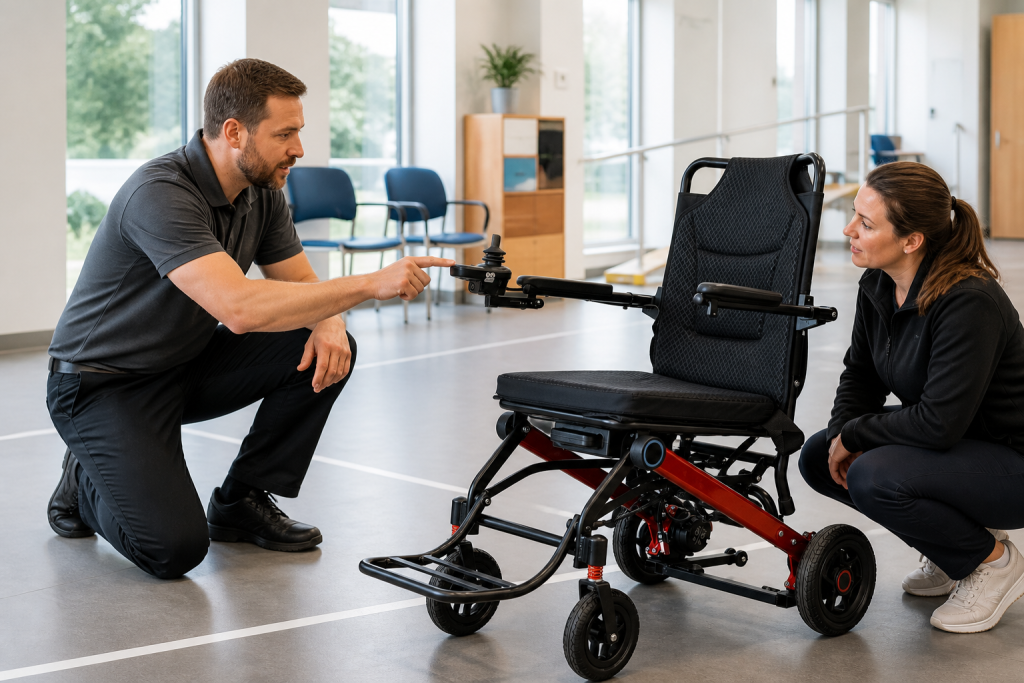
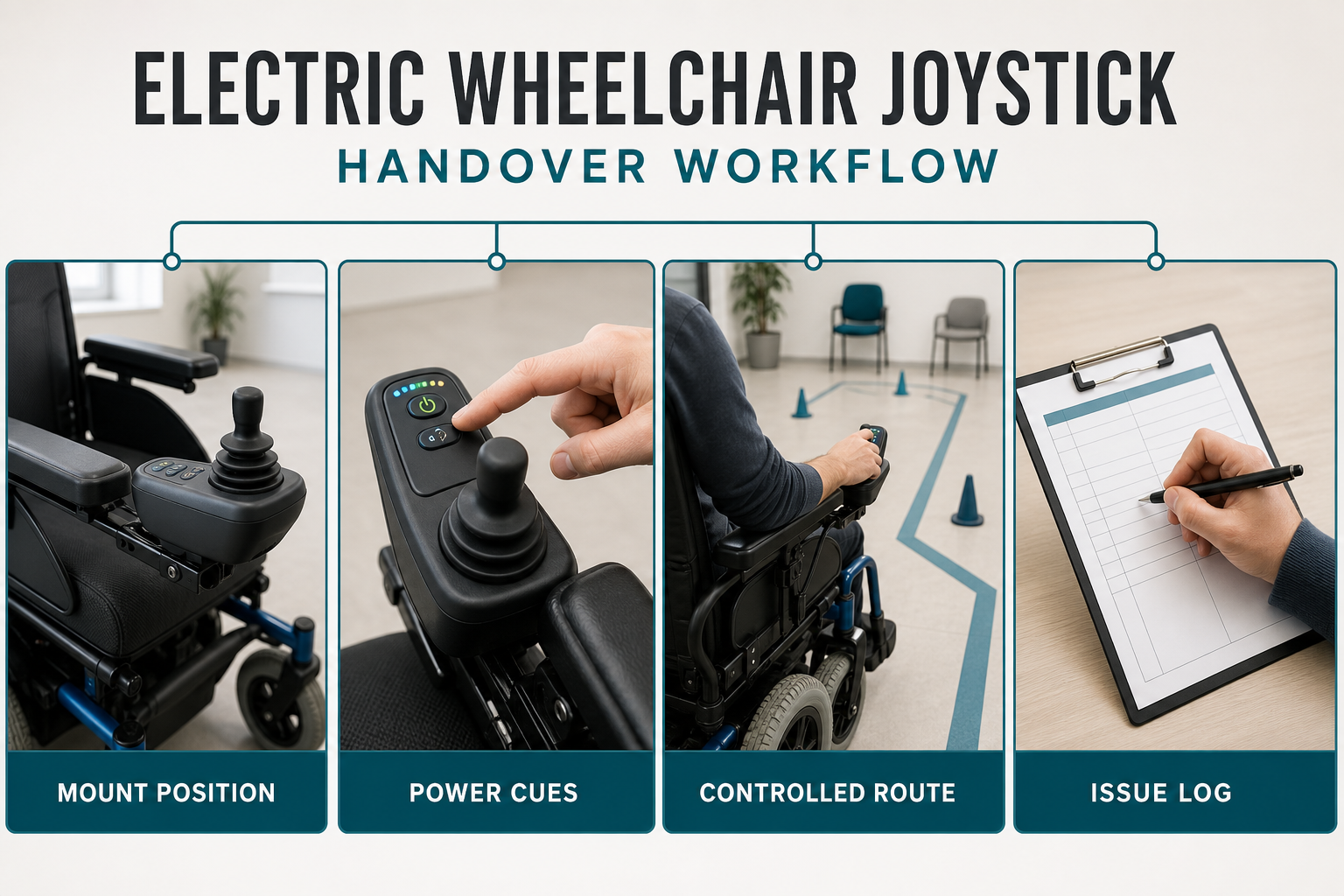
An electric wheelchair joystick handover should cover mounting, side position, reach, clearance, power controls, speed settings, stop actions, and supervised route practice. Use the actual chair. Follow current instructions. Record the approved setup before staff or users repeat the handover. For U.S. facilities, align site procedures with official mobility-device guidance.
An electric wheelchair joystick becomes easier to hand over when its mount, cable route, control cues, staff roles, supervised practice, daily checks, and issue records all describe the same configured chair. A short demonstration may look clear in the moment, yet later staff can still face questions about controller position, swing-away movement, power cues, speed-setting authority, stopping practice, storage, or service reporting.
A reliable B2B handover treats the joystick as part of a complete operating record rather than a loose feature. Purchasing, training, operations, and service teams should share one source-led method. This article shows how distributors, care facilities, rental programs, and mobility providers can document controller checks without inventing functions, promising outcomes, or treating attendance as proof of competence.
What should an electric wheelchair joystick record contain?
In practice, An electric wheelchair joystick record should contain chair identity, controller housing, mount side, cable route, current instructions, permitted staff tasks, training checkpoints, and issue ownership.
Start with the exact configured sample. Record model, revision, option set, controller side, mount type, armrest relationship, cable path, power source, and source documents. If any field remains unknown, leave it open. Do not copy a control description from another chair that happens to use a similar housing.
Create one controller identity sheet
Here is the clean starting point:
Next, Give every controller-related field a source, owner, and status. Attach photographs that show the joystick in its normal position, swing-away position where permitted, folded protection position, and cable relationship. Keep marketing images outside the evidence set unless they show the exact delivered configuration.
- chair, revision, option set, and controller identity
- mount side, armrest relationship, cable path, and housing
- current instruction, training scope, and service boundary
- open gap, accountable owner, and closure record
Use the same sheet during quotation, sample review, receiving, handover, and service discussions. If a mount, controller, armrest, or instruction changes, add a dated revision and reopen affected checks. That history gives staff one dependable answer about which control setup they reviewed.
Key Takeaway: Controller identity connects visible parts, current sources, staff roles, and later changes.
How should teams verify controller mounting position?
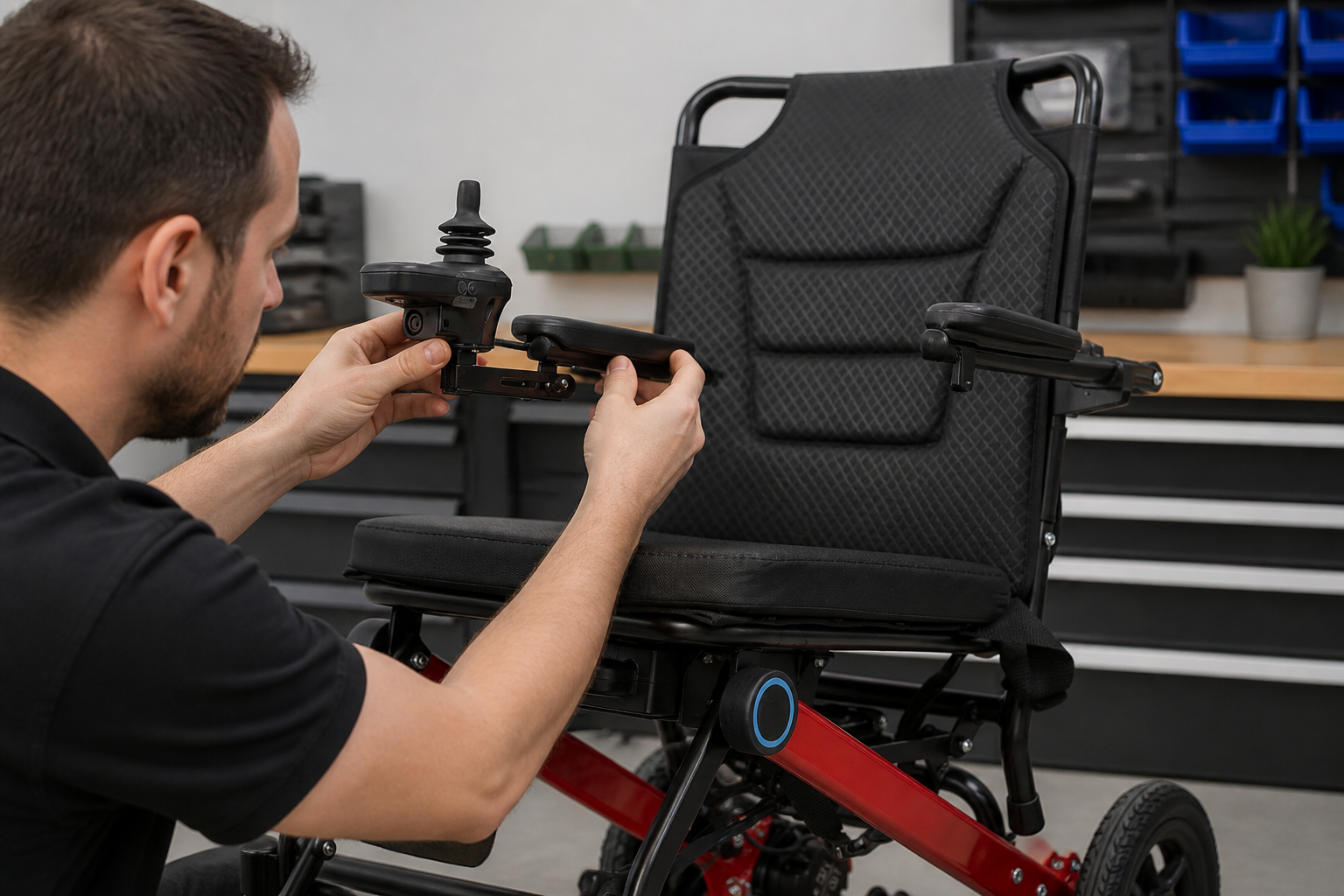
Meanwhile, An electric wheelchair joystick mount review should verify side, reach position, swing-away action, fasteners, cable clearance, and armrest relationship against current product instructions.
Inspect the empty stationary chair before training begins. The ergonomic electric wheelchair page can prompt questions about position and support, while the offered chair’s own source must govern any adjustment. Do not move a bracket, cable, or armrest to match a photograph from another configuration.
Review the mount before control practice
The small details shape the handover:
For example, Check whether the housing sits straight, the mount follows its permitted position, the cable has clear routing, and any swing-away action matches the current instruction. Record who may adjust the mount and which actions belong to service personnel. If authority remains unclear, keep adjustment closed.
- controller side and mount relationship
- visible fasteners, housing condition, and cable clearance
- permitted swing-away or storage position
- adjustment authority, service route, and open concern
Photograph the configured mount from useful angles. Neutral notes work best: housing aligned with mount, cable clear from moving joint, instruction missing, or staff role unresolved. Avoid language that claims universal reach, ease, or comfort. Those outcomes depend on a defined user and setup review.
Key Takeaway: Mount review verifies identity, position, cable clearance, and role authority before anyone practices control tasks.
Which control cues belong in staff training?
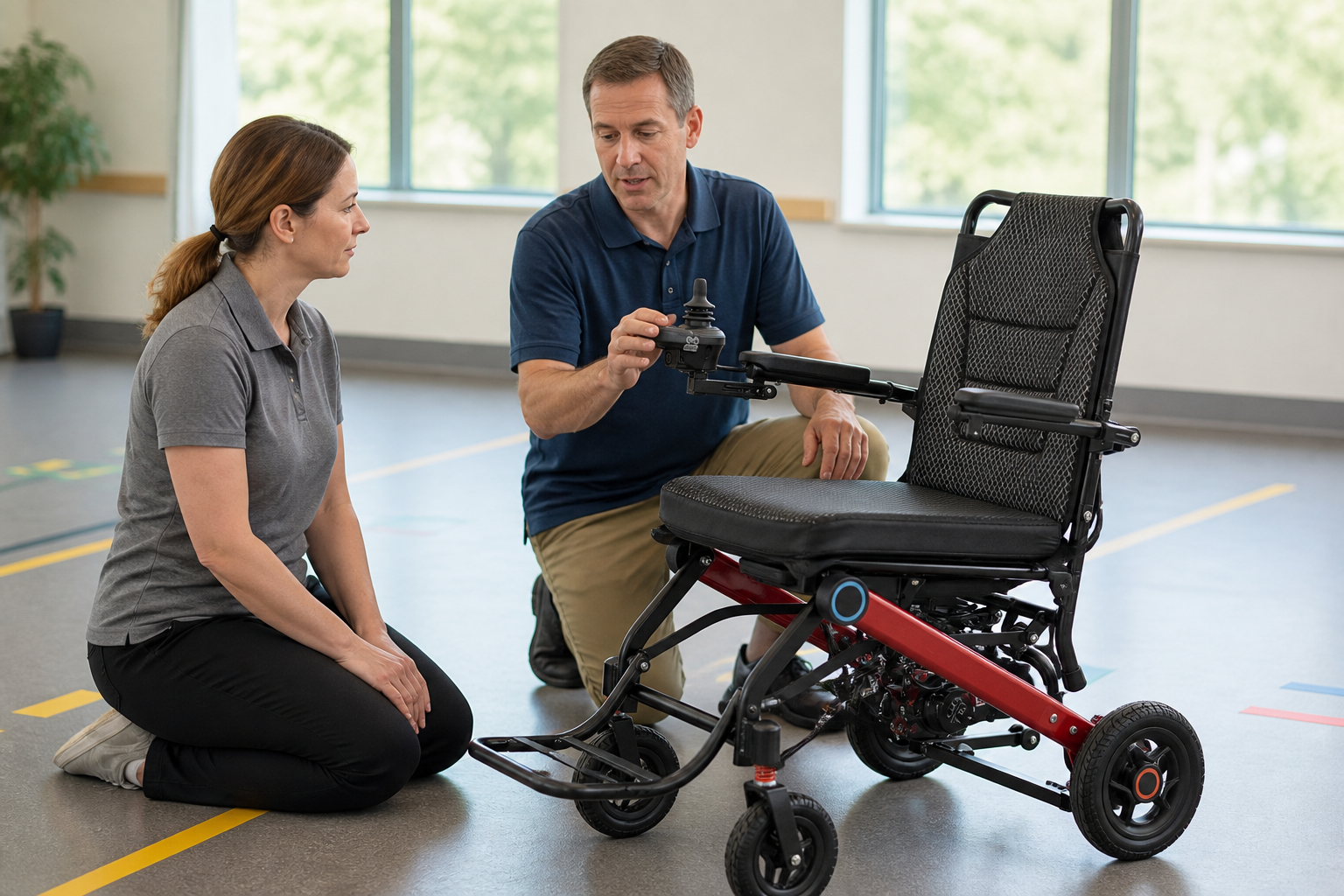
Still, An electric wheelchair joystick training plan should cover current power cues, permitted settings, neutral position, directional input, stopping practice, shutdown, and concern reporting.
Build training from the current instruction and local policy. The electric mobility chair staff training plan offers related record ideas, but it cannot replace model-specific guidance. Trainers should state which controls belong to routine use and which settings or service actions staff must not change.
Teach observable cues in a fixed order
This is the repeatable sequence:
Afterward, Begin with chair identity and controller position. Continue with power cues, neutral hand position, permitted setting review, directional input in a controlled area, stopping, shutdown, storage, and issue reporting. Use qualified supervision. Stop when a source, trainer, or participant calls for it.
- chair and controller identification
- power cue, neutral state, and permitted setting review
- controlled directional input, stopping, and shutdown
- storage, concern report, stop reason, and follow-up owner
Record what was shown, practiced, left open, or stopped. Attendance only shows that a person joined the session. It should not become a broad statement about skill or independent operation. Repeat affected checkpoints after an authorized controller, mount, chair, or instruction change.
Key Takeaway: Training works best when observable controller cues follow a source-led order with clear stop rules.
How should teams plan controlled route practice?
In practice, An electric wheelchair joystick route practice should use a defined indoor area, configured chair, qualified supervisor, named checkpoints, stop rules, and neutral observation notes.
Create a route that matches assigned staff tasks without turning training into a performance claim. Mark a start position, straight section, broad turn, stopping point, parking location, and return. Keep obstacles modest and planned. Do not add slopes, tight gaps, or surface changes unless the proper source, supervisor, and local policy place them in scope.
Record the route and every stop condition
The useful record answers one question:
Next, Could another trainer repeat the same session with the same chair and source? Note floor type, route order, controller position, settings used under instruction, supervisor, participant role, checkpoint result, stop reason, and follow-up action.
- route map, floor context, and checkpoint order
- configured chair, controller identity, and source revision
- supervised input, stop action, shutdown, and parking
- open question, staff role, and repeated-practice owner
Keep route observations factual. Record a delayed stop cue, unclear power indicator, mount question, or cable concern without assigning a medical cause or promising an outcome. Route practice supports handover documentation; it does not prove suitability for every user or facility.
Key Takeaway: Controlled route practice should be repeatable, supervised, source-led, and limited to observable actions.
What belongs in a daily controller check?
Meanwhile, An electric wheelchair joystick daily check should cover housing, mount, cable route, visible damage, power cues under current instructions, neutral state, shutdown, and issue reporting.
Place the check before operation and after any event covered by local policy. Keep it visual and source-led. Staff should not open the controller, change hidden settings, reroute cables, or perform service work unless their role and current instruction permit those actions.
Keep routine checks separate from service work
Here is the boundary that prevents confusion:
For example, List what staff may observe, what they may operate during a permitted check, and what sends the chair to a service owner. Use clear stop conditions. A cracked housing, loose mount, pinched cable, unexpected cue, or missing instruction should remain a documented concern rather than a field repair by unassigned staff.
- housing, joystick stem, mount, and armrest relationship
- cable path, connectors visible without disassembly, and clearance
- power cue, neutral state, shutdown, and storage position
- concern status, chair hold rule, service contact, and closure
Link each concern to chair identity, time, observer, and action owner. If service returns the chair, repeat affected controller and route checkpoints before normal handover. A short daily record can be useful when it preserves facts without encouraging unapproved repair.
Key Takeaway: Daily checks protect controller identity and issue routing while keeping service work inside the assigned role.
What should suppliers answer about joystick controls?
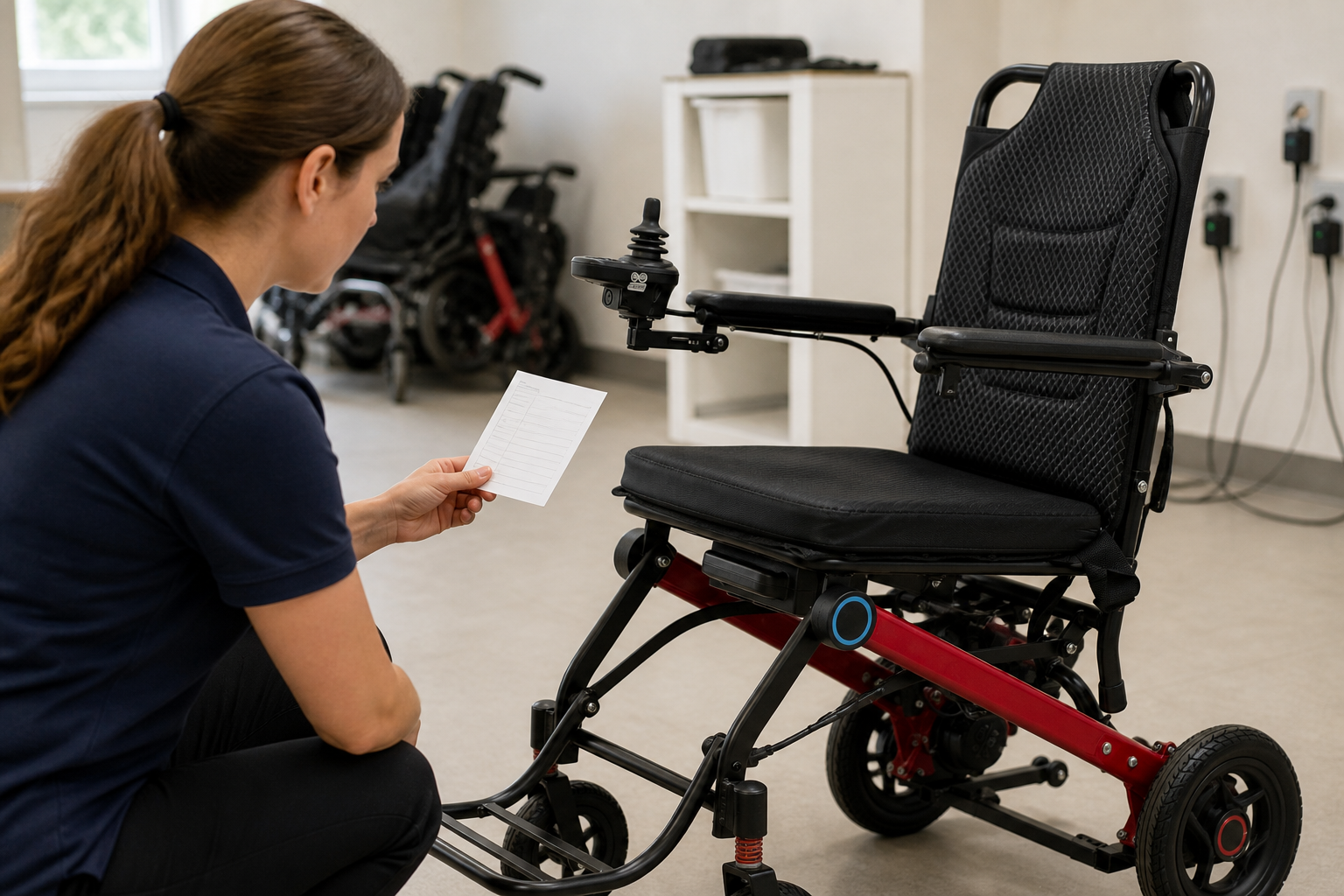
Still, An electric wheelchair joystick supplier response should identify the controller, compatible configuration, current instructions, mount options, cable parts, permitted settings, training scope, service route, and revision process.
Send suppliers the same questions. Ask them to label product, revision, option, date, and source on each reply. Separate a manual, option list, wiring reference, sample photograph, service answer, and commercial term. Similar-looking controllers may not share functions, settings, parts, or service steps.
Ask questions that support real handover work
A useful answer survives staff turnover:
Afterward, Another colleague should be able to identify the offered control, find current instructions, verify the mount, run assigned checks, stage supervised practice, and report a concern. If any step relies on an unwritten explanation, record that gap and owner.
- controller identity and compatible chair configuration
- mount, cable, part naming, and permitted option sources
- user-facing cues, staff training scope, and service boundaries
- revision notice, replacement process, and support contact
Keep earlier supplier replies visible when a revision arrives. Mark which training, receiving, daily check, or route record needs an update. This prevents a new controller document from quietly replacing the evidence used for the original decision.
Key Takeaway: Supplier evidence should support identification, training, daily checks, service routing, and later revisions.
How should receiving and service teams repeat the review?
In practice, An electric wheelchair joystick receiving review should repeat controller identity, mount, cable path, current documents, configured-chair checks, training actions, and service closure before release.
Give receiving teams the approved controller sheet. Compare the arrived chair with the exact product and option record. The motorized wheelchair receiving article provides related process ideas, while this chair’s current source and approved configuration should control acceptance.
Connect arrival checks with service closure
The record should show what happened next:
Next, Photograph a changed controller, mount, cable route, armrest, or document set. Assign each difference an owner and status. If service work occurs, record the authorized action, returned configuration, current source, and repeated checkpoints. Do not release the chair because it powers on once.
- approved controller and configured-chair identity
- mount, cable, housing, document, and supplied-part comparison
- service action, return record, and repeated daily checks
- training update, route practice, issue closure, and release authority
Keep purchasing, training, operations, and service records together. The shared file gives staff a clear path when a control question returns months later. For a model-specific controller checklist or distributor discussion, contact us today.
Run the same handover check with more than one assigned staff member before the chair joins routine work. Compare their records for the controller name, mount position, startup cue, stopping action, shutdown step, issue route, and hold authority. Differences between records can reveal unclear wording or a missing source before those gaps spread across shifts.
Meanwhile, Keep the review tied to the configured chair; a colleague’s experience with another controller is useful context, but it is not a substitute for this model’s instruction. When a gap is found, revise the handover sheet, repeat the affected checkpoint, and date the new record.
Key Takeaway: Receiving and service should return the exact controller configuration to a documented, trained, and approved state.
What FAQs do buyers ask about an electric wheelchair joystick?
An electric wheelchair joystick FAQ should clarify mount changes, training records, route practice, daily checks, and service boundaries without replacing the current product instruction.
For example, Can I move an electric wheelchair joystick to the other side?
Only when the current source and assigned role permit that configuration. Record the change and repeat affected fit, cable, training, and route checks.
What’s the best way to teach stopping with a joystick?
Still, Use the model instruction, qualified supervision, a controlled route, clear stop rules, neutral observations, and a documented follow-up path.
How do I know if a controller concern needs service?
Follow the current instruction and local hold rule. A loose mount, damaged housing, pinched cable, unexpected cue, or unclear source should reach the assigned service owner.
Afterward, Can attendance prove that staff can operate every chair?
No. Attendance records participation only. Keep chair-specific checkpoints, observations, open actions, and repeated practice separate.
What should remain in the controller handover file?
In practice, Keep chair identity, controller sheet, source revisions, mount photos, daily checks, training record, route notes, service actions, and issue closures.
Related planning resources: Review adult wheelchair fit, suspension and route review, fleet management records before approving a product, sample, route, or supplier decision.