
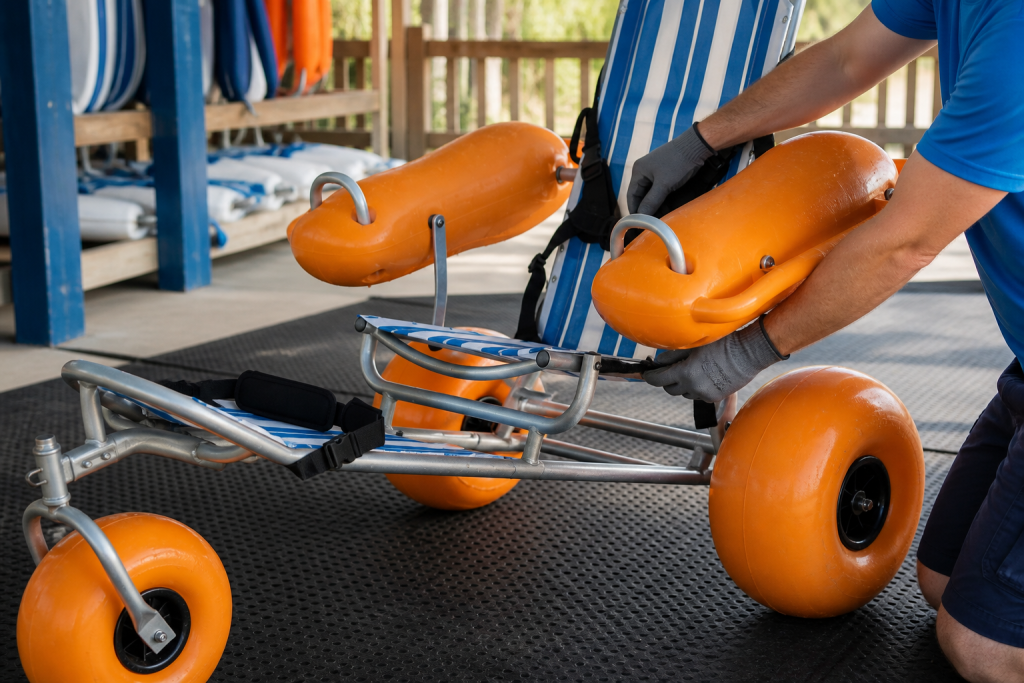
A floating beach wheelchair needs more than a quick visual check before service. Staff should inspect each fitted part, run a dry rehearsal, agree on water-entry limits, and record every handoff. Keep each step clear. Stop when equipment, weather, or staffing falls outside the approved plan. For U.S. facilities, review official mobility-device guidance alongside local rules and site-specific safety requirements.
A floating chair can sit clean and ready in storage, yet a rushed opening can still leave staff unsure about straps, floats, wheels, route status, or who approved the unit for service. That uncertainty affects the guest conversation and puts avoidable pressure on the team. A short pre-opening routine gives every shift the same calm way to review the chair before reservations begin.
This article sets out seven practical checks for a floating beach wheelchair in a resort, beach club, rental, or municipal access program. It covers visible condition, model-specific instructions, a dry-ground movement check, route status, staff handoff, and a written release or hold decision. It does not replace the supplier manual, local water rules, supervision policy, or staff training.
In practice, Here’s the working idea: the opening check should be short enough for daily use and clear enough for a new trained employee to follow. A manager can adapt these steps to the exact product and site. Teams reviewing the floating beach wheelchair product page can pair visible product features with their own local checklist rather than relying on memory.
What should staff check before beach service begins?
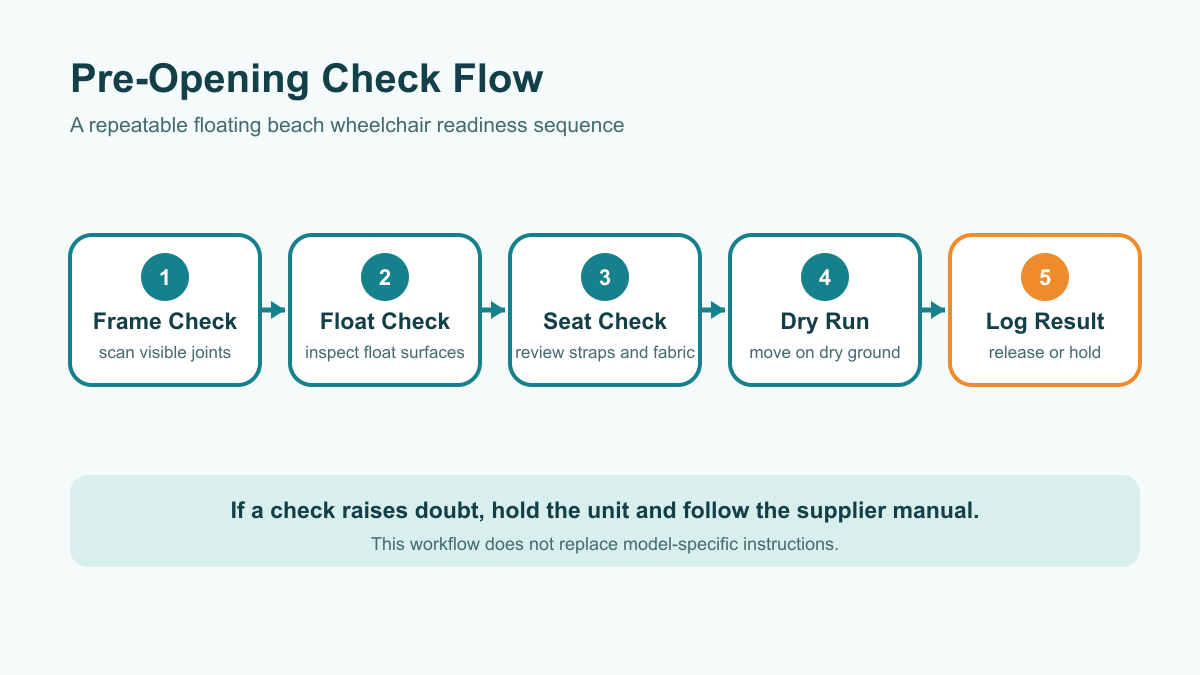
A floating beach wheelchair should receive a documented visual and functional review on dry ground before beach service begins. Staff should identify the unit, open the correct manual or property card, and work in a fixed order. A fixed sequence reduces missed steps and makes a handoff easier to explain.
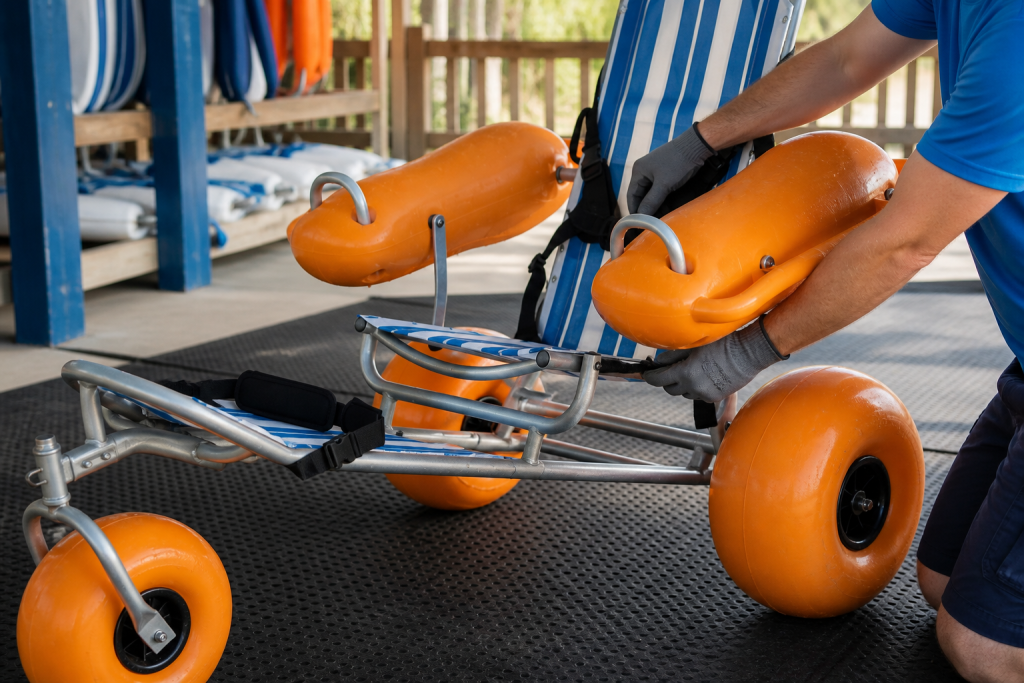
Begin in a clean staging area with enough room around the chair. The employee should look before touching, noting any obvious change from the prior shift. The check should then move through frame, floats, seat, straps, wheels, handles, foot area, and any model-specific parts named by the supplier. If the employee cannot confirm a condition, the correct result is a hold and supervisor review, not a guess.
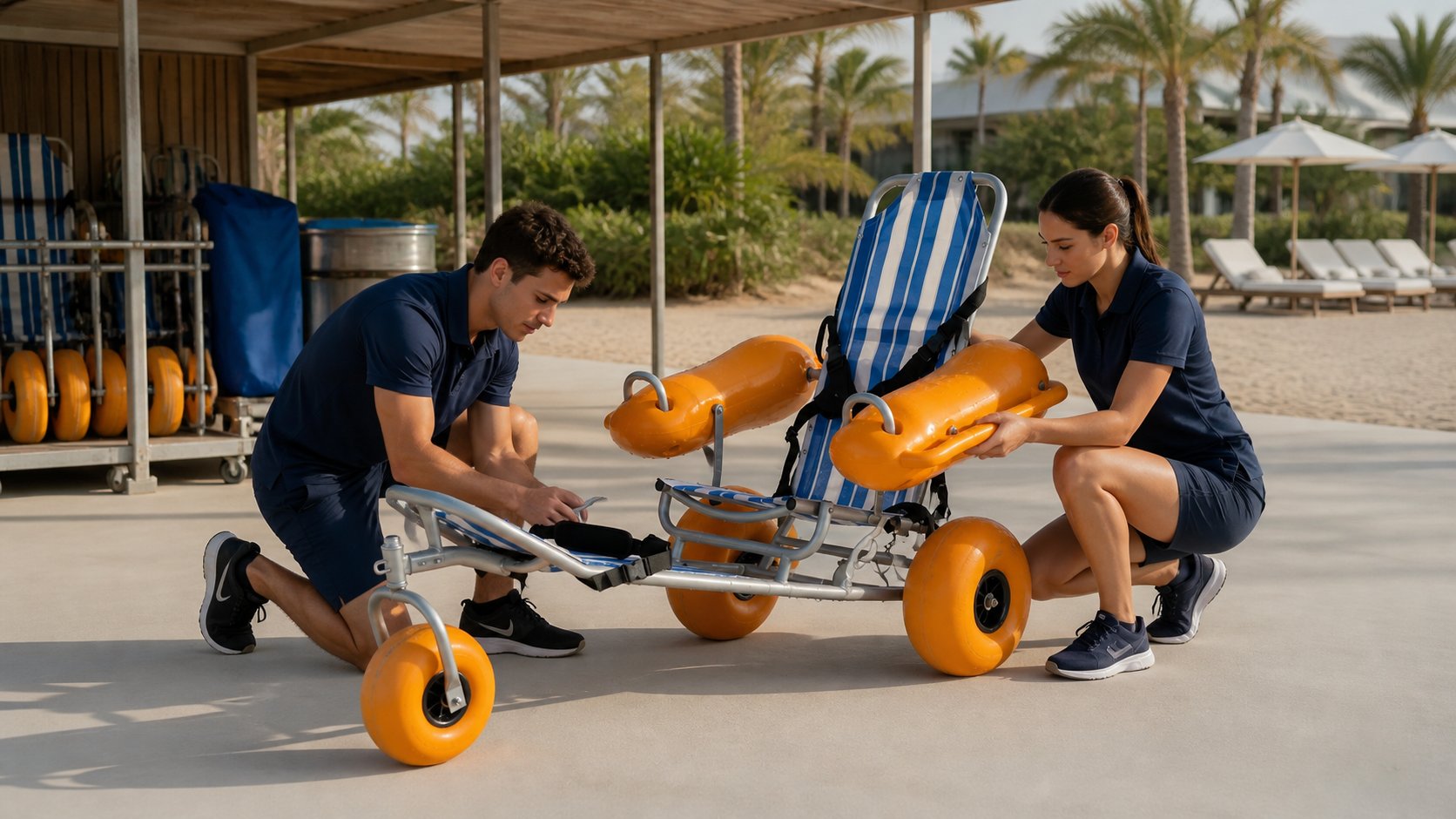
What belongs on the opening card?
Next, Keep the card direct: it should tell a trained employee what to look at, where to record the result, and what action follows a failed or unclear check. Avoid vague boxes labeled “good.” Use observable prompts such as “no visible split in float surface” or “strap hardware follows the model manual.” The property should approve exact wording with its supplier and operating lead.
The card should identify the chair because a fleet may contain more than one model or revision. It should also show the date, shift, employee, and current route status. A simple pass, hold, or not-applicable field can work when each choice has a written meaning.
- Unit identifier and model reference
- Date, shift, and employee name
- Current supplier manual or property card version
- Frame and visible joint check
- Float, wheel, seat, strap, and foot-area check
- Dry-ground movement result
- Route and staffing status
- Release or hold decision with notes
Store the opening card where staff can reach it without leaving the equipment area. A digital form may suit a large operation, but a laminated prompt and signed log can also work. The format matters less than consistent use, clear ownership, and a record that supervisors can review.
How should staff review frame, floats, seat, and wheels?
Meanwhile, Use the same visual path each time: start at one end of the floating beach wheelchair and move around it in one direction. This helps the employee cover every visible component without jumping between parts. The chair should remain on dry, stable ground while staff follow the supplier’s instructions.
Look for visible changes rather than trying to diagnose hidden faults. The employee can note loose-looking hardware, damaged fabric, strap wear, unusual wheel position, surface cuts, or missing model-specific parts. Any technical inspection, adjustment, repair, inflation task, or replacement should follow the manual and the property’s authorized maintenance process.
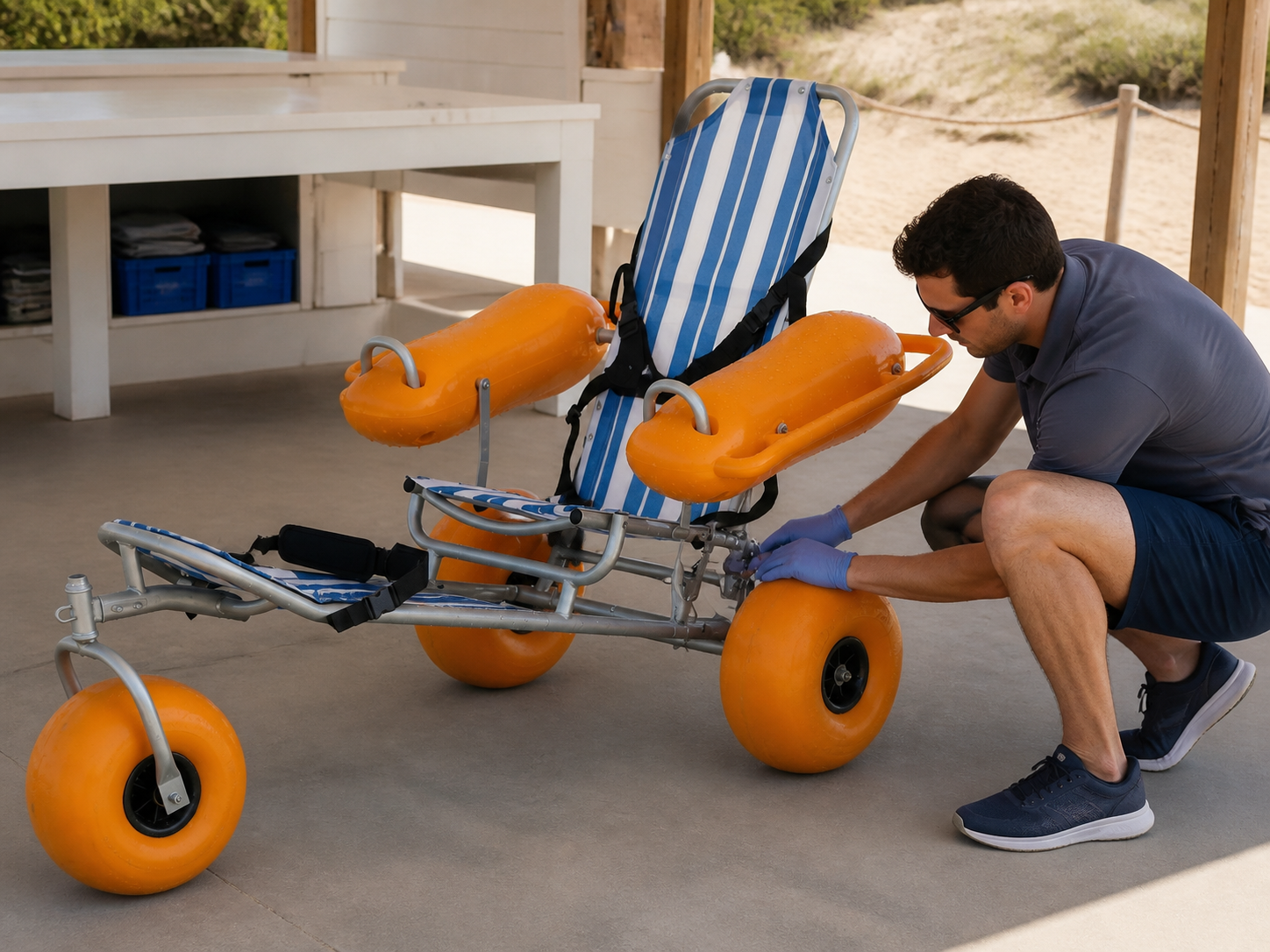
- Scan frame tubes and visible joints for change
- Review orange float surfaces and attachment points
- Check striped seat fabric and strap routing
- Look at wheel surfaces, hubs, and forks
- Confirm handles and foot area match the manual
- Verify that no required part is missing
- Record doubt as a hold rather than a pass
The comparison article on floating versus all terrain beach wheelchairs can help managers separate product roles. Staff should never borrow a checklist from a different chair category merely because both devices use balloon wheels. Float arms, seating, wheel arrangement, and water-use policy require model-specific wording.
How should teams run a dry-ground readiness check?
For example, A floating beach wheelchair readiness check should include a short dry-ground movement test and a current route review before any guest handoff. The purpose is not to prove performance. It is to confirm that the trained employee can move, steer, stop, and position the empty chair as described by the supplier and property policy.
Choose a controlled staging zone away from guest traffic. Follow the manual for handling points and any parking method. Move the chair only through the approved dry test pattern. Listen for change, watch wheel tracking, and stop if the product response differs from the normal baseline.
The team should then review the path from staging to the water-entry decision point. A clean chair cannot make a blocked route available. Mats, gates, sand conditions, staffing, weather, and local water restrictions may change the service decision.
What should the dry test include?
Still, The test should stay modest: it needs only enough movement to compare the unit with its approved baseline. A resort should not create an improvised stress test or exceed the supplier’s instructions. The employee can use a marked staging pattern with a straight movement, a gentle turn, a stop, and a return to the release point if the model manual permits those actions.
Keep the chair empty unless the approved staff training and local policy state otherwise. Guest use should not become part of equipment inspection. Record any change in sound, tracking, handle feel, wheel movement, or component position with neutral language.
- Use the approved dry staging surface
- Follow named handling points from the manual
- Move through the property’s short test pattern
- Stop if response differs from the normal baseline
- Return the chair to the marked release point
- Record pass, hold, or supervisor review
If the product has recently received maintenance, follow the return-to-service process set by the supplier and property. The guide on floating beach wheelchair maintenance for commercial use can support process planning, yet the model manual remains the technical authority.
When should staff place the unit on hold?
Afterward, A clear hold rule protects the workflow: staff should pause release whenever a required check fails, a component looks different, the manual cannot be found, the route is unavailable, trained staffing is missing, or local conditions fall outside policy. A hold is an operating status, not a fault diagnosis.
The opening card should name who can review a hold and how staff should isolate the unit from guest use. Use a visible status tag that contains no sensitive guest information. The reviewer should record the action, any supplier contact, and the criteria used for release.
- Visible damage or missing component
- Unclear float, wheel, strap, seat, or frame condition
- Unexpected response during dry movement
- Missing manual or checklist version
- Route closure or mat problem
- Staffing gap under local policy
- Weather or water restriction under local rules
Do not erase the original hold record after release. Add the reviewer’s note and time so managers can see the full sequence. Repeat holds around one component or route zone may point to a training, storage, maintenance, or site-process issue that deserves management review.
How can a staff handoff improve service consistency?
In practice, A floating beach wheelchair handoff improves service consistency when one trained employee clearly states the unit status, route status, reservation plan, and any open note to the next trained employee. The handoff should happen beside the unit or through the approved operations channel, not through scattered personal messages.
Use a short repeat-back. The receiving employee names the unit, release status, meeting point, and next action. If those details do not match, both employees stop and check the record. That small pause can prevent a released chair from being confused with a held unit.
What should the outgoing employee say?
Make the message operational: state what the next employee needs for the next action. Avoid long history unless it changes current service. The outgoing employee can point to the signed opening record and identify the route version rather than trying to recite every check.
Next, Guest communication should remain respectful and limited to service needs. The equipment log does not need personal medical details. If a reservation requires information under property policy, store it in the approved guest system rather than the chair check record.
- Unit identifier and release or hold status
- Checklist completion time and employee
- Current route and water-use decision status
- Planned meeting and return points
- Named operator and support roles
- Any open supervisor or supplier note
- Cleaning, rinse, dry, and storage status
Properties planning a wider program can review floating beach wheelchairs for resort accessibility while keeping the daily handoff tied to one site and one unit. Marketing language should never replace the signed operating record.
How should managers use the daily records?
Records work best when someone reads them: managers should review holds, repeated questions, missing fields, route changes, and maintenance referrals. The goal is a clearer process, not paperwork volume. A one-page record with consistent entries can reveal more than a long form filled with vague comments.
Meanwhile, Set a review rhythm that matches operating volume and season. A busy beach service may need a short weekly scan plus immediate review of holds. A seasonal program may review before opening, during peak use, and before storage. Local policy should name the owner.
- Check for incomplete or contradictory entries
- Group repeat holds by component or route zone
- Compare handoff notes with staffing plans
- Update prompts after an approved process change
- Confirm old form versions leave active circulation
- Keep supplier communication with the related record
Do not turn the log into a product performance database unless the property has a defined method and verified inputs. Its primary role is daily readiness, traceable decisions, and clear staff communication.
What do operators ask about opening checks?
These floating beach wheelchair answers address common resort questions about dry-ground review, release decisions, and handoffs.
For example, Q1: Can staff skip the check when the chair was unused yesterday?
No. Storage, cleaning, transport, weather, or another team’s activity may change the unit or route. Follow the property’s approved opening routine for every service period.
Q2: Does a visual pass approve the chair for water use?
Still, No. Water use also depends on the model manual, local rules, trained staffing, guest service policy, and current conditions. A visual pass covers only the named opening step.
Q3: Should staff repair a concern during the opening check?
Only if they hold the required authorization and follow the approved maintenance process. Otherwise, place the unit on hold and refer it through the named channel.
Afterward, Q4: Can one checklist cover different floating chair models?
Not safely as a single technical form. A shared workflow can exist, but component prompts and handling steps should match each model manual.
Q5: What should staff tell a guest when the chair is on hold?
In practice, Use clear, respectful service language approved by the property. Explain that the unit is unavailable under the current check and offer the next available service option without making a technical diagnosis.
Seven calm checks can make opening service easier to run: identify the unit, review the frame, review floats and seating, check wheels and handling points, perform the approved dry test, confirm route and staffing, then log the release or hold. For a model-specific B2B discussion, contact us today with your property workflow and the questions your team wants the checklist to answer.
Related planning resources: Compare saltwater care steps, staff handoff training, commercial hire budgeting before approving a sample, staff plan, or service workflow.