
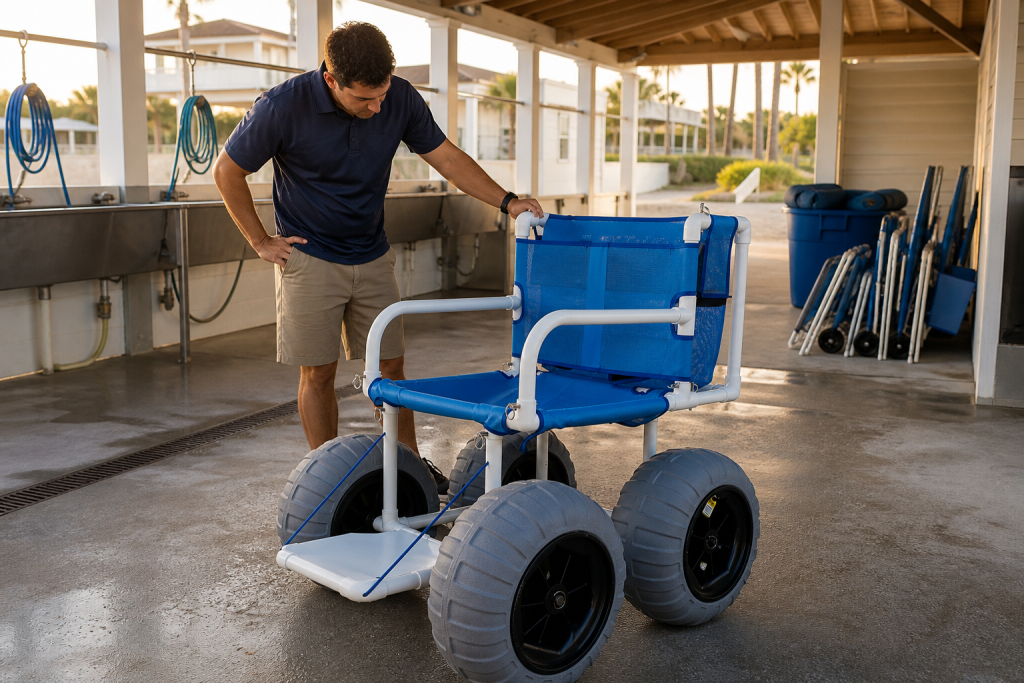
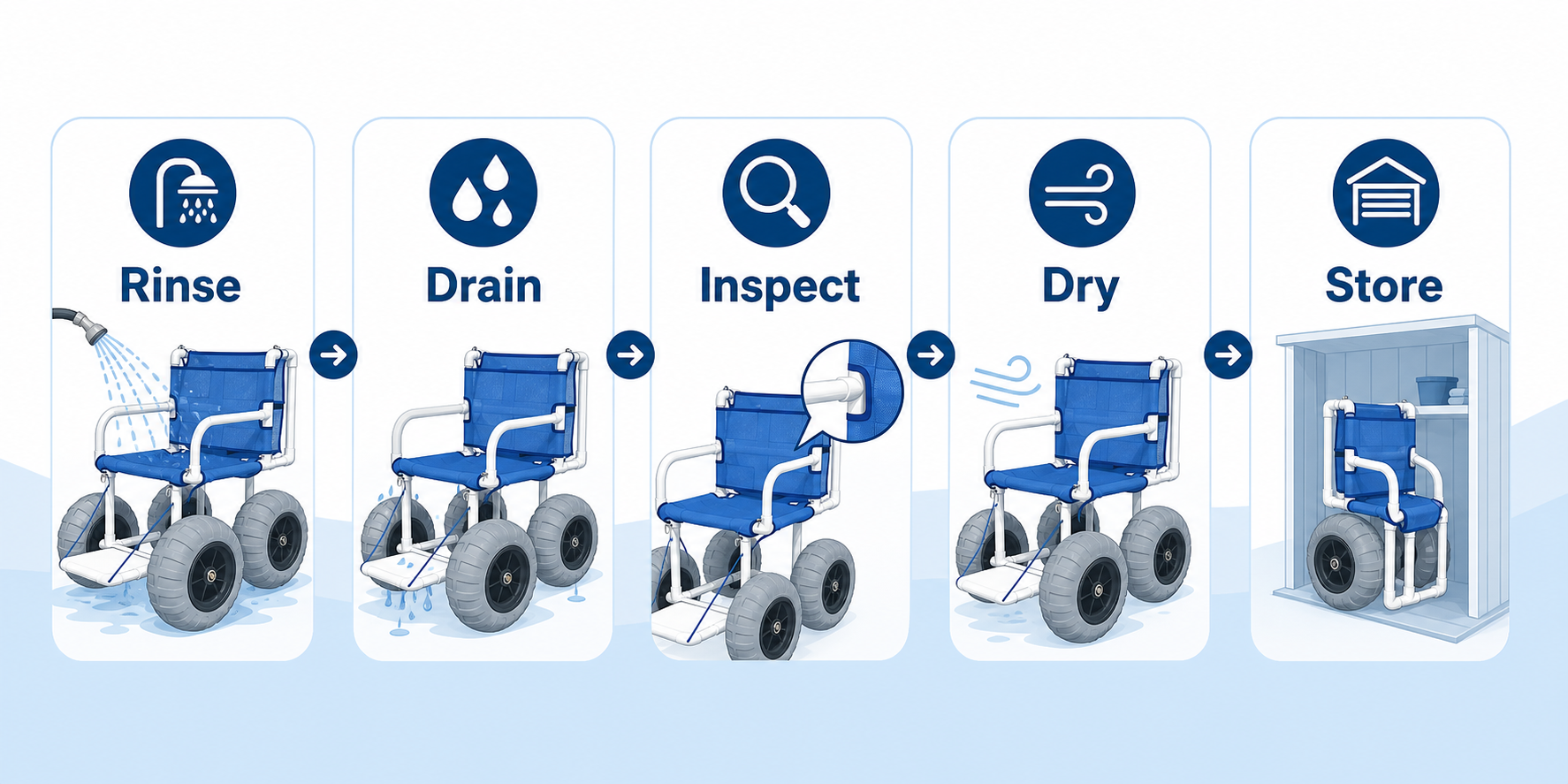
A PVC Beach Wheelchair care plan should move each chair through post-use inspection, freshwater rinsing, drainage, complete drying, protected storage, and shift handoff. Follow current supplier instructions. Keep metal fittings and moving parts visible during checks. Record damage before returning a chair to service. For U.S. facilities, align local procedures with official mobility-device guidance.
A PVC beach wheelchair may look simple, yet a rental fleet still faces sand, salt spray, sunscreen, moisture, rough handling, and rushed storage after a busy shoreline shift. Without a shared care routine, one employee may rinse only visible surfaces while another stores damp fabric or misses a change at a joint. Resort and rental managers can reduce that variation through a repeatable post-use process built around the product manual, approved supplies, factual records, and a clear out-of-service path.
This guide focuses on cleaning and observation rather than repair instructions. Any adjustment, replacement, or technical service should follow manufacturer guidance and be completed by personnel authorized for that work.
What causes avoidable wear in a PVC beach wheelchair fleet?
In practice, A PVC beach wheelchair can face avoidable wear when sand, salt, moisture, sunscreen, and loose debris remain on its frame, fabric, cords, wheel areas, or footplate after use. Storage choices matter as much as rinsing because trapped water and poor airflow can leave components damp between rentals. Rough stacking, dragging disassembled parts, using harsh chemicals, or forcing connectors may also change surfaces and fittings.
Rental managers should treat care as a full operating cycle rather than a quick hose-down. A documented cycle starts at return, continues through rinsing and drainage, then closes only after inspection, drying, and suitable storage. Staff should compare every action with the model’s own instructions and pause whenever a product condition falls outside routine cleaning.
Which residues should staff remove after use?
Begin with visible residue and likely collection points. Staff can rinse exposed sand and saltwater from approved surfaces while paying attention to seams, cord paths, wheel hubs, footplate edges, and PVC joints. The goal is not aggressive scrubbing. It is a controlled process that removes loose material without masking a problem or damaging fabric and fittings.
Next, The Beach Wheelchair ST V2.0 page can help buyers recognize a related beach-chair layout, while the manual for the fleet’s purchased model defines suitable cleaning methods. If staff find a stain, odor, rough edge, altered fit, or trapped debris that routine care does not resolve, they should document the observation and move the chair into the approved review path.
- Remove loose sand before it moves deeper into joints, fabric folds, or storage areas.
- Rinse saltwater residue from manufacturer-approved frame, wheel, cord, and footplate surfaces.
- Wipe guest-contact areas with products approved for the chair’s materials.
- Keep solvents, abrasive tools, and unapproved cleaners away from PVC and mesh.
- Separate cleaning observations from repair decisions.
How should teams rinse without hiding a problem?
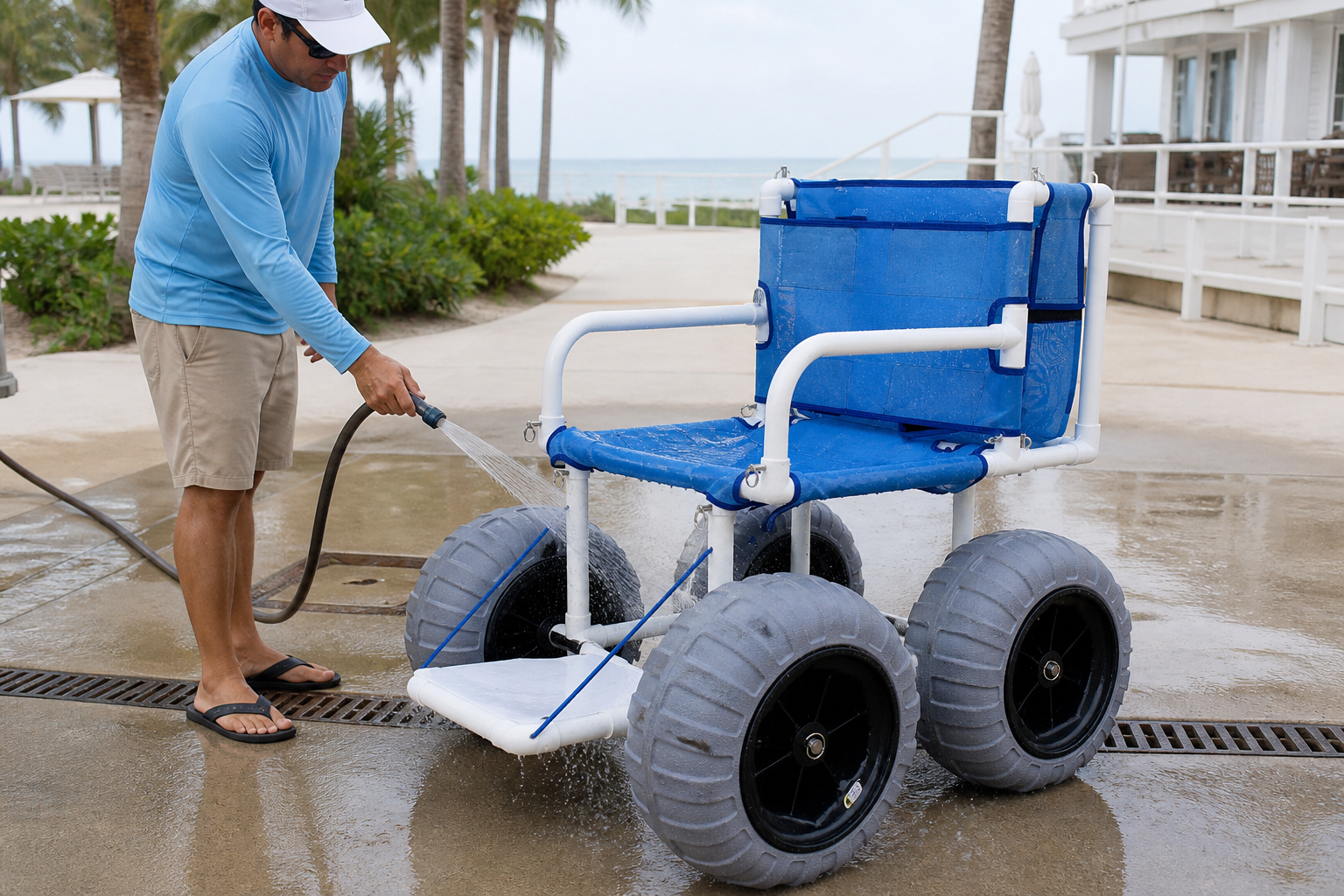
A PVC beach wheelchair rinse should use the method and water pressure allowed by the manufacturer, with the chair positioned so staff can see drainage and inspect surfaces afterward. A gentle fresh-water rinse can move sand and salt away without turning the task into a high-pressure wash that drives debris into small gaps or conceals a loose part. Staff should work in a consistent order, such as wheels and lower frame, footplate and cords, seat and back, then upper frame.
That sequence can be changed to match the product manual, but the chosen method should stay consistent across shifts. Employees should stop if a fitting moves unexpectedly, fabric detaches, a cord path looks wrong, or water does not drain as expected.
What should staff inspect after drainage?
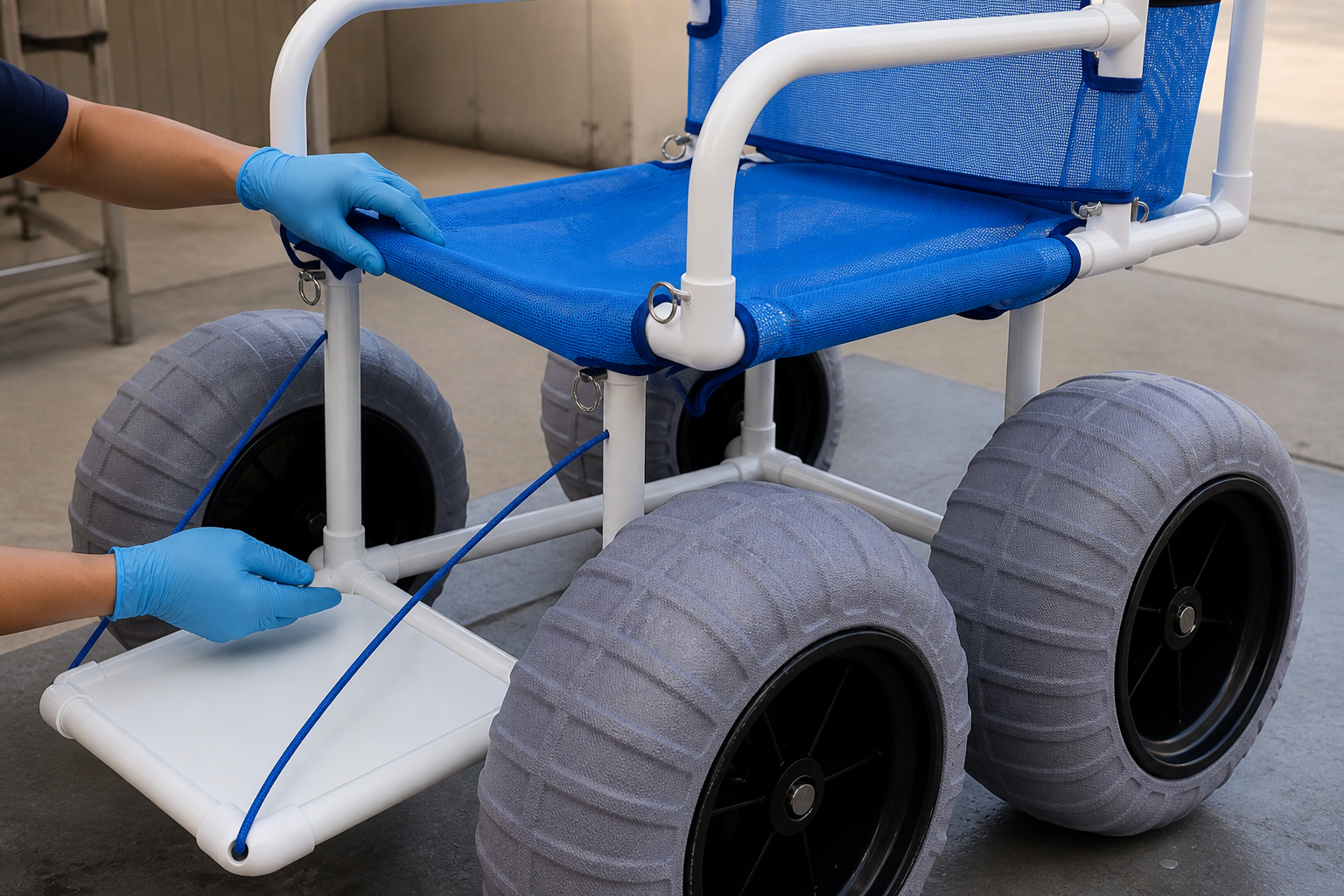
Meanwhile, A PVC beach wheelchair inspection should cover visible PVC joints, frame tubes, seat and back fabric, cords, attachment points, footplate, wheels, hubs, and any fasteners listed in the approved checklist. Inspection should happen after loose residue has cleared and excess water has drained, since grime can hide surface changes while standing water can make small details harder to see. Staff should use good light and factual language.
A note such as “left cord routed differently from reference” is more useful than a vague label such as “bad.” The beach wheelchair maintenance article can support broader planning, but a fleet checklist must match the purchased chair and local service procedure.
Which observations require a service hold?
Use a simple rule: uncertainty means pause. Staff should place a chair under review whenever a component is missing, altered, loose, cracked, sharply worn, difficult to move as intended, or different from the approved setup. The same hold applies when a worker cannot explain a noise, cord path, wheel condition, seat attachment, or frame connection. A service hold is an operational status, not a technical diagnosis.
For example, Staff can tag the chair, block it from reservation inventory, and send the record to authorized maintenance or the supplier contact. They should not borrow parts from another chair, force a connector, or return the unit to service because the next booking is waiting.
- Hold the chair when any required component is missing or does not match its approved position.
- Record unusual movement, rubbing, looseness, sharp wear, or visible surface change.
- Photograph the observation when site policy permits and personal data is absent.
- Keep the unit out of booking inventory until authorized review closes the hold.
- Link the final disposition to the original return and inspection record.
How should staff dry and store modular parts?
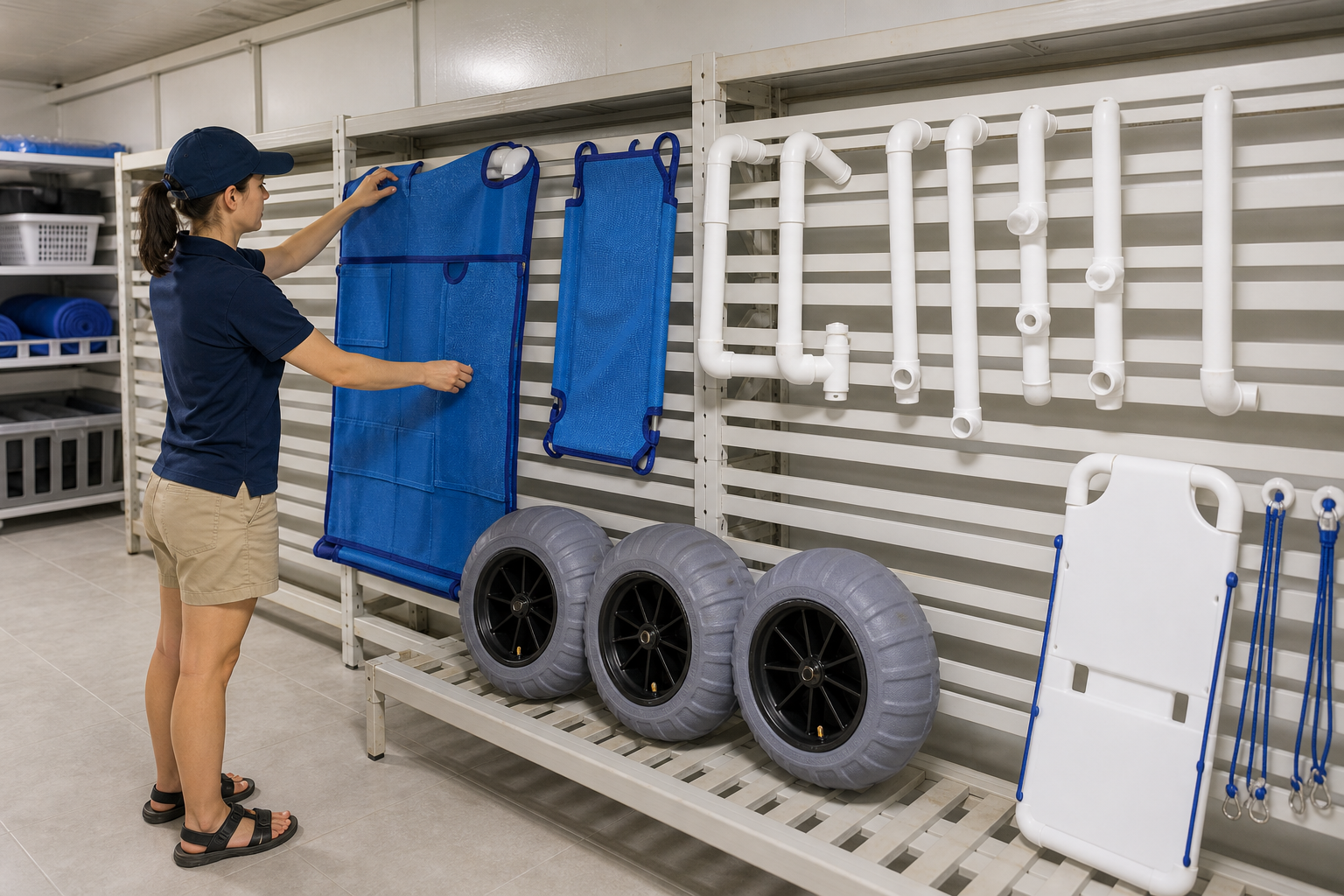
A PVC beach wheelchair should dry according to manufacturer directions in a clean, ventilated area where water can drain and fabric can air without being folded damp. Staff should avoid sealed bins, direct heat, harsh sun exposure beyond product guidance, and stacks that press fittings or mesh into awkward shapes. If the chair is stored assembled, it needs stable support and space around contact points.
If approved storage uses modules, every part should rest on a suitable rack with wheel surfaces, cords, fabric, footplate, and PVC sections protected from impact. The balloon-wheel beach wheelchair article gives buyers useful context on wheel design, while the fleet’s own storage method should come from its model instructions and site layout.
How can managers schedule care across busy rental days?
Still, A PVC beach wheelchair care schedule should assign tasks by rental event and shift rather than depend on spare time at closing. One employee can receive the returned unit, another can complete the rinse and drainage tasks, and a named person can close inspection and ready status. Smaller teams may combine roles, but the record should still show who completed each step.
Managers can protect turnaround quality by keeping enough equipment and labor for realistic care cycles without promising a fixed universal reset time. Reservations should never force a damp or uncertain chair back into use. A visible workflow board or digital status view can separate available, cleaning, drying, under review, and unavailable equipment without exposing guest information.
What should a simple care record capture?
Keep records factual and easy to close. A useful record identifies the chair, return time, operating environment, completed care steps, observed conditions, current status, and responsible staff. It should avoid unsupported guesses about why a part changed. Managers can add a short exception field for facts that authorized maintenance may need, such as a wheel that did not rotate as expected or a cord that no longer matched the reference setup.
Afterward, Consistent labels help supervisors review patterns across a fleet and spot repeated handling or storage issues. The record also gives the next shift a clear answer when a guest asks whether a reserved chair is ready.
- Equipment identifier and return date or time.
- General use environment, such as dry sand, wet sand, or saltwater exposure.
- Rinse, drainage, inspection, drying, and storage completion fields.
- Factual observations with optional approved photographs.
- Ready, under review, or unavailable status with staff ownership.
When should maintenance move beyond routine cleaning?
A PVC beach wheelchair should move beyond routine cleaning whenever staff observe a component change, persistent residue, unusual movement, altered fit, visible damage, missing hardware, or any condition the approved checklist cannot close. At that point, trained cleaning staff should stop rather than experiment. Authorized maintenance can compare the chair with technical documentation, decide whether parts or service are needed, and record the outcome.
Managers should keep repair tools and spare components under controlled access so frontline staff do not make unrecorded substitutions. Supplier communication works better when the request includes the model, equipment identifier, factual observation, clear photographs, service history, and operating environment without an invented diagnosis.
How should teams separate returned and ready equipment?
In practice, A PVC beach wheelchair should move through physically distinct return, cleaning, drying, review, and ready zones so a damp or unchecked unit cannot be mistaken for available stock. The layout does not need a large facility, but every zone needs a clear purpose and enough room for staff to work without stacking frames, wheels, fabric, or footplates in unstable positions. Managers can use rack position, floor color, equipment tags, or a digital board that matches the physical area.
Whatever method the site chooses, a unit should change zones only when the assigned task and record are closed. Personal items and guest paperwork should stay away from cleaning and storage areas.
The flow should also prevent clean parts from crossing paths with sand-covered returns. Staff can place rinse supplies near drainage, drying racks near ventilation, and service-hold equipment in controlled access. A busy shift may receive several units at once, so each chair and its modules need an identifier that remains attached through the process. If identifiers are missing or mixed, staff should pause assembly and send the parts for review. Clear separation reduces mistaken status changes without claiming that a colored zone replaces inspection.
How can spare-parts control support a PVC fleet?
Next, A PVC beach wheelchair spare-parts process should keep approved components identified, protected, and linked to the exact models they support. Managers should avoid open bins where similar tubes, cords, fittings, fasteners, fabric sections, or wheel parts can be exchanged without a record. Authorized maintenance can maintain a parts list, receipt date, supplier source, compatible model, storage location, and use history. Frontline cleaning staff should know where to send an observation, but they should not choose a substitute part based on appearance. This boundary keeps cleaning, inspection, and technical work from blending into an undocumented repair.
Procurement teams can review parts availability, documentation, packaging, and supplier communication before seasonal demand rises. They should ask how the manufacturer identifies components, how updates are communicated, and what information a service request needs. Fleet records can then link a replaced component with the chair, authorized worker, reason, and return-to-service approval. That trail helps supervisors separate recurring handling issues from isolated events while avoiding speculative claims about product life.
What do rental managers ask about PVC chair care?
A PVC beach wheelchair care plan often raises questions about rinsing, chemicals, disassembly, booking status, and record retention. These concise answers support policy drafting, while the product manual and authorized service guidance control the exact process for a purchased chair.
Meanwhile, Q1: Should staff rinse the chair after every beach use? Follow the manufacturer care schedule and site procedure, with post-use attention whenever sand, saltwater, or other residue is present.
Q2: Can teams use any disinfectant on PVC and mesh? No. Use only products and methods approved for each material and the purchased model.
Q3: Should a chair be stored while fabric remains damp? No. Follow approved drainage and drying steps before ready status or enclosed storage.
For example, Q4: Can staff replace a loose part during cleaning? Only authorized personnel should perform adjustments or replacement work under the approved service process.
Q5: What if the next reservation starts soon? Keep the chair unavailable until its required care and review steps are closed; use the site’s approved alternative plan.
How can a fleet turn care into a dependable routine?
A PVC beach wheelchair fleet becomes easier to manage when every return follows the same rinse, drainage, inspection, drying, storage, and status process. Train staff on the actual model, keep approved supplies at the point of work, and give employees permission to place a unit under review without delay. Link booking availability with the care record so operational pressure does not override an unresolved condition.
Still, Managers can compare related options through the Beach Series, then build a model-specific routine for each purchased product. For product documentation, fleet planning, or supplier questions, contact us today with your intended environment and rental workflow.
Related planning resources: Review floating-chair handoff training, pre-service checklist, all-terrain route planning before approving a product, sample, route, or supplier decision.