

You make repairs easier by pairing a Lightweight electric wheelchair with clear part identity, fault reporting, repair boundaries, and a named support contact. A customer can lose days of use while dealer and supplier exchange pictures of nearly identical controllers. An unapproved spare may then create a new problem. Build the service process during sampling so your team knows what to record, what to hold, and who can authorize the next step.
1. What Makes Lightweight Electric Wheelchair Support Work?
Lightweight electric wheelchair support works when the buyer and supplier share a clear path from reported problem to verified resolution. That path needs product identity, evidence, named owners, and agreed follow-up. A friendly sales contact helps, but it cannot replace a clear process when equipment becomes unavailable.

Which roles should be clear before ordering?
Name the person who owns the next step. Agree on who receives reports, checks evidence, approves work, supplies parts, and checks closure. Ask how escalation works when a case remains open. Keep promises about response and repair times tied to current written terms rather than assuming a universal service window.
- Name sales, technical, and logistics contacts.
- Define the details needed for case intake.
- Agree on escalation and progress updates.
- Record who authorizes return to use.
| Support stage | Needed owner | Expected output |
|---|---|---|
| Intake | Dealer contact | Clear case record |
| Review | Approved technical team | Next allowed action |
| Closure | Responsible service owner | Checked result |
A named handoff keeps reports from circulating without a decision. Key Takeaway: Buy a support process alongside the product, with roles written down.
2. Which Lightweight Electric Wheelchair Parts Need Identity?
Lightweight electric wheelchair parts need IDs that distinguish model, revision, connectors, mounting, and approved replacements. Similar shape does not prove compatibility. Controllers, batteries, motors, casters, brakes, supports, and cushions may differ within a product family, so a photograph should support rather than replace a part reference.

What belongs in a practical parts list?
Order by reference, then check the image. Ask for part names, approved part numbers, clear photos, and replacement boundaries. Use the joystick handover guide to organize questions about mounts and cable routing. Keep compatibility decisions with approved staff, especially where software or electrical matching is involved.
- Link each part to compatible model revisions.
- Photograph connectors without exposing sensitive records.
- Record approved substitutes and limits.
- Update the list after supplier changes.
| Identifier | What it distinguishes | Useful attachment |
|---|---|---|
| Part reference | Exact ordered part | Supplier photo |
| Revision | Design or production change | Compatibility statement |
| Model mapping | Where the part may be used | Current parts list |
This reduces delay caused by repeated visual guessing. Key Takeaway: A serviceable product needs a parts list your dealer can use without improvising.
3. What Should a Lightweight Electric Wheelchair Fault Report Say?
Lightweight electric wheelchair fault reports should state what happened, when it appeared, and which setup was involved. Describe symptoms before suggesting a cause. A good report gives technical staff a safe starting point without asking the customer to repeat a risky event or dismantle equipment.

Which details make a remote review faster?
Report the change you saw. Include model and serial details, recent service, warning signals, charging history where relevant, and normal use conditions. Ask for permitted photos of the affected area. Protect personal data and collect only what the case requires, especially when images show a user or private space.
- State the symptom in plain language.
- Name the exact chair and affected part.
- Note when the symptom began and any recent changes.
- Preserve warnings without bypassing or clearing them.
| Report field | Useful example | Avoid |
|---|---|---|
| Symptom | Control does not respond at startup | Unsupported diagnosis |
| Context | Appeared after transport | Missing timeline |
| Identity | Model and part revision | Description based on color |
Specific notes help support staff choose an approved next step. Key Takeaway: Build your fault form around observable evidence rather than guessed failures.
4. When Should a Lightweight Electric Wheelchair Stay on Hold?
Lightweight electric wheelchair service hold is suitable when a reported state may affect safe use or needs approved inspection. Follow manufacturer guidance and local service procedures. Brake faults, unexpected movement, structural damage, or concerning battery signs deserve a clear stop-and-review response rather than an informal workaround.
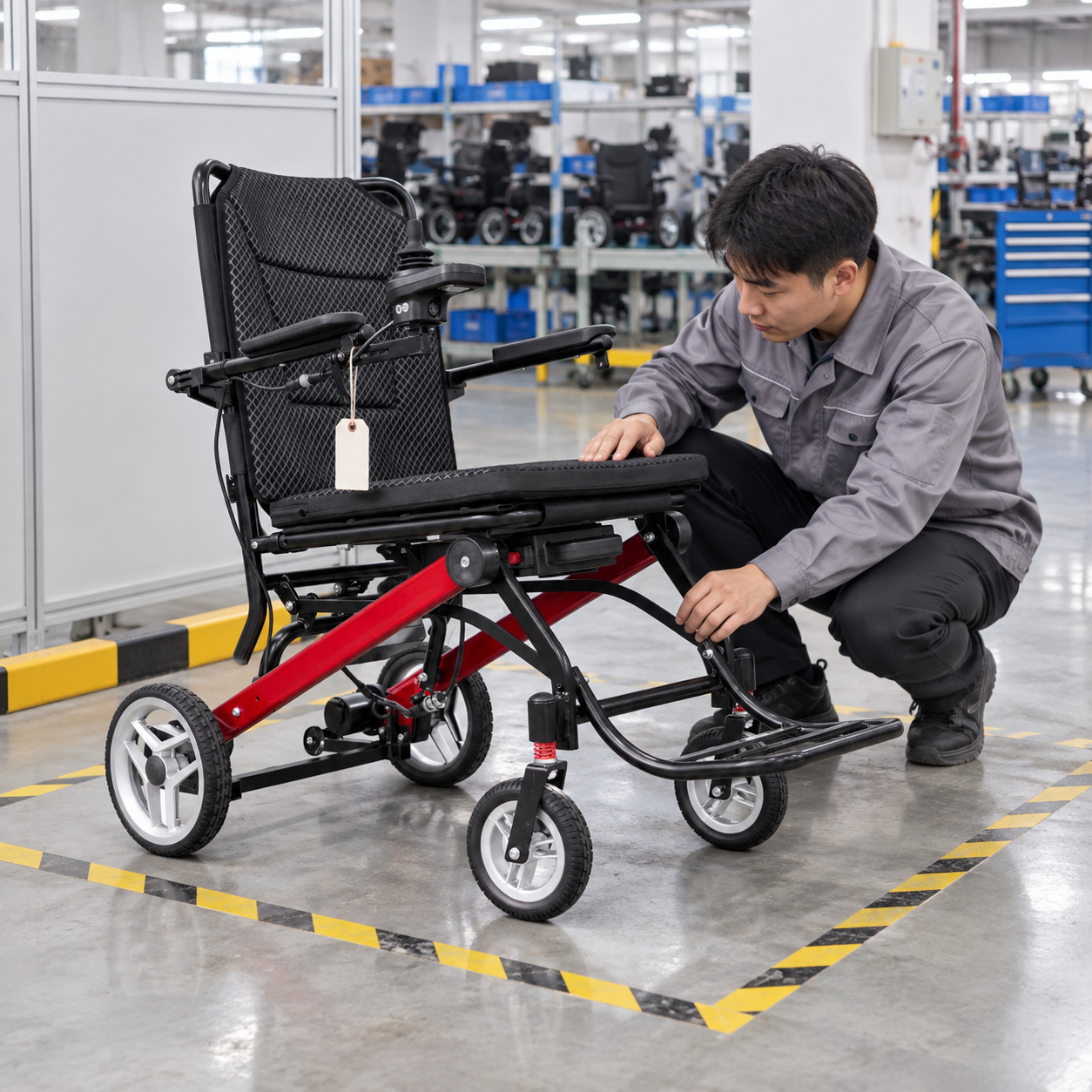
How do you prevent accidental return to use?
Make status visible to the whole team. Separate equipment awaiting review from ready stock and record who controls release. Extend the discipline used in a delivery receiving check to returned products. If a user relies on the chair, discuss suitable service plans without promising an unsuitable replacement.
- Record the reason for holding equipment.
- Limit handling to approved checks.
- Keep sales and service teams informed.
- Require recorded resolution before release.
| Status | What staff may do | Release state |
|---|---|---|
| Reported | Collect allowed evidence | Technical review |
| On hold | Follow agreed service steps | Approved resolution |
| Ready | Use within approved instructions | Checked handover |
Visible status reduces the chance of a rushed, undocumented return. Key Takeaway: A service hold needs both a reason and an accountable release process.
5. Who Should Repair a Lightweight Electric Wheelchair?
Lightweight electric wheelchair repairs should stay within the competence, approval, and procedures needed for the task. Dealers need to know which checks they may perform and which work belongs with qualified service staff. A video or spare part alone does not establish that a repair method is suitable.

What should the service agreement distinguish?
Draw the boundary before a fault occurs. Separate user care, dealer inspection, approved part replacement, and specialist work. Ask for current instructions, tools, training, and verification steps where replacement is allowed. Never bypass safety systems or open a battery pack to shorten turnaround.
- Record approved tasks by role.
- Keep needed training and tools available.
- Follow approved procedures and part matching.
- Escalate tasks outside your service capability.
| Task class | Typical role | Needed support |
|---|---|---|
| User care | Trained user or helper | Current manual |
| Dealer review | Approved dealer staff | Clear inspection scope |
| Technical repair | Qualified approved staff | Procedure and checks |
Clear limits support faster decisions without unsafe shortcuts. Key Takeaway: Match repair work with approval and staff capability.
6. What Should a Lightweight Electric Wheelchair Warranty Explain?
Lightweight electric wheelchair warranty terms should explain scope, exclusions, claim evidence, roles, and the remedy process. Read part-specific terms rather than assuming every part has identical coverage. Warranty length alone tells you little about freight costs, diagnosis, labor, or how a cross-border claim will be resolved.

Which questions belong in quotation review?
Ask what happens after a claim is accepted. Clarify needed evidence, return approval, replacement approval, transport plans, and any charges your business may bear. Product options in the wheelchair range may carry different commercial terms. Have your team review the actual agreement for your market and order.
- Name coverage by part and use conditions.
- Check claim submission and approval steps.
- Allocate freight, labor, and inspection costs.
- Record escalation for open claims.
| Term | Buyer question | Evidence |
|---|---|---|
| Coverage | Which parts and conditions? | Written warranty |
| Remedy | Repair, replacement, or another response? | Agreed process |
| Costs | Who pays each part of resolution? | Commercial terms |
Specific terms help dealers explain support without overpromising. Key Takeaway: Compare the complete claim process rather than one warranty duration.
7. Which Lightweight Electric Wheelchair Spares Should You Stock?
Lightweight electric wheelchair spare stock should reflect installed models, seen faults, supplier lead times, and approved service work. Avoid choosing quantities from an unsupported universal ratio. A small, well-identified range can serve dealers better than a large shelf of parts that do not match current revisions.
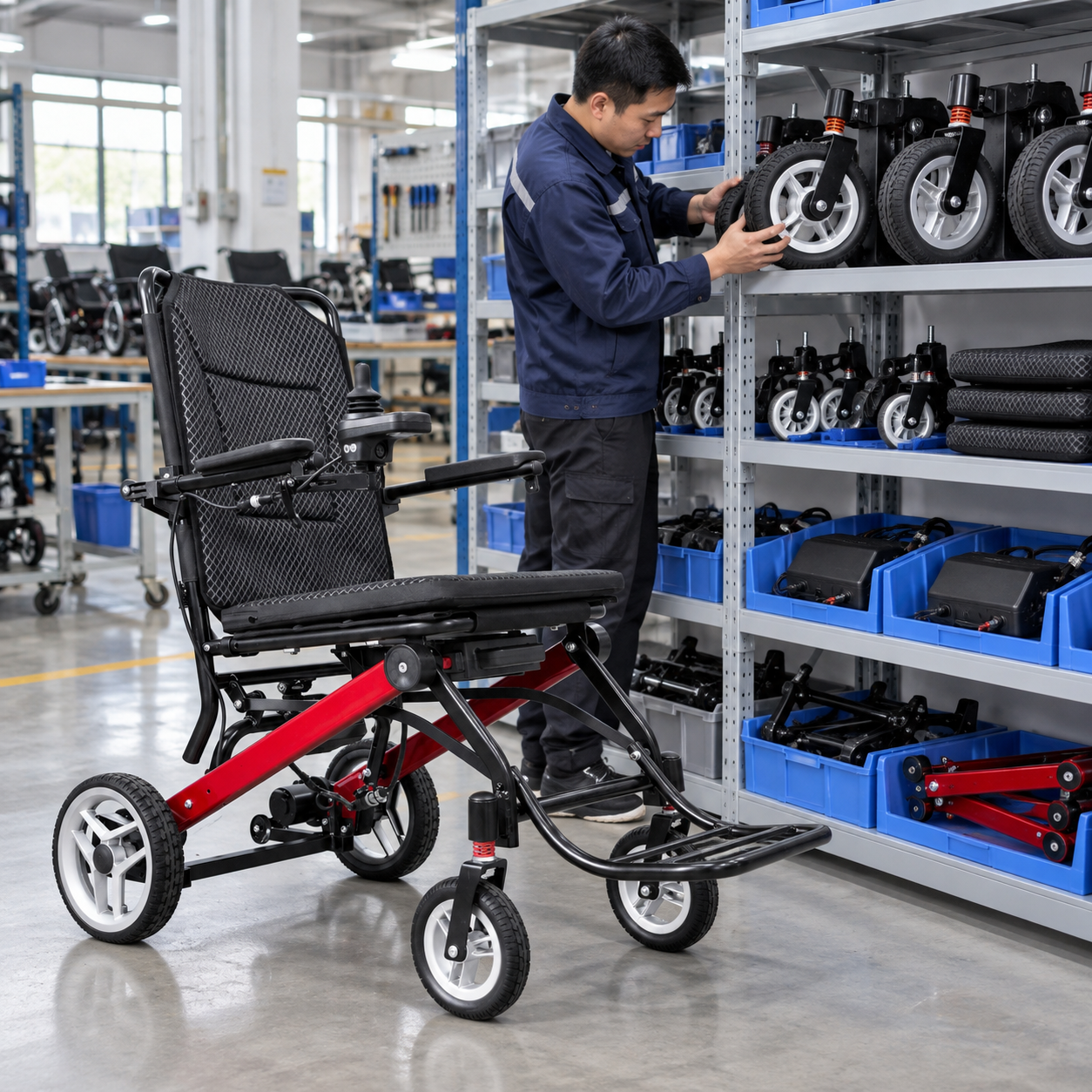
What details should guide a starter kit?
Use your actual installed base. Ask the supplier which approved parts your team may replace, then compare that list with expected support needs and logistics. Review stock as field evidence arrives. Batteries need their own compatibility, storage, and transport plan, so do not treat them like ordinary hardware bins.
- Map parts to current model and revision.
- Record actual order and restocking times.
- Track usage before increasing quantities.
- Separate service tools from replacement stock.
| Stock input | What it changes | Review method |
|---|---|---|
| Installed models | Compatible part range | Dealer asset list |
| Actual faults | Likely demand | Case history |
| Supply route | Reorder timing | Current supplier quote |
Stock decisions improve as your own evidence grows. Key Takeaway: Start with traceable parts and revise quantities from real service demand.
8. How Do You Teach Lightweight Electric Wheelchair Aftercare?
Lightweight electric wheelchair aftercare should give users clear model-specific instructions, practical training, and a route for follow-up. The WHO provision guidance treats training and follow-up as part of wheelchair services. Keep explanations suited to the user and avoid transferring technical repair duties through a rushed demo.

What should a customer be able to show back?
Ask for a demo, then fill the gaps. Review allowed setup, routine inspection, charging, storage, and fault reporting for the delivered setup. Use clear pictures and accessible instructions where suitable. Check that the customer knows when to stop use and how to reach suitable help.
- Demonstrate daily care within the user manual.
- Check understanding with a practical repeat.
- Provide a clear contact route for concerns.
- Arrange follow-up suited to the user's needs.
| Training topic | Demo goal | Follow-up record |
|---|---|---|
| Setup | Correct allowed plan | User understanding |
| Routine care | Safe recorded steps | Instructions provided |
| Fault response | Stop and report when needed | Contact confirmed |
The handover should leave the customer with a usable plan. Key Takeaway: Good aftercare training reduces guesswork while preserving clear repair boundaries.
9. How Do You Check a Lightweight Electric Wheelchair Repair?
Lightweight electric wheelchair repair checks should confirm that approved work resolves the reported concern and that connected functions operate correctly. Use approved procedures and competent staff. Record the required checks before returning equipment to use.
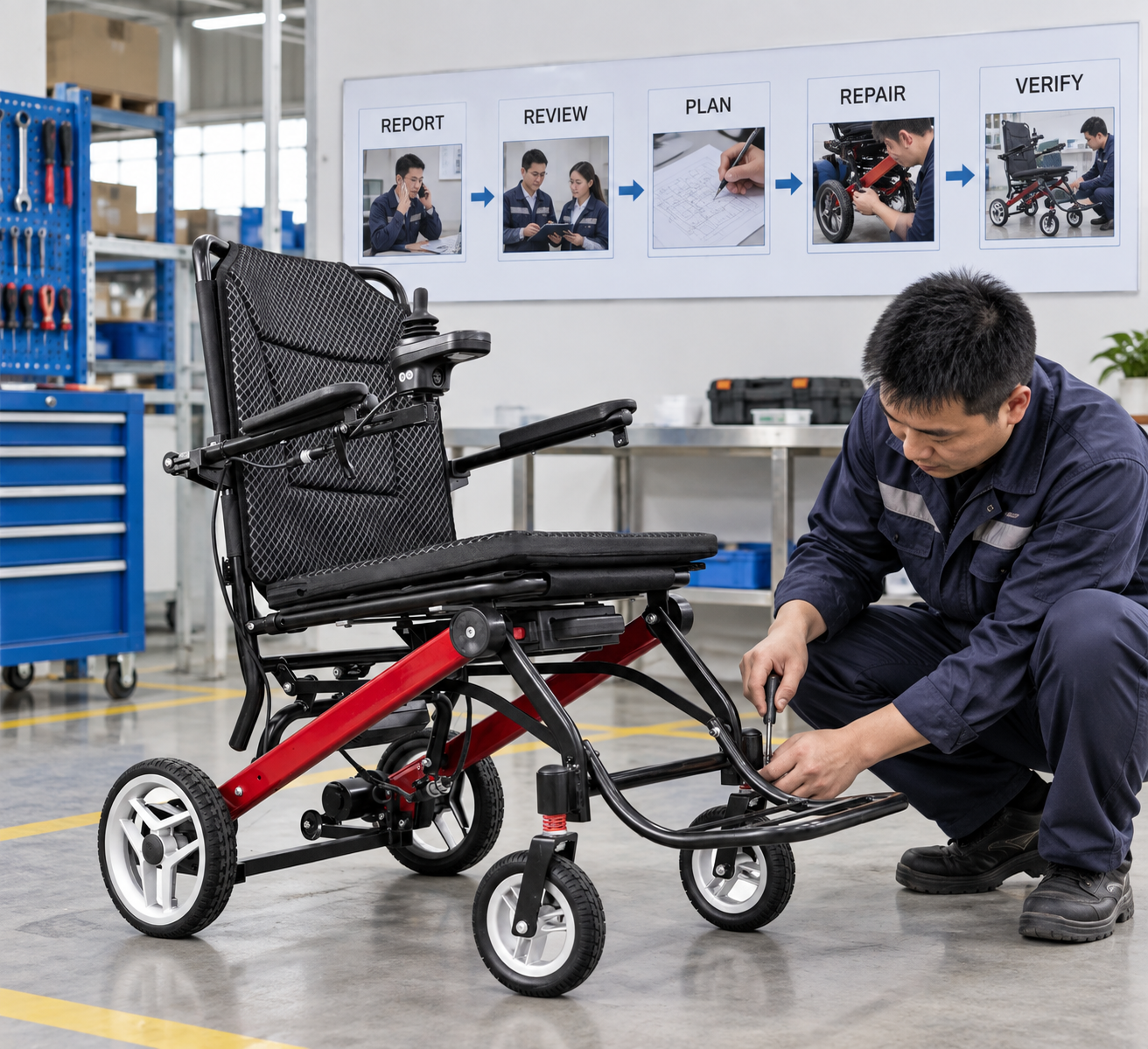
Which details should close a service case?
Check the outcome against the original symptom. Record parts used, revisions, work performed, test results, and the person authorizing release. Review related setup changes, including controls and seating, before handover. Explain the outcome to the customer and retain unresolved issues in the file.
- Link work records with the original fault report.
- Name replacement parts and approved revisions.
- Complete needed connected-function checks.
- Record release and customer handover.
| Closure item | Purpose | Responsible input |
|---|---|---|
| Work record | Shows what changed | Repair technician |
| Checks | Supports return to use | Approved checker |
| Handover | Explains outcome and care | Dealer contact |
The diagram represents service steps, not measured repair success rates. Key Takeaway: Close a case when the result is checked and the handover is clear.
10. How Can Lightweight Electric Wheelchair Support Improve Orders?
Lightweight electric wheelchair support can improve later orders when service records guide product, manual, training, and packing changes. Look for repeated symptoms and conditions across confirmed cases. Keep suspected causes separate from verified findings so a pattern prompts review rather than an unsupported accusation.

What should you discuss before a repeat order?
Bring the evidence back to sourcing. Share confirmed issues, service delays, parts mismatches, and recurring training gaps with Ary Medical. We can discuss product records, sample needs, and supplier-support questions for the next order. Our position is that equipment supply should include details dealers can use when customers need help.
- Review case trends with actual shipment context.
- Agree on changes and named owners before reorder.
- Check revised parts and instructions together.
| Field finding | Buying response | Evidence to request |
|---|---|---|
| Repeated mismatch | Revise parts mapping | Updated compatibility list |
| Handover confusion | Improve instructions | Demo and feedback |
| Packing damage | Review protection | Revised packing evidence |
This connects individual repairs with better product support and repeat-order decisions. Key Takeaway: Contact us with your service brief to discuss a more practical support plan.
Frequently Asked Questions
Q1: Can I order parts by photo alone?
Use the part reference and revision as well. Similar appearance does not prove electrical, mechanical, or software compatibility.
Q2: What's the best starter spare-parts quantity?
Base it on installed models, actual demand, lead times, and approved work. There is no reliable universal percentage for every dealer.
Q3: How do I know if a repair belongs with a specialist?
Check the manufacturer's procedure, needed competence, and approval. Escalate work outside your approved service scope.
Q4: Can I return a chair to use after replacing a part?
Only after needed checks and release. The original symptom and connected functions need the checks specified for that repair.
Q5: How do I know whether warranty terms meet my needs?
Review coverage, exclusions, claim evidence, remedies, and who pays each cost. Compare the written process with your actual customer-support duties.