
Choose a commode chair bucket by matching the exact chair, bucket assembly and care instructions before ordering a replacement or setting up shared use. A gray receptacle may look familiar in a product photo, but a different rim or support can make it wrong for another frame. If staff improvise removal or cleaning, the next handover becomes uncertain. Ask for the current part reference and a named hygiene process.
What should a commode chair bucket order identify?
A commode chair bucket order should identify the exact chair model, fitted bucket, lid or cover if supplied, and approved replacement reference. The small-wheel front image shows a gray container beneath a black seat but not a universal part code. Request the current assembly list.
Which fields prevent a wrong delivery?
Name the chair before the pan. Record model, wheel variant, bucket reference and what fittings are included. A seller should confirm whether the request covers only the receptacle or a complete supported assembly.
- Identify chair and bucket part codes.
- State the included component scope.
- Ask for current matching instructions.
| Order field | Purpose |
|---|---|
| Chair model | Selects the right parts record |
| Bucket scope | Clarifies what arrives |
A colour match is weaker than a controlled part match. Key Takeaway: Your receiving team can check the bucket against a real chair.
How do you match a commode chair bucket to a frame?
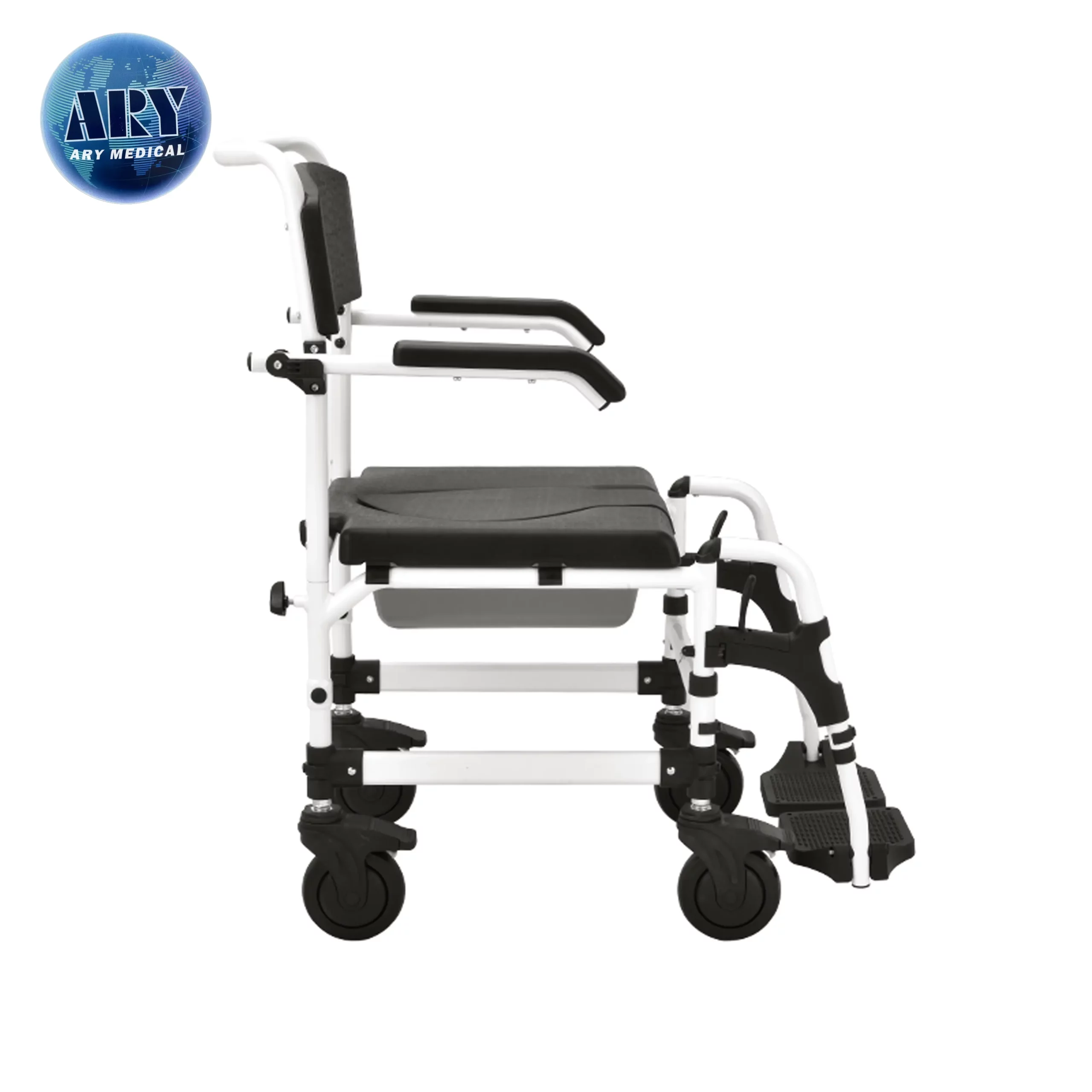
Match a commode chair bucket to the maker-approved support and seat opening on the exact frame. The side view shows how a bucket sits below the seat, but no fixing measurement or removal method. Use the product range for context and request model-specific evidence.
What should a supplier verify?
Check the interface, not the silhouette. Ask which seat, bucket support and related parts belong together. A similar gray shape may have different engagement or clearance on another chair.
- Compare exact chair and bucket references.
- Identify associated support or lid pieces.
- Request approved fitting and check guidance.
| Fit point | Evidence |
|---|---|
| Seat opening | Current model drawing |
| Bucket support | Approved assembly record |
The interface matters more than the container colour. Key Takeaway: Your team can avoid an unapproved substitute.
Can photos explain commode chair bucket removal?
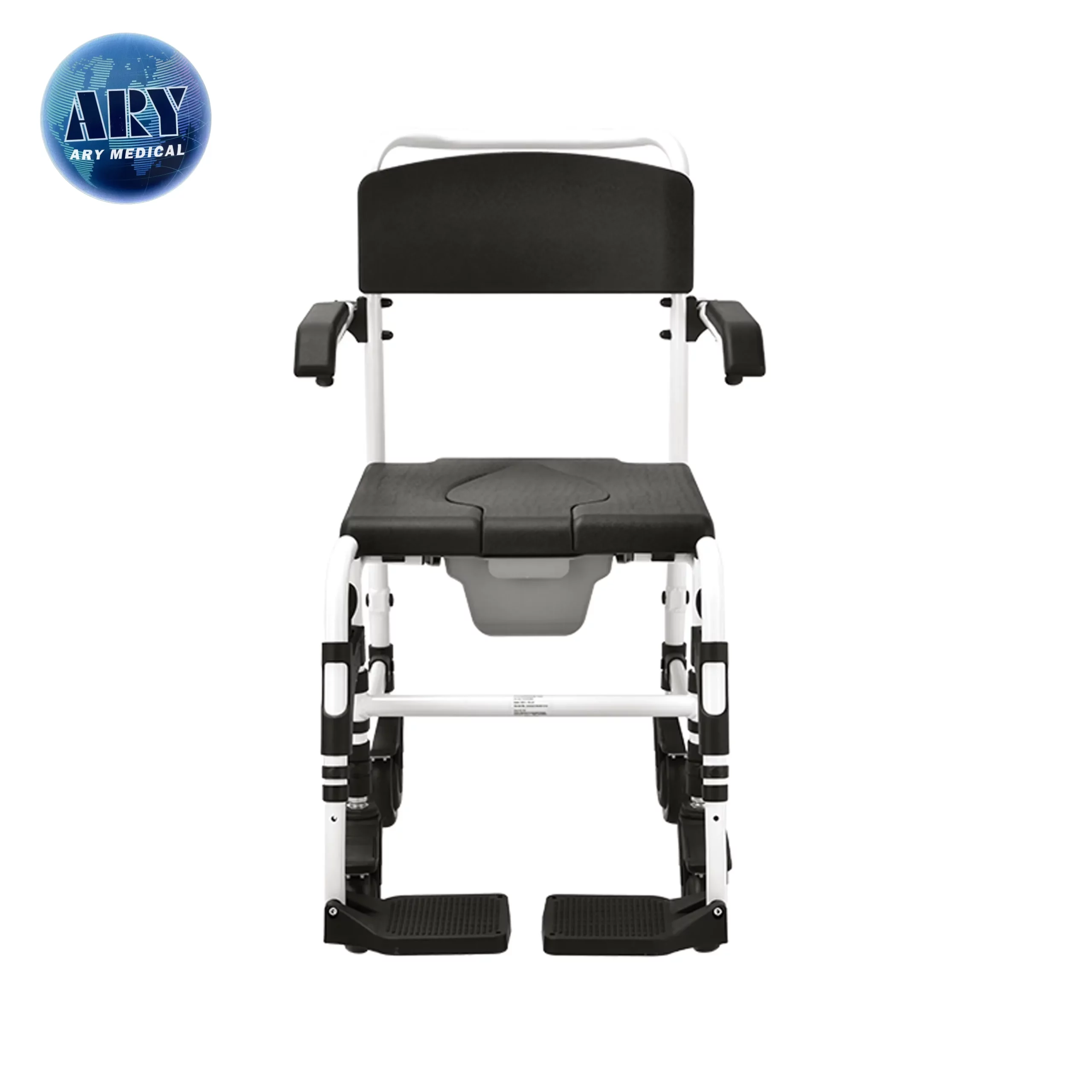
Photos cannot provide a safe universal commode chair bucket removal sequence. The front image shows the fitted container beneath a small-wheel chair, not the permitted hand positions or hygiene steps. Follow the exact maker guide and local care protocol.
What should a staff guide contain?
Use a controlled instruction, not a guess. The maker should name the correct part, permitted handling method, checks and stop conditions. A care lead should set the hygiene process for the setting and train staff on it.
- Use model-specific bucket instructions.
- Identify the trained handler and care route.
- Refer unclear or damaged supports for review.
| Question | Owner |
|---|---|
| How does it fit? | Maker instructions |
| How is it handled after use? | Local care protocol |
A clear split of duties reduces improvised handling. Key Takeaway: Your staff can find the right method before touching the assembly.
Who should review commode chair bucket care?

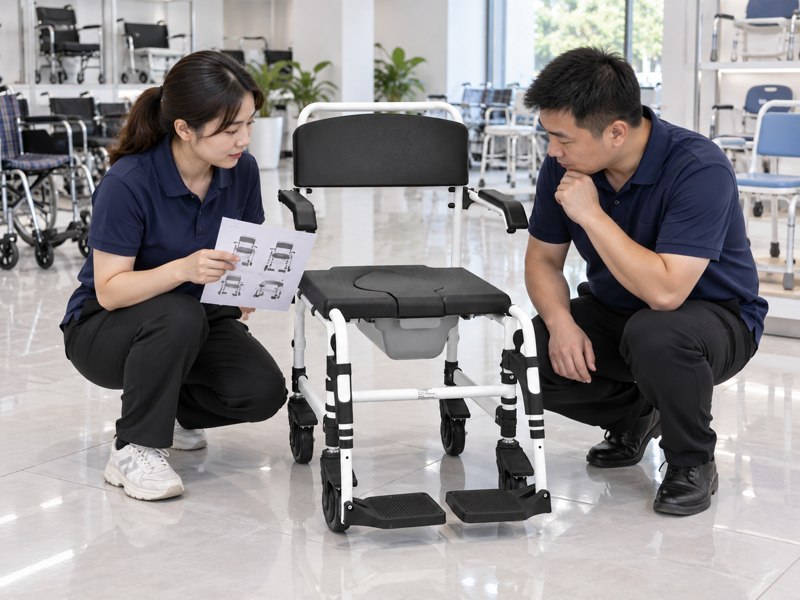
A commode chair bucket care plan should be agreed by the setting's responsible care lead using the maker's material and cleaning limits. The illustrative model-review scene is a paper check beside an empty chair, not proof of hygiene. Related transfer equipment has its own care and handling duties.
What needs a named owner?
Keep use, cleaning and release connected. Record who empties and cleans, which process applies and when the chair can return to use. The exact procedure must come from product directions and the facility's risk assessment, not this article.
- Assign bucket and chair care responsibility.
- Use compatible products and current instructions.
- Record condition and release decision.
| Care step | Record |
|---|---|
| Bucket handling | Responsible worker |
| Return to use | Approved check result |
Care work is safer when ownership is visible. Key Takeaway: Your service can hand over a chair with a traceable care status.
Do variants share the same commode chair bucket?
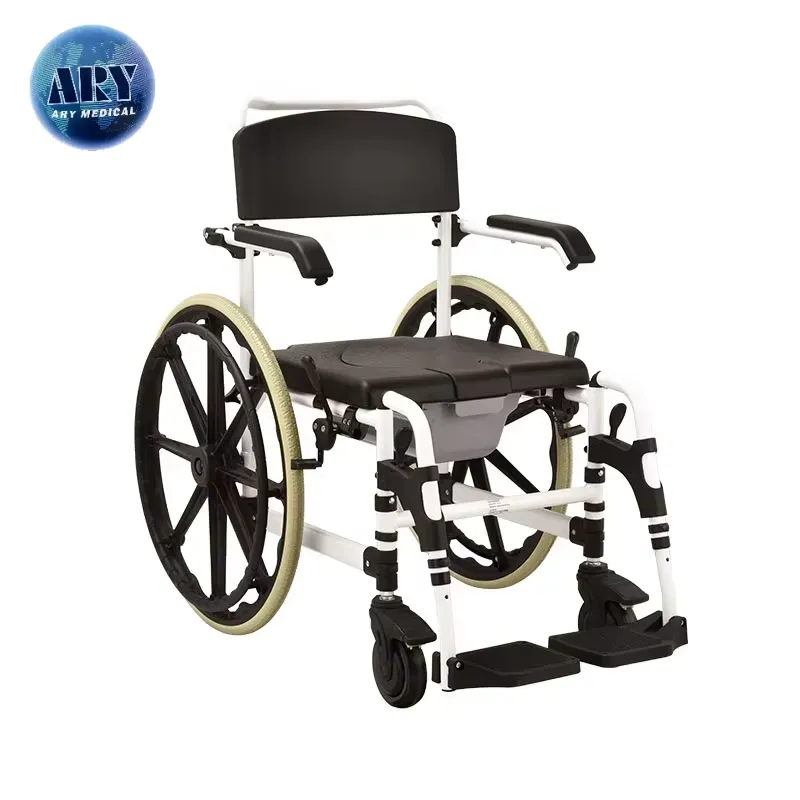
Large-rear-wheel and small-wheel variants may not share the same commode chair bucket, even when frames and seat colours look alike. The gallery shows two distinct wheeled configurations. Ask for separate bucket and support references before treating them as interchangeable.
How should a quote show this distinction?
Put each variant on its own line. Record exact model and associated bucket assembly for each chair. Do not infer a common part from a family name or an overlapping seat opening in photographs.
- Identify wheel and frame variant.
- Request its approved bucket code.
- Keep service directions separate.
| Variant | Buyer request |
|---|---|
| Small-wheel chair | Matching bucket record |
| Large-rear-wheel chair | Independent bucket and support data |
Shared styling does not guarantee shared fit. Key Takeaway: You can order replacements without mixing model families.
Which commode chair bucket materials need guidance?

The commode chair bucket material, surface finish and any lid or handle need product-specific care guidance. A large-rear-wheel side photo shows the bucket position but cannot identify its polymer or chemical compatibility. Ask the maker for the actual materials record.
What should a cleaning enquiry include?
Name the surface before the product. Request the approved cleaning agents, contact conditions and drying method for the named part. Do not assume any disinfectant or temperature works for all plastic buckets.
- Identify the exact bucket and added parts.
- Request allowed products and limits.
- Record damage or surface change for review.
| Material question | Source |
|---|---|
| Surface type | Maker specification |
| Cleaning compatibility | Current care instructions |
A material name without an approved method still leaves staff guessing. Key Takeaway: Your care plan can be specific to the supplied receptacle.
When should a commode chair bucket be replaced?
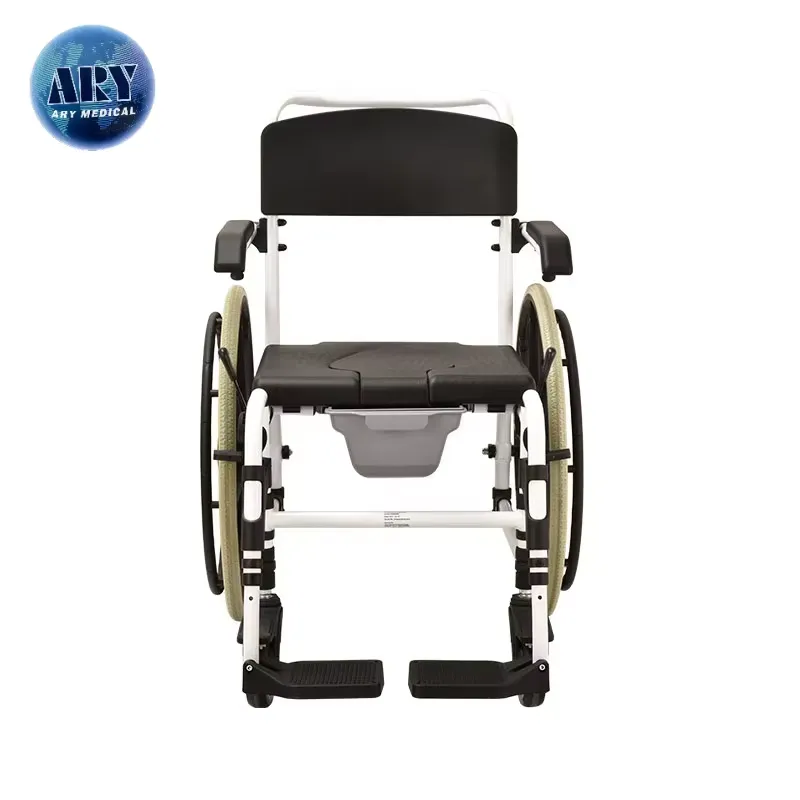
A commode chair bucket should be reviewed for replacement when damaged, missing parts, hard to secure or outside the maker's stated service limits. The large-rear-wheel front photo does not set a lifespan. Use the site's hold and technical review route for doubts.
Which evidence helps a supplier?
Report the concern in context. Send model and bucket codes with clear views of the affected area. Do not ask staff to repeat a risky fit attempt merely to obtain a better video.
- Record visible damage or fit concern.
- Keep chair and bucket identities together.
- Ask for an approved replacement decision.
| Concern | Next step |
|---|---|
| Damage or crack | Hold and review |
| Unclear fit | Check approved part reference |
A doubtful bucket should not be passed to the next user by default. Key Takeaway: Your service team can close the issue with the correct part.
How should shared-use commode chair bucket records work?

Shared-use commode chair bucket records should connect product identity, care method, trained worker and release status. The illustrative care scene shows the record process, not a decontamination result. Keep the bucket and chair together in the log.
What should be checked after care?
End with a documented release decision. UK adult social-care guidance is one example of assigning cleaning roles and using maker-compatible methods; apply the local protocol relevant to your setting. Ask the supplier team for model-specific cleaning limits.
- Record method and responsible worker.
- Note any damage or missing part.
- Hold or release under the care policy.
| Record field | Use |
|---|---|
| Bucket and chair ID | Keeps parts together |
| Care and release | Supports handover |
A checklist needs a real decision at the end. Key Takeaway: Your next user receives equipment with a known care status.
What should a commode chair bucket matching chart show?
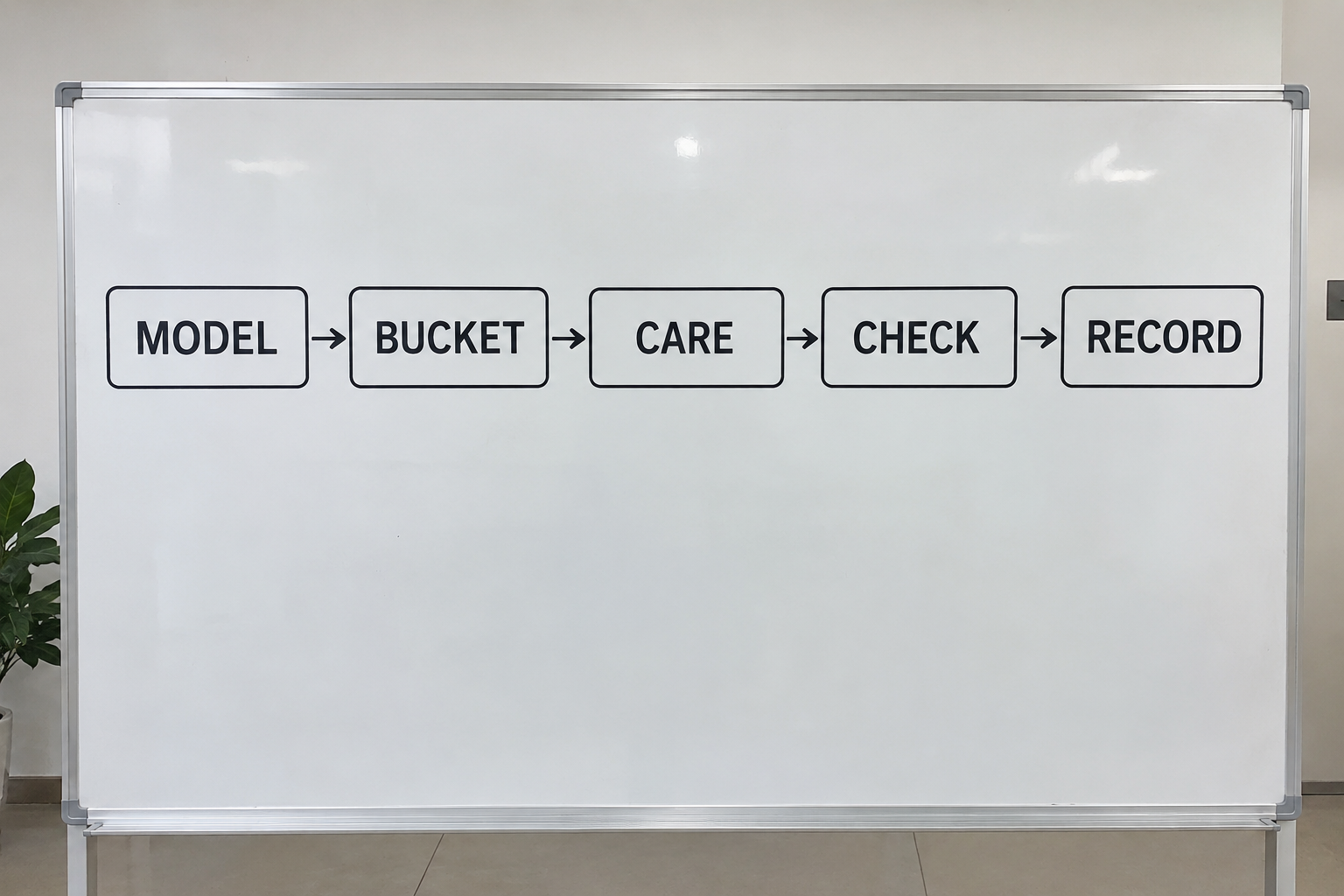
A commode chair bucket matching chart should show model, bucket, care method, check and record for the specific variant. The board image gives those review stages, not removal directions. Add the approved part and guide version to the actual dealer sheet.
Can a colleague repeat the match?
Keep the source beside each field. Link chair, receptacle and support references with inspection notes. Mark unknowns as open questions instead of approving a visual match.
- List exact model and bucket references.
- Attach current care instructions.
- Record checks and unresolved issues.
| Chart field | Purpose |
|---|---|
| Model and bucket | Supports ordering |
| Care and check | Supports safe handover |
A simple chart prevents one gray bucket from becoming a generic item. Key Takeaway: Your dealer can explain why the selected part fits.
How do you request a commode chair bucket replacement?

Request a commode chair bucket replacement with the exact chair variant, current bucket code, observed concern and care setting. Ask for approved fitting and cleaning information before the part returns to use. Avoid generic removal steps or material guesses.
Ready to send the parts question?
Show the supplier the whole context. Ary Medical can clarify available bucket and support parts for a named wheeled commode. Include your model, care and service questions so the response can address the actual chair.
- Identify chair and bucket variants.
- Describe fit or condition concern.
- Request current part and care records.
| Buyer input | Supplier answer |
|---|---|
| Exact chair and bucket | Approved replacement match |
| Care setting | Available handling guidance |
A complete parts brief shortens the route from concern to decision. Key Takeaway: For model-specific bucket information, contact us. Ary Medical favours clear part identity and careful handover.
Frequently asked questions
Q1: Can I use any gray bucket that fits under the seat?
No. Confirm the exact chair and approved bucket assembly.
Q2: What's the best way to clean a shared-use bucket?
Follow the maker's material limits and your setting's approved care protocol.
Q3: How do I know if the bucket is fitted correctly?
Use the exact model instructions and a trained check; a product photo is insufficient.
Q4: Can I swap buckets between small-wheel and large-wheel chairs?
Only if the maker confirms the same part for both exact variants.
Q5: How do I know when replacement is needed?
Refer damage, missing parts or uncertain fit through the approved service route.