

Choose a wheeled commode chair by identifying the exact wheel configuration, checking the intended route and following model-specific handling instructions. The AryMD gallery shows both a four-small-caster chair and a different large-rear-wheel version. A buyer who treats those photos as one interchangeable model may order the wrong parts or make an unsupported brake claim. Compare the actual sample, product record and care plan before purchase.
What is a wheeled commode chair in this range?
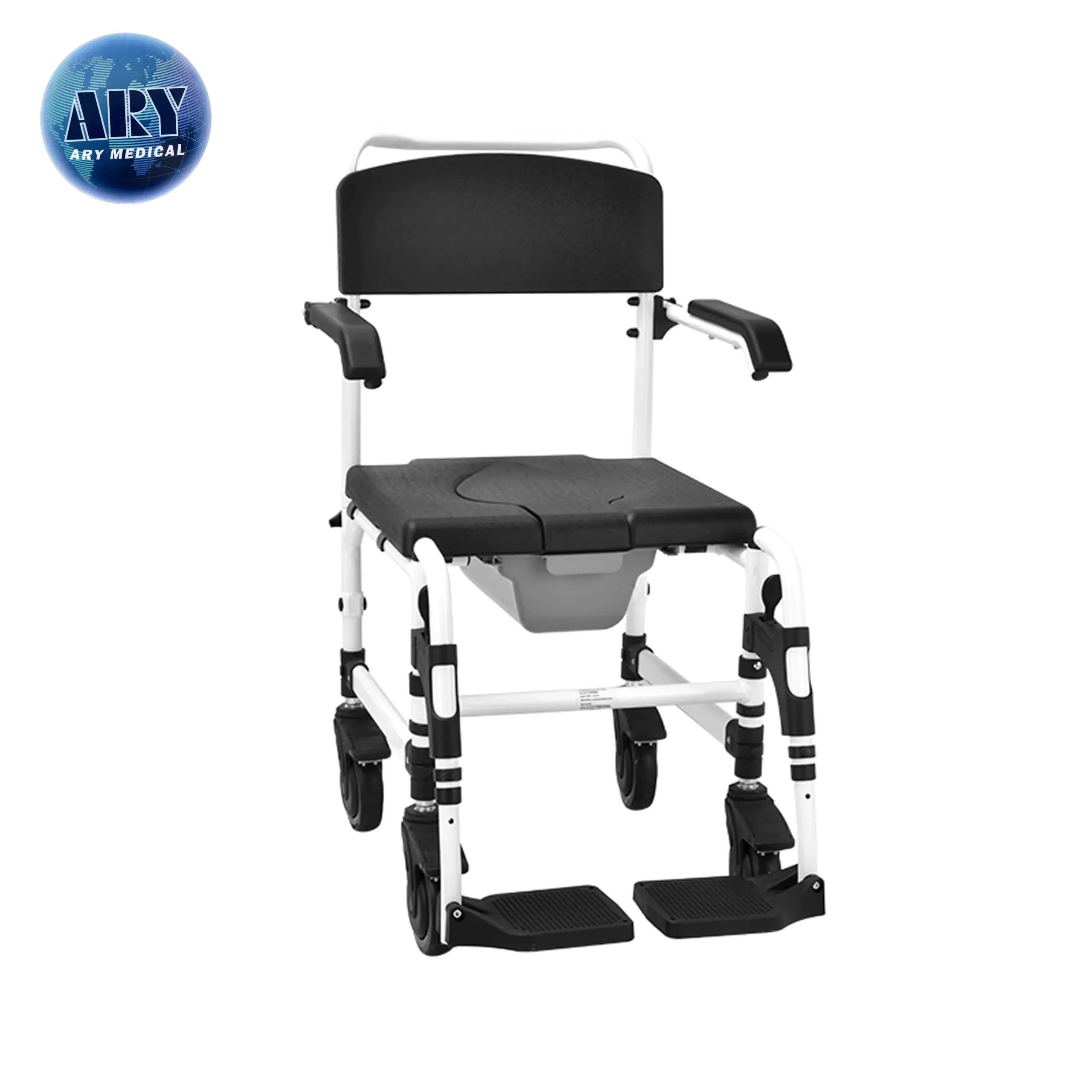
A wheeled commode chair in this range is a white-frame commode with a black seat and back, an under-seat container and wheels. The selected gallery includes different wheel layouts. Do not use one photo as the specification for every variant.
Which identity belongs on the request?
Name the version before the wheel. Record model, revision and the supplied chair configuration. The small-caster front image is a useful reference but not a complete parts list.
- Identify exact model and product page.
- Record wheel and foot-support layout.
- Keep current maker instructions with the order.
| Record | Use |
|---|---|
| Model and revision | Defines the chair |
| Wheel configuration | Defines the variant |
The same seat style can sit over another wheel set. Key Takeaway: Your buying team can compare products without mixing versions.
How do wheel versions of a wheeled commode chair differ?

Wheel versions of a wheeled commode chair differ visibly between a four-small-caster frame and a large-rear-wheel frame with smaller front casters. That difference can affect parts, handling and route questions. It does not prove a change in brake or transport capability.
What should a comparison sheet show?
Keep two variants in separate columns. Record each wheel position and exact model reference. Use the toilet-chair range for options, then ask for the current document for each shortlisted chair.
- Separate small-caster and large-rear-wheel samples.
- Name front and rear wheel assemblies.
- Ask for variant-specific instructions.
| Variant | Visible layout |
|---|---|
| Small-caster | Four small wheels |
| Large rear-wheel | Large rear wheels, small front casters |
Wheel appearance helps identification, not operating claims. Key Takeaway: You can prevent a mixed-version order.
How do you match a wheeled commode chair wheel part?
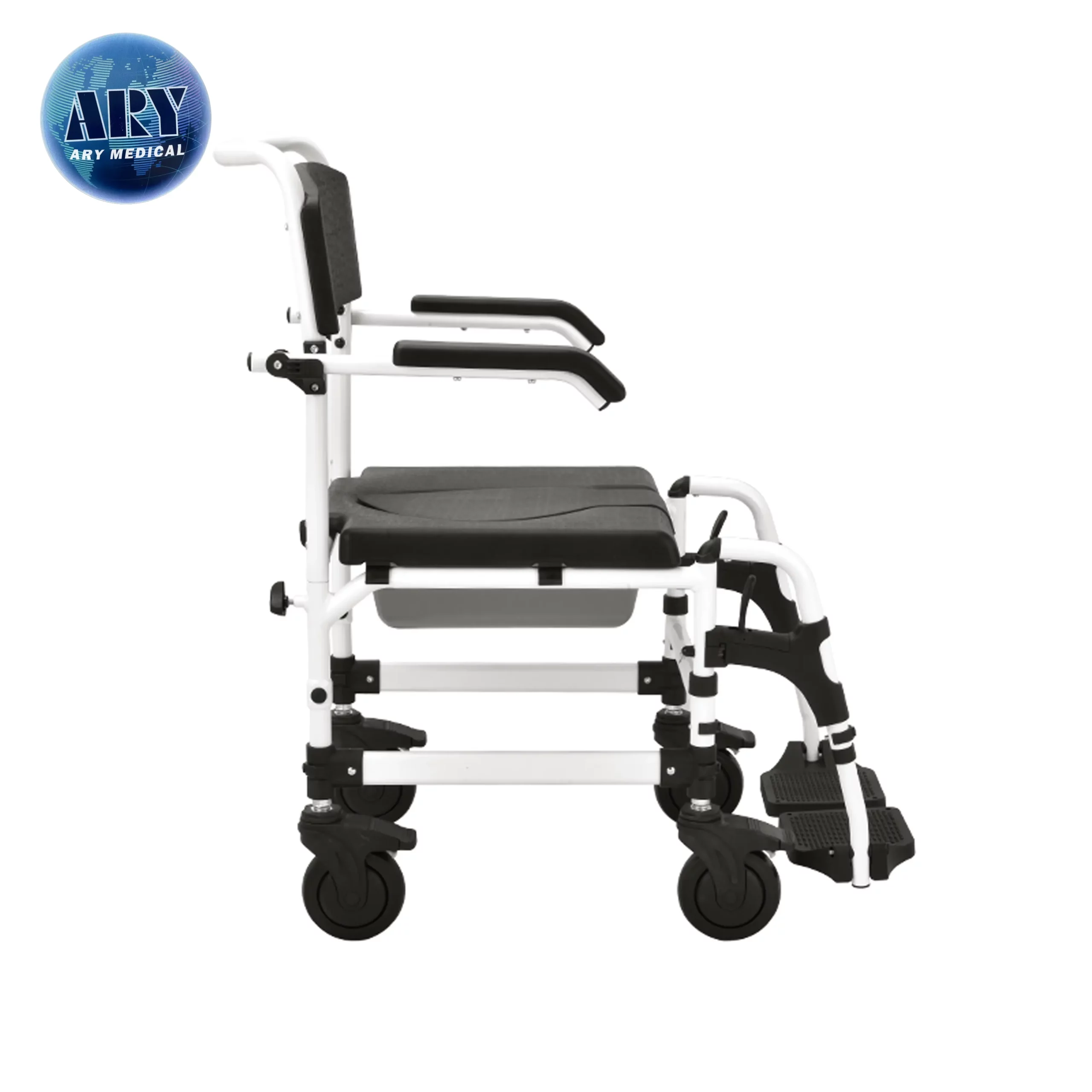
Match a wheeled commode chair wheel part by exact model, wheel position and approved assembly reference. A wheel that looks similar may use another mounting. The small-wheel side photo does not establish interchangeability.
Which details should a parts request include?
Locate the wheel on the actual chair. Describe front or rear position and any visible concern, then request the current compatible part list. Keep the receiving record for later service.
- Identify the supplied variant.
- Record wheel side and position.
- Request maker-approved replacement reference.
| Part field | Purpose |
|---|---|
| Variant and position | Narrows the assembly |
| Current part reference | Supports proper replacement |
A diameter estimate is not enough to order safely. Key Takeaway: Your service team can request a traceable wheel match.
Can a wheeled commode chair clear the intended route?

A wheeled commode chair can clear a route only when its exact open dimensions and handling method fit the actual doorway, turn and floor. Large rear wheels do not automatically make a route suitable. Check an unoccupied sample with trained staff.
What should the route note contain?
Measure the narrowest real point. Record door swing, turning space and the surface the chair would encounter. The large-wheel side image is not a completed route trial.
- Measure usable passage and turn.
- Note floor transitions and storage.
- Keep sample observations with the model.
| Route point | Decision question |
|---|---|
| Door and turn | Is there physical clearance? |
| Floor and handling | Does the plan follow maker guidance? |
A chair can pass a straight opening but fail the next turn. Key Takeaway: Your team can screen a route before finalising a variant.
What brake evidence does a wheeled commode chair need?
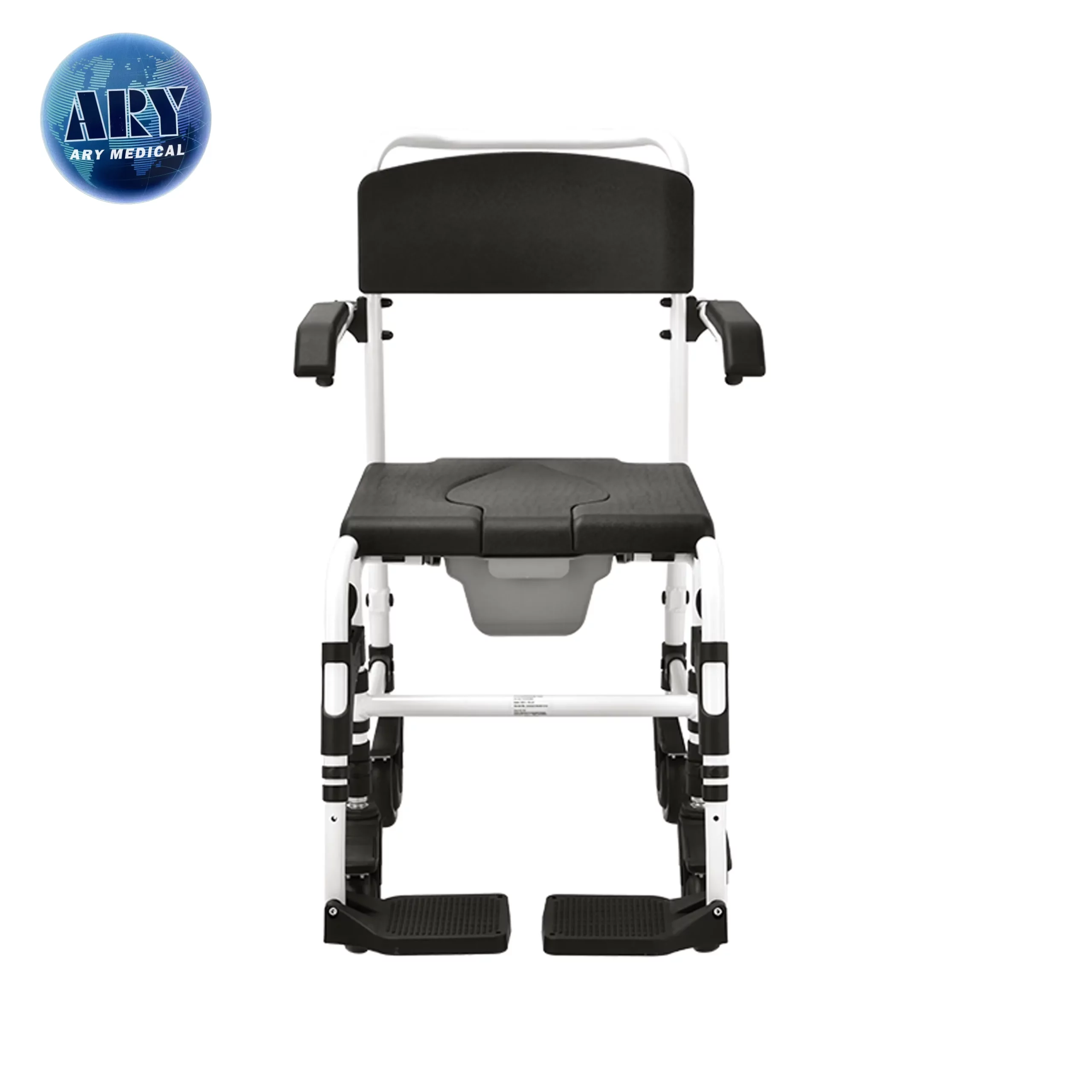
A wheeled commode chair needs brake evidence from current maker instructions and a check of the actual supplied assembly. Visible levers or wheel housings do not prove brake function. Ask how staff should verify parking or movement for that model.
Which questions prevent an unsupported claim?
Let the manual define the check. Use the small-caster photo to locate hardware, then have qualified staff follow the prescribed process. A braking claim should identify the exact variant and evidence.
- Request the stated brake design and controls.
- Record the approved check method.
- Refer doubtful operation for service.
| Question | Source |
|---|---|
| What is fitted? | Exact model part list |
| How is it checked? | Current maker instructions |
Wheel size is not a brake test. Key Takeaway: Your product page can avoid promising an unverified stopping function.
Does a wheeled commode chair allow shower use?

A wheeled commode chair allows shower use only if the exact model is designed and approved for that wet setting. Do not infer waterproofing from a white frame or a bathroom product name. Check the maker’s intended-use and care information.
Why is the distinction useful?
Keep toilet use and wet use separate. The Medway care-provider notice warns against using standard wheeled commodes as shower chairs unless specifically designed for that purpose. It does not approve this AryMD variant.
- Request exact intended-use wording.
- Check wet-environment compatibility if needed.
- Use an appropriate separate shower product when required.
| Use question | Evidence |
|---|---|
| Toileting | Exact model instructions |
| Showering | Specific wet-use approval for that model |
A bathroom setting does not make every chair a shower chair. Key Takeaway: Your care plan can select equipment for the task actually required.
How does a wheeled commode chair fit a transfer plan?

A wheeled commode chair fits a transfer plan only after the person, chair and relevant staff have been assessed together. The large-wheel front image shows arms and footplates but no safe personal method. Use the exact maker permissions.
What should a care team record?
Put the person back into the equipment decision. Related transfer devices have different intended roles. Record chair placement, permitted foot-support movement and the assessed transfer method without inventing a technique.
- Confirm the exact chair and route.
- Review permitted arm and foot positions.
- Name the person who approves the method.
| Plan field | Responsible evidence |
|---|---|
| Product position | Maker instructions |
| Personal transfer | Appropriate individual assessment |
A wheeled base adds handling questions to the care plan. Key Takeaway: Your buyer can choose a chair that fits the assessed task.
What upkeep does a wheeled commode chair need?

A wheeled commode chair needs the care and service stated for its exact frame, wheels, seat and container. A showroom cleaning image cannot prove corrosion resistance or chemical compatibility. Record wear and use an approved service route.
Which areas deserve inspection?
Follow the parts that move or touch. Ask the AryMD team for current care and replacement information. Keep cleaning methods linked to the product material record and local care policy.
- Review wheel and frame condition.
- Check seat, arms and container as instructed.
- Escalate damage or doubtful movement.
| Area | Review point |
|---|---|
| Wheels and frame | Condition and service needs |
| Seat and container | Compatible care method |
A clean chair may still have a worn wheel or loose part. Key Takeaway: Staff can care for the whole device, not only visible surfaces.
What should a wheeled commode chair comparison chart show?

A wheeled commode chair chart should show separate small-caster and large-rear-wheel variants, their model records, the route and a blank pending decision. It should not imply either version passed a brake or shower test. Attach actual maker documents.
How does the chart guide purchasing?
Leave untested claims open. Use each visual stage as a question for the supplier and care team. Keep the final choice tied to the exact ordered model.
- Identify both variant wheel layouts.
- Collect current handling directions.
- Record route and user questions.
| Chart stage | Evidence |
|---|---|
| Variant | Product reference and wheel map |
| Decision | Route and care-plan review |
A comparison works when each column keeps its own parts and claims. Key Takeaway: Your team can explain why one variant was selected.
How do you order a wheeled commode chair?

Order a wheeled commode chair by sending the exact wheel variant, route and intended-use brief to the supplier. Ask for current brake, cleaning and handling information for that model. Keep personal transfer decisions with trained staff.
Ready to compare the two layouts?
Put the configuration on one order line. Ary Medical can review available models when you identify the required wheel arrangement and care setting. Confirm a sample before larger orders.
- Share model and wheel configuration.
- Request current instructions and part list.
- Record care-team review of the route.
| Your brief | Supplier response to request |
|---|---|
| Variant and setting | Relevant model options |
| Handling questions | Current product documents |
A precise order prevents a small-wheel photo from standing in for a large-wheel delivery. Key Takeaway: For a model-specific comparison, contact us. Ary Medical supports equipment choices based on the actual chair and use plan.
Frequently asked questions
Q1: Can I treat all wheeled commodes as the same model?
No. Identify the small-caster or large-rear-wheel variant and its exact parts.
Q2: What’s the best way to check a doorway?
Measure the actual clear route and compare it with the exact configured chair.
Q3: How do I know if the brakes work?
Use the maker’s model-specific check with qualified staff; a photo is not proof.
Q4: Can a wheeled commode go into the shower?
Only if that exact model is designed and approved for wet use.
Q5: Can a larger rear wheel replace a small caster?
Not by appearance. Use only a confirmed compatible part for the exact model.