
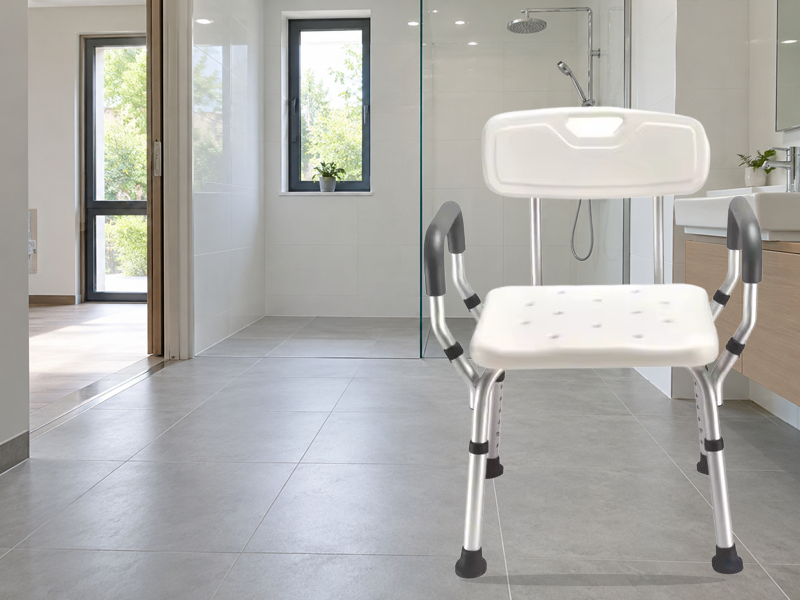
A shower chair vs transfer bench choice starts with the entry barrier. A chair supports seated bathing after entry; a transfer bench spans a tub edge for a seated crossing. Buyers should compare the bathroom route, support needs, space, cleaning, and service before pricing either product.
The ISO 17966:2026 overview includes bath boards, bath seats, and shower chairs. Confirm product scope and setup before using a standard as part of an approval decision.
1. What Does Each Product Do?
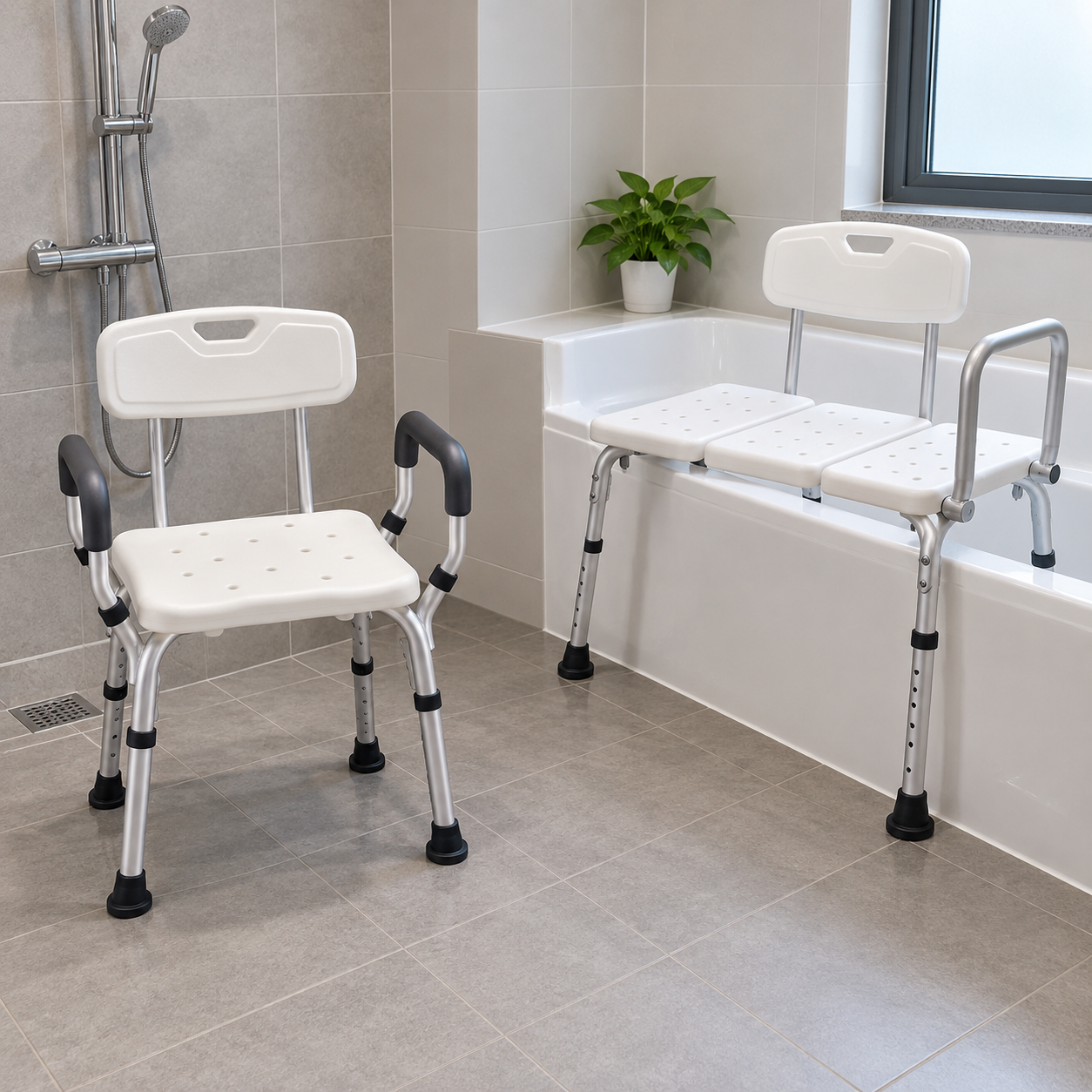
A shower chair sits within the bathing area. A transfer bench spans a tub edge, with parts of its frame on the wet and dry sides. A bath lift is a separate powered product.
Keep the task boundary clear so a supplier does not quote a larger seat when the entry route is the actual problem.
Related product and sourcing references include bathing-chair buyer guide and bath-chair range.
2. Who Needs This Comparison?
Distributors, facilities, and care teams need a way to match product support with a specific entry route. Individual transfer methods belong with qualified assessors.
Buyers should record the task, room, attendant role, and any limits before choosing a category.
3. How Does Entry Differ?
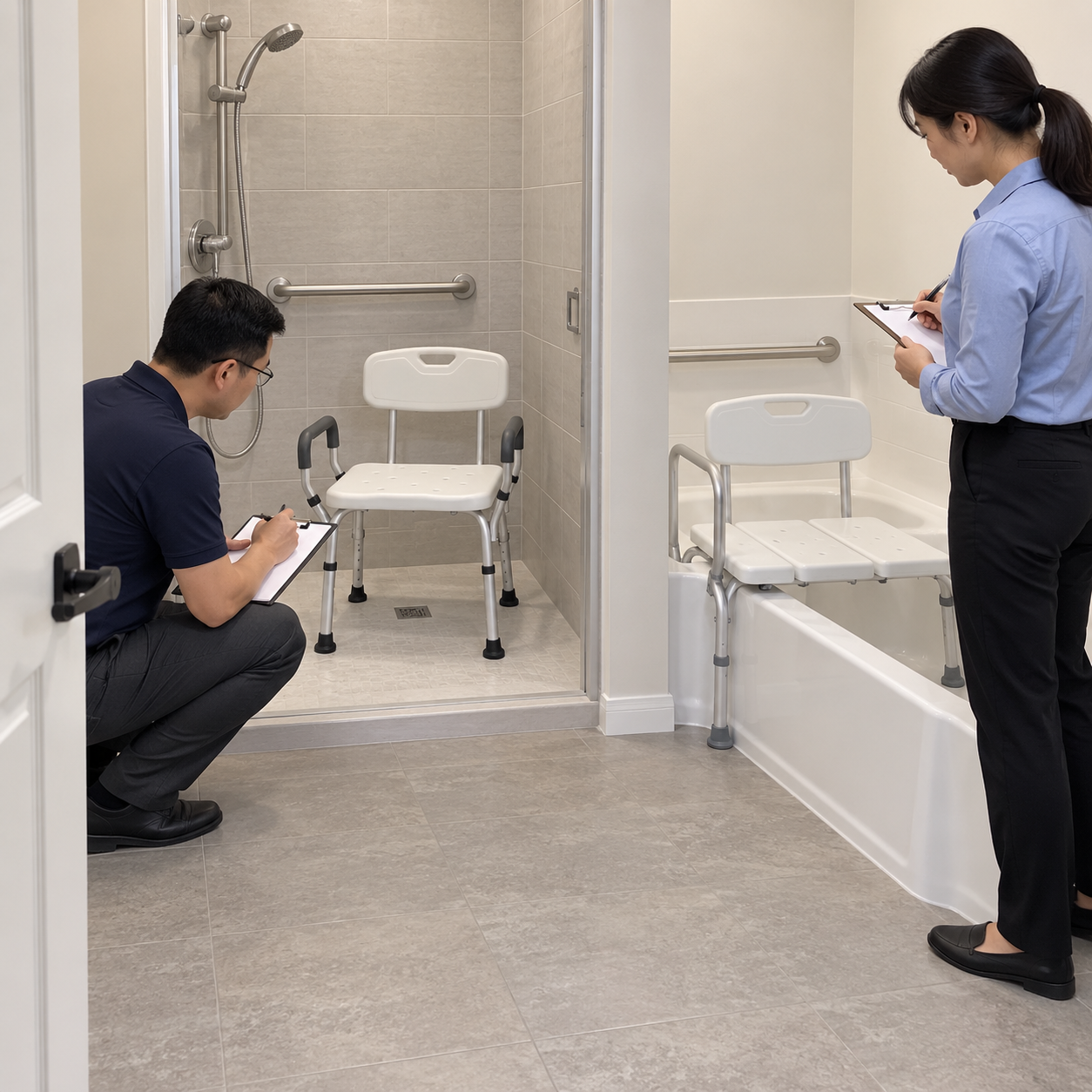
A chair must reach a suitable position inside the bathing area. A transfer bench must clear the tub rim and provide a seated path across it.
Measure each route from approach through return. Include the door, tub wall, controls, curtain, and room for help.
For a related reference, see bath-lift guide.
4. How Does Space Affect the Choice?
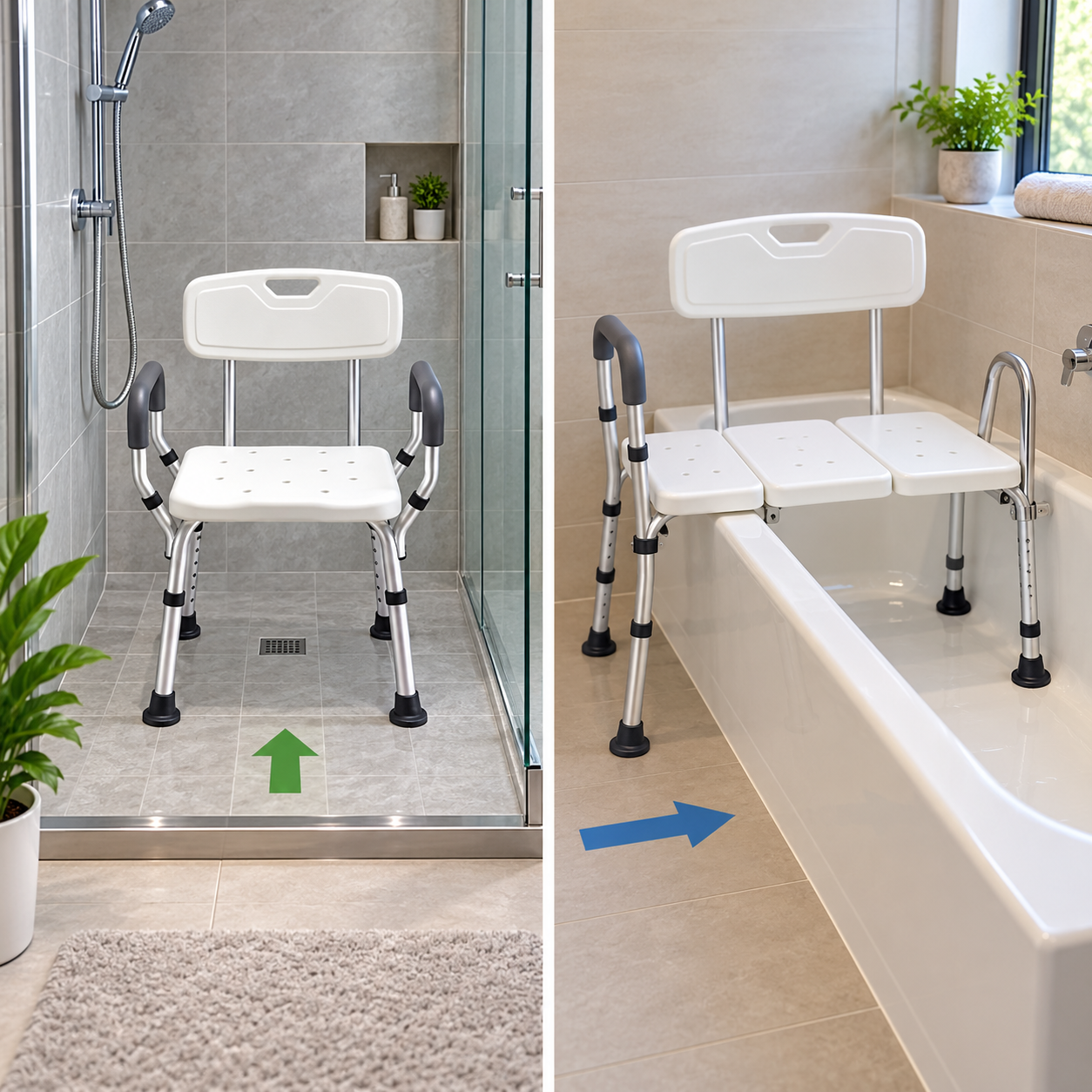
A transfer bench needs room on both sides of a tub. A shower chair needs a stable base inside the bathing area and clear access around its supports.
Check the full footprint and moving fixtures in the target room, then confirm the actual sample fits.
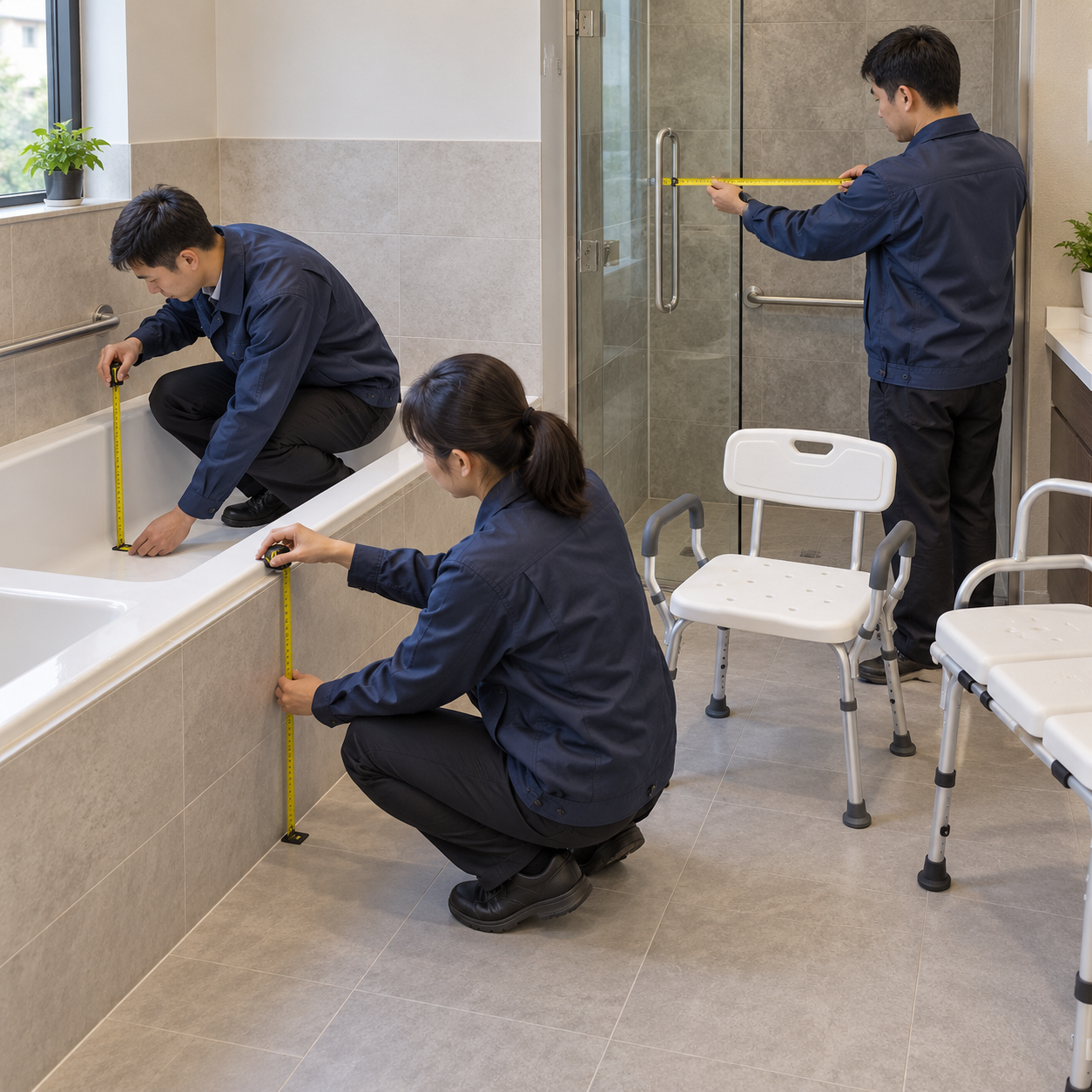
5. Which Supports Need Review?
Backs and arms can support one task while limiting lateral access. Confirm which supports are fixed, removable, or optional on the offered setup.
Test contact, clearance, removal, and cleaning on the same sample.
For a related reference, see white bath chair.
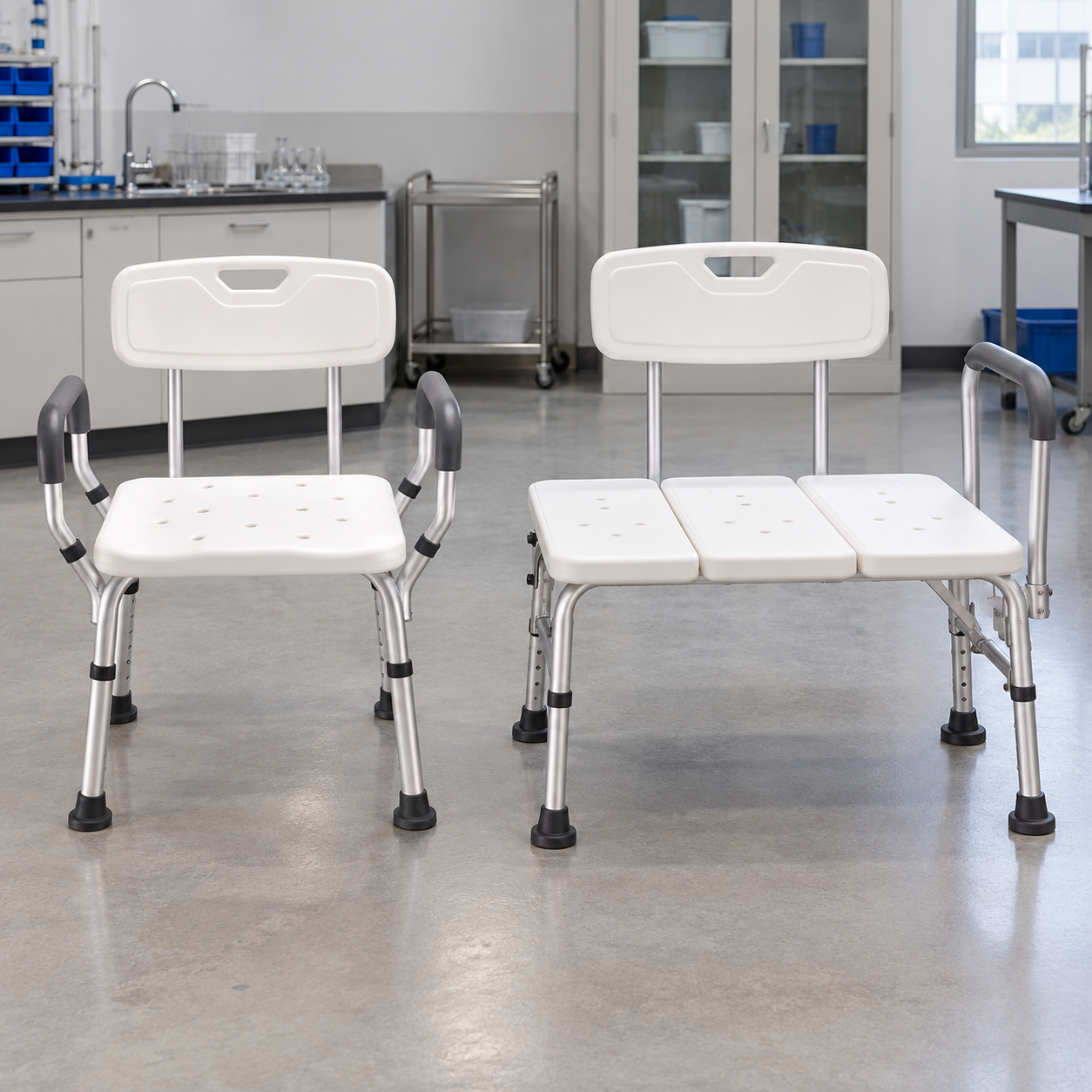
6. What Stability Evidence Is Needed?
Check feet, locks, joints, frame movement, and surface contact before any approved task trial. Do not treat one vertical load report as evidence for every transfer direction.
Record the chair, height setting, floor, and test method for each result.
For a related reference, see simple bath chair.
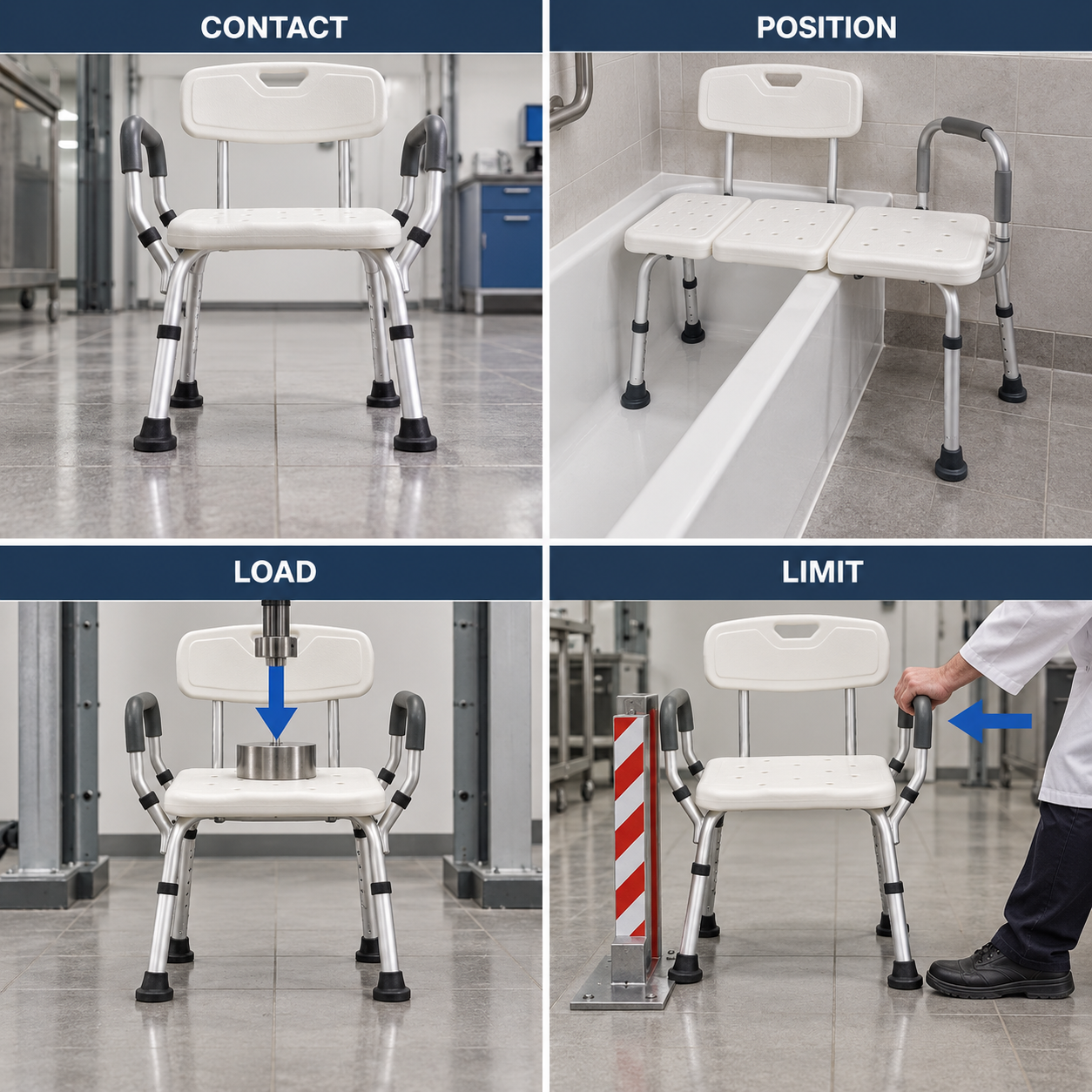
7. How Does Cleaning Differ?
A bench may cross wet and dry areas and include long rails. A chair may have a compact base with its own joints, feet, and supports.
Follow the exact product instructions for cleaning, rinsing, drying, and release.
For a related reference, see bath and commode-chair guide.
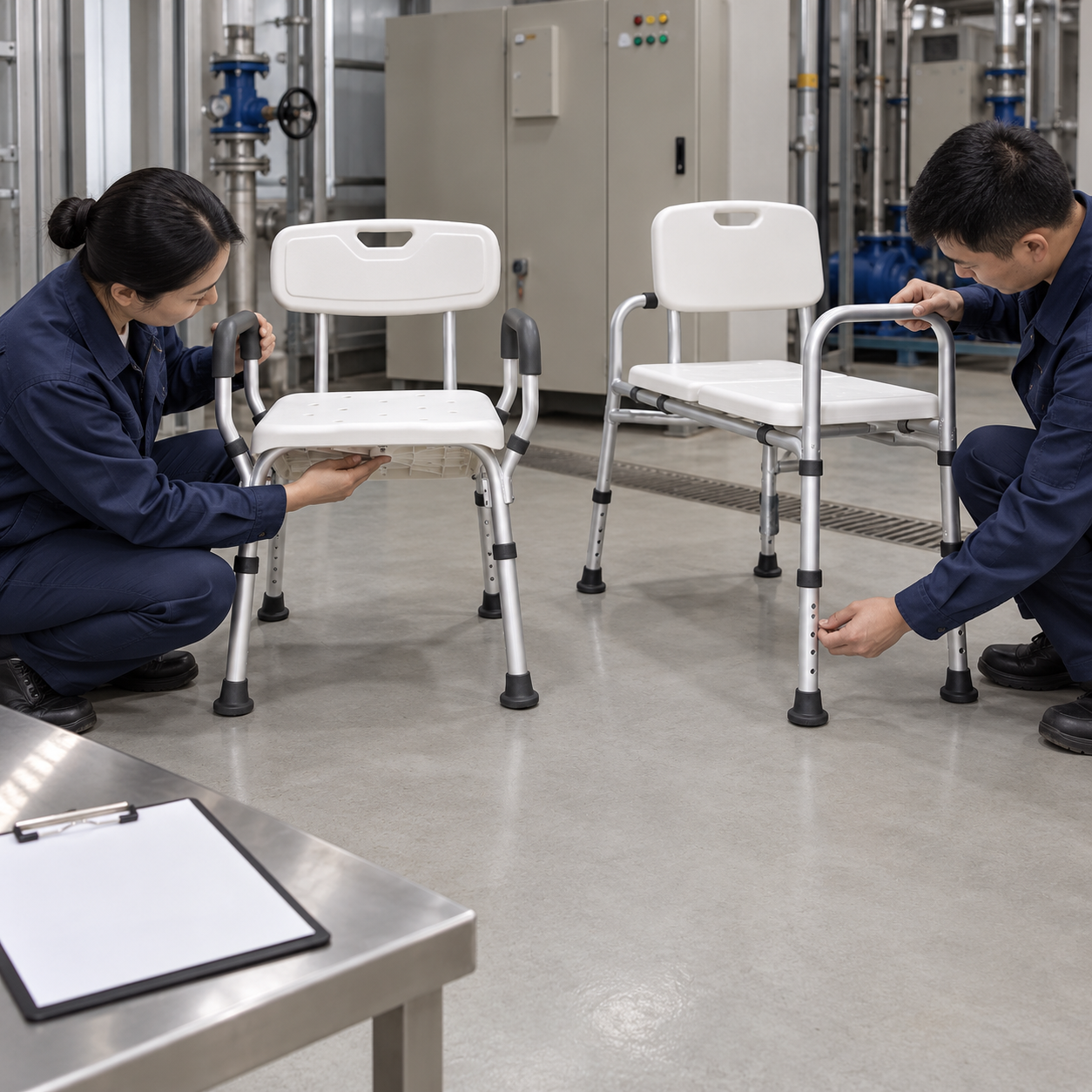
8. How Should Buyers Test Samples?
Use a measured mock-up or the target bathroom. Test placement, access, support, cleaning, drying, and storage with the quoted setup.
Separate shared baseline checks from chair-specific and bench-specific observations.
For a related reference, see folding bath chair.

9. What Should Supplier Files Match?
Match the quotation, drawing, manual, parts list, load evidence, and sample to one model and revision. Keep open differences visible until the supplier closes them.
Ask who owns technical questions and replacement parts.
For a related reference, see B2B supplier overview.

10. How Should the Range Be Approved?
Set pass-or-hold gates for entry, room fit, support, stability, cleaning, documents, parts, and service. Compare price only after mandatory gates pass.
Keep the accepted setup and change rules with the purchase order.
For a related reference, see toilet-chair range.
For a product or sourcing question, contact us today.

Frequently Asked Questions
Can a transfer bench fit every bathtub?
No. Tub width, rim, wall gap, floor levels, enclosure, controls, and outside approach can prevent correct placement. Measure and trial the exact bathroom.
What’s the best option for a walk-in shower?
A shower chair often fits the task when entry is already accessible and the need is seated bathing. User support, floor contact, controls, and caregiver space still require review.
How do I know whether the tub edge is the main barrier?
Observe the complete entry route with qualified input. If stepping over the rim prevents safe access, a seated crossing product may deserve evaluation.
Can one sample approve several bathroom layouts?
Only when critical sizes, surfaces, routes, supports, and workflows are demonstrably equivalent. Record room groups rather than assuming all bathrooms match.
How should buyers document a product change?
Require a change notice that identifies affected parts, sizes, evidence, instructions, packaging, and production timing. Retest any task or risk altered by the change.