
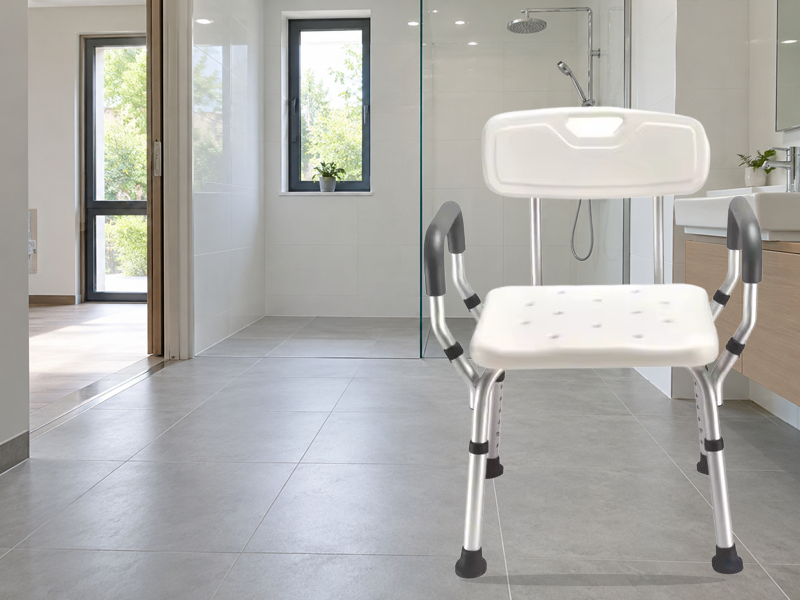
A shower chair material comparison should cover the frame, seat, supports, feet, fasteners, finish, cleaning, and spare parts. A product seldom uses one material throughout, so buyers need a part-level record.
The ISO 17966:2026 overview covers requirements and test methods for assistive products used in bathing and showering. Material evidence should still match each part and the exact chair setup.
1. What Is Being Compared?
For the quoted setup, list the parts and joints. Include coatings, inserts, padding, adhesives, fasteners, and replacement parts.
Use the ISO standard as a scope reference, not as proof that a model complies.
Related product and sourcing references include bathing-chair buyer guide and bath-chair range.
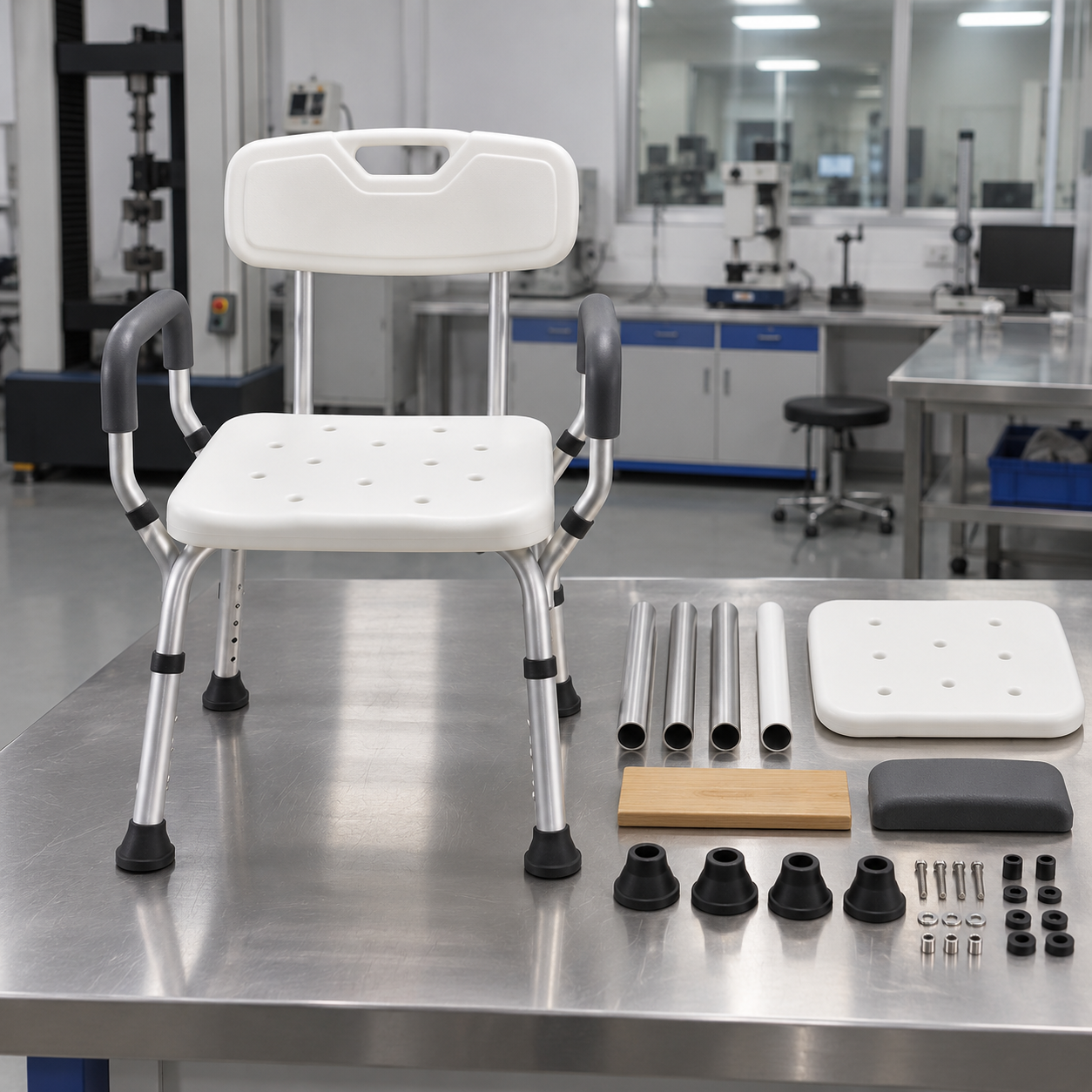
2. Which Frame Properties Matter?
For the frame, review type, tube size, joints, finish, drainage, weight, service access, and intended load. Geometry and process affect the result too.
Ask for the drawing and material record for the sample.
For a related reference, see white bath chair.

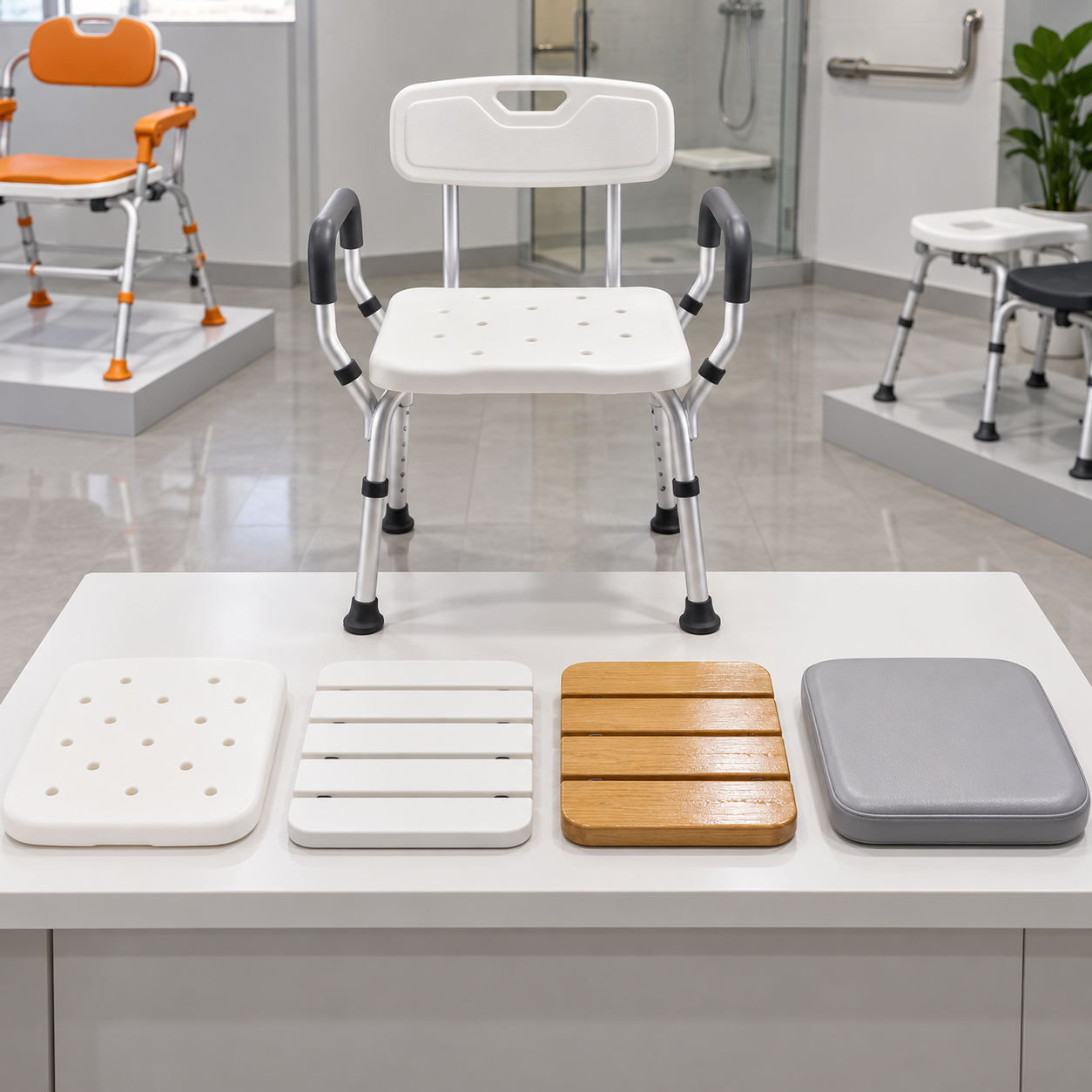
3. What Should Seat Materials Show?
For the seat, check surface, stiffness, drainage, seams, mounts, pads, and cleaning limits. Molded shells, slats, wood, and padding create different joints.
Inspect the underside and any removable part.
For a related reference, see shower chair material comparison.
4. Which Support Materials Need Review?
Arms, backrests, grips, covers, locks, and mounts include user-contact materials and joints. Check edges, tears, retained water, and replacement fit.
However, do not assume options share the same material set.

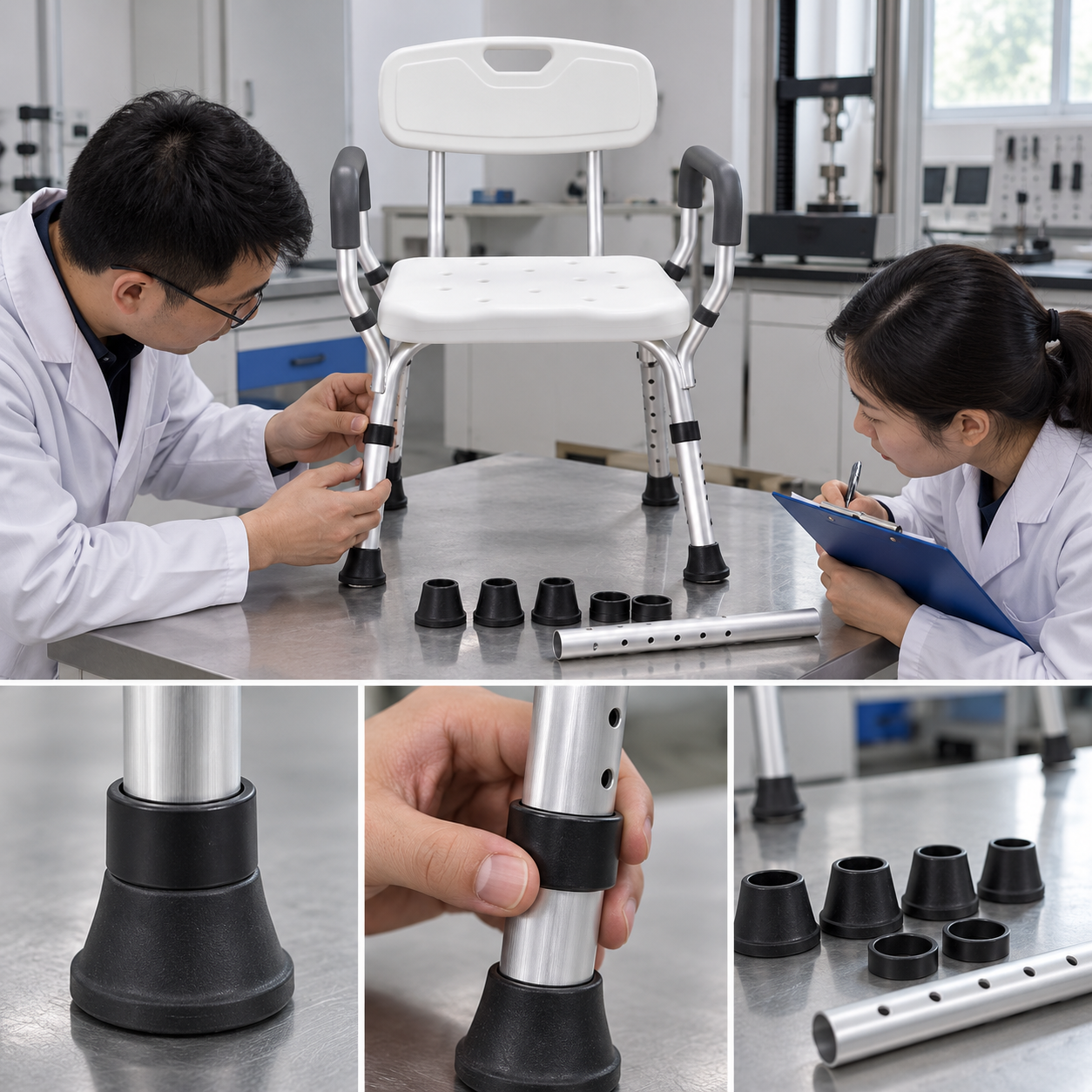
5. How Do Feet Affect the System?
Foot material, shape, mount, tread, wear, and cleaning interact with the floor. Match replacements to the leg and compare all feet together.
For surface-grip claims, use a separate test record.
For a related reference, see simple bath chair.
6. What Fastener Joints Need Control?
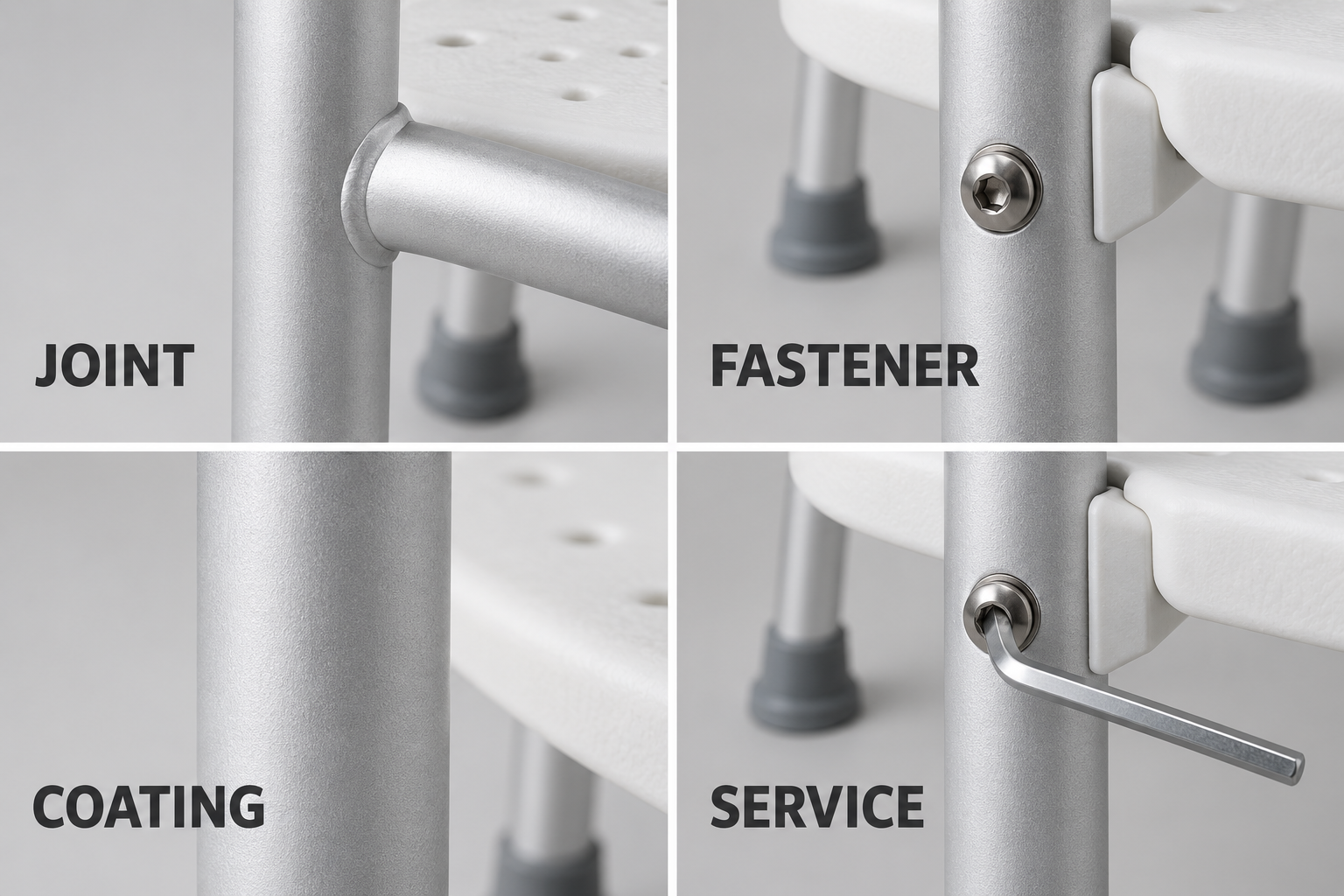
Check material, finish, thread, lock, access, and service method. Mixed materials and damaged coatings can affect a joint.
Before repair, match the part and approved steps.
For a related reference, see folding bath chair.
7. How Should Rust Be Reviewed?
Look for pitting, staining, coating lift, rust, roughness, and water around openings or mixed-metal joints. Also record where and when the mark appeared.
Technical staff should assess frame concerns.
Related product and sourcing references include hospital furniture range and hospital furniture range.

8. Which Cleaning Limits Apply?
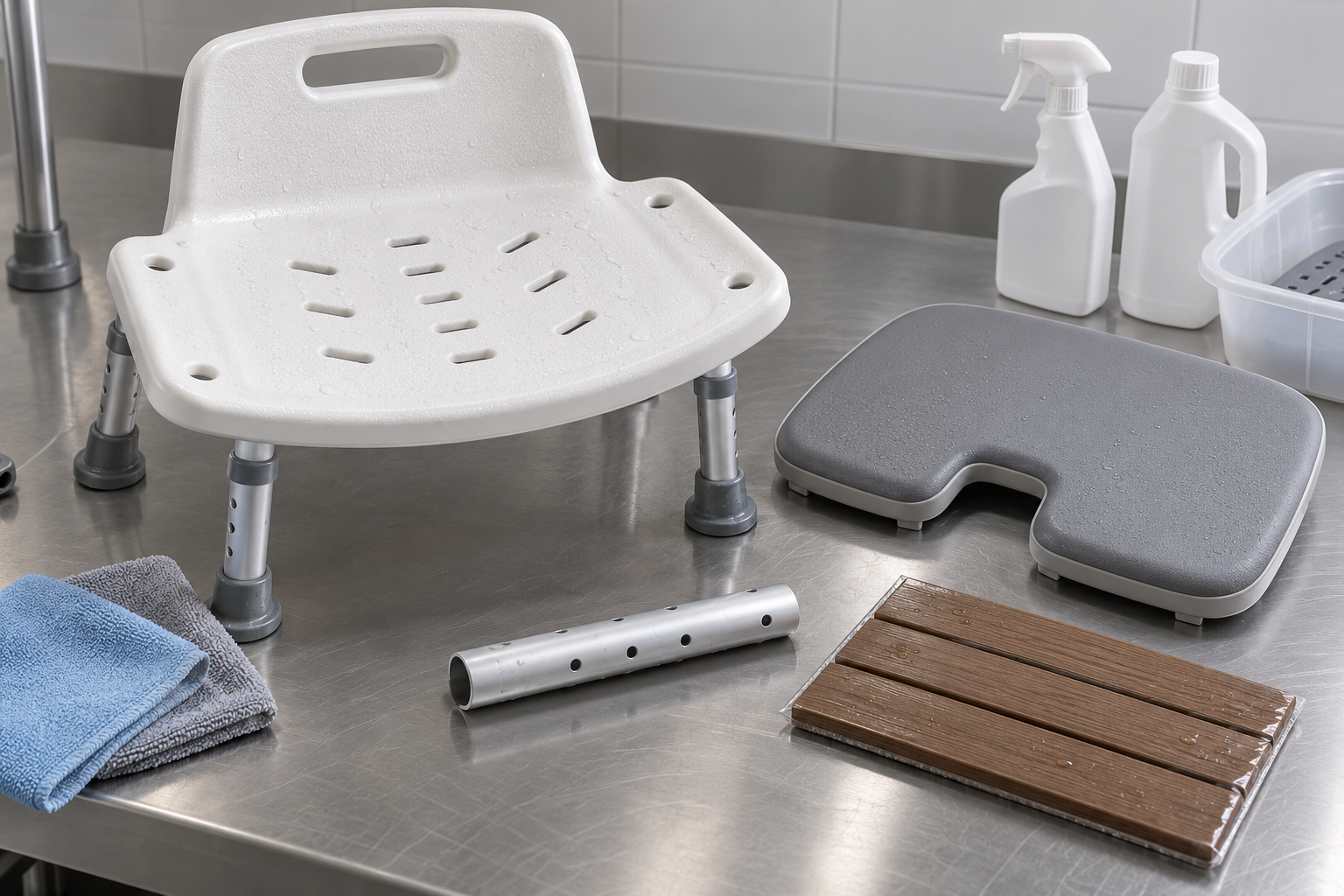
Ask which materials and finishes allow the stated cleaner, rinse, drying method, or disassembly. Before release, test the facility process on the quoted setup.
Remove claims that lack a defined source or condition.
9. What Should a Sample Review Record?
Record part identity, finish, drainage, cleaning, contact, wear, and post-test condition. Then match each result to the material and revision.
A test report for one material does not prove a whole chair’s results.
For a related reference, see B2B supplier overview.
10. How Should Materials Be Frozen?
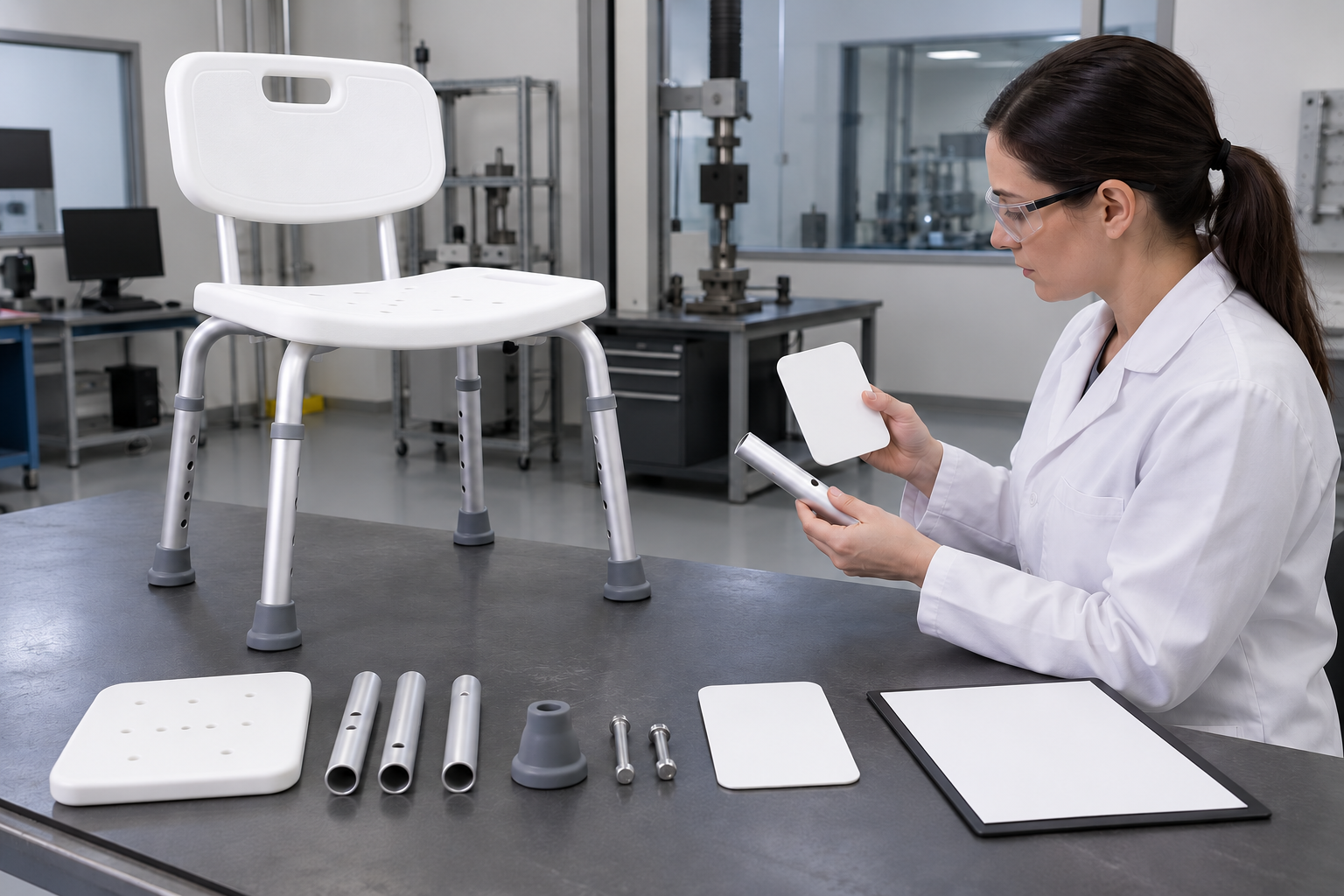
List approved materials, finishes, suppliers, substitutes, check points, spare parts, and change approvals in the order file.
Before shipment, review any substitution that changes a joint or cleaning limit.
For a related reference, see toilet-chair range.
For a product or sourcing question, contact us today.

Frequently Asked Questions
Can one material make a shower chair rust-proof?
No. Geometry, finish, joints, mixed metals, scratches, water entry, cleaning, drying, and maintenance also affect rust risk. Product instructions should define check and hold conditions for visible material change.
What’s the best frame material for shared facilities?
The best system matches intended loads, cleaning, handling, maintenance, evidence, and parts support. Compare complete setups rather than names. Include staff workload and replacement access in the facility decision.
How do I know whether a coating suits wet use?
Review coating detail, substrate, preparation, sample finish, damage response, relevant evidence, cleaning limits, and check plan. Check bends, holes, welds, and fastener areas where coverage may differ.
Can wooden parts belong in a shower product?
Possibly, when the complete design, finish, water exposure, cleaning, drying, maintenance, and evidence support the intended environment. Buyers should avoid extending one construction’s evidence to a different wood or finish.
How should buyers control material substitutions?
Require advance notice, technical impact review, updated evidence where needed, matched samples, check changes, and written approval before shipment. Update spare parts, manuals, cleaning guidance, and receiving checks when the change is accepted.