
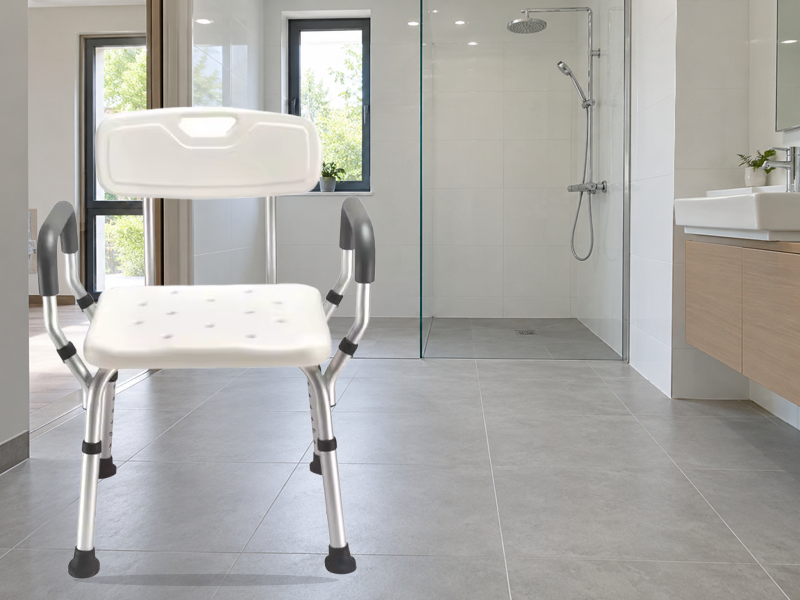
Shower chair cleaning and disinfection needs a set order: identify the chair, clean, apply an approved method, rinse if needed, dry, inspect, and release. One chemical or time does not fit every model.
In healthcare, the CDC says to follow maker instructions for noncritical equipment. Use the chair manual and facility rules for the exact method.
1. Which Steps Need Separate Definitions?
First define cleaning, disinfection, rinsing, drying, check, and release. Name the product state and output at each stage.
Follow healthcare policy only where it applies to the facility and equipment use.
Related product and sourcing references include bathing-chair buyer guide and bath-chair range.
2. Who Owns the Process?
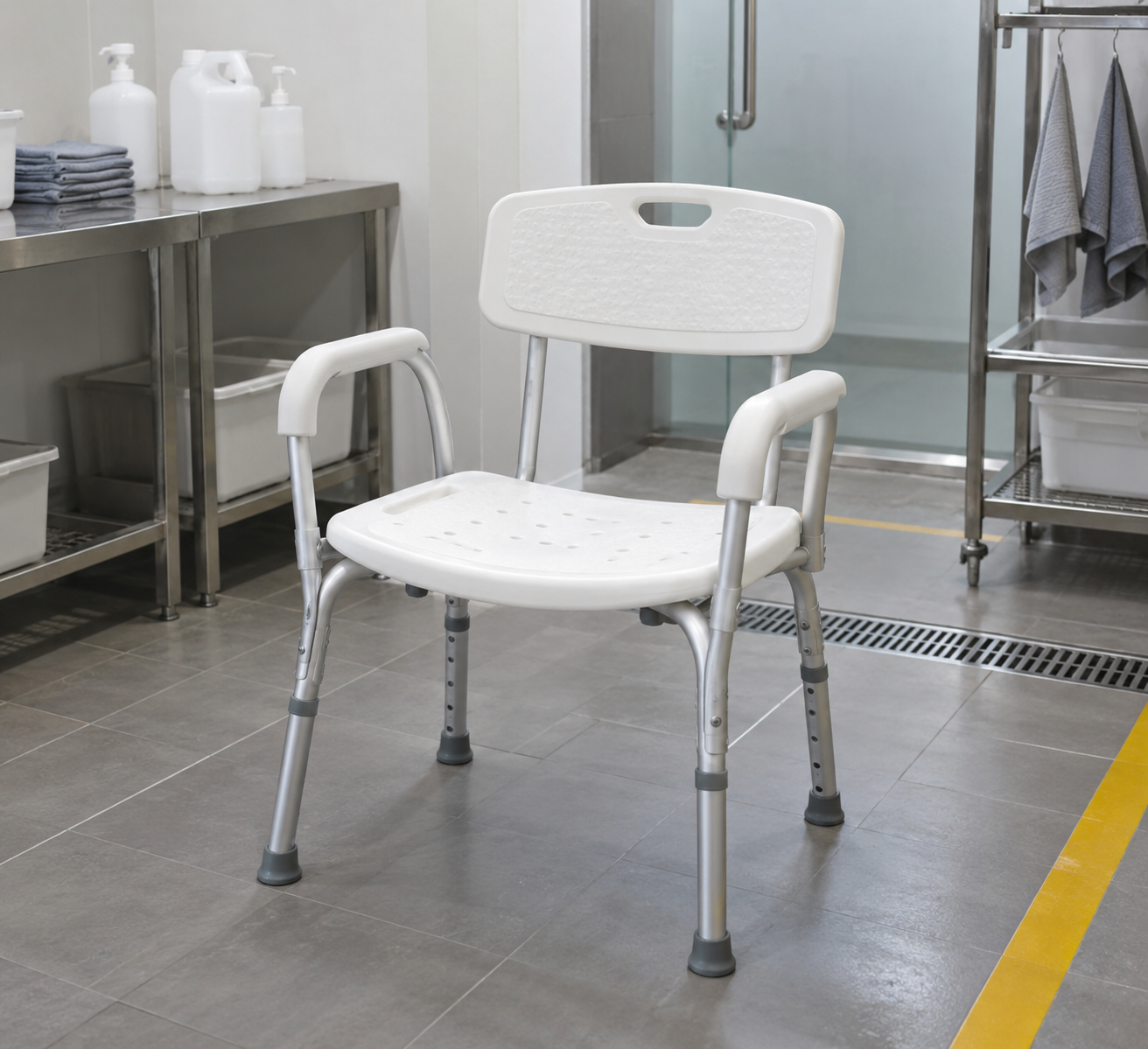
Before collection, assign cleaning, review, check, storage, and release to named roles. Staff should know who can stop work and who can return a chair to use.
Keep clean and unprocessed units apart.
3. Which Instructions Control?
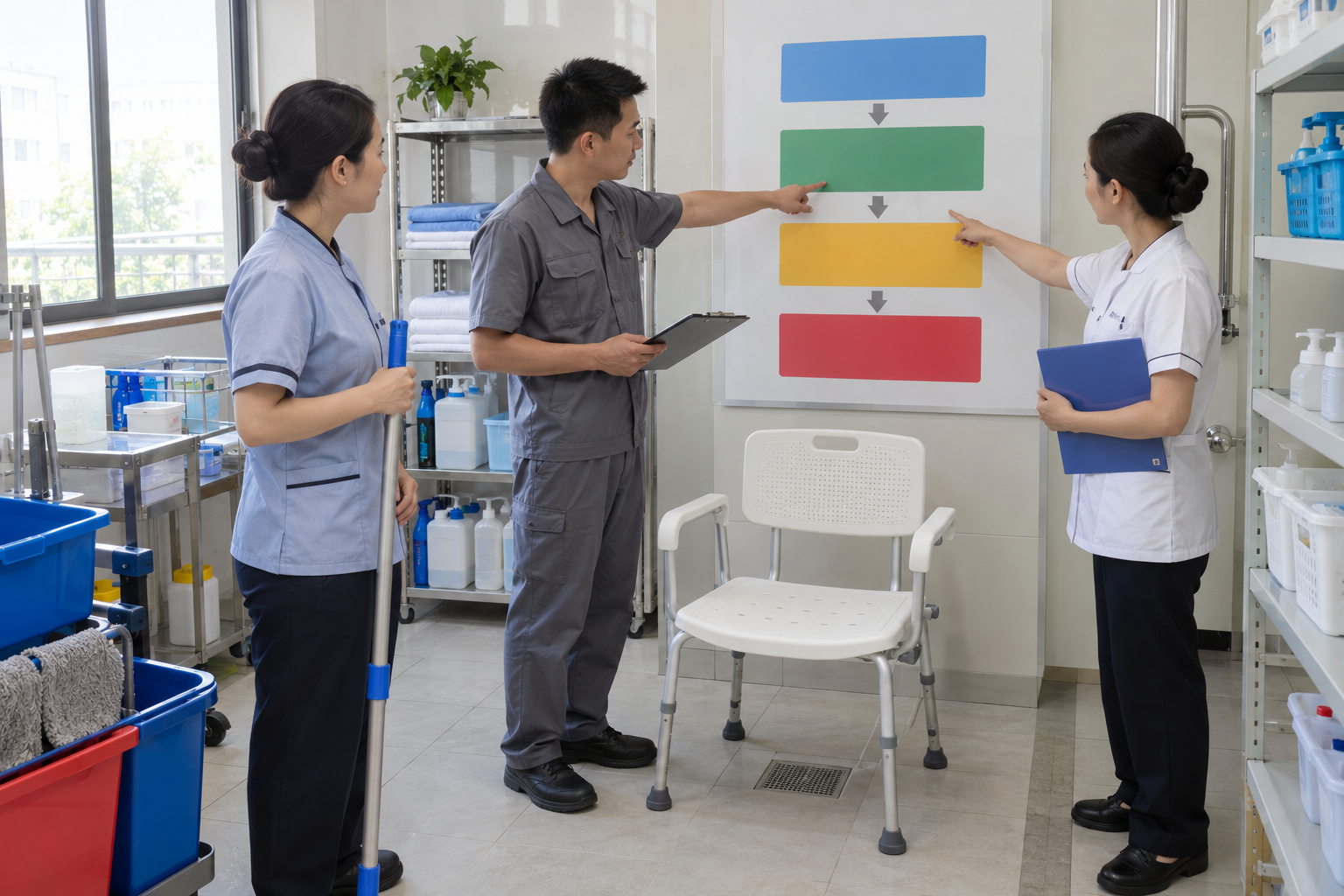
Before choosing a method, check the exact manual for agents, limits, rinsing, disassembly, and drying. Facility policies and chemical controls must also be followed.
Resolve conflicts with the equipment and infection-control owners before routine use.
For a related reference, see simple bath chair.
4. What Happens Before Cleaning?
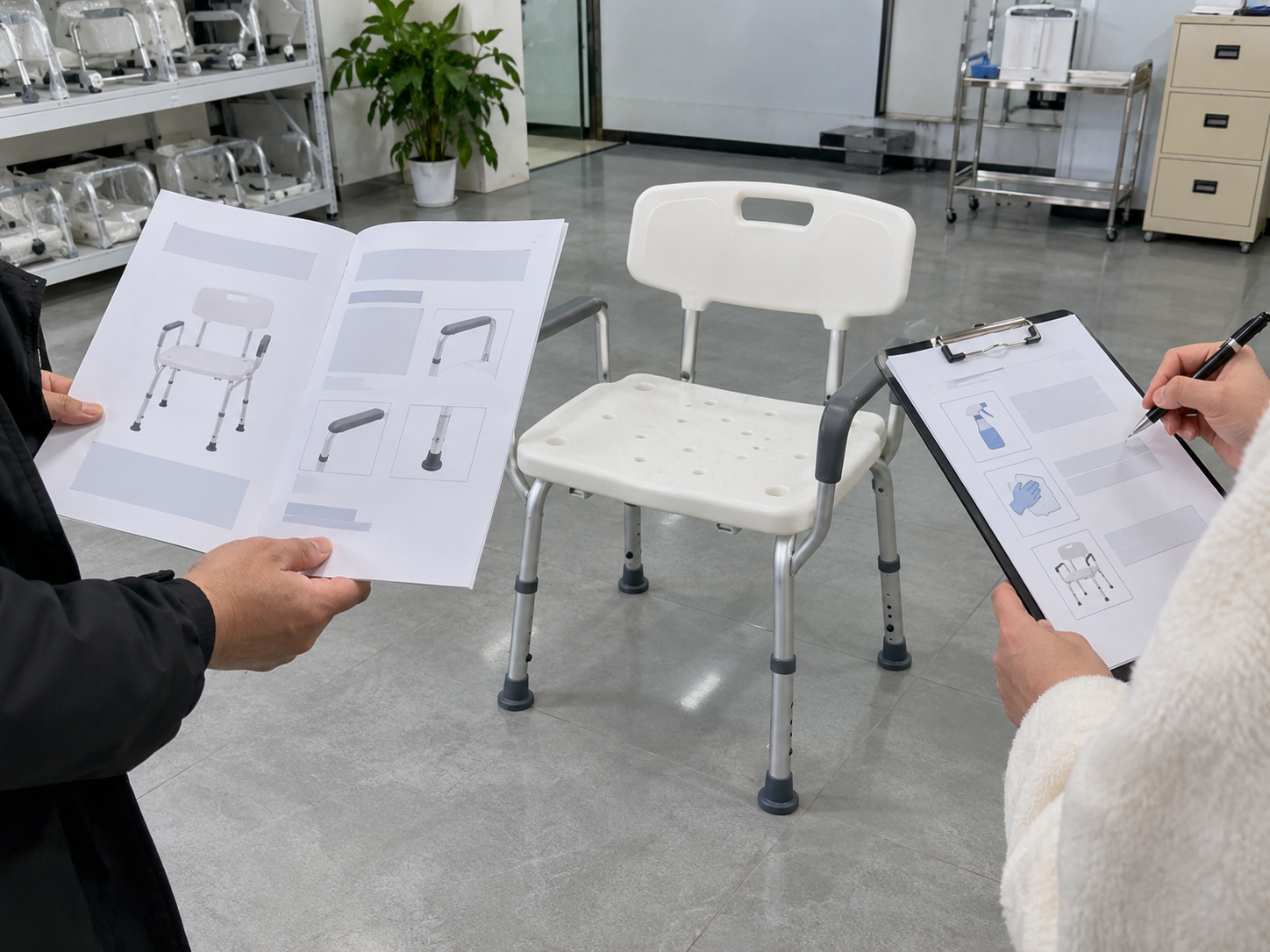
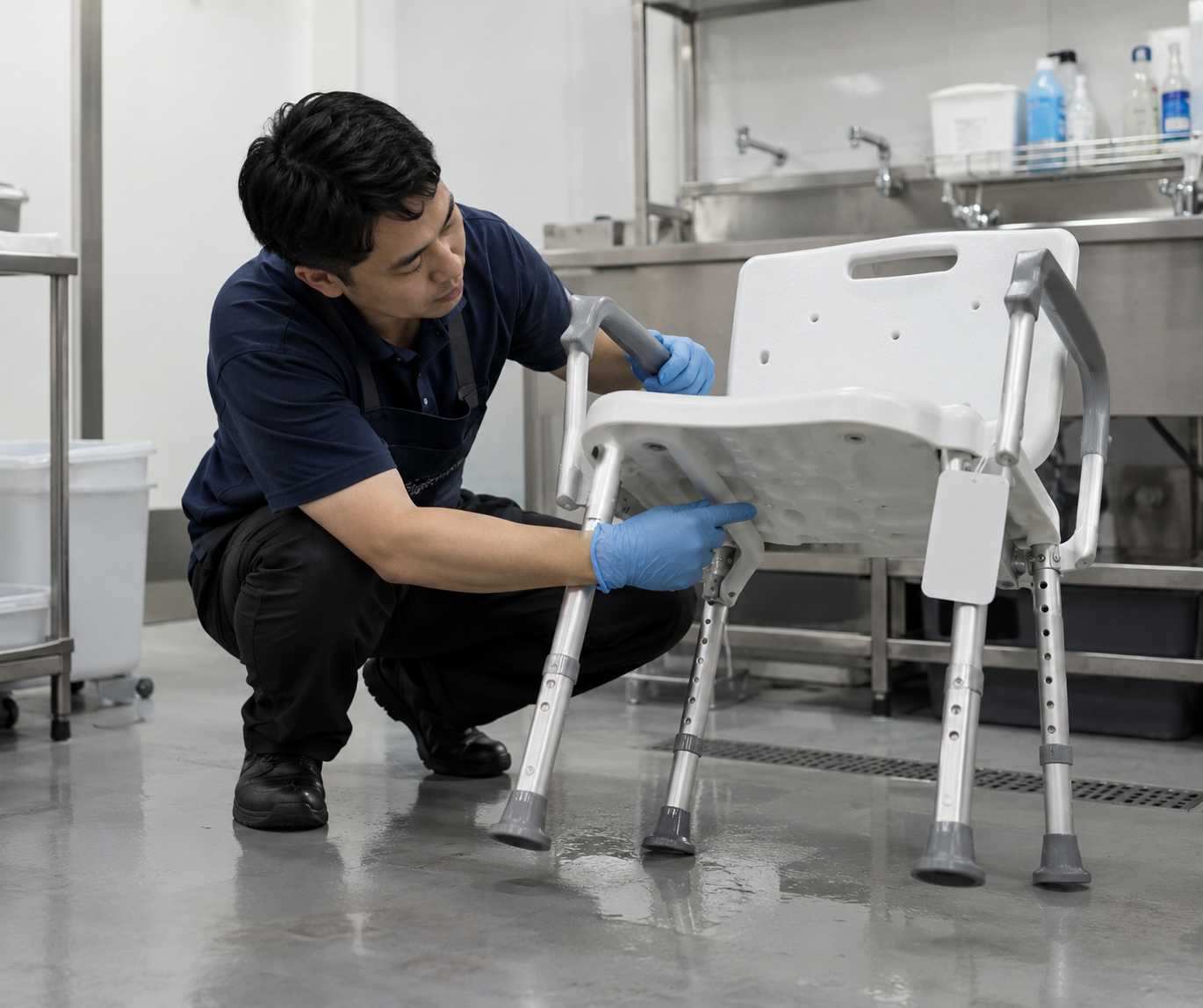
Before cleaning, check unit identity, setup, visible soil, cracks, loose supports, locks, and retained water. Isolate damage or unknown contamination before starting.
Photograph unusual findings before cleaning changes the evidence.
5. Which Areas Need Access?
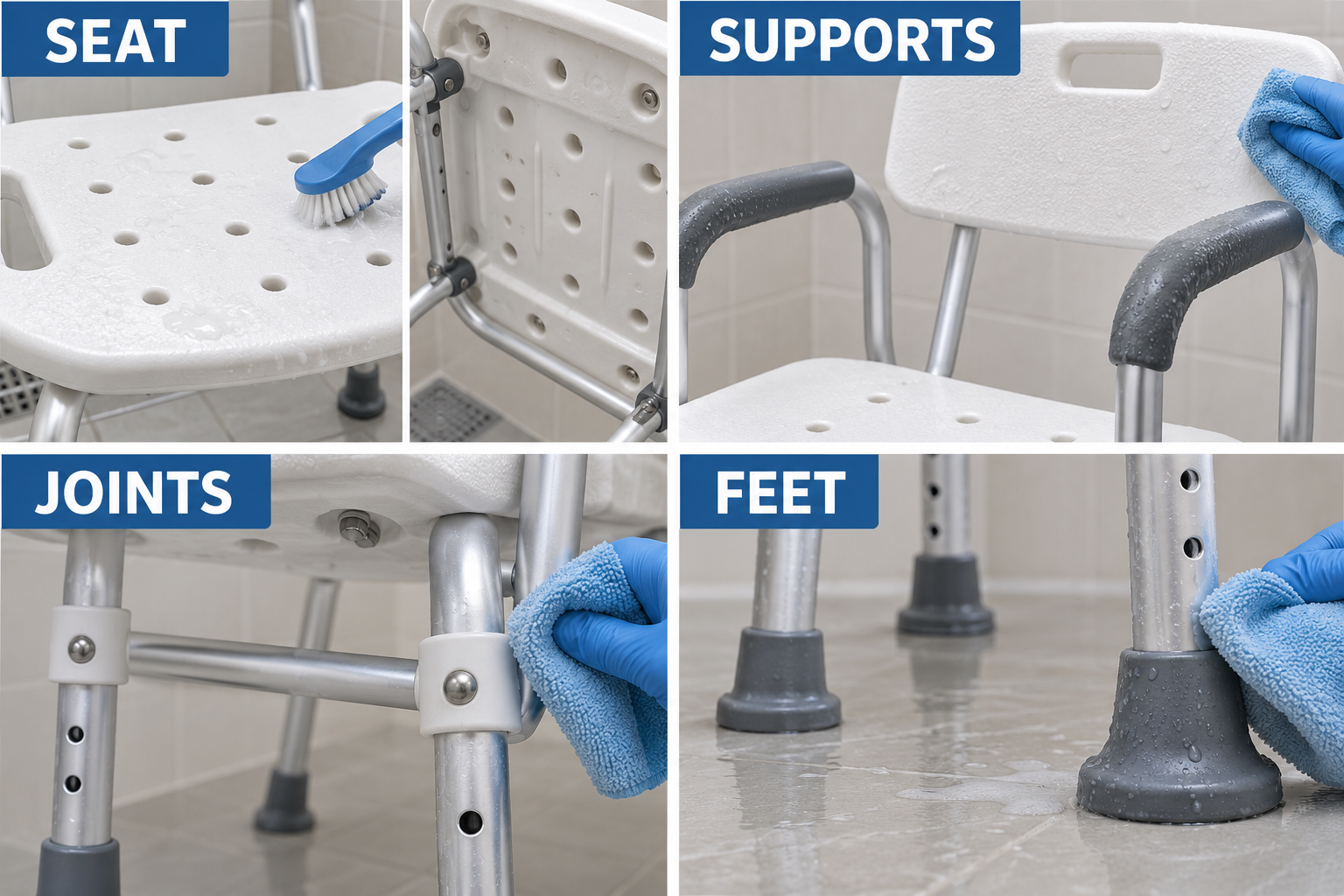
For each chair, map the seat, back, arms, grips, buttons, locks, feet, joints, tubes, undersides, and removable parts. Check surfaces touched by users and caregivers.
Do not force fluid into hollow parts or protected mechanisms.
For a related reference, see bath and commode-chair guide.
6. How Should the Process Run?
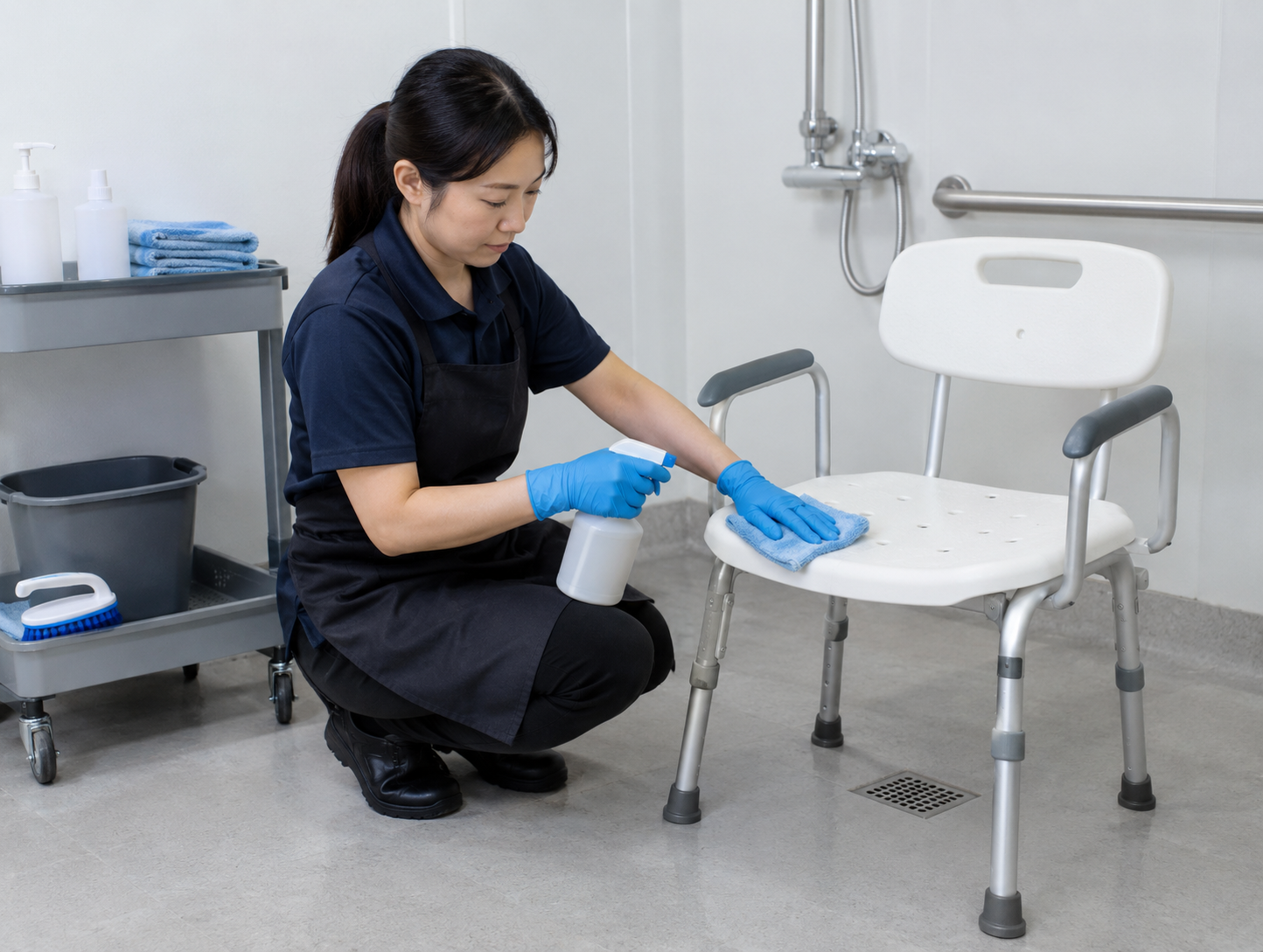
Then use the approved order and compatible products. Record the method, operator, product state, and any change to the surface or finish.
Stop if a part swells, cracks, sticks, or changes appearance.
7. When Is Rinsing Needed?
After cleaning, rinse only when the product method requires it. Keep water away from openings or mechanisms unless the instructions allow it, and inspect drainage after the process.
Hold a chair with unexplained water inside a tube or joint.
For a related reference, see white bath chair.
8. What Must Dry Before Storage?
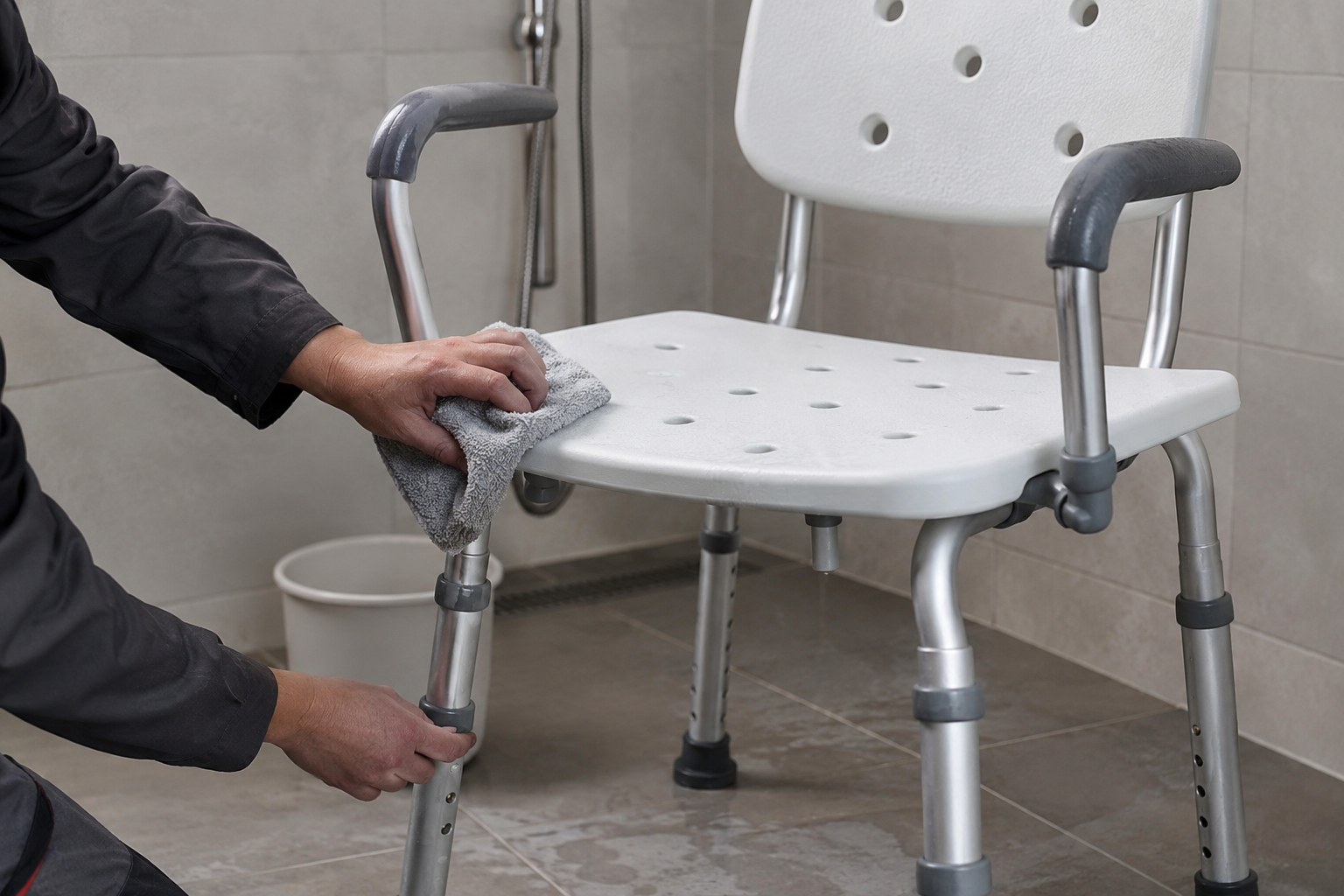
Before storage, check seams, overlaps, feet, tubes, joints, undersides, and removable parts. Store only in the approved clean, ventilated area after the release state is clear.
Keep damp and held units out of clean stock.
For a related reference, see folding bath chair.
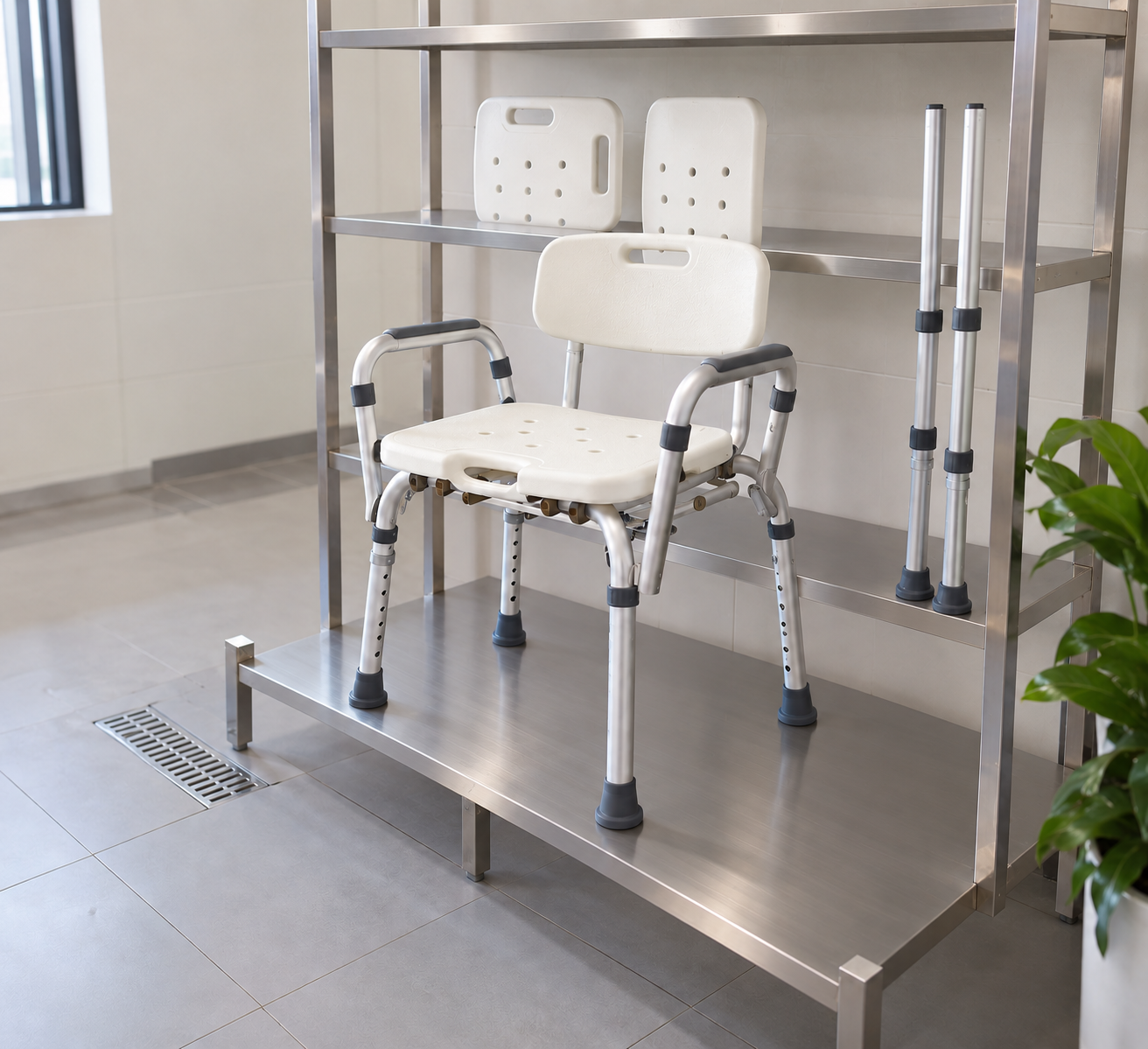
9. Which Checks Follow Cleaning?
After drying, recheck locks, height settings, supports, feet, labels, function, and surfaces. A clean chair still needs a full condition check.
Record the result and hold damage for technical review.
For a related reference, see toilet-chair range.
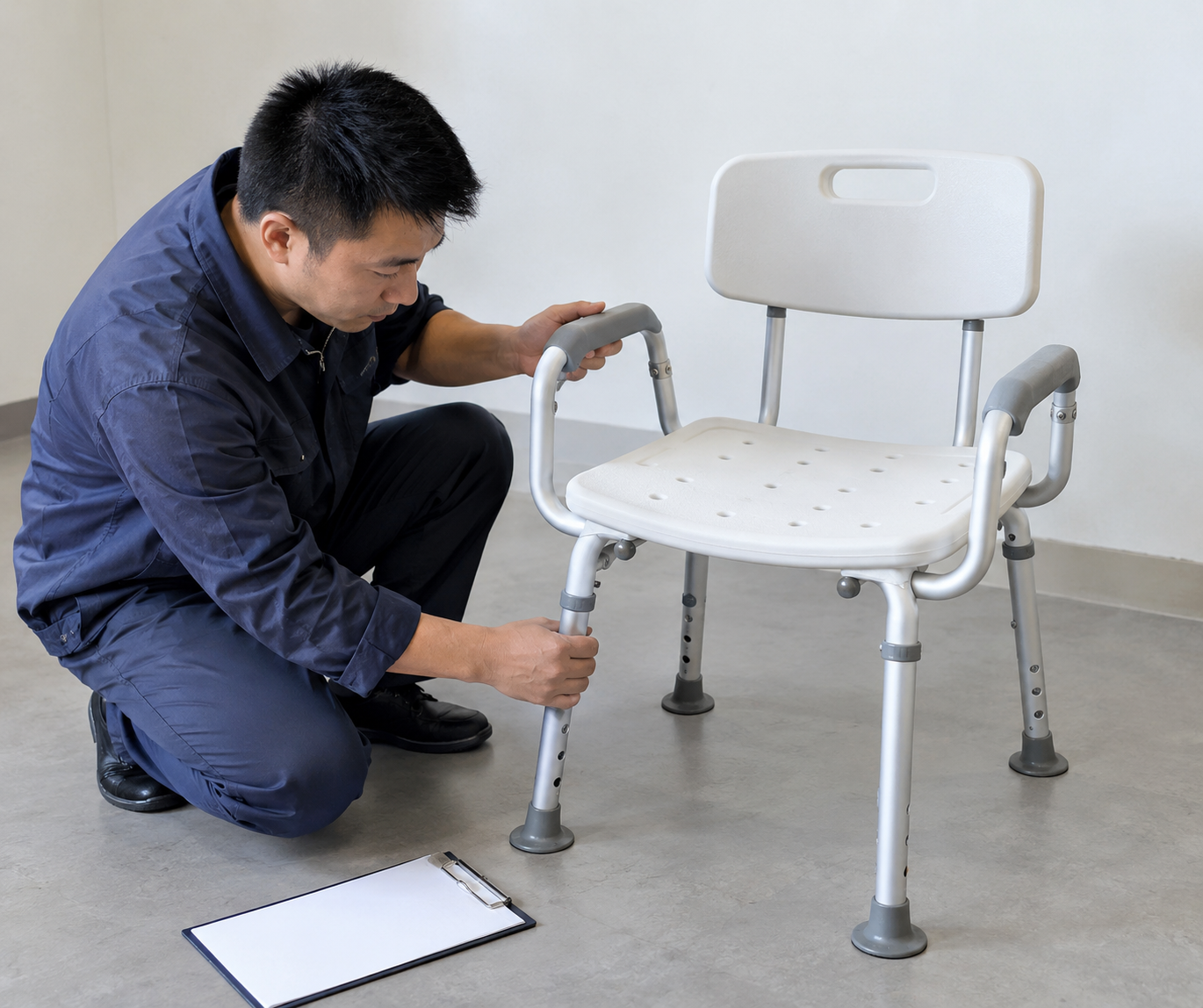
10. What Belongs in the RFQ?
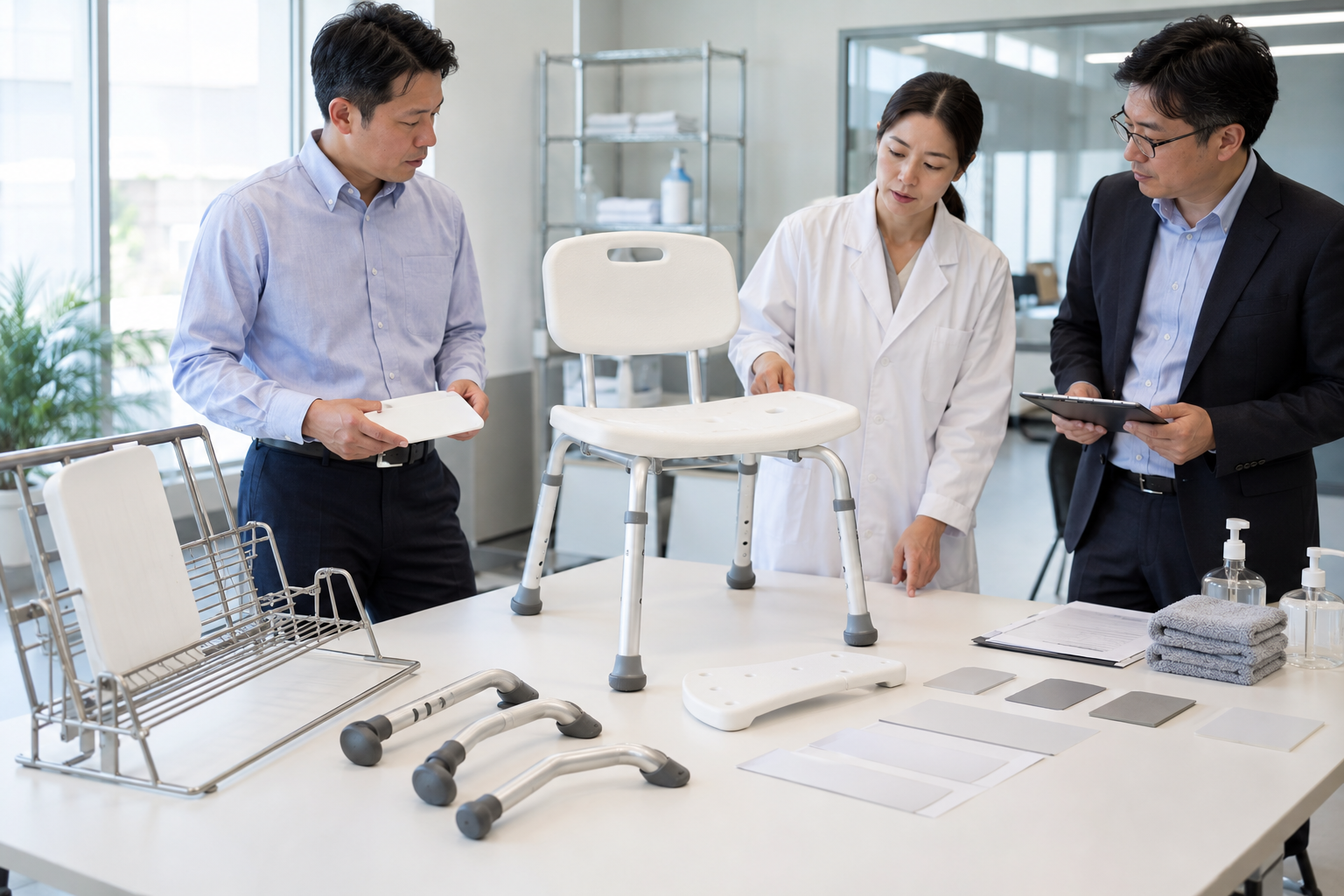
For the RFQ, request materials, methods, prohibited agents, disassembly, drying, checks, spare parts, and change notice.
Test a complete dirty-to-clean cycle on the sample before rollout.
For a related reference, see B2B supplier overview.
For a product or sourcing question, contact us today.
Frequently Asked Questions
Can one disinfectant be used on every shower chair?
No. Materials, finishes, joints, and manuals vary by chair. Check the exact manual and facility rules before approval.
What’s the best cleaning method for shared chairs?
Use the facility method approved for that chair. It should name the cleaner, order, rinse, dry, check, and release steps.
How do I know whether water entered a leg tube?
Follow the manual and check its approved drain points and leg movement. If water stays inside or cannot be checked, hold the chair.
Can a chair return to use before it is dry?
Do not release the chair while required drying or checks remain. Trapped water can hide residue or affect parts.
How should facilities document a cleaning-related hold?
Record the chair ID, date, condition, affected area, action, owner, and release decision. Keep it apart from clean stock until an approved person releases it.