
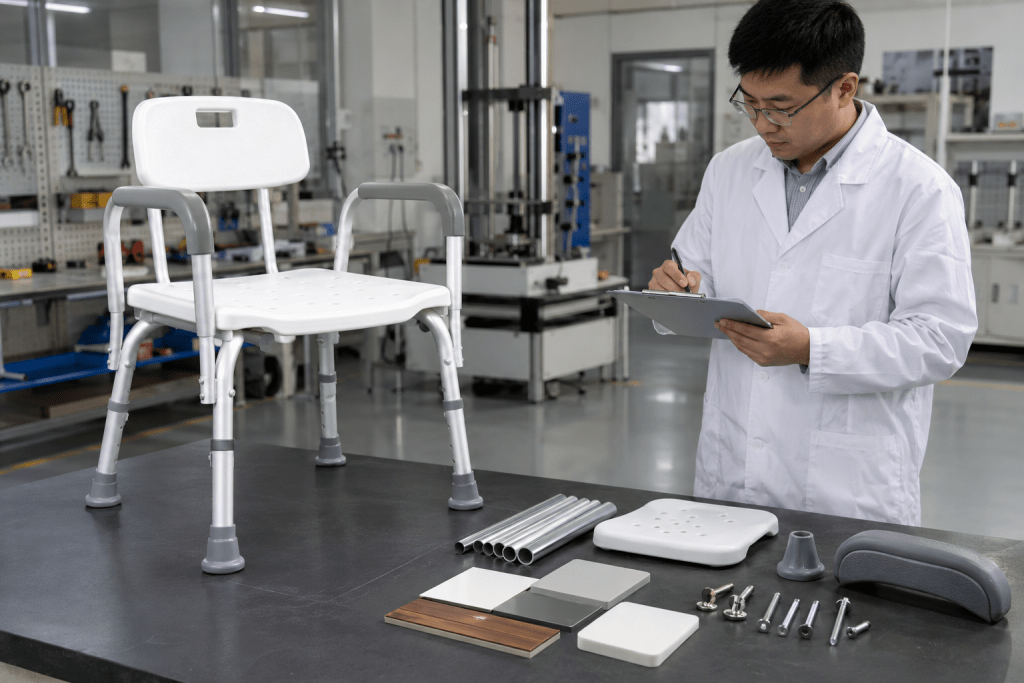
A shower chair material comparison has no universal winner because frame structure, finish, seat, supports, feet, fasteners, cleaning, transport, and service shape performance together. Buyers often compare aluminum, stainless steel, plastic, and wood as if each chair used one material. Joints, coatings, inserts, padding, and replacement parts tell a more useful story. This guide gives distributors and institutions a component-level B2B review. It also shows where supplier substitutions can reopen approval. Traceability matters when visually similar parts use different compounds. Receiving records should preserve that distinction.
1. What Is a Shower Chair Material Comparison?
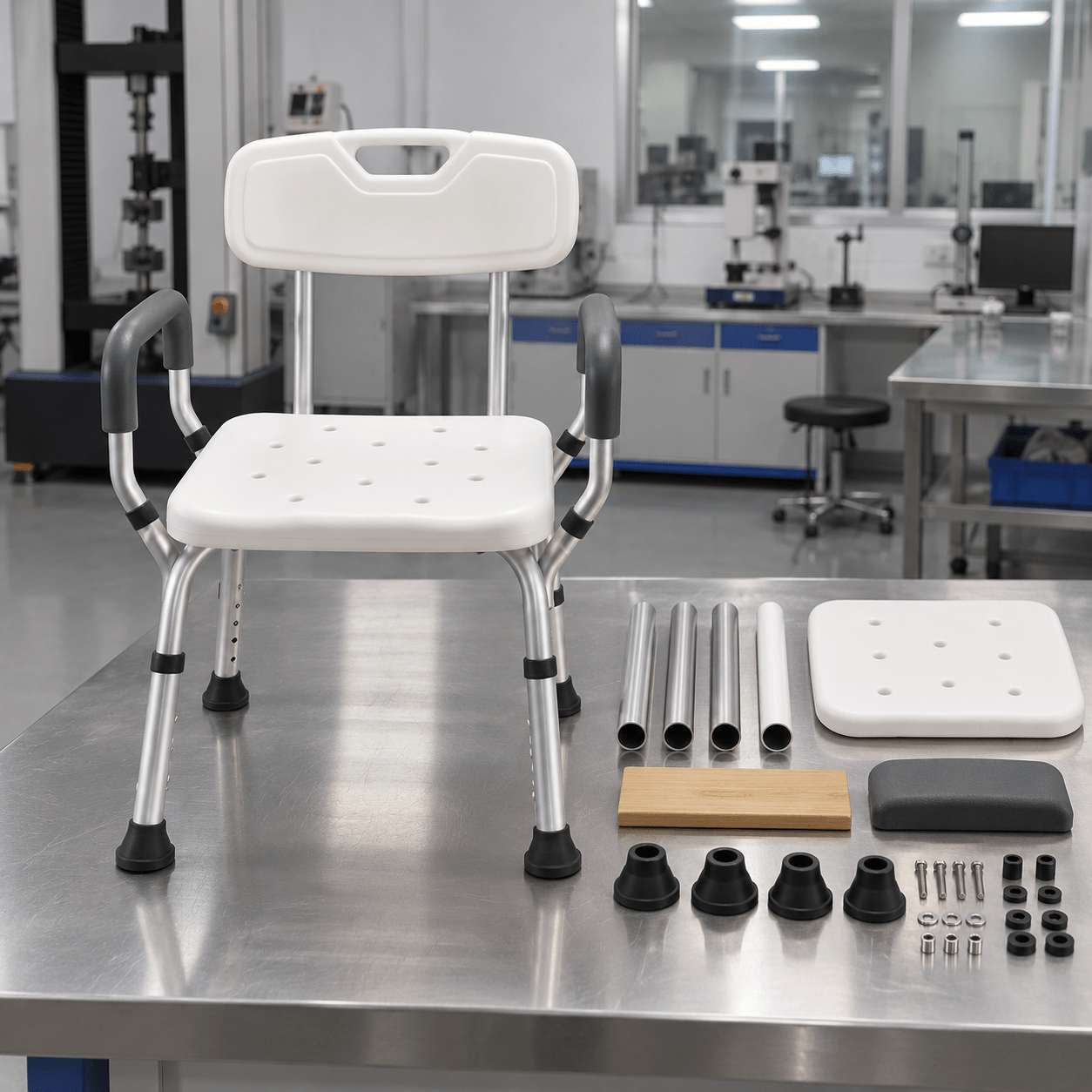
A shower chair material comparison reviews the complete material system: frame, seat, back, arms, feet, fasteners, coatings, inserts, adhesives, seams, and replacement parts. Product labels rarely describe every interface. Production processes and storage conditions can further change material behavior.
Which Material Groups Belong in the Review?
Common groups include aluminum, stainless steel, coated steel, molded plastic, wood, elastomers, foam, textiles, and fasteners. Exact grade or composition needs evidence.
- Structural frame and joints.
- Seating and user-contact surfaces.
- Feet, fasteners, coatings, and inserts.
Why Must Buyers Review Material Systems?
Interfaces can trap water, create corrosion risk, loosen, or complicate cleaning even when each material sounds suitable alone. Follow every joint: wet-area performance depends on connected parts.
- Map materials at each connection.
- Identify coatings and hidden surfaces.
- Control compatible replacements and substitutes.
| Component | Material group | Wet-area role | Buyer check |
|---|---|---|---|
| Frame | Metal or reinforced polymer | Structural support | Joints, finish, drainage |
| Seat/supports | Molded plastic, wood, padding | User contact | Surface and cleaning |
| Feet/fasteners | Elastomer and metal | Contact and assembly | Wear and compatibility |
The chair should be reviewed as one material assembly. Key Takeaway: compare component systems and interfaces rather than one headline material.
2. How Does a Shower Chair Material Comparison Cover Frames?

A shower chair material comparison covers frame strength, stiffness, mass, corrosion resistance, finish, manufacturing, repair, and inspection. Geometry and process can matter as much as material name. Tube dimensions and joint design still require configuration-specific evidence.
Which Frame Properties Matter?
Review structural properties within the offered tube, wall, bend, weld, fastener, and adjustment design. Avoid inferring performance from color or weight.
- Strength and stiffness under intended loads.
- Mass, handling, and transport effect.
- Corrosion, finish, drainage, and repair.
Which Frame Details Need Inspection?
Tube ends, bends, welds, coatings, holes, fasteners, braces, end caps, and adjustment interfaces can reveal wet-area risks. Inspect the hidden path: water often enters at openings and joints.
- Check finish continuity and damage.
- Look for retained water and sharp edges.
- Match production with the approved sample.
| Frame option | Possible benefit | Wet-area risk | Evidence need |
|---|---|---|---|
| Aluminum system | Lower mass | Oxidation or joint issues | Exact design evidence |
| Stainless system | Corrosion resistance potential | Grade and finish still matter | Material traceability |
| Coated steel | Controlled cost and stiffness | Coating damage exposes base | Finish and inspection plan |
Frame material needs design and process context. Key Takeaway: approve the complete frame system, not a metal name.
3. How Does a Shower Chair Material Comparison Cover Seats?
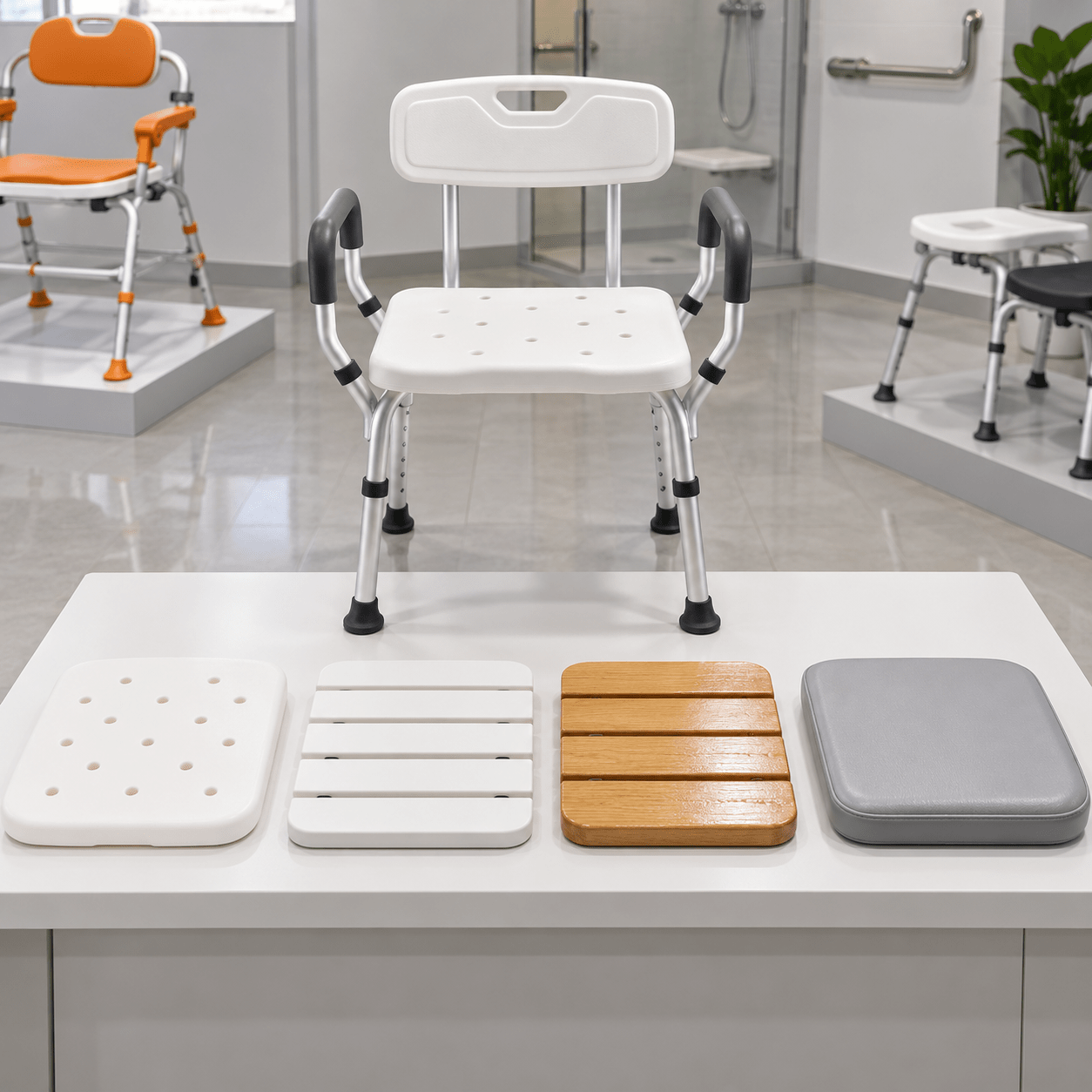
A shower chair material comparison covers seat waterproofing, smoothness, stiffness, comfort, drainage, cleanability, temperature feel, mounts, and damage resistance. Construction may alter performance more than surface appearance. Repeated wetting and drying deserve review under intended service conditions.
Which Seat Properties Matter?
Review contact surface, contour, openings, seams, texture, edge radius, flex, retained water, and compatible cleaning methods.
- Smooth and accessible surfaces.
- Drainage and drying behavior.
- Mount integrity and visible damage.
Which Seat Constructions Need Separate Review?
Molded shells, slats, wooden components, padding, open-front seats, and removable panels have different interfaces. Keep categories distinct: cleaning and evidence cannot be copied between designs.
- Inspect every seam and underside.
- Test removable parts through a complete cycle.
- State material and maintenance limitations.
| Seat construction | Material need | Cleaning issue | Buyer check |
|---|---|---|---|
| Molded shell | Smooth, durable surface | Drain holes and underside | Damage and drainage |
| Slatted seat | Stable joints and finish | Gaps and mounts | Alignment and access |
| Padded seat | Sealed contact system | Seams and drying | Cover integrity |
Seat review joins contact and maintenance. Key Takeaway: select construction only after testing drainage, cleaning, mounts, and service.
4. How Does a Shower Chair Material Comparison Cover Supports?
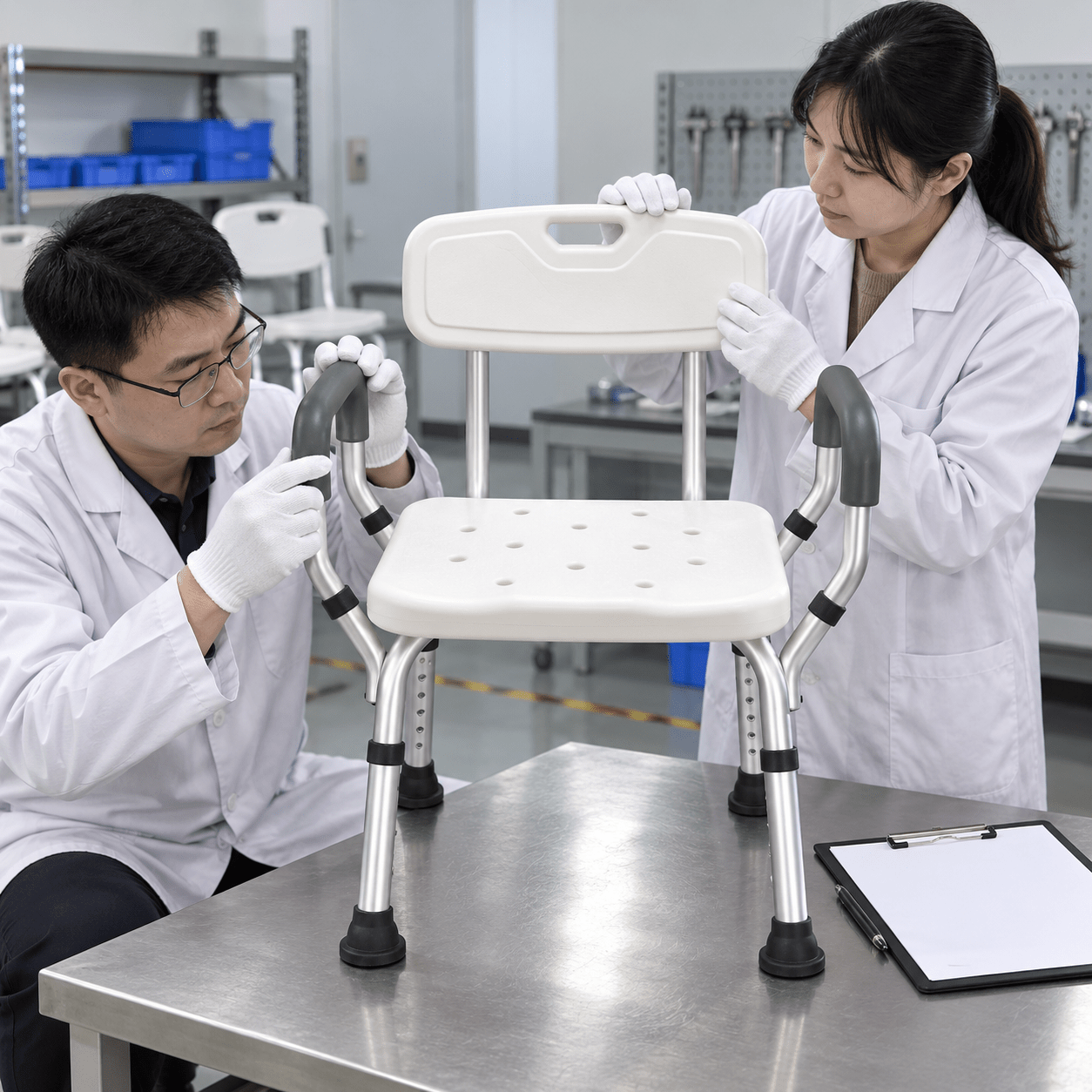
A shower chair material comparison covers back and arm frames, grips, padding, covers, fasteners, inserts, locks, and skin-contact edges. Optional supports may introduce new materials. Their replacement parts should preserve the approved contact and cleaning properties.
Which Back and Arm Materials Need Review?
Check structural tube, molded grip, pad, cover, adhesive, fastener, mount, and removable interface in the offered configuration.
- Contact feel and edge condition.
- Water resistance, drainage, and drying.
- Mount, lock, and replacement compatibility.
Which Skin-Contact Details Need Inspection?
Seams, texture, temperature, cracks, exposed hardware, residue, and movement affect practical use. Small defects become daily contact: inspect supports closely after cleaning and load trials.
- Look for tears, gaps, and sharp edges.
- Check looseness and trapped moisture.
- Hold damaged contact surfaces.
| Support component | Contact property | Wet-area risk | Action |
|---|---|---|---|
| Arm grip | Secure comfortable surface | Wear or chemical damage | Inspect/replace |
| Back panel | Smooth rear contact | Crack or retained water | Hold if damaged |
| Padding | Sealed resilient cover | Tear or swelling | Follow approved service |
Support materials need close inspection and parts control. Key Takeaway: include every contact layer and mount in the material review.
5. How Does a Shower Chair Material Comparison Cover Feet?
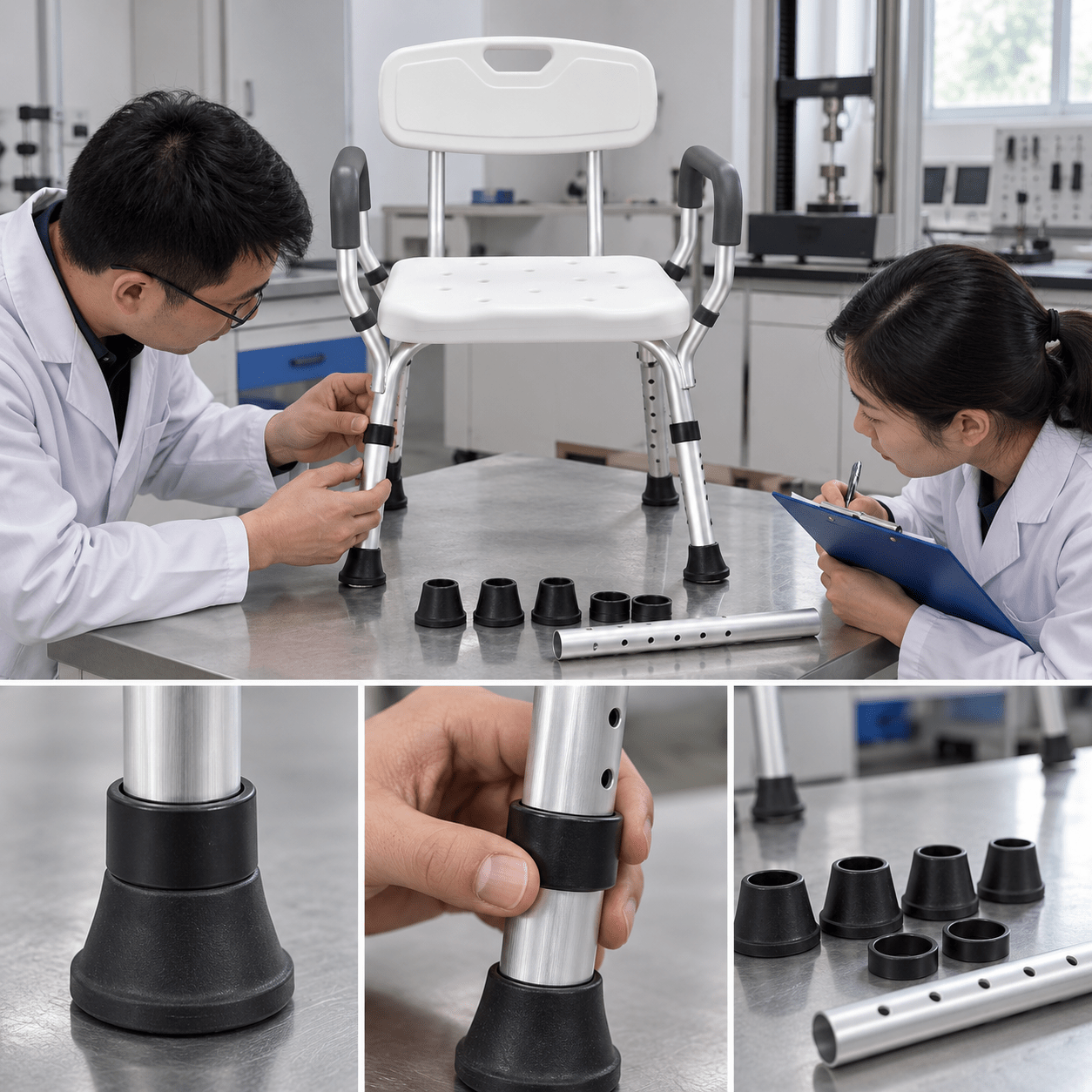
A shower chair material comparison covers foot compound, hardness, resilience, tread, geometry, attachment, water exposure, wear, and compatibility with the leg. Black or grey rubber appearance proves little. Matching feet across all legs also protects chair geometry.
Which Foot Materials Affect Grip?
Wet contact, deformation, shape recovery, surface marking, cleaning resistance, and aging may affect suitability. Review the defined floor condition.
- Material identity and hardness source.
- Contact geometry and tread.
- Wear, cleaning, and replacement guidance.
Which Leg-to-Foot Interfaces Affect Durability?
Push fits, threads, collars, inserts, and integrated ends can loosen, admit water, or corrode. Inspect the connection: grip begins above the floor surface.
- Check retention and seating depth.
- Look for rotation or splitting.
- Match replacement size and orientation.
| Foot field | Material question | Interface risk | Verification |
|---|---|---|---|
| Compound | Does it suit approved floors? | Aging or incompatible cleaning | Evidence and sample |
| Geometry | Does contact remain complete? | Edge or partial contact | Floor trial |
| Mount | Does it stay secured? | Pull-off or water entry | Retention check |
Feet combine material, geometry, and attachment. Key Takeaway: evaluate the whole floor-contact assembly rather than rubber alone.
6. How Does a Shower Chair Material Comparison Cover Fasteners?
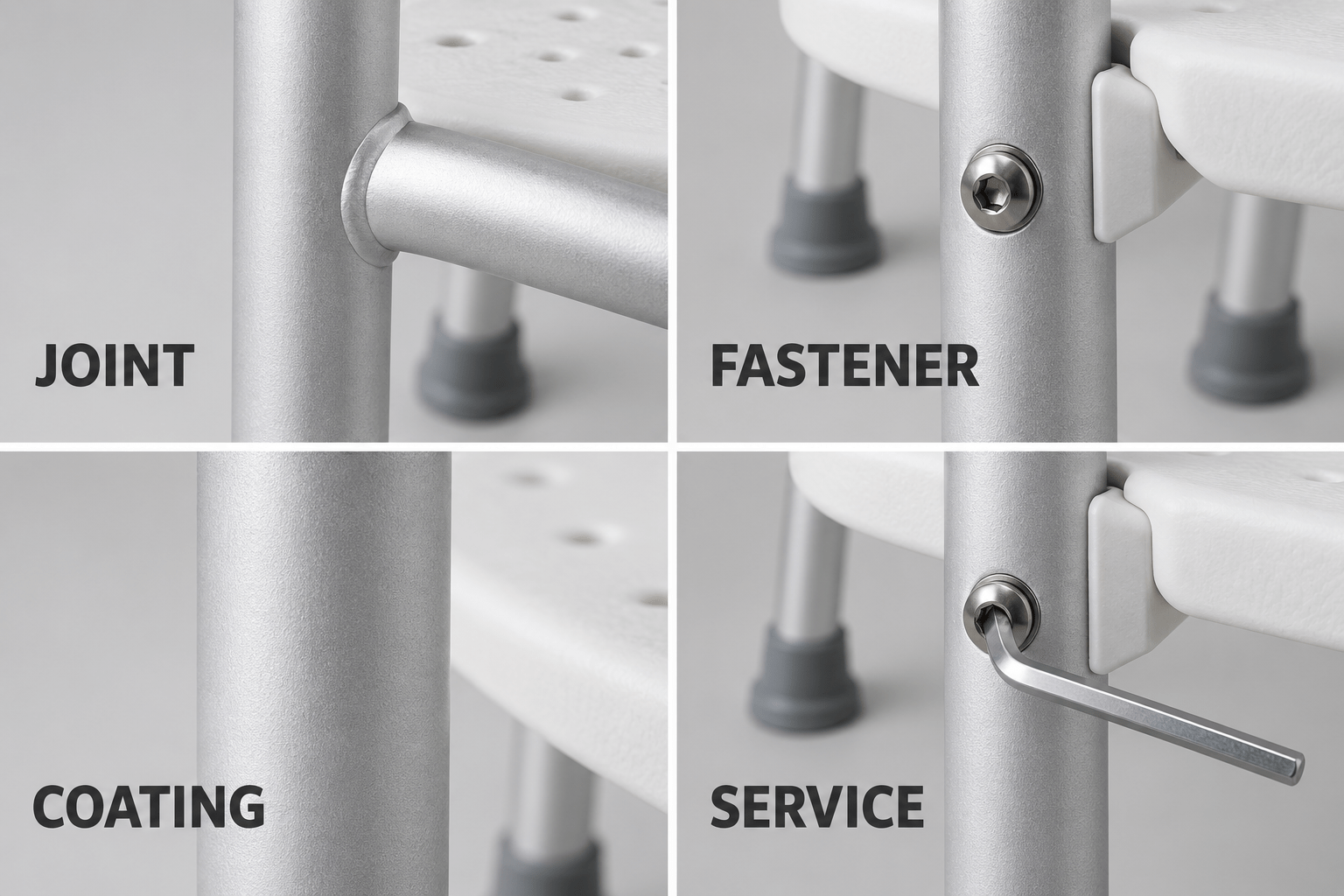
A shower chair material comparison covers fastener strength, corrosion resistance, locking, finish, accessibility, compatibility, and replacement. Mixed materials can introduce joint-specific problems. Assembly methods and service tools may damage protective surfaces when uncontrolled.
Which Fastener Properties Matter?
Review material, coating, size, head, thread, locking feature, torque or assembly method, access, and spare identity.
- Match fasteners with drawings and samples.
- Inspect exposed and hidden joints.
- Define replacement and reassembly checks.
Which Mixed-Material Risks Need Control?
Galvanic contact, coating damage, trapped water, loosening, staining, and seized threads may occur at interfaces. The joint is the unit: separate material claims miss interaction.
- Identify dissimilar-metal contacts.
- Protect finish during service.
- Monitor recurring joint defects.
| Joint | Material interaction | Failure sign | Control |
|---|---|---|---|
| Frame fastener | Dissimilar metals or coating | Stain, looseness, seizure | Approved materials and inspection |
| Folding hinge | Metal and polymer interfaces | Wear or play | Cycle and lubrication guidance |
| Support mount | Tube, insert, and screw | Movement or corrosion | Parts and closeout check |
Fasteners can decide whether materials remain connected. Key Takeaway: review joints as engineered material interfaces with service controls.
7. How Does a Shower Chair Material Comparison Address Corrosion?
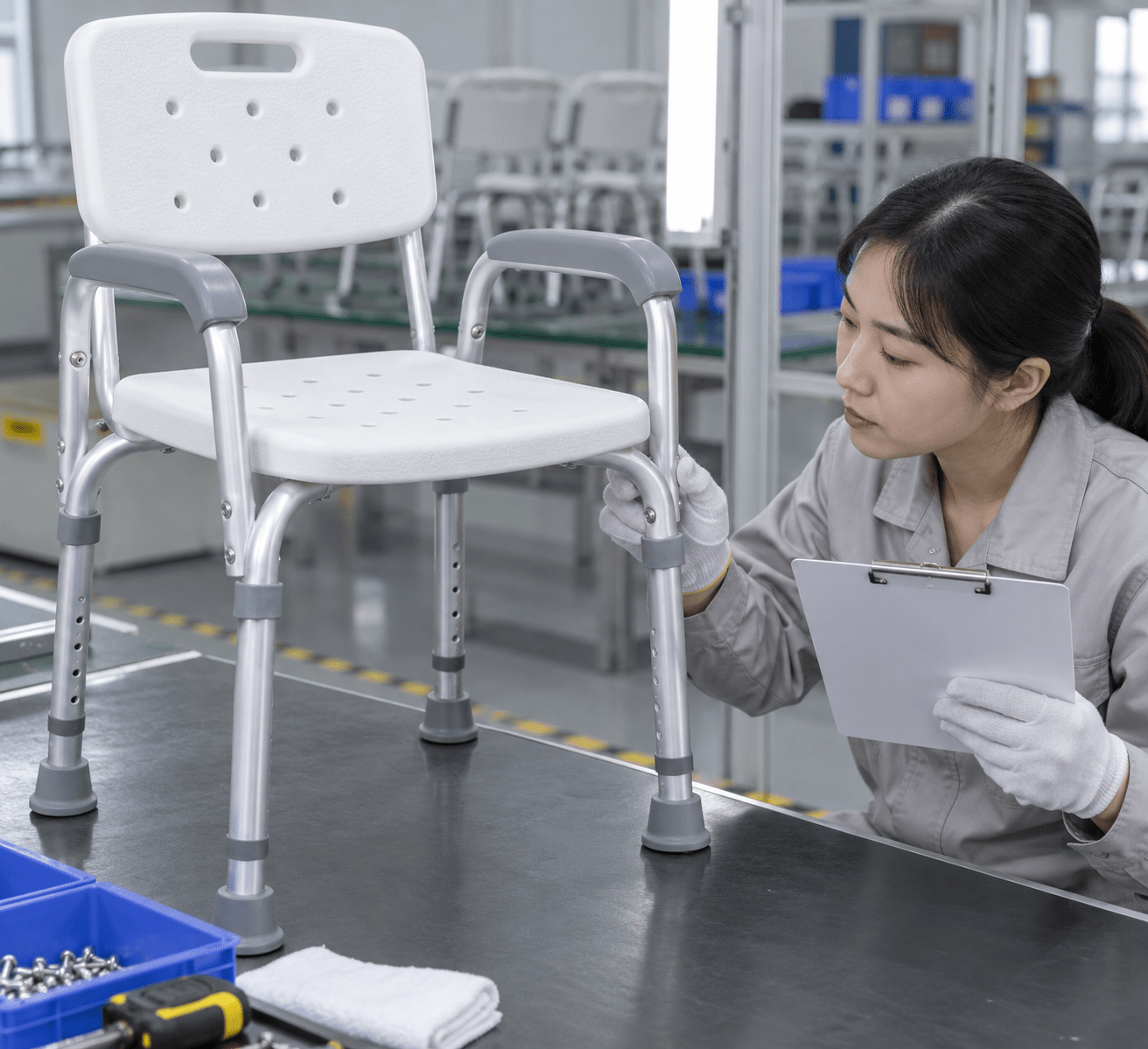
A shower chair material comparison addresses corrosion through base material, finish, water entry, drainage, cleaning, scratches, mixed metals, storage, and inspection. No wet-area material is maintenance-free by label alone. Early surface changes can help teams find recurring process problems.
Which Corrosion Signs Need Inspection?
Look for pitting, staining, coating lift, white oxidation, rust, damaged fasteners, roughness, and moisture inside tubes.
- Inspect joints, holes, welds, and end caps.
- Compare hidden and exposed surfaces.
- Record severity and product status.
Which Use Conditions Change Corrosion Risk?
Warm water, humidity, salts, cleaners, poor drying, scratches, and mixed metals change exposure. Trace the cause before repair: surface cleaning may hide a structural issue.
- Review facility cleaning and drying.
- Check institutional equipment workflows where relevant.
- Hold affected parts until assessed.
| Sign | Possible cause | Affected area | Action |
|---|---|---|---|
| Staining | Water or mixed material | Joint or fastener | Inspect and document |
| Coating lift | Damage or exposure | Coated frame | Hold and assess |
| Pitting or rust | Corrosion process | Structural area | Technical disposition |
Corrosion review links material with environment. Key Takeaway: inspect likely water-entry and mixed-material locations throughout service.
8. How Does a Shower Chair Material Comparison Affect Cleaning?
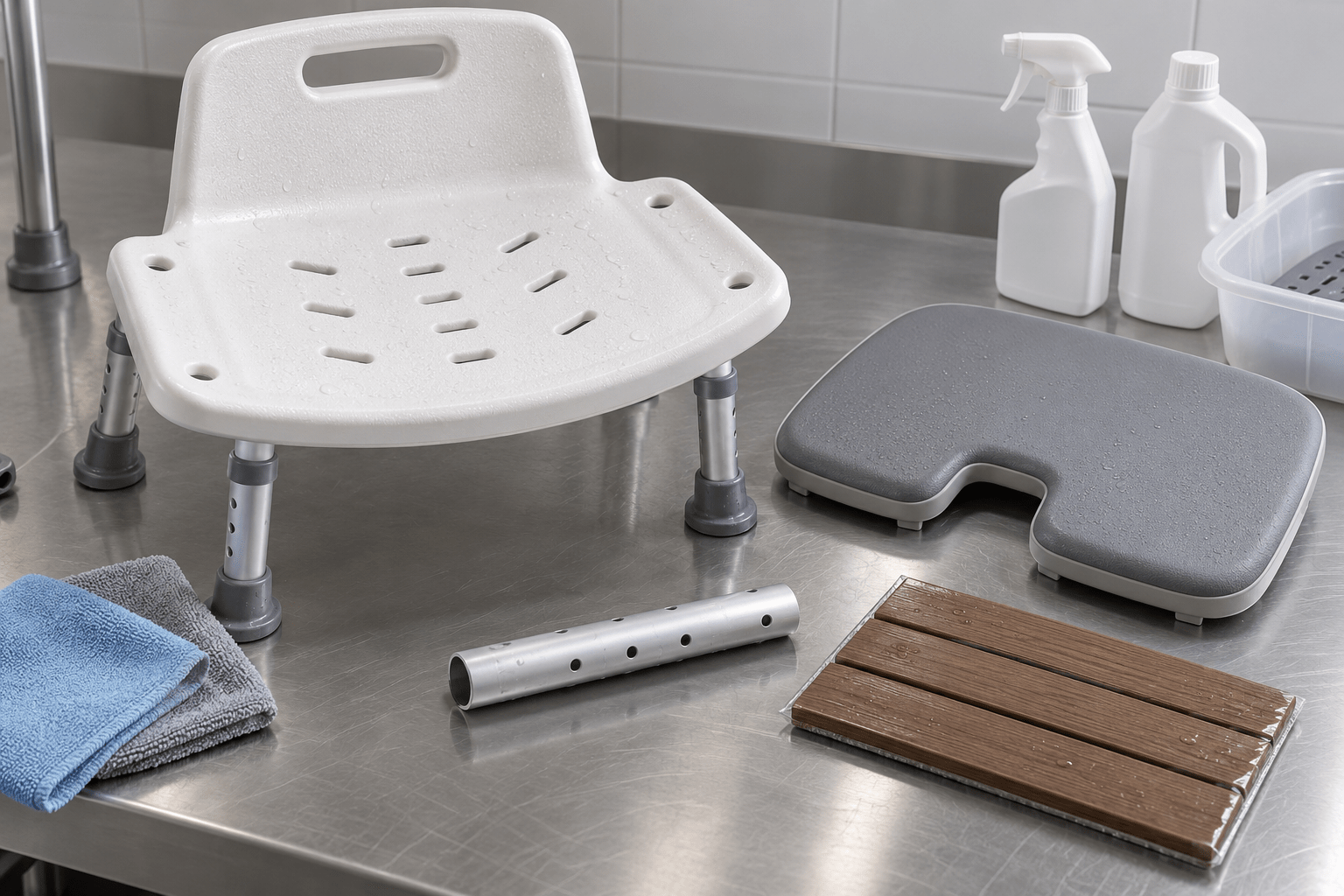
A shower chair material comparison affects cleaning through surface smoothness, drainage, seams, porosity, removable parts, chemical compatibility, drying, and inspection. Facility processes should follow current product instructions. Cleaning labor and damage holds also affect lifecycle planning.
Which Surfaces Support Routine Cleaning?
Smooth accessible finishes, open drainage, sealed padding, removable parts, and dry storage can make workflow more manageable when correctly designed.
- Map high-contact and hidden surfaces.
- Verify approved methods and tools.
- Inspect after cleaning and drying.
Which Cleaning Claims Need Verification?
Chemical resistance, antimicrobial, stain resistance, machine washing, or high-temperature use require evidence and conditions. Remove the marketing shortcut: name the agent, method, material, and limit only when verified.
- Keep unverified claims out of articles and RFQs.
- Compare with other bathing-product material boundaries.
- Record damage and hold rules.
| Surface | Cleaning task | Limitation | Buyer rule |
|---|---|---|---|
| Molded plastic | Wipe, rinse, dry as approved | Scratches or chemical attack | Follow instructions |
| Padding | Clean seams and cover | Tear or retained moisture | Inspect before release |
| Metal frame | Clean joints and finish | Water entry or coating damage | Dry and examine |
Cleaning claims should stay material-specific. Key Takeaway: approve a cleaning workflow only after compatibility and post-cleaning function checks.
9. How Do You Test a Shower Chair Material Comparison?
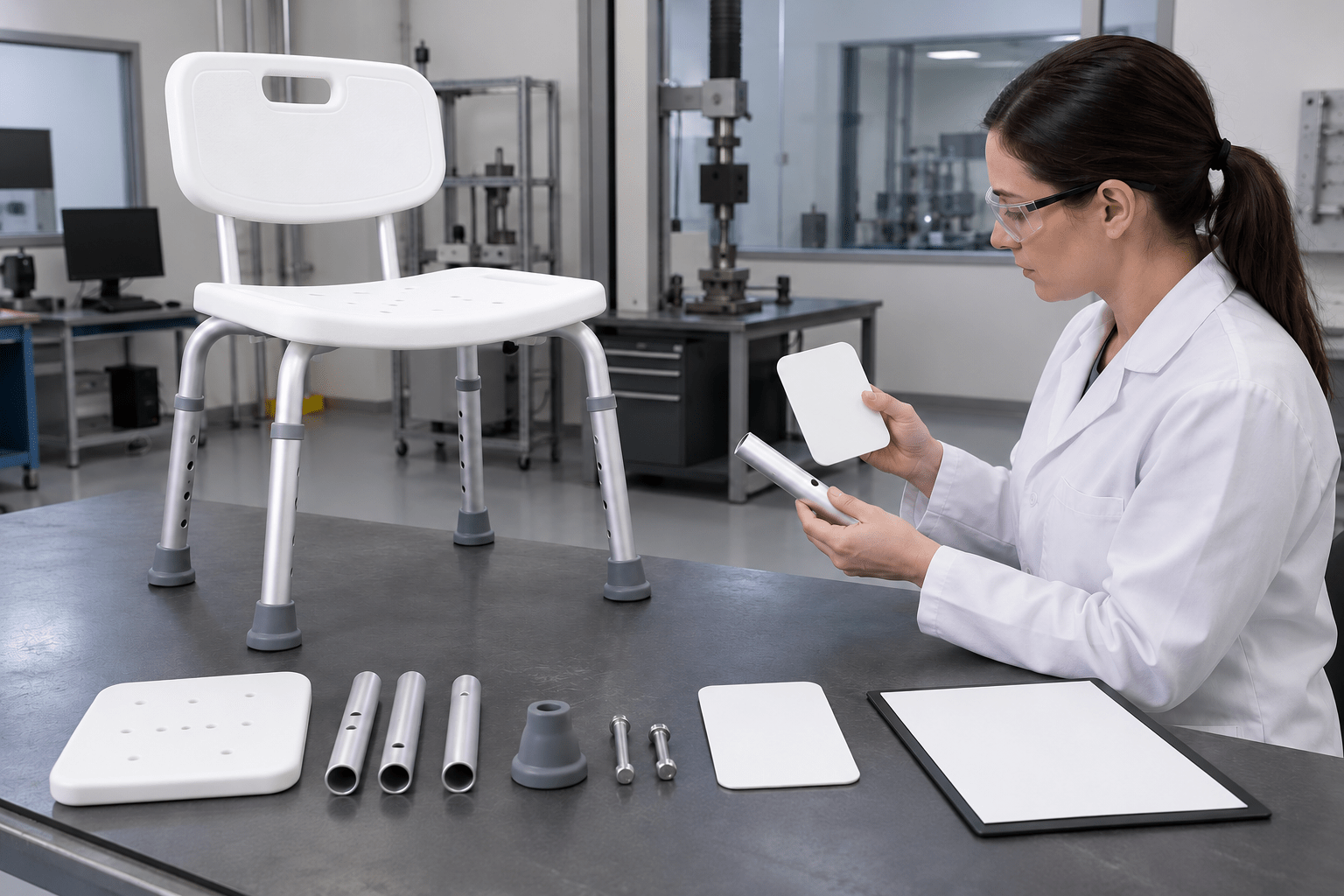
A shower chair material comparison test combines sample inspection, cleaning trials, water retention, stiffness, grip, adjustments, damage review, and applicable laboratory evidence. It should not invent properties from appearance. Every test condition should remain linked with the exact component revision.
Which Sample Checks Need Buyer Observation?
Inspect finish, edges, joints, drainage, contact surfaces, feet, locks, cleaning access, drying, and visible change through controlled tasks.
- Record product and material identity.
- Use approved conditions and methods.
- Compare before and after state.
Which Laboratory Evidence May Be Relevant?
Strength, durability, corrosion, material identity, coating, or chemical exposure may require configuration-specific records. Match evidence with the claim: a material certificate cannot prove complete chair performance.
- Review method and sample scope.
- Resolve gaps before approval.
- Preserve changes and deviations.
| Check | Sample method | Report need | Gate |
|---|---|---|---|
| Finish and edges | Visual/tactile inspection | Usually sample record | No harmful damage |
| Cleaning response | Approved workflow | Compatibility evidence where claimed | No functional loss |
| Structural material | Configuration review | Applicable technical evidence | Scope matches |
Testing should answer specific material questions. Key Takeaway: combine sample behavior and traceable evidence without extending either beyond scope.
10. How Should Buyers Use a Shower Chair Material Comparison?

A shower chair material comparison should guide component specifications, sample gates, cleaning plans, spare parts, inspections, supplier changes, and lifecycle decisions. Unit price should use the same configuration and support assumptions. The purchase file should identify critical materials and approved substitutes.
Which Criteria Belong in the Selection Matrix?
Include intended use, bathroom, cleaning, handling, mass, fit, finish, service, parts, evidence, and change risk. Separate mandatory gates from preferences.
- Product and environment fit.
- Cleaning and maintenance workload.
- Supplier evidence and parts support.
Which Conditions Belong in the Purchase Order?
Fix verified material fields, finish, approved sample, substitutes, inspection, parts, packaging, and change notice. Preserve the system: component substitutions can affect joints and cleaning.
- Reference controlled drawings and samples.
- Define critical incoming checks.
- Apply related bathroom-equipment receiving controls.
| Decision stage | Material output | Owner | Release rule |
|---|---|---|---|
| Brief | Properties and environment | Product team | Needs defined |
| Sample | Inspection and workflow record | Evaluation team | Critical checks pass |
| Production | Controlled materials and changes | Procurement | Approved system preserved |
The final choice should survive production and service. Key Takeaway: buy a controlled material system, not a single attractive material label.
Conclusion
Wet-area material selection needs a component-by-component review of frames, seats, supports, feet, fasteners, corrosion, cleaning, tests, and parts. No material name can replace that work. For help comparing bath-chair configurations and sourcing evidence, contact us today.
Durable bathroom equipment comes from controlled interfaces, finishes, cleaning limits, and replacement decisions. The same controls should follow the chair from sample approval through service. Keep material records current. Retain approved samples whenever appearance cannot confirm material identity or revision.
FAQ
Can one material make a shower chair corrosion-proof?
No. Geometry, finish, joints, mixed metals, scratches, water entry, cleaning, drying, and maintenance also affect corrosion risk. Product instructions should define inspection and hold conditions for visible material change.
What’s the best frame material for shared facilities?
The best system matches intended loads, cleaning, handling, maintenance, evidence, and parts support. Compare complete configurations rather than names. Include staff workload and replacement access in the institutional decision.
How do I know whether a coating suits wet use?
Review coating specification, substrate, preparation, sample finish, damage response, applicable evidence, cleaning limits, and inspection plan. Check bends, holes, welds, and fastener areas where coverage may differ.
Can wooden components belong in a shower product?
Possibly, when the complete design, finish, water exposure, cleaning, drying, maintenance, and evidence support the intended environment. Buyers should avoid extending one construction’s evidence to a different wood or finish.
How should buyers control material substitutions?
Require advance notice, technical impact review, updated evidence where needed, matched samples, inspection changes, and written approval before shipment. Update spare parts, manuals, cleaning guidance, and receiving checks when the change is accepted.
