
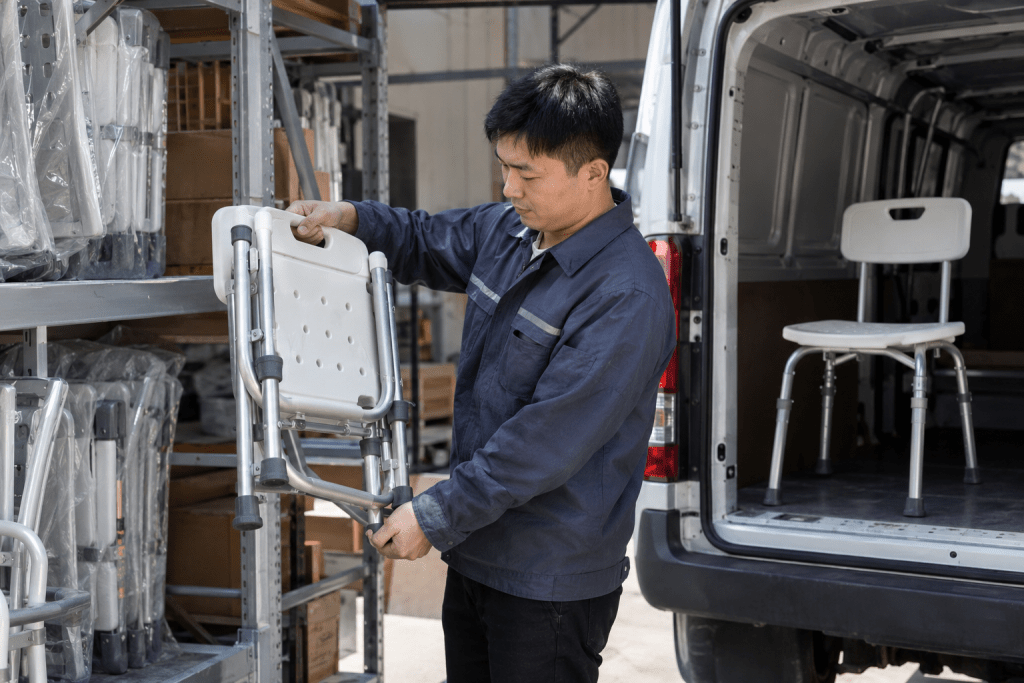
Folding shower chair transport and storage is practical only when the complete handling cycle works: preparation, folding, locking, lifting, loading, restraint, drying, storage, restoration, and inspection. A compact chair can still trap water, expose a latch, shed a loose part, or remain awkward to lift. Folded dimensions alone therefore do not prove portability. This guide helps distributors, care programs, facilities, and rental fleets validate the real workflow without relying on sales language.
1. What Is Folding Shower Chair Transport and Storage?
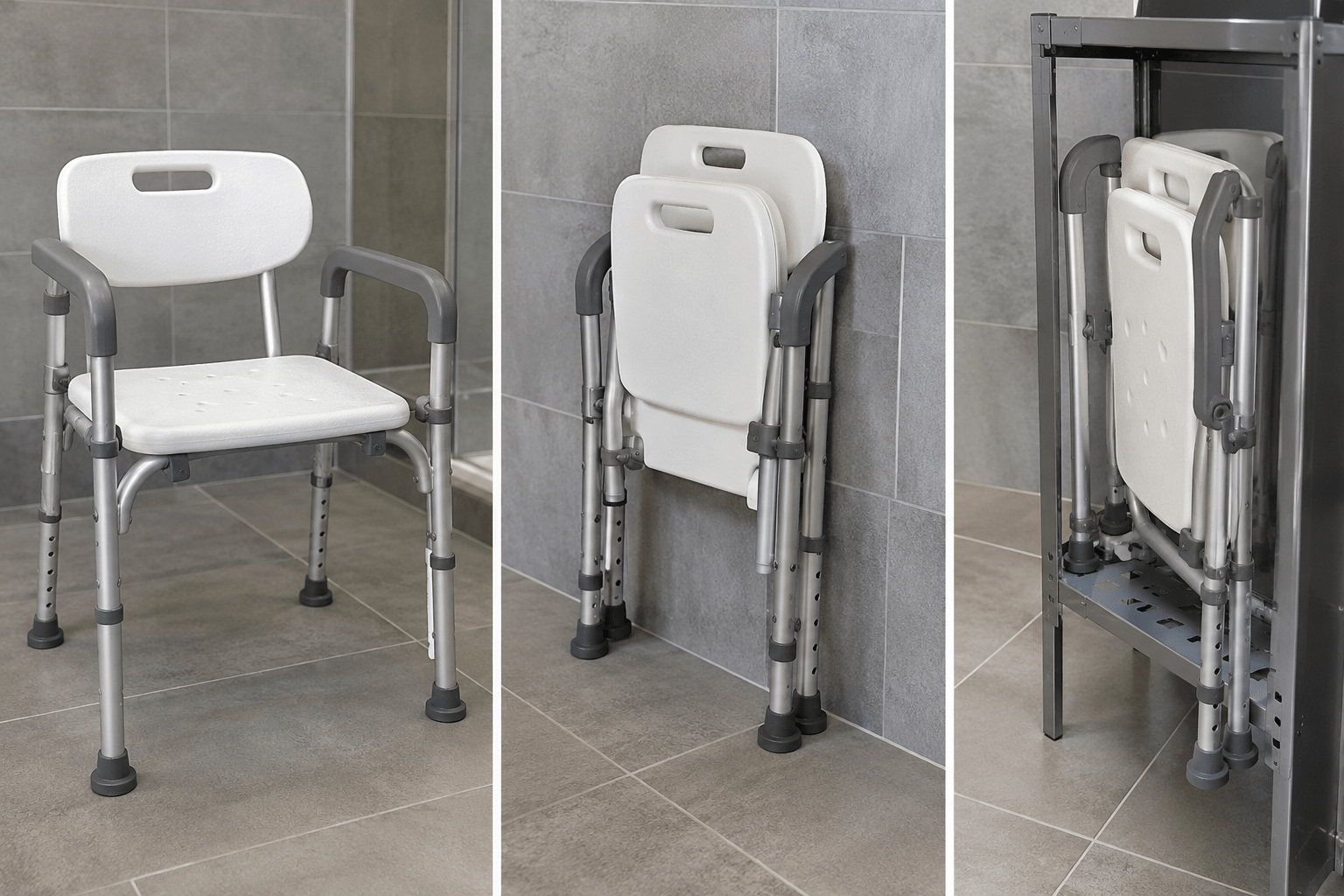
Folding shower chair transport and storage describes every controlled state between service and return to service. It includes the assembled chair, prepared chair, folded unit, removed components, transport-secured load, drying position, stored position, and restored configuration. Each transition needs an owner and a release condition.
Which Product States Need Definitions?
Define the chair as in use, empty and prepared, folded, transport-secured, drying, stored, restored, or held. Powered options, if present, need their own controlled shutdown and handling rules.
- Photograph approved states where useful.
- Identify loose and removable parts.
- Keep a hold state separate from storage-ready.
Which Actions Belong in the Workflow?
Preparation, fold, lock, lift, load, restraint, unload, dry, store, unfold, and inspect all belong to the same portability claim. Follow the full cycle: skipping restoration hides important handling failures.
- Assign each action to a trained handler.
- Record stop conditions at transitions.
- Include post-transport function checks.
| State | Required action | Owner | Release condition |
|---|---|---|---|
| Prepared | Clean, drain, inspect | Care/equipment staff | Ready to fold |
| Folded/secured | Lock and restrain | Handler/driver | No movement or loose parts |
| Restored | Unfold, configure, test | Trained receiver | Complete and functional |
Portability is a process, not one measurement. Key Takeaway: approve every product state from service exit through verified restoration.
2. Who Manages Folding Shower Chair Transport and Storage?
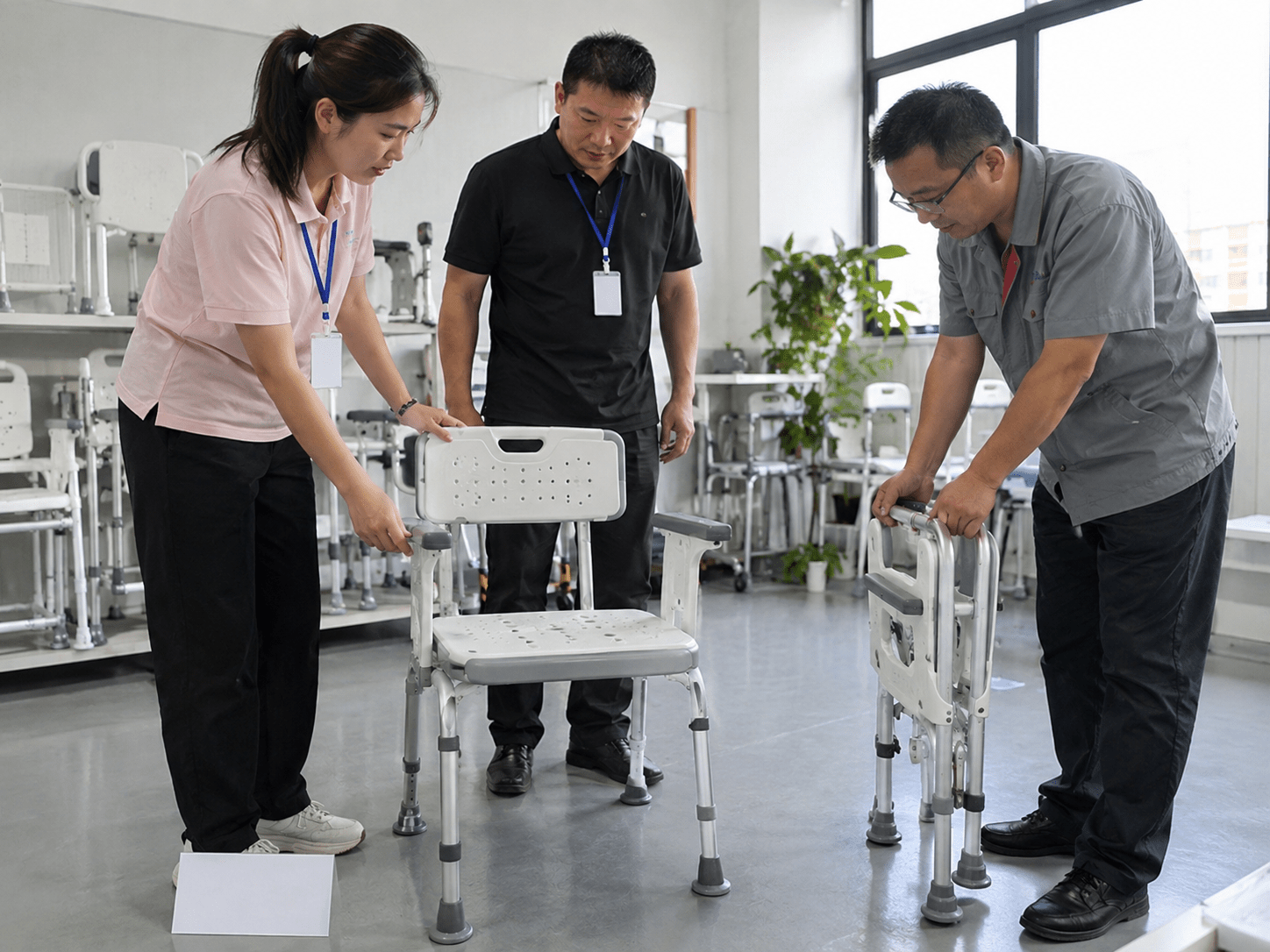
Folding shower chair transport and storage may involve a user, caregiver, facility worker, driver, warehouse handler, technician, or rental operator. Their reach, training, lifting capacity, vehicle access, and task frequency differ. The workflow should reflect the least-supported realistic handler, not a showroom demonstration.
Which Handlers Need Realistic Trials?
Observe the people who actually fold, carry, load, dry, store, and restore the chair. Record when a second person or handling aid is required.
- Test normal work clothing and gloves.
- Use realistic vehicle and shelf heights.
- Do not assume all handlers share the same strength.
Which Training Topics Need Ownership?
Fold order, pinch zones, grip points, loose-part control, latch confirmation, restraint, drying, and restoration checks need clear responsibility. Make the handoff teachable: every handler should know the next safe state.
- Use configuration-specific instructions.
- Define tasks a driver may not perform.
- Refresh training after design or packaging changes.
| Handler | Main task | Training need | Limitation |
|---|---|---|---|
| Caregiver | Prepare and fold | Sequence and pinch zones | User removed first |
| Driver | Load and restrain | Grip and securement points | No unapproved disassembly |
| Technician | Restore and inspect | Locks, parts, function | Authorized release only |
Named roles prevent informal shortcuts. Key Takeaway: validate portability with the real handlers and the limits of their jobs.
3. How Does Folding Shower Chair Transport and Storage Start?
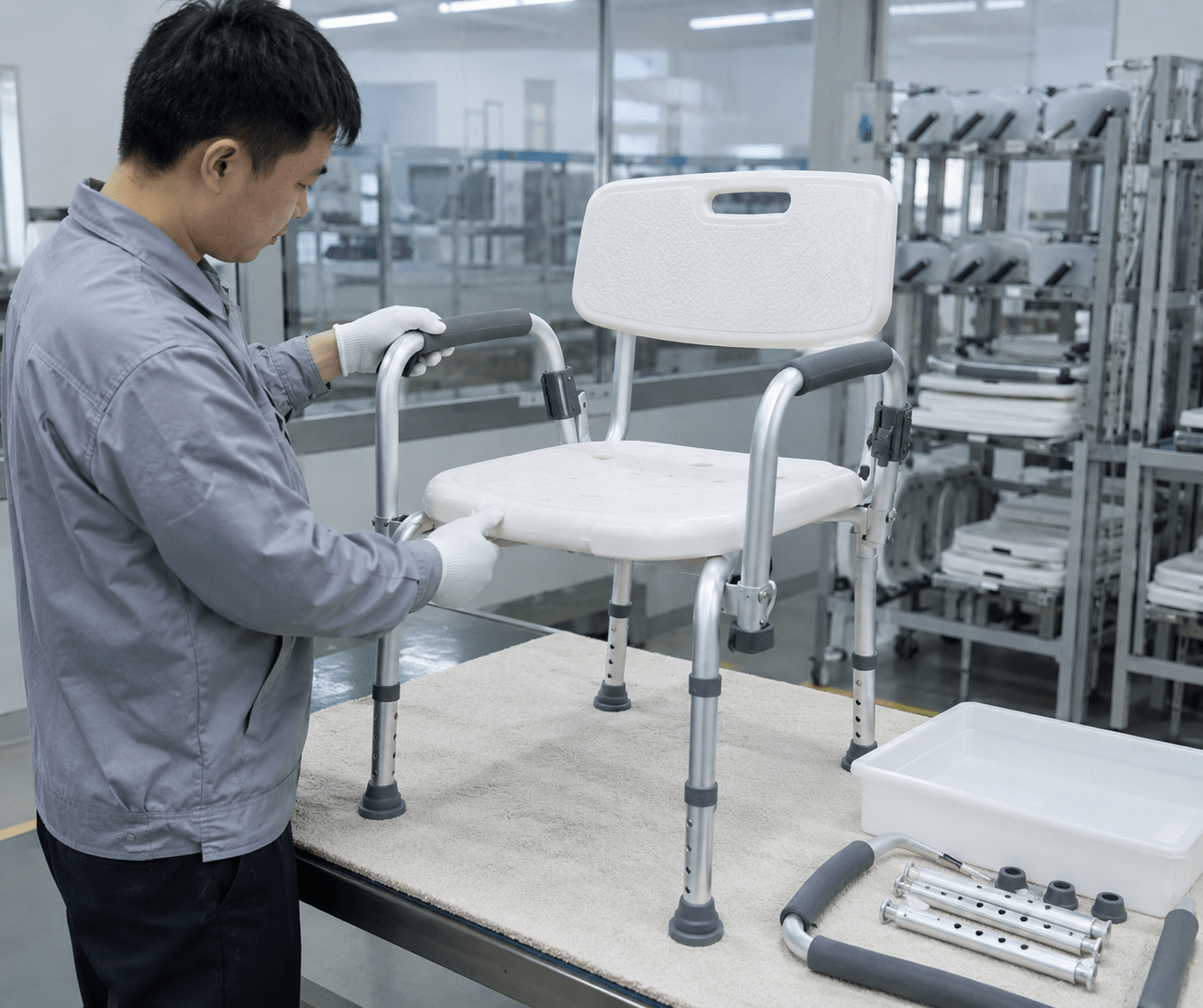
Folding shower chair transport and storage starts after the user is removed and the chair is cleaned, drained, set, inspected, and prepared according to current instructions. Folding a wet, damaged, or wrongly configured chair can conceal the problem. Preparation should create a known, empty product state.
Which Preparation Steps Come Before Folding?
Confirm identity, empty the chair, manage accessories, drain and dry as required, select the approved height or position, and remove only permitted parts.
- Inspect supports, feet, locks, and frame.
- Keep removed hardware in an identified container.
- Protect padded and user-contact surfaces.
Which Conditions Should Stop the Process?
Damage, a stuck lock, trapped object, retained water, loose support, missing instruction, or unknown configuration should stop routine folding. Do not fold through resistance: force can turn a service issue into structural damage.
- Tag and segregate abnormal units.
- Record the location of the fault.
- Route unresolved conditions to technical review.
| Preparation step | Pass condition | Stop sign | Action |
|---|---|---|---|
| Identity/configuration | Correct instructions available | Unit or revision unknown | Hold and reconcile |
| Condition | Empty, complete, undamaged | Loose, bent, trapped, or wet part | Technical review |
| Parts control | Removed items identified | Missing or mixed component | Stop and inventory |
Good preparation reduces handling errors later. Key Takeaway: create a clean, empty, known configuration before touching the folding mechanism.
4. Which Locks Secure Folding Shower Chair Transport and Storage?
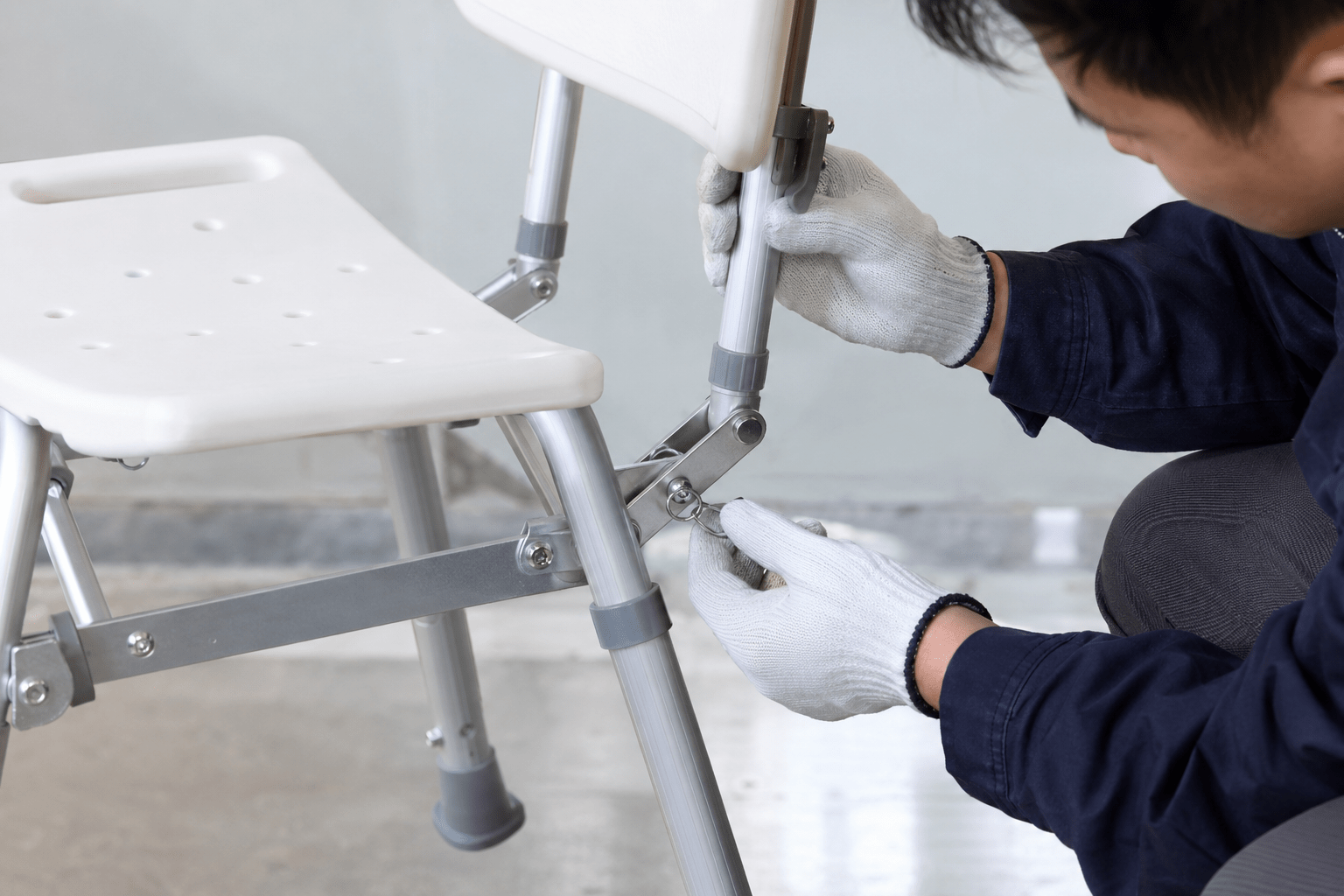
Folding shower chair transport and storage depends on hinges, latches, pins, braces, back folds, arm folds, leg folds, and safety catches reaching their intended states. A mechanism may need one lock when open and another when folded. Partial engagement should remain a failed condition.
Which Folding Interfaces Need Inspection?
Inspect each hinge or pivot for alignment, wear, obstruction, corrosion, sharp edges, looseness, and smooth approved movement. Check adjacent padding or cables where fitted.
- Identify every moving interface.
- Keep fingers outside marked pinch paths.
- Stop when movement differs from the sample.
Which Lock States Need Clear Confirmation?
Open, folding, transport-secured, fully opened, partly engaged, and held states should look and feel distinct. Confirm, do not assume: reaching a compact shape does not prove a latch is secured.
- Use the documented visual and tactile check.
- Test the lock without a seated user.
- Recheck after loading and unloading.
| Interface | Correct state | Warning sign | Release rule |
|---|---|---|---|
| Main hinge | Aligned through movement | Binding, play, sharp edge | Hold if abnormal |
| Open-position brace | Fully engaged | Partial seating or movement | No use |
| Folded restraint | Unit remains compact | Opens or sheds a part | Do not transport |
Lock state must be observable and repeatable. Key Takeaway: verify every open and folded latch before lifting or returning the chair to service.
5. How Does Lifting Affect Folding Shower Chair Transport and Storage?
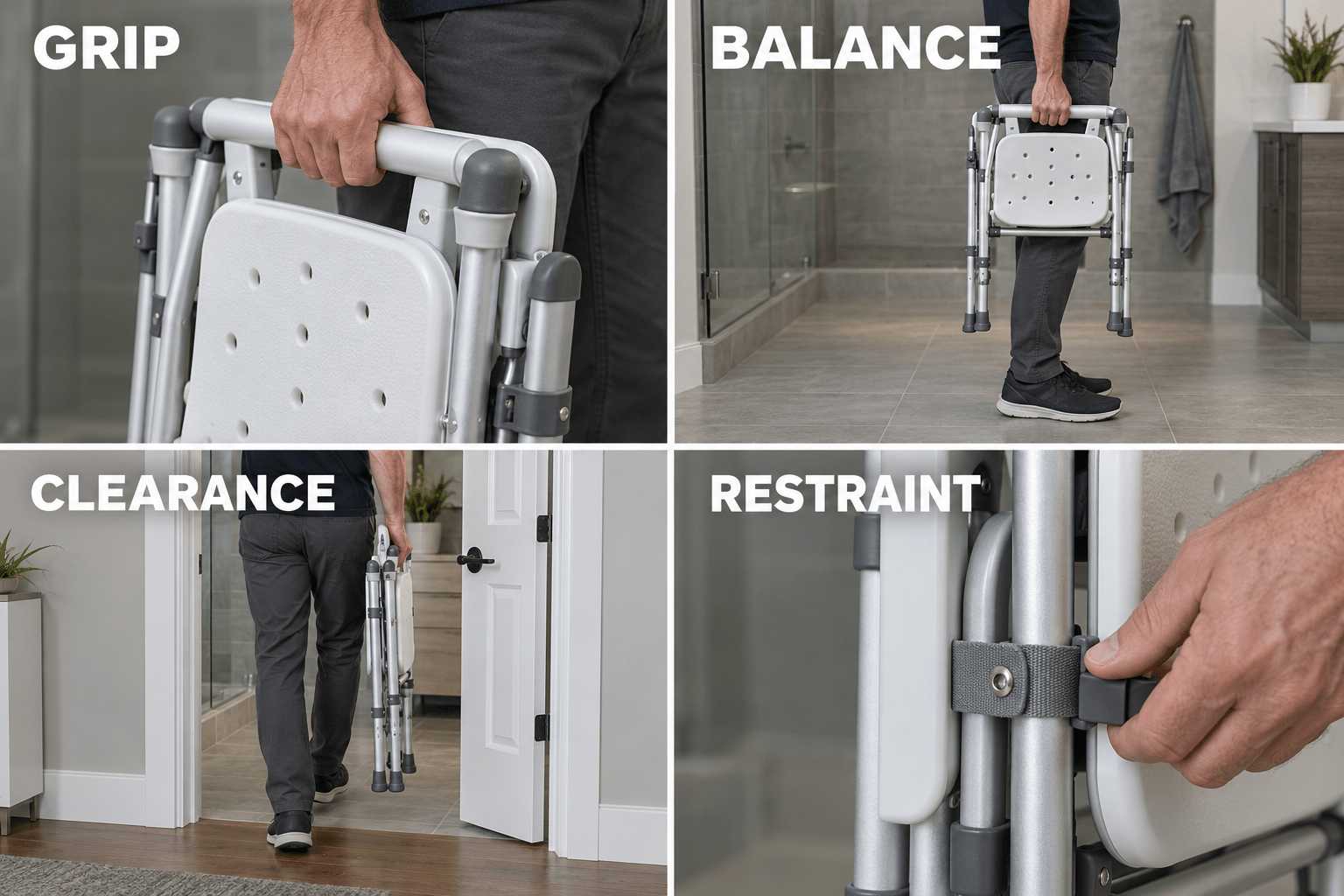
Folding shower chair transport and storage is affected by product mass, center of mass, folded balance, grip shape, projections, reach distance, and the possible need for two people. A lighter unit can still be awkward if it unfolds or shifts. Real lifting routes matter more than a catalog weight alone.
Which Handling Properties Matter?
Review stable grip points, hand clearance, folded thickness, balance, sharp projections, loose parts, and whether a handler can keep the load close to the body.
- Never lift from a removable support unless approved.
- Confirm the folded lock remains engaged.
- Record two-person or equipment needs.
Which Lifting Routes Need Testing?
Test pickup from the floor or rack, movement through a doorway, loading over a vehicle sill, and placement on the approved shelf. Walk the real route: one narrow turn can defeat an otherwise manageable fold.
- Measure obstacles and clearances.
- Exclude unapproved stair carrying.
- Include unload and retrieval positions.
| Lift task | Chair state | Main risk | Control |
|---|---|---|---|
| Floor pickup | Folded and secured | Poor grip or back reach | Approved grip and aid |
| Vehicle loading | Balanced compact state | Shift at sill | Two-person rule if needed |
| Shelf placement | Dry, contained parts | Projection or unstable storage | Defined rack and restraint |
Handling performance is route-specific. Key Takeaway: test grips, balance, obstacles, and handler needs across the complete route.
6. How Do Vehicles Affect Folding Shower Chair Transport and Storage?
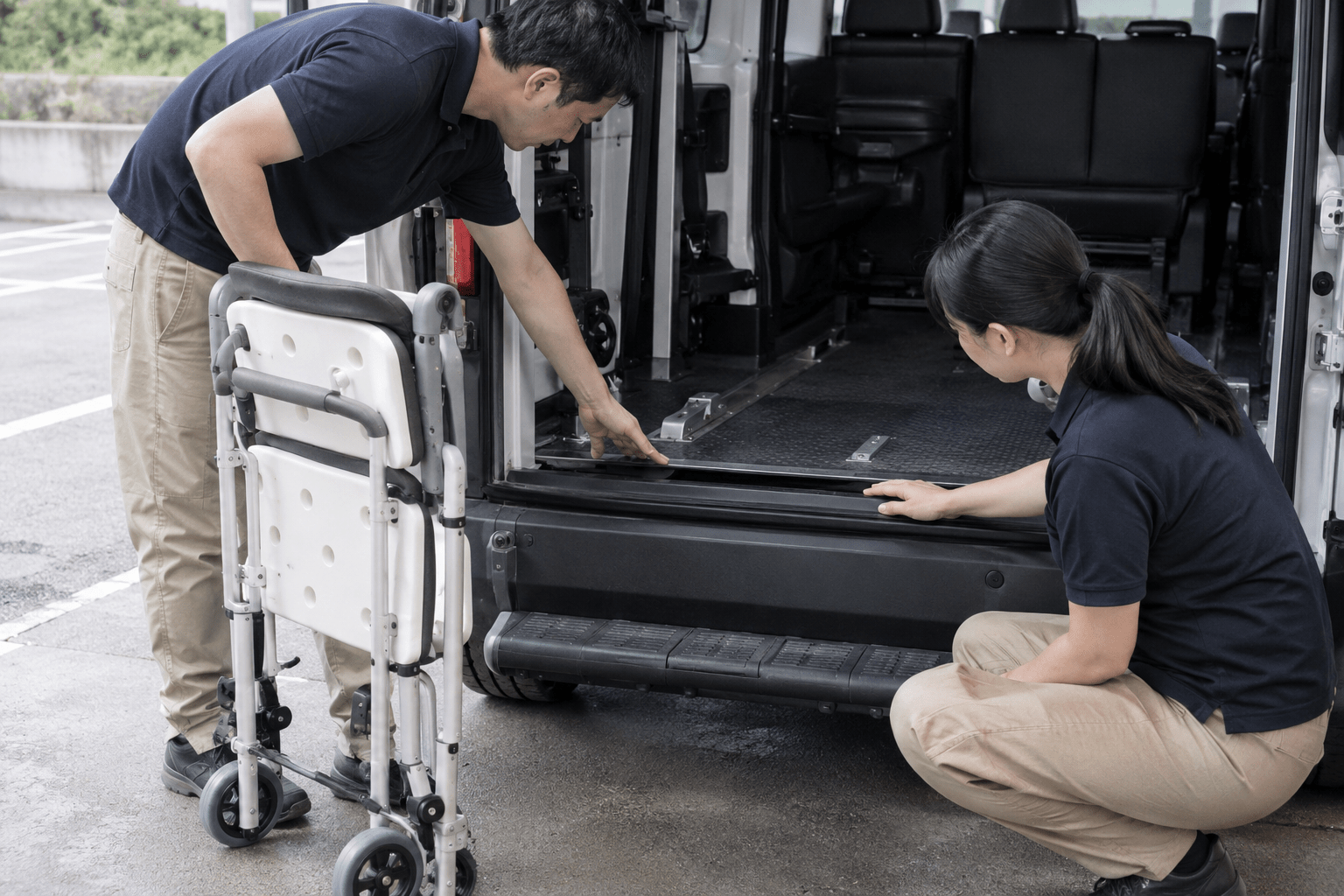
Folding shower chair transport and storage must fit the vehicle opening, sill, cargo floor, internal height, restraint space, other loads, and unloading clearance. A chair that fits by volume may still block a tie point or place a latch against another object. The selected orientation should protect supports and controls.
Which Cargo Measurements Need Review?
Measure the opening at its limiting points, sill height, usable floor, roof or shelf clearance, and the space needed for hands during loading and unloading.
- Use folded dimensions in the secured state.
- Include bags or removed components.
- Test with normal adjacent cargo.
Which Restraint Points Need Verification?
Restraints should contact approved structural areas without bending arms, pressing padding, opening locks, or damaging adjustment buttons. Secure the chair, not the accessories: soft or removable parts are poor load paths.
- Prevent sliding and rotation.
- Separate hard components with suitable protection.
- Reinspect after a representative vehicle trip.
| Vehicle factor | Chair factor | Trial | Pass rule |
|---|---|---|---|
| Opening/sill | Folded size and grips | Load and unload | No forced contact |
| Cargo floor | Balance and projections | Place and retrieve | Stable orientation |
| Restraint | Structural contact points | Controlled transport trial | Locks and surfaces intact |
Vehicle fit includes access and restraint, not just volume. Key Takeaway: validate the chair in the intended vehicle with realistic cargo and handling space.
7. How Does Packing Affect Folding Shower Chair Transport and Storage?
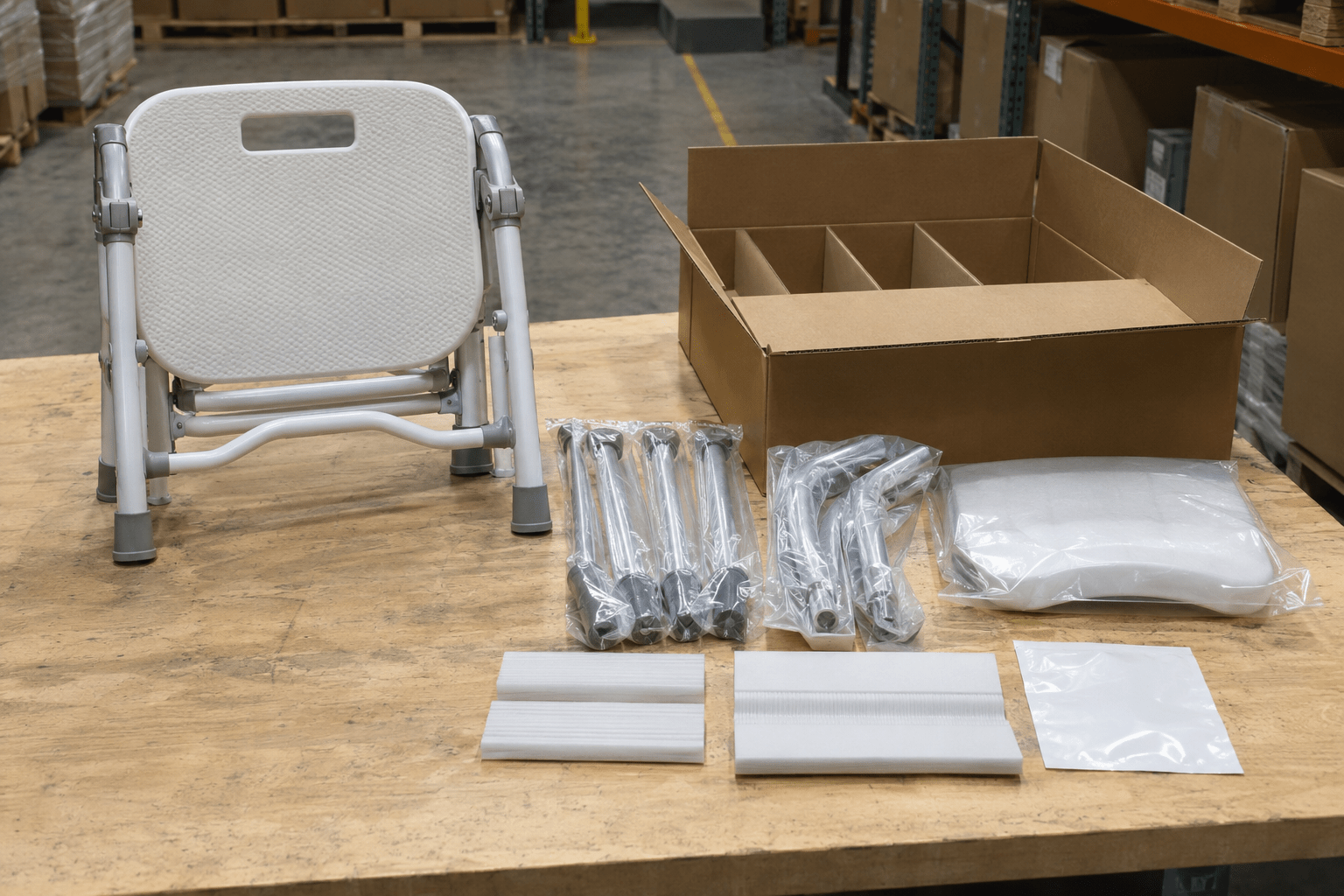
Folding shower chair transport and storage requires packing that protects the seat, back, arms, locks, feet, buttons, labels, fasteners, and loose accessories. Packing should not trap a damp chair or conceal unit identity. Reusable fleet packaging and export cartons may need different designs.
Which Parts Need Protection?
Protect protrusions, contact surfaces, coated tubes, lock levers, padding, foot treads, and parts that can rub together. Avoid pressure that distorts a component.
- Separate hard metal from soft surfaces.
- Contain fasteners and accessories.
- Preserve access for receiving inspection.
Which Package Fields Preserve Identity?
The package should connect model, configuration, parts list, orientation, unit reference, and inspection state without adding unsupported claims. Keep the package traceable: mixed parts can make a sound chair unusable.
- Use blank controlled locations for required labels.
- Match contents to the packing record.
- Define damaged-package escalation.
| Package layer | Purpose | Main risk | Receiving check |
|---|---|---|---|
| Surface protection | Prevent rub and impact | Trapped moisture | Dryness and condition |
| Part containment | Keep set complete | Mixed or missing hardware | Inventory |
| Outer restraint | Control movement | Crush or lock pressure | Geometry and function |
Packing must protect the approved configuration. Key Takeaway: control moisture, contact, movement, parts, and identity through the transport package.
8. How Does Drying Affect Folding Shower Chair Transport and Storage?
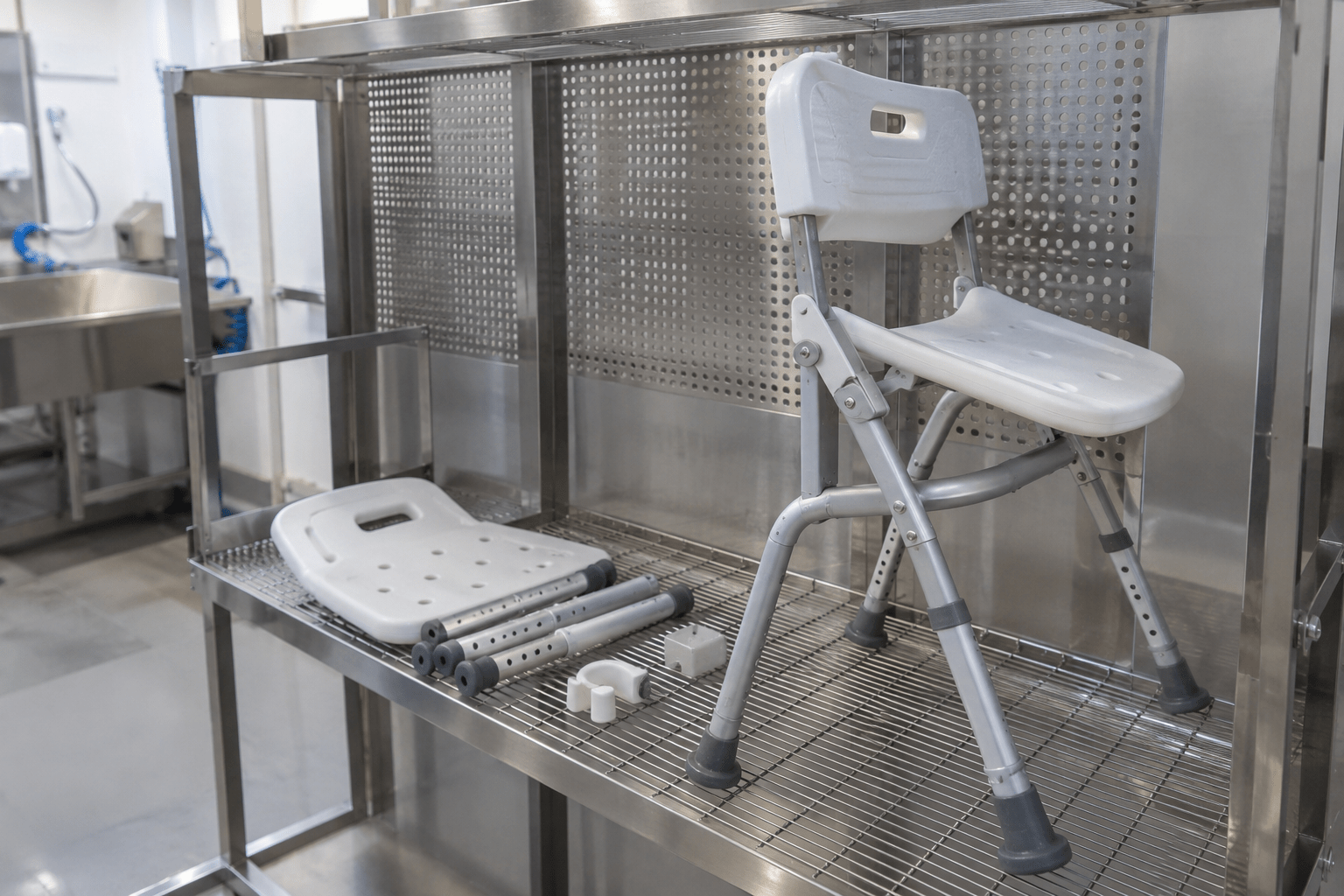
Folding shower chair transport and storage requires verified drying because water can remain inside tubes, hinges, padding, seams, feet, drain openings, and folded layers. Folding wet surfaces together slows detection and can recontaminate a clean storage area. Drying position should follow product instructions.
Which Areas Retain Water?
Inspect overlapping panels, tube ends, adjustment holes, hinge pockets, padding seams, foot cavities, and the underside of seating. Move components only as the approved method allows.
- Drain through intended openings.
- Keep removed parts exposed to air.
- Hold unexplained dripping or retained-water sounds.
Which Storage Conditions Need Control?
Ventilation, floor clearance, separation, temperature, restraint, contamination control, and retrieval access should be defined. Store for the next task: a compact stack is not useful if staff cannot identify or safely remove one chair.
- Keep clean and returned units separate.
- Avoid pressure on locks and padding.
- Use institutional storage planning where applicable.
| Drying area | Method | Failure sign | Storage rule |
|---|---|---|---|
| Folded interfaces | Open/position as instructed | Moisture between layers | Do not pack |
| Tubes and hinges | Ventilate and inspect | Drip, residue, corrosion | Technical hold |
| Storage surface | Clean and raised | Mixed status or floor contact | Correct before placement |
Dry storage preserves the completed process. Key Takeaway: verify hidden areas before folding, packing, or stacking the chair.
9. How Does Reassembly Affect Folding Shower Chair Transport and Storage?
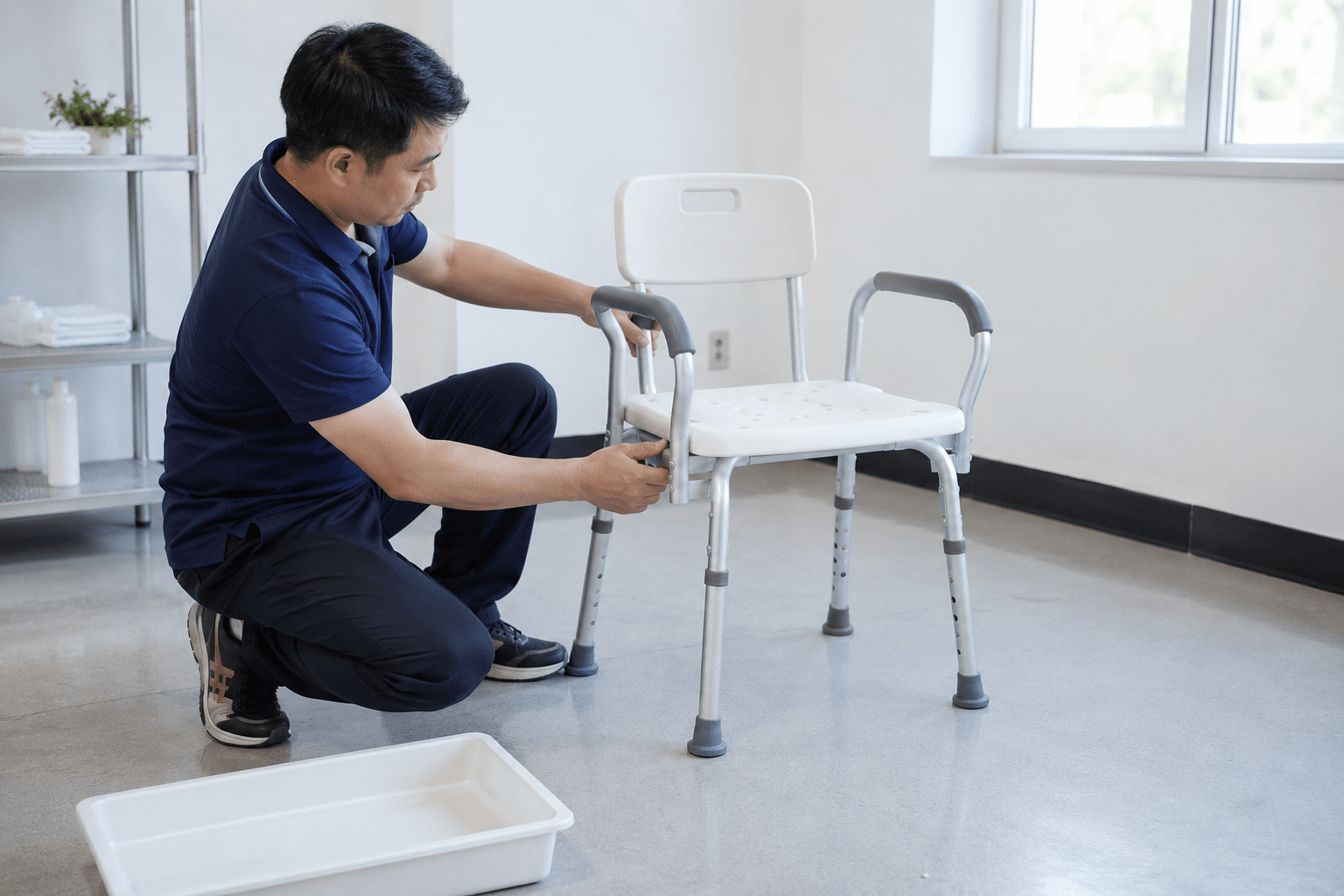
Folding shower chair transport and storage ends only after the chair is restored to the approved configuration and passes function checks. Backs, arms, legs, feet, pins, braces, accessories, and fasteners need identity and orientation control. Memory should not replace instructions after a long storage period.
Which Parts Need Identity and Orientation Checks?
Match removed items to the chair, inspect damage, and install them in the approved direction and location. Confirm settings are equal where required.
- Do not mix parts between similar units.
- Check retainers and mounting depth.
- Record substitutions or missing components.
Which Functions Need Verification Before Use?
Open-position locks, height pins, support mounts, feet, drainage, visible damage, labels, and expected movement need no-user checks first. Restore, then prove: unfolded appearance is not a release test.
- Confirm full floor contact.
- Repeat affected support and stability checks.
- Hold any partly engaged mechanism.
| Restoration point | Correct condition | Function check | Hold rule |
|---|---|---|---|
| Folding structure | Fully open and locked | Controlled movement check | Partial lock or play |
| Removed parts | Correct and complete | Mount/retention check | Mixed, missing, or loose |
| Final setup | Equal settings and contact | Empty-chair stability check | Rocking or damage |
Restoration returns the chair to controlled service. Key Takeaway: inspect identity, assembly, locks, supports, and floor contact before release.
10. How Should Buyers Test Folding Shower Chair Transport and Storage?
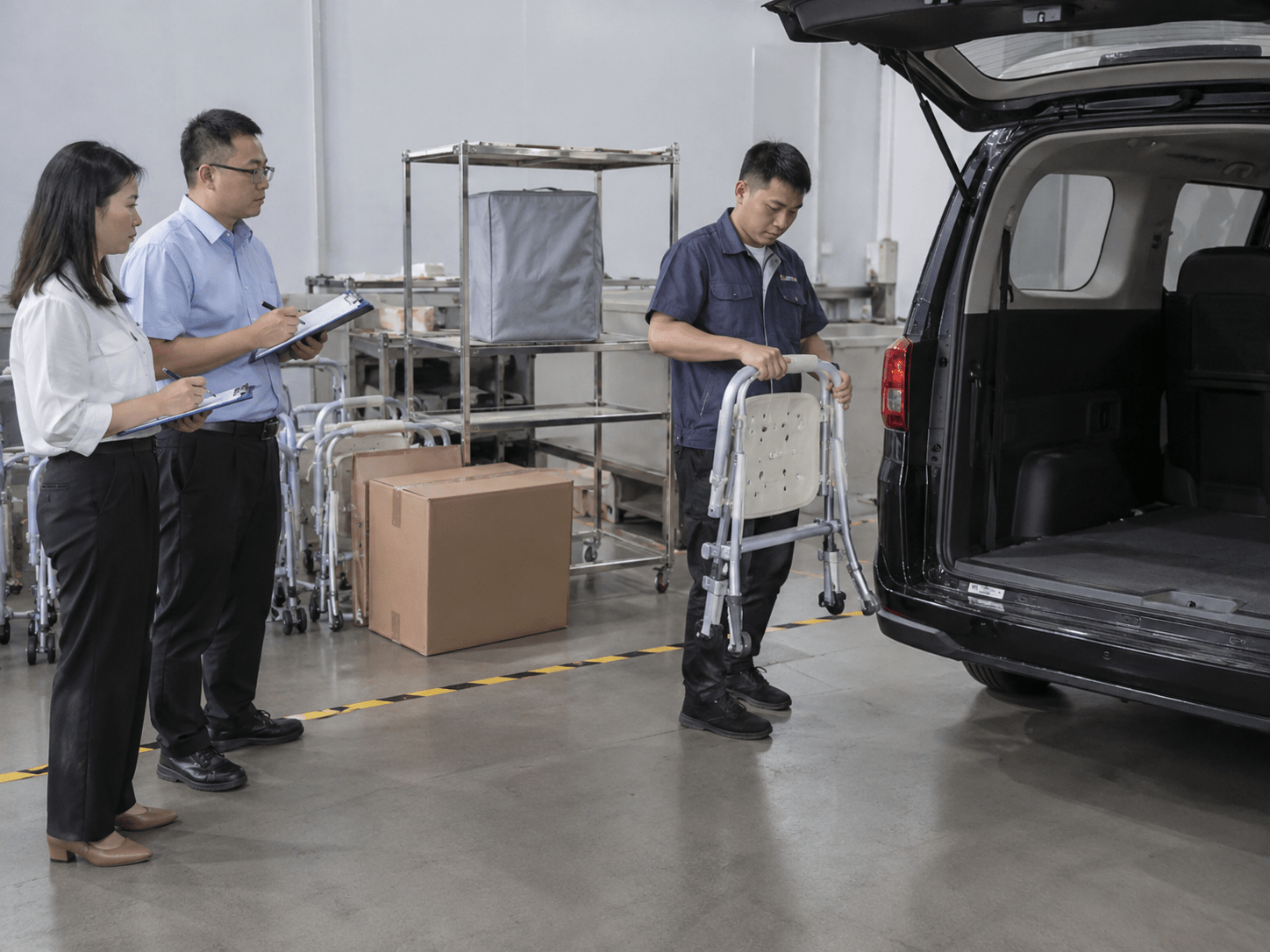
Folding shower chair transport and storage should be tested as one witnessed cycle using the quoted configuration, likely handlers, real route, vehicle or storage area, packing, and current instructions. Buyers should record time, effort, errors, damage, retained water, loose parts, and restoration findings. Production controls must preserve the approved process.
Which Complete Cycle Needs Witnessing?
Prepare, fold, lock, carry, load, restrain, unload, dry, store, restore, and inspect without coaching that ordinary staff will not receive.
- Observe hand positions and awkward reaches.
- Record every intervention and stop.
- Repeat after realistic cleaning and handling.
How Should Production Preserve the Approved Process?
Control configuration, hinges, latches, fasteners, packaging, instructions, parts, and change notices. Protect the approval basis: a small latch or bag change can alter handling.
- Reference the approved sample and revision.
- Include bath-product receiving checks.
- Retest material design changes.
| Project stage | Required output | Owner | Gate |
|---|---|---|---|
| Sample | Complete cycle record | Evaluation team | Workflow passes |
| Production | Controlled parts and packing | Supplier/procurement | Matches approval |
| Receiving | Identity and function checks | Warehouse/quality | Release or hold |
The cycle is the evidence behind portability. Key Takeaway: approve the handling system and preserve it through production, delivery, and service.
Conclusion
A folding chair is portable only when handlers can prepare, secure, lift, load, dry, store, restore, and inspect it under real conditions. Folded size is one input, not the decision. For help reviewing bath-chair configurations, handling routes, and supplier controls, contact us today.
We help B2B buyers turn portability claims into witnessed tasks and acceptance gates. Good mobility equipment design respects the complete work of the people who handle it.
FAQ
Can folded dimensions prove portability?
No. Dimensions do not show grip quality, balance, latch security, loose parts, handler effort, vehicle access, drying, or restoration. Test the complete cycle.
What’s the best way to dry a folded chair?
Use the product-approved position and method that exposes likely retention areas without damaging locks or supports. Verify tubes, hinges, seams, padding, and overlapping layers before packing.
How do I know whether a folding lock is fully engaged?
Use the configuration-specific visual and tactile check in the current instructions. Partial seating, movement, unusual noise, or resistance requires a hold and technical review.
Can a folded chair be stored while wet?
No, unless controlled instructions explicitly define that state. Trapped moisture can obstruct inspection, affect materials, contaminate storage, and create work at the next use.
How should distributors test vehicle loading?
Use the intended vehicle, real opening and sill, normal adjacent cargo, trained handlers, approved restraint points, and a full unload-and-restore check. Record contact, effort, movement, and damage.
