
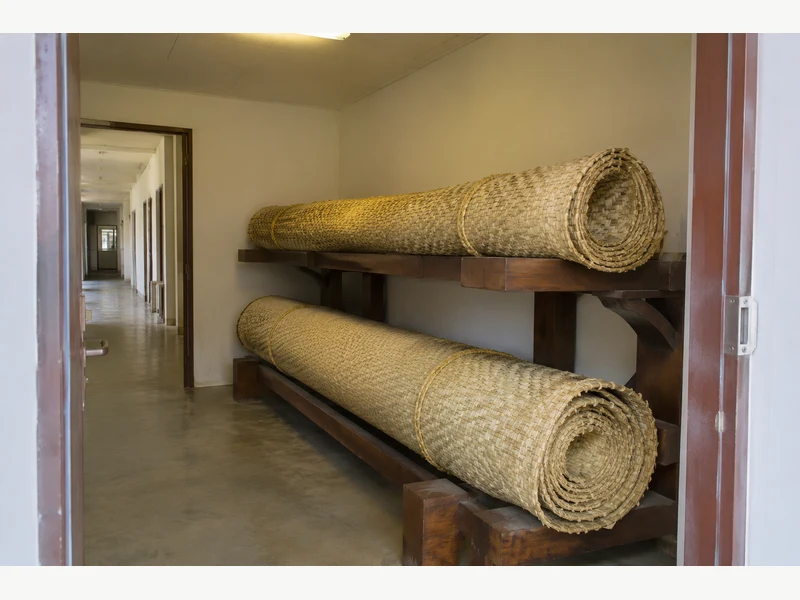
Set up beach mat storage around identifiable sections, the manufacturer's storage conditions and a location where the crew can retrieve the correct roll first. A pile of unmarked rolls looks tidy in October but can leave the reopening team searching for the one end section that fits the promenade. Label and photograph the route before removal starts.
What belongs in a beach mat storage plan?
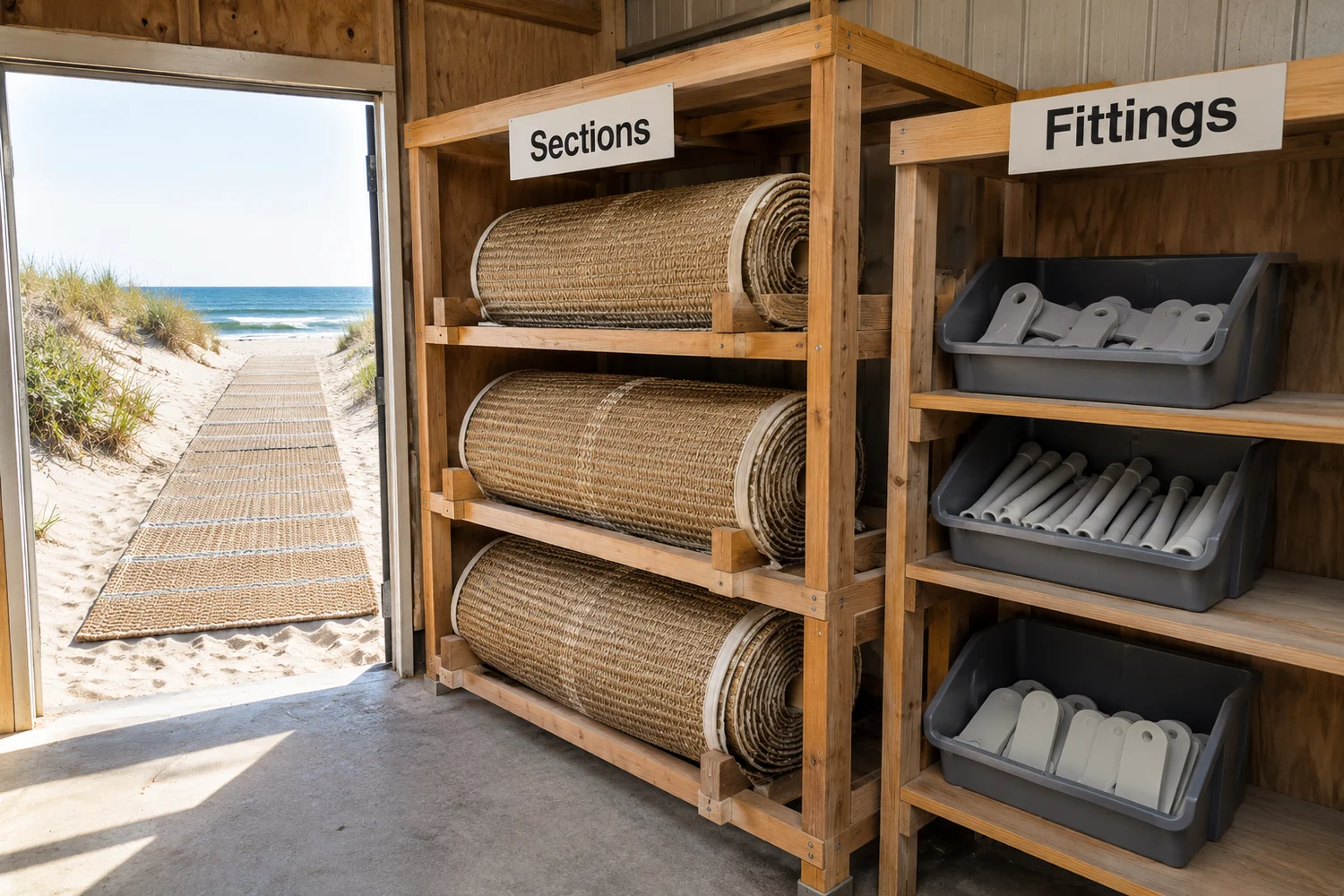
A beach mat storage plan needs a section list, the approved removal guidance, a storage location and a named person responsible for the inventory.
Which products are on the beach?
Start with the installed layout. Roll-out matting and rigid panels may need different handling and supports. Identify the actual product and obtain the instructions for that construction before assigning a storage method.
- Identify each mat family on the route.
- Keep the current supplier record with the site plan.
| Review point | What to record |
|---|---|
| Product type | Roll or panel system |
| Responsible person | Owner of the seasonal inventory |
Key Takeaway: The crew can prepare the right space and handling equipment before the route comes up.
How should sections be labeled before removal?
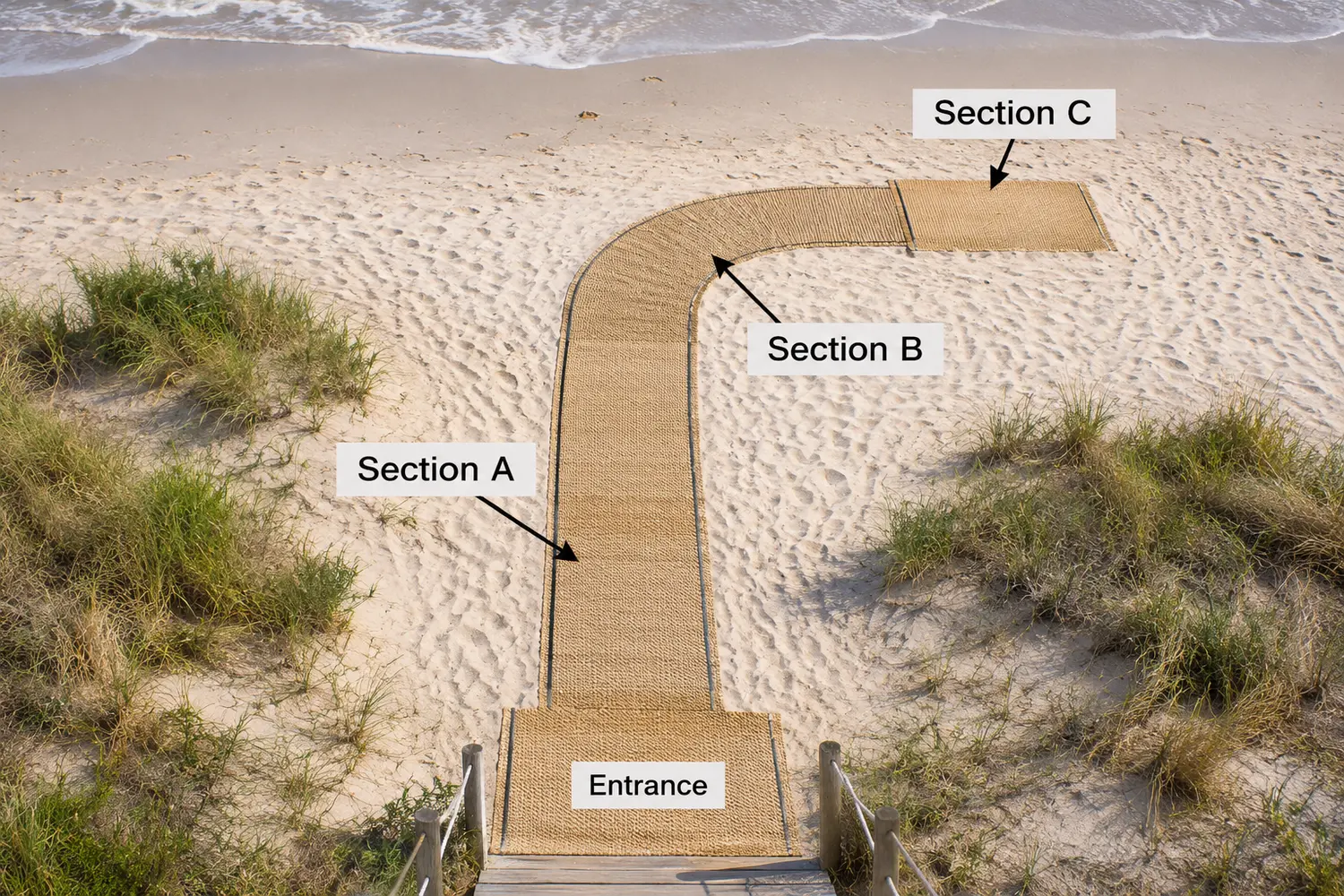
Match each section to its position in the beach mat storage inventory while the route is still visible.
Which end faces the promenade?
Record the orientation. A photograph looking from the beach toward the entrance can be hard to interpret months later. Pick a direction on the plan and give each piece a stable identifier using the maker's permitted labeling method.
- Photograph each junction in sequence.
- Keep a copy of the placement map with the stored set.
| Review point | What to record |
|---|---|
| Section ID | Position on plan |
| Orientation | Direction of the named endpoint |
Key Takeaway: Two crews can read the same route map without relying on memory.
Who decides when seasonal removal can begin?

Coordinate removal and beach mat storage with the site manager, local permissions and the product instructions.
What should visitors hear first?
Give an accurate service date. Seasonal mats are one part of a wider access service. The National Park Service beach access information gives an example of a location with seasonal mats. Your own venue should publish its actual dates and alternatives.
- Confirm authority to close the route.
- Update the information desk before removal.
| Review point | What to record |
|---|---|
| Site decision | Authorized closure window |
| Visitor message | Current route availability |
Key Takeaway: Visitors can plan around a clearly communicated seasonal change.
How should sand and moisture be handled?
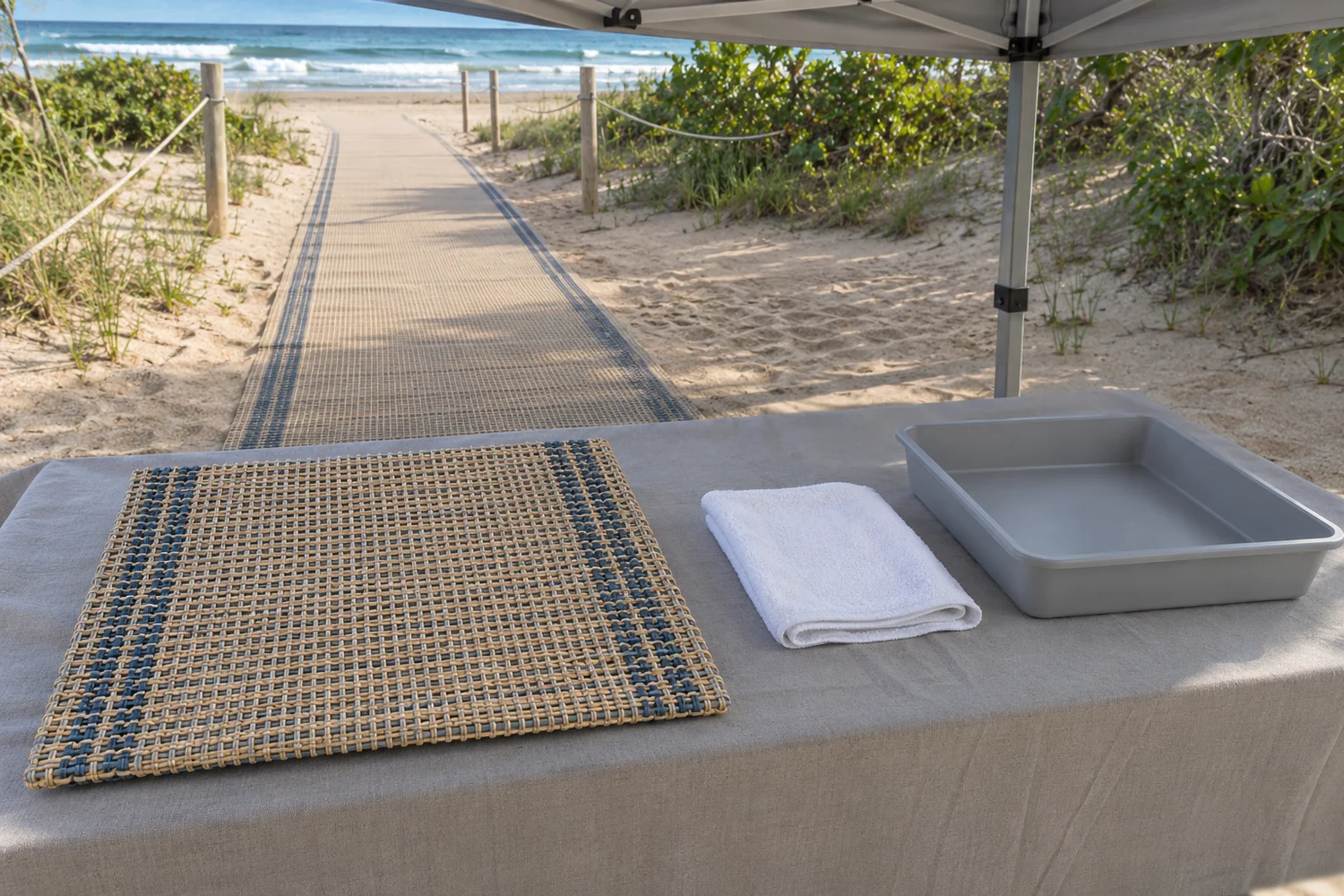
Use the exact manufacturer's cleaning and drying guidance before placing material into beach mat storage.
Where can the section be checked?
Choose an appropriate staging area. Sand trapped at a join may conceal damage, and a damp roll can make later inspection harder. Ask the site manager where the crew may clean the material and handle any residue.
- Confirm compatible cleaning methods.
- Inspect the relevant surfaces before packing.
| Review point | What to record |
|---|---|
| Care method | Product-specific instructions |
| Staging area | Venue-approved work location |
Key Takeaway: The team can put away a section whose condition it has actually seen.
How tightly should a mat be rolled?

Follow the manufacturer's specified roll direction, supports and restraints for beach mat storage.
Can the last crew's photograph settle it?
Find the exact packing instruction. Materials, end profiles and connectors can differ. A tightly bound roll in a marketing photo does not establish the correct diameter, tension or load-bearing point for your section.
- Ask whether connectors remain fitted.
- Identify the approved carrying or restraining accessories.
| Review point | What to record |
|---|---|
| Roll preparation | Specified direction and method |
| Restraint | Approved accessory and location |
Key Takeaway: You can request the right packing information without guessing at a setting.
Where do connectors and end pieces go?
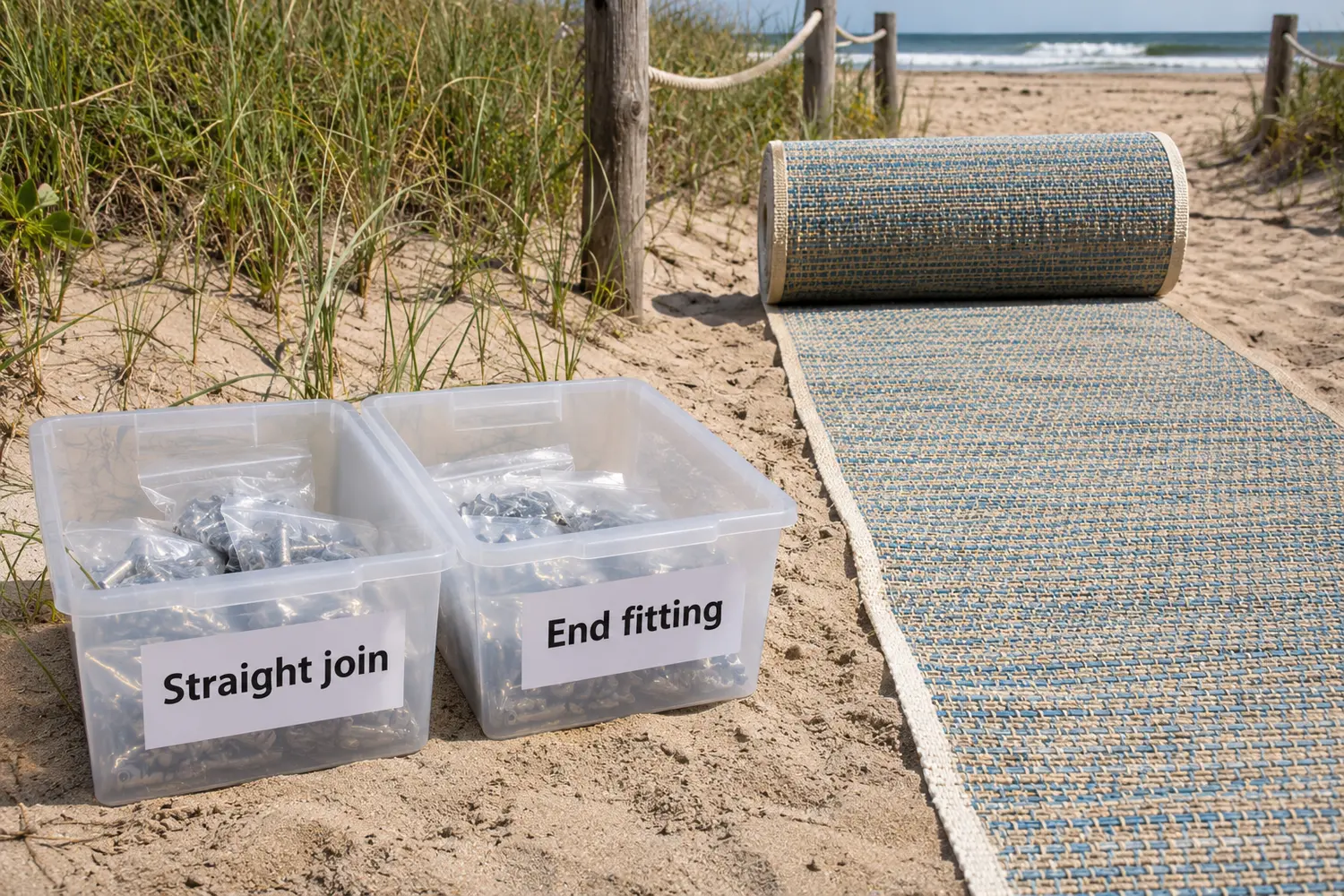
Assign an identifiable place for loose fittings in the beach mat storage plan.
Which small part stops reopening?
Count by interface type. A box marked “hardware” gives the next crew little help if straight joins and terminal fittings differ. Use a parts list tied to the system revision and keep unresolved items apart.
- Bag or bin the items as instructed.
- Record the expected and recovered quantities.
| Review point | What to record |
|---|---|
| Straight-run fittings | Named set and count |
| End fittings | Separate identity and count |
Key Takeaway: A missing part becomes a specific reorder enquiry while there is still time.
What rack and access space do the rolls require?
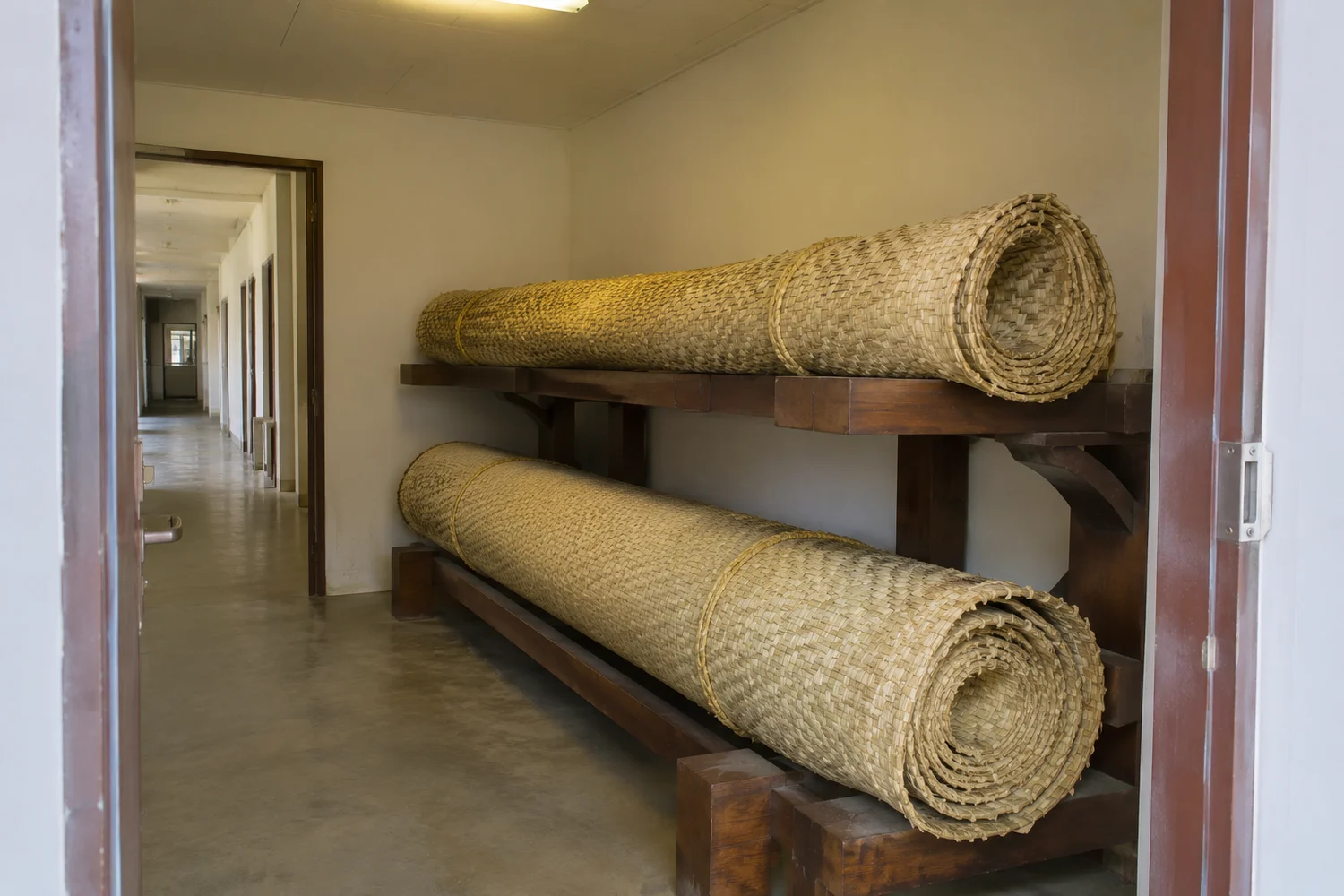
Base beach mat storage space on packed dimensions, packed mass and the handling method approved for the equipment.
Can staff reach the first roll safely?
Review the route through the store. A rack that fits the roll length can still be awkward to reach through a narrow doorway. Ask the facilities team to confirm supports, handling equipment and access for the actual loads.
- Record the maximum packed envelope.
- Agree who reviews the rack and handling plan.
| Review point | What to record |
|---|---|
| Rack allocation | Named storage position |
| Access route | Doorway and handling space |
Key Takeaway: A usable store lets the crew retrieve a section without moving the whole inventory.
How should a damaged section be stored?
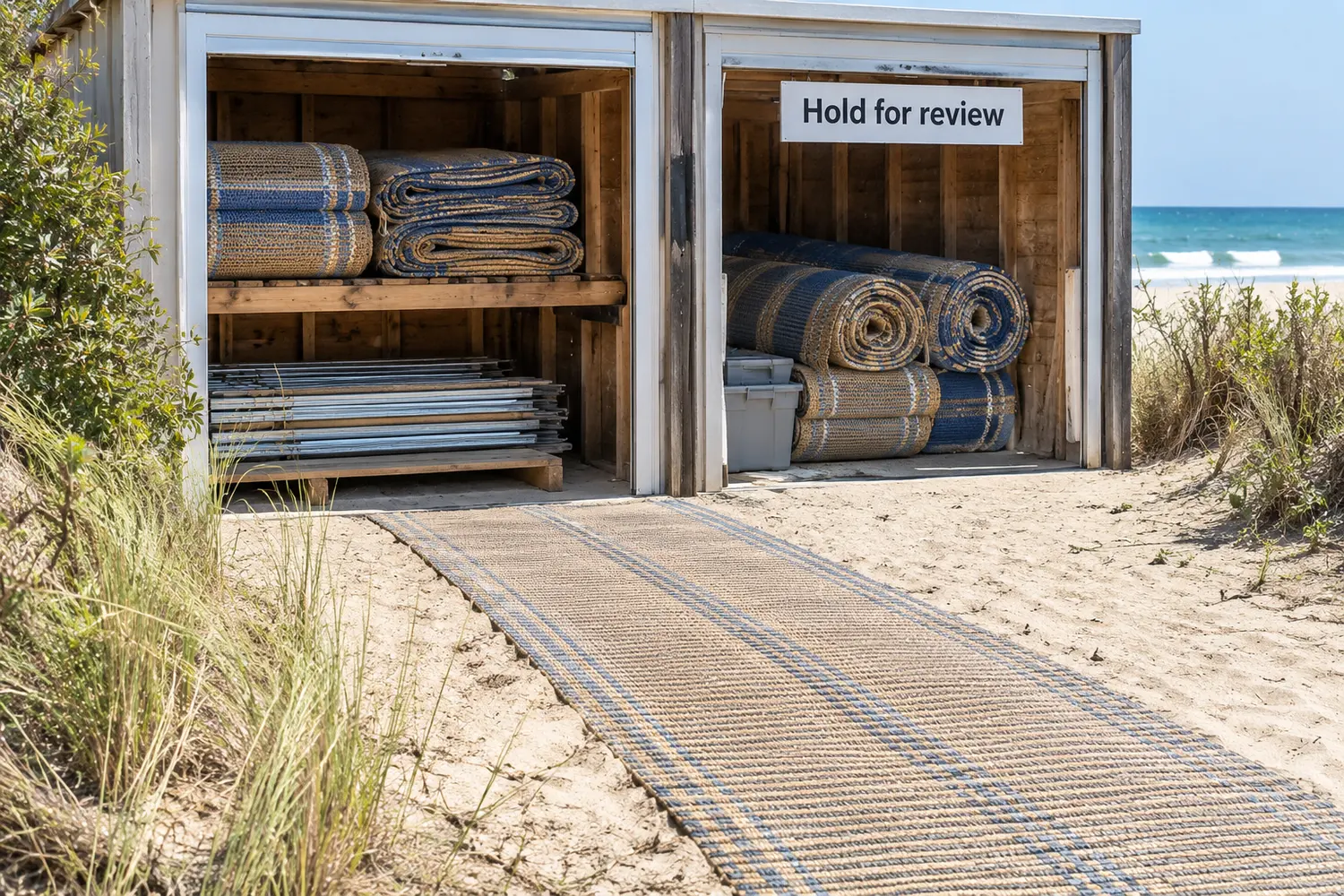
Keep any section awaiting assessment identifiable and separate within beach mat storage.
Can someone pick it up by mistake?
Give it a clear status. Record the section reference and observed issue, then ask the supplier or authorized reviewer for a decision. Do not return a questionable section to the available stock solely because the season is approaching.
- Keep the issue photographs with the ID.
- Record who can authorize the next step.
| Review point | What to record |
|---|---|
| Available stock | Reviewed section |
| Held stock | Named issue and review owner |
Key Takeaway: The reopening team can distinguish usable inventory from work that is still open.
Which checks belong on the reopening list?

Close the beach mat storage period by checking identity, condition, fittings and the current approved site layout.
Has the beach changed over winter?
Walk the proposed route again. A complete stored set does not establish that last year's endpoint remains suitable. Ask the site manager to review the current route and have the supplier resolve any changed equipment requirement.
- Reconcile the stored count to the plan.
- Record any changed site condition before deployment.
| Review point | What to record |
|---|---|
| Equipment record | Available parts and rolls |
| Site record | Current layout decision |
Key Takeaway: A good storage file supports a new opening decision, even when the shoreline has moved.
How can a buyer specify seasonal storage needs?
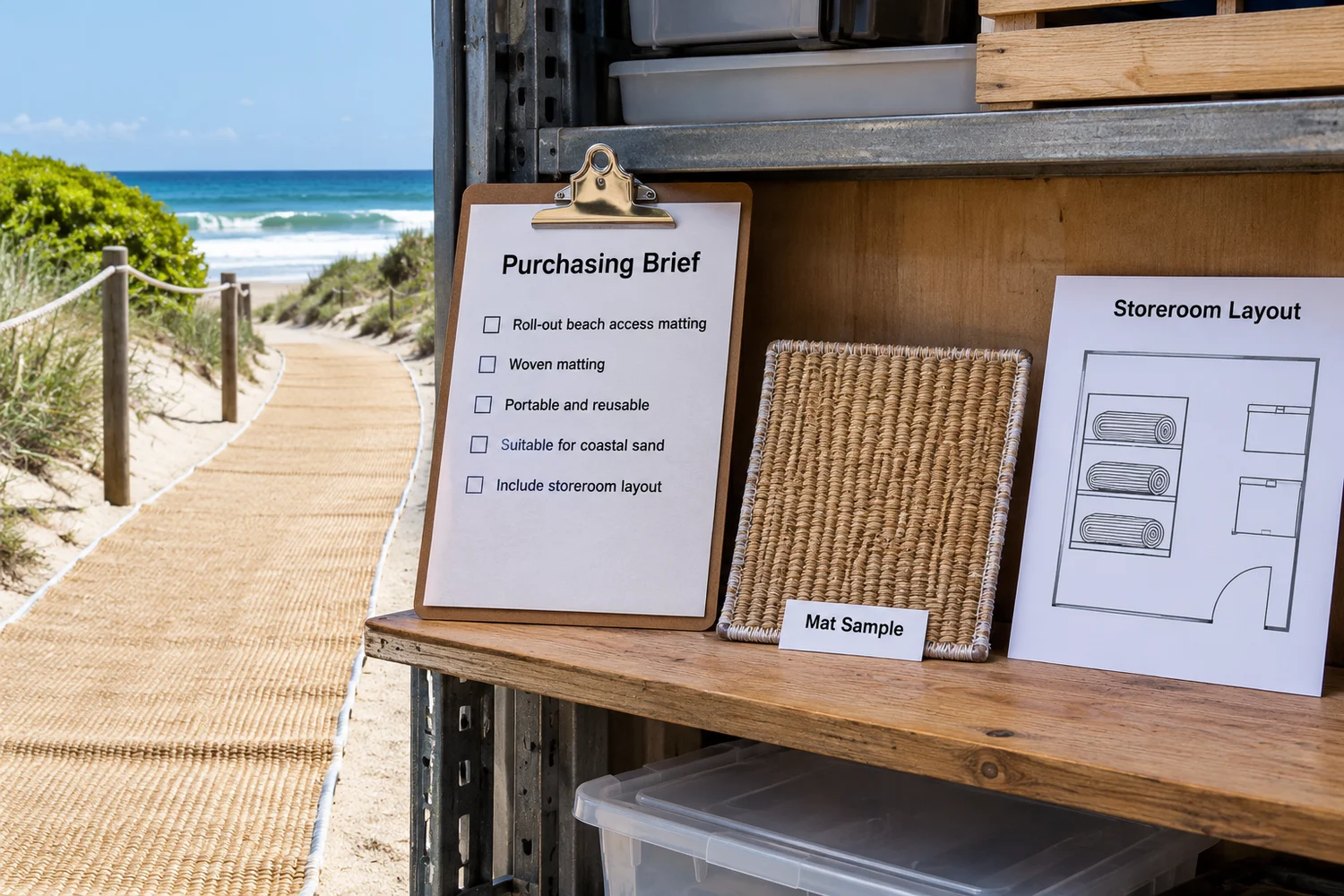
Include beach mat storage space, handling responsibilities, recommended spares and packing information in your request for quotation.
Which answers affect ownership cost?
Price the work around the mat. Ask for packed measurements, available instructions and compatible replacement parts. Send AryMD the wheelchair or mobility equipment context when assessing the complete beach access service.
- Name the available store and handling route.
- Ask for the documentation supplied with the system.
| Review point | What to record |
|---|---|
| Purchasing input | Site and storage limits |
| Supplier response | Packed units and support scope |
Key Takeaway: You can buy a route that your team can also take down, identify and bring back into service. Contact us with your layout and storage constraints to discuss the equipment information your team needs.
Frequently asked questions
Q1: Can we store every mat upright?
Use the maker's instructions for the exact mat and rack. Upright storage is not a universal rule.
Q2: What's the best way to mark the first section?
Use an approved identifier tied to a route map and a fixed entrance or endpoint.
Q3: Can loose connectors from different mats share one bin?
Only if their identities and confirmed compatibility remain clear. Separate bins make differences easier to trace.
Q4: How do I know a stored section is ready to redeploy?
Check its condition and matching fittings under the applicable instructions, then confirm the current site plan.
Q5: Should spare sections appear in the same count as installed ones?
List each separately. The reopening team needs to know both the planned coverage and the reserve stock.