
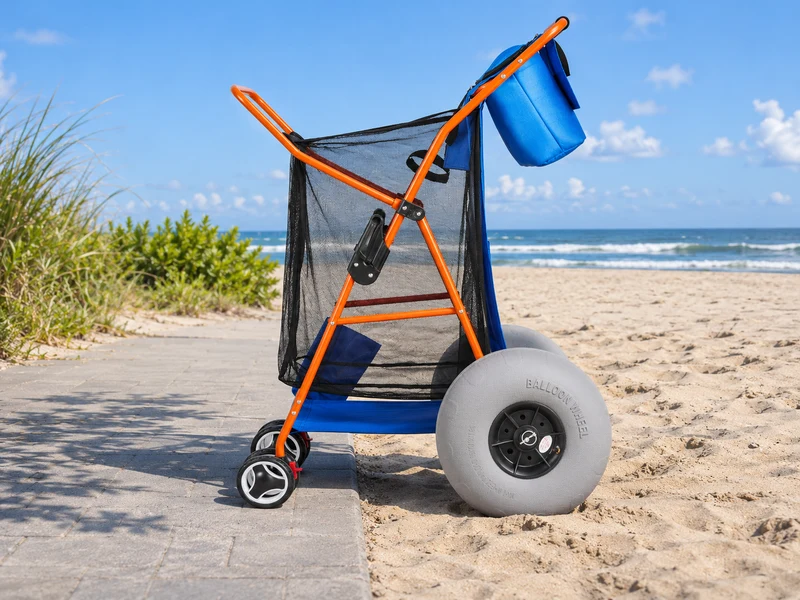
Assess beach trolley casters at the actual transition with the trolley configured as the manufacturer intends. An upright trolley can look well suited to open sand while its small front wheels meet a lip at the store door. Check the complete route before choosing it for daily cargo runs.
What do beach trolley casters do on this cart?
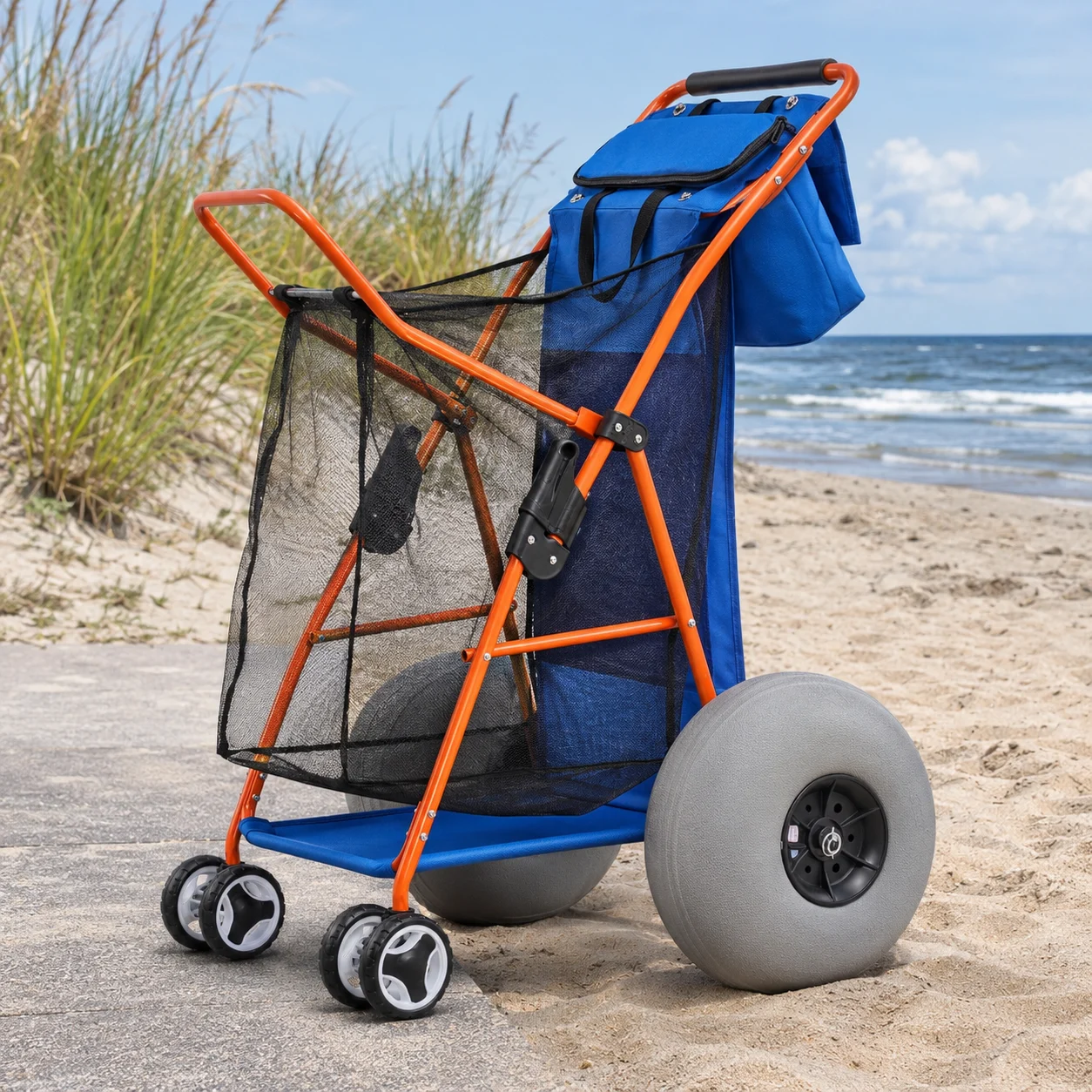
The small beach trolley casters belong to a different wheel assembly from the wide tires on the pictured upright cargo trolley.
Which pair are you discussing?
Name the front assembly. A supplier shown a photo of only a large balloon tire may answer the wrong service question.
- Photograph the complete side profile.
- Mark the smaller wheel position.
| Check | What to look for |
|---|---|
| Small assembly | Front caster position |
| Large assembly | Wide rear tire position |
Key Takeaway: The full side view ties a spare-parts or route question to the correct wheel.
Which surface change should you inspect first?
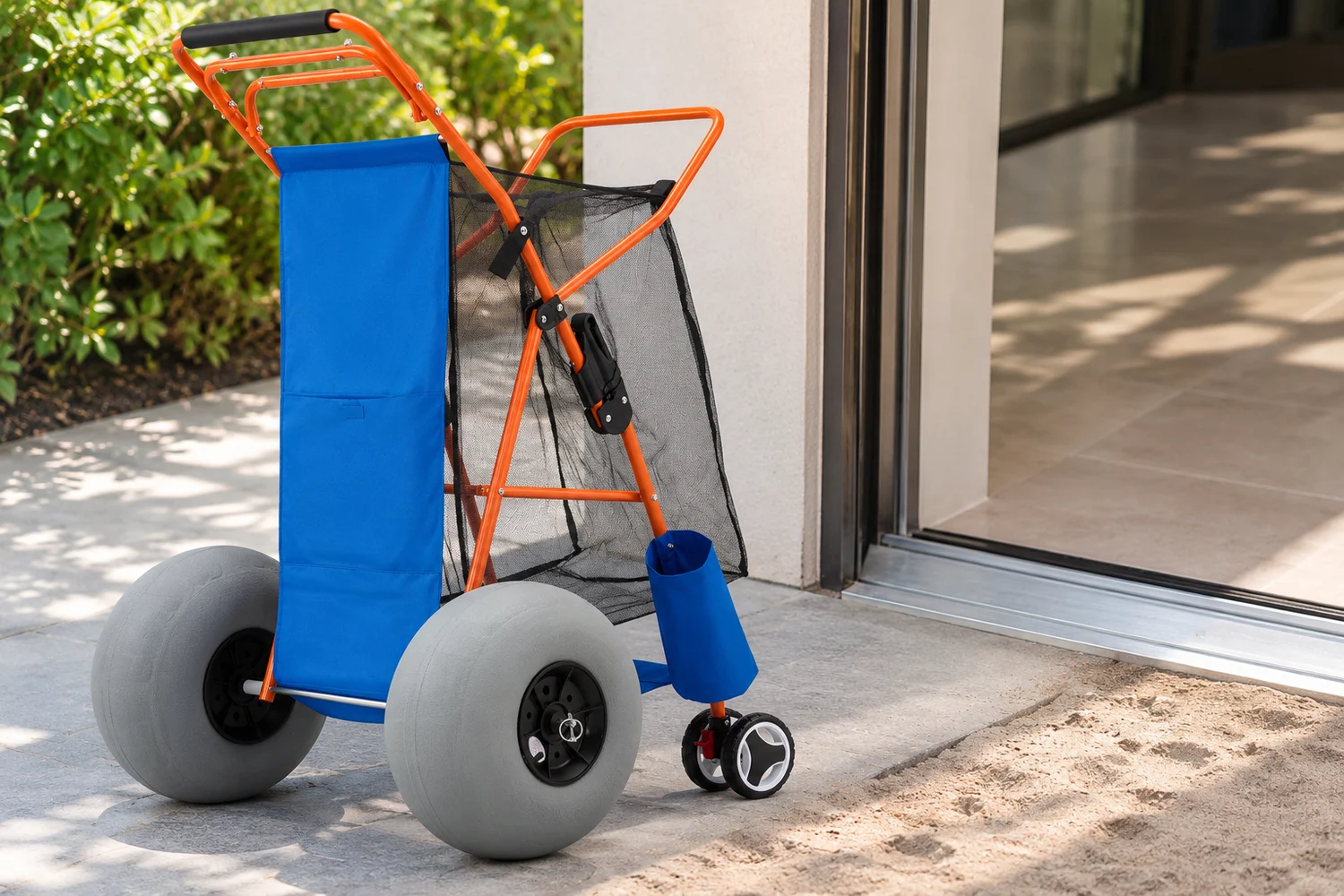
Inspect the first discontinuity encountered by the beach trolley casters between storage and the destination.
Where does the route actually begin?
Start indoors. The store sill, a drain cover or a join in a path can come before the trolley reaches the beach itself. The same entrance should appear on the facility’s beach route plan.
- Walk the complete route.
- Name the point where the surface changes.
| Check | What to look for |
|---|---|
| Origin | Equipment storage |
| First transition | Earliest relevant surface change |
Key Takeaway: Choosing the actual starting point keeps a small but important threshold in the review.
What does the side view reveal?
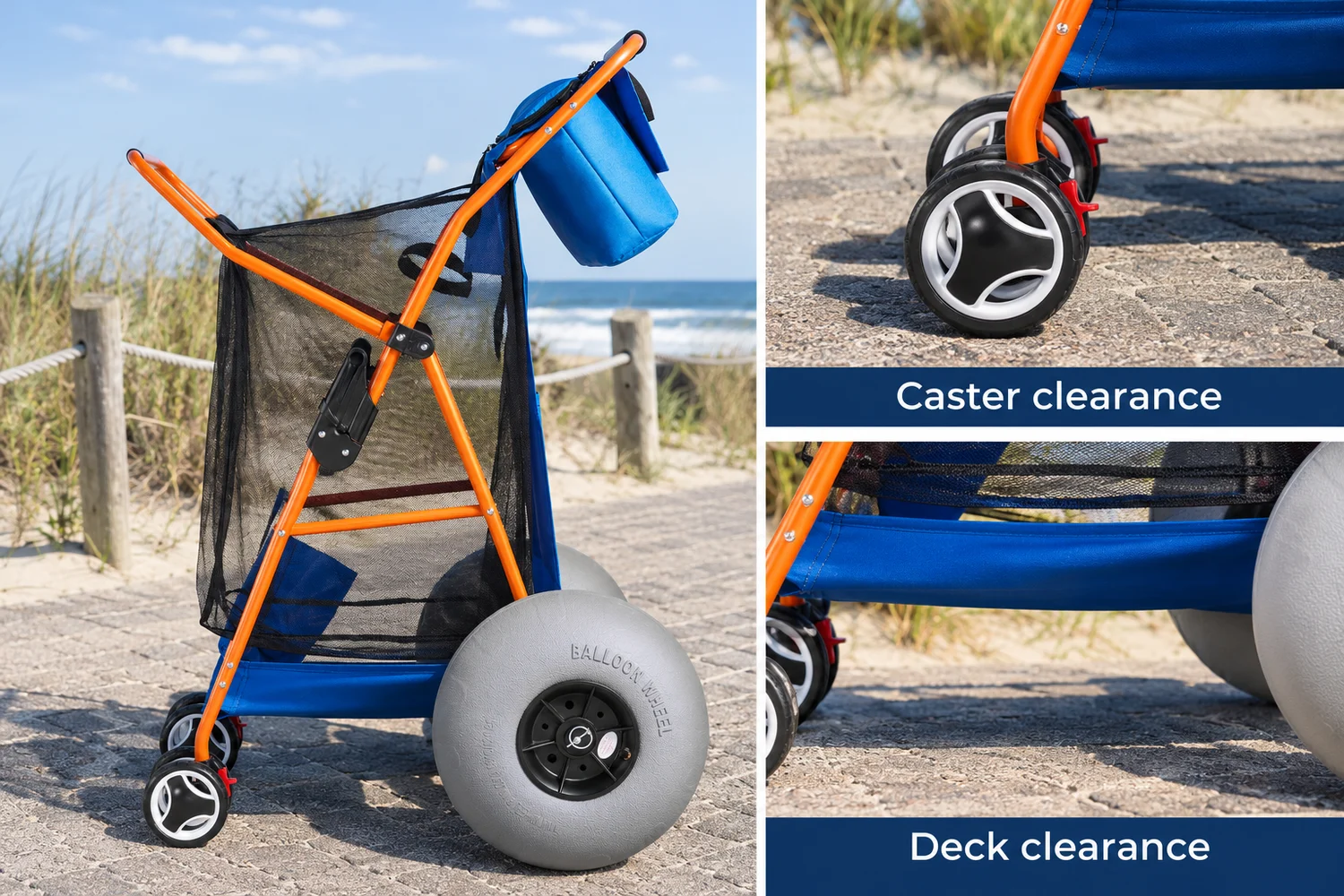
A side view of the beach trolley casters shows their relationship to the deck and wider rear wheels.
Which clearances are distinct?
Look at the lowest points. A caster contacting an edge and a deck edge meeting the same obstacle are different events.
- Photograph caster and deck in one frame.
- Name which component is closest.
| Check | What to look for |
|---|---|
| Caster clearance | Wheel approach to the transition |
| Deck clearance | Deck or frame above the surface |
Key Takeaway: A clear side view tells service staff where to start investigating.
How should a site describe the transition?
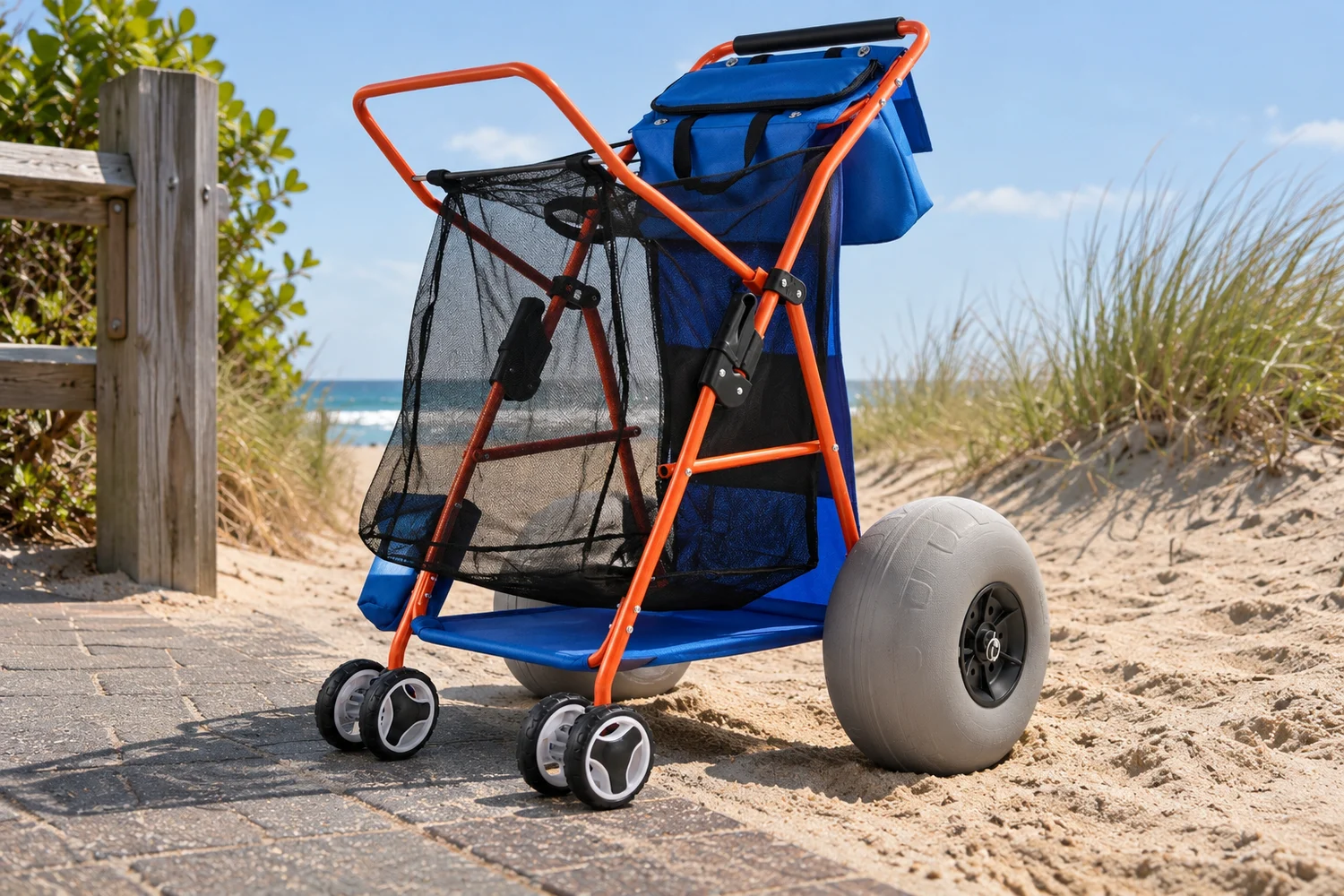
Record what the beach trolley casters encounter, including any lip, gap, loose sand or change in direction.
Can two entrances share one description?
Name the exact entrance. Morning sand buildup at one doorway can create a different approach from the hard edge at a loading bay.
- Record the place and time.
- Add a side-on photo with the trolley separate.
| Check | What to look for |
|---|---|
| Geometry | Lip, gap or edge observed |
| Condition | Loose material or other change |
Key Takeaway: A route description should identify a repeatable location, not just say “sand.”
What changes when the deck carries cargo?
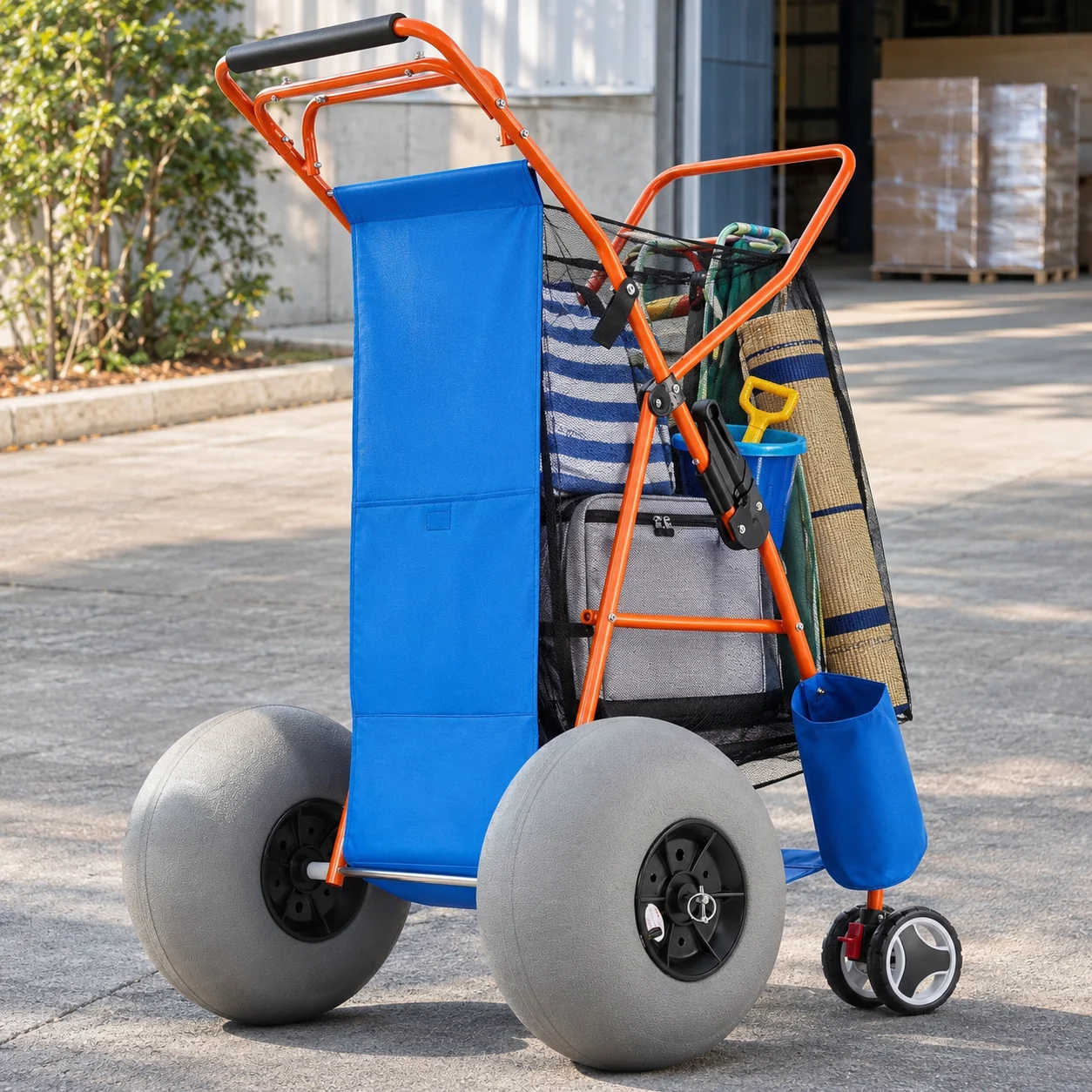
Review beach trolley casters behaviour in the complete approved cargo configuration under a suitable site assessment.
Why distinguish the empty observation?
An empty cart answers a limited question. Load placement and handling demands can change how an operator approaches the same transition.
- Record representative cargo.
- Consult the documented handling arrangement.
| Check | What to look for |
|---|---|
| Empty check | Initial observation |
| Loaded assessment | Configured cart and operator review |
Key Takeaway: A product photo of an empty deck cannot settle a loaded route decision.
Can you infer swivel or lock features from a picture?
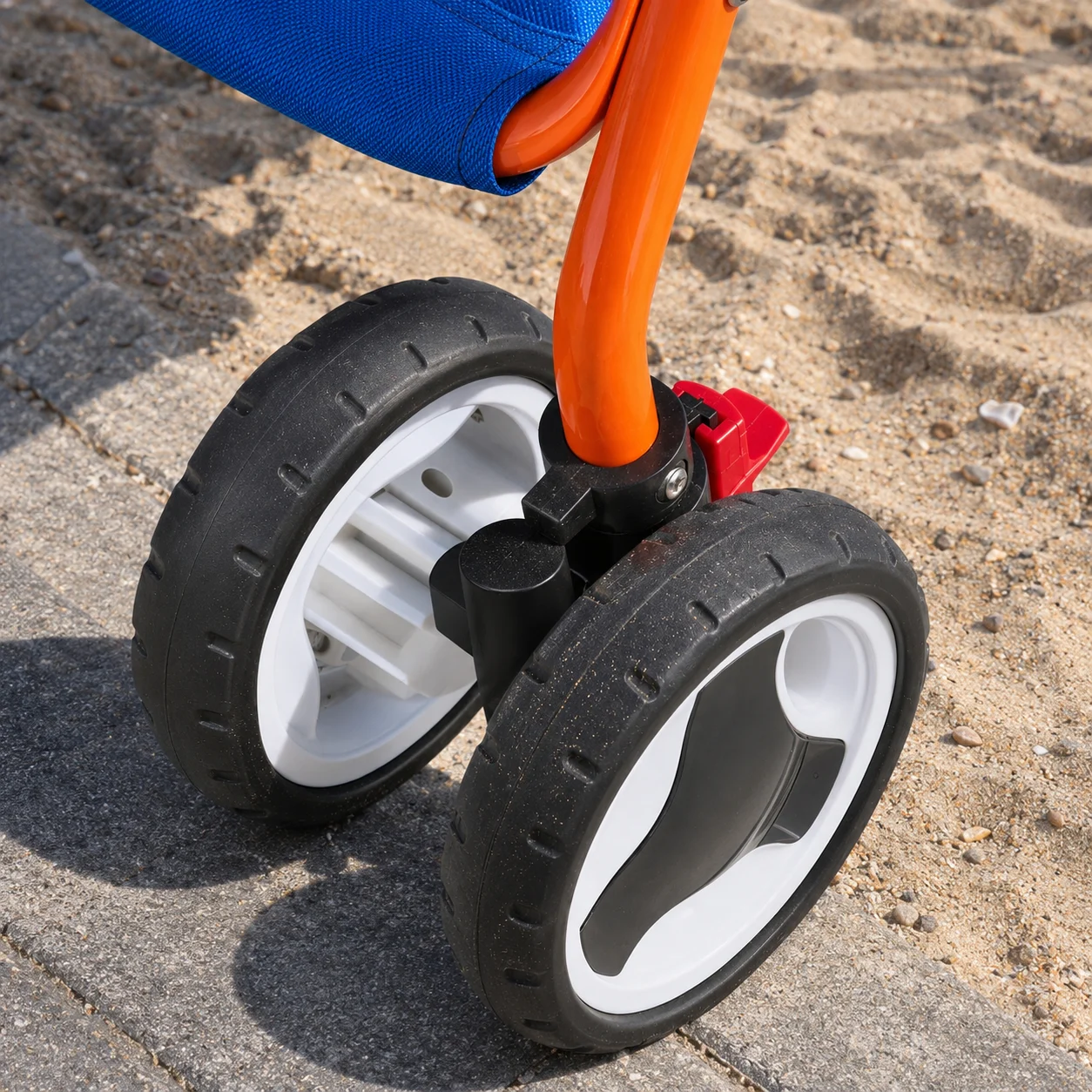
Verify the fitted beach trolley casters features from the unit and its documentation before describing them.
What can the close-up prove?
It can show visible construction. A small bracket or tab does not by itself prove a brake, lock or approved operating method. Distinguish extra beach accessories from the standard caster assembly.
- Ask for the caster part reference.
- Request instructions for any claimed function.
| Check | What to look for |
|---|---|
| Visible fitting | Feature to identify |
| Confirmed function | Model-specific documentation |
Key Takeaway: Avoid selling or briefing a function that has only been guessed from an image.
What if one caster tracks differently?
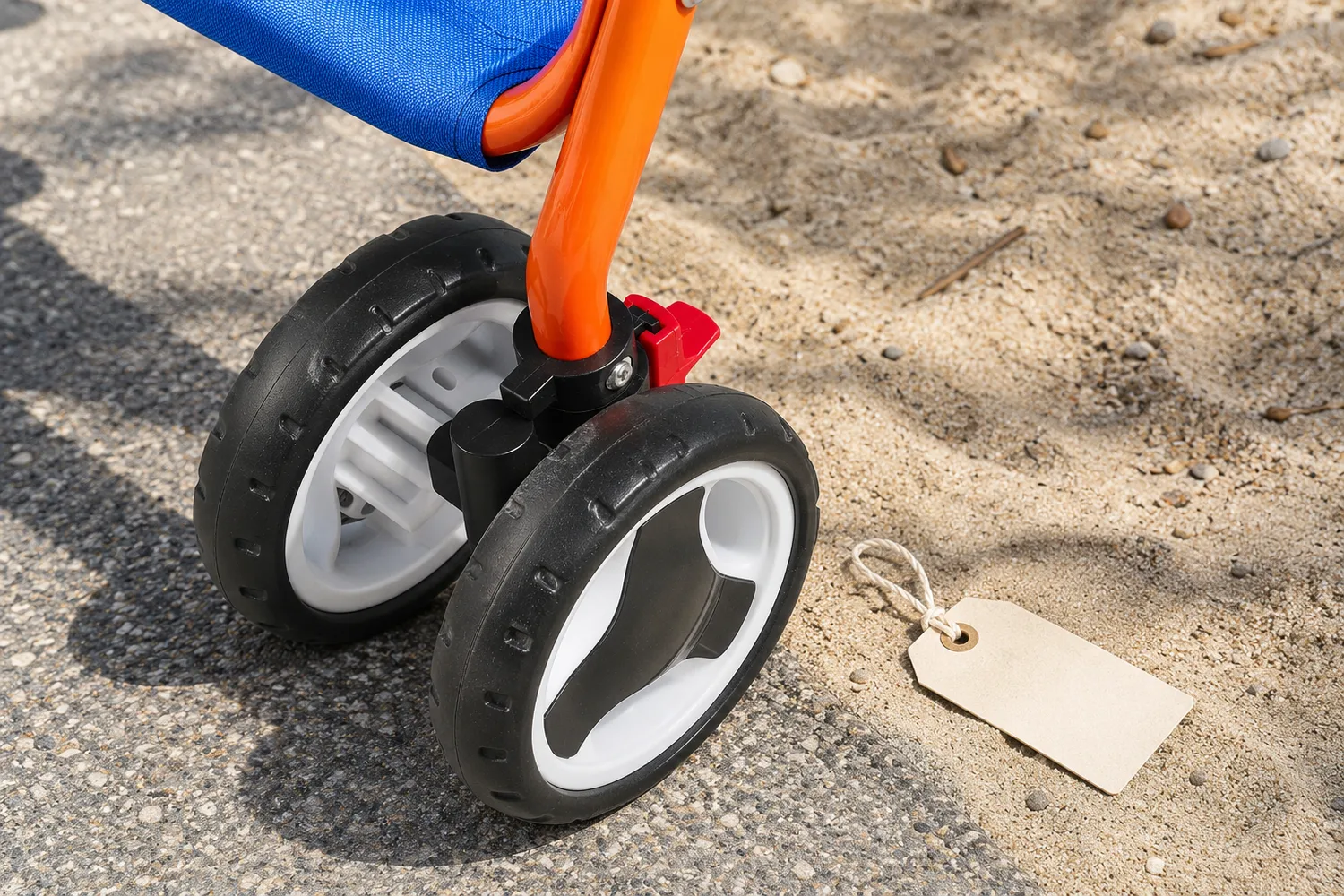
Remove the trolley from normal issue pending assessment if beach trolley casters show an unexpected handling change.
Which observations help service staff?
Describe the conditions. “Right front changed direction at the store sill” is more useful than diagnosing an axle or fork from a distance. For a workplace handling assessment, see the HSE guidance on pushing and pulling.
- Identify the affected side.
- Note surface and load condition.
| Check | What to look for |
|---|---|
| Observation | What changed and where |
| Diagnosis | Assigned service assessment |
Key Takeaway: A short factual report can separate a site obstruction from an equipment issue.
What belongs in a sample trial?
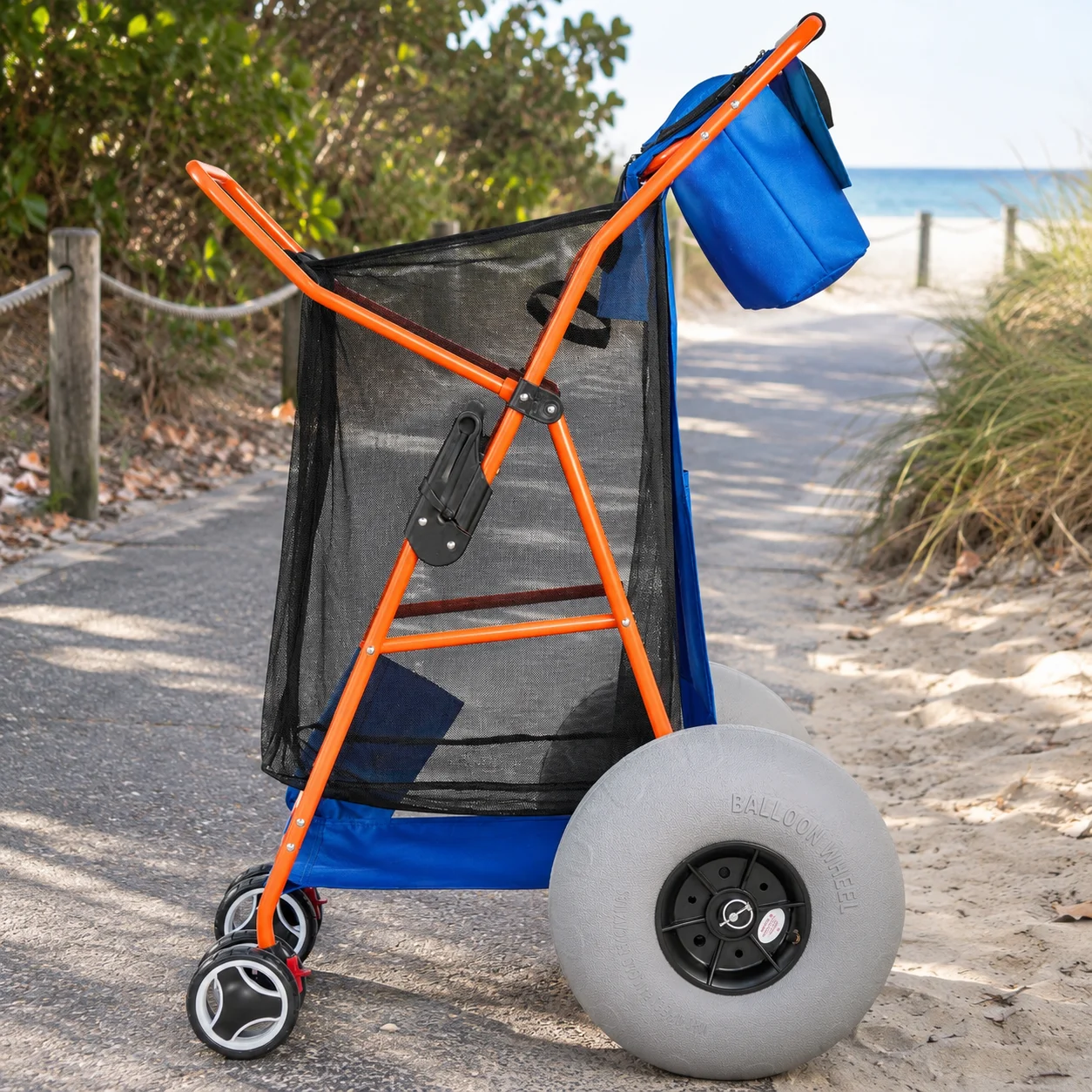
A trial of beach trolley casters should cover the intended route, configured trolley and planned work task.
Who should see the trial?
Include the people who handle the gear. Their normal doorways, turn positions and hand access may be missing from a catalogue demonstration. Document the rear balloon wheels separately from the front casters.
- Agree the conditions in advance.
- Record exceptions and stop if the route is unsuitable.
| Check | What to look for |
|---|---|
| Test route | Named task and surfaces |
| Result | Observed behaviour under those conditions |
Key Takeaway: A narrowly described result is more useful than a promise about every beach.
How do you order the correct caster?
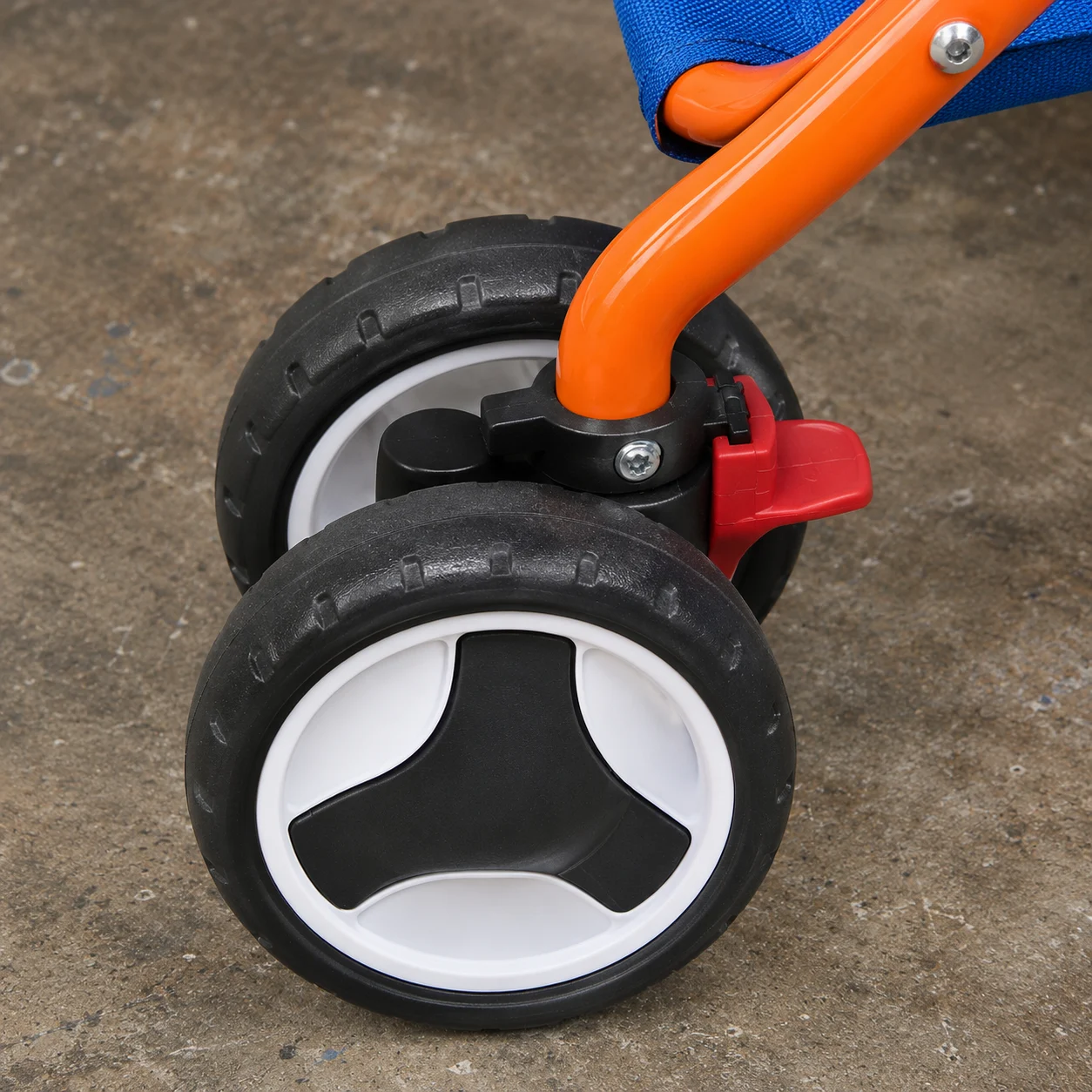
Match beach trolley casters to the approved complete caster or wheel assembly for the trolley revision.
Which dimensions need context?
Show how it mounts. A caster wheel with the same outside diameter can belong to a different fork or mounting arrangement.
- Photograph the mount in context.
- Ask for the complete spare reference.
| Check | What to look for |
|---|---|
| Wheel only | Individual rotating component |
| Assembly | Wheel, fork and specified mounting parts |
Key Takeaway: The purchase line should state which assembly the depot will actually receive.
When is the trolley suitable for this route?
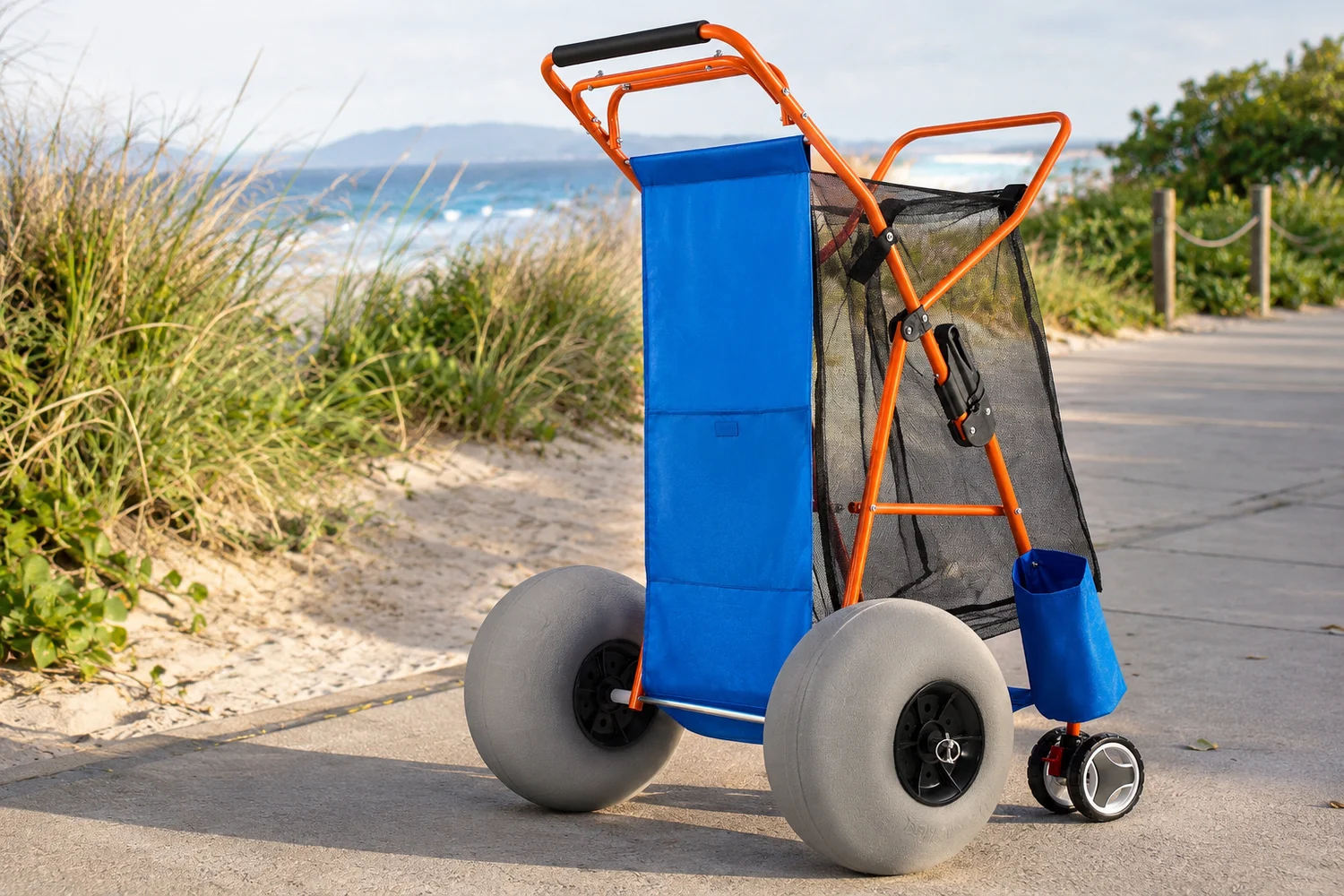
Accept the beach trolley casters arrangement when the approved trolley meets the actual site's route and handling requirements.
What belongs in the handover?
Name the boundary of the decision. A trolley accepted for a paved service lane should not automatically be assigned to a different entrance covered in deep sand.
- Save the accepted route.
- Name the person who reviews changes.
| Check | What to look for |
|---|---|
| Approved task | Defined cargo movement |
| Changed task | Requires a new review |
Key Takeaway: The buyer can explain where the trolley works and what should trigger another review. Contact us with the cart photograph and the load your team expects to carry. The doorway on the way to the beach matters as much as the sand.
Frequently asked questions
Q1: Can I use a rear balloon tire as a reference for a front caster?
No. Identify each assembly separately.
Q2: How do I know if the small wheel has a brake?
Use the exact unit and its instructions. A tab in a photo is insufficient evidence.
Q3: What's the best view of a threshold problem?
Use a side view showing the wheel, deck and actual threshold.
Q4: Can a larger caster fix the problem?
Use only a configuration approved for the complete trolley.
Q5: Can the deck carry a passenger across the transition?
No passenger use is supported by this cargo trolley example.