
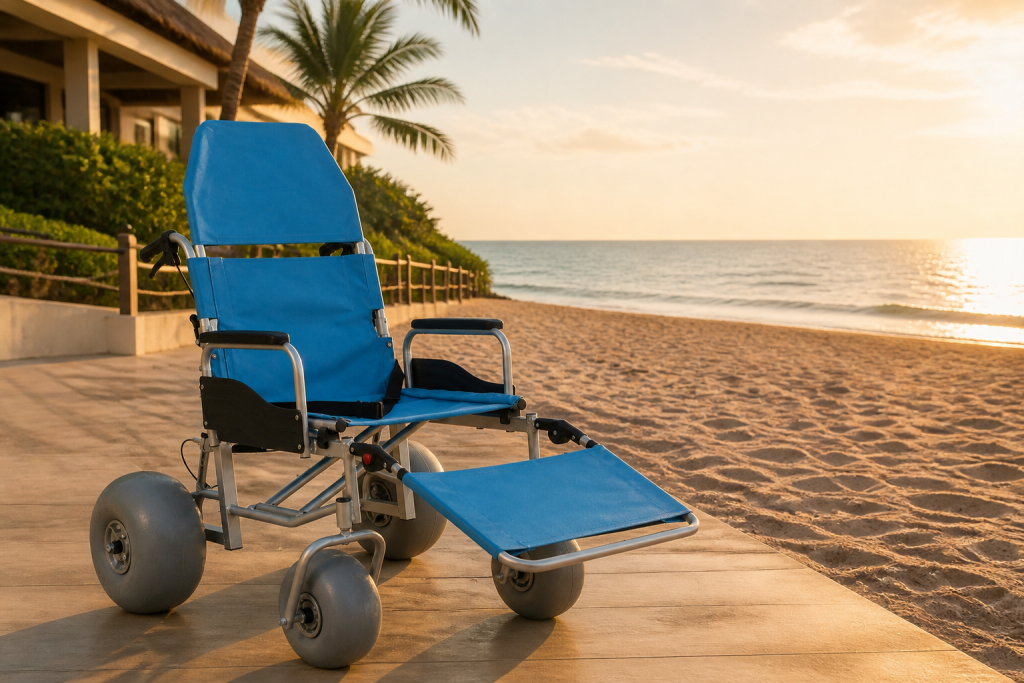
An all-terrain beach wheelchair review should connect wheel layout, route conditions, staff handling, cleaning, and storage to one real service plan. Check the actual product. Walk the intended route. Record any limit before approving use. For U.S. facilities, review official mobility-device guidance alongside local rules and site-specific safety requirements.
An all-terrain beach wheelchair becomes practical when its tire layout, frame, seating, foot support, care routine, and supplier records match real beach operations. For resorts, rental teams, distributors, and access planners, the goal goes beyond moving across sand. Teams need a chair that fits arrival routes, storage rooms, staff handling, guest transfer points, and repeat daily use.
A well-chosen all-terrain beach wheelchair can help a beach program serve more visitors with calmer handoffs and fewer unclear decisions. The wrong match can create slow checkouts, awkward handling, and unclear maintenance work after salty or sandy use. This guide gives buyers a practical way to judge fit before a trial order, using product structure, route checks, service routines, and supplier communication as the main decision points.
How should buyers judge an all-terrain beach wheelchair?
In practice, Buyers should judge an all-terrain beach wheelchair by matching chair structure with the routes, users, staff routines, and service records behind each beach program.
What product details deserve a close look?
Here is the practical test: start with parts that staff touch every day, then work outward toward route and storage demands. A beach chair may look simple in a catalog photo, yet each visible component tells a buyer how the chair may behave in busy service. The blue high-back seat, black arm supports, front footrest, silver frame, and gray balloon tires each support a different part of the guest handoff. A buyer should ask whether those parts look easy to inspect, easy to clean, and easy to describe in a staff checklist.
- Check whether the seat and back shape support a stable seated posture during handoff.
- Review arm supports, side panels, and footrest access for assisted transfers.
- Ask for clear product images showing frame joints, wheel hubs, and fabric mounting.
- Confirm that replacement parts can be named clearly in a purchase discussion.
- Note whether staff can describe each part without relying on a long manual.
Next, Key Takeaway: A practical chair gives buyers visible details they can turn into repeatable staff checks.
| Buyer Check | What To Review | Why It Matters |
|---|---|---|
| Seat area | Back height, fabric shape, side support | Helps teams discuss fit before use |
| Wheel system | Balloon tires, hubs, axle area | Supports route and care planning |
| Frame | Joints, tubing, footrest mounts | Helps staff spot wear during checks |
Use these details as a short pre-purchase review before comparing models.
How does the chair fit a B2B purchase process?
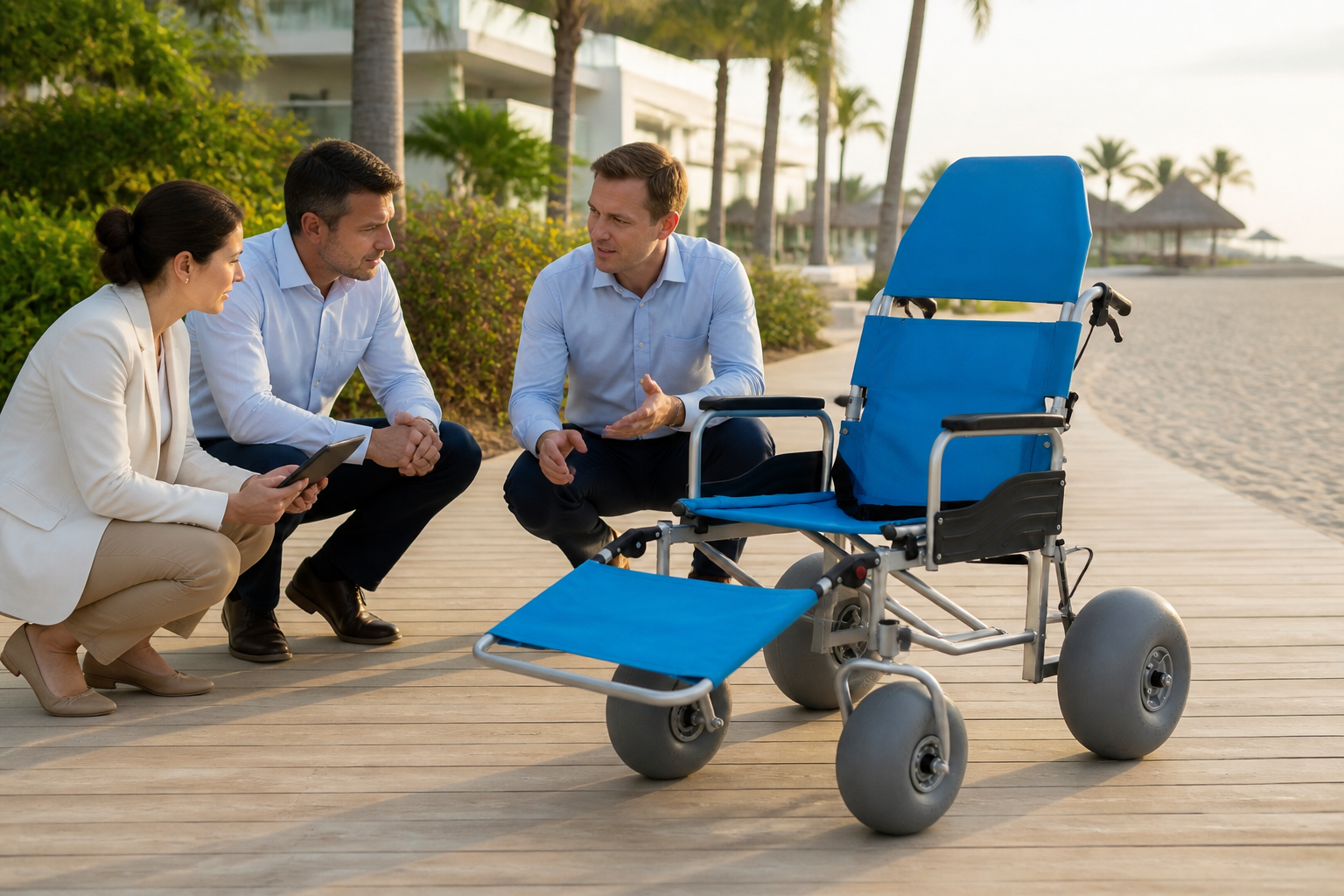
A better way to think about it: the chair has to fit an operating system, not just a beach. A resort may need a small fleet. A distributor may need repeatable product records. A local access program may need simple handoff notes for seasonal staff. That makes product clarity a buying factor. The article on how beach wheelchair users can enjoy better access gives useful context for access planning, while a product page can carry chair-specific details for quoting and internal review.
- Match product images with the route where the chair will be used.
- Save supplier notes in the same folder as purchase records.
- Ask staff which parts they inspect before and after each beach session.
- Keep buyer comments tied to visible chair components, not vague opinions.
- Record which team role owns checkout, return, and storage after each use.
Meanwhile, Key Takeaway: B2B buyers need a chair that can be checked, described, and supported by records after purchase.
| Purchase Need | Useful Evidence | Team Benefit |
|---|---|---|
| Quote review | Product photos and part names | Cleaner buyer-supplier discussion |
| Staff handoff | Short inspection notes | Less confusion during busy periods |
| Fleet planning | Storage and care notes | Better day-to-day control |
Use product clarity as a buying signal, because unclear parts create unclear service routines.
What route conditions should teams check before use?
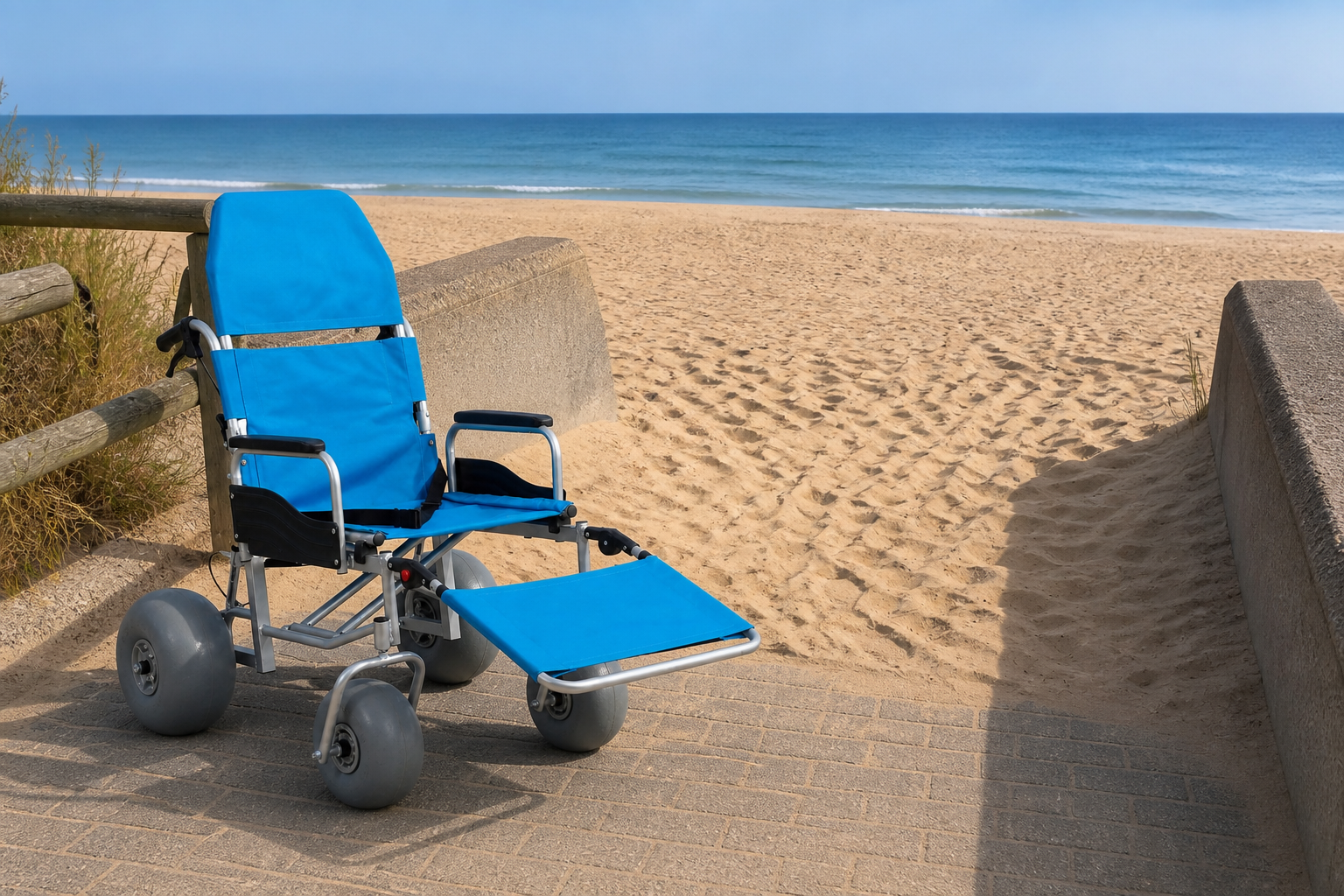
Teams should check an all-terrain beach wheelchair against the full route from storage to sand, including turns, slopes, surface changes, and return paths.
For example,
What makes a beach route harder than it looks?
Here is the catch: a route can look flat in a photo and still create handling trouble. Soft sand, loose dry paths, narrow ramps, sharp turns, and wet surface-change zones all change how staff move a chair. Buyers should map the route before they rely on any single product claim. A chair listed on a beach wheelchair product page may offer the right structure, but local route conditions still decide daily usability.
- Walk the route from storage to beach access before selecting a model.
- Note changes from pavement, boardwalk, mats, ramps, and loose sand.
- Check turning space near the checkout point and beach entry.
- Review where staff can pause safely during assisted movement.
- Mark any route point that becomes harder after wind, crowds, or tide changes.
Key Takeaway: Route fit turns a product choice into a service choice.
| Route Point | What To Check | Buyer Question |
|---|---|---|
| Storage exit | Door width and turn radius | Can staff move it without delay? |
| Beach entry | Surface change and slope | Does the wheel layout suit the path? |
| Return point | Rinse and parking area | Can staff reset it quickly? |
Still, Build the route review before the purchase discussion gets too narrow.
How can buyers document route fit?
Use this simple move: record route notes in plain language that any staff member can understand. Avoid long technical claims. Write down where the chair starts, who moves it, which surface changes occur, and where the user handoff takes place. Photos of the route can support supplier questions without turning into a formal report. Related reading such as how to get a wheelchair on the beach can help teams frame those questions for public beach access and resort settings.
- Take route photos from staff eye level.
- Mark soft sand, firm paths, slopes, and tight turns.
- List any points where staff need help from another team member.
- Keep route notes near product photos and supplier replies.
- Save one short note about where the chair should wait between bookings.
Key Takeaway: Clear route notes help buyers compare chair structure with real handling conditions.
| Record Type | Best Use | Keep It Short |
|---|---|---|
| Route photos | Supplier discussion | One view per decision point |
| Staff notes | Daily handoff training | Plain action wording |
| Storage notes | Fleet planning | Door, space, and rinse access |
Afterward, Use route documentation as a shared buyer language rather than a paperwork burden.
Which chair details affect handling and care?
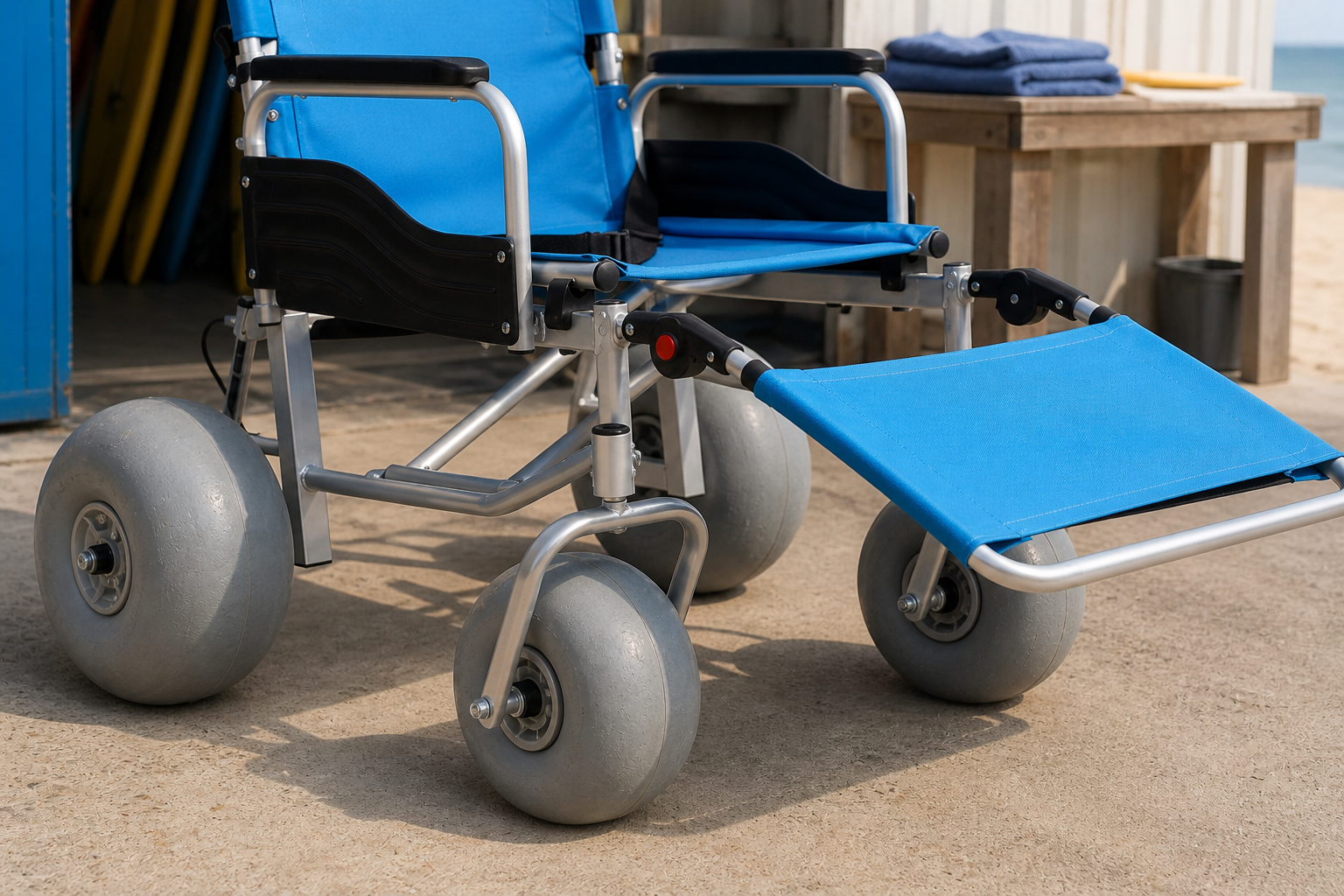
Handling and care depend on visible chair details such as balloon tires, frame joints, seat fabric, arm supports, footrest position, and storage access.
What should staff inspect after beach use?
In practice, Here is the short version: staff should look at the parts that collect sand, salt, moisture, and handling stress. Balloon tires, hubs, frame joints, footrest mounts, fabric seams, and black side supports all deserve a routine look. This does not need a complicated form. A short, visible checklist can guide staff after each use and before storage. A buyer reviewing lightweight beach wheelchair options may use a similar care mindset, even if product structure differs.
- Check balloon tires for visible surface damage or lodged debris.
- Wipe frame joints and footrest mounts after sandy use.
- Let fabric dry before closed storage when possible.
- Report loose parts or odd movement before the next checkout.
- Keep a simple return note so the next shift sees what was checked.
Key Takeaway: Care works best when staff can see and name each part quickly.
| Chair Area | Routine Check | Action Trigger |
|---|---|---|
| Tires and hubs | Sand, surface marks, hub movement | Staff note before reuse |
| Frame and footrest | Loose mounting points | Hold for review |
| Seat fabric | Moisture and visible wear | Dry and record |
Keep care language simple enough for seasonal teams.
How should a buyer talk with a supplier?
Next, Here is a useful filter: ask supplier questions that tie directly to visible product parts. Instead of asking broad claims about beach performance, ask for frame photos, wheel details, storage guidance, fabric care notes, and spare-part naming. This creates a cleaner record for purchasing teams and helps distributors avoid vague product sheets. A supplier who can explain parts clearly helps buyers train staff after delivery.
- Request close images of tires, hubs, frame joints, and footrest mounts.
- Ask how the chair should be rinsed, dried, and stored after beach use.
- Ask which parts are most often checked during routine care.
- Keep all replies tied to a product SKU or model page.
- Ask for plain part names that staff can repeat during handoff.
Key Takeaway: Better supplier questions lead to clearer use, care, and reorder notes.
| Supplier Question | Good Answer Format | Buyer Use |
|---|---|---|
| Which parts need routine checks? | Named part list | Staff checklist |
| How should it be stored? | Plain care steps | Equipment room plan |
| Which images show frame details? | Close product photos | Purchase record |
Use supplier communication as part of the product test, not a late admin step.
What selection flow helps buyers avoid mismatch?
Meanwhile, A simple selection flow helps buyers avoid mismatch by connecting route fit, chair structure, care routine, and supplier handoff in one review.
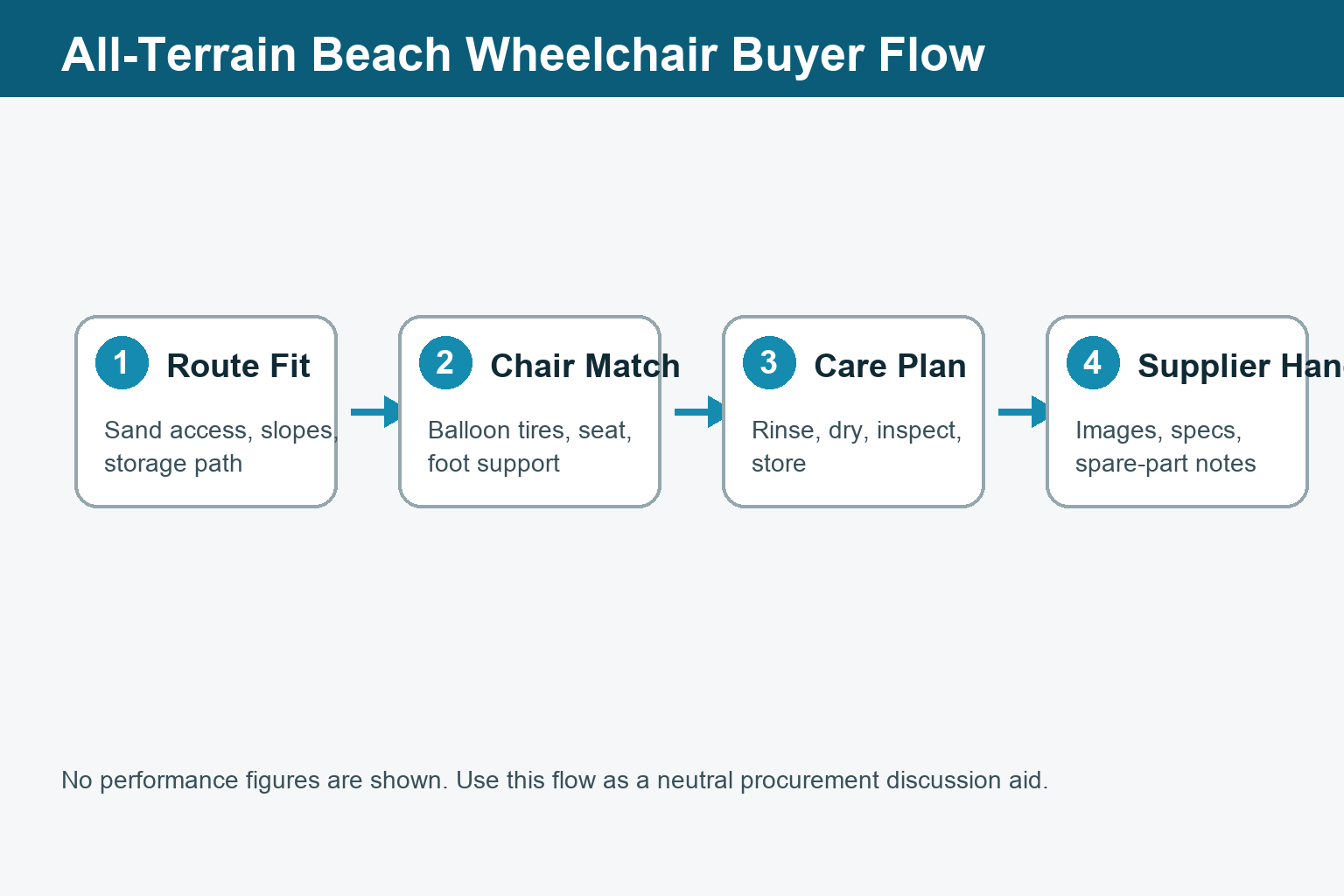
What should happen before a trial order?
You might be wondering: what can be checked before the chair arrives? Quite a lot. Buyers can review route photos, product images, staff handling notes, storage space, and supplier replies before a trial order. That does not replace a physical trial, but it reduces guesswork. The page for beach wheelchair options can sit beside route notes during buyer review, so each model question stays tied to a visible product record.
- Compare route photos with chair images.
- Decide who will move, clean, and store the chair.
- List transfer points where staff need extra clarity.
- Prepare supplier questions before asking for a quote.
- Keep one buyer note for any concern that should be tested during trial use.
For example, Key Takeaway: Pre-trial review helps teams spot mismatch before money and time get tied up.
| Review Step | Decision Made | Evidence Needed |
|---|---|---|
| Route fit | Does the path suit the chair? | Photos and staff notes |
| Chair match | Does structure suit daily use? | Product images |
| Handoff plan | Can staff use simple steps? | Short checklist |
Treat the trial order as a confirmation step, not the beginning of thinking.
How should teams make the final buyer call?
Here is the buying lens: choose the chair that your staff can explain, inspect, clean, store, and request support for without confusion. Comfort and access matter, yet buyers also need operating clarity. If a product creates too many open questions before delivery, daily use may feel harder later. A concise internal note can name the selected route, product details, care steps, and supplier records. Teams ready to discuss fit can contact us today and keep the conversation focused on real beach service needs.
- Pick a model only after route and storage checks are written down.
- Keep support questions tied to product parts.
- Train staff with short steps rather than long manuals.
- Review feedback after early use and adjust the checklist.
- Save staff comments in the same file as supplier replies and product photos.
Still, Key Takeaway: A practical choice combines product fit with a routine staff can repeat.
| Buyer Call | What It Means | What To Keep |
|---|---|---|
| Ready for trial | Route and chair look aligned | Photos and supplier replies |
| Needs review | Open questions remain | Specific part questions |
| Not a fit | Route or storage mismatch | Reason for future comparison |
Use the buyer call as a working record for future purchases.
FAQ
Can I use one all-terrain beach wheelchair for every beach route?
No. One chair may not suit every route because sand depth, slopes, storage access, and transfer points differ between locations. Match the chair with the actual route before placing a larger order.
What is the best all-terrain beach wheelchair for soft sand?
Afterward, The best option is the one whose wheel layout, seat support, frame, footrest, care routine, and supplier records fit your beach program. Avoid choosing from a photo alone.
How do I know if a beach chair fits my staff workflow?
Start with staff tasks. If the team can move, inspect, clean, store, and describe the chair with short steps, the workflow fit is stronger.
Can I ask a supplier for extra product photos?
Yes. Ask for close photos of tires, hubs, frame joints, side supports, footrest mounts, and folded or stored positions when relevant.
What should I check after a beach wheelchair trial?
In practice, Check route handling, seat support, staff comments, cleaning time, storage fit, and any parts that need clearer supplier guidance.
Related planning resources: Review all-terrain route planning before approving a product, sample, or supplier decision.