
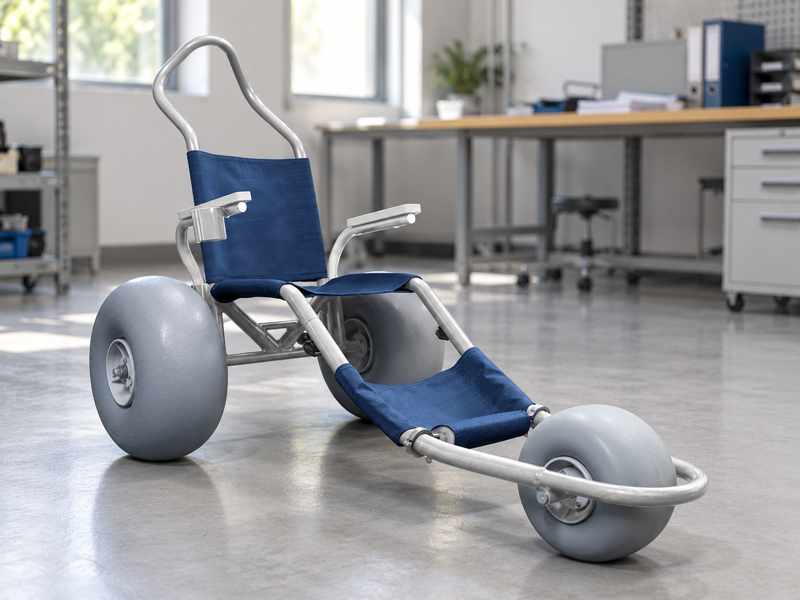
Review beach wheelchair ground clearance by identifying the lowest relevant point and the conditions behind its measurement. A large wheel can make a chair look ready for an awkward path joint. That impression says little about the frame or supports below it. Ask for labeled product data and give the actual site concern to the responsible reviewer.
What does beach wheelchair ground clearance describe?

Beach wheelchair ground clearance describes the space between a defined low point on the chair and the ground in a stated setup. Wheel diameter and seat height are separate figures.
Name the low point
Start beneath the frame. Ask the supplier to mark which part sets the quoted gap. A drawing should also state the ground reference and the product's measured position. WHO guidance links assistive products with supporting services.
- Mark lowest part
- Name ground reference
- Record setup
| Check | Record to retain |
|---|---|
| Mark lowest part | Supplier-defined point |
| Name ground reference | Measurement surface |
| Record setup | Exact product state |
You can ask about the gap that matters instead of relying on a wheel-size label.
Can wheel diameter establish the clearance figure?
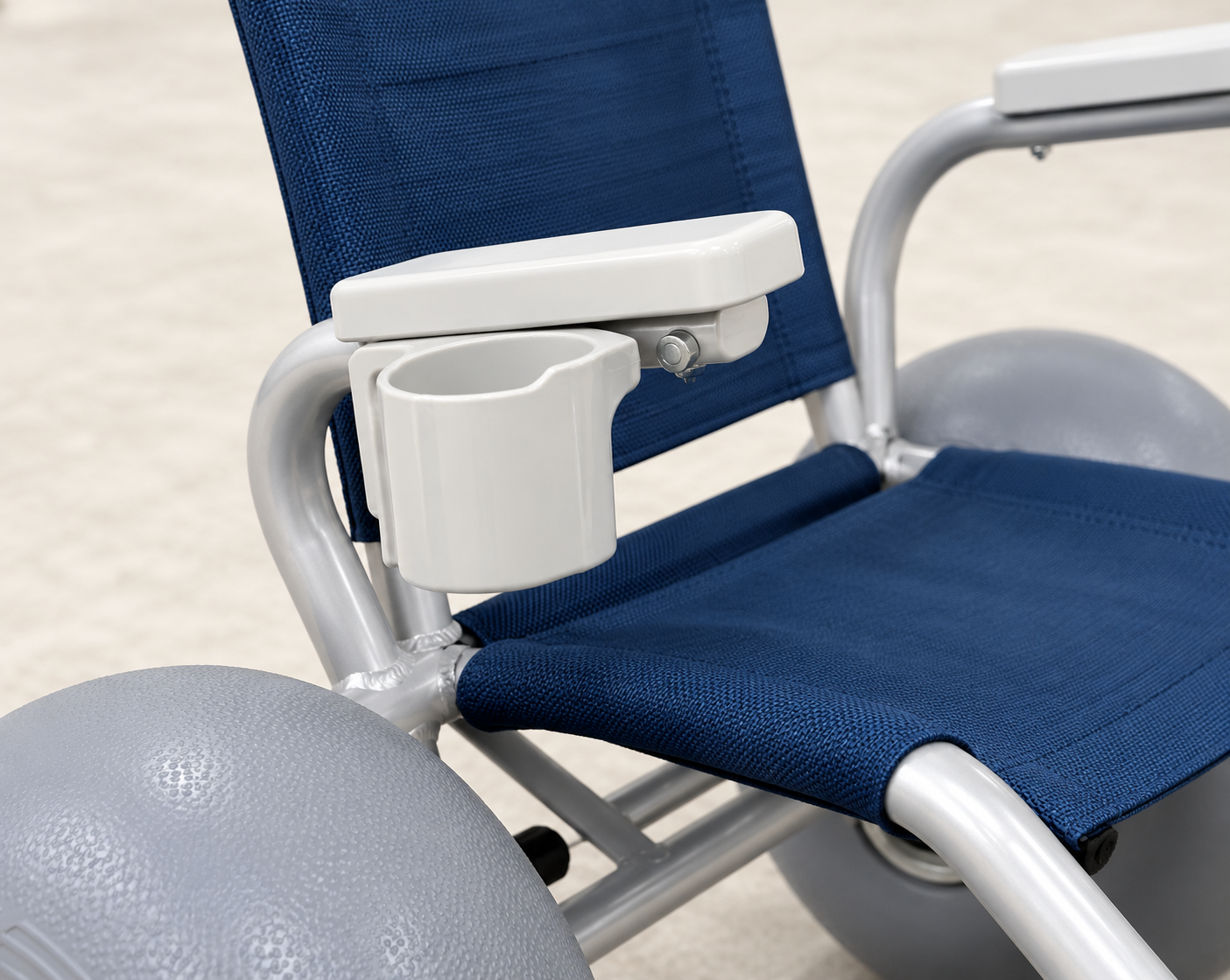
No, wheel diameter alone cannot establish beach wheelchair ground clearance. Frame members, foot supports and other fitted parts may sit below the wheel's upper edge.
Which part sits lowest?
Ask what sits lowest. Request a view of the complete underside relationship without asking staff to lift or tilt a chair for an improvised check. Use supplier drawings where the needed view is unclear. Keep this dimension separate from the wider design comparison.
- Identify low parts
- Retain wheel details
- Avoid guessed values
| Check | Record to retain |
|---|---|
| Identify low parts | Current drawing |
| Retain wheel details | Exact fitted version |
| Avoid guessed values | Written clarification |
You can distinguish a wheel dimension from the chair's actual lower envelope.
Which setup belongs with beach wheelchair ground clearance data?
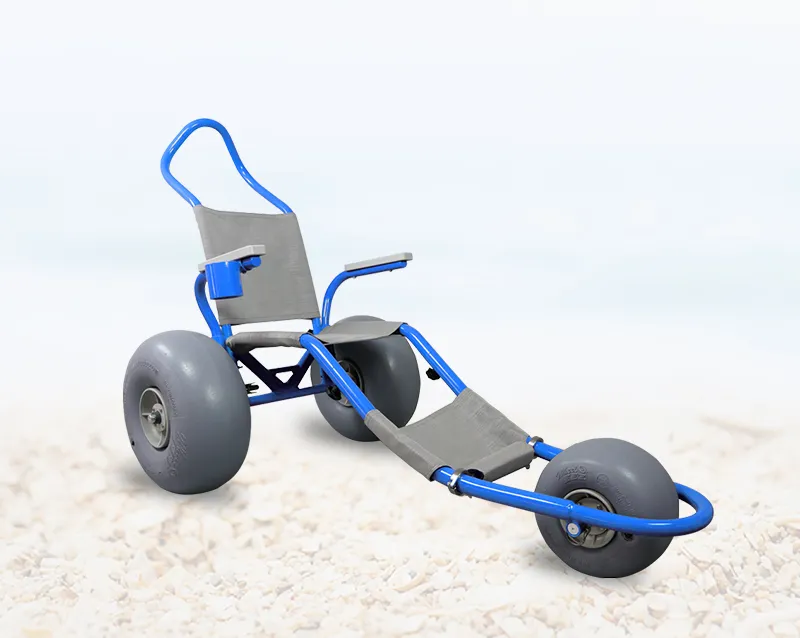
Beach wheelchair ground clearance data should name the fitted wheels, supports and other parts that affect the lower envelope. A change in setup can change which point sits closest to the ground.
Record the supplied version
Keep parts tied to the figure. Ask whether the quoted dimension applies to the exact offer. Note any optional part that needs a separate clearance review.
- List fitted parts
- Link quote
- Flag options
| Check | Record to retain |
|---|---|
| List fitted parts | Current configuration |
| Link quote | Exact offered model |
| Flag options | Separate review questions |
Your clearance record can remain tied to the product you plan to receive.
Can a static gap prove that a chair crosses an obstacle?
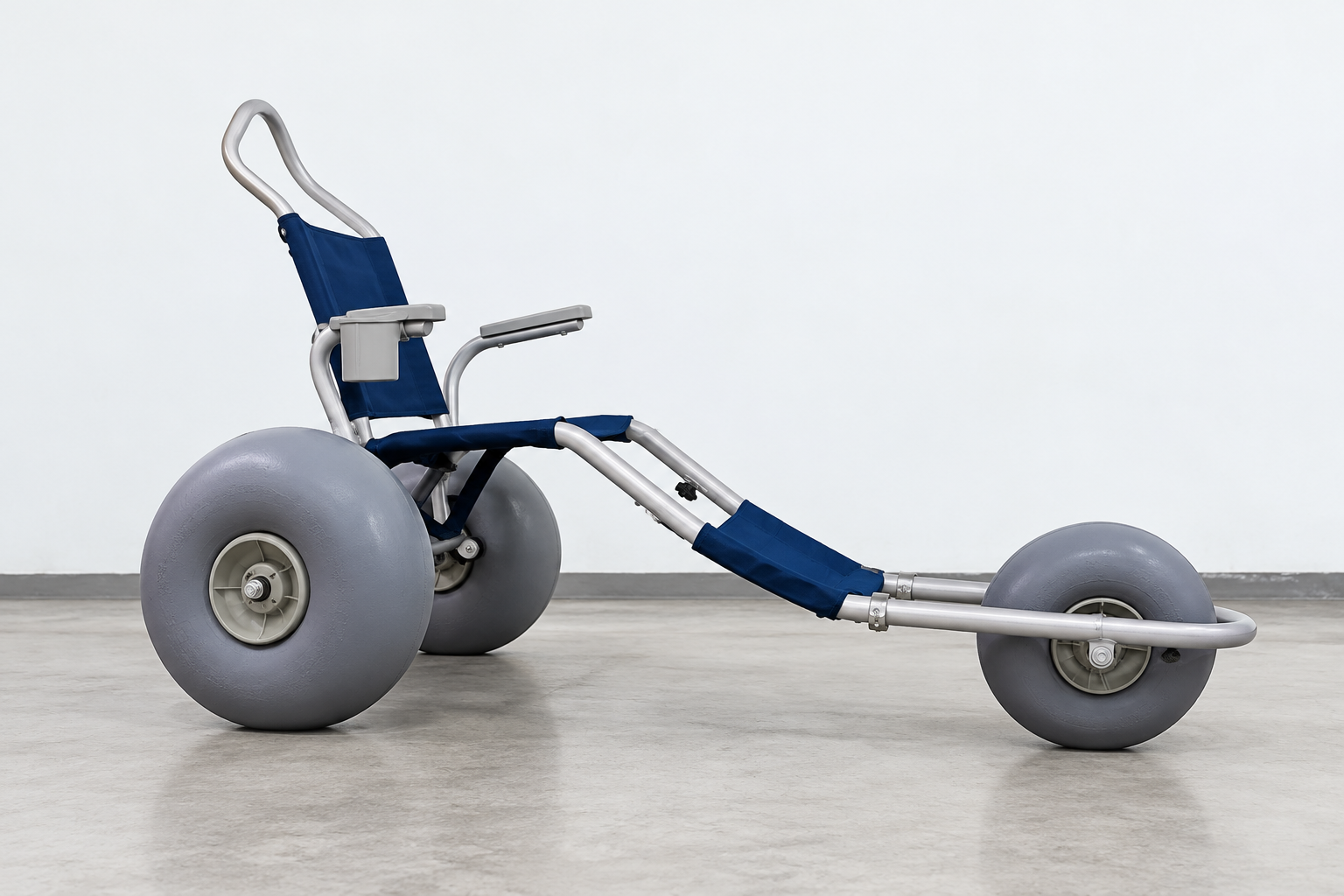
No, a static beach wheelchair ground clearance figure cannot prove that a chair can cross a particular obstacle. Movement, route geometry and permitted use require more than a single dimension.
Separate geometry from performance
A gap is not a crossing test. Ask for the maker's limits and an appropriate site review. Do not create an obstacle trial from catalog measurements.
- Identify route feature
- Request limits
- Assign review
| Check | Record to retain |
|---|---|
| Identify route feature | Measured site context |
| Request limits | Applicable maker guidance |
| Assign review | Responsible site process |
You can keep a useful dimension from becoming an unsupported capability claim.
How should beach wheelchair ground clearance relate to route surveys?
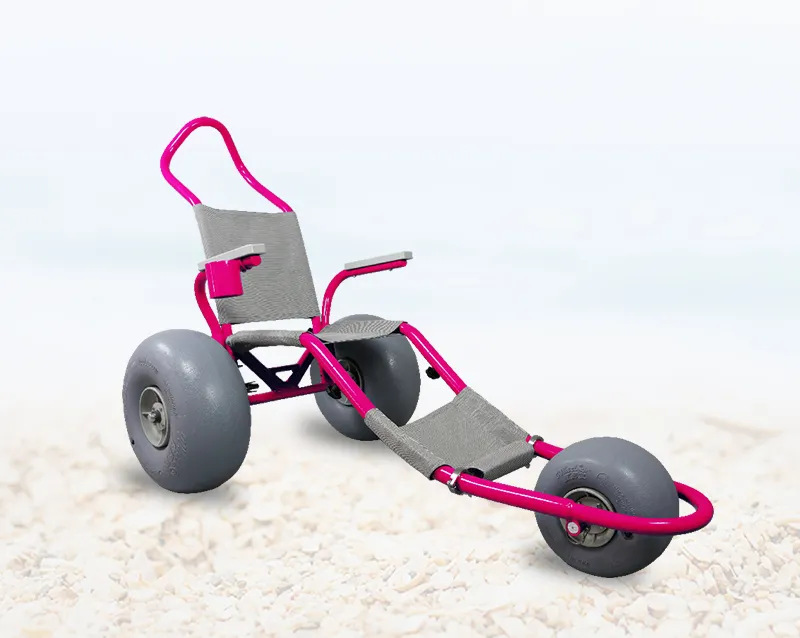
Use beach wheelchair ground clearance as one input to a route survey, alongside the complete chair and the actual ground features. Keep equipment data separate from site observations.
Give the reviewer both records
The route adds its own facts. Record relevant joints, transitions and surface changes for the responsible reviewer. A clear route photo can locate a concern without establishing a passable limit. Add the equipment record to your route-planning brief.
- Keep equipment data
- Locate route concern
- Record review outcome
| Check | Record to retain |
|---|---|
| Keep equipment data | Model-specific drawing |
| Locate route concern | Site photo and position |
| Record review outcome | Named decision |
You can connect a site concern with the right equipment question.
What should buyers ask about soft ground?
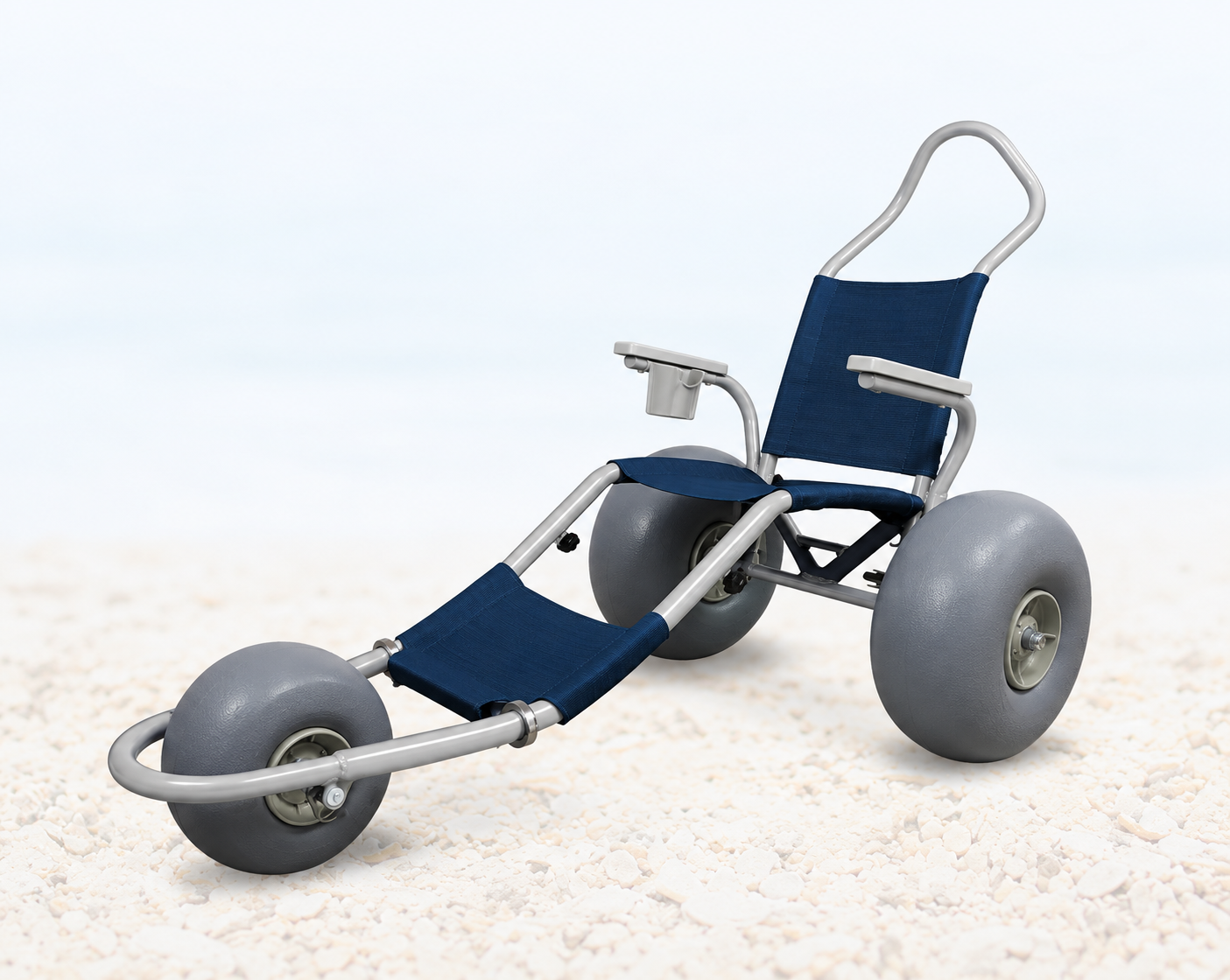
Buyers should ask how beach wheelchair ground clearance figures were measured and what guidance covers the intended ground. A dimension measured on a firm surface does not describe every sand condition.
State the ground conditions
The measuring surface changes the context. Describe the proposed site to the supplier and site team. Avoid assigning a general sand-performance result from an unloaded product photograph.
- Name measured surface
- Describe planned ground
- Request guidance
| Check | Record to retain |
|---|---|
| Name measured surface | Supplier statement |
| Describe planned ground | Site observations |
| Request guidance | Intended-use limits |
You can avoid treating a workshop dimension as a universal beach result.
Which images help explain a clearance question?
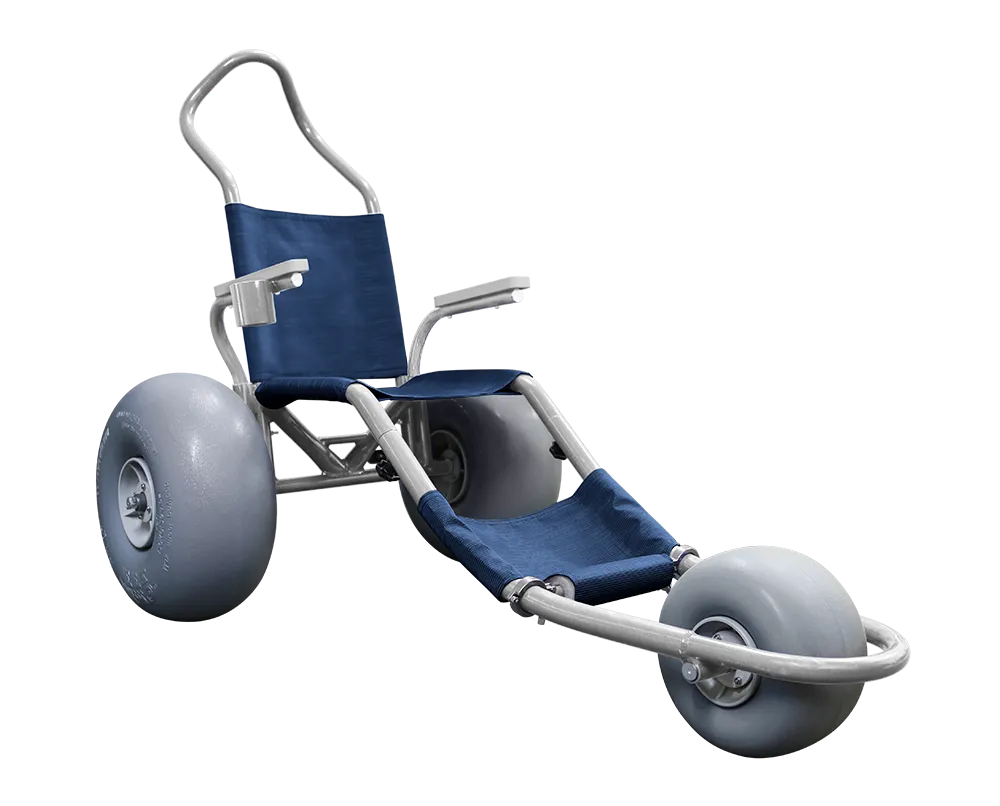
Side views and supplier-marked low points help explain beach wheelchair ground clearance questions. Photos need a clear product state and cannot replace labeled measurements.
Ask for the lower-envelope view
Keep the complete chair in context. Request a whole-product image alongside any low-point detail. The supplier should identify the relevant part so staff do not guess from shadows.
- Show full product
- Mark low point
- Link measurement
| Check | Record to retain |
|---|---|
| Show full product | Model identity |
| Mark low point | Supplier annotation |
| Link measurement | Drawing and units |
You can point to the part that needs clarification without measuring a photograph.
Should options trigger another clearance review?
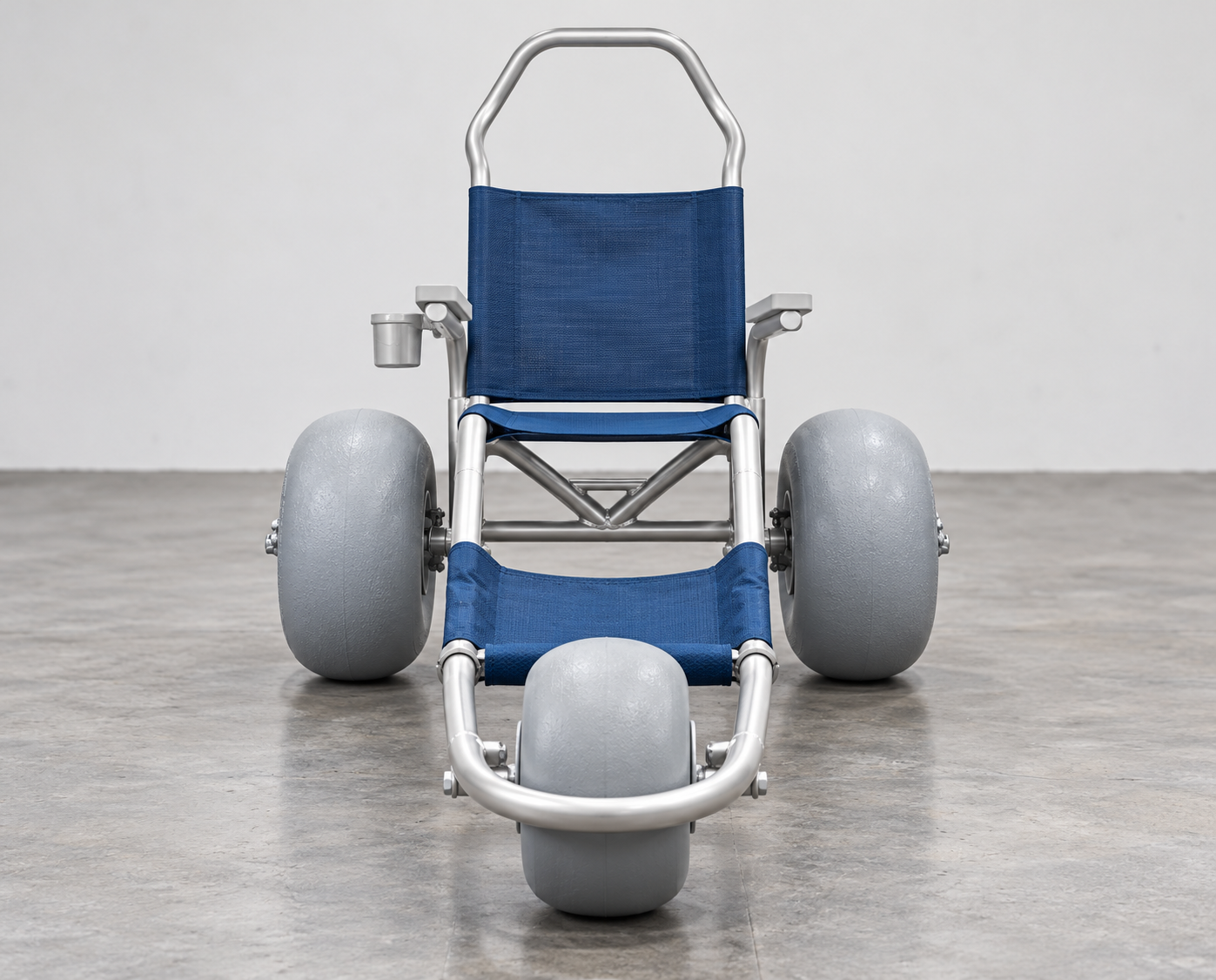
Yes, a beach wheelchair ground clearance review should be revisited when an option changes the lower envelope or relevant product state. Approval of the original setup does not cover every later change.
Check the effect of the added item
A small part can change the question. Ask the supplier which dimensions and limits need updating. Keep the option's review with the original purchase record. Revisit the surface-use questions if the setup changes.
- Name added item
- Request changed data
- Retain decision
| Check | Record to retain |
|---|---|
| Name added item | Exact option |
| Request changed data | Updated dimensions |
| Retain decision | Written review result |
You can stop an old clearance figure from following a changed chair unchanged.
What should a beach wheelchair ground clearance record retain?
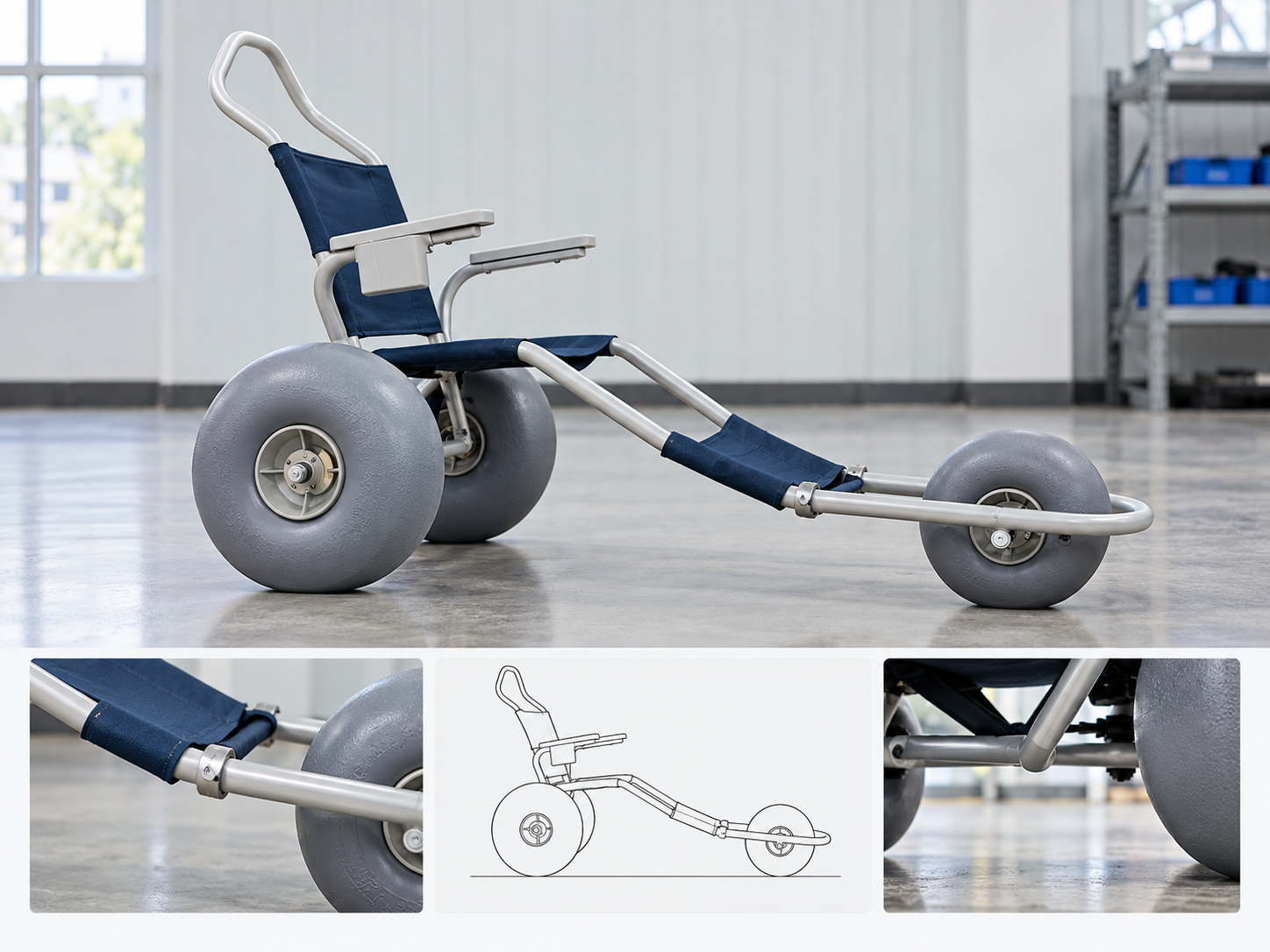
A beach wheelchair ground clearance record should retain the drawing, product state, units and unresolved limits. It should also identify which site questions still need review.
Keep geometry and decisions separate
Make the open question visible. Record who supplied the figure and who reviewed the route. Avoid writing a general approval where only a dimension was confirmed.
- Retain source
- Name review owner
- List open limits
| Check | Record to retain |
|---|---|
| Retain source | Drawing and date |
| Name review owner | Site decision contact |
| List open limits | Pending answers |
You can trace what was measured and what remains undecided.
How can you request beach wheelchair ground clearance details?

Request beach wheelchair ground clearance details by naming the chair and the low-point question raised by your site. Ask for a labeled drawing and the conditions behind the stated dimension.
Send a lower-envelope inquiry
Point to the route concern. Share relevant site observations without proposing your own obstacle limit. Use the supplier's answer within the complete route review.
- Name model
- Mark question
- Request evidence
| Check | Record to retain |
|---|---|
| Name model | Exact proposed chair |
| Mark question | Part or route feature |
| Request evidence | Dimensions and guidance |
You can obtain useful clearance facts before approving equipment for a service plan. Contact us with your model and project questions so we can discuss the product information and written terms you need.
Frequently asked questions
Q1: Can I calculate clearance from wheel diameter?
No. Other parts can sit below the wheel's upper edge, so request the actual lower-envelope information for the complete setup.
Q2: What's the best view for a clearance inquiry?
Start with a side drawing and a marked low point. A whole-product photo can help identify the setup but cannot replace a measured figure.
Q3: How do I know if a clearance figure applies to my chair?
Match the exact model and fitted parts. The source should state the product position and measurement conditions.
Q4: Can a stated gap prove that a chair will cross a curb?
No. A static dimension does not establish obstacle performance or permission for a particular maneuver.
Q5: Should I review clearance after adding an option?
Yes, if the option changes the lower envelope or relevant setup. Ask which dimensions and limits need to be reviewed again.