
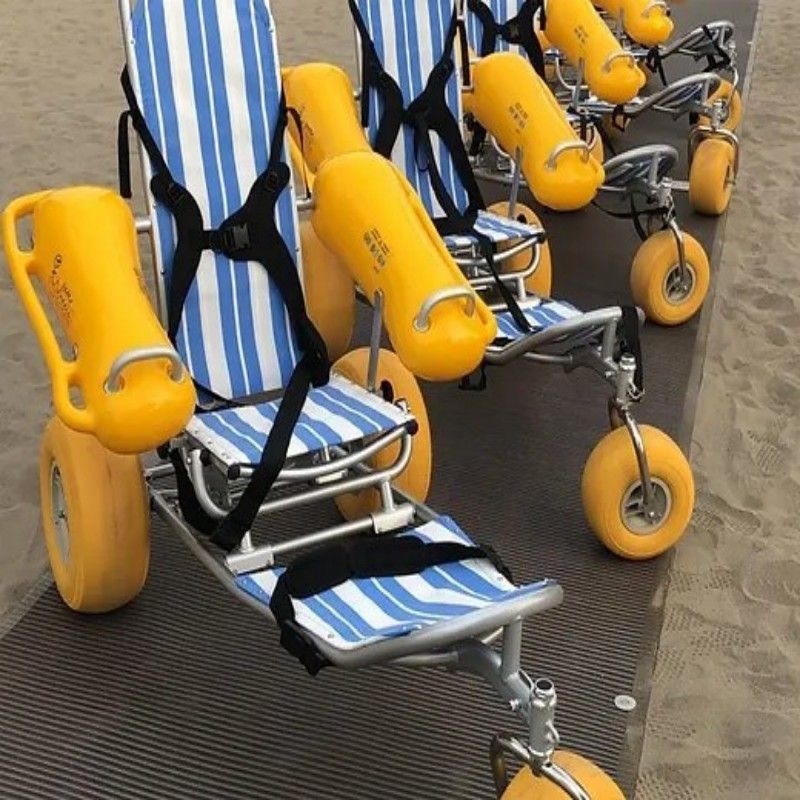
Also, A beach wheelchair comparison should use the same user brief, route, product type, configuration, trial, care, and supplier evidence for every candidate. A numbered “top” list without a defined comparison set cannot identify a universal winner. Build a scorecard around the actual service instead.
Then, The California Coastal Commission beach-wheelchair page shows that availability and local arrangements vary by destination. ADA mobility-device guidance provides policy context. Product fit still requires model-specific review.
Which Beach Wheelchair Types Should Be Compared?
However, Separate all-terrain, floating, lightweight, folding, manual, and powered products by intended task. Do not rank unlike product types on one unexplained list.
For example, Group by use case. Use the floating versus all-terrain guide.
- Define intended route.
- Identify water-use requirements.
- Keep walker products separate.
| Type | Primary review |
|---|---|
| All-terrain | Route and handling |
| Floating | Approved water service |
| Lightweight | Transport and care |
Meanwhile, Key Takeaway: Compare products built for the same job.
How Should User Fit Enter the Comparison?
Instead, Review seating, supports, transfer access, restraints where fitted, controls where fitted, and individual needs with suitable professionals.
As a result, Fit comes before ranking. Record the exact configured sample.
- Use approved seat setup.
- Review transfer plan.
- Check control access.
| Fit area | Evidence |
|---|---|
| Seat | Configured dimensions |
| Supports | Approved setup |
| Transfer | Individual plan |
Also, Key Takeaway: A winner for one user can fail another.
What Route Evidence Should Be Shared?
Then, Use the same measured route, surface conditions, turns, slopes, transitions, rest points, storage, and staff plan for every candidate.
However, Normalize the route trial. Use the route guide.
- Map all surfaces.
- Record conditions.
- Mark untested areas.
| Route item | Comparison |
|---|---|
| Sand | Handling observation |
| Turn | Space needed |
| Transition | Controlled crossing |
For example, Key Takeaway: A fair comparison uses the same route.
How Should Wheels and Frames Be Compared?
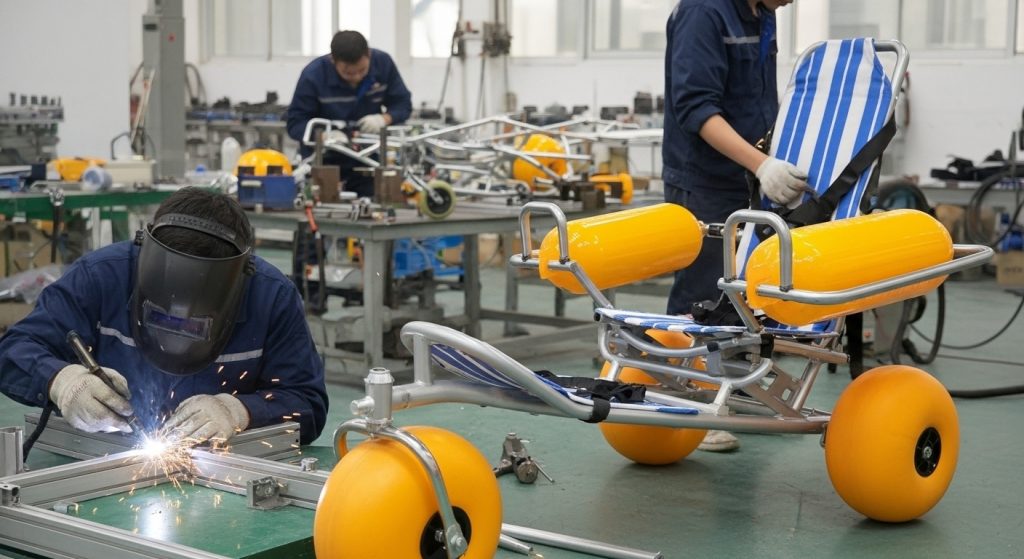
Meanwhile, Compare wheel layout, width, material, bearings, mounts, frame joints, corrosion care, cleaning access, parts, and storage. Avoid performance claims from wheel size alone.
Instead, Inspect the system. Use model documents and the exact sample.
- Check wheel mounting.
- Review frame joints.
- Request replacement parts.
| Component | Evidence |
|---|---|
| Wheel | Specification and trial |
| Frame | Material and inspection |
| Part | Approved identifier |
As a result, Key Takeaway: Component evidence supports route observations.
How Does Water Use Change the Comparison?
Also, Only products designed and approved for water service should enter that comparison. Staff, conditions, local rules, buoyancy components, return, and care need their own records.
Then, Do not infer flotation. Use the floating chair checklist.
- Identify approved product type.
- Define staff positions.
- Record stop rules.
| Water item | Question |
|---|---|
| Product | Approved for service? |
| Staff | Trained and available? |
| Conditions | Within local plan? |
However, Key Takeaway: Water service is a separate operating model.
What Handling and Transport Tests Matter?
For example, Repeat folding, gripping, lifting, vehicle loading, unloading, reopening, and inspection. Record parts removed and people required.
Meanwhile, Test the complete task. Use the storage guide.
- Identify grip points.
- Measure the vehicle.
- Check after reopening.
| Task | Evidence |
|---|---|
| Fold | Repeatable steps |
| Lift | Suitable handling |
| Store | Protected space |
Instead, Key Takeaway: Transport convenience needs a real trial.
How Should Cleaning and Service Be Compared?
As a result, Compare inspection, approved rinsing, drying, lubrication where approved, storage, parts, repair contacts, and downtime. Use current product instructions.
Also, Price the care cycle. Use the saltwater care guide.
- List care tasks.
- Track parts and faults.
- Record downtime.
| Care area | Comparison |
|---|---|
| Cleaning | Method and time |
| Parts | Availability |
| Service | Response path |
Then, Key Takeaway: Ownership evidence belongs in product comparison.
What Supplier Evidence Should Be Scored?
However, Score manuals, revision control, model data, sample consistency, packaging, approved parts, warranty terms, service contacts, and response quality.
For example, Test evidence, not promises. Use the procurement guide and supplier questions.
- Request current files.
- Compare sample and order.
- Test one service question.
| Supplier area | Evidence |
|---|---|
| Documents | Current revision |
| Sample | Matches proposed order |
| Support | Named response |
Meanwhile, Key Takeaway: Supplier quality affects the chair decision.
How Should a Comparison Scorecard Work?
Instead, Use pass, concern, not tested, and fail for written must-have criteria. Avoid a single total score that hides a critical failure.
As a result, Protect must-have conditions. Record who observed each result and under what conditions.
- Define must-have rules.
- Use the same test sequence.
- Keep comments with scores.
| Status | Meaning |
|---|---|
| Pass | Meets condition |
| Concern | Needs evidence |
| Fail | Rejects must-have |
Also, Key Takeaway: A transparent scorecard exposes tradeoffs.
What Is the Best Beach Wheelchair Comparison Rule?
Then, Choose the model that passes the defined user, route, handling, care, service, and support requirements with the fewest unresolved risks. Preserve the original featured image.
However, End with evidence. Use the beach product range without mixing unrelated categories.
- Use one exact configuration.
- Date every trial.
- Retain supplier evidence.
| Decision area | Pass condition |
|---|---|
| User | Fit reviewed |
| Route | Trial completed |
| Support | Documented |
For example, Key Takeaway: The best chair is the best verified fit for the use case.
Is there one best beach wheelchair?
Meanwhile, No. User, route, product type, staff, care, and support requirements vary.
Can floating and all-terrain chairs share one ranking?
Instead, Only if the comparison clearly separates their different tasks and requirements.
Should price decide the winner?
As a result, No. Compare complete configuration, service, care, support, and risk.
How many models should be trialled?
Also, Use enough suitable candidates to reveal tradeoffs under the same test.
Will the main image change?
Then, No. The original featured image remains.