
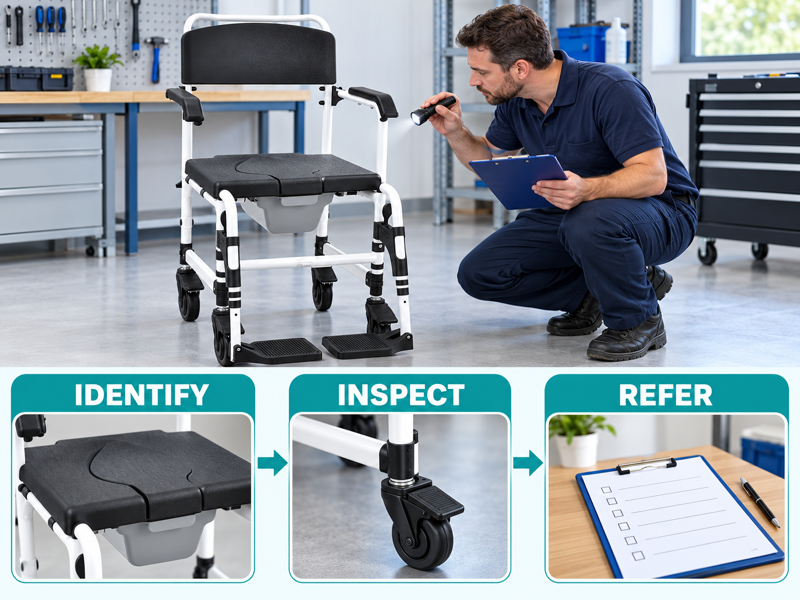
Use commode chair corrosion checks to record a condition concern and obtain a qualified service decision. A Singapore distributor may receive a photo of a brown mark with no model code or cleaning history. Clear identification and contextual evidence make the enquiry more useful than guessing at the cause.
What should commode chair corrosion checks establish?
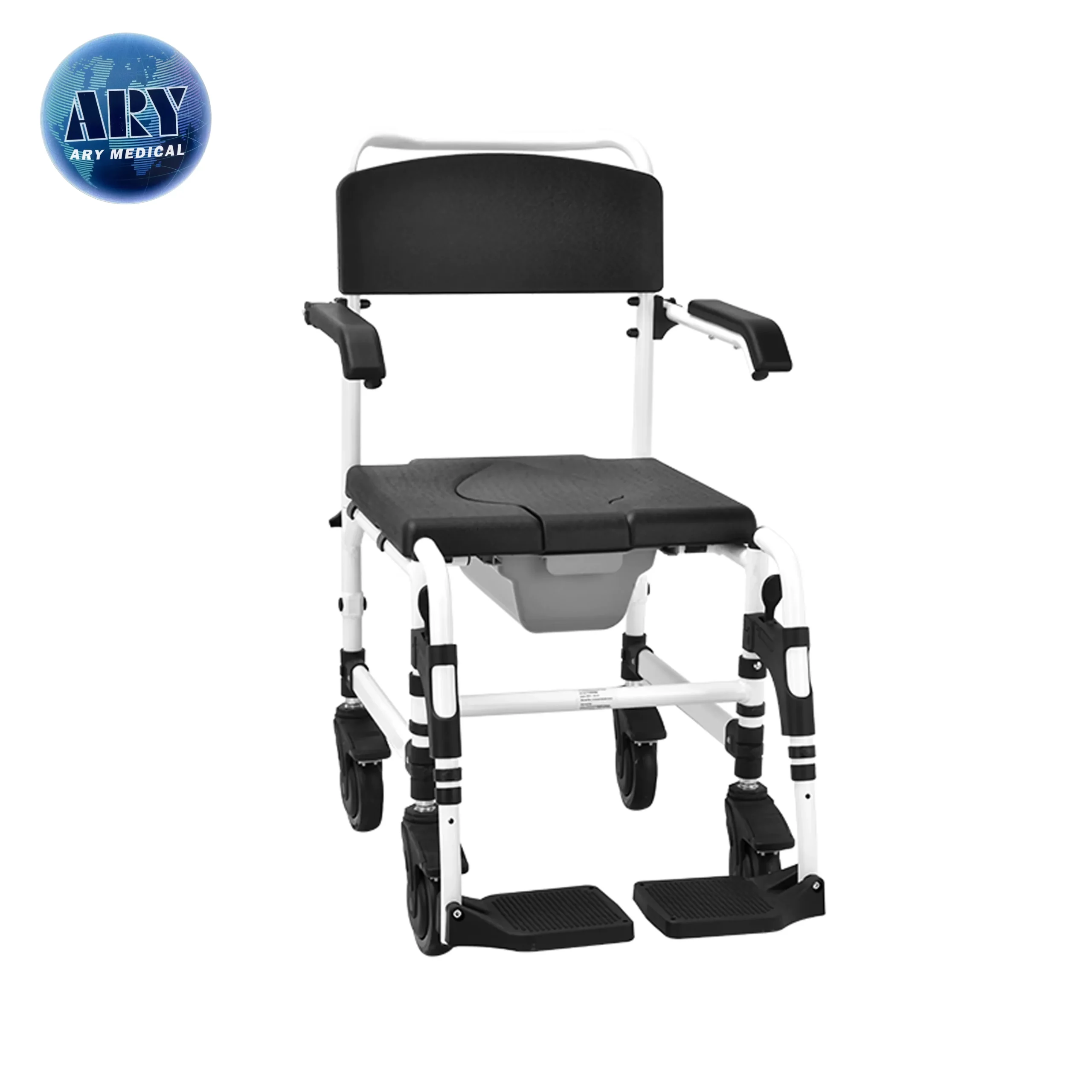
Commode chair corrosion checks should establish where a surface change appears and which model and material are involved. A brown mark may need review, but a photograph alone cannot establish its cause or severity.
Open a factual condition review
Record condition without guessing cause. Identify the exact chair and record the affected area. Ask qualified service staff to assess uncertain damage under the maker's guidance.
- Chair identity
- Affected area
- Reviewer
| Check | Record or reference |
|---|---|
| Chair identity | Label |
| Affected area | Photo |
| Reviewer | Service record |
Key Takeaway: You can raise a clear condition concern without making an unsupported diagnosis.
Which materials should be identified first?
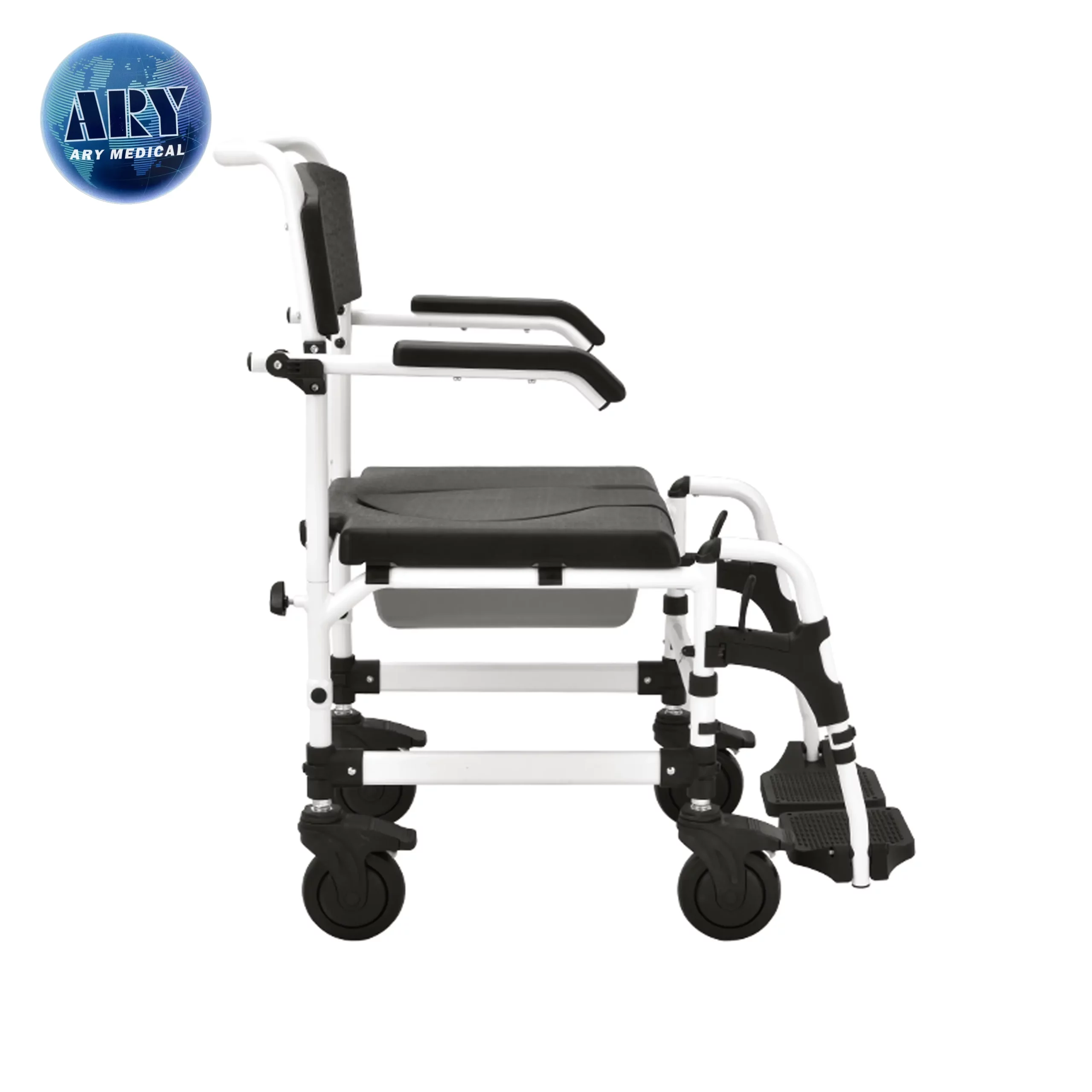
For commode chair corrosion checks, identify the frame, fasteners, brackets and finish from the model's product file. A white coating does not tell you which metal lies beneath it.
Identify the actual materials
Check the actual product file. Ask the maker for the material and care information relevant to the affected part. Avoid assuming every component uses the same alloy or surface treatment. Check the relevant wheeled chair configuration when identifying exposed fittings.
- Frame material
- Fastener material
- Finish
| Check | Record or reference |
|---|---|
| Frame material | Specification |
| Fastener material | Parts file |
| Finish | Maker statement |
Key Takeaway: The review starts from the materials actually supplied.
Where should a visual review focus?
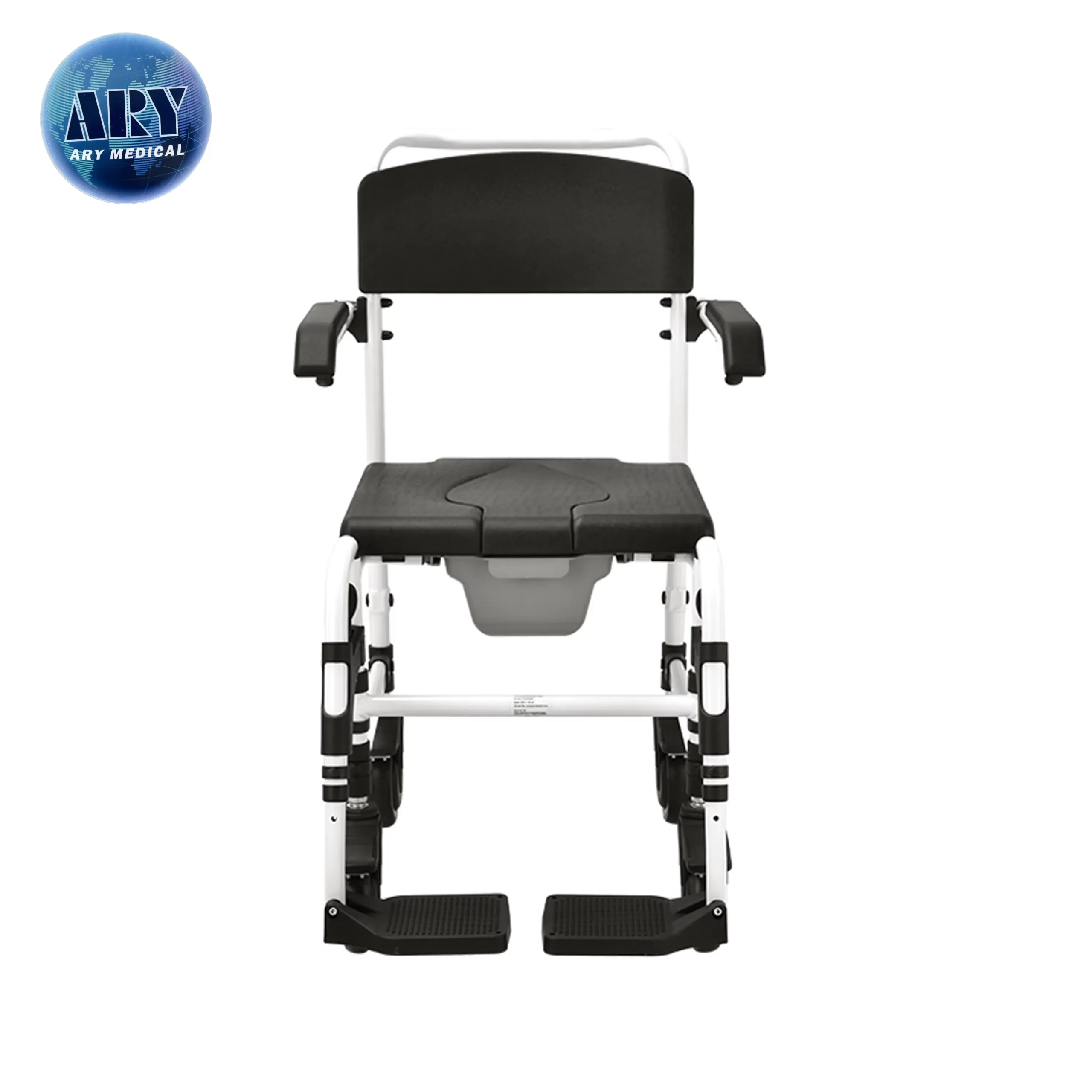
Commode chair corrosion checks should cover the accessible areas named in the maker's service guidance, including relevant joints and fittings. Dirt, wear and surface damage should be recorded distinctly where staff can do so.
Inspect within the permitted scope
Inspect accessible joints and surfaces. Use an empty chair and the permitted inspection method. Do not remove coatings or dismantle structural parts simply to inspect beneath them.
- Inspection area
- Visible condition
- Method
| Check | Record or reference |
|---|---|
| Inspection area | Service guide |
| Visible condition | Photo |
| Method | Work instruction |
Key Takeaway: The check gathers evidence without damaging the product.
How should cleaning history be used?

For commode chair corrosion checks, cleaning history can help the reviewer understand the conditions, but it does not prove a cause by itself. Record known products and methods without filling gaps from memory.
Check known care conditions
Record what was actually used. Compare the recorded process with the maker's care limits. Refer discrepancies to the responsible team rather than declaring that a particular cleaner caused the damage. The collection bucket may have different material limits from the frame.
- Cleaning product
- Method
- Care limit
| Check | Record or reference |
|---|---|
| Cleaning product | Care log |
| Method | Procedure |
| Care limit | Maker guide |
Key Takeaway: The reviewer receives context with its uncertainty intact.
What should happen to an affected chair?
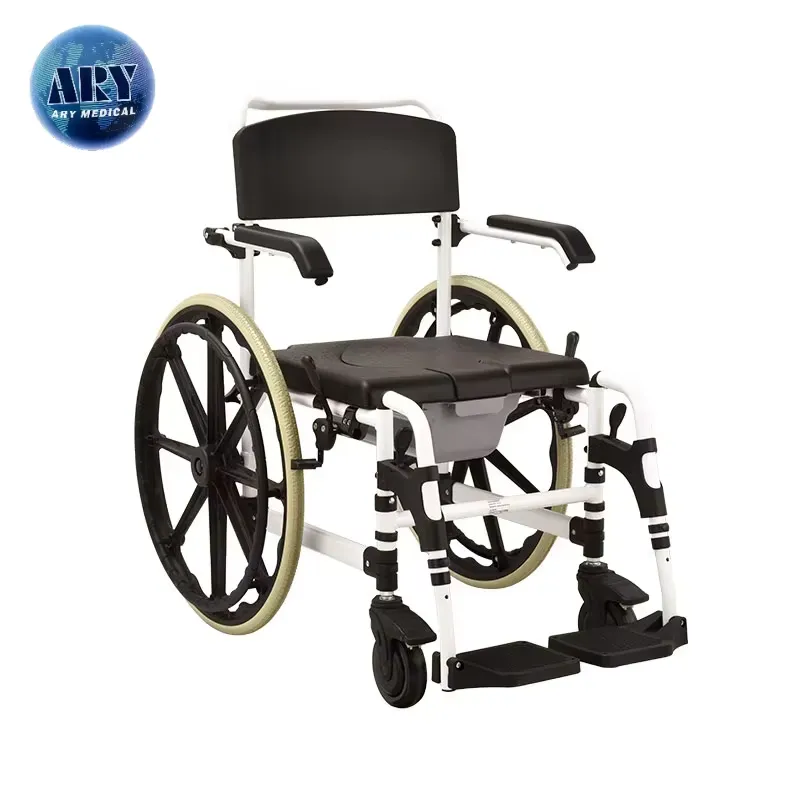
For commode chair corrosion checks, an unresolved condition concern should follow the site's hold and review process. Appearance alone is not a sound basis for promising that a chair remains fit for use.
Control the affected unit's status
Use the service hold process. Record its stock status and inform the responsible service team. Let qualified staff decide whether repair, replacement or another action is required.
- Stock status
- Concern
- Disposition
| Check | Record or reference |
|---|---|
| Stock status | Hold record |
| Concern | Case note |
| Disposition | Service decision |
Key Takeaway: The unit has a clear status while the concern is reviewed.
Can staff touch up a damaged finish?
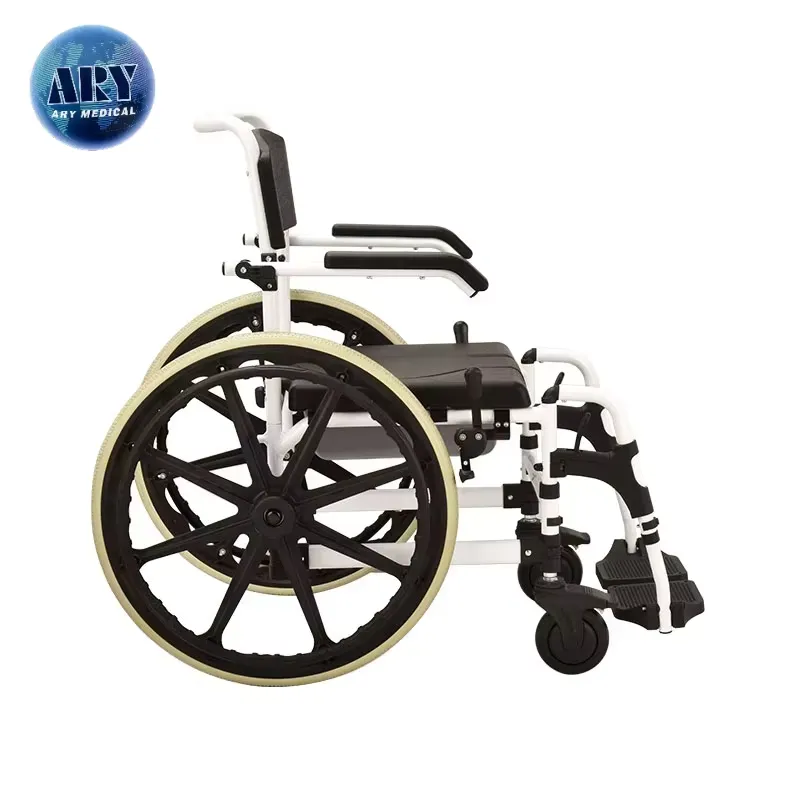
For commode chair corrosion checks, a coating repair needs the maker's approved materials and method where repair is permitted. Covering a mark may hide a problem or affect later cleaning.
Request an approved repair route
Ask for an approved repair method. Ask whether the part should be repaired or replaced and who may perform the work. Keep the answer with the service record. Record the exact arm-support part if that is the affected component.
- Repair permission
- Materials
- Work owner
| Check | Record or reference |
|---|---|
| Repair permission | Maker response |
| Materials | Approved method |
| Work owner | Service plan |
Key Takeaway: A cosmetic fix does not replace a supported condition decision.
How should evidence be photographed?
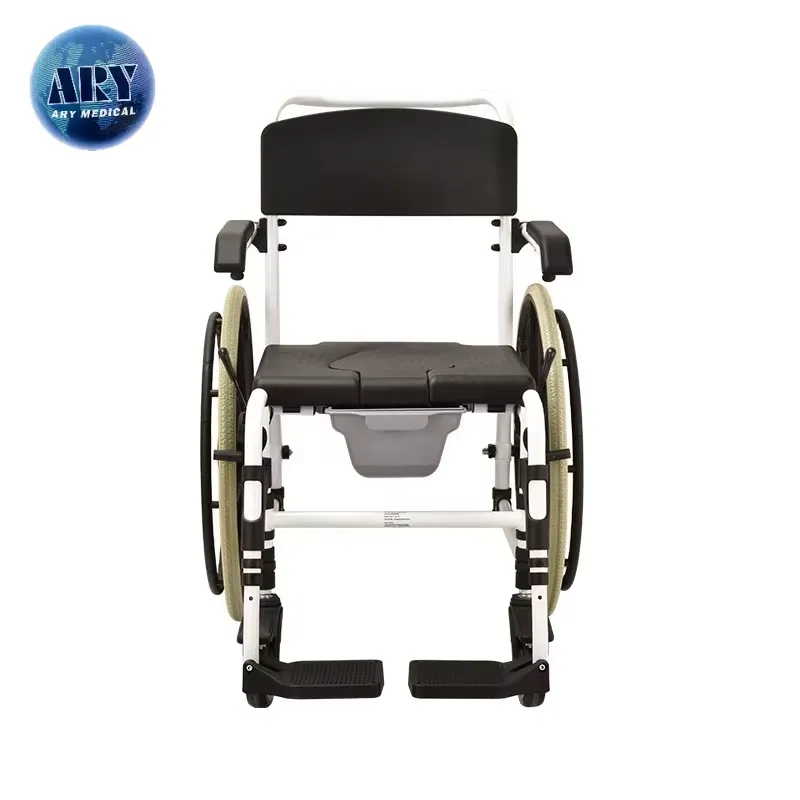
Photos for commode chair corrosion checks should show the whole chair and the affected area at useful detail. Extreme close-ups without context can make it hard to identify the part.
Capture useful photographs
Use clear views and a location reference. Use neutral light and retain the original files. Include a safe size reference if needed, but do not infer damage depth from a flat image.
- Overview
- Detail
- Location
| Check | Record or reference |
|---|---|
| Overview | Unit photo |
| Detail | Close-up |
| Location | Annotated view |
Key Takeaway: The supplier can locate and review the reported change.
What can supplier evidence demonstrate?

For commode chair corrosion checks, any material or corrosion-test evidence should match the relevant model, material and test conditions. A test result for one coating does not guarantee every chair in every care setting.
Check the scope of supplier evidence
Match the evidence to its scope. Ask for the report scope and have a suitable technical reviewer assess it. Keep a buyer's visual check separate from formal product testing.
- Test sample
- Conditions
- Applicable part
| Check | Record or reference |
|---|---|
| Test sample | Report |
| Conditions | Method |
| Applicable part | Scope review |
Key Takeaway: You can see what the evidence supports and what remains unknown.
How should repeat cases be reviewed?
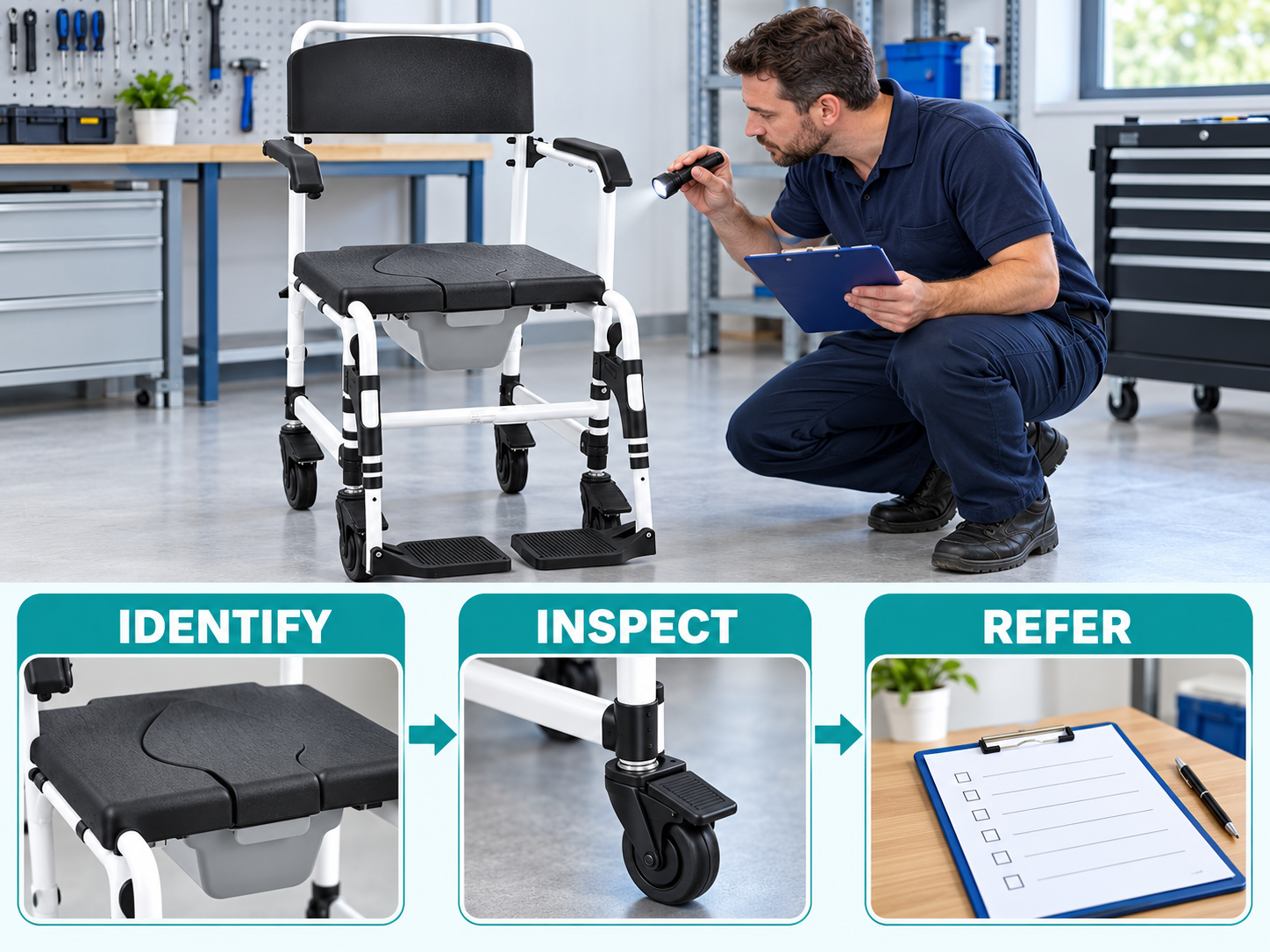
Review commode chair corrosion checks across comparable models, affected parts and known care conditions. A raw photo count cannot establish a defect rate without the relevant number of chairs and a defined period.
Compare recurring cases carefully
Compare like conditions and parts. Keep confirmed findings separate from initial reports. Refer recurring issues through the product and service process with the supporting records. See the WHO assistive product specifications for procurement context.
- Model group
- Care conditions
- Units in scope
| Check | Record or reference |
|---|---|
| Model group | Case data |
| Care conditions | Logs |
| Units in scope | Fleet record |
Key Takeaway: Patterns can guide investigation without overstating the data.
What should a condition enquiry contain?

An enquiry about commode chair corrosion checks should include the model, affected part, photographs and known care history. State whether the unit is on hold and which decision you need.
What should you do next?
Send facts that support a decision. Ask for material guidance and an approved service route. Keep the resulting action and any limits on the review in the chair's record.
- Product facts
- Condition evidence
- Requested action
| Check | Record or reference |
|---|---|
| Product facts | Enquiry |
| Condition evidence | Photos |
| Requested action | Service question |
Key Takeaway: You can seek a supported response to a specific condition concern. To discuss the model and documents for your order, contact us with your requirements. At AryMD, useful product facts should support every care-equipment purchase.
Frequently asked questions
Q1: Can a photograph prove that a chair is corroded?
Not reliably on its own. A qualified reviewer may need product, material and condition information to interpret the mark.
Q2: What’s the best response to a damaged coating?
Use the service hold and review process appropriate to the concern. Ask the maker for an approved repair or replacement route.
Q3: How do I know which metal is under a white finish?
Check the model's product file. Appearance alone does not identify the frame alloy or every fastener material.
Q4: Can a corrosion test guarantee all cleaning conditions?
No. Review the tested material, method and conditions; a result has a defined scope.
Q5: Should I compare every reported mark as one defect category?
No. Separate initial reports from confirmed findings and compare relevant models, parts and known conditions.