
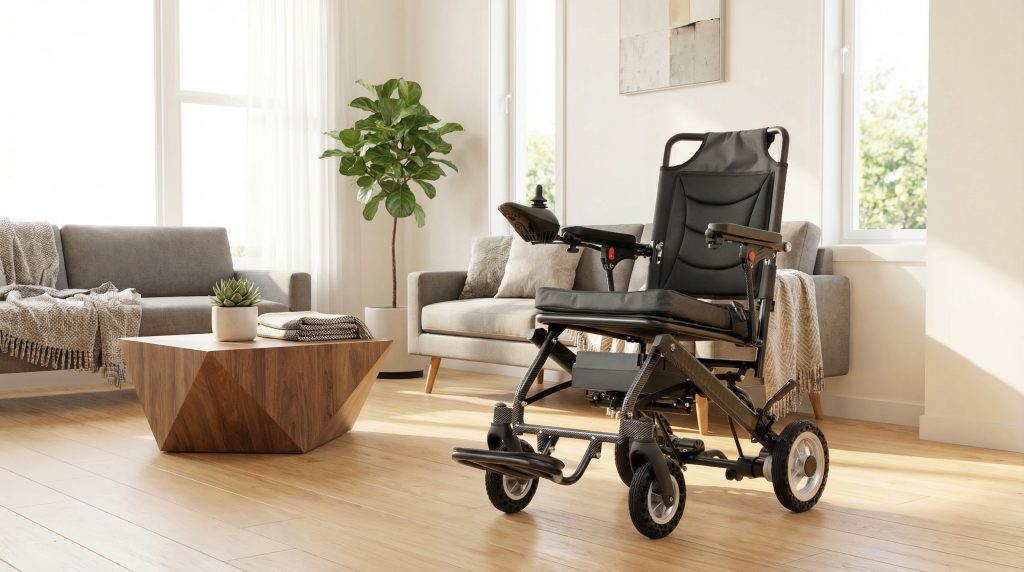
A lightweight electric wheelchair should be chosen from the complete configured product, not a headline weight or a generic “travel” label. Buyers need user fit, chair weight, removable-part weight, folded size, lift points, battery records, route trials, service support, and current transport information before approving a model.
Also, This guide uses official U.S. mobility-device guidance for policy context and IATA passenger guidance for battery-powered mobility-aid transport context. Every specification still needs current model evidence from the supplier.
What Does Lightweight Electric Wheelchair Weight Include?
A quoted weight may describe the frame, chair without battery, chair with battery, or another configuration. Record what was installed and removed during measurement.
Then, Define the number before comparing it. Use the electric wheelchair weight guide to organize model records.
- Name the measured configuration.
- Record battery and accessories separately.
- Reject weight figures without a method.
| Weight record | Question |
|---|---|
| Chair weight | Which parts were fitted? |
| Removable item | What must be lifted separately? |
| Packed weight | What ships in the carton? |
Key Takeaway: A weight figure needs a configuration.
How Should Seated Fit Be Reviewed?
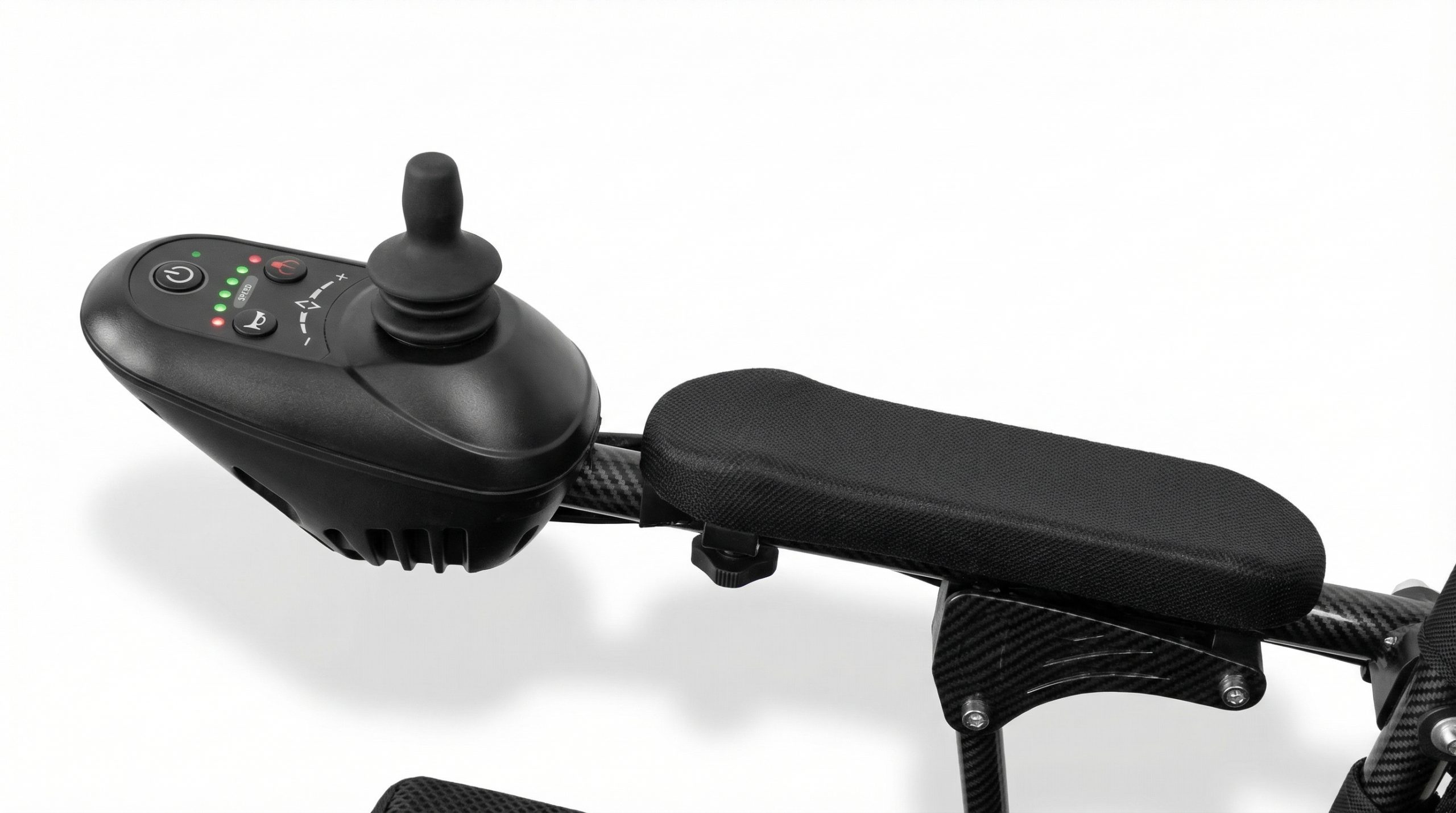
However, Low weight does not settle seat width, depth, arm support, foot support, control reach, or posture. Review the complete setup with the intended user and suitable professionals.
Fit comes before portability. Use the adult fit review and keep individual assessment separate from supplier claims.
- Record seat and support needs.
- Check joystick reach and clearance.
- Keep approved adjustments visible.
| Fit area | Evidence |
|---|---|
| Seat | Configured dimensions |
| Controls | Mounting and reach |
| Supports | Approved setup |
For example, Key Takeaway: A lighter chair can still be the wrong fit.

Which Route Checks Matter?
Test relevant doorways, turns, thresholds, surfaces, slopes, stopping points, storage, and charging locations with the configured chair. Brochure adjectives cannot replace a controlled route trial.
Meanwhile, Use the real route. A compact route plan keeps measurements tied to actual tasks.
- Measure clear openings.
- Mark tight turns and thresholds.
- Record conditions used during the trial.
| Route item | Check |
|---|---|
| Doorway | Complete chair clearance |
| Turn | Occupied route space |
| Surface | Controlled trial condition |
Key Takeaway: Route evidence should come from the intended setting.
How Should Folding Be Tested?
Instead, Repeat the full folding and unfolding sequence, check latches, identify pinch points, and confirm the chair remains stable during handling. Record any parts removed before folding.
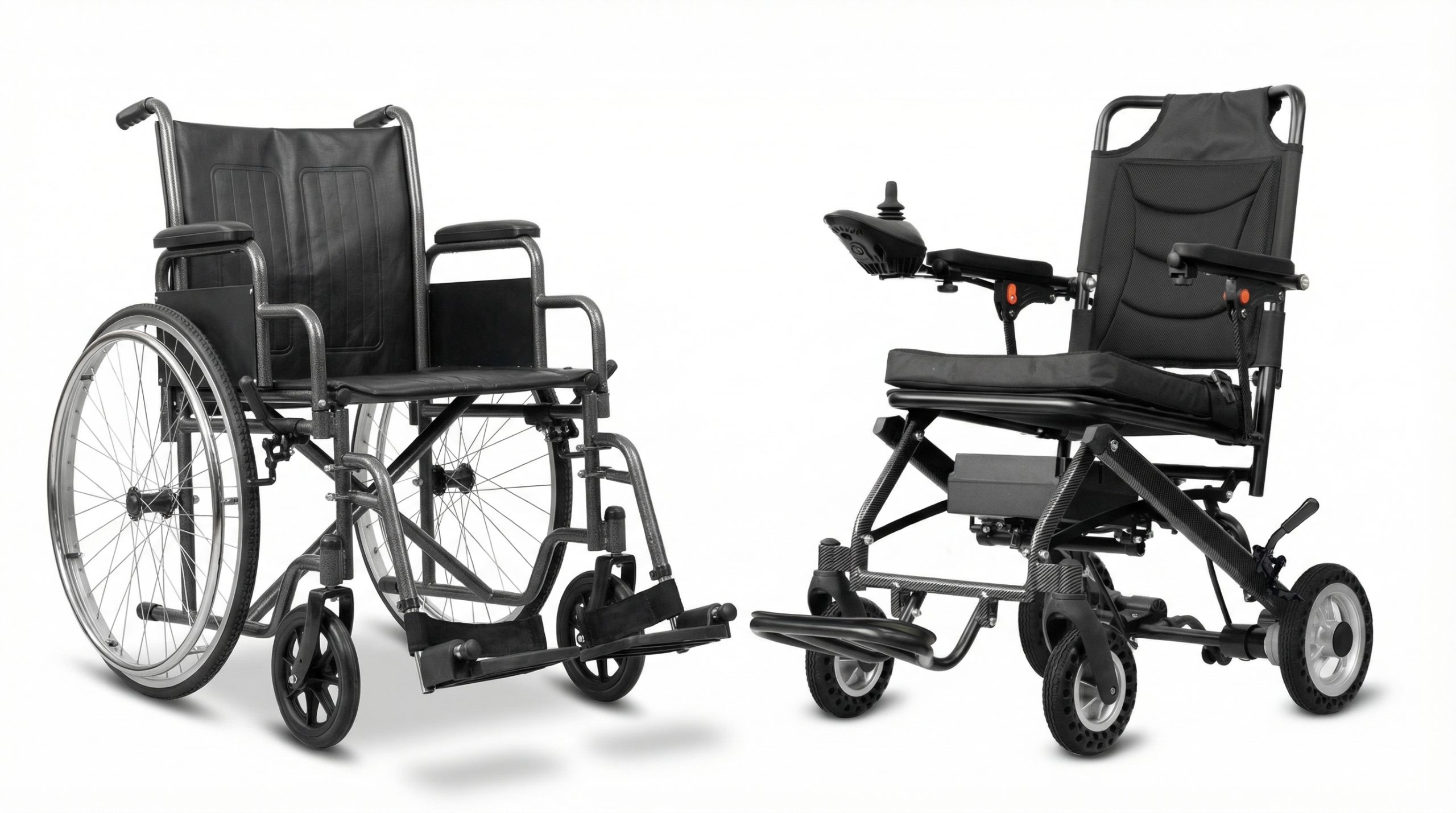
Watch the whole sequence. Use the folding wheelchair comparison.
- Repeat every latch step.
- Keep hands clear of joints.
- Check the chair after unfolding.
| Fold step | Pass condition |
|---|---|
| Prepare | Power and accessories handled correctly |
| Fold | No forced movement |
| Reopen | Locks and controls checked |
As a result, Key Takeaway: A compact fold is useful only when the process is repeatable.
What Makes Car Loading More Predictable?
Measure the vehicle opening, cargo floor, available depth, lift path, and secure storage area. Identify who will handle the chair and which components can be removed under current instructions.
Also, Test the task before purchase. The travel specification guide connects folding, weight, and records.
- Measure the actual vehicle.
- Identify safe gripping points.
- Plan cargo restraint and separation.
| Loading item | Record |
|---|---|
| Opening | Usable dimensions |
| Lift | People and approved points |
| Cargo | Stable storage plan |
Key Takeaway: Vehicle fit requires a real loading trial.
How Should Battery Records Be Checked?
Then, Record the exact battery, charger, connector, labels, instructions, and replacement route supplied with the chair. Do not infer range or compatibility from another model.
Keep the matched system together. Use the battery-care article only after checking current manufacturer instructions.
- Match battery and charger to the model.
- Inspect cables and connectors.
- Keep replacement identifiers.
| Battery record | Purpose |
|---|---|
| Model identity | Prevents mismatching |
| Instructions | Defines current handling |
| Replacement path | Supports service planning |
However, Key Takeaway: Battery evidence must be model-specific.

What Should Travelers Verify Before a Trip?
Transport requirements vary by operator and battery type. Travelers should contact the airline or transport provider in advance and carry current device and battery information.
For example, Confirm every trip. IATA publishes current passenger guidance, but each operator makes acceptance and handling decisions under applicable rules.
- Identify battery type and device.
- Ask the operator for current requirements.
- Keep handling information accessible.
| Travel record | Owner |
|---|---|
| Battery information | Traveler and supplier |
| Operator approval | Transport provider |
| Handling notes | Traveler and staff |
Key Takeaway: A prior trip does not guarantee the next trip.
How Should a Sample Be Trialled?
Meanwhile, Use a written sequence covering controls, stops, turns, route obstacles, folding, loading, seating, and charging records. Suitable users and trained staff should have enough time to repeat tasks.
One showroom lap is not enough. Document conditions instead of turning impressions into unsupported performance claims.
- Use the same test sequence for each model.
- Record pass, concern, or not tested.
- Repeat critical handling tasks.
| Trial area | Output |
|---|---|
| Driving | Route observations |
| Handling | Repeatable steps |
| Fit | Configured feedback |
Instead, Key Takeaway: A repeatable trial supports a fair comparison.
Which Supplier Support Records Matter?
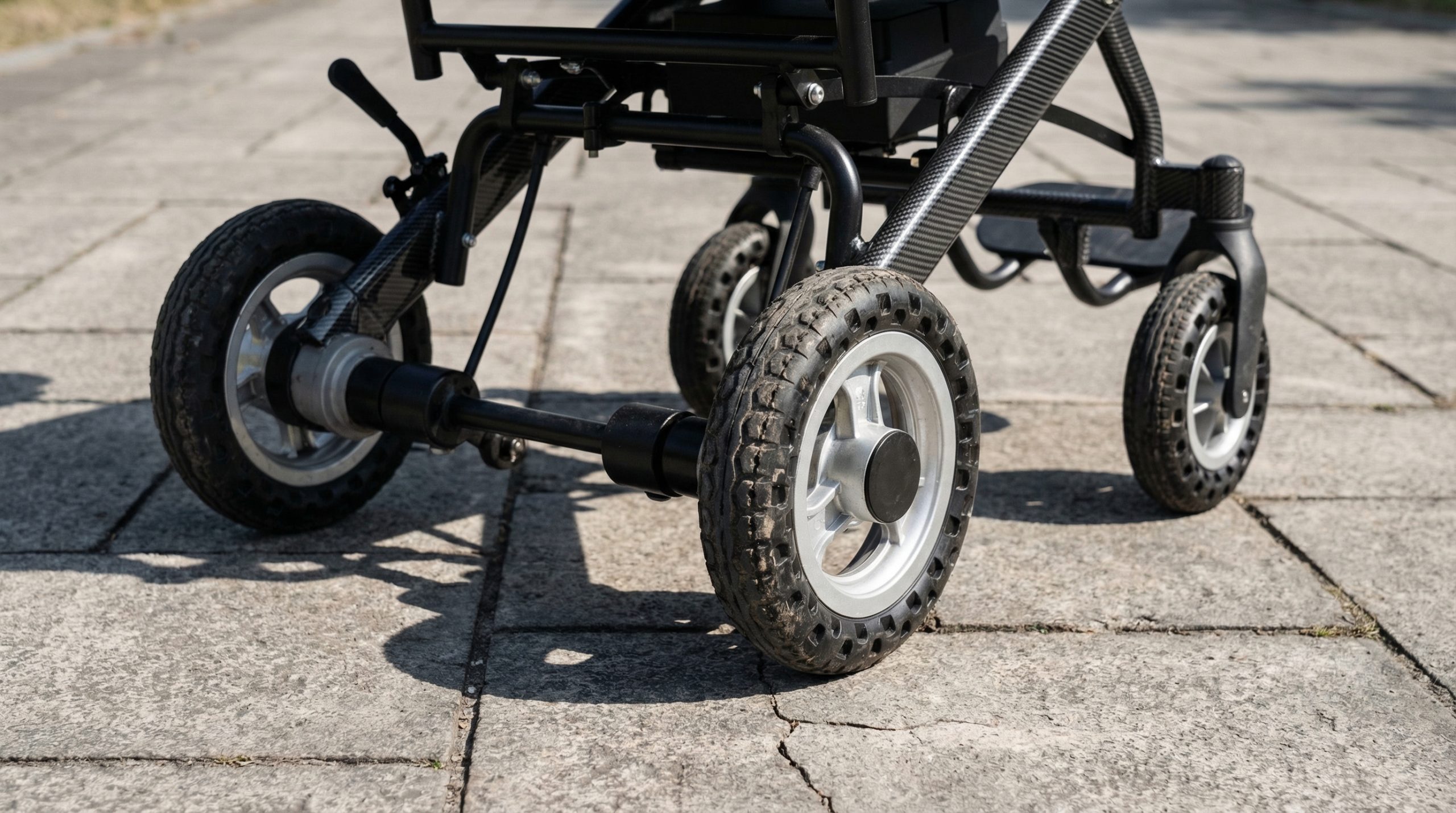
Ask for manuals, revision control, spare-part identifiers, charger and battery matches, service contacts, warranty terms, packaging, and response responsibilities.
As a result, Test support before volume orders. Use the supplier review and delivery inspection.
- Keep current manuals.
- Record approved parts.
- Test one realistic service question.
| Support area | Evidence |
|---|---|
| Documents | Revision-controlled files |
| Parts | Model-specific identifiers |
| Response | Named contact and process |
Key Takeaway: Light weight cannot compensate for weak support.
What Is the Best Lightweight Electric Wheelchair Decision File?
Also, Combine the user brief, complete weight record, fit, route, folding, vehicle loading, battery information, trial results, supplier evidence, quote, and service plan. Keep the original featured image and current model files.
Finish with one traceable package. Use the fleet guide for ongoing ownership records.
- Date every measurement.
- Use one exact configuration.
- Retain changes and approvals.
| File area | Pass condition |
|---|---|
| Fit | Approved setup |
| Handling | Repeatable tasks |
| Support | Documented path |
Then, Key Takeaway: Choose the chair that passes the complete use case.
Is the lightest chair always the easiest to handle?
No. Balance, gripping points, folding, removed parts, and the person doing the lifting also matter.
Should battery weight be included?
However, Record both complete-chair weight and any approved removable components so the method is clear.
Does a lightweight chair guarantee airline acceptance?
No. Check current operator and battery requirements before every trip.
Can one sample trial represent every configuration?
For example, No. Accessories, controls, seating, and batteries can change fit and handling.
Should the original main image be replaced?
No. This optimization preserves the existing featured image as requested.