
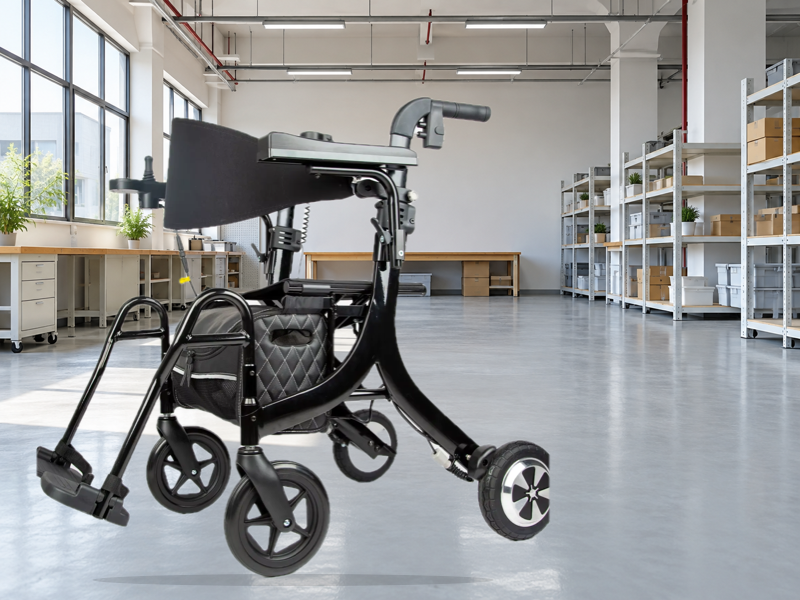
An electric rollator becomes easy to maintain when teams assign owners, define safe routine checks, record the exact product setup, and keep service questions traceable. A quick wipe or visual glance cannot show whether brake cables move freely, wheels rotate as expected, fasteners appear secure, or control behavior matches the manual. Dealers, care providers, rental teams, and institutional buyers need a simple record that staff can repeat without dismantling protected parts or inventing service limits.
This guide organizes cleaning, inspection, function checks, handover, and supplier communication around observable facts. Each record names the device, date, reviewer, condition, source instruction, and open action. That method helps service and operations teams work from the same file while keeping repairs and technical judgments with trained personnel.
ADA.gov distinguishes manually powered aids such as walkers from other powered options. Facilities should review the exact electric device under applicable rules.
Who should own the maintenance record?
An electric rollator maintenance record should have named owners for routine cleaning, visual inspection, functional checks, service escalation, and return-to-use approval.
Ownership prevents skipped tasks and unclear handoffs. Define which checks trained staff may perform under the manual, which findings need a technician, and who closes an open item. A walking-aids range gives buyers product-family context, but each service record must identify the exact model, revision, and setup.
Start with device identity, location, date, reviewer, current condition, and source instruction. Record whether the seat, backrest, bag, controls, cables, handles, frame, and wheels match the normal setup. If a component changes, open a new entry and link it with the earlier record.
Create a repeatable service rhythm
Begin with clear ownership:
Map tasks by event rather than inventing unsupported time intervals. Useful events include receiving, return from use, routine cleaning, a reported change, storage release, and scheduled technician service. Follow model instructions for timing and scope. A local checklist should never replace the manual.
- device and revision identity
- named task owner
- source instruction and event
- open action and closure record
A strong record shows what staff observed, what they did, what they did not do, and who reviews the next step. Avoid vague words such as fine or normal without a checked field. That clarity helps another worker continue the handover without private explanation.
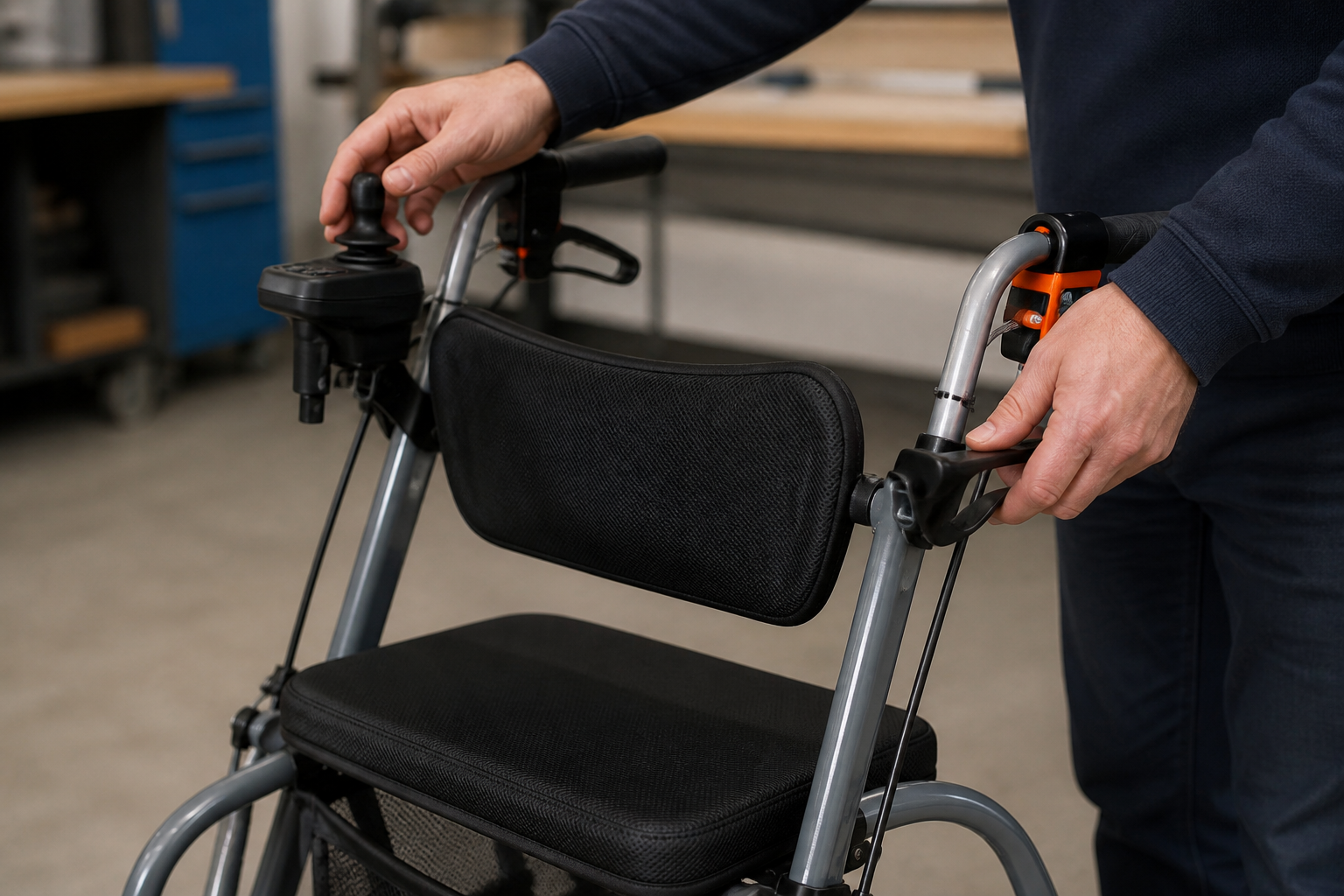
How should brakes and controls be checked?
An electric rollator brake and control check should follow the manual, use a stable inspection area, and record lever movement, cable condition, control mounting, and observed response.
Begin with power status and a visual check. Inspect handles, brake levers, visible cables, control mount, and accessible connectors without removing protected covers. The electric three-in-one walker page provides configuration context, yet only the exact model manual defines its operating sequence.
Note fraying, kinks, loose routing, unusual movement, or contact with folding joints. Do not adjust a cable or control unless the manual and staff role permit it. Any repair, setting change, or technical diagnosis belongs with trained service personnel and should appear in the record.
Use one controlled function sequence
Keep the check calm and traceable:
Stabilize the device in the defined inspection area. Follow the manual for brake lever movement, parking function, power-up, control return, and stop response. Use a clear stop signal and no rider during a bench check unless the procedure specifically calls for a supervised user trial.
- handle and lever condition
- visible cable routing
- control mount and housing
- observed response under the manual
Record the exact condition, action, and result. If behavior differs from the source instruction, remove the device from normal circulation according to local policy and escalate the finding. Do not erase the earlier entry after service; link the technician record and closure decision.
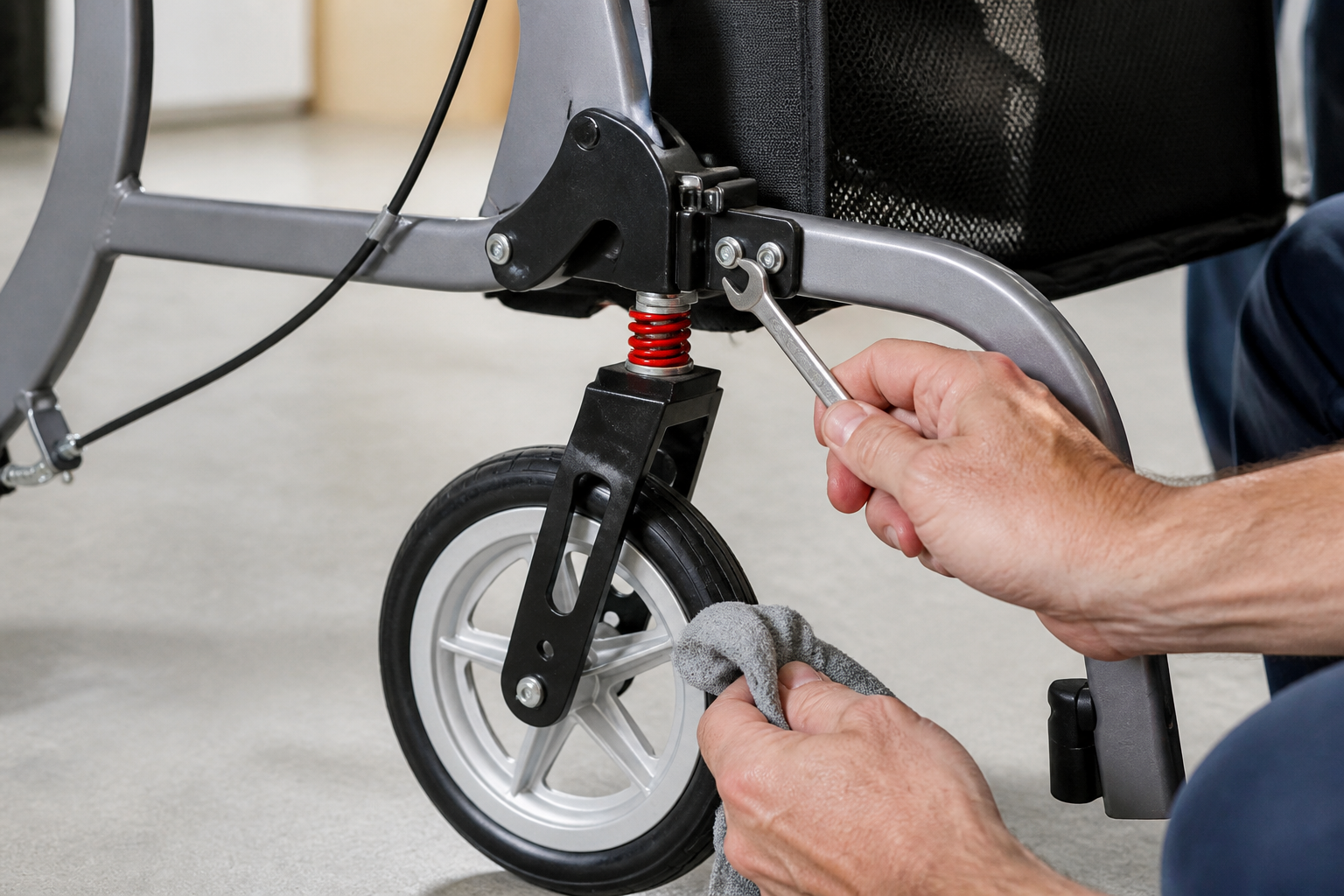
What should teams inspect on wheels and frame?
An electric rollator wheel and frame check should cover visible tire condition, rotation, caster movement, accessible fasteners, folding joints, tubing, and cable clearance.
Clean surfaces before judging them. Use methods permitted by the manual and keep moisture away from protected electrical areas. The electric five-in-one walker page shows another product context, but staff should avoid assuming that parts, settings, or service steps transfer across models.
Place the device on stable level flooring. Observe each wheel, accessible axle area, frame tube, joint, and fastener. Note debris, visible wear, unusual play, interference, or a changed resting position. Do not assign a technical cause unless a trained person confirms it.
Inspect from the ground upward
A fixed order reduces missed fields:
Move from tires and wheels through forks, joints, frame tubes, seat supports, handles, cables, and controls. Photograph findings from a useful angle and include a location note. If a wheel or fastener check needs a tool, follow the service instruction and assigned staff role.
- tire surface and wheel rotation
- caster and accessible axle area
- frame tubes and folding joints
- fasteners and cable clearance
A clean photo should not become proof that a device needs no service. Pair images with the checklist and source method. Record any change after transport or storage as a new event so teams can see when a condition entered the history.
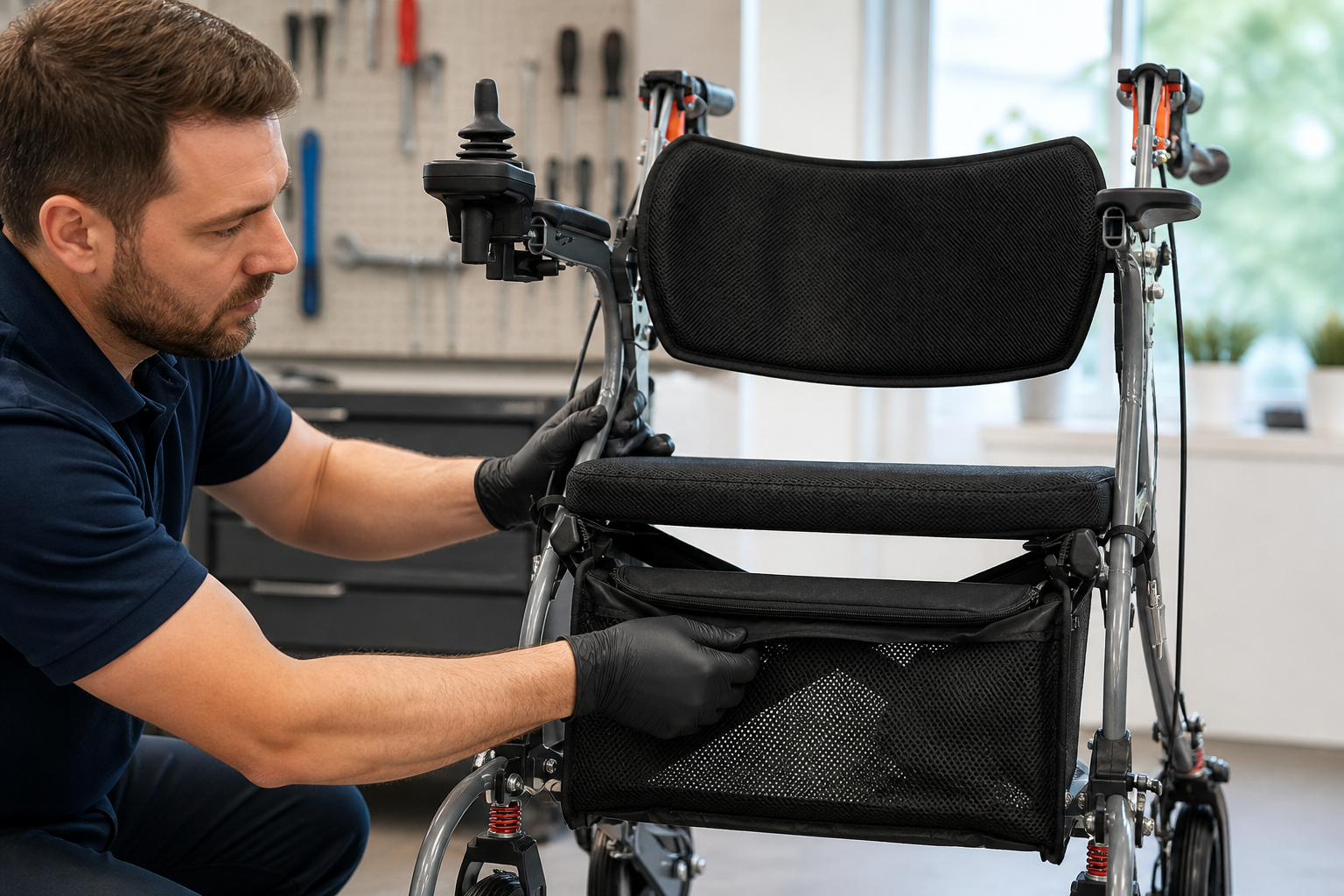
How should seat, backrest, and storage parts be reviewed?
An electric rollator review should include seat attachment, backrest position, mesh bag condition, frame supports, folding clearance, and any limits stated in the manual.
Soft goods and storage parts can hide wear or interfere with moving components. Inspect fabric, stitching, attachment points, closures, and clearance from wheels or cables. The shopping walker page gives storage-oriented context, while the exact device file controls permitted load, cleaning, and attachment steps.
Empty the bag before inspection and keep personal items away from service records. Check whether fabric blocks labels, joints, or cables. Review the seat and backrest only under the permitted setup. Do not add unapproved hooks, straps, or bags during a routine check.
Connect soft goods with folding checks
This area deserves its own record:
Inspect attachment points, seams, padding, support tubes, and clearance while the device remains stable. Follow the documented folding sequence and watch whether fabric or straps enter a joint. If a part is removed for cleaning, record its position and reattachment method.
- seat and backrest attachment
- fabric and seam condition
- bag position and closures
- clearance near joints and cables
Photographs can support identification, but the checklist should still name the part and condition. Any replacement should carry its own source and service record. This gives receiving and rental teams a clean way to confirm that soft goods returned with the correct device.
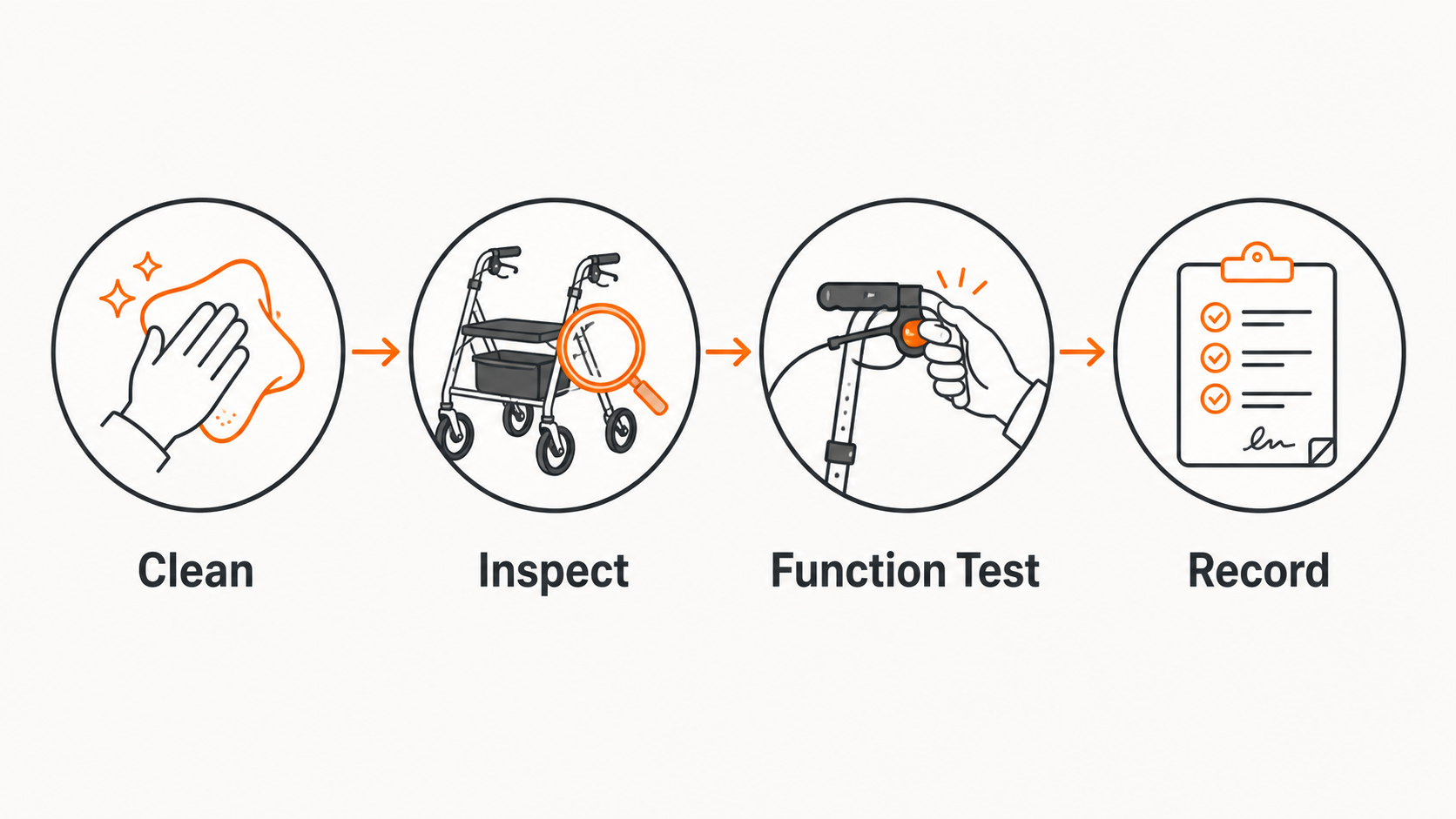
What makes a service record useful after repair?
An electric rollator service record becomes useful when it links the reported condition, technician action, replaced part identity, function check, and return decision.
Do not overwrite the original finding. Keep the report, technician notes, source instruction, part reference, and closure as connected events. Ask suppliers how revisions and replacement parts are matched. A broad component name without the exact device identity can create confusion later.
The closure entry should state who performed the work, what changed, which checks were repeated, and who approved return under local policy. Keep invoices or commercial documents separate from technical service evidence while linking them with a common job reference where useful. Record any parts that were inspected but not replaced, because that note can prevent a later reviewer from assuming the area was ignored.
If the technician updates a setting, save the authorized source, earlier position, new position, reason, and follow-up check. These details keep the repair story readable after staff changes.
Preserve the whole service trail
The history should tell one clear story:
Use dated entries for report, triage, technician work, function check, and return decision. Attach photos and source documents to the right event. If the result remains open, show the next owner and keep the device status visible to operations staff.
- reported condition and device identity
- technician action and part reference
- repeated function checks
- return decision and approver
A future reviewer should be able to follow the issue without guessing. Retain superseded records and mark them clearly. That trail supports fleet planning, recurring-issue review, supplier questions, and cleaner handoffs between operations and service.
What should buyers ask a supplier about maintenance?
An electric rollator supplier discussion should cover manuals, revision identity, routine check scope, part naming, service contacts, document updates, and issue-report requirements.
Send suppliers a consistent evidence grid. Ask which tasks trained customer staff may perform, which require service personnel, and how a device revision appears in the paperwork. Request example forms without customer data. Leave any unanswered field open rather than filling it from another model.
Review whether a new staff member could identify the device, find the correct manual, perform permitted checks, record a finding, and open a service request. That practical test shows whether the supplier file can support a real fleet or distribution handover. Ask how urgent and routine questions take different routes, which device photos help identification, and what reference appears in later replies. Save the supplier response beside the question rather than replacing it. A dated thread helps purchasing and service teams see what changed and which action remains open.
Prepare a maintenance evidence pack
Keep the supplier request focused:
List device identity, operating setting, routine events, staff roles, current checklist, and open service questions. Ask the supplier to label document versions and assumptions. Record replies as new events so earlier questions remain visible.
- current manual and revision identity
- permitted routine check scope
- part naming and update route
- written service contact process
Bring the device profile, operating setting, maintenance events, and document questions into a model-specific discussion. Keep the final pack with receiving, training, operations, and service records. That shared file also supports staff handover and later supplier review.
What do buyers ask about this electric rollator topic?
Can I create one maintenance checklist for every rollator?
No. A shared layout can help, but each checklist should follow the exact model manual, revision, controls, frame, wheel layout, permitted tasks, and local staff roles.
What's the best way to track routine checks?
Use event-based entries with device identity, date, owner, source instruction, observed condition, action, open item, and closure. Keep earlier records rather than overwriting them.
How do I know if a brake check needs a technician?
Follow the model manual and local role rules. Escalate behavior that differs from the source instruction, visible damage, unclear cable condition, or any adjustment outside staff authority.
Can staff clean electrical areas with ordinary spray?
Not without product-specific instructions. Follow the manual's cleaning method, keep moisture away from protected areas, and assign uncertain work to trained service personnel.
What should a repair closure record contain?
Include the original condition, device identity, technician action, part reference, repeated function checks, date, reviewer, return decision, and links to source documents.
For model-specific records, sample planning, or a supplier discussion built around your operating profile, contact us today.