
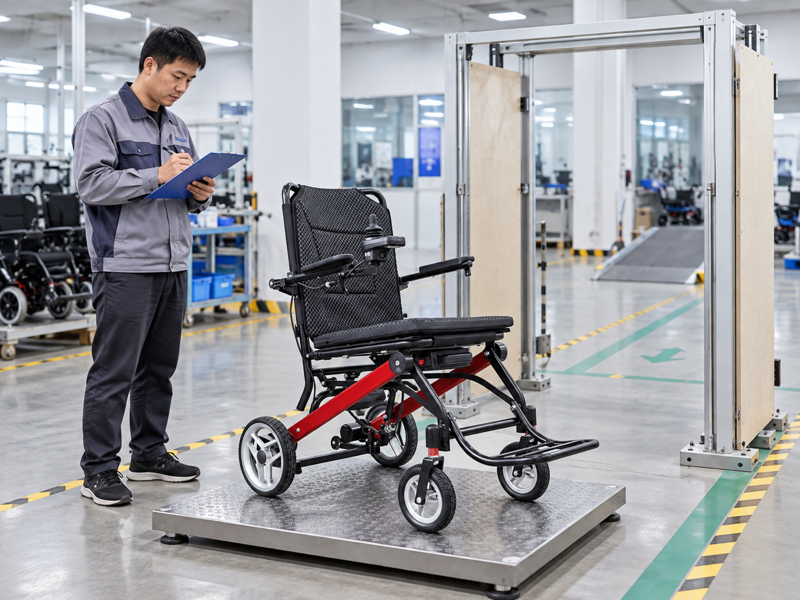
The best sample shows that a Lightweight electric wheelchair fits your written needs under repeatable conditions. A chair may look right in a video yet arrive with a different battery or poor control protection. A short showroom drive can miss both faults. Use a shared test record so sales, service, and buying teams approve the same setup before ordering stock.
1. What Should a Lightweight Electric Wheelchair Sample Prove?
Lightweight electric wheelchair sampling should show that the model meets your use, handling, and support needs. Set those needs before looking at results. A sample trial can guide an order but cannot prove legal compliance, long-term life, or fit for every user.
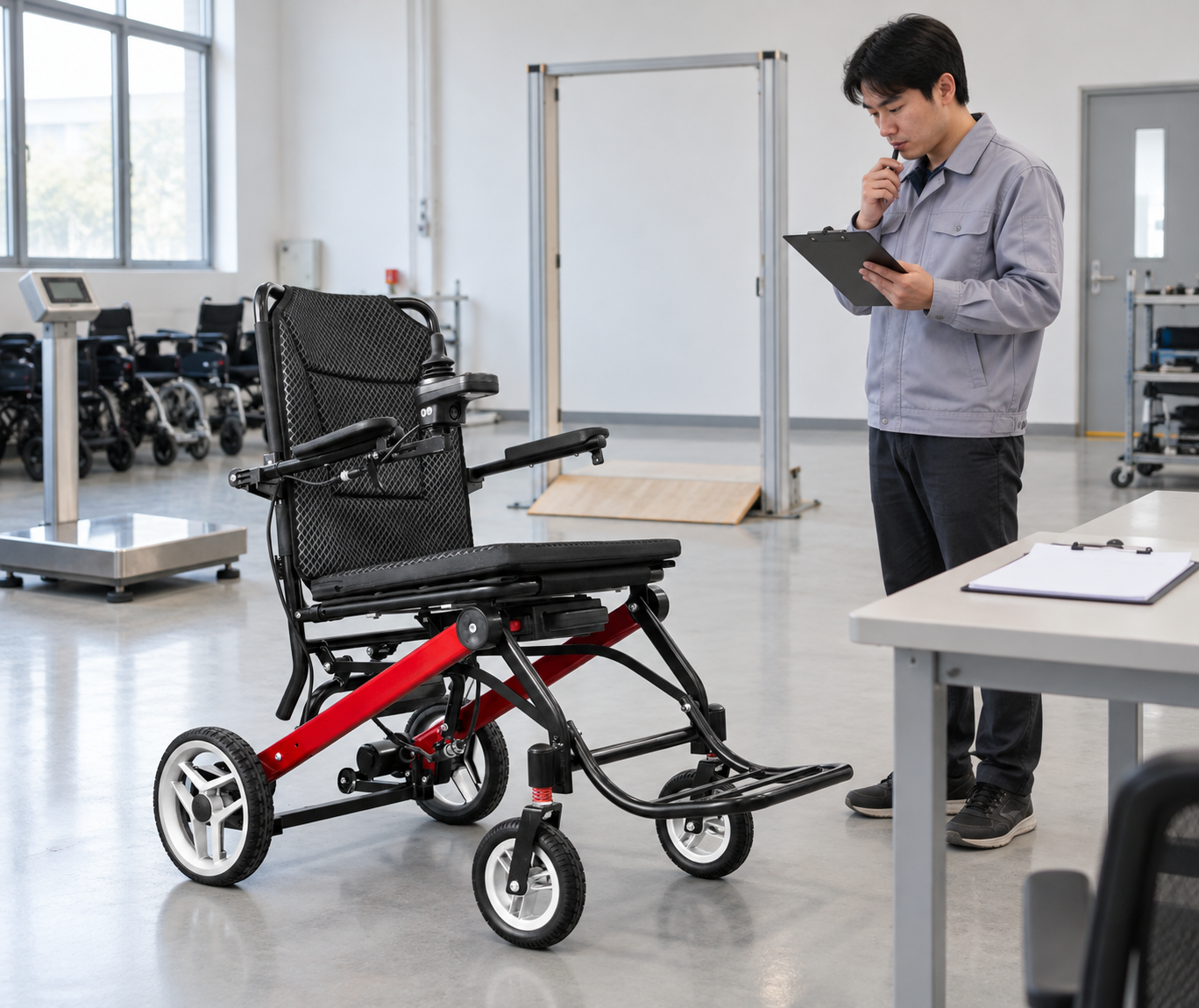
Which pass conditions belong in the brief?
Write the decision before the demo. Name hard limits such as vehicle fit, clear doorway access, needed parts, and the intended user group. Keep optional preferences separate so a low price cannot conceal a failed requirement. Agree on who can accept a deviation and what evidence they need.
- Define intended use and model setup.
- List needed records and support details.
- Name observable pass conditions for each task.
- Separate formal testing from dealer sample checks.
| Requirement type | Example | Decision rule |
|---|---|---|
| Hard limit | Fits named storage space | Must pass |
| Service need | Parts clearly identified | Must be recorded |
| Preference | Preferred frame finish | Compare after suitability |
Written conditions keep demos focused on the intended order. Key Takeaway: Decide what the sample must prove before the supplier sends it.
2. Is Your Lightweight Electric Wheelchair Sample Correct?
Lightweight electric wheelchair sample identity should match the quotation, approved setup, and current records. Check model, revision, battery, charger, controls, seating, and provided accessories before testing. If those differ, a good test result may apply to equipment you never intended to order.

What should you inspect before opening a test log?
Match the hardware to the paperwork. Use the delivery receiving process to document carton state, labels, loose parts, and visible damage. Record discrepancies before setup rather than quietly swapping a spare. Ask the supplier whether any difference changes performance, fitting, or service instructions.
- Photograph packing and visible state on arrival.
- Count provided accessories against the order.
- Match part references with current records.
- Resolve unapproved substitutions before testing.
| Item | Compare against | If it differs |
|---|---|---|
| Model and revision | Approved quotation | Pause review |
| Battery and charger | Setup record | Request confirmation |
| Accessories | Packing list | Record shortage |
Identity checks protect every later measurement from a false starting point. Key Takeaway: Do not approve one setup using evidence from another.
3. What Should You Measure on a Lightweight Electric Wheelchair?
Lightweight electric wheelchair measurements should cover the dimensions and handling weights that matter to your channel. Define whether the chair is assembled, folded, loaded, or stripped of allowed removable parts. Each measurement needs a clear method because ambiguous labels make supplier comparisons unreliable.
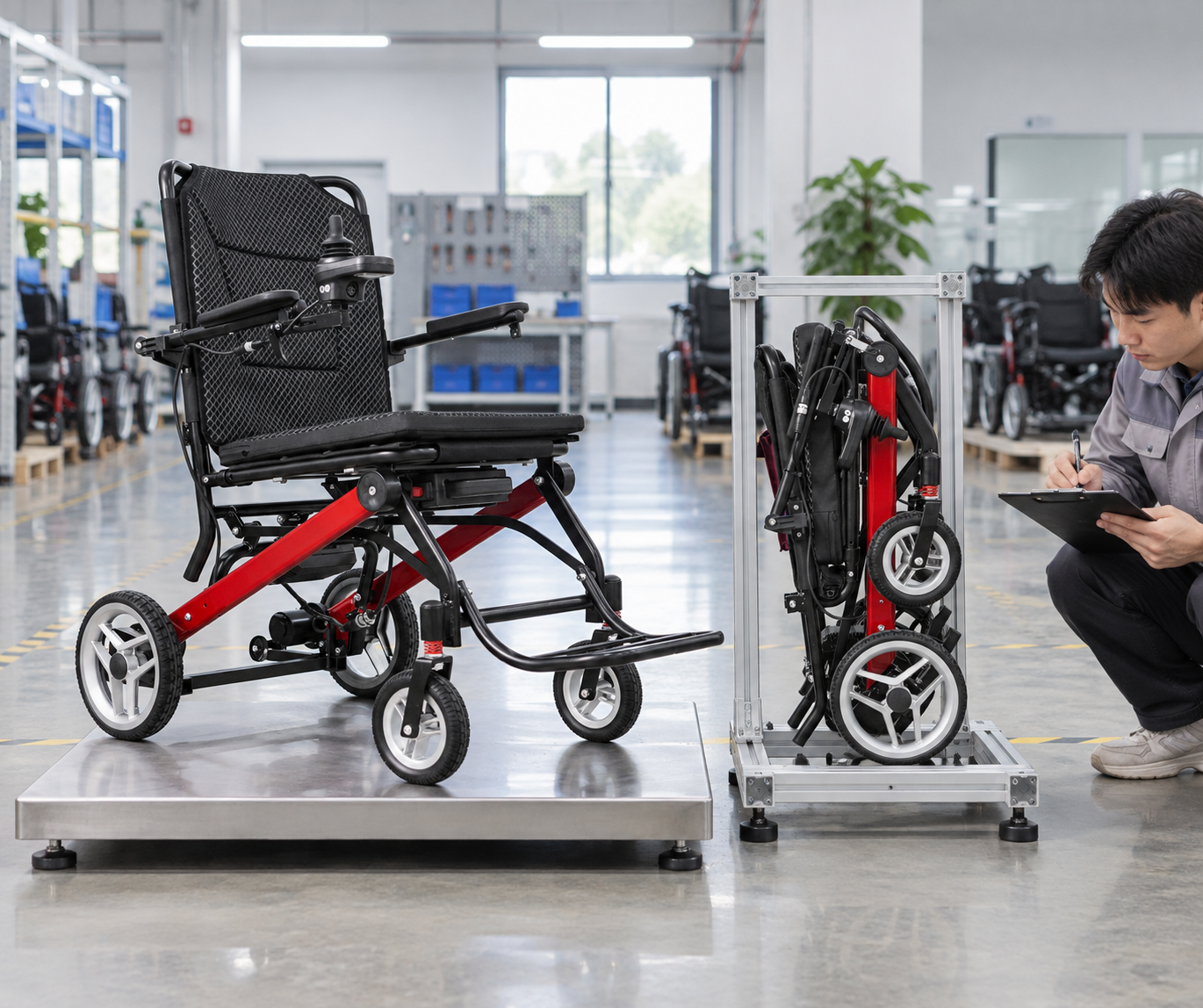
Which measurements reduce disputes later?
Keep the setup in the picture. Record total width, folded envelope, relevant seat dimensions, and actual handling weight using suitable equipment. Note where a measurement begins and ends. When results disagree with records, ask for clarification rather than changing numbers to match a brochure.
- Record units and equipment used for measurement.
- Name installed and removed parts.
- Measure the narrowest needed route or storage opening.
- Keep results with the sample's identity record.
| Measurement | Clear state | Buyer use |
|---|---|---|
| Handling weight | Exact lifted setup | Loading assessment |
| Folded envelope | Lock engaged as instructed | Storage trial |
| Clear seat width | Delivered cushion installed | Fitting review |
Consistent measurement methods make small differences easier to explain. Key Takeaway: A useful number includes its equipment state, units, and method.
4. How Should a Lightweight Electric Wheelchair Fold in Testing?
Lightweight electric wheelchair folding tests should show secure, repeatable setup using the maker's instructions. Let trained staff perform each step themselves. If they need constant help from the person leading the demo, review the steps before teaching customers.
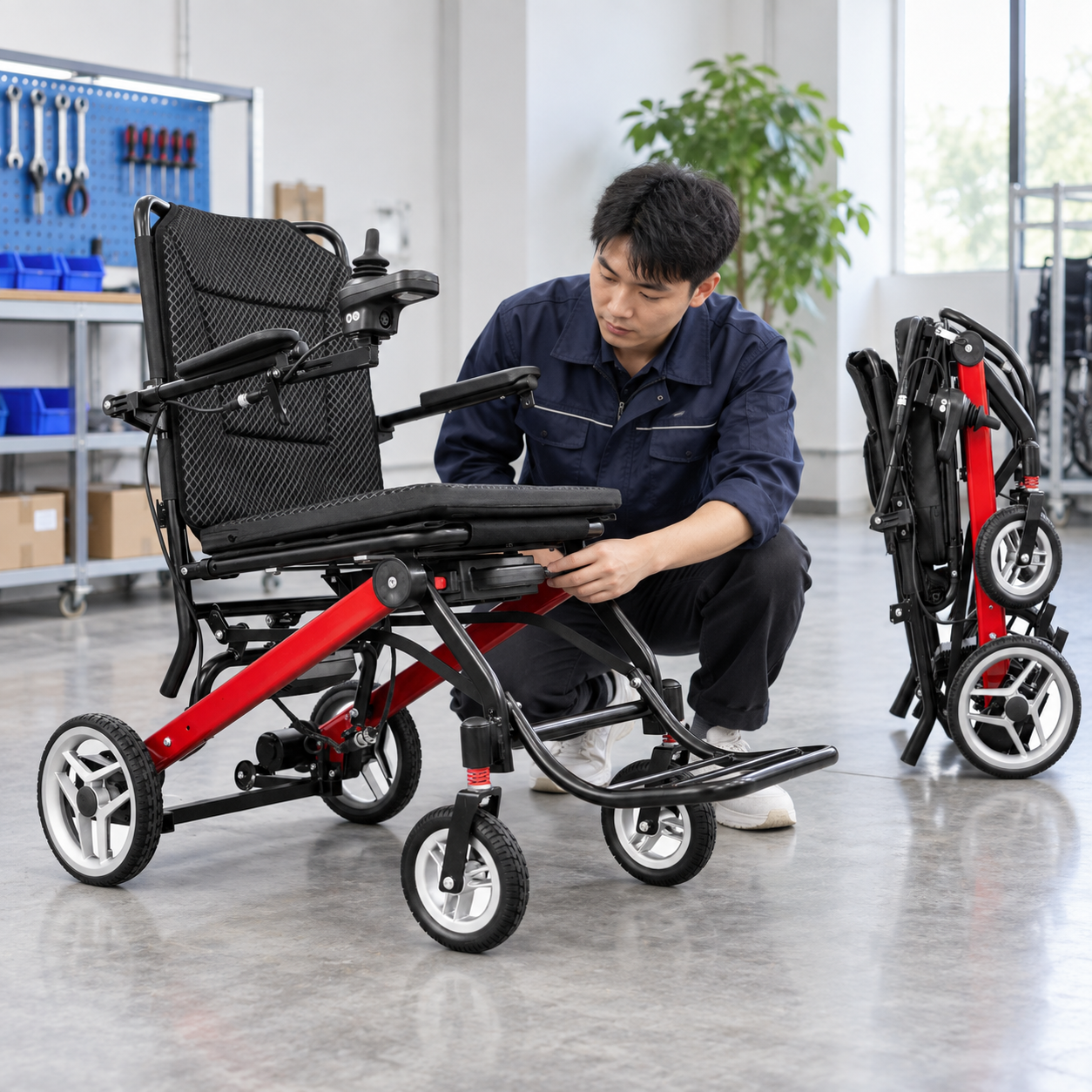
Which notes deserve a written concern?
Watch for hesitation and trapped parts. The folding chair comparison guide helps organize questions about shape, handling, and storage. Inspect cables, fabric, latch engagement, and the state after opening. Repeat only within a sensible review plan; a few cycles do not prove lifetime durability.
- Follow the manual's preparation and release steps.
- Record unclear cues and awkward hand positions.
- Check the frame lock after every opening.
- Stop if binding, damage, or unexpected movement appears.
| Check | Meaning for buyers | Next action |
|---|---|---|
| Clear sequence | Easier staff training | Record demo |
| Uncertain latch | Setup risk needs review | Supplier clarification |
| Cable contact | Possible setup issue | Hold and inspect |
Operational notes reveal problems that folded dimensions cannot. Key Takeaway: Approve both folded shape and the process needed to reach it.
5. How Do You Test Lightweight Electric Wheelchair Controls?
Lightweight electric wheelchair control tests should show predictable response during allowed tasks with suitable supervision. Use a clear level area and the stated model setup. Watch braking, low-speed control, and warning signals closely; keep software changes and fault diagnosis within approved service limits.

What should a dealer watch on a basic route?
Start where correction is easy. Have suitable trained staff review control access, intended movement, stopping, and simple turns. Record conditions and the operator's experience instead of assigning unexplained scores. Stop the trial if a fault, unpredictable response, or loss of control appears.
- Check control mount and external cable state.
- Check intended start, stop, and direction response.
- Watch turning within allowed operating limits.
- Record faults without bypassing warnings.
| Check | Useful result | Limit |
|---|---|---|
| Low-speed movement | Predictable response | Supervised allowed task |
| Stopping | Consistent behavior | Follow model procedure |
| Control access | Comfortable intentional input | Personal needs vary |
Control evidence helps when another team can understand the test conditions. Key Takeaway: Record what the chair did during each task.
6. How Does Lightweight Electric Wheelchair Fit Affect Approval?
Lightweight electric wheelchair approval must include a suitable review of seating, controls, and user tasks. A hardware inspection cannot settle personal fit. The WHO wheelchair provision guidelines connect assessment, fitting, training, and follow-up through trained staff; keep your sample program consistent with that person-focused approach.
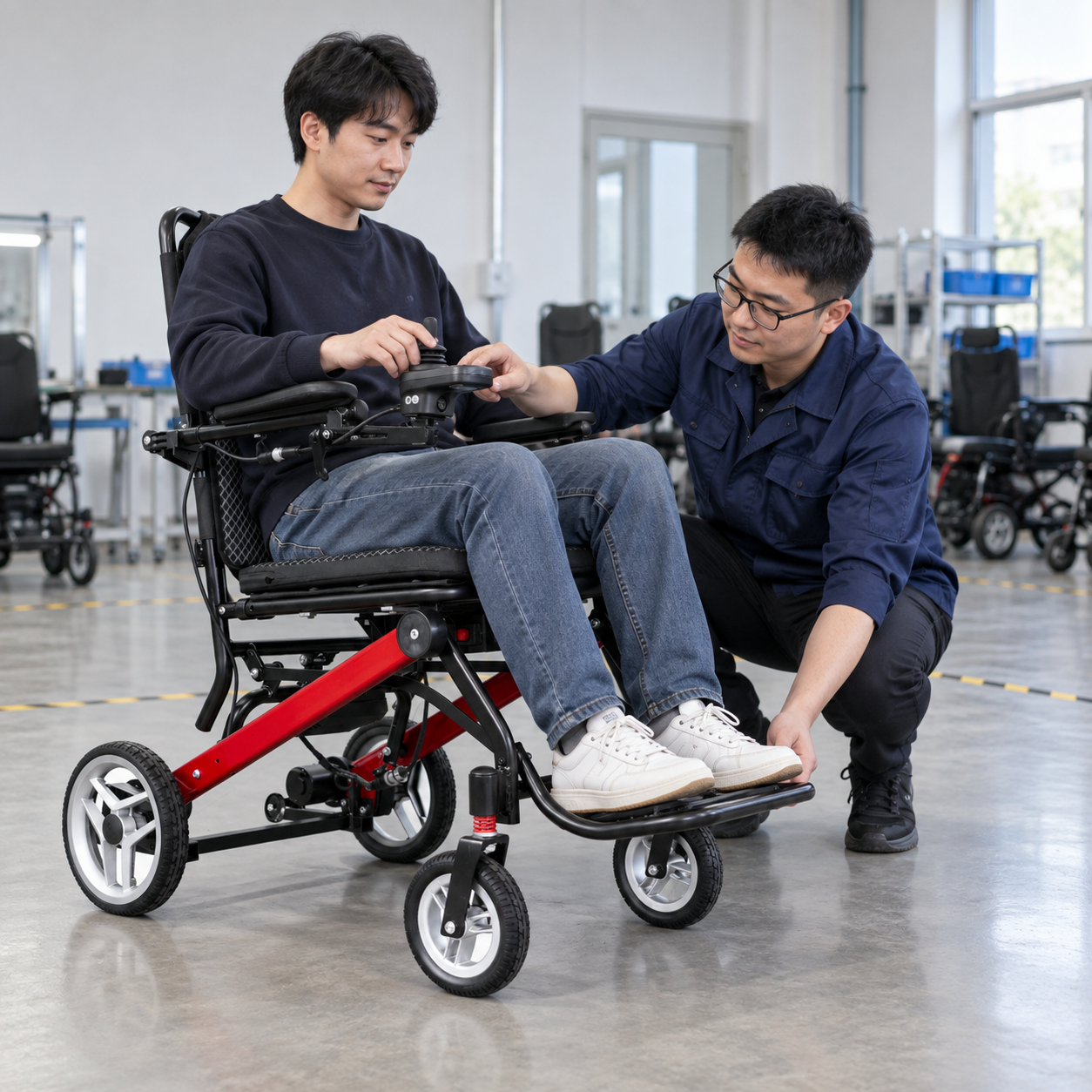
What can a buying team collect responsibly?
Separate dimensions from clinical judgments. Record clear seat space, adjustment ranges, and feedback from a suitable trial. Use the adult wheelchair fit review to prepare product questions. Refer clinical support needs to qualified staff; a photo cannot settle those needs.
- Record the actual cushion and support setup.
- Check access to controls during normal tasks.
- Capture user feedback with consent.
- Name open fitting needs before sales approval.
| Evidence | Buyer can document | Qualified review needed |
|---|---|---|
| Dimensions | Measured clear space | Personal suitability |
| Controls | Allowed mounting options | User-specific access |
| User feedback | Reported concern and context | Clinical review |
This separation makes the sample file more useful to every team. Key Takeaway: Approve product scope while keeping personal fitting decisions with suitable staff.
7. Which Routes Should a Lightweight Electric Wheelchair Test Use?
Lightweight electric wheelchair route trials should reproduce common allowed tasks within the model's stated limits. Include relevant doorways, turning spaces, and surface changes that your customers actually encounter. A dramatic obstacle course provides little value if it exceeds intended use or hides ordinary access problems.
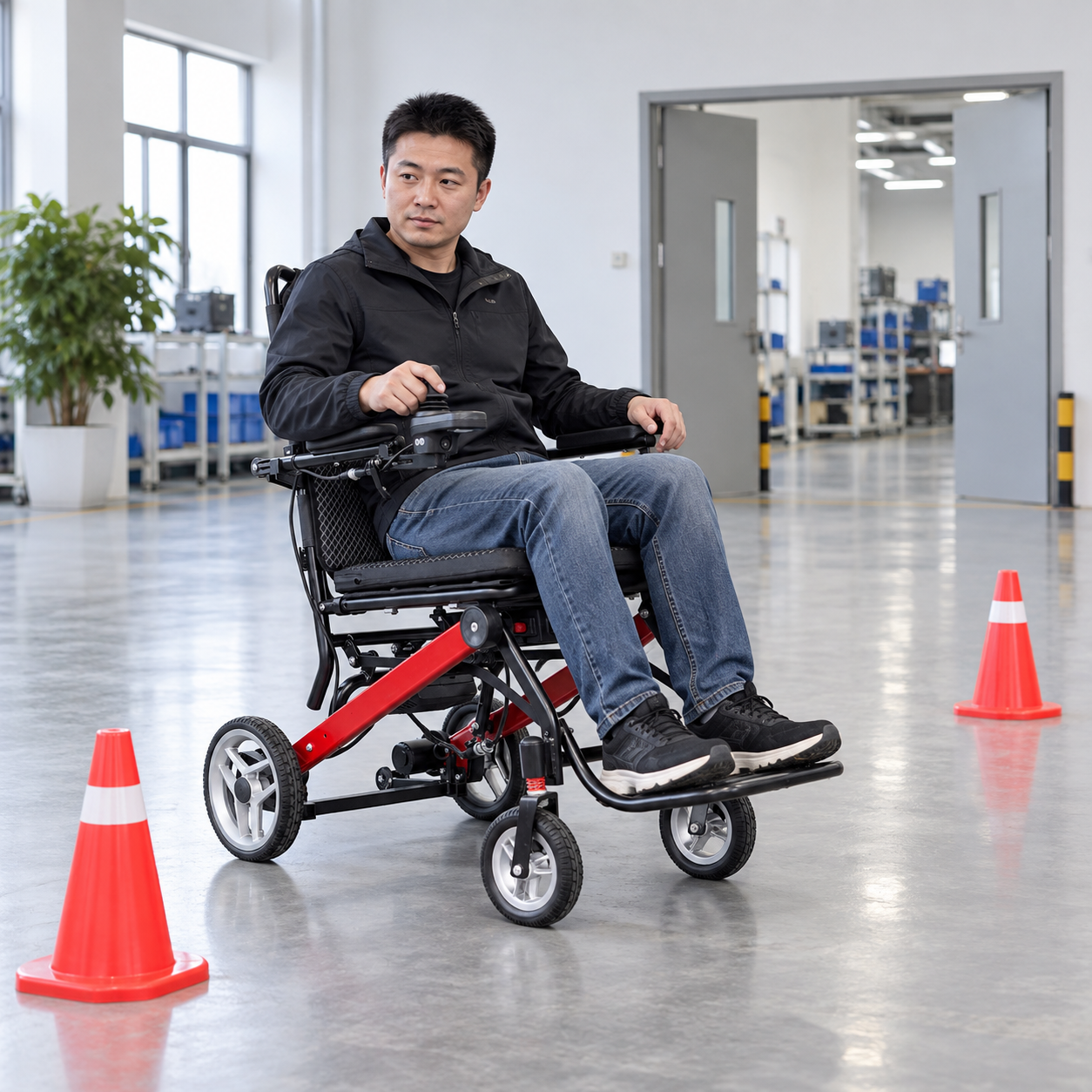
How do you compare samples on equal terms?
Keep the route fixed. Use the same clear setup, suitable operators, instructions, and notes for each candidate wherever practical. Mark differences that cannot be controlled, such as user fit or weather. Ask suppliers to explain limits before adding ramps, thresholds, or outdoor surfaces to your plan.
- Record route dimensions and surface state.
- Use tasks allowed for each candidate model.
- Keep assistance and supervision suitable.
- Treat differences as context for review.
| Route task | Order question | Record |
|---|---|---|
| Doorway | Can the configured chair pass? | Clear width and approach |
| Tight turn | Is repeated correction needed? | Space and check |
| Surface change | Does intended use cover it? | Manual limit and result |
Equal conditions make comparisons clearer without claiming laboratory precision. Key Takeaway: Test the routes your market needs and document all relevant limits.
8. What Does Lightweight Electric Wheelchair Packing Need to Pass?
Lightweight electric wheelchair packing should protect the ordered setup, accessories, controls, and records through the agreed delivery route. Inspect how the chair sits in its carton and which parts can move. An intact exterior alone does not prove that internal supports protect vulnerable parts.

What can receiving staff evaluate without destructive tests?
Open the carton in sequence. Photograph supports and loose parts before moving them, then check for rub marks, bent hardware, and shifted parts. Compare the packing with its approved design. Formal shipping tests need suitable methods and evidence beyond one successful delivery.
- Check joystick and frame protection inside the carton.
- Keep battery and charger identity traceable.
- Check manuals and setup parts are present.
- Record damage before assembling or operating equipment.
| Packing item | Check | Evidence |
|---|---|---|
| Internal supports | Hold equipment as intended | Unpacking photos |
| Loose accessories | Secured and complete | Item count |
| Records | Match the sample revision | Document list |
A recorded opening sequence helps explain damage and missing items. Key Takeaway: Make packing part of sample approval rather than an afterthought in freight pricing.
9. How Do You Score a Lightweight Electric Wheelchair Sample?
Lightweight electric wheelchair scoring should distinguish a checked pass, an open concern, and a failed requirement. Explain each decision with notes and supporting records. Avoid combining serious open issues into an average score that still looks acceptable because several easy checks passed.
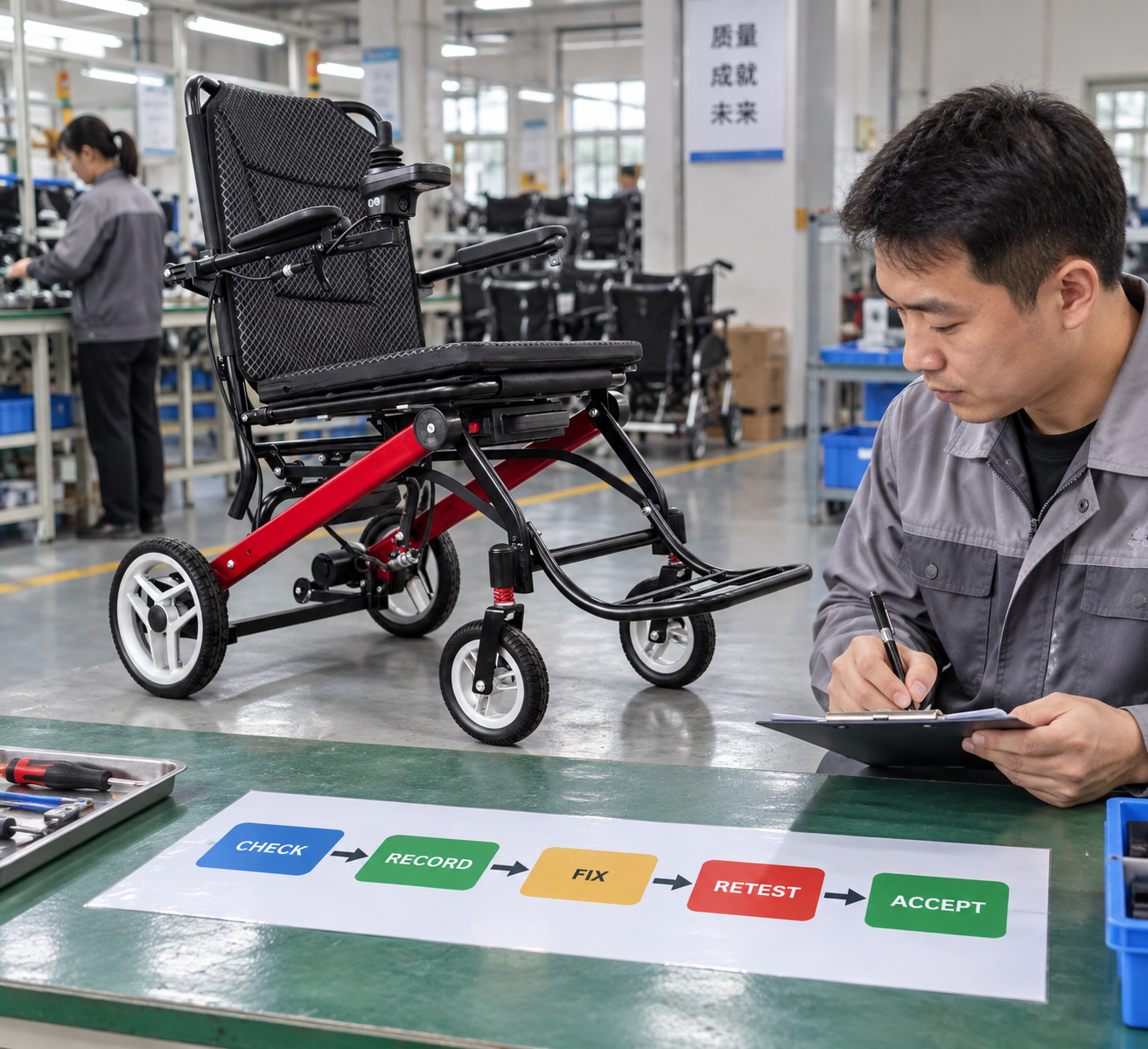
What happens after a concern appears?
Keep the issue open until evidence closes it. Give each concern an owner, requested fix, and retest plan. Ask for a corrected sample or revised instruction rather than verbal reassurance. When changes affect other parts, repeat those checks before signing approval.
- Mark which needs block an order.
- Attach photos, measurements, or trial notes.
- Record supplier responses and agreed corrections.
- Retest affected functions before closing the concern.
| Result | Meaning | Order action |
|---|---|---|
| Pass | Evidence meets the requirement | Keep baseline |
| Concern | Details or correction missing | Hold decision |
| Fail | Requirement not met | Reject or revise brief |
The chart describes a decision process rather than claimed test data. Key Takeaway: A sample score needs reasons and open-issue visibility.
10. What Turns a Lightweight Electric Wheelchair Sample Into Stock?
Lightweight electric wheelchair samples become an order baseline when approved setup, inspection points, packing, and change control appear in shared records. Keep the sample identity and approved records. A supplier should notify you before swapping parts that affect fitting, handling, performance, or service.

What should your trial-order approval include?
Carry the evidence into the purchase order. Ary Medical can discuss sample options, product details, private-label needs, and the checks in your buyer brief. Name who reviews changes and how receiving staff compare delivered units. Our position is that sample approval should remain useful when the next shipment arrives.
- Link the order with a clear approved setup.
- Agree on inspection and packing records.
- Review trial-order feedback before increasing volume.
| Approval record | Supports | Next check |
|---|---|---|
| Sample identity | Setup control | Production match |
| Inspection plan | Repeatable receiving | Shipment review |
| Service file | Dealer readiness | Field feedback |
This turns a good demo into a recorded buying decision. Key Takeaway: Contact us with your test brief to plan a sample review your whole team can use.
Frequently Asked Questions
Q1: Can I approve a sample from a supplier video?
Only for what the video actually shows. Vehicle fit, seating, handling, and local use still need suitable evidence.
Q2: What's the best sample scorecard?
Use requirement-based pass, concern, and fail decisions. Keep open order-blocking issues visible rather than averaging them away.
Q3: How do I know if production will match my sample?
Require a clear setup, change-control agreement, and receiving checks. One sample alone cannot guarantee future consistency.
Q4: Can I use a route trial as a certification test?
No. Dealer evaluation and formal compliance testing serve different purposes and need different evidence.
Q5: Can I accept a small part substitution?
Only after reviewing its effects and approving it. A small-looking change can affect fit, controls, handling, or service parts.