
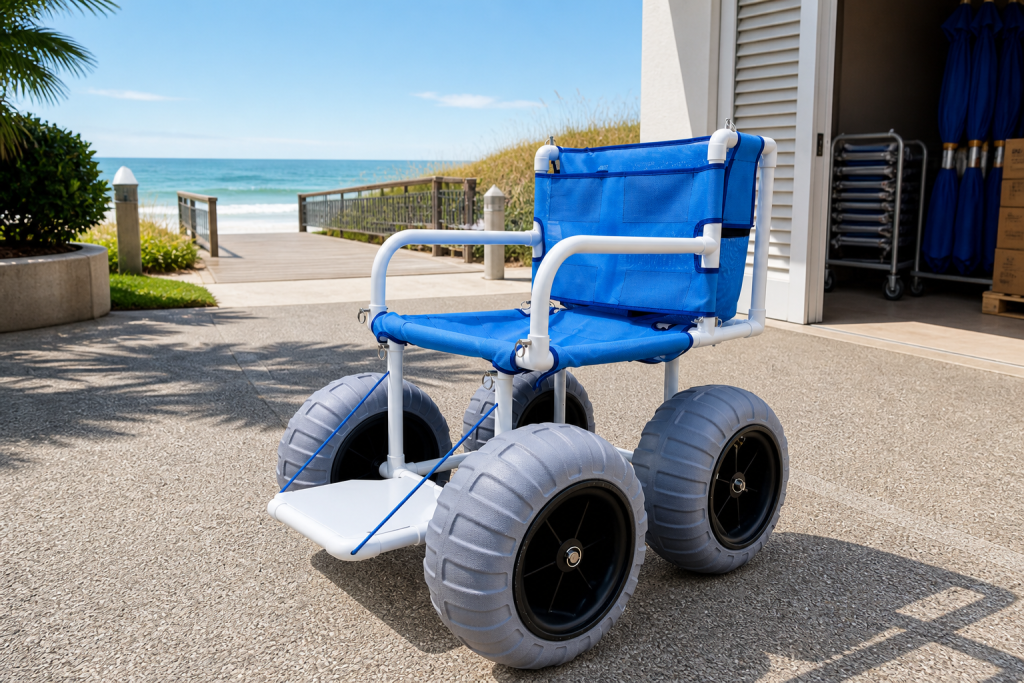
A PVC Beach Wheelchair procurement plan should connect the buyer brief, intended route, sample inspection, supplier records, packaging, receiving checks, spare parts, cleaning, storage, and operations handoff. Compare the exact configuration. Keep revisions visible. Approve evidence before volume ordering. For U.S. facilities, align local procedures with official mobility-device guidance.
Resort buyers can receive a polished quote yet still lack the product detail, document ownership, receiving method, and staff handoff needed for a workable beach mobility program. That gap turns a purchasing decision into a series of last-minute questions after cartons arrive. A PVC beach wheelchair procurement plan solves the problem by connecting the service brief, model review, supplier response, receiving check, and operations handoff before an order moves forward. Buyers do not need invented claims or vague promises. They need a traceable comparison built around the exact product, local site, guest-service model, and approved internal roles.
This article gives purchasing managers, hotel operators, accessibility leads, rental teams, and distributors a practical B2B workflow. It does not claim that one chair fits every user, beach, or service program. Manufacturer instructions, local beach rules, resort policy, and individual guest needs remain in control. Teams should ask suppliers for model-specific information and route technical questions to authorized people. They should also separate hospitality support from clinical advice, because a purchasing file cannot decide personal suitability.
In practice, Procurement becomes easier when every department knows which decision it owns. Purchasing can manage commercial documents and supplier communication. Operations can define routes, storage, cleaning, staffing, and service status. Facilities can review space and building interfaces. Finance can confirm budget authority and payment terms. Guest-service teams can describe booking and communication needs. A single owner can combine those inputs into a short brief without allowing one department to promise performance on behalf of another.
What Should a PVC Beach Wheelchair Brief Cover?
A PVC Beach Wheelchair brief should cover intended service, site conditions, operating roles, storage, receiving, records, and supplier questions. Buyers can place the brief within a wider Beach Series program so purchasing does not treat the chair as an isolated object. The brief should name where service begins, which surfaces staff expect, who moves equipment, where the chair waits between bookings, and how a concern pauses service. It should describe current needs without turning assumptions into specifications.
Define the Service Before Requesting Quotes
Here is the practical point: a supplier can answer better questions when a resort explains the planned service in plain operational language. State whether the chair supports resort-owned guest service, rental operations, public beach access, event use, or distributor stock. Name the expected route from storage to a service point.
Next, Describe staffing and booking patterns without promising a volume that has not been approved. Avoid broad phrases such as works everywhere. A useful brief identifies surfaces and handoff points while asking the supplier how the exact model relates to them.
The resort should keep the right to pause or revise service after local review.
- Name the service owner and service location.
- Describe planned surfaces and handoff points.
- State storage and cleaning arrangements.
- Identify staff groups that will handle equipment.
- List questions that need model-specific answers.
Assign Decision Owners
Clear ownership keeps quotes comparable: give each topic to a named role before supplier responses arrive. Purchasing can own quote format, commercial terms, and document tracking. Operations can own workflow, route, storage, and staffing requirements. Facilities can own bay access and cleaning-area interfaces. A technical reviewer can address product instructions or unresolved component questions. No single person needs to perform every task, yet one project owner should close gaps and keep the latest brief. A decision log can record who accepted each requirement and which item remains open.
- Name one project owner for the procurement file.
- Assign commercial, operational, facility, and technical topics.
- Record open questions beside their owners.
- Keep one dated version of the buyer brief.
- Pause approval while a required topic lacks an owner.
Which Product Details Belong in a Supplier Review?
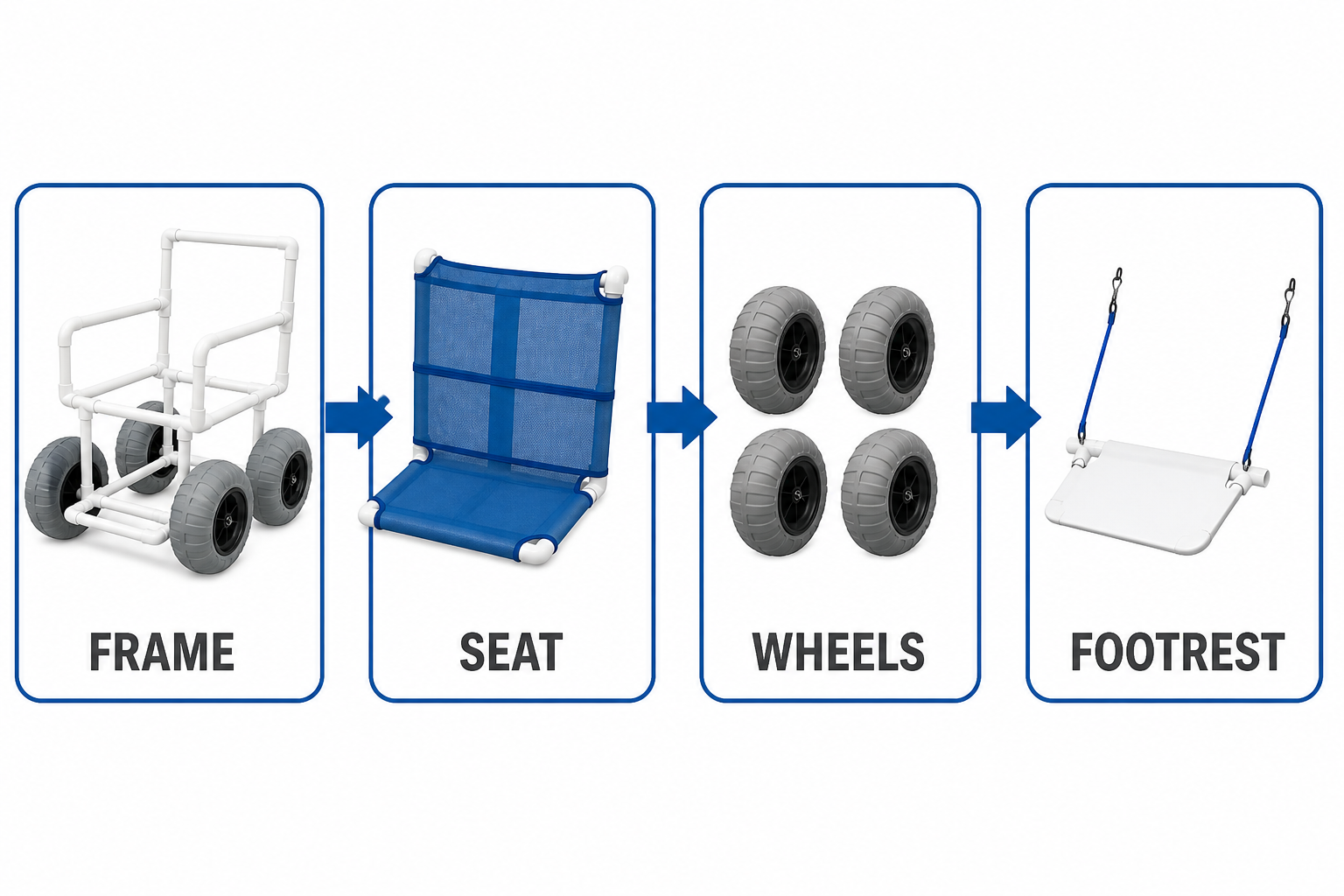
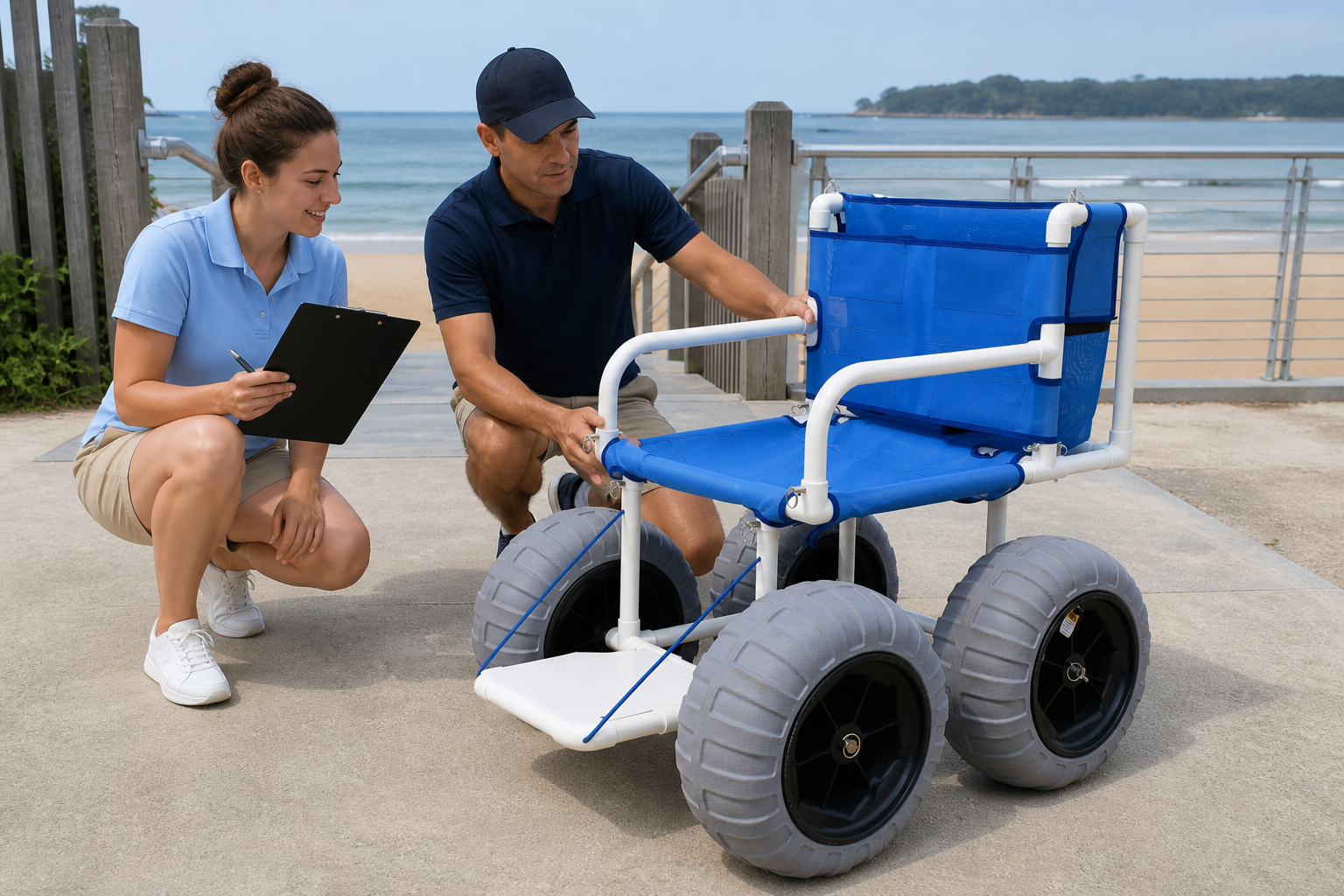
Meanwhile, A PVC Beach Wheelchair supplier review should cover frame structure, seating, arm supports, foot support, wheels, visible fasteners, included items, instructions, packaging, and after-sale communication. Buyers can review a related Beach Wheelchair ST V1.0 page as a product reference, then require the supplier to identify the exact quoted model and revision. A website image alone should not close a technical question. The supplier response should link each statement with a current drawing, manual, photo set, packing list, or other approved document.
Review Structure and Included Components
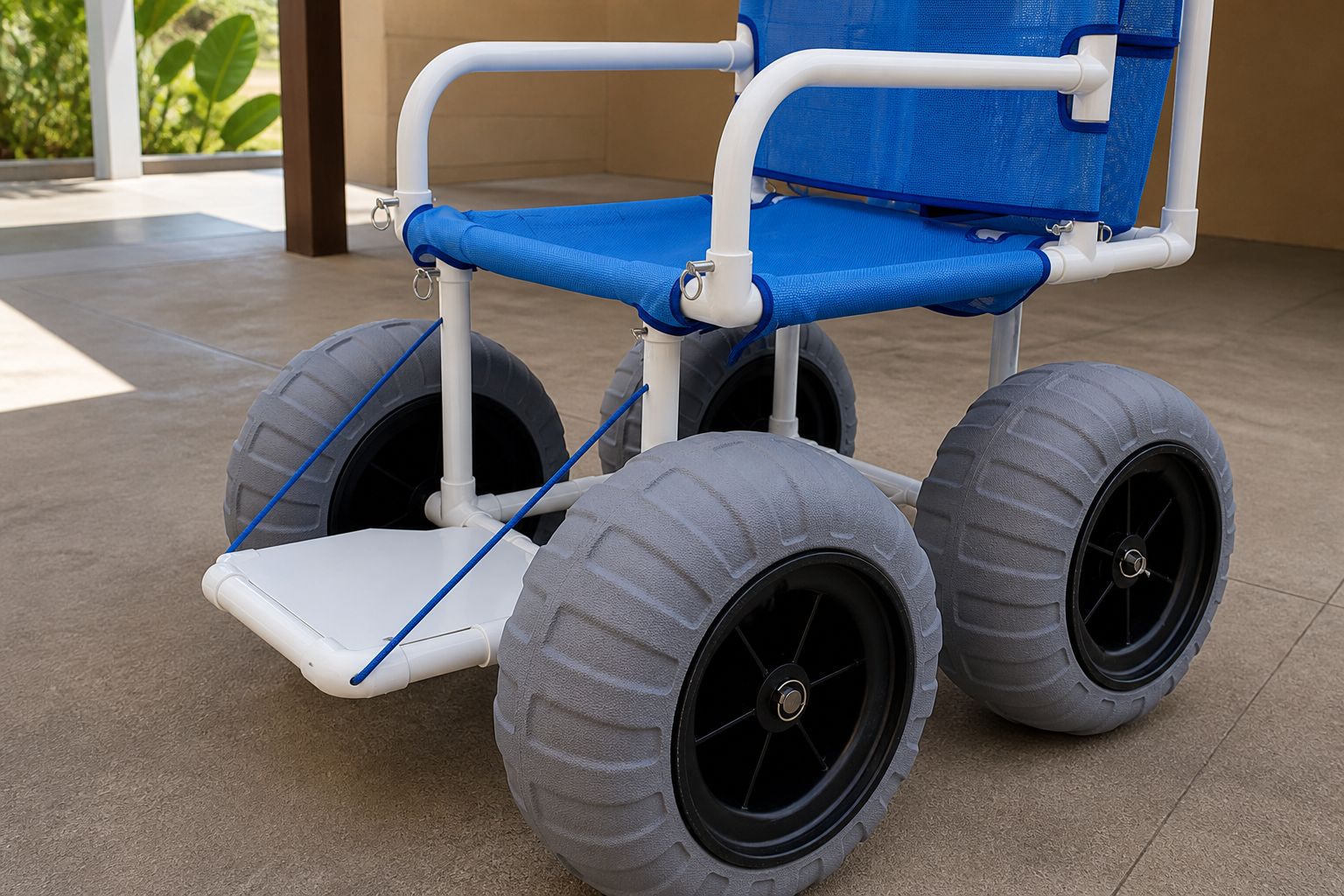
Details matter more than category labels: ask the supplier to identify the tubular frame, seat and back material, arm supports, foot support, wheel count, wheel layout, attachment points, visible pins, cords, and any parts packed separately. Product photographs should show the quoted configuration from several angles. Buyers should ask which items appear in the carton and which require separate purchase. They should also ask how the model arrives: fully assembled, partly assembled, or packed in modules. Do not infer a folding action, adjustment range, load rating, water use, or accessory fit from appearance alone.
- Request the exact model name and revision.
- Ask for current images from several angles.
- Obtain a component and included-item list.
- Confirm which parts arrive separately.
- Route unclear structural details to an authorized reviewer.
Request Instructions and Document Control
A document needs a date and owner: ask for current operating, assembly, cleaning, inspection, storage, and maintenance instructions that match the quoted model. Record language, revision, issue date, and supplier contact. If a resort needs translated material, define who approves the translation and how updates reach staff. Buyers should ask whether supplier documents change after production updates and how the supplier notifies customers. Marketing copy may help category discussion, yet it should not replace controlled product instructions. Keep superseded files away from active operations after an approved update arrives.
- Request current model-specific instructions.
- Record document language, date, and revision.
- Name the supplier contact for document questions.
- Define how translated material receives approval.
- Remove superseded instructions from active use.
How Should Resorts Compare Supplier Responses?
For example, A PVC Beach Wheelchair comparison should use the same questions, evidence fields, status terms, and decision owners for every supplier. Resorts can draw discussion points from a B2B beach accessibility guide, while their own brief controls the purchase. A uniform response sheet reduces the chance that one quote wins through polished language while another carries clearer operating detail. Each requirement should receive a status such as answered, partly answered, evidence pending, not offered, or out of scope.
Use Evidence-Based Response Fields
Make every answer traceable: place the supplier statement beside its document name, revision, page, image, or file reference. A buyer should be able to reopen the source without searching a long email chain. If a supplier gives a verbal answer, ask for written confirmation from an authorized contact. Do not score an unanswered field as acceptable because a similar model appears on a website. Separate product evidence from commercial preference. Price, lead time, payment, packaging, support, and technical response may each need different decision owners and approval paths.
- Use the same question set for every supplier.
- Link each answer with a source document.
- Mark partial or missing evidence clearly.
- Separate commercial and product-review fields.
- Ask for written confirmation after verbal advice.
Ask About Packaging and Delivery Boundaries
Receiving starts before shipment: request a packing list, carton count, package identifiers, assembly state, handling notes, and the contact path for visible freight damage or missing parts. Buyers should know who books transport, who manages import or local delivery tasks, and where responsibility changes under the agreed commercial terms. Avoid guessing about carton size, weight, or stacking based on another model. Ask the supplier for current data tied to the exact order. The resort should prepare a receiving area with room to identify cartons and protect parts from weather or public traffic.
- Request packing and carton-identification documents.
- Confirm the assembly state at delivery.
- Define the contact path for damage or shortages.
- Prepare a controlled receiving area.
- Keep order data tied to the exact model revision.
What Should Staff Check at Receiving?
Still, A PVC Beach Wheelchair receiving check should verify order identity, carton condition, included items, visible product condition, document match, and hold status before operations take control. Staff can compare the delivered configuration with a related Beach Wheelchair ST V3.0 page only when the order actually names that model. Otherwise, use order documents and supplier-approved references. Receiving staff should not assemble, adjust, or release equipment beyond their trained role.
Match the Delivery With the Order
Start with identity before handling: compare purchase order, supplier invoice, packing list, carton labels, model name, quantity, and any order-specific reference. Photograph exterior carton condition under resort policy before opening. Record shortages, unexpected cartons, or visible damage without speculating about cause. Move affected items to a controlled hold area and contact the named supplier channel. Keep packaging until the receiving question closes if resort procedure allows. A clean arrival record helps purchasing and supplier teams discuss the same evidence.
- Match order, invoice, packing list, and carton labels.
- Record carton condition before opening.
- Count received items against approved documents.
- Place disputed or damaged items on hold.
- Keep evidence under resort record policy.
Run a Visible Product Check
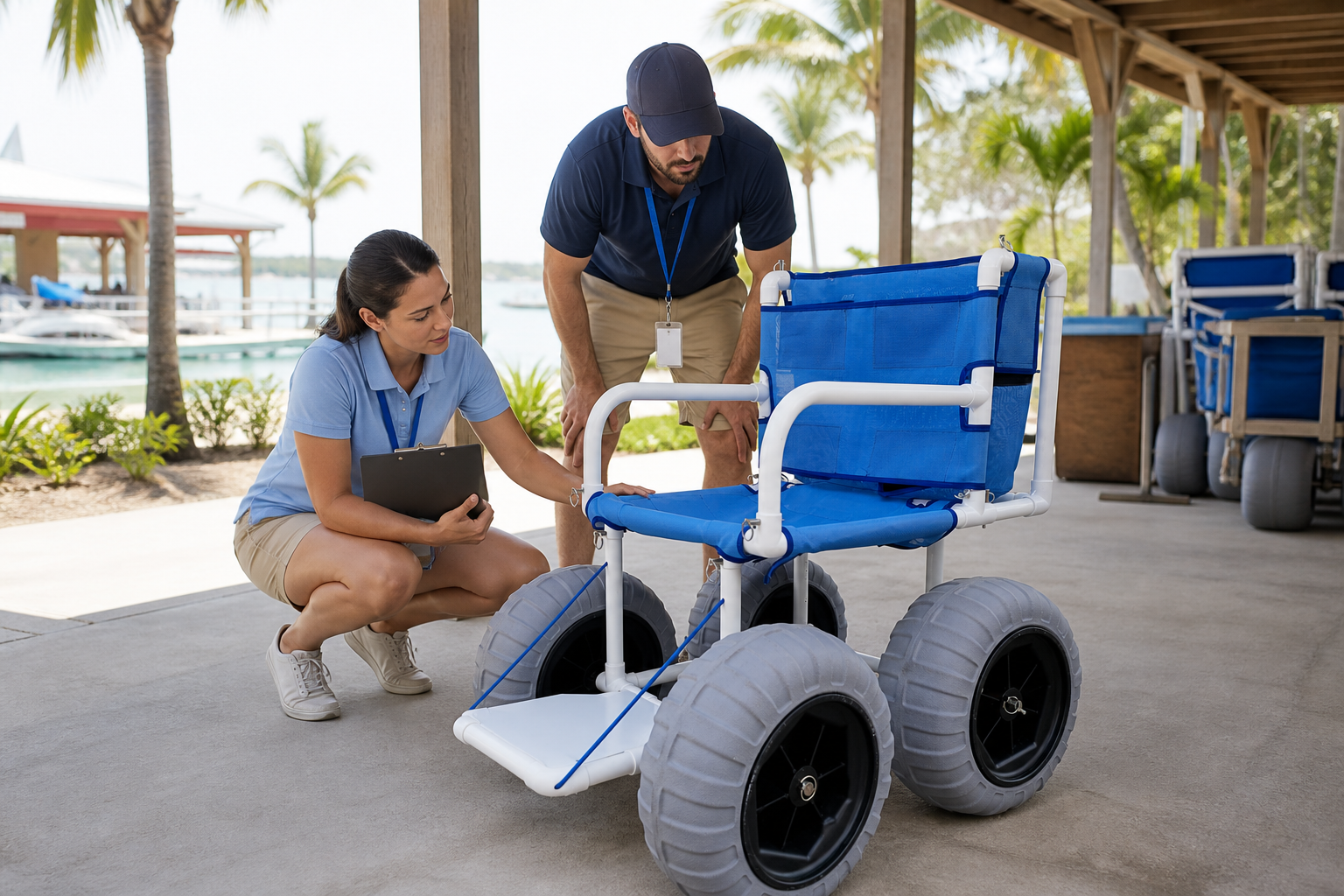
Open cartons with a controlled sequence: use the approved packing list and model instructions while staff identify frame sections, seat and back, arm supports, foot support, wheels, fasteners, pins, cords, accessories, and documents. Compare visible parts with approved references. Record scratches, distortion, missing items, unusual fit, or an unexpected color or configuration. Do not force parts into place or create an unapproved repair. If assembly belongs with trained staff or a service partner, keep parts organized and preserve their identifiers until that work begins.
- Use the approved packing list during opening.
- Identify each component before assembly begins.
- Compare configuration with current order evidence.
- Record visible concerns with clear photographs.
- Keep equipment on hold until discrepancies close.
How Should Procurement Hand Off to Operations?
Afterward, A PVC Beach Wheelchair handoff should give operations the exact model, current instructions, receiving status, component record, supplier contacts, open concerns, and approved service boundaries. Procurement should not mark a chair ready merely because payment and delivery are complete. Operations need time for authorized assembly, product review, route checks, storage setup, staff coaching, and record preparation. One formal handoff keeps commercial closure separate from service release.
Build an Operations Handoff Pack
The handoff pack should answer action questions: which model arrived, what parts came with it, where current instructions live, who owns technical questions, which items remain on hold, and what work must close before guest service. Include controlled documents rather than an email dump. Add the receiving record, approved photos, chair identifier, storage location, and status vocabulary. If the resort uses a maintenance system, create the asset record before service opens. Keep medical suitability decisions outside the procurement pack.
- Include exact model and chair identifier.
- Attach current approved instructions.
- Add receiving and component records.
- Name supplier and internal contacts.
- List every open item and decision owner.
Require a Service-Release Decision
Delivery does not equal service readiness: an authorized operations owner should close assembly, visible checks, route planning, storage, cleaning setup, staff coaching, and any supplier questions before the chair receives a ready status. The release record can stay concise, but it should show who made the decision and when. A chair that remains in review should stay outside booking availability. If staff find a new concern during practice, status should return to hold until an authorized person closes it. This boundary protects clear accountability across procurement and operations.
- Name the operations release owner.
- Close assembly and visible product checks.
- Confirm route, storage, and cleaning workflows.
- Complete staff practice with empty equipment.
- Keep unresolved equipment outside booking availability.
What Do Resort Buyers Ask About PVC Chair Procurement?
In practice, PVC Beach Wheelchair buyers often ask about model identity, documents, assembly, receiving, and service release. These direct answers keep purchasing choices connected with current evidence and approved resort roles.
Can buyers select a chair from product images alone? No. Images support discussion, but current model documents, supplier responses, local review, and approved requirements should guide the decision.
Should a supplier quote include every accessory? Only items listed in the quote and packing documents belong to the order. Buyers should ask which items come standard and which require separate purchase.
Next, Can receiving staff repair a part that looks loose? Not unless their training, product instructions, and resort policy authorize that work. Place the equipment on hold and escalate the concern.
Does delivery mean the chair can enter guest service? No. Operations should close assembly, checks, route, storage, cleaning, coaching, and open questions before release.
What should remain in the procurement record? Keep the approved brief, quotes, evidence, decision log, order documents, receiving record, instructions, handoff, and supplier contacts under resort policy.
Meanwhile, A PVC Beach Wheelchair procurement plan works when resort buyers define service, request model-specific evidence, compare suppliers consistently, control receiving, and hand equipment to operations with a clear status. Teams can adapt this workflow around their commercial process, local beach program, and exact chair model. For product questions, procurement support, or B2B sourcing, contact us today.
Related planning resources: Review saltwater care steps, floating-chair handoff training, all-terrain route planning before approving a product, sample, route, or supplier decision.