
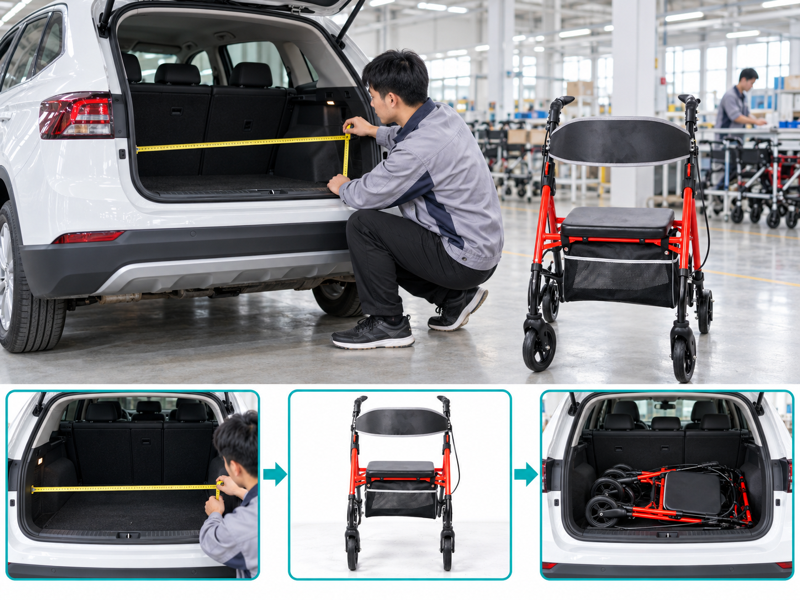
Check rollator car boot fit using the full folded outline, the actual boot opening and a workable handling plan. A UK customer may have a roomy car but a narrow loading gap beneath the rear window. Measuring the route into storage helps you identify the conflict before choosing a model.
What determines rollator car boot fit?
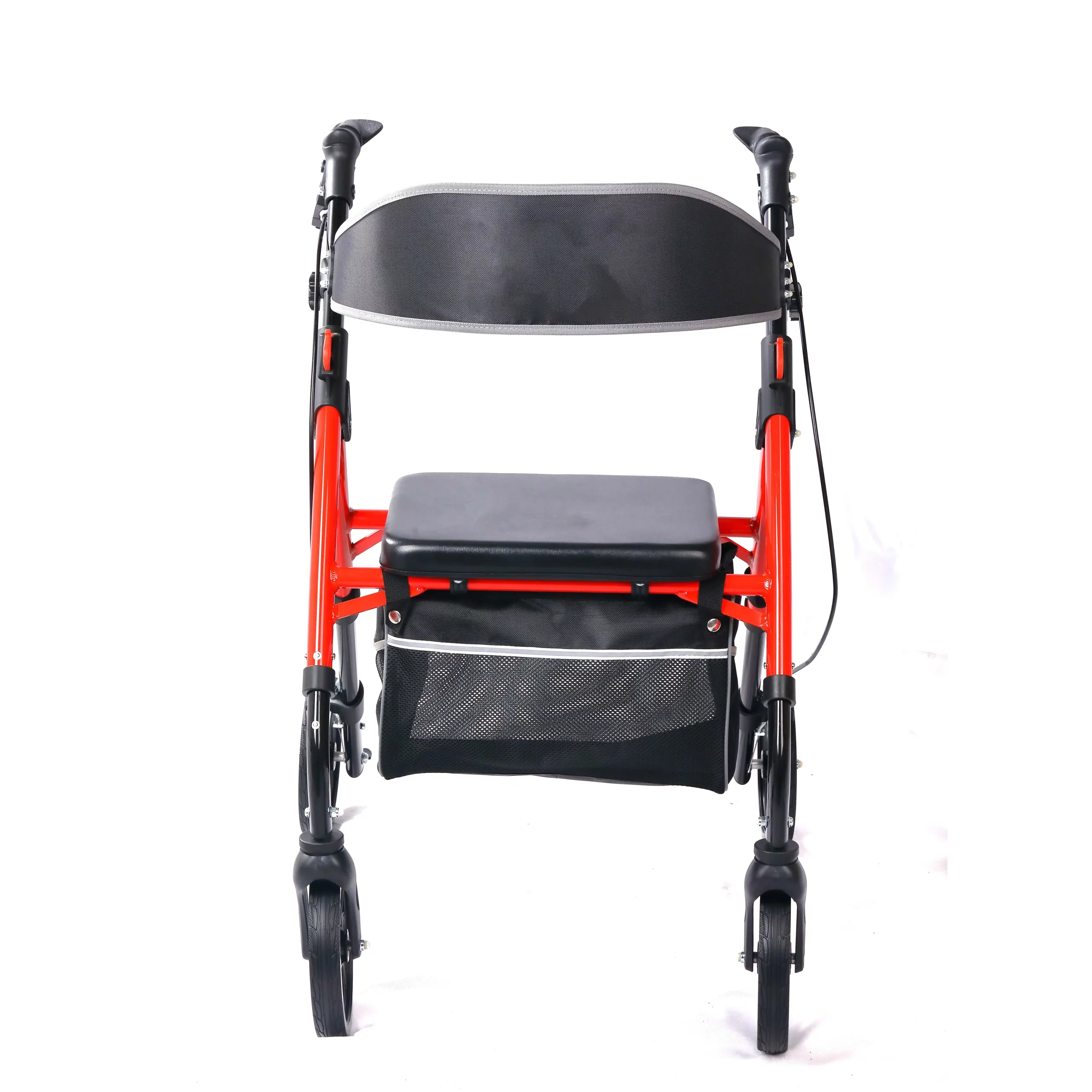
Rollator car boot fit depends on the folded device, usable boot opening and route into the vehicle. A large luggage volume does not prove that the rollator will pass through the opening.
Define the vehicle and device
Measure the opening and the load space. Record the vehicle and the exact rollator model. Compare the maker's folded dimensions with the space you can actually use.
- Folded outline
- Boot opening
- Vehicle version
| Check | Record or reference |
|---|---|
| Folded outline | Model drawing |
| Boot opening | Measurement |
| Vehicle version | Record |
Key Takeaway: You can begin with comparable dimensions.
Which folded dimensions should be requested?
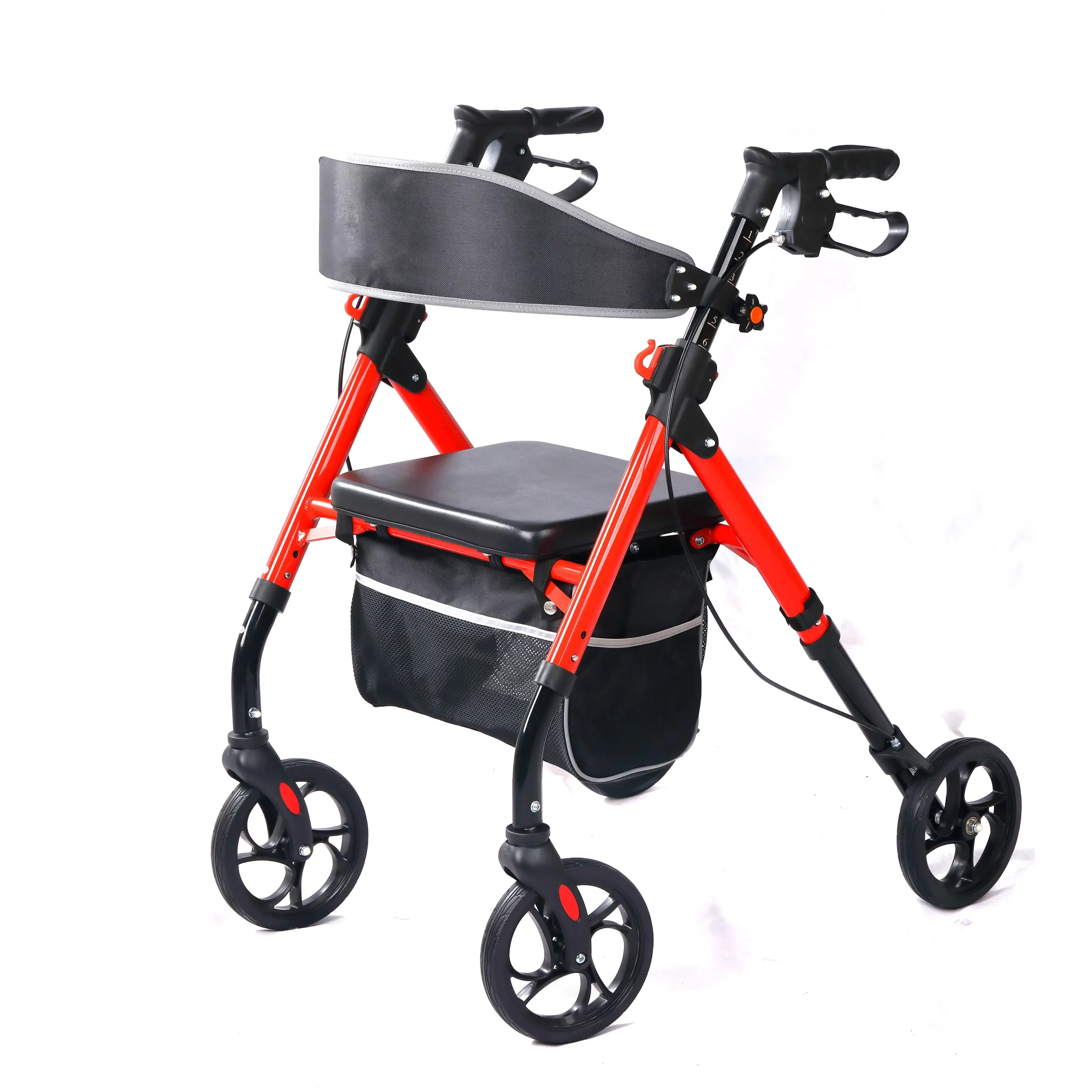
For rollator car boot fit, request the complete folded outline, including handles, wheels and any fitted bag. A frame-only figure can omit the part that catches at the opening.
Measure the complete folded outline
Include the parts that still project. Ask which accessories remain fitted in the approved transport setup. Do not remove parts merely to match a smaller catalog dimension. Include the complete rollator seat configuration in the folded outline.
- Overall folded size
- Fitted accessories
- Permitted setup
| Check | Record or reference |
|---|---|
| Overall folded size | Drawing |
| Fitted accessories | Contents |
| Permitted setup | Manual |
Key Takeaway: The comparison uses the rollator as it will be handled.
How should the boot opening be measured?
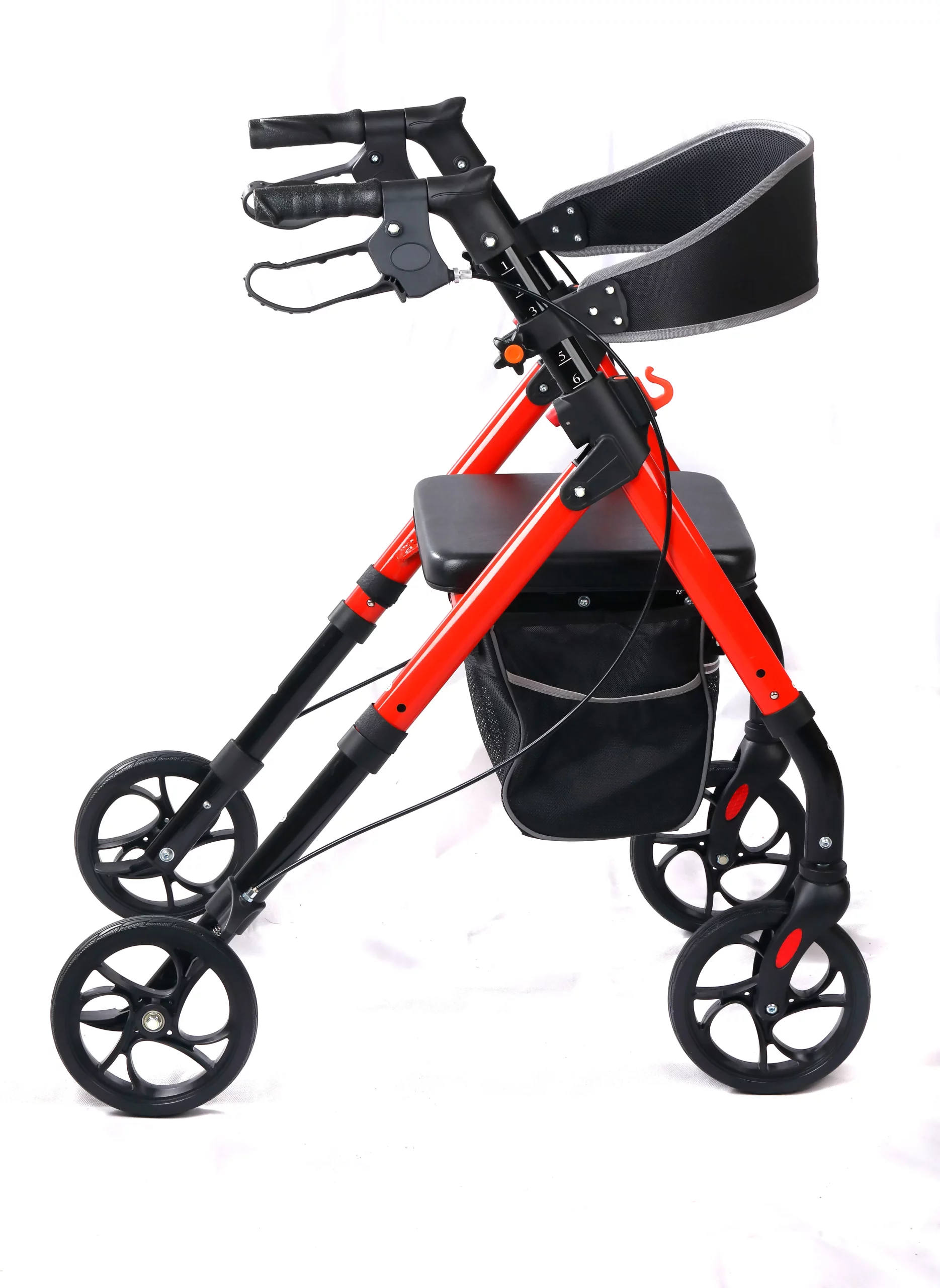
Rollator car boot fit needs the usable opening, sill and interior restrictions, not just the floor width. Trim, hinges or a sloping rear window can reduce available space.
Check the loading opening
Check the narrow path into storage. Measure with seats and covers in the intended travel position. Keep a simple sketch showing the tightest points.
- Opening shape
- Sill position
- Interior restriction
| Check | Record or reference |
|---|---|
| Opening shape | Sketch |
| Sill position | Photo |
| Interior restriction | Measurement |
Key Takeaway: A generous floor area cannot hide a narrow entry.
What should be checked about folding?
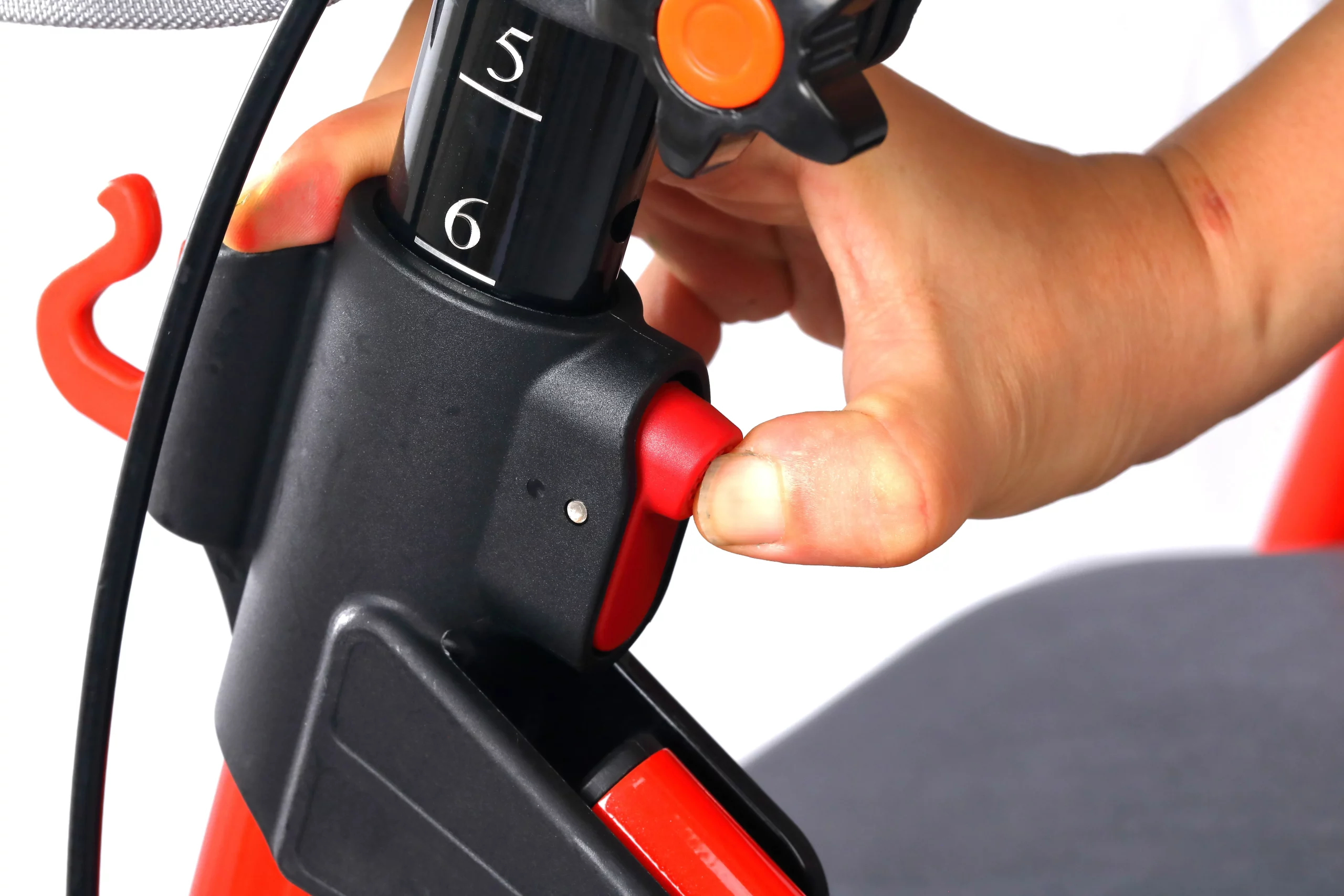
For rollator car boot fit, confirm the permitted folding method and how the folded state is held. A compact shape is not useful if staff do not know the correct release and lock points.
Confirm the folding method
Use the model's own sequence. Review the guide on an empty device. Refer a stiff or unclear mechanism for service rather than forcing the fold during a fit check. Keep the relevant control guidance with the model instructions.
- Folding method
- Fold retention
- Unclear mechanism
| Check | Record or reference |
|---|---|
| Folding method | Manual |
| Fold retention | Guide |
| Unclear mechanism | Service note |
Key Takeaway: The storage review does not depend on an improvised fold.
How should the lifting task be assessed?
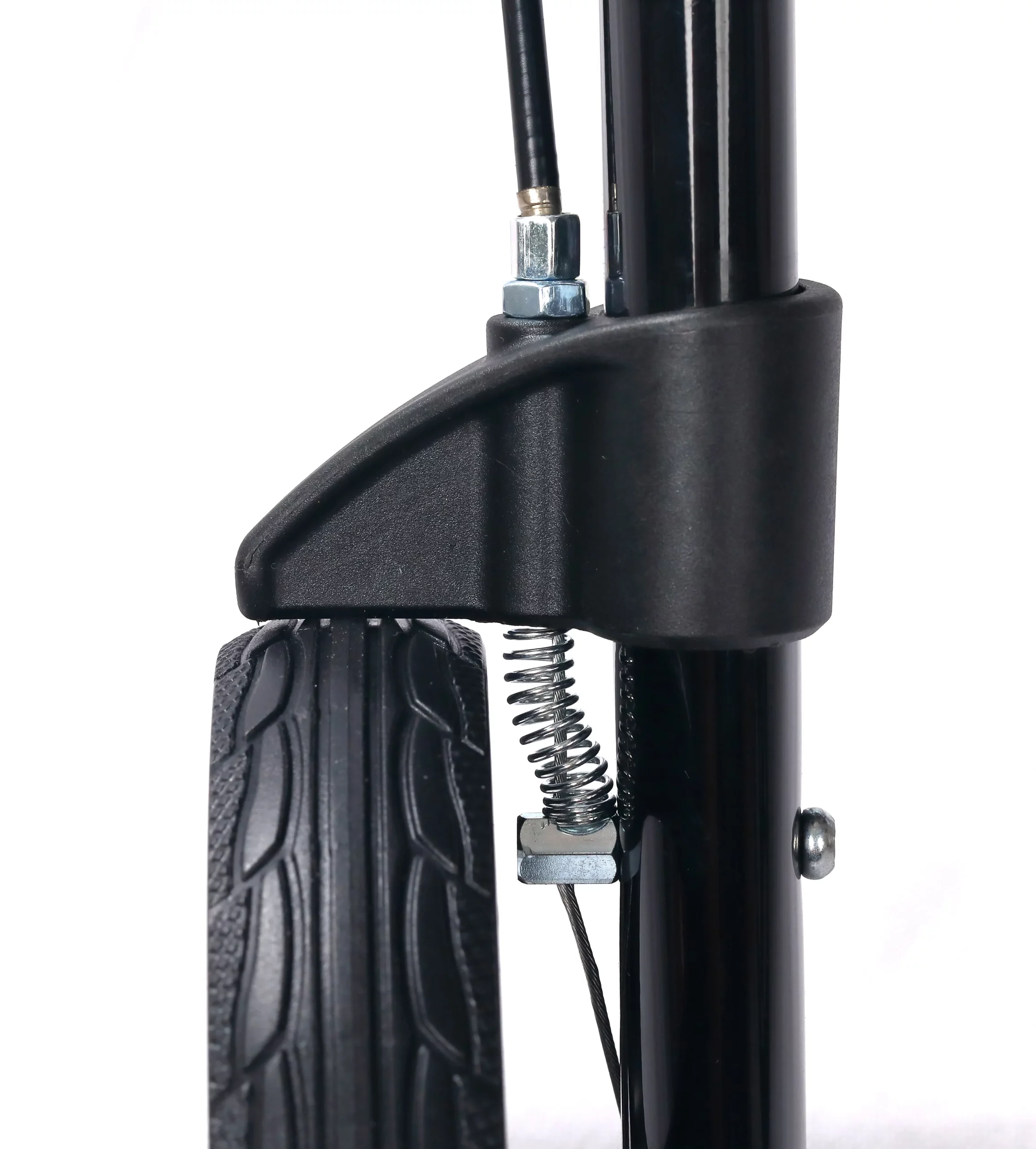
Rollator car boot fit includes who lifts or moves the device and from which height. Product weight alone cannot establish that a particular person can handle it comfortably or safely.
Review the handling task
Consider the person doing the handling. Use approved handling points and seek suitable advice where lifting ability is uncertain. Do not infer safe handling from a short showroom demonstration.
- Device weight
- Handling points
- Handler needs
| Check | Record or reference |
|---|---|
| Device weight | Verified spec |
| Handling points | Guide |
| Handler needs | Review |
Key Takeaway: A fitting device also needs a workable handling plan.
Can removing the bag help?
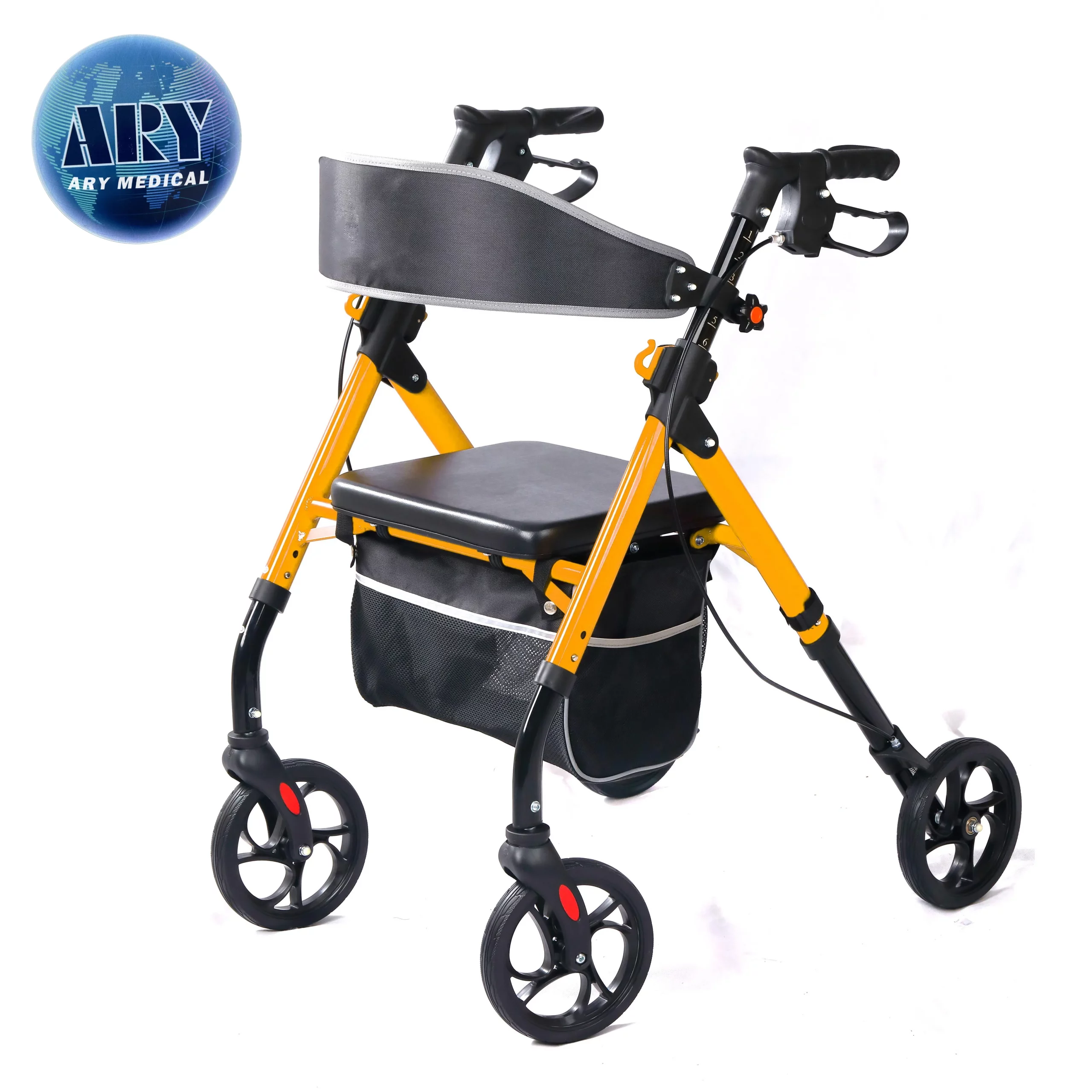
For rollator car boot fit, remove a bag or accessory only where the maker permits it and the contents can be managed separately. A bag left full may change the folded outline or handling load.
Record detachable items
Confirm the allowed setup. Record what stays attached for travel. Keep detachable items together so the next outing does not start with missing parts.
- Bag status
- Loose items
- Allowed removal
| Check | Record or reference |
|---|---|
| Bag status | Transport plan |
| Loose items | Storage list |
| Allowed removal | Guide |
Key Takeaway: Your fit result applies to a repeatable setup.
How should the device be secured for travel?
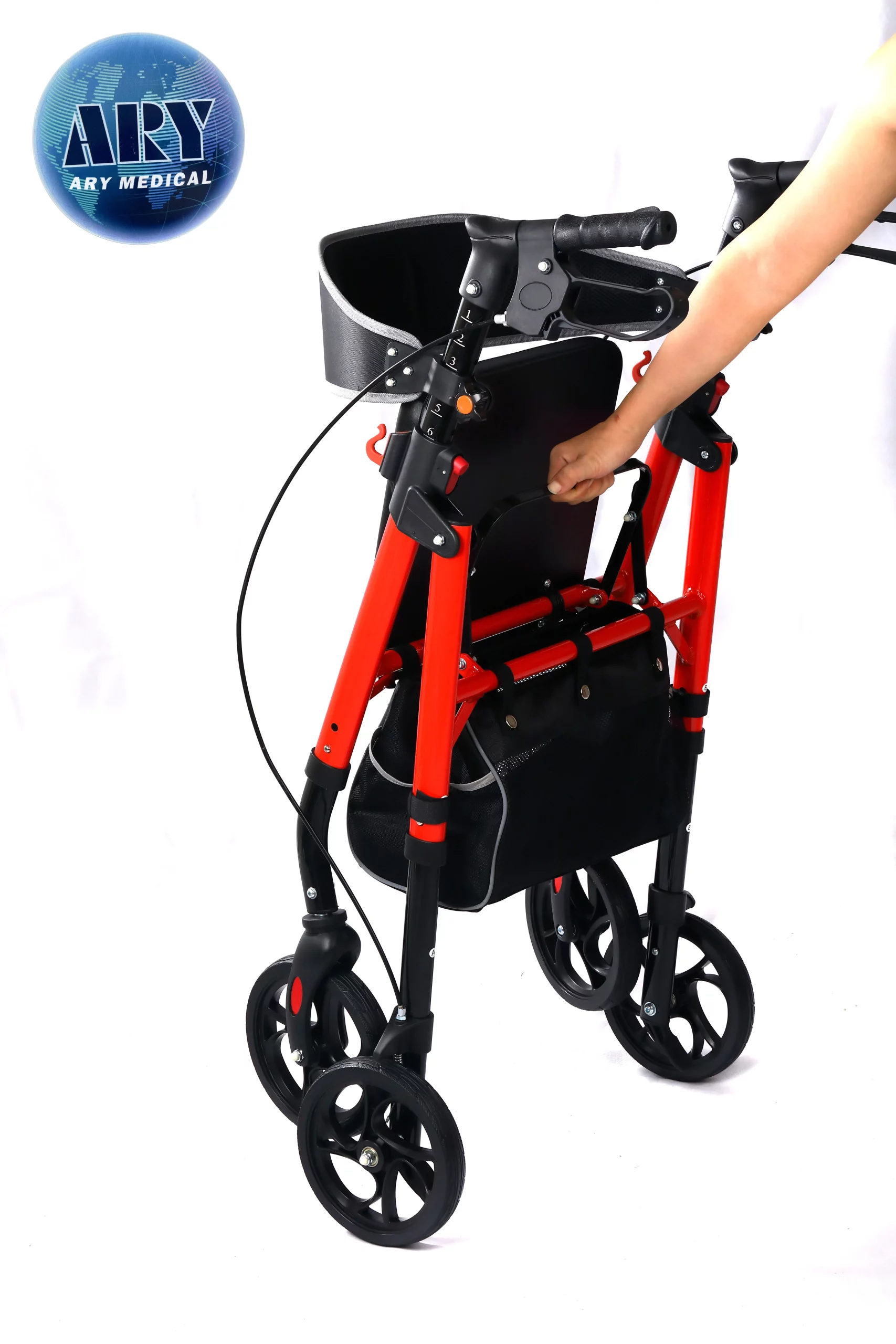
Rollator car boot fit must include a suitable way to secure the empty aid as luggage. A rollator that slides or shifts in the boot has not been fully planned for transport.
Plan empty-aid retention
Follow the vehicle and product guidance. Ask the relevant vehicle or mobility specialist about the intended arrangement. Do not describe an improvised strap as an approved restraint.
- Vehicle guidance
- Aid guidance
- Securing arrangement
| Check | Record or reference |
|---|---|
| Vehicle guidance | Owner details |
| Aid guidance | Manual |
| Securing arrangement | Review record |
Key Takeaway: Storage fit and travel retention are both addressed.
What can an empty-device trial confirm?

An empty-device trial can confirm rollator car boot fit within the setup and handling method reviewed. It cannot prove that every similar vehicle or rollator will fit.
Use the actual vehicle for review
Use the actual car and model. Record the model, folded state and any moved vehicle fittings. Stop when access requires force or an unsupported part change. Ask for a representative sample during supplier purchasing discussions.
- Trial identity
- Setup
- Observed conflict
| Check | Record or reference |
|---|---|
| Trial identity | Model record |
| Setup | Photos |
| Observed conflict | Review note |
Key Takeaway: A trial gives you a specific, usable fit record.
When should you recheck the result?
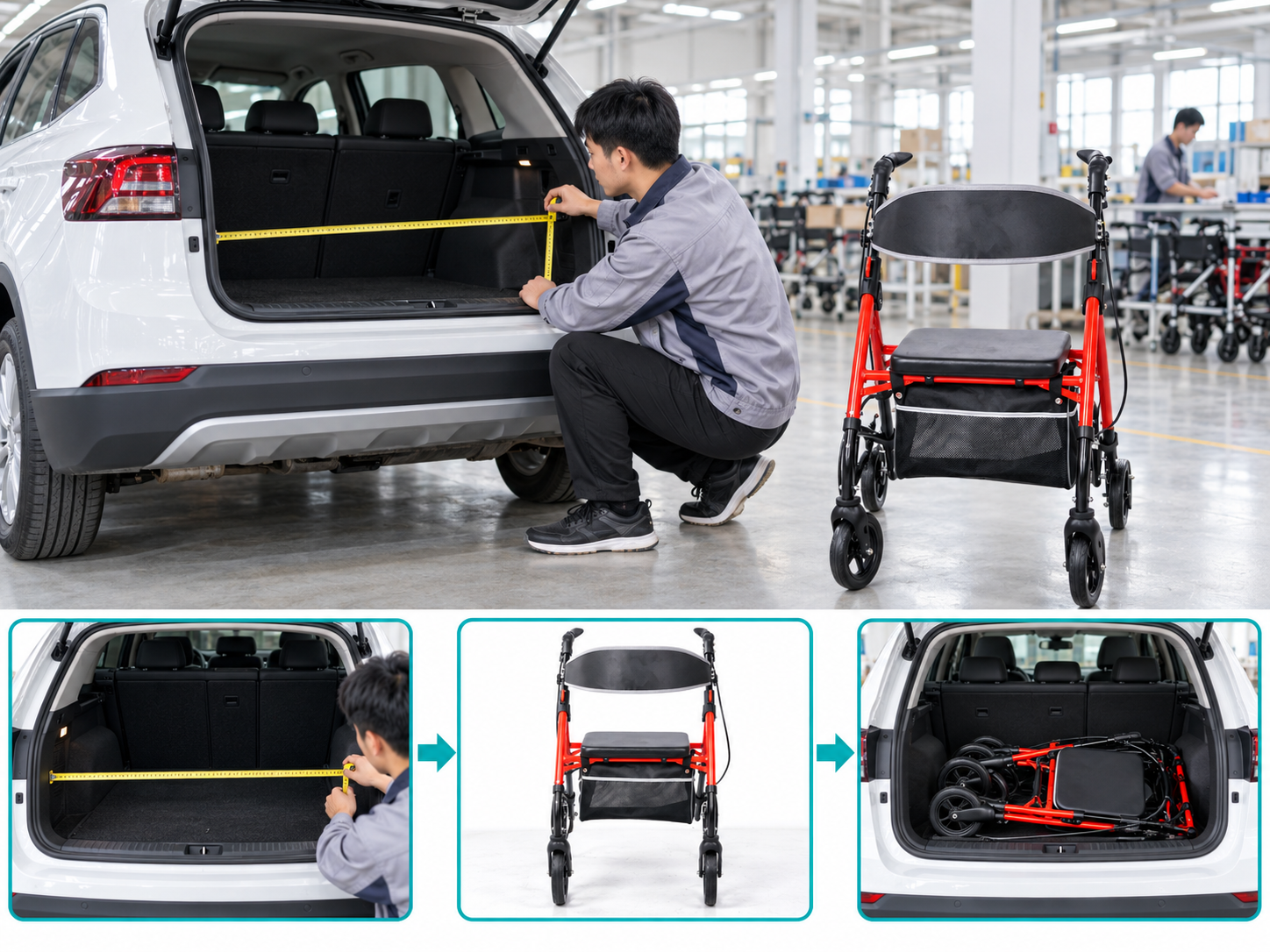
Recheck rollator car boot fit after a model change, added accessory or different vehicle arrangement. A replacement bag or handle position may alter an earlier result.
Recheck changed setups
Review changes that affect the outline. Keep the original dimensions and photos. Compare the changed setup before relying on the previous loading plan. The NHS walking-aid and wheelchair guidance provides general selection context.
- Product change
- Vehicle change
- Earlier result
| Check | Record or reference |
|---|---|
| Product change | Revision note |
| Vehicle change | Layout |
| Earlier result | Fit record |
Key Takeaway: Your transport plan can stay accurate after an update.
What should a supplier enquiry include?
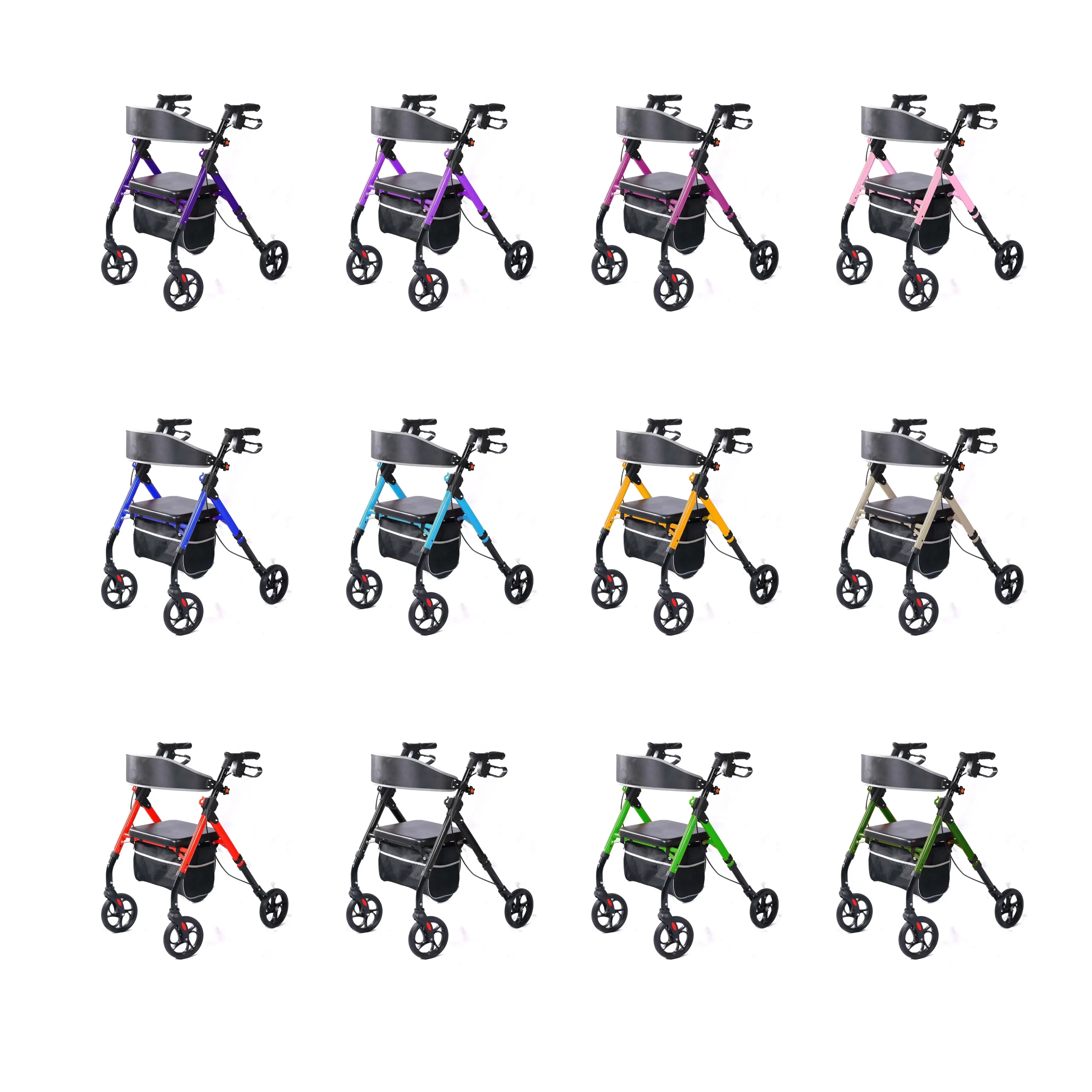
For rollator car boot fit, send the usable opening dimensions and the required folded setup. State any limits on handling or storage that affect the choice.
What should you do next?
Send the constraint that matters. Ask for current folded drawings and the relevant manual section. Use these with the actual vehicle review before confirming selection.
- Opening dimensions
- Folded drawing
- Handling question
| Check | Record or reference |
|---|---|
| Opening dimensions | Enquiry |
| Folded drawing | Supplier file |
| Handling question | Review brief |
Key Takeaway: The supplier can answer a precise fit question. To discuss the model and documents for your order, contact us with your requirements. At AryMD, useful product facts should support every care-equipment purchase.
Frequently asked questions
Q1: Can luggage volume tell me whether a rollator fits?
No. Check the usable opening and internal shape against the complete folded device.
Q2: What’s the best dimension to request first?
Request the full folded outline with the intended accessories. A frame-only width may omit handles, wheels or a bag.
Q3: How do I know if I can remove the bag for transport?
Use the maker's instructions for the exact model. Record which items remain attached in the reviewed setup.
Q4: Can a folded rollator travel loose in the boot?
Plan suitable retention using relevant vehicle and product guidance. Fitting into the space is only part of the transport task.
Q5: Should I recheck fit when replacing the rollator?
Yes. A different wheel, handle or folding arrangement can change both the outline and handling task.