

Shower chair packaging reduces landed cost when product architecture, protected dimensions, carton volume, pallet use, assembly, damage prevention, and receiving are designed together. A low-cost chair in an oversized carton can lose its price advantage through freight, storage, breakage, and rework. Smaller is not automatically better when locks, surfaces, or parts become vulnerable. This guide helps distributors, importers, private-label brands, packaging engineers, and logistics teams optimize the complete pack without weakening product control.
1. What Is Shower Chair Packaging?
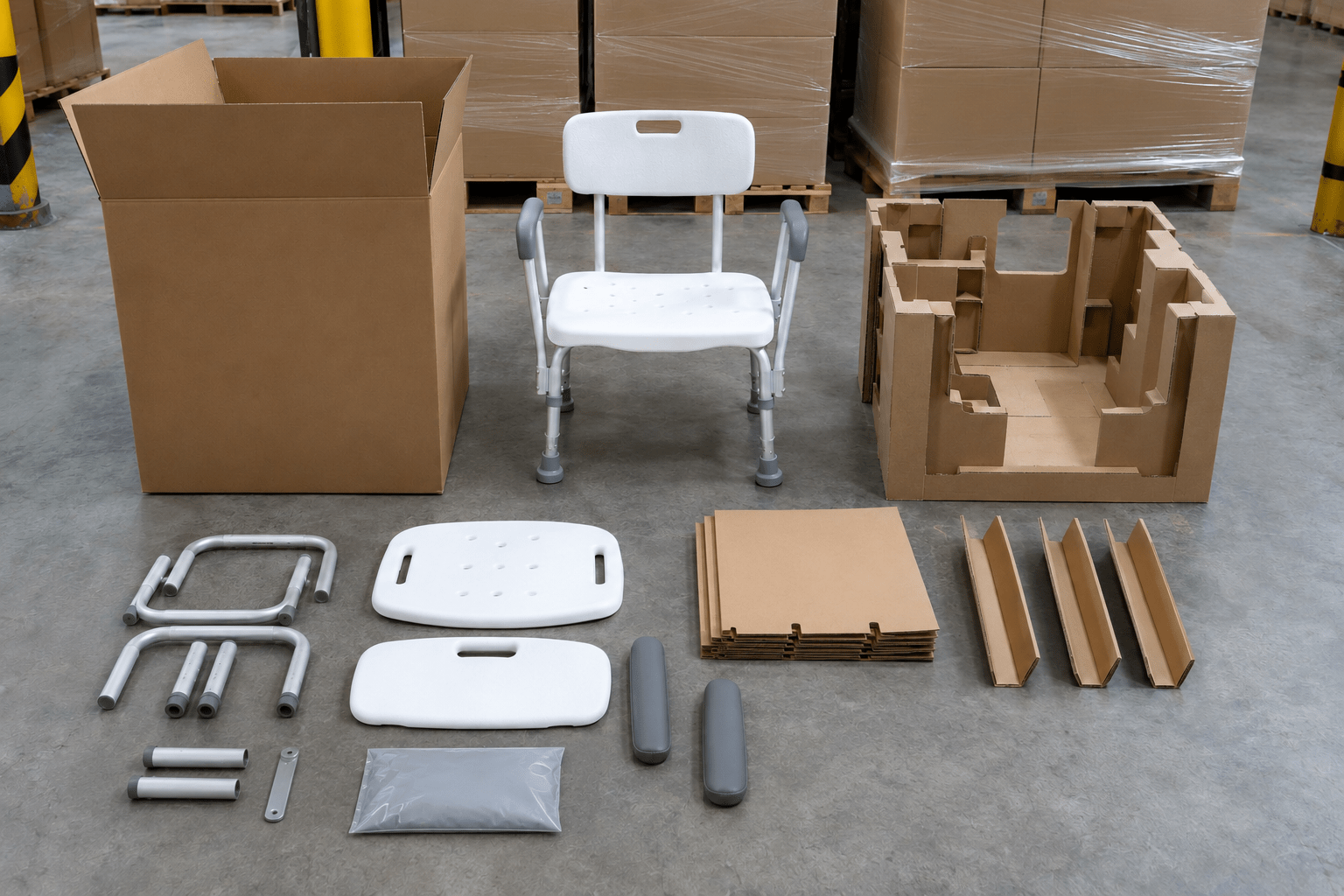
Shower chair packaging includes surface protection, component restraint, inner packs, cartons, pallets, container loading, identity labels, documents, and the product state inside. Assembled, folded, knocked-down, module-separated, nested, accessory-packed, and retail-ready states create different risks. The approved pack should make each layer’s job clear.
Which Packaging Layers Need Definitions?
Define which material protects finish, prevents movement, contains parts, resists compression, enables handling, carries identity, and supports receiving. Duplicate material without a purpose adds cost and waste.
- Map every layer to a hazard.
- Identify reusable and disposable elements.
- Keep pack materials compatible with surfaces.
Which Product States Affect the Pack?
The chair may ship assembled, folded, partly disassembled, or as controlled modules. Name the packed state: carton dimensions mean little without it.
- Record removed supports and hardware.
- Define assembly work after unpacking.
- Protect locks and adjustments in their transport state.
| Packaging layer | Purpose | Main risk | Receiving check |
|---|---|---|---|
| Surface/component protection | Prevent rub, impact, contact | Moisture or pressure marks | Finish and shape |
| Inner pack/carton | Restrain and contain | Movement, crush, missing parts | Layout and completeness |
| Pallet/container | Unit handling and transport | Shift, compression, moisture | Load condition |
Pack architecture should be deliberate from product to container. Key Takeaway: define the product state and purpose of every packaging layer.
2. Who Owns Shower Chair Packaging Decisions?

Shower chair packaging needs shared input from product, engineering, sourcing, quality, logistics, warehouse, sales, service, and customers, but product state, protection, artwork, pallet layout, test method, assembly, and changes need named approvers. Packaging suppliers alone should not decide technical interfaces.
Which Teams Need Shared Inputs?
Engineering defines vulnerable components; logistics defines shipment constraints; quality defines tests and receiving; warehouse defines handling; service identifies replacement and unpacking issues; sales defines channel needs.
- Use one pack requirement register.
- Resolve cost and protection conflicts.
- Include destination receiving conditions.
Which Decisions Need Named Approval?
Approve knock-down state, protection materials, carton design, artwork, palletization, tests, instructions, and future changes through controlled files. Assign the final word: otherwise each supplier optimizes a different outcome.
- Separate artwork and structural approval.
- Record deviations from standard packs.
- Define who may change materials or layout.
| Team | Core input | Decision | Handoff |
|---|---|---|---|
| Engineering/product | Product state and fragile zones | Allowed disassembly | Packaging design |
| Quality/logistics | Hazards and shipment route | Test and pallet plan | Supplier/warehouse |
| Brand/service | Artwork, assembly, support | User-facing pack files | Final release |
Ownership keeps cost reductions from creating hidden failures. Key Takeaway: put structural, logistics, artwork, and change decisions under named approval.
3. How Does Product Design Affect Shower Chair Packaging?
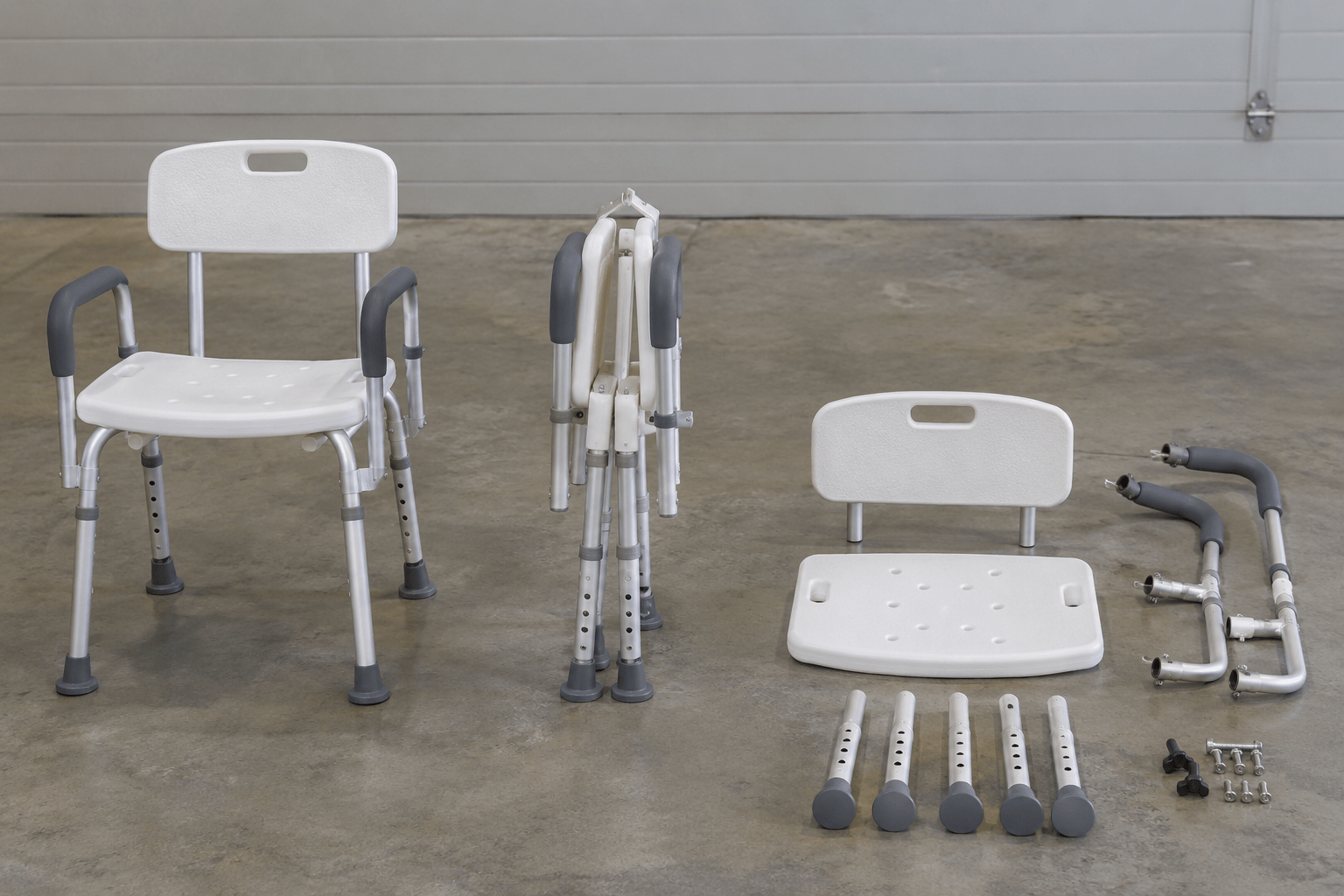
Shower chair packaging depends on whether the frame folds, the back and arms remove, legs nest, feet remain attached, and modules fit without damaging each other. Design features can reduce volume, but projections, exposed locks, loose padding, sharp edges, and complex assembly can increase damage or labor.
Which Design Features Reduce Pack Volume?
Folding frames, removable supports, nested legs, compact feet, shared cavities, and efficient module shapes may reduce protected size when interfaces withstand repeated handling.
- Evaluate parts in the protected state.
- Keep removal and reassembly simple.
- Check whether volume savings survive added inserts.
Which Design Choices Increase Risk?
Long projections, exposed buttons, unsupported seats, loose hardware, fragile controls, and tight rubbing contact can fail during distribution. Count the tradeoffs: a smaller pack can add assembly errors or cosmetic damage.
- Inspect likely contact and load paths.
- Protect latches from unintended movement.
- Include service and receiving feedback.
| Design feature | Volume effect | Damage effect | Assembly effect |
|---|---|---|---|
| Folding frame | Often reduces envelope | Locks need protection | Restoration check required |
| Removable modules | Enables tighter layout | Mixed or lost parts | More assembly steps |
| Nested components | Uses empty space | Rub/contact risk | Orientation must be clear |
Product and pack should be engineered together. Key Takeaway: accept volume reductions only after protection and assembly risks are controlled.
4. Which Dimensions Control Shower Chair Packaging?
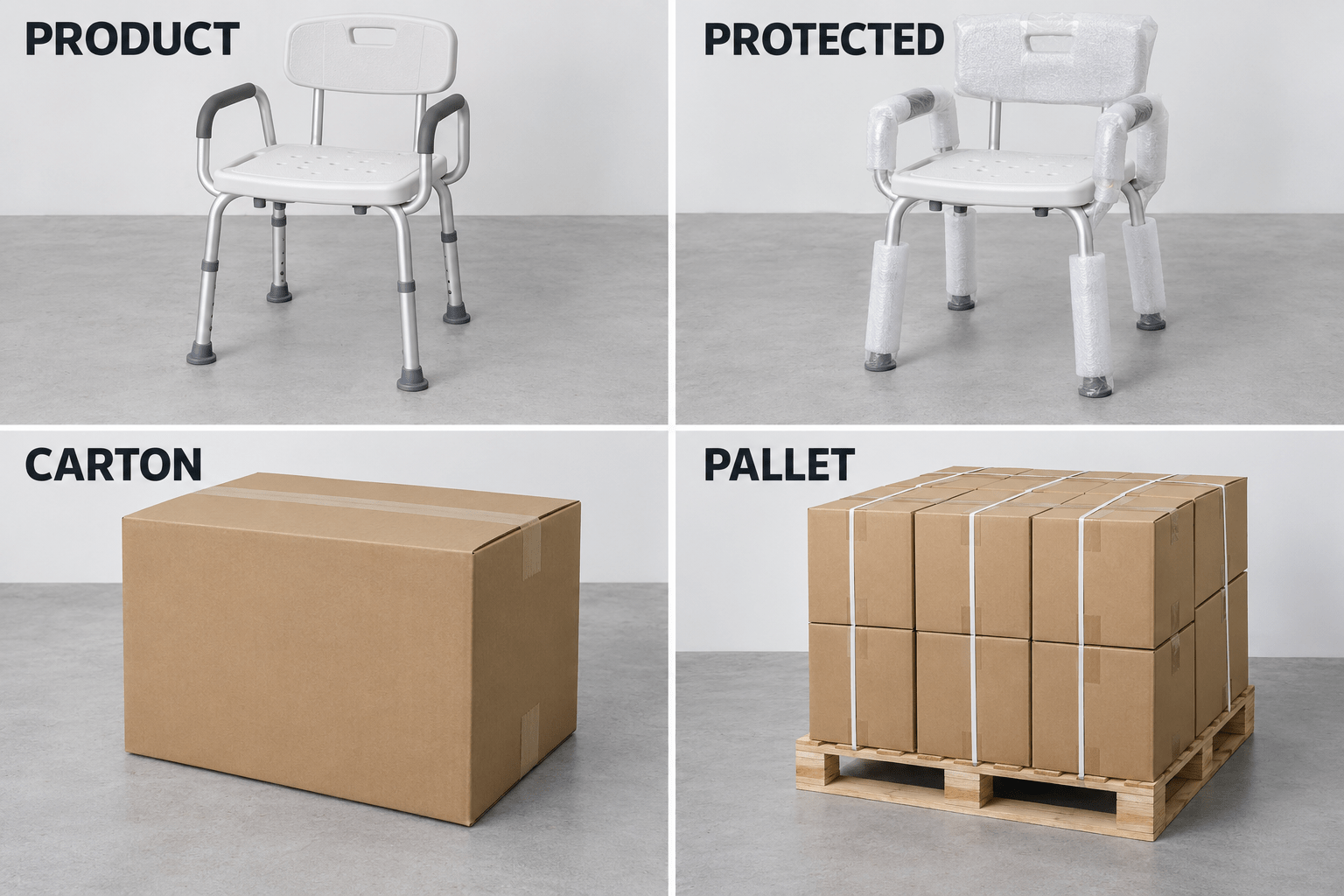
Shower chair packaging needs operating, folded, module, projection, protected, inner-pack, carton, pallet, stack, and loading dimensions with defined measurement states. Freight may depend on physical mass, dimensional basis, lane, and carrier terms. Buyers should avoid universal savings claims without shipment-specific calculation.
Which Product Dimensions Need Recording?
Measure the chair as used, folded or separated, with projections, removed parts, and required protection. State orientation and tolerances.
- Use controlled reference points.
- Include the bulkiest approved option.
- Record dimensions after pack materials settle.
Which Package Dimensions Affect Freight?
Carton outside dimensions, pallet footprint and height, stack limits, container clearance, usable count, and weight basis all affect planning. Follow the dimensional chain: a small module change can alter a complete layer count.
- Calculate by route and commercial basis.
- Allow handling and door clearance.
- Verify actual packed samples.
| Dimension | Source | Calculation use | Owner |
|---|---|---|---|
| Product/protected state | Drawing and pack sample | Inner layout | Engineering/packaging |
| Carton outside | Finished carton sample | Freight and storage | Packaging/logistics |
| Pallet/load | Approved arrangement | Handling and container plan | Logistics/warehouse |
Good data replaces vague compactness claims. Key Takeaway: compare verified packed dimensions under the same freight and handling basis.
5. How Does Protection Shape Shower Chair Packaging?
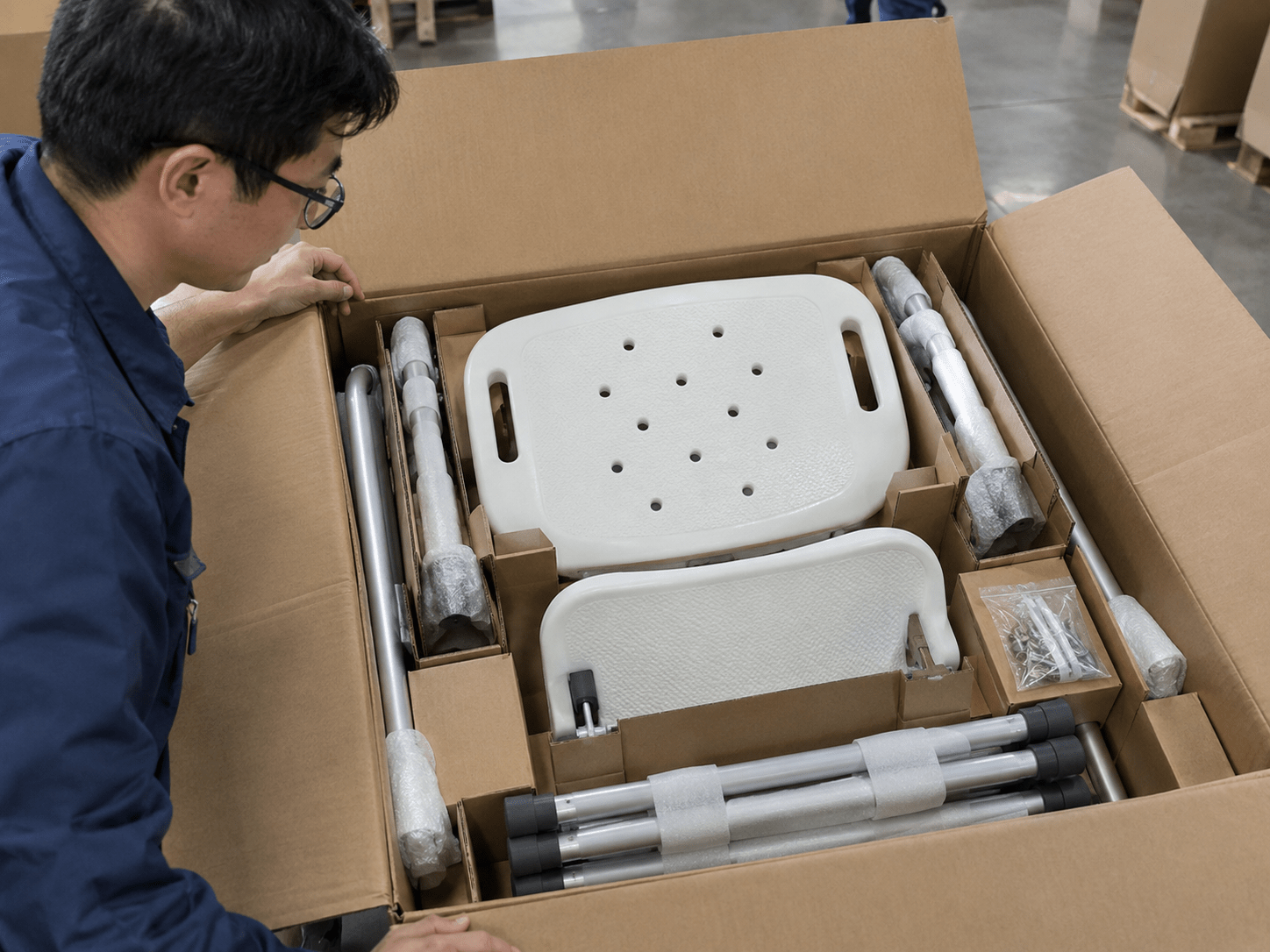
Shower chair packaging should prioritize molded seats, backs, arms, feet, locks, adjustment buttons, fasteners, finishes, labels, and any protruding or load-bearing interface. Foam, corrugated inserts, bags, caps, wraps, edge guards, restraints, and moisture controls need validation. More material is not proof of better protection.
Which Components Need Priority Protection?
Identify where impact, compression, abrasion, puncture, moisture, or part-to-part movement can change appearance or function. Protect critical mechanisms from carrying carton loads.
- Map contact points in all orientations.
- Support large molded parts without distortion.
- Separate coated metal and soft surfaces.
Which Protection Methods Need Validation?
Evaluate material, thickness, shape, retention, surface compatibility, recovery, waste, and receiving signs through the approved distribution plan. Protect against a named hazard: arbitrary layers increase cost without evidence.
- Inspect the product after each trial.
- Record shifted or compressed inserts.
- Review bath-equipment surface controls.
| Component | Hazard | Protection | Receiving sign |
|---|---|---|---|
| Seat/back | Compression, rub, puncture | Supported separator and sleeve | Warp, scratch, crack |
| Locks/buttons | Impact and unintended movement | Clearance and rigid guard | Changed state or damage |
| Feet/fasteners | Movement and loss | Identified contained pack | Missing, mixed, deformed |
Protection should address product-specific failure modes. Key Takeaway: validate each material against a defined hazard and product inspection.
6. How Does Parts Control Shape Shower Chair Packaging?
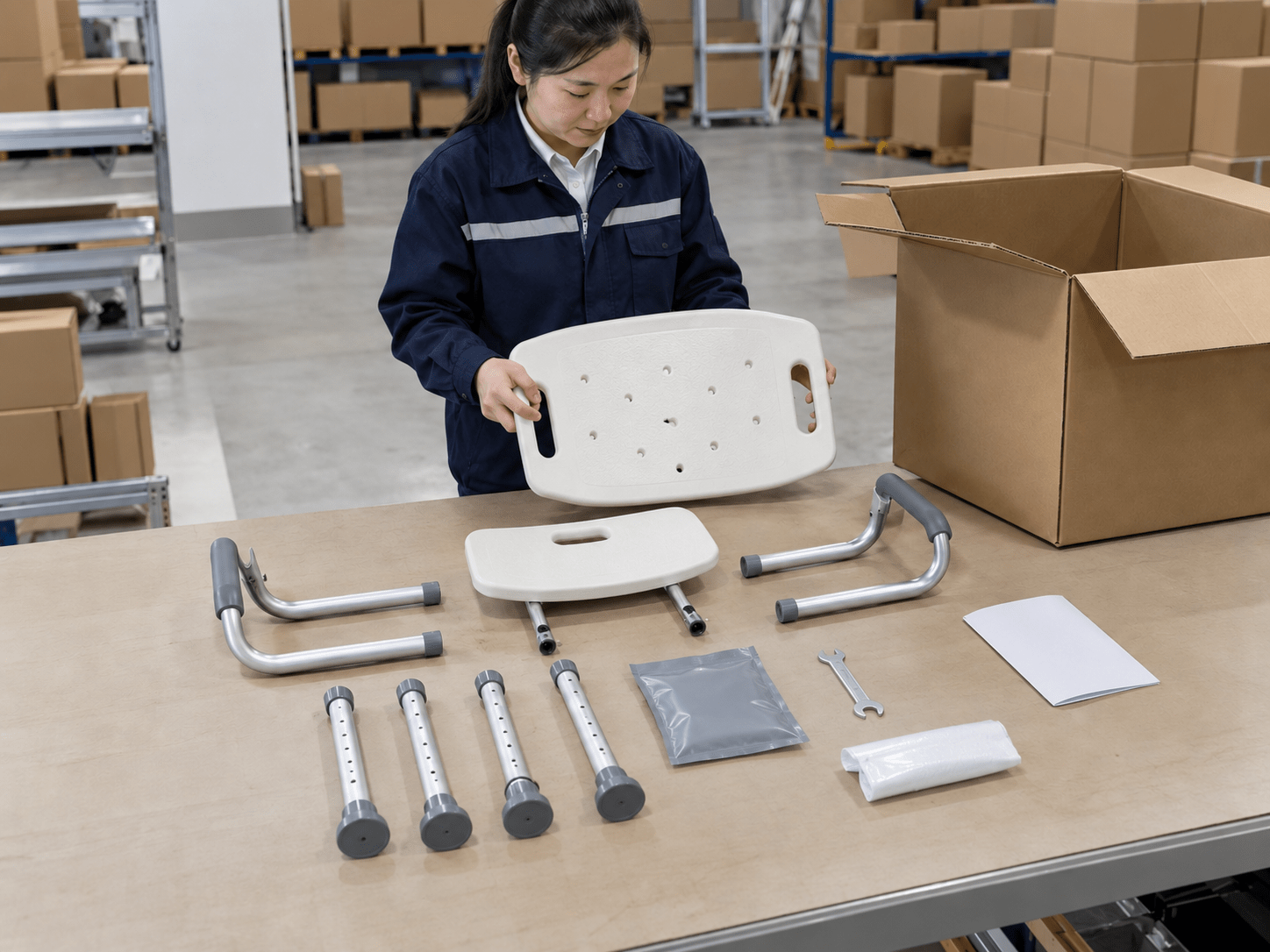
Shower chair packaging should identify and contain fasteners, arms, backs, feet, tools, accessories, manuals, labels, and spare parts so a complete unit reaches assembly. Pack position should follow unpack order and prevent small parts from being discarded with inserts. Similar hardware needs unmistakable separation.
Which Loose Parts Need Identification?
Use controlled part sets and packaging locations linked to the unit. Avoid loose fasteners inside large cavities where they can scratch surfaces or disappear.
- Keep one unit’s components together.
- Separate service spares from assembly parts.
- Verify quantity and condition before closure.
Which Assembly Sequence Affects Packing?
Part access, orientation, tool need, error prevention, temporary storage, and waste handling determine whether unpacking supports correct assembly. Pack in work order: the first required part should not sit beneath the largest module.
- Trial unpacking with representative staff.
- Record confusing or reversible steps.
- Keep instructions accessible before assembly.
| Part | Pack position | Assembly step | Risk |
|---|---|---|---|
| Hardware | Sealed identified inner location | After module identification | Loss or wrong fastener |
| Supports | Separated from finish surfaces | Orientation and mount check | Rub or reversed fit |
| Manual/tool | Accessible top layer | Read before build | Discarded or unavailable |
Parts control reduces damage and assembly rework. Key Takeaway: arrange identified components in the order the receiver must find and use them.
7. How Should Shower Chair Packaging Be Tested?
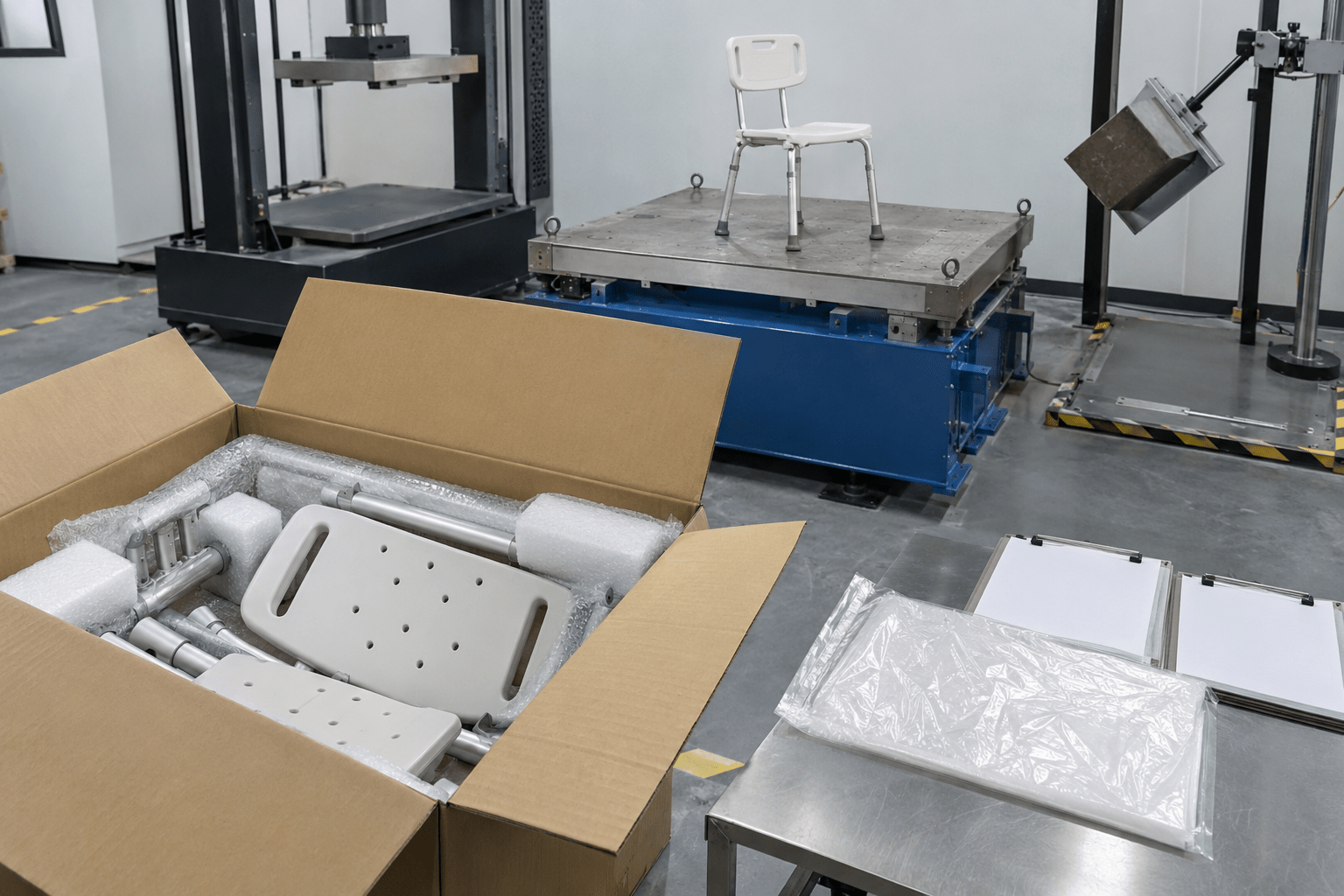
Shower chair packaging should be tested against the defined distribution hazards, which may include drop, vibration, compression, stacking, puncture, moisture, abrasion, and repeated handling. Conditions and acceptance sources must be selected by qualified teams. No single dramatic drop proves the complete pack.
Which Distribution Hazards Need a Test Plan?
Map factory handling, warehouse stacking, line-haul movement, transfer points, parcel or pallet treatment, destination storage, and unpacking to justified checks.
- Define the product and pack revision.
- Record orientation and preconditioning.
- Preserve the sequence and observations.
Which Outcomes Need Product Inspection?
After testing, inspect structure, surfaces, locks, feet, supports, fasteners, completeness, assembly, function, carton, and insert movement. Open the carton: package appearance alone cannot clear the chair.
- Compare pre- and post-test state.
- Classify cosmetic and functional defects.
- Retest changed materials or layouts.
| Hazard | Product check | Acceptance source | Status |
|---|---|---|---|
| Impact/vibration | Movement, cracks, locks, loose parts | Approved test plan | Pass/hold |
| Compression/stack | Frame, seat, carton deformation | Stack and product criteria | Pass/hold |
| Moisture/abrasion | Finish, labels, corrosion signs | Route-specific requirements | Pass/hold |
Testing should protect the chair, not just the box. Key Takeaway: inspect the complete product after realistic, controlled distribution challenges.
8. How Do Pallets Affect Shower Chair Packaging?

Shower chair packaging should be planned at carton, pallet, and container levels because orientation, layer count, overhang, compression, restraints, corners, forklift access, mixed cargo, moisture, door clearance, and unloading all interact. A strong individual carton can still fail in a poorly designed load.
Which Pallet Variables Need Review?
Check pallet fit, carton orientation, layer pattern, maximum approved stack, edge support, overhang, corner protection, wrap or restraint, fork entry, and warehouse handling.
- Use actual carton dimensions and tolerances.
- Prevent point loads on vulnerable faces.
- Record pallet and restraint specifications.
Which Container Variables Affect Planning?
Internal dimensions, door opening, loading order, mixed cargo, voids, moisture exposure, access, and destination unload method should guide the plan. Design for unloading too: a dense load can create damage when receivers cannot access it safely.
- Model clearance at the door.
- Separate heavy or sharp adjacent cargo.
- Define damaged-load inspection steps.
| Logistics level | Variable | Risk | Control |
|---|---|---|---|
| Carton | Strength, orientation, handle state | Crush or mishandling | Approved construction |
| Pallet | Layer, overhang, restraint | Edge load or shift | Verified pattern |
| Container | Door, void, mixed cargo, moisture | Load movement or access damage | Loading plan and record |
Unit protection must survive the full load system. Key Takeaway: approve carton, pallet, and container arrangements as connected designs.
9. How Does Receiving Validate Shower Chair Packaging?
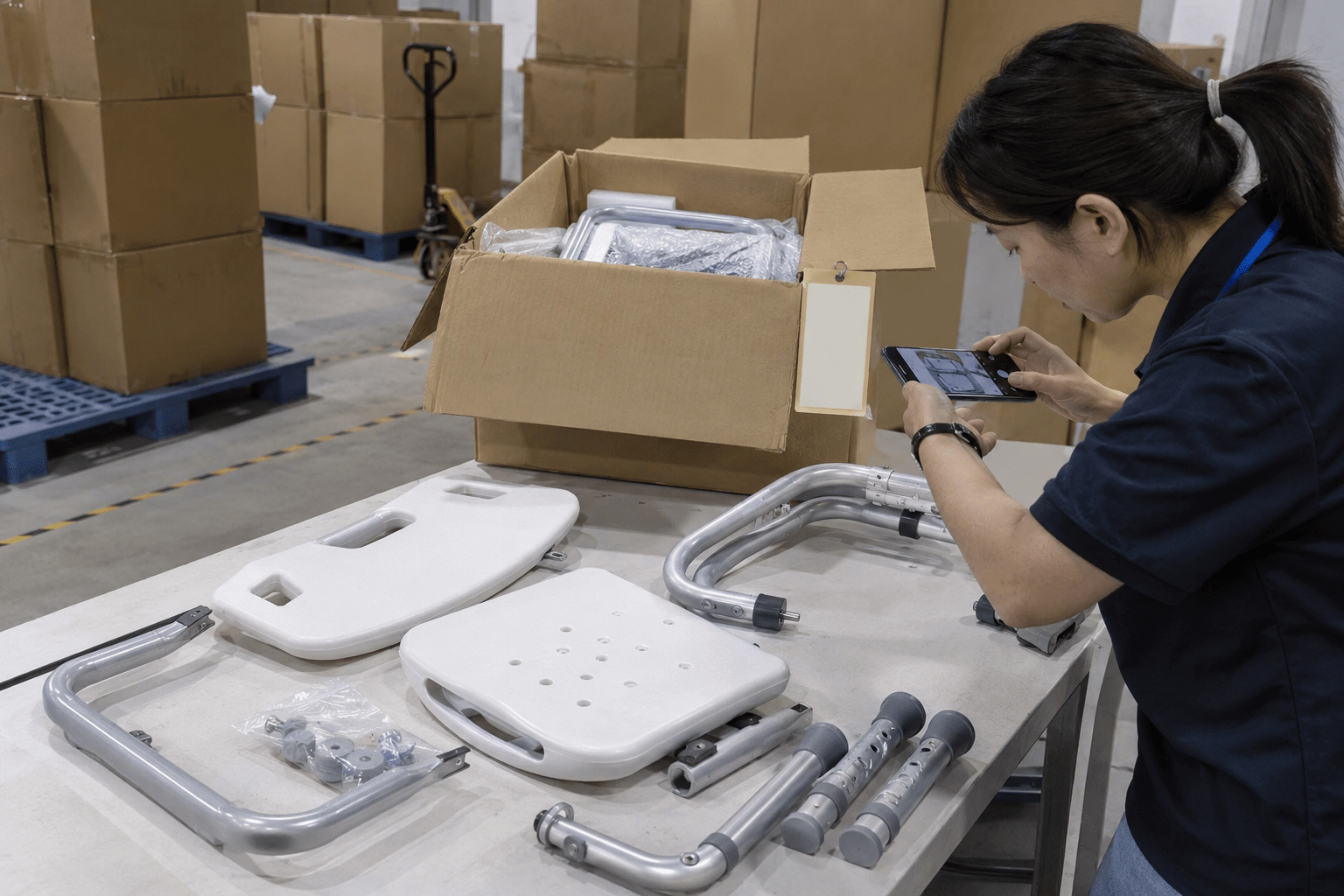
Shower chair packaging is validated in receiving through carton crush, puncture, moisture, seals, orientation, pallet movement, identity, and count, followed by product completeness, surfaces, frame, locks, feet, supports, assembly, function, and waste review. Field evidence should return to packaging owners.
Which Package Conditions Need Recording?
Photograph pallet and cartons before unpacking, record affected positions, and preserve suspect materials. Link every finding to shipment, carton, and unit identity.
- Note compression and contact direction.
- Separate carrier and packing evidence.
- Expand inspection under approved rules.
Which Product Conditions Close the Feedback Loop?
Inspect parts, finish, geometry, locks, supports, feet, assembly, and normal no-user function. Trace the cause carefully: similar damage can come from packing, handling, production, or rework.
- Compare patterns across carton locations.
- Keep disposition and corrective action linked.
- Verify the revised pack on a new shipment.
| Receiving finding | Possible pack cause | Evidence | Owner |
|---|---|---|---|
| Rub or scratch | Part movement/contact | Carton layout and surface photos | Packaging/quality |
| Bent or failed component | Impact or compression path | Position and protection state | Engineering/supplier |
| Missing or mixed part | Weak containment/control | Parts pack and count | Production/packing |
Receiving converts transport outcomes into design improvement. Key Takeaway: link carton evidence with product condition before corrective action is chosen.
10. How Should Buyers Approve Shower Chair Packaging?
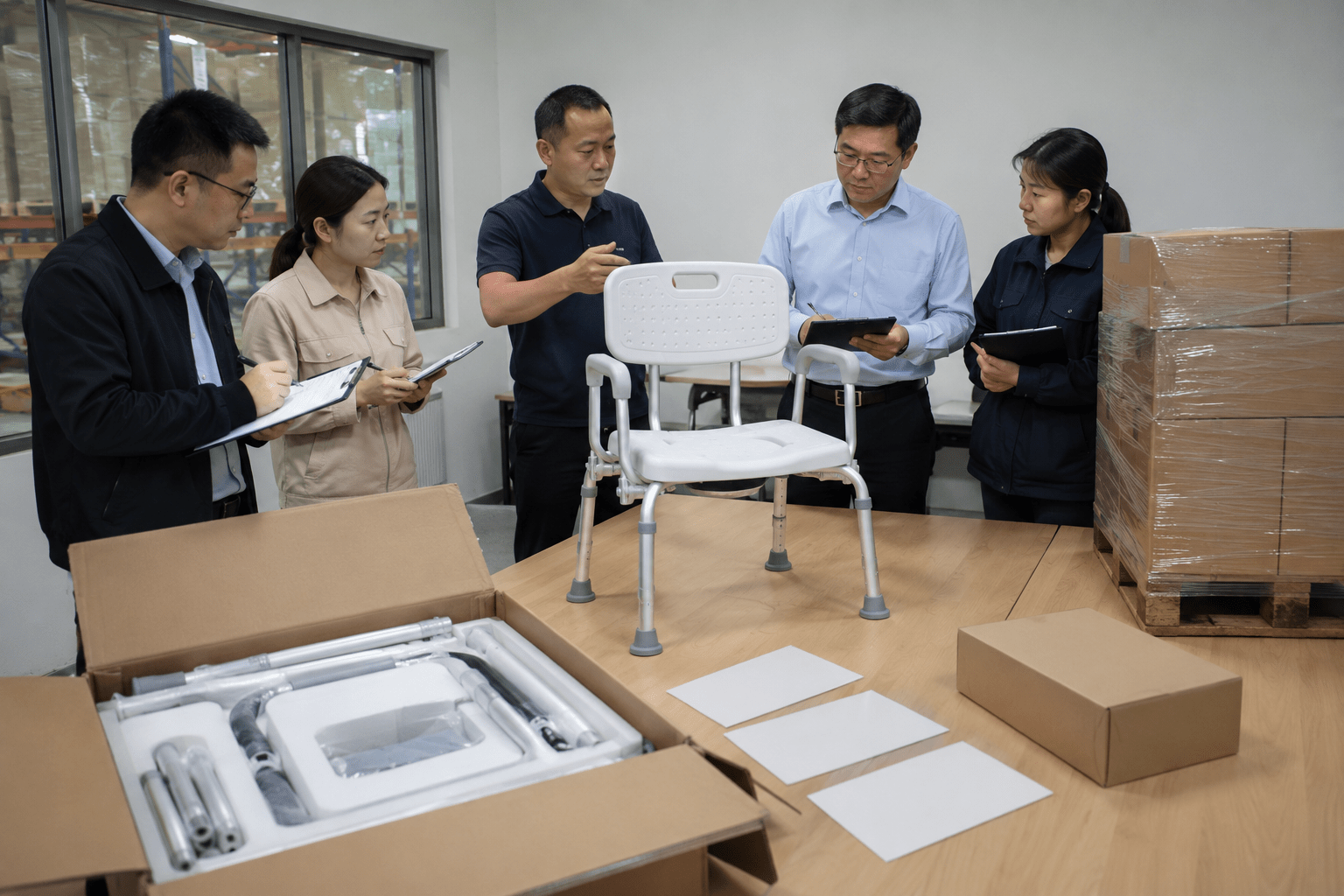
Shower chair packaging should be approved through product-state, protection, parts, testing, pallet, receiving, cost, labor, storage, assembly, and disposal gates. Cost comparison needs the same unit pack, carton, pallet, route, freight basis, damage assumption, and operational scope. Approved files should freeze the pack.
Which Cost Fields Need Like-for-Like Comparison?
Compare packaging materials, carton, pallet, freight, storage, loading, receiving, assembly, waste, inspection, and observed damage or rework under one shipment basis.
- Separate confirmed values from assumptions.
- Avoid invented damage or volume savings.
- Compare the same product revision.
Which Files Freeze the Approved Pack?
Release the pack drawing, material specifications, layout, artwork, labels, test record, packing instruction, pallet plan, physical sample, receiving checks, and change-notice rule. Protect the approval: a cheaper insert is still a design change.
- Require review before material substitution.
- Match production packs to the reference.
- Keep supplier change controls active.
| Approval stage | Output | Owner | Release rule |
|---|---|---|---|
| Design/sample | Protected layout and packed sample | Packaging/engineering | Product state preserved |
| Test/logistics | Test record and load plan | Quality/logistics | Defined hazards pass |
| Production | Released files and change route | Procurement/supplier | Pack matches approval |
Pack approval should survive cost pressure and production. Key Takeaway: freeze materials, layout, files, tests, and receiving checks together.
Conclusion
Packaging can reduce freight and landed cost only when product state, dimensions, protection, parts, tests, pallets, receiving, and change control remain connected. Smaller cartons are valuable when they do not create damage, assembly errors, or hidden labor. For help reviewing bath-chair configurations and supplier packing options, contact us today.
We help B2B buyers turn logistics goals into controlled samples and acceptance evidence. Efficient packaging protects both the product and the work required to deliver it.
FAQ
Can a smaller carton always reduce landed cost?
No. It may increase protection material, assembly labor, damage, pallet inefficiency, or receiving work. Compare complete landed and operating costs on the same route and product state.
What’s the best packing state for a folding chair?
The best state keeps locks secured, protects surfaces and projections, controls loose parts, dries fully, and supports simple restoration. Validate it through packing, transport, unpacking, and function checks.
How do I know whether protection is excessive?
Map every layer to a defined hazard, inspect test outcomes, measure volume and labor, and remove only materials shown to be redundant through controlled trials.
Can packaging changes affect product approval?
Yes. New materials or layouts can change pressure, abrasion, moisture, lock state, part control, assembly, labels, and receiving. Review and retest according to change impact.
How should distributors report shipping damage?
Record shipment, pallet, carton, and unit identity; photograph the unopened pack and product position; describe the affected component and function; preserve materials; and track disposition and corrective action.
